

Every houseplant shelf has an easy end and a hard end, and the west-facing window is the hard one: gentle morning nothing, then the full force of the afternoon sun arriving with heat attached. Plants that sulk in it burn at the edges; plants built for it treat the west window as the best seat in the house.
This article is about matching the plant to that light. Seven indoor plant types that genuinely suit west-facing windows — what the afternoon sun gives them, what it asks of them, and the care that keeps them thriving rather than merely surviving. No ranking and no favourites: the right choice is the one whose habits fit your room and your routine.
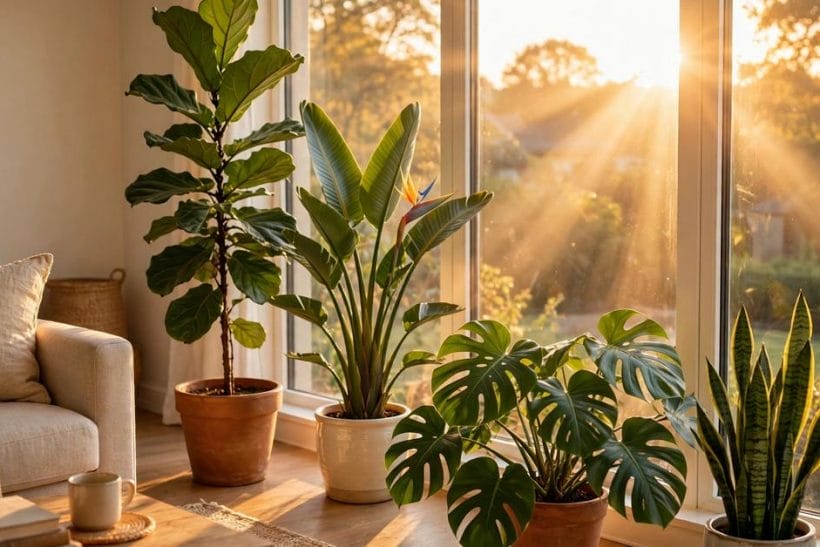
1. West-Facing Windows at a Glance
Scope first. This article owns one question: which indoor plants suit the strong afternoon light of a west-facing window, and how to care for them there. The wider garden reading lives elsewhere on the site: container garden ideas for pot growing generally, tiny house garden ideas for small-space growing, led grow lights for plants for rooms where daylight runs short, and the outdoor companions in mulch landscaping ideas, courtyard landscaping ideas and small japanese garden ideas. Here, everything serves the west window.
One rule governs the whole article: a west window is not a bright room, it is a daily event — hours of direct, warm, late-day sun. Choose plants that evolved for strong light, then manage the heat at the glass.
| Plant type | Character in west light | Asks of you |
|---|---|---|
| Fiddle-leaf fig | Statement tree, loves brightness | Stability — dislikes being moved |
| Bird of paradise | Bold sun-lover, architectural | Space, and regular watering in growth |
| Monstera | Vigorous climber for bright corners | Support, and room to grow |
| Snake plant | Upright, drought-tolerant, forgiving | Very little — water sparingly |
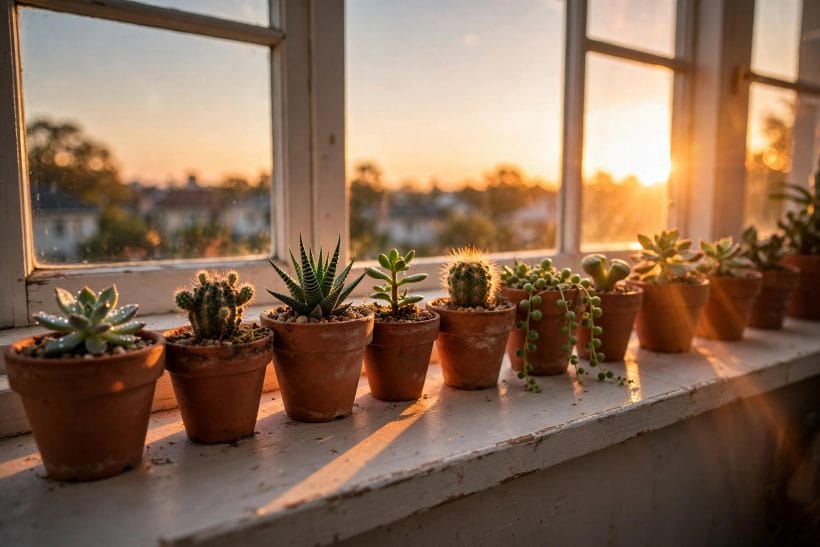
| Jade plant | Compact succulent, stores water | Restraint with the watering can |
| Croton | Colourful foliage that colours up in sun | Consistent light to hold its colour |
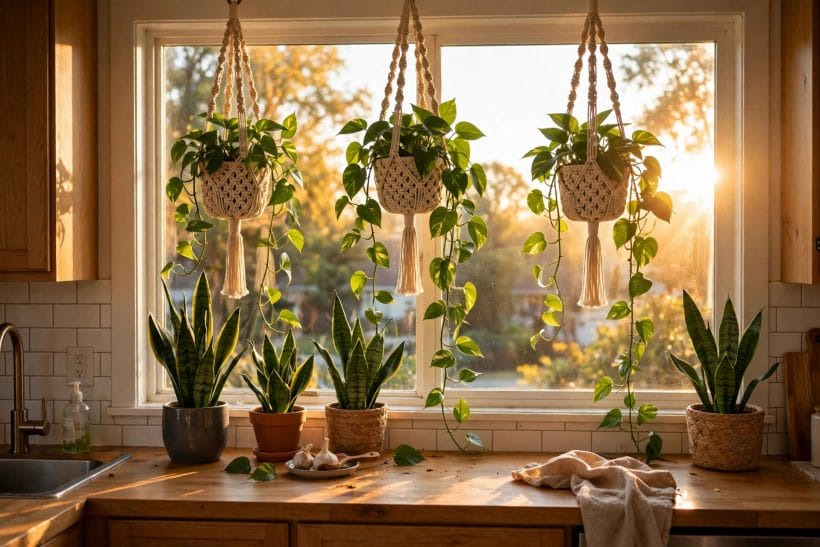
| Pothos | Trailing, adaptable, easy-going | An occasional trim and turn |

2. What a West Window Actually Delivers

1. Afternoon sun is the strong sun
A west window’s light arrives when the day is already warm, so its direct hours are the most intense a houseplant meets indoors. That intensity is a gift to sun-loving species — it drives compact growth, strong colour and, in some, flowers — and a hazard to shade-bred leaves, which scorch rather than adapt.
2. Heat builds at the glass
The glass itself becomes a radiator on sunny afternoons, and leaves touching or nearly touching it can be damaged on the hottest days. This is the west window’s one real danger, and it is managed by placement — a small distance between leaf and glass — rather than by abandoning the window. The room side of the glass tells the same story: a windowsill that feels hot to the back of your hand at four in the afternoon is telling you exactly what the nearest leaves are enduring, and on heatwave days even the proven sun-lovers in this article appreciate a sheer curtain drawn across the fiercest hour, or a move back from the glass until the evening softens it.
3. The light swings with the seasons
Summer afternoons are long and fierce; winter’s west light is weaker, lower and briefer. Plants that thrive in June may merely tick over in January, which is normal and healthy. Expect the care rhythm — especially watering — to change with the season rather than follow a fixed calendar.
3. The Tall Statement Plants
4. Fiddle-leaf fig: the bright-room tree
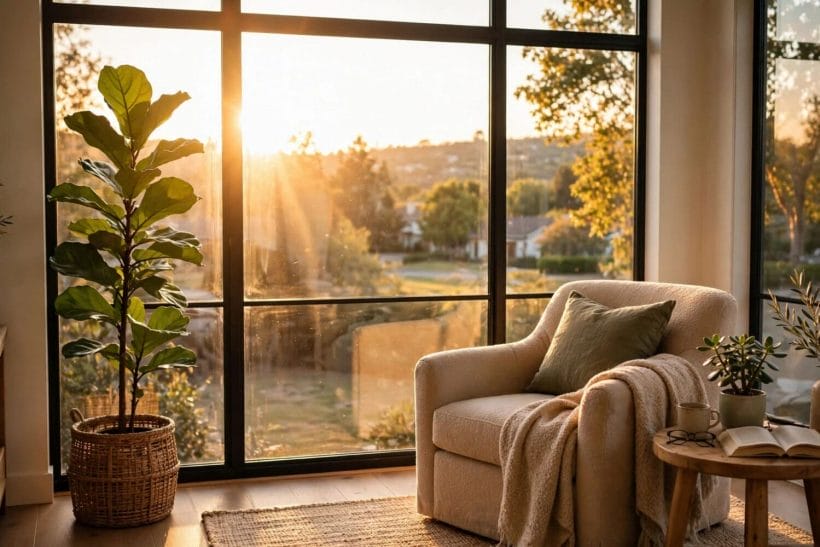
The fiddle-leaf fig wants all the light a west window offers and rewards it with upright, sculptural growth. Its known sensitivity is to change — draughts, moves, sudden shifts — so give it its place, turn it occasionally for even growth, and then leave it alone to be a tree.
5. Bird of paradise: built for sun
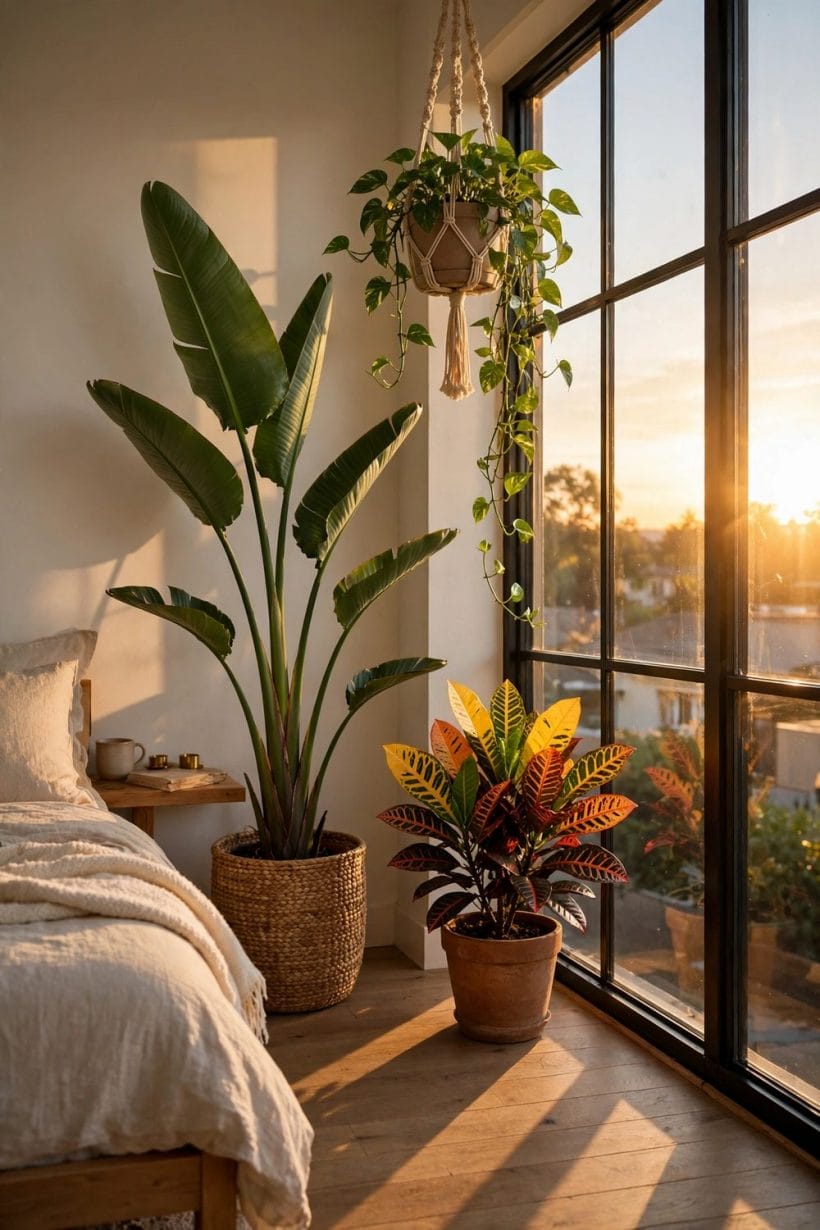
With its broad, banana-like leaves, bird of paradise is a plant of open, sunny places, and the west window suits its nature. It grows large, so place it where its leaves can arch without pressing the glass, and keep its watering generous while it is actively growing.
6. Monstera: the vigorous climber
Monstera takes bright light gladly and grows with enthusiasm, its split leaves larger and more dramatic in strong light. Give it a moss pole or support to climb, expect it to claim its corner over a few seasons, and rotate it so the whole plant shares the window rather than leaning to it.
4. The Forgiving Four
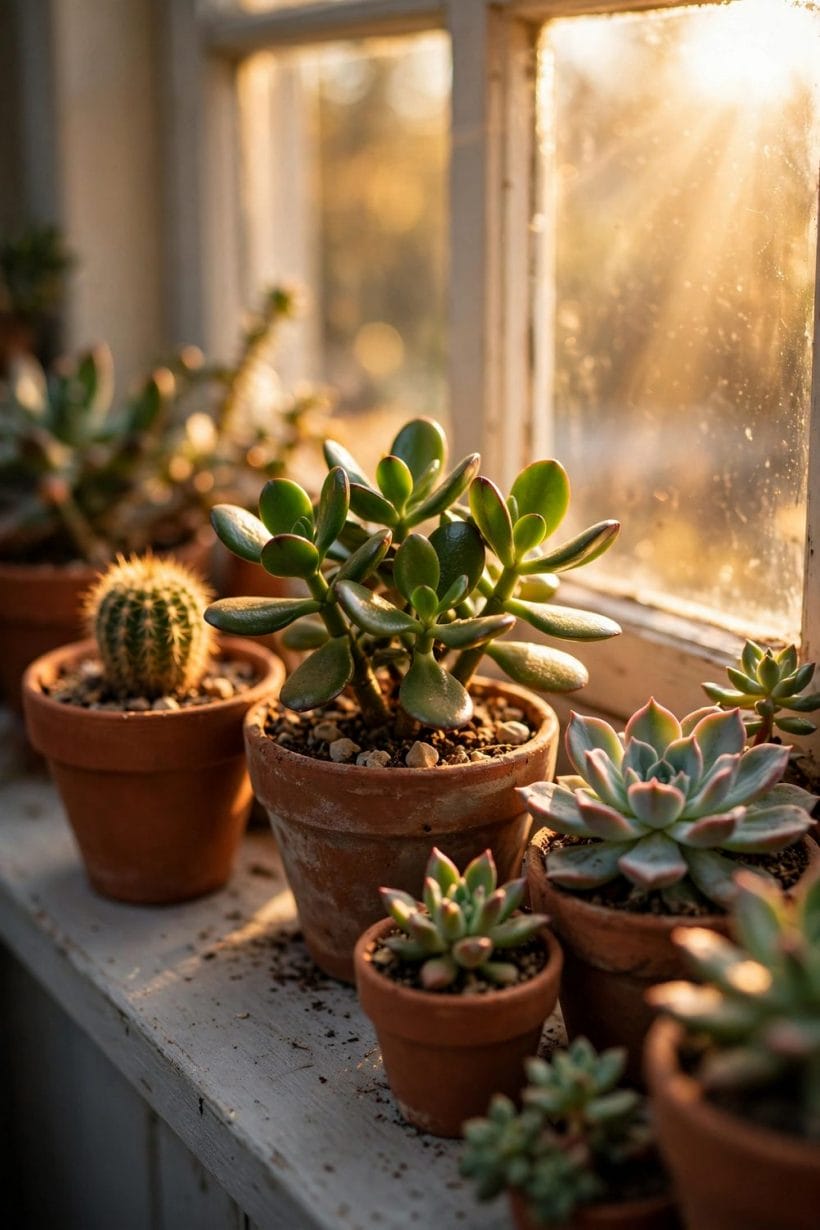
7. Snake plant: the near-indestructible
Upright sword leaves, a deep tolerance of drought, and indifference to all but the worst neglect make the snake plant the west window’s easiest tenant. It handles the strong light without complaint — just stand it a little back from the hottest glass — and its one requirement is restraint: water sparingly, and let the compost dry between waterings.
8. Jade plant: the sunny succulent
The jade plant stores water in its thick leaves and stems precisely because it evolved under strong sun, so the west window feels like home. It grows slowly into a small, tree-like succulent that asks for bright light, a gritty, free-draining compost, and a light hand with water, especially in winter.
9. Croton: colour that answers light
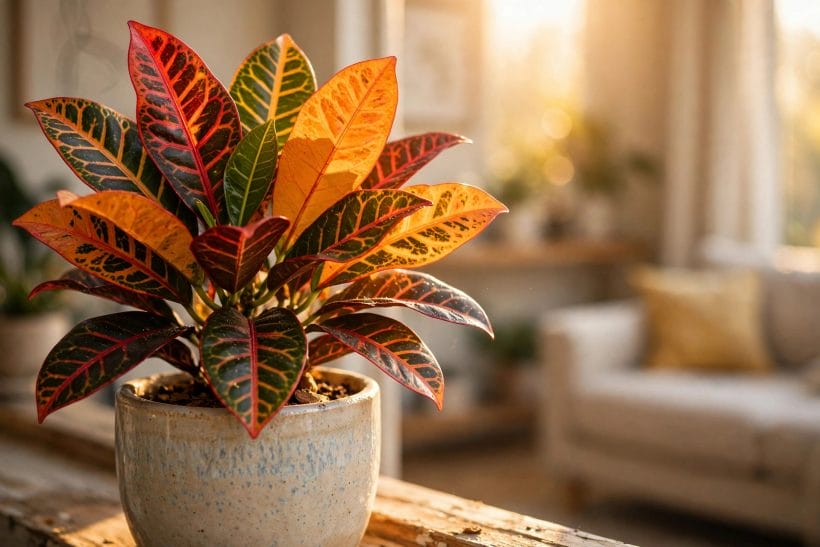
Crotons carry their colour in their leaves — greens, yellows, oranges and reds — and the colouring intensifies in strong light and fades in gloom, which makes the west window the place to keep them vivid. Keep their light consistent, since sudden drops in light are the usual cause of leaf drop.
10. Pothos: the adaptable trailer
Pothos trails from a shelf or hanging pot and tolerates a wider range of light than the others here, though its variegation shows best in brightness. In a west window it grows quickly; trim the longest trails to keep it bushy, and turn it so all sides share the light.
5. Placing Plants Around the Glass
11. A hand’s breadth from the glass
On the sunniest afternoons, draw plants slightly back from the pane itself — the difference between thriving in strong light and being scorched by concentrated heat. The infographic’s tip is the practical rule: move plants back slightly from hot glass on the sunniest afternoons, and return them when the season softens.
12. Sill, stand or floor
Match the plant’s size to its station: succulents and small pots on the sill, statement plants on the floor where their pots are stable and their leaves clear the glass. Plant stands at varied heights let a group share one window without the tall shading the small into gloom.
13. Grouping for humidity and shade
Plants grouped together raise the humidity immediately around their leaves and shade each other’s pots, which suits the dry warmth of a west window. Keep a little air space between them — companionship, not crowding — and the group becomes its own small climate.
6. Watering in a Warm Window
14. Check the soil, not the calendar
A west window dries pots unevenly — the sunny side faster than the shaded — so judge watering by the soil’s actual dryness, felt with a finger, rather than by a weekly rule. Even the toughest plant here would rather be checked than scheduled.
15. Drought-tolerant is not drought-proof
The snake plant and jade store water to survive dry spells, not to live in permanent drought, and their most common cause of death indoors is the opposite: overwatering into soggy compost. Let them dry well between drinks, empty saucers after watering, and in winter water least of all.
16. Water in the morning
Watering before the day’s heat lets roots take up moisture ahead of the afternoon’s demands and keeps droplets off leaves while the strong sun is on them. It is a small habit that suits the west window’s rhythm better than evening watering, which leaves plants sitting wet overnight.
7. Rotation and Even Growth
17. Turn pots a little, regularly
Plants grow toward the light, and at a single-aspect window an unturned plant becomes one-sided. A quarter turn at regular intervals keeps growth even and stems upright — the cheapest piece of care in this article, and the one that keeps windowsill plants looking intentional.
18. Watch the lean on tall plants
Statement plants — the fig, the bird of paradise, the monstera — lean visibly as they reach for the light. Rotation matters most for them, along with supports placed early: a monstera’s pole or a fig’s discreet stake works far better fitted before the lean than corrected after it.
19. Prune for shape, not rescue
Light pruning keeps trailers bushy and trees balanced, and cuttings of pothos and jade root so readily that pruning doubles as propagation. Prune in the growing season, with clean tools, and treat it as styling — a plant needing rescue pruning usually needed different light or water months earlier.
8. Heat Stress and Scorch: Reading the Signs
20. Scorch marks tell one story
Pale, papery patches on the leaves nearest the glass, appearing after a very hot afternoon, are the signature of heat scorch rather than disease. The remedy is distance, not treatment: move the plant back, let it grow new leaves in its own time, and remember the spot for next summer’s hottest days.
21. Wilting at noon, recovered by night
A plant that droops in the afternoon heat and recovers by morning is usually thirsty at the root rather than damaged. Check the soil first; if it is dry, water thoroughly. Repeated wilting is the plant asking for a bigger pot, a better position, or a more consistent routine.
22. Leaf drop after a change
Several of these plants protest change with dropped leaves — the fig and the croton especially — when light, temperature or position shifts suddenly. Acclimatise new plants to the west window gradually over a week or two, and once a plant is settled and growing, resist rearranging it on impulse.
9. Pots, Soil and Feeding in Bright Light
23. Drainage is non-negotiable
Every pot at a west window needs a drainage hole and somewhere for the water to go — a saucer that gets emptied, not a cachepot that quietly fills. Bright light makes plants drink; it does not make them enjoy standing in water, and root trouble in wet compost is the commonest indoor killer.
24. Compost matched to the plant
Succulents and drought-tolerants want a gritty, free-draining mix; the leafy tropicals — monstera, bird of paradise, pothos — want a richer compost that still drains freely. Repot when roots crowd the drainage hole, stepping up one pot size at a time, in spring where possible.
25. Feeding in the growing season
Feed modestly while plants are growing actively in spring and summer, following the product’s own label directions, and rest them in winter when growth slows. A west window’s strong light drives real growth, so feeding matters — but more feed than the label says scorches roots rather than helping leaves.
10. A Simple Care Rhythm

26. The weekly two-minute round
Once a week: feel the soils, turn the pots a quarter, lift any leaf off the glass, and look at the newest growth. That small round catches thirst, lean and scorch while they are still trivial, and it is the entire secret behind windowsills that look effortlessly good.
27. Adjust with the seasons
As autumn shortens the afternoons, move plants closer to the glass to gather what light there is and ease back on water and feed; as spring strengthens, reverse both. The west window changes more across the year than any other aspect in the house — let the care change with it, and the seven plants in this article will hold their places happily.
Final Considerations
A west-facing window is not a problem to solve but a climate to plant for: strong afternoon light, warmth at the glass, and a long seasonal swing. The seven types here — fig, bird of paradise and monstera for presence; snake plant, jade, croton and pothos for forgiveness and colour — cover most rooms and most routines between them. Choose by habit rather than by headline, give leaves a little air between them and the hot glass, and turn the pots as the weeks pass. Do that, and the hardest window in the house becomes the one visitors ask about.
One last encouragement for the hesitant: start with the forgiving end of the list. A snake plant or a jade on the sill will prove within a single summer what the window can do, and success at the easy end is what gives a household the confidence to graduate to the fig tree by the glass. The window is not waiting to defeat you; it is waiting to be planted.



0 Comments