

A major appliance is bought in an afternoon and lived with for a decade. The fridge that hums too loudly, the washer that will not fit through the door it was carried past on the showroom floor, the oven whose celebrated features nobody uses — none of these failures happen in the kitchen. They all happen at the buying stage, in the checks that were skipped.
This guide is those checks, for any major appliance from any maker: measure the space and the route, size the capacity to the household, read the energy label, interrogate the warranty, and plan the delivery before the order. Nothing here reviews or ranks appliances or brands — it cannot, honestly, from a desk. What it can do is make sure the appliance you choose was chosen properly.
Related Guide: Sunset Bronze Appliances: What To Check Before You Buy
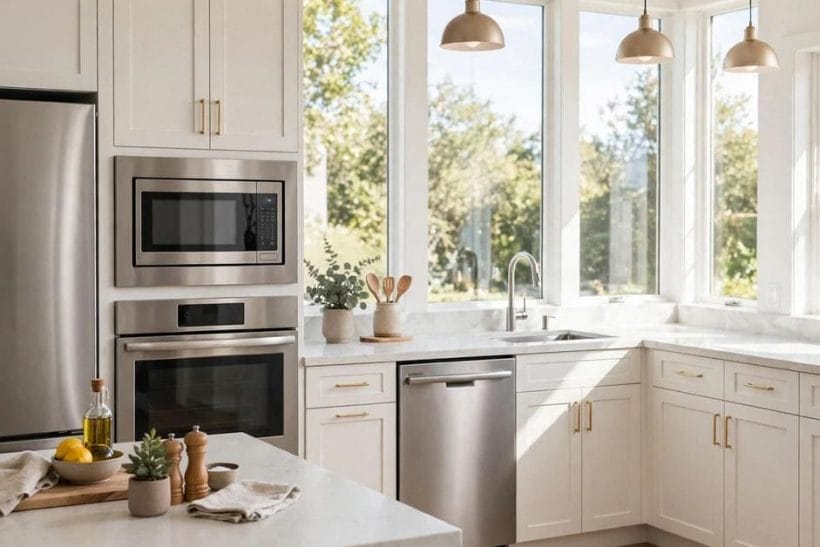
1. Appliance Buying at a Glance
Scope first. This guide owns the buying checks for the appliance itself — the machine, its fit and its paperwork. The neighbouring checks live elsewhere on the site: the seller’s side of the bargain in buying appliances from a discount retailer, small-appliance choosing in the microwave buying guide and how to choose a blender, the consumable that follows the machine home in how to choose dishwasher detergent, and the rooms these machines serve in kitchen ideas and compact kitchen appliances for tiny houses. Here, everything serves the purchase.
One rule governs the whole guide: an appliance is a decade-long tenant, not a purchase. Check it the way you would check anything you intend to live with for ten years — by measurement, by label and by paperwork, never by showroom shine.
| Check | What to settle | Why it matters |
|---|---|---|
| Measure | The space, and the route to it | Most failed deliveries are failed measurements |
| Capacity | Sized to the household, not the showroom | Too small frustrates daily; too big wastes money and space |
| Energy | The official label, compared like for like | Running costs are paid every week for years |
| Warranty | Parts and labour cover, in writing | Decides who pays when year three arrives |
| Delivery | Access and installation agreed in advance | Decides whether fitting day is a pleasure or a dispute |
2. Measure the Space and the Route

1. Measure the alcove, not the old appliance
The gap left by the outgoing machine is evidence, not a specification: ranges, fridges and laundry pairs vary more than their categories suggest. Measure the space itself — width, depth, height — including skirting, sockets, taps and any pipework that steals room, and compare it with the new appliance’s stated dimensions and its maker’s clearance requirements.
2. Measure the route it must travel
Front door, hall turns, stairs, the kitchen doorway: the appliance must survive the journey as well as fit the destination. Note the tightest point and compare it honestly with the machine’s largest dimension, allowing for packaging. This single check prevents the commonest disaster in appliance buying — the perfect machine, returned from the doorstep.
3. Doors, hinges and handles need room too
An appliance that fits its alcove can still fail in use: fridge doors that cannot open past a wall, oven doors that meet the island, washer doors blocked by a cupboard. Allow for door swing and handle projection, and stand in the space imagining the machine working, not just sitting.
3. Capacity: Size for Your Household
4. Count people, then count habits
Capacity ratings are stated in each maker’s own terms — litres, place settings, drum weight — and the honest comparison is against your household’s actual load: how many people, how often the machine runs, whether it serves a family or a couple who batch-cook. Buy for the real week, not the annual feast.
5. Too big is a cost, not a luxury
An oversized fridge cools empty air, an oversized washer runs half-empty drums, and both cost more to buy and to run while crowding the room. Too small is equally a tax — double cycles, daily frustration. The right capacity is the unglamorous middle: your largest ordinary load, comfortably.
6. Freestanding, built-in and integrated are different commitments
Freestanding machines swap easily and show their own faces; built-in and integrated models disappear into the cabinetry and cost more to fit and to replace. Decide which commitment the kitchen is making before comparing models, because the choice narrows the field more than any feature list.
4. Energy and Running Costs
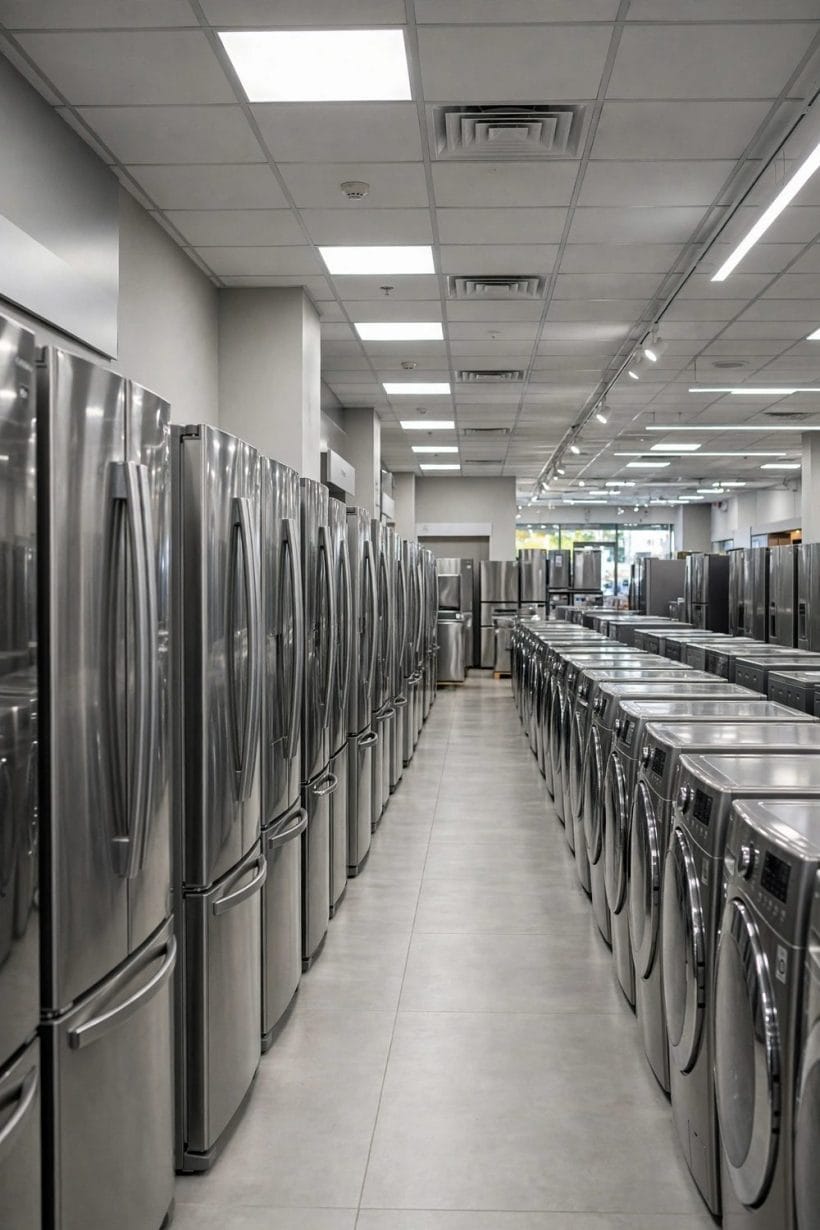
7. Read the official label, not the adjectives
Every major appliance carries an official energy rating, and that label — not the brochure’s language — is the comparable fact. Ratings systems are revised from time to time, so compare machines rated under the same current scheme, and read the consumption figures behind the grade: two machines with the same letter can still differ.
8. Running costs are a weekly payment
A machine used daily for a decade pays its energy bill hundreds of times. The efficient choice is often worth a higher purchase price, and the inefficient bargain often is not a bargain — work it out over the years you will own it, in the rough terms the labels allow, rather than at the till alone. This is also where honesty about habits belongs: an eco programme only saves what it promises if the household actually uses it, so weigh the figures for the cycles you run most, not the flattering test cycle on the label’s front.
9. Water is a cost too
Dishwashers and laundry appliances spend water as well as power, and their labels say how much per cycle. In homes on metered water — or in dry regions — that figure belongs in the comparison alongside energy, and eco programmes that genuinely suit your loads are worth more than programmes you will never switch on.
5. Features: What You Will Actually Use

10. List your real programmes before you shop
Write down the cycles and functions your household actually uses weekly — the wash you run, the oven mode you trust, the fridge layout that fits your shopping. Then let that list judge the showroom: features not on it are decoration, however impressively they demonstrate.
11. Smart features are a service, not a specification
Connected appliances promise apps, alerts and updates; they also depend on networks, accounts and a maker’s continuing support. Value them as a service you are subscribing to, check what still works if the connection or the maker goes away, and never let them outweigh capacity, energy and warranty.
12. Controls you can read are a safety feature
Knobs you can feel, displays you can read in daylight, doors that feel balanced: the interface is used every single day, by everyone in the house, including guests and grandparents. Try the controls in the showroom with your own hands. A machine that is clear to operate is a machine that gets used correctly.
6. Build, Noise and the Feel of the Thing
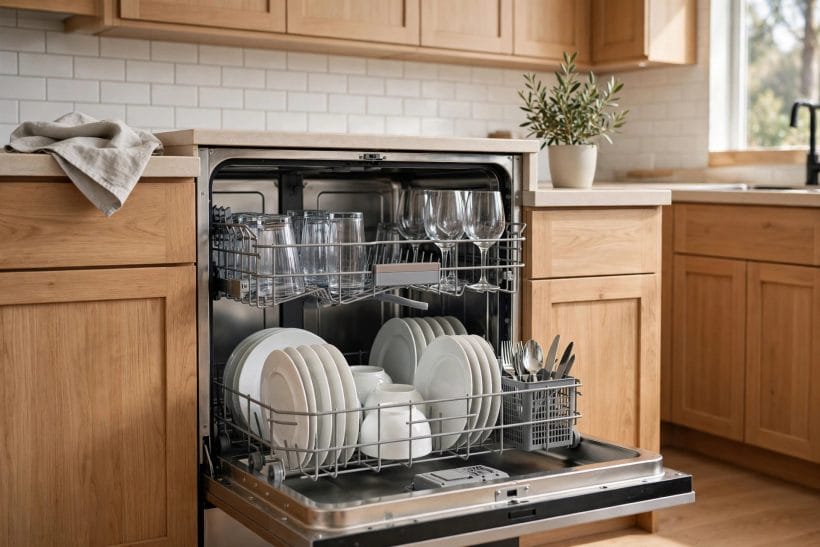
13. Open it, lift it, lean on it
Shelf flex, drawer smoothness, door weight and seal grip are all information your hands can gather in a minute. Makers build to price points, and the differences live exactly here — in the hinges, the runners and the rigidity of the parts you will touch ten thousand times.
14. Noise matters most in open plans
Every appliance states a noise level, and in a studio or open-plan home that figure shapes daily life: a loud dishwasher colonises the evening, a humming fridge underlines every silence. Compare the stated figures between your shortlisted machines, and weight them by how close your living space sits to the machine.
15. Finishes must survive your kitchen
Stainless shows fingerprints, white shows the years differently, dark finishes show dust and scale marks. None is wrong; each asks a different amount of wiping. Match the finish to the household’s honest housekeeping, and check how replacement doors and handles are handled if the finish is damaged later.
7. Warranty and Service Support

16. Warranty: parts, labour and the small print
A warranty’s headline length is its least informative number. Read what it covers — parts only, or parts and labour — what it excludes, and what it asks of you: registration deadlines, authorised repairers, proof of purchase. Two warranties of the same length can be worth very different amounts of money.
17. The service network where you actually live
When a machine fails, what matters is who comes, how soon, and with what parts. Before buying, check that the maker has service coverage in your area and that common parts are obtainable — a question any good retailer or the maker’s own site can answer. Local help matters, as the checklist says; distant excellence does not fix a fridge.
18. Spares and repairability
Appliances outlive their fashion cycle only if they can be repaired: seals, shelves, pumps and elements available as spares, and manuals that still exist. Makers increasingly publish how long spares are kept. A machine that can be mended cheaply in year seven is worth more than a sealed box that cannot.
8. Delivery and Installation

19. Confirm connections before the day
Water in, waste out, power, gas where relevant: each connection has a location and a standard, and the new machine’s requirements must match what your kitchen offers. Gas and fixed electrical work belong to qualified installers under the rules where you live — establish who is doing what before delivery day, not during it.
20. Installation is part of the purchase
Levelling, sealing, connecting and the first test run are where a good appliance becomes a working one. Agree in advance whether installation is included, what it covers, and whether the old machine is disconnected and taken away — and get it in the order paperwork, as the companion guide to retailer checks sets out in full.
21. Inspect on arrival, before signing
Dents in doors, cracked shelves, a drum that will not turn: check the machine over while the delivery crew is present and note anything on the paperwork before you sign it clean. Damage reported at the doorstep is a claim; damage found on Saturday is an argument.
9. The Brand Question, Answered Honestly
22. A badge is a promise, not a specification
Buyers ask how much the brand matters because they want a shortcut. The honest answer is that a name summarises a maker’s typical build, warranty and service standards — useful as a first filter, useless as a final decision. Judge the specific model in front of you on the checks in this guide, and let the badge argue afterwards.
23. Every range has strong and weak models
Makers build families of machines at different prices, and quality follows the model more faithfully than the marque: the careful buyer’s question is never “which brand” but “which machine, at which specification, with which warranty”. That is why this guide names no brands at all: the method travels, the verdicts would not.
24. Pay for substance you can verify
Where a premium is asked, ask what it buys that you can check: longer or broader warranty cover, better stated energy and noise figures, a stronger service network, availability of spares. Premiums that buy only styling and story are a taste decision — legitimate, but make it knowingly.
10. The Pre-Buy Walk-Through

25. Re-run the five checks in order
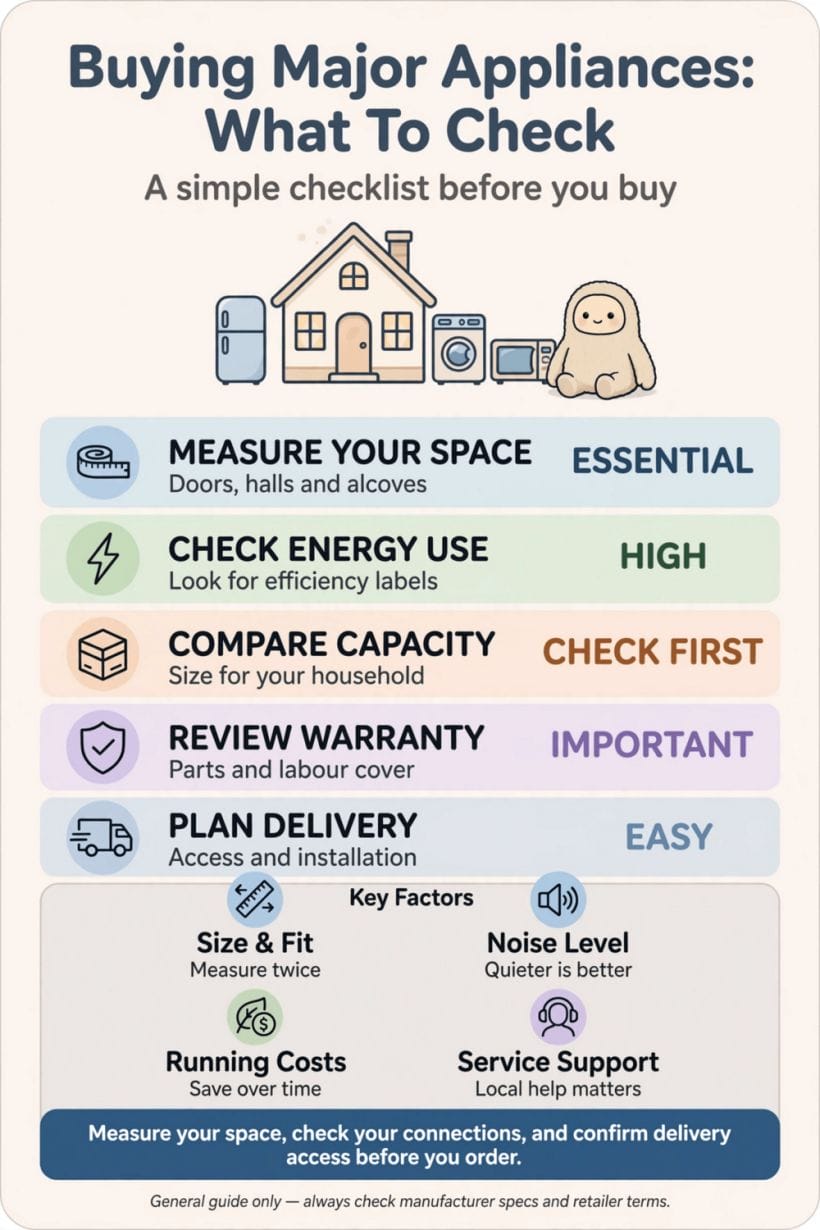
Before paying, walk the checklist once more, in the infographic’s order: measured space and route; energy label read; capacity matched to the household; warranty read to its small print; delivery and installation agreed. Any check that cannot be answered is the one to resolve while the money is still yours.
26. Compare two machines, not ten
Shortlists of ten dissolve into confusion; two finalists compared line by line — dimensions, capacity, label figures, noise, warranty terms, total fitted cost — produce a decision you can defend. Comparison is a tool: use it at the end of the process, not as the process.
27. Keep the file
Invoice, warranty document, manuals, the serial number photographed, the delivery note as signed: one folder, kept for the machine’s life. It is the evidence for every warranty claim, service visit and eventual resale, and it takes five minutes on the day the machine arrives.
Final Considerations
No badge, showroom or review roundup can do the five checks for you, because four of them are about your house rather than the machine: your alcove, your doorway, your household’s loads, your local service map. Do those honestly — measure twice, read the label, size for the real week, read the warranty’s small print, agree the delivery — and the brand question shrinks to its proper size: a tie-breaker between machines that have already passed. That is how a decade-long tenant gets chosen well.



0 Comments