

Wide glass is a gift: more light, longer views and rooms that feel twice their size. Dressing it well is the tricky part, because standard panels can look skimpy and heavy treatments can swallow the view. These curtain ideas for wide windows cover thirteen approaches, from a single sweeping curtain wall to layered sheers and shutters. Each way notes light control, privacy and effort honestly, so you can choose with your eyes open.
1. One Long Curtain Wall for a Calm, Unified Look
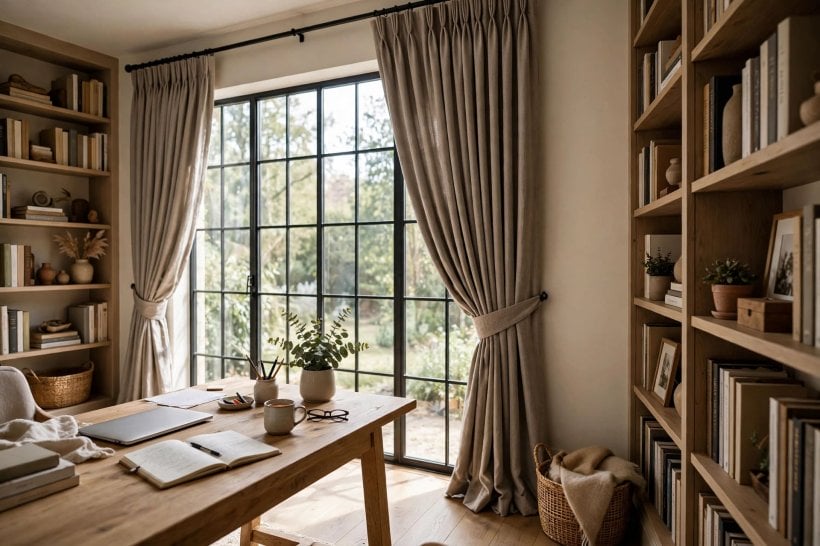
The boldest answer to a wide expanse is to treat it as one window, not several. A single track or pole runs the full width, and the curtains draw to one or both ends in deep, even folds. It suits modern rooms and open-plan spaces, and it makes the wall feel wider and calmer. The trade-offs are fabric cost, since you are buying metres of cloth, and weight: choose a track rated for the load, and hang the fullest folds at the ends so the glass still reads as one sweeping picture when the curtains are open. The table below compares all thirteen approaches in this guide.
| Approach | Light control | Privacy | Effort |
|---|---|---|---|
| Single curtain wall | Good when lined | Full when closed | High: lots of fabric |
| Two pairs | Flexible by section | Full | Medium |
| Layered sheers | Gentle, filtered | Daytime only | Medium |
| Pelmet or valance | As per curtains | As per curtains | Medium |
| Repeated Roman blinds | Excellent per blind | Full | High |
| Ceiling track | Good | Full | Medium |
| Cafe half curtains | Top light stays open | Lower half only | Low |
| Shutters or louvres | Excellent, adjustable | Full | High |
| Panels per section | Flexible | Full | Medium |
| Blackout panels | Total | Full | Medium |
| Sunroom drapes | Good | Good | Medium |
| Woven shades | Filtered | Partial | Low to medium |
| Mixed feature panels | Good | Full | Medium |
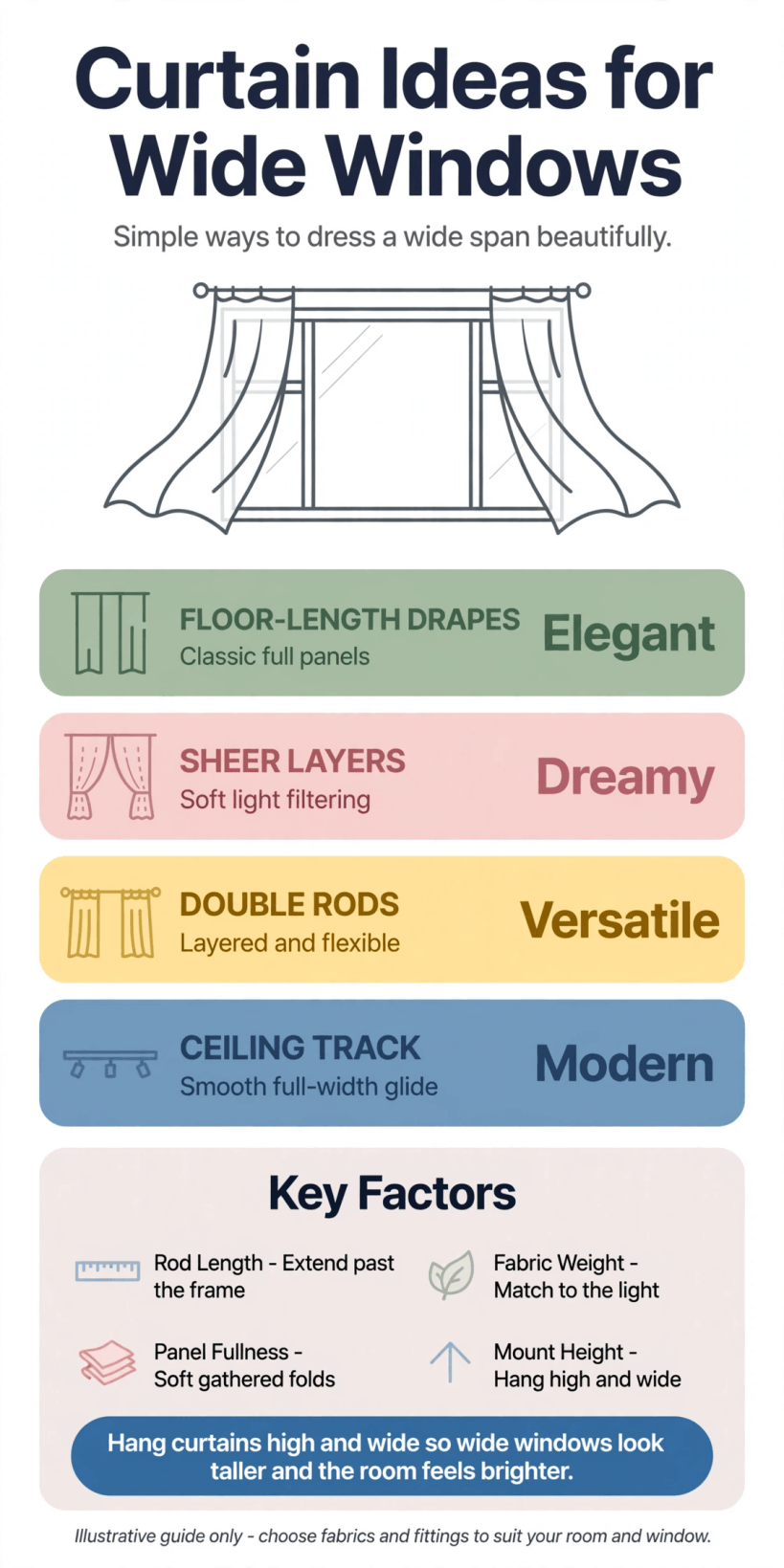
Thirteen ways to dress a wide expanse of glass, compared by light control, privacy and the work each one involves.
Fullness is what makes or breaks this look. Skimpy fabric stretched flat across a wide span reads as a bedsheet, while generous folds read as luxury even in a modest cloth. As a working rule, plan for the curtain to look softly gathered even when closed, and choose the plainest fabric you love, because at this scale the folds themselves are the pattern. Linen-look weaves, soft cottons and matte synthetics all behave well; shiny fabrics exaggerate every wrinkle across a long drop.
2. Two Pairs That Meet and Part by Section
Where a wide wall of glass is really three or four windows in a row, two pairs of curtains give you control section by section. Hang one long pole, place pairs so they stack over the mullions when open, and close only the pair that faces the low sun or the neighbours. It is the layout most living rooms end up loving, because it behaves like separate windows by day and one grand treatment by night. Keep the pairs identical in length and heading so the rhythm reads as intentional. This section-by-section thinking is the same trick used throughout tiny house living room ideas, where one room has to change mood several times a day.
Think about stack-back: the wall space each open pair occupies. On a wide window there is usually glass to spare, so pairs can stack over the outer sections without darkening the room. If wall space exists beyond the frame, extend the pole so pairs can stack partly off the glass and the full width of daylight survives. It is a small measuring decision that changes how bright the room feels every single day.
3. Sheers Layered Under Heavier Panels
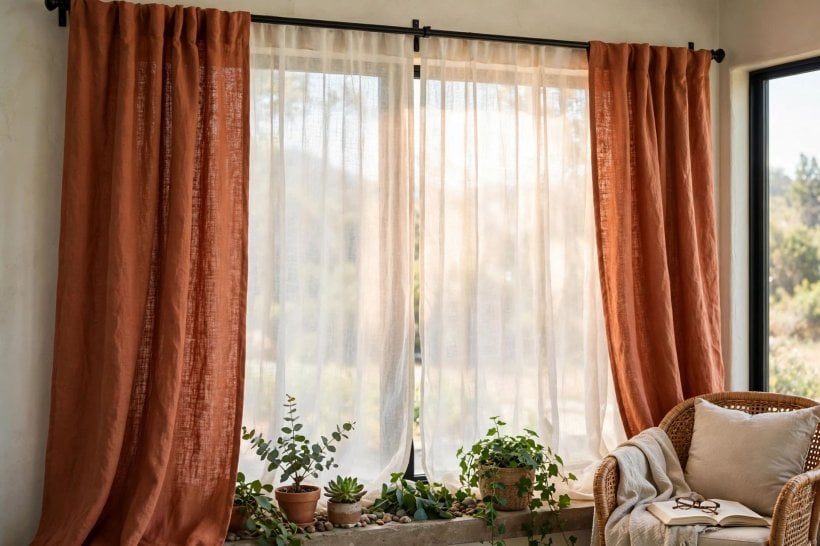
Layering solves the classic wide-window dilemma: you want the light, but not the audience. A sheer on its own track runs the full width and filters the day, softening glare and hiding the room from the street. Heavier panels hang at the ends, more like a frame than a cover, and close only for full privacy or a film night. Choose sheers with a weighted hem so they hang in straight, calm folds across a long span, and test a sample at midday: some sheers turn grey or yellow in strong sun. The layered look also borrows well from bathrooms that use frosted layers, as seen in tiny house bathroom ideas, where privacy and daylight have to coexist.
Hardware matters here: a double track or a pole-plus-track combination keeps the layers independent, so the sheer glides without dragging the heavy panels with it. Where budget is tight, a simple wire system for the sheer behind a standard pole works surprisingly well. Keep the sheer a fraction shorter than the outer curtains so the hem layers look deliberate, and wash sheers gently and often — across a wide span, dust shows as a grey tide line long before the fabric looks dirty up close.
4. A Pelmet or Valance To Tame a Tall Span
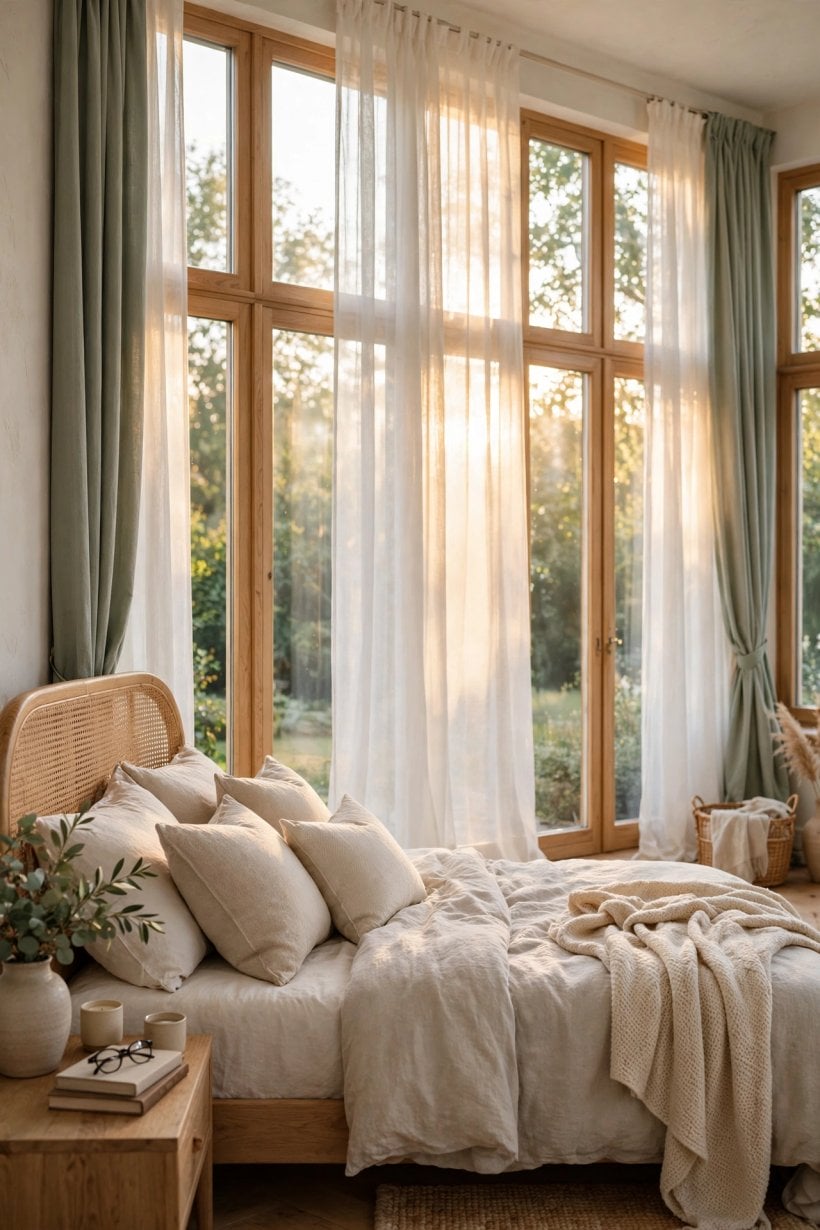
Some wide windows are also tall, and the proportions can feel barn-like. A pelmet — a covered board or shallow box fitted above the curtains — shortens the visual height, hides the track and gives the whole treatment a tailored, finished top edge. A soft valance does the same job with fabric instead of board, and suits cottage or traditional rooms. Measure the pelmet depth against your ceiling height: too deep eats the glass, too shallow looks apologetic. Upholster it in the curtain fabric for a quiet look, or in a contrast colour to make the window a deliberate feature of the room.
5. Roman Blinds Repeated Across the Span
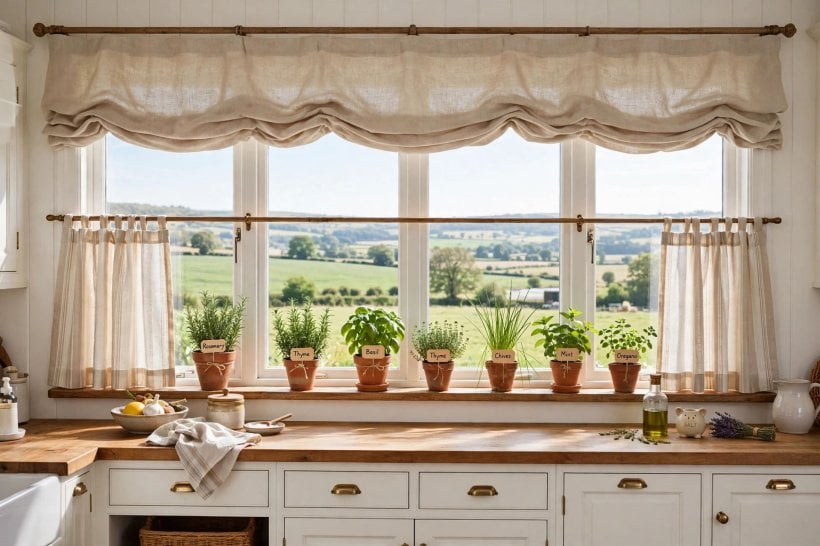
Instead of curtains at all, hang a row of Roman blinds, one per window section, all in the same fabric. Raised, they stack into neat horizontal bands that frame the view; lowered, they read as one continuous soft wall. The repetition is the decoration, so keep the fabric plain or subtly textured and let the folds do the work. Wide single Romans are possible but sag and strain their cords, so repeated narrower blinds are the honest, longer-lasting choice. Colour carries extra weight in a repeated scheme, a lesson borrowed from colorful tiny house interior ideas: pick a shade you can live with multiplied by four.
Two practical notes. First, line the blinds if the room faces strong sun, because unlined fabric fades unevenly across a wide wall and the difference shows blind by blind. Second, think about cords and chains in homes with small children and follow current safety guidance for looped cords. Where several blinds meet, align their fold heights carefully on fitting day; a row of Romans at slightly different levels looks restless, while a level row looks like architecture.
6. A Ceiling Track for a Clean, Modern Line
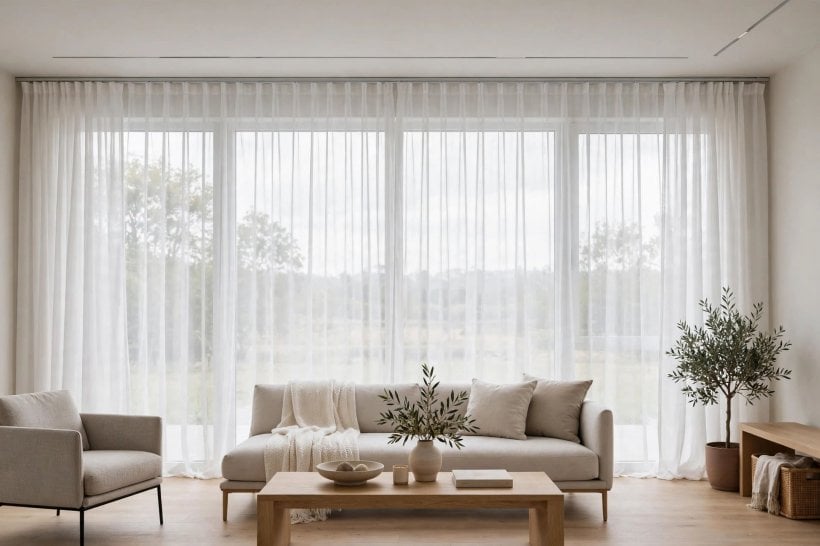
A track fixed to the ceiling, rather than a pole on the wall, lets curtains run wall to wall and floor to ceiling with nothing breaking the line. It is the treatment behind most hotel windows and gallery-like living rooms, and it flatters wide glass because the fabric falls in one unbroken plane. Wave-style headings keep the folds even across long distances, which matters when a span is wide enough for uneven gathers to show. Plan the track before decorating: ceiling fixings need solid points, and the curtain length must be measured from the ceiling, not the window frame, or the whole effect falls short — literally, by a puddle or a gap.
Measuring is the craft here. Decide the finished look first — a whisper of clearance above the floor, an exact kiss, or a soft puddle — then measure the drop in several places, because ceilings and floors are rarely perfectly level across a wide room. Order curtains to the longest measurement and have them hemmed after hanging if you want a truly tailored finish. It is slower, but a wide curtain wall is a big purchase, and this is the step that separates a good result from a great one.
7. Cafe-Style Half Curtains for Privacy With Light
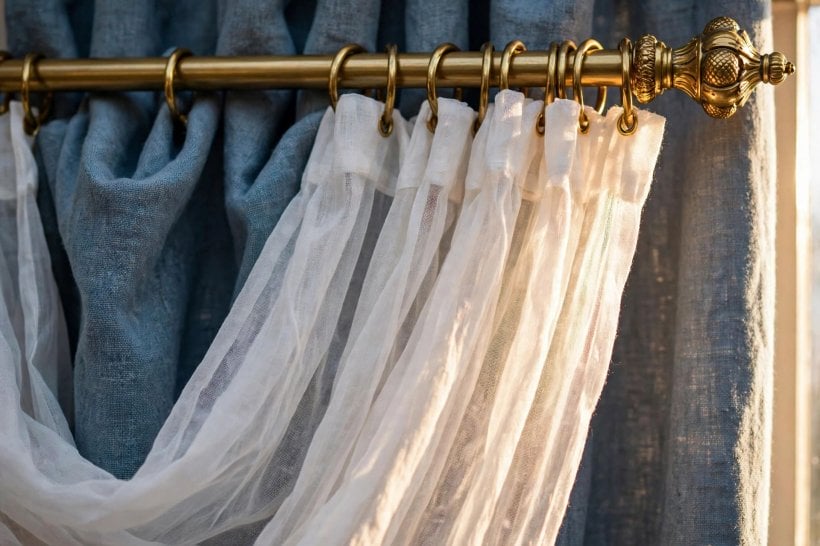
For a wide kitchen or street-facing window, cover only the lower half. Cafe curtains on a slim rod or wire screen the room at seated eye level while the top half pours in light and sky. Across a wide span, use one continuous run rather than sections, and choose a fabric with a finished pattern that reads well gathered: small checks, stripes and simple florals are classics for a reason. This is the lowest-cost, lowest-effort idea in the guide, and it is renter-friendly, since the fittings are light. The honest limitation is night privacy when lights are on, so pair it with a blind if the room is overlooked after dark.
8. Shutters or Interior Louvres for Architecture, Not Fabric
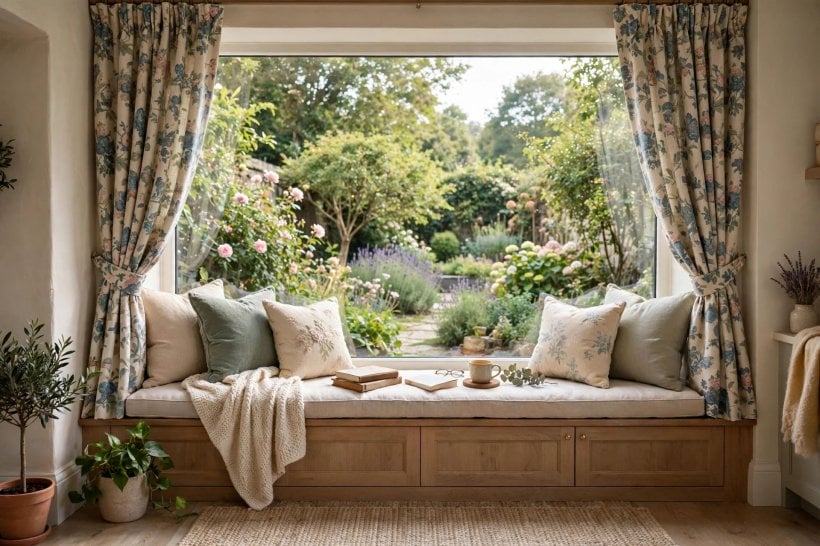
When fabric feels fussy, shutters give a wide span structure. Tracked shutters slide or fold across large openings, and their louvres tilt to fine-tune light through the day. They add a faint coastal or plantation character that suits sunrooms, kitchens and calm bedrooms, and they are easy to wipe clean where curtains would gather dust and cooking smells. The investment is real, and measuring must be exact, because a wide run shows any wobble in the track. Many households compromise beautifully: shutters on the wide window, soft curtains elsewhere in the room, so the space keeps both its architecture and its softness.
Budget honestly for this one. Shutters are priced by area, and a wide span is a lot of area, so get more than one quote and ask exactly what the track, frames and fitting add to the headline price. The payback is longevity and the way they become part of the house rather than a furnishing: they ask for nothing but a wipe-down, suit almost every style of room, and give precise, minute-by-minute control of light that no fabric can match.
9. Separate Panels for Each Window Section
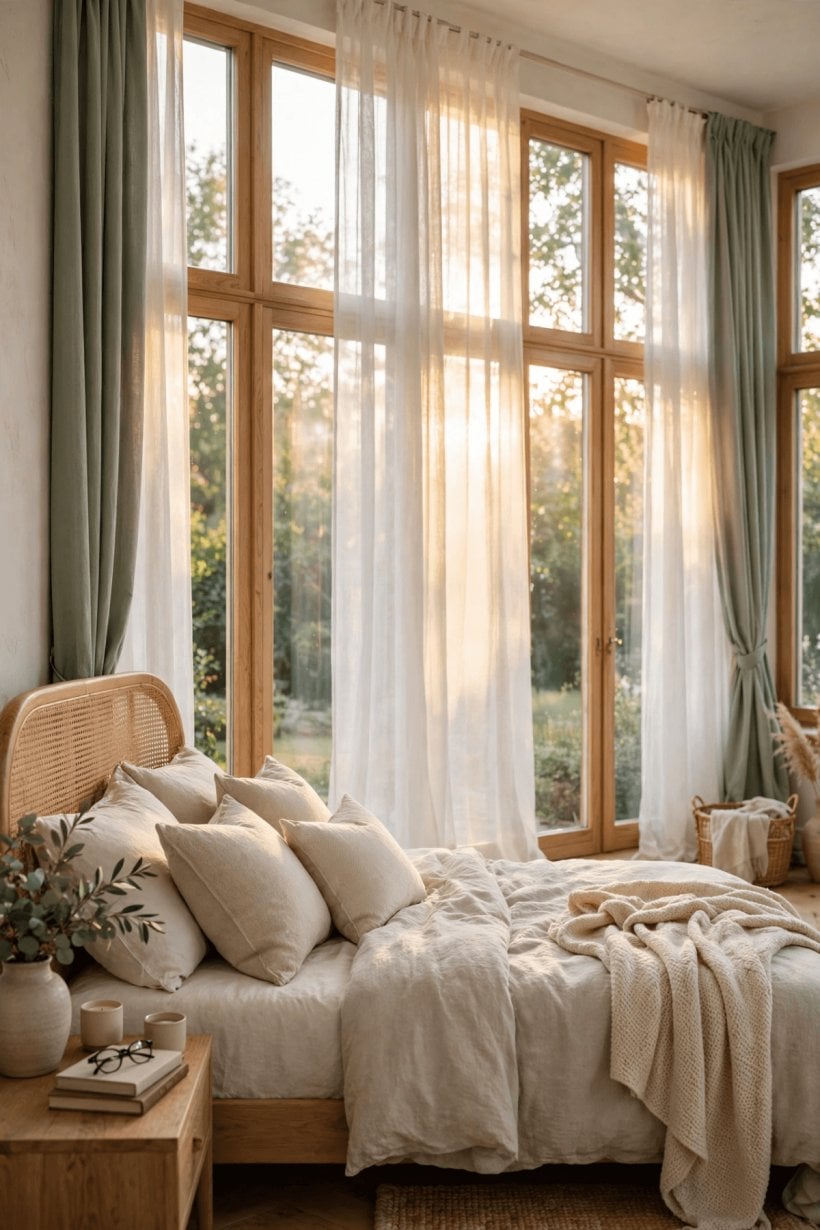
Sometimes the friendliest approach is to dress each section of a wide window as its own small window: a pair of short panels or a single blind per pane, repeated faithfully. It breaks the cost into stages — you can dress the middle sections first — and it keeps each piece of fabric light and easy to wash. The risk is fussiness, so discipline matters: identical fabric, identical headings, identical drop, and hardware in one finish. Done calmly, the effect echoes the simple repeated openings in tiny barn house interior ideas, where honest repetition is the whole charm.
10. Blackout Panels for Bedrooms and Movie Nights
A wide window in a bedroom is lovely at dawn — unless you value sleep. Blackout-lined panels, sized generously so they overlap the wall at both ends and meet without a light gap in the middle, turn a bright room properly dark. Add a pelmet or a track that returns to the wall to stop light leaking over the top. The same setup flatters a living room used for films or a projector. Choose blackout lining rather than stiff coated fabrics where you can; it drapes better across long drops. Sleep-first thinking like this sits happily alongside tiny house bedroom ideas, where darkness and quiet are designed, not hoped for.
Small details decide whether blackout works in practice. Let the panels overlap in the middle rather than just meeting, extend them a hand’s width beyond the frame on each side, and check the closed curtains at the brightest hour before you call the job done; a thin blade of light at one edge is far more annoying than a generally dim room. Floor-length panels seal better than sill-length ones across a wide span, because they close the last gap at the bottom.
11. Relaxed Drapes for a Sunroom or Porch Window Wall
Sunrooms and enclosed porches often have the widest glass in the house, and they ask for something softer than blinds but tougher than silk. Relaxed drapes in outdoor-friendly fabric filter fierce afternoon sun, shrug off humidity and can be tied back loosely for a breezy, holiday feel. Fit a simple track or wire that lets every panel slide clear of the doors. Because these rooms blur indoors and out, colours borrowed from the garden — leaf greens, terracotta, warm stone — settle naturally, echoing the indoor-outdoor flow in tiny house landscaping ideas. Washability matters more than elegance here; choose fabric you can machine wash without grief.
Tie-backs earn their keep in these rooms. A wide panel caught by a breeze through an open door can billow like a sail, so give every panel a tie or holdback and a hem with a little weight. Choose fittings that tolerate damp air without rusting, and expect to wash the drapes more often than indoor curtains; sunroom fabric works hard against dust, pollen and strong light, and it lasts far longer with regular, gentle care.
12. Bamboo and Woven Shades for Warm Texture
Woven wood and bamboo shades give a wide span warmth that plain fabric sometimes lacks. Ordered per section and hung side by side, they filter light into a soft, dappled glow and pair well with white walls and timber floors. Add a plain liner if the room needs real privacy at night, because woven shades alone can silhouette figures after dark. Their natural variation is part of the appeal, but order all sections together so the tones match across the run. This layered, natural approach to surfaces is a cousin of the material mixing in bedroom interior design for tiny houses, where texture does the decorating in small footprints.
13. Mixed Panels: Pattern at the Ends, Plain in the Middle
The decorator’s trick for very wide windows is to split the fabric story. Patterned panels hang at the outer ends like bookends, while plain panels in a coordinating tone cover the middle sections. The eye reads the pattern as a frame, the plain cloth keeps costs and visual noise down, and the window gains a designed, deliberate finish. Reverse it — plain ends, patterned middle — only if the middle truly is the view you want to crown. Keep both fabrics the same weight and heading so the folds march together. It is a forgiving scheme for indecisive decorators: you commit to the bold fabric in small doses, and the wide window does the rest.
Test before you commit. Pin or tape generous samples of both fabrics at the window and live with them for a full day and an evening, because pattern behaves differently at wide scale: prints that look busy on a small swatch calm down across a long span, and plains that look safe can turn flat. Check the two fabrics together at the join, in daylight and lamplight, and only then order. An hour of testing protects the whole budget.
Final Considerations
Whichever of these curtain ideas for wide windows you choose, measure the full span twice, buy fabric for generous folds rather than a flat cover, and fix hardware that is rated for the real weight of the cloth. Wide glass rewards confidence: one clear idea, repeated or extended calmly across the whole width, always beats several small ideas competing. Start with the light and privacy you need at the worst hour of the day, let that choose the treatment, and the widest window in the house will become the one you show off first. Finally, keep the fittings, hems and tracks maintained with a seasonal once-over, and a good treatment will serve for many years.

0 Comments