

A gate is the handshake of a home: it is touched daily, seen from the street, and expected to work in every weather.
These 75 ideas cover layouts, timber choices, colours and the unglamorous details that decide whether a gate still swings true in five years.
1. Wooden Gate Basics at a Glance
A good wooden gate is mostly structure: sound posts, a braced frame that resists sagging, hinges sized for the weight and a finish that sheds weather. Style matters, but it sits on top of those four decisions. Work through the table first, then use the ideas that follow to choose a design that suits your fence line, your plot and the way you actually move through the space each day. If the gate serves a new build, our guide to tiny house building design ideas helps you place entrances where paths and daily routines want them.
| Element | Typical choice | What to check first |
|---|---|---|
| Posts | Sturdy timber or timber-clad posts, set deeper for wide or tall gates | Ground conditions, frost, drainage and room to dig |
| Frame | Ledged and braced construction, diagonal running the right way | Which side the brace pushes towards the hinge side |
| Hinges | Heavy strap or tee hinges on pedestrian gates, stronger sets for driveways | Gate weight, width and how far the gate must open |
| Finish | Exterior stain, oil or paint system made for outdoor timber | Sun exposure, re-coating interval and end-grain protection |
| Latch | Thumb latch, ring latch or bolt matched to use | Access from both sides, child and pet security |
| Clearance | A small, even gap under and beside the gate | Sloping ground, gravel growth and seasonal swelling |
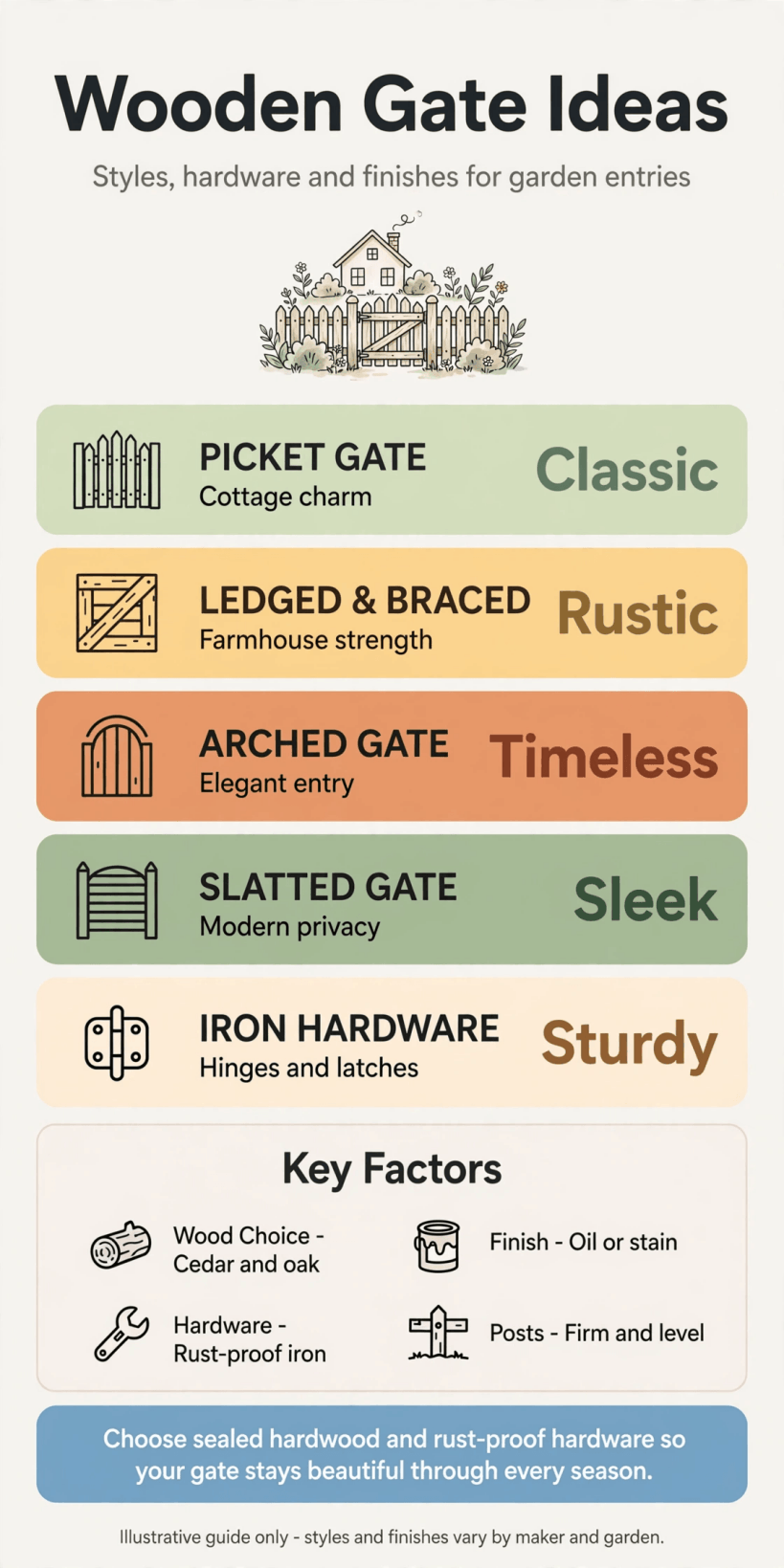
A quick visual summary of the parts that matter: posts, bracing, hinges, finish and clearances.
Decide the opening first — width, swing direction and whether vehicles pass through — because every later choice, from hinge size to automation, hangs on those three answers. Measure the opening in two places, top and bottom, and note any slope before pricing anything.
2. Layouts and Opening Styles (Ideas 1–8)
Layout is about movement. A gate that opens against a slope, blocks a path or strands the bins will annoy you daily, however handsome it looks in photos. Sketch the swing arc on the ground with a hose or chalk before committing, and check local rules on outward-opening gates near pavements with your city or county office.
1. Single pedestrian gate. The classic garden solution: one leaf around a comfortable walking width, hinged to open onto a path rather than into planting.
2. Double garden gates. Two narrower leaves suit wider garden openings and move bulky items like mowers and furniture through without a struggle.
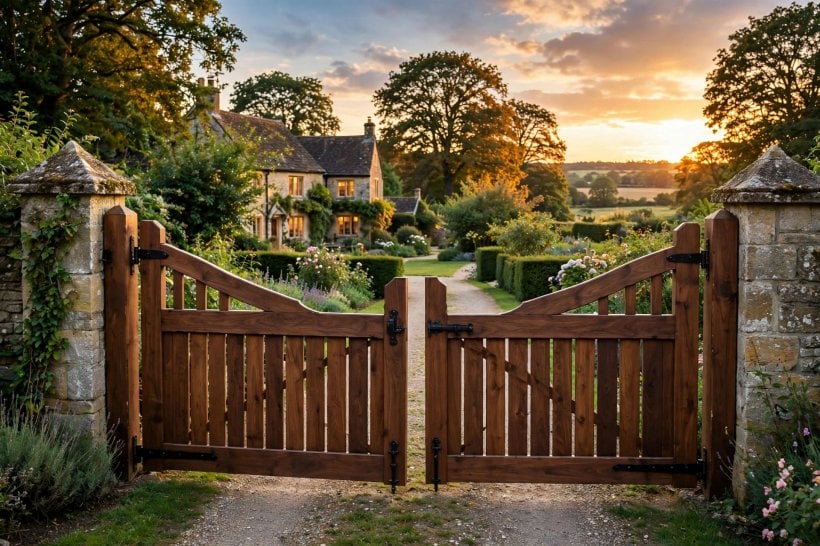
3. Driveway pair. Matched leaves across a drive give symmetry and presence; plan post strength and hinge capacity for the extra width and weight.
4. Sliding timber gate. Where swing space is tight or the drive slopes, a sliding leaf on a track keeps the entrance clear without an arc.
5. Side-return gate. The hardworking gate between house and fence deserves the same care as the front one, since it guards tools, bikes and bins.
6. Courtyard gate in a wall. Set into a rendered or stone wall, a timber leaf becomes a doorway-like moment of privacy and arrival.
7. Split-level pair on a slope. Stepping the two leaves to follow sloping ground avoids a huge gap under one side and looks deliberately tailored.
8. Gate-within-a-gate. A pedestrian door built inside a wide driveway leaf saves opening the full span for every dog walk and school run.
Plot access and boundaries shape these choices; our notes on how to buy land for a tiny house cover the boundary and access checks worth doing early.
3. Styles and Colours (Ideas 9–16)
Style should rhyme with the house and fence, not audition against them. Repeat the fence’s board direction for a calm run, or deliberately contrast a painted gate against natural fencing to mark the entrance. Colour is your cheapest design lever: it can make a plain ledged gate look tailored.
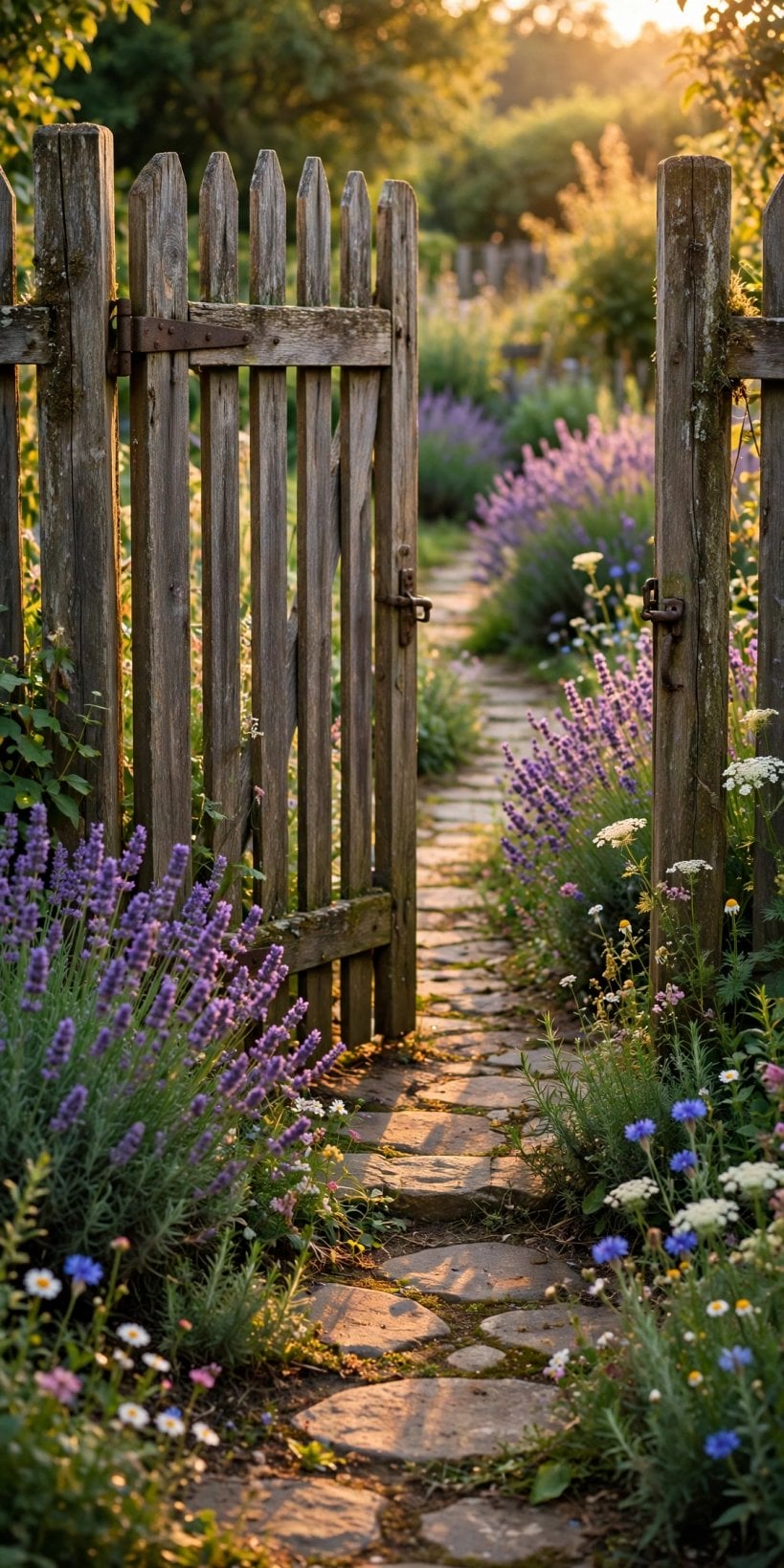
9. Cottage ledged gate. Vertical boards, visible ledges and a gentle arched top give the friendliest first impression a front garden can offer.
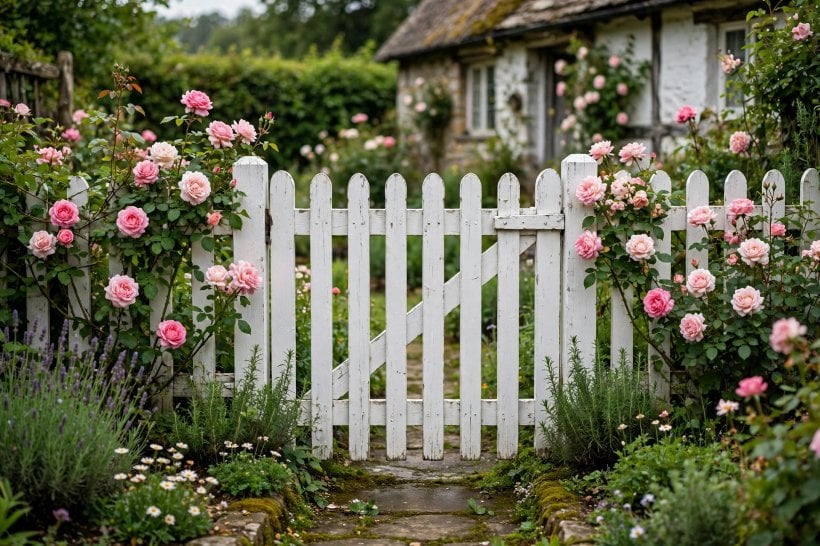
10. Picket gate. A low picket leaf matches picket fencing and keeps sight lines open for chatty, front-garden neighbourhoods.
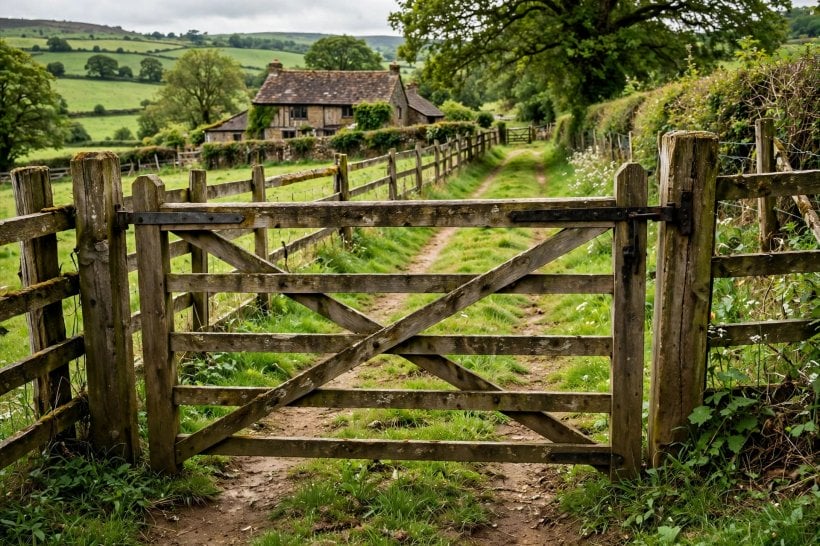
11. Ranch-style cross brace. A bold X brace across wide boards suits rural plots, barns and relaxed country gardens.
12. Modern horizontal slats. Clean horizontal boards with narrow shadow gaps give a contemporary read that pairs well with rendered walls.
13. Shaker-style framed gate. A framed panel with simple, square proportions suits painted finishes and neat suburban fence lines.
14. Arched-top statement gate. One graceful arch over a tall gate marks a courtyard or side entrance as somewhere special.
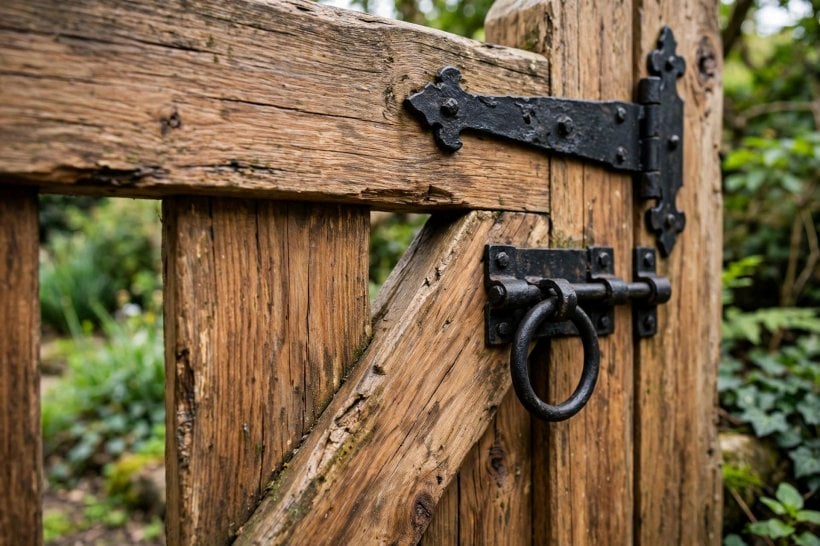
15. Sage or forest painted finish. Deep greens settle a gate into planting and hide algae tones better than pale colours in damp climates.
16. Black-stained contemporary gate. A near-black stain on slats looks sharp against pale walls and gravel, and unifies mixed fencing runs.
For colour behaviour in different lights, the thinking in our tiny house interior paint colors guide applies outdoors too: test on the actual timber, in sun and shade.
4. Timber and Construction Details (Ideas 17–24)
Timber choice and joinery decide lifespan more than any other factor. Dense, durable species or properly treated softwood both succeed outdoors when the construction sheds water and the end grain is protected. Ask what treatment a ready-made gate carries and how its boards are fixed.
17. Tongue-and-groove boards. Interlocking boards close gaps as timber moves seasonally and give a solid, private face to the street.
18. Ledged and braced frame. Horizontal ledges with a diagonal brace transferring weight to the hinge side is the timeless anti-sag structure.
19. Framed, ledged and braced. A full outer frame around the braced core adds stiffness for taller or wider gates that must stay square.
20. Thick boards for security gates. Heavier sections resist warping and feel reassuringly solid on side and rear entrances.
21. Rounded board tops. Softened tops shed water better than sharp square edges and are kinder to hands and paws.
22. Stainless or coated fixings. Screws and bolts that resist corrosion prevent the black streaks that spoil pale finishes within a season.
23. Sealed end grain. Extra finish on board ends and the gate’s top edge slows the water uptake that starts most rot.
24. Replaceable bottom board. Designing the lowest board as a sacrificial, replaceable piece extends the whole gate’s life cheaply.
5. Posts, Sizes and Clearances (Ideas 25–32)
More gates fail at the posts than anywhere else. A leaf is a sail in wind and a lever on its hinges, so posts need depth, drainage and, for wide gates, serious consideration of size. Confirm any boundary or highway rules before setting posts near a pavement.
25. Oversized posts for wide gates. Stepping up post section for driveway leaves is cheap insurance against lean and hinge strain.
26. Gravel drainage pocket. A free-draining base under and around the post slows the ground-line rot that claims most posts.
27. Post caps. Simple caps shed water off the vulnerable top grain and finish the line neatly.
28. Correct hanging gap. A consistent few millimetres at the sides lets timber swell in wet months without binding.
29. Ground clearance on slopes. Cut or step the gate bottom to follow sloping paths so it clears at the high point without a gappy low side.
30. Wheel support for long leaves. A small support wheel at the closing end of a long gate takes weight off the hinges every single day.
31. Double-check the diagonal. Measuring both diagonals of the opening before hanging catches out-of-square posts while they can still be adjusted.
32. Gate stop bead. A simple stop strip gives the latch a positive close and stops the leaf swinging through in gusts.
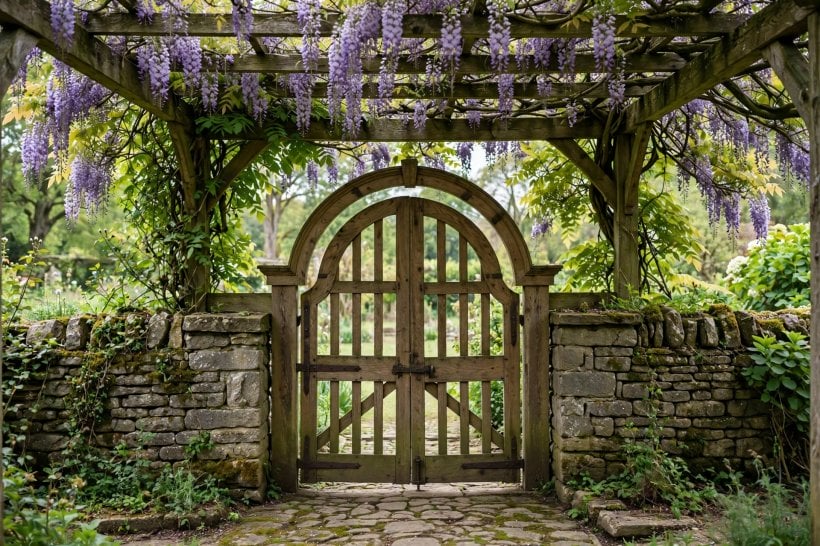
Entrances work best when planned with the paths to them; see the planting and path ideas in our tiny house landscaping ideas for approaches that lead naturally to a gate.
6. Hinges, Latches and Hardware (Ideas 33–40)
Hardware is where daily satisfaction lives. Smooth, quiet, one-handed operation makes a gate feel expensive; rattling, sticking hardware makes the same gate feel cheap. Choose ironwork for the gate’s weight and width, not just its looks.
33. Heavy strap hinges. Long straps spread load across the boards and suit ledged gates perfectly, in galvanised or black finishes.
34. Tee hinges for lighter gates. Neat tee hinges handle modest garden gates and are easy to replace like-for-like years later.
35. Self-closing spring. A gentle closer keeps gates shut behind children and pets without slamming when adjusted properly.
36. Thumb latch. The traditional handle-and-thumb set works from the front, with a matching inside release for convenience.
37. Ring latch. A simple ring turns both sides of the gate, giving a clean look and easy gloved-hand operation in winter.
38. Tower bolt for pairs. A bottom bolt into a ground socket holds the first leaf of a pair steady so the second can latch against it.
39. Cabin hook for hold-open. Hooks that hold a gate against a wall or post are invaluable on delivery, moving and gardening days.
40. Lockable latch for side gates. A key or padlock option on the utility side gate protects tools and bikes without changing the gate’s look.
7. Finishes and Weather Care (Ideas 41–48)
Outdoor timber is a maintenance relationship, not a fit-and-forget purchase. The right finish depends on exposure: south-facing gates bake, north-facing ones stay damp, and coastal air tests everything. Choose a system you will genuinely reapply on schedule.
41. Penetrating oil finish. Oils feed the grain, are simple to top up without sanding back, and suit a natural, low-sheen look.
42. Exterior stain with colour. Stains add UV-filtering pigment while keeping grain visible; mid-tones hide weathering most gracefully.
43. Full paint system. Primer, undercoat and topcoat give the crispest colour and the best moisture shield, at the cost of more prep.
44. Two-tone gate and frame. A darker frame with lighter boards, or the reverse, adds tailored detail to plain ledged designs.
45. Annual wash-down. A yearly gentle clean removes the algae and grime that hold moisture against the finish.
46. Top-edge extra coat. Horizontal top edges take the weather; an extra coat there in spring repays itself every winter.
47. Touch-up pot discipline. Keep a small labelled pot of the finish for chips and screw heads, and small damage never becomes big damage.
48. Lift and re-hang check. Every couple of years, check hinge screws for bite and re-tighten or lengthen them before holes wear oval.

8. Driveway Gates and Automation-Ready Choices (Ideas 49–56)
Driveway gates add vehicles, visitors and weather exposure to the equation. Even if you hang them manually today, a few forward-looking choices keep future automation possible and daily use easy from day one.
49. Balanced leaf widths. Equal leaves swing and wear evenly; an offset split suits drives where one side parks more often.
50. Inward opening where possible. Gates that open into the property stay clear of pavements and passing traffic; confirm your local rules either way.
51. Automation-ready posts and ducts. Strong posts and a simple duct for future cabling, planned now, avoid digging up a finished drive later.
52. Manual release thinking. Any powered gate needs a sensible manual override for power cuts; understand it before you need it at midnight.
53. Visibility splays. Keep planting and pillars low near the exit so drivers and pedestrians can see each other clearly.
54. Reflective house number. A clear number on or beside the gate helps deliveries and emergency services find you after dark.
55. Gravel-friendly bottom edge. On gravel drives, set clearance so the leaf glides over settled stone without ploughing it into piles.
56. Visitor latch at standing height. Place the everyday latch where a standing adult naturally reaches, not where it merely looked neat on paper.
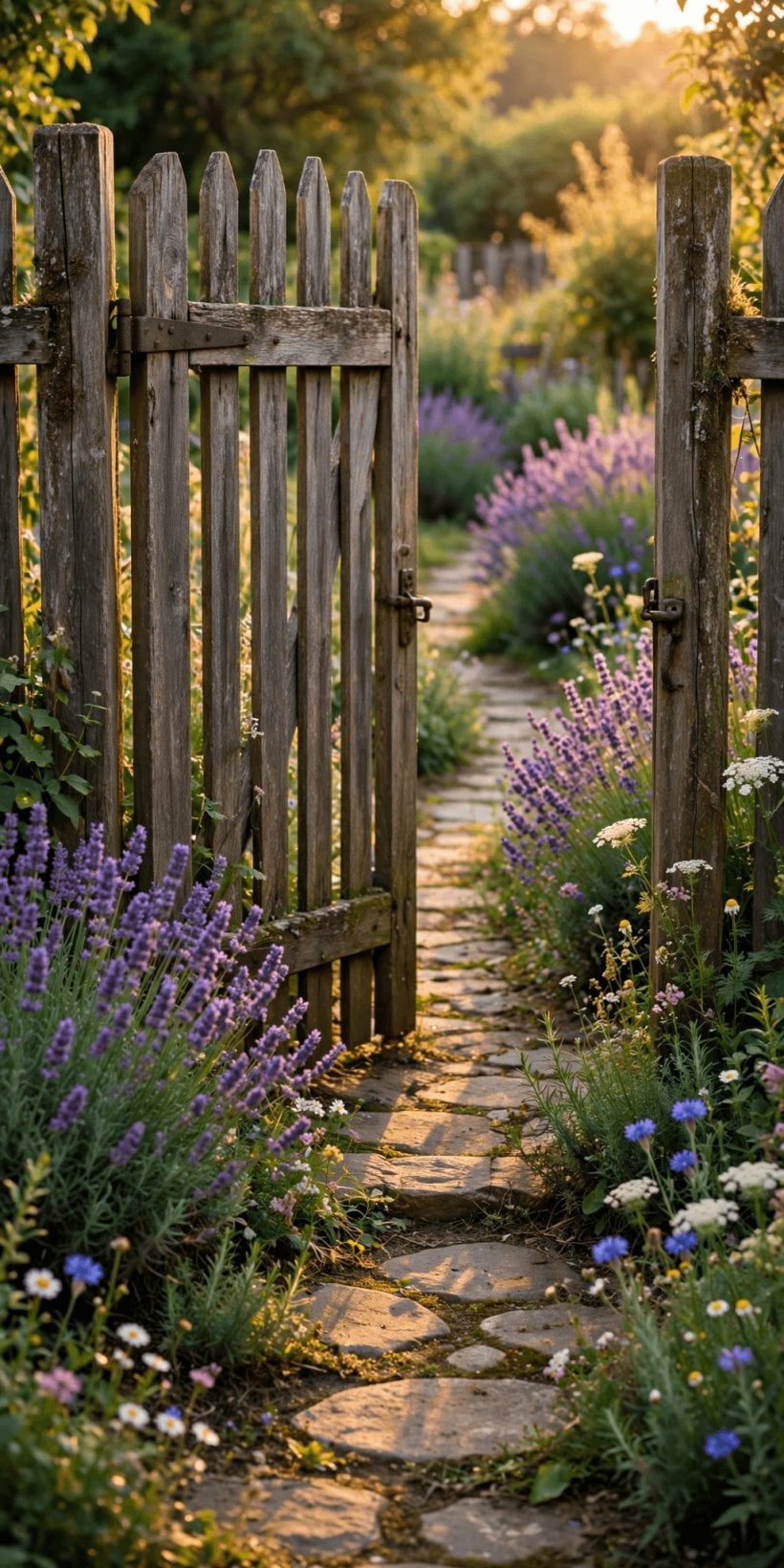
Rural plots suit timber particularly well; the relaxed boundary treatments in our tiny barn house interior story extend naturally to ranch-style gates outside.
9. Planting, Lighting and Street Appeal (Ideas 57–64)
The gate is a picture frame moment: what surrounds it decides the whole effect. A little planting softens posts, one warm light makes evenings welcoming, and a tidy verge lifts everything without major spend.
57. Climber on the gate post. A rose or jasmine trained to one side perfumes arrivals; keep growth clear of the swing and hinges.
58. Lavender or grass edging. Low, soft planting along the fence line leads the eye to the entrance and asks little water once settled.
59. Lantern on the latch post. One shielded warm light at the latch post helps guests find the handle without flooding the street.
60. Matching fence and gate finish. One finish across fence and gate reads as a single designed boundary, even on a budget build.
61. Deliberate contrast gate. Alternatively, paint only the gate a bold colour and let it become the home’s cheerful full stop.
62. House-name plaque. A small routed or painted plaque adds cottage character and helps visitors confirm they have the right gate.
63. Boot-scraper and gravel mat. A practical patch of gravel or a scraper by the gate keeps mud outside and floors cleaner inside.
64. Seasonal wreath or hanging basket. One changeable decoration keeps the entrance feeling cared for through the year at almost no cost.
10. Costs, Planning and Practical Checks (Ideas 65–75)
Gate budgets are driven by size, timber, hardware weight and ground conditions rather than by style alone, so compare quotes on the same specification. The checks below keep a project honest from first measurement to final hinge.
65. Measure twice, in two places. Openings are rarely square; width at top and bottom plus a diagonal check prevents the commonest ordering mistake.
66. Price posts and hardware with the gate. Quotes that exclude posts, hinges and latches always look cheaper than they are; compare complete entrances.
67. Check boundary ownership. Confirm which boundary is yours and discuss plans with neighbours before replacing a shared line; see local guidance where unsure.
68. Confirm rules near highways. Height limits and opening direction can be regulated near roads and pavements, so check with the city or county first.
69. Plan the dig before delivery. Know what is under the post holes — roots, rubble, services — before a delivery date is looming over you.
70. Choose the swing with the bins in mind. It sounds comic until bin day: make sure the everyday route for bins, bikes and prams stays easy.
71. Allow for seasonal movement. Timber swells in winter wet and shrinks in summer dry; gaps and latch alignment should anticipate both states.
72. Photograph hardware before ordering spares. Hinge and latch patterns vary; a phone photo prevents wrong replacements years from now.
73. Keep the finish paperwork. Product names and colours fade from memory long before the gate needs recoating; file them with the house documents.
74. Walk the delivery route. Long gates and posts need a path from vehicle to opening; measure pinch points at corners and side passages.
75. Do the five-year test. Before ordering, ask honestly: can I re-coat it, tighten it and lift it if needed? Choose the design whose answer is yes.
The same measure-first discipline runs through how to build your own tiny house, where openings and access are planned before materials are ordered, not after.
Final Considerations
A great gate is a small piece of engineering wearing a friendly face. Get the opening, posts and bracing right, choose hinges and a latch that match the gate’s real weight and use, and pick a finish you are willing to maintain. Style then becomes the easy part, whether your taste runs to cottage ledges, ranch braces or clean modern slats.
Before you commit, run the practical list once more: boundary and local rules checked, opening measured twice, swing sketched on the ground, and the full entrance — posts, hardware and finish included — priced as one job. If you are placing a gate as part of a wider plot plan, our guide on where you can build a tiny house covers the siting questions that affect entrances and access. Choose well, hang it carefully, and your gate will keep its swing, its colour and its welcome for years.

0 Comments