

Designer lighting can lift a whole room, but it is easy to order the wrong size, finish or bulb type in the excitement of choosing a style.
This guide walks through the calm checks to make first, so the fitting you love on screen is the one that works at home.
1. Quick Answers at a Glance
Circa Lighting is the retail brand associated with Visual Comfort, a designer-lighting company known for collections created with well-known designers. In plain terms, think of it as a place to shop for decorative lighting — pendants, chandeliers, sconces, lamps and outdoor fittings — in a wide range of traditional, transitional and modern styles. Most buying questions shoppers bring to circa lighting are not really about the brand at all; they are about fit, finish, light quality and installation. The question-and-answer table below answers the ones that matter most, in the order to check them.
| Question | Short answer | What to check |
|---|---|---|
| What am I actually buying? | Decorative lighting designed as a long-term fitting, not a disposable accessory. | The exact product page, its dimensions and what is included in the box. |
| How do I pick the right size? | Scale the fitting to the room, the furniture below it and the ceiling height. | Diameter, drop or projection, and clearance above doors, heads and tables. |
| Which finish should I choose? | The one that already appears elsewhere in the room, in hardware or furniture details. | Finish samples or photos in natural light, and how the finish is described. |
| Will it be bright enough? | Brightness depends on bulbs, shades and dimming, not on the fitting alone. | Bulb type, number of bulbs, direction of light and dimmer compatibility. |
| Can I install it myself? | Hardwired fittings usually belong with a qualified electrician. | Ceiling support, existing wiring and your local rules for electrical work. |
| What if it arrives wrong or damaged? | Policies vary, so read them before ordering, not after. | Delivery terms, returns window and how defects are reported. |
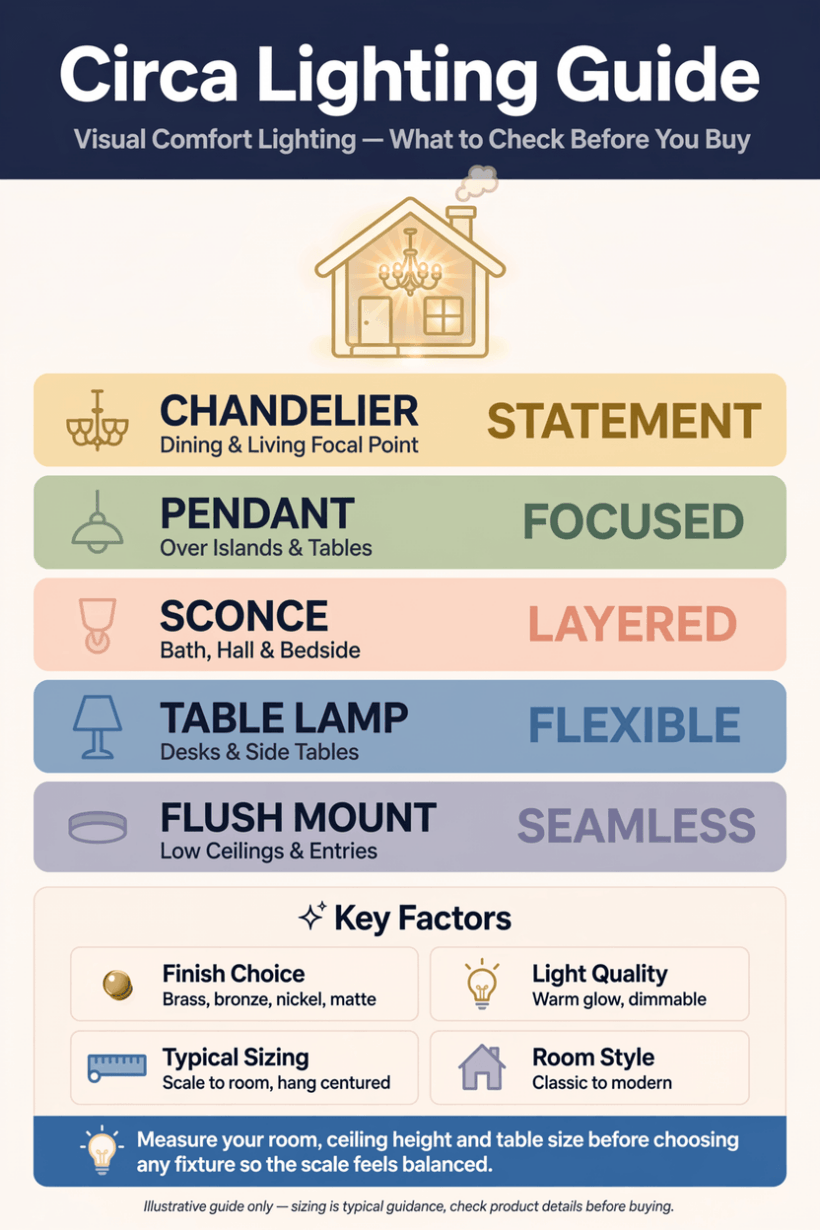
A one-page summary of the checks in this guide: size, finish, bulbs, controls, installation and delivery.
Keep this table open while you browse. If a product page cannot answer one of its rows, that is a sign to slow down and ask the retailer before paying, rather than hoping the detail works out on delivery day.
2. What the Brand Is and Is Not
It helps to set expectations clearly. This is a designer-lighting retailer: the appeal is considered design, a broad choice of finishes and collections that coordinate across a home, from a hallway sconce to a dining pendant. It is not a budget warehouse, and it is not a bespoke workshop making one-off pieces to your drawings. Pieces are typically ordered as finished products with stated dimensions and specifications, so your measuring and checking do the heavy lifting.
Because collections are designed to coordinate, a useful approach is to choose one family of forms and finishes for connected spaces, then vary the fitting type — a pendant here, sconces there — rather than mixing unrelated styles room by room. That is the same discipline that makes small homes feel coherent, as our guide to tiny house and small-space interior design explains for furniture and colour.
3. Choosing a Style That Fits Your Room
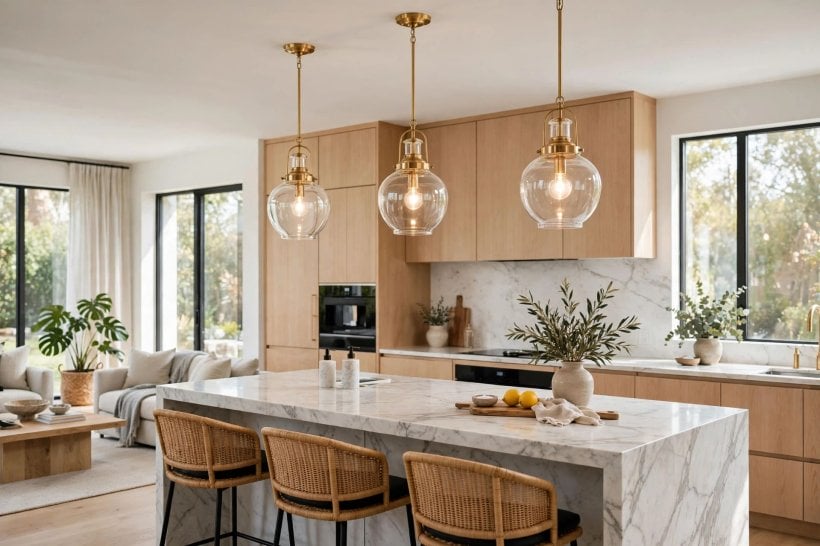
Start with the room’s existing language. Traditional spaces with paneling, patterned textiles and turned furniture legs usually suit curved forms, lantern shapes and aged or warm metallic finishes. Cleaner rooms with flat-front cabinetry and simple lines take crisper geometry: globe pendants, linear suspensions and slim sconces. Transitional rooms — the majority — can borrow from both, as long as one element repeats.
The repeat rule is your safety net: echo a shape, a finish or a material at least twice in the room. A brass pendant over the island reads as intentional when the cabinet handles or a nearby lamp share the tone. In a living room, match the fitting’s mood to the seating and rug rather than to a single cushion. For more on pulling a scheme together, see our tiny house living room ideas, which use the same repeat-and-restraint approach.
4. Finishes and How They Age
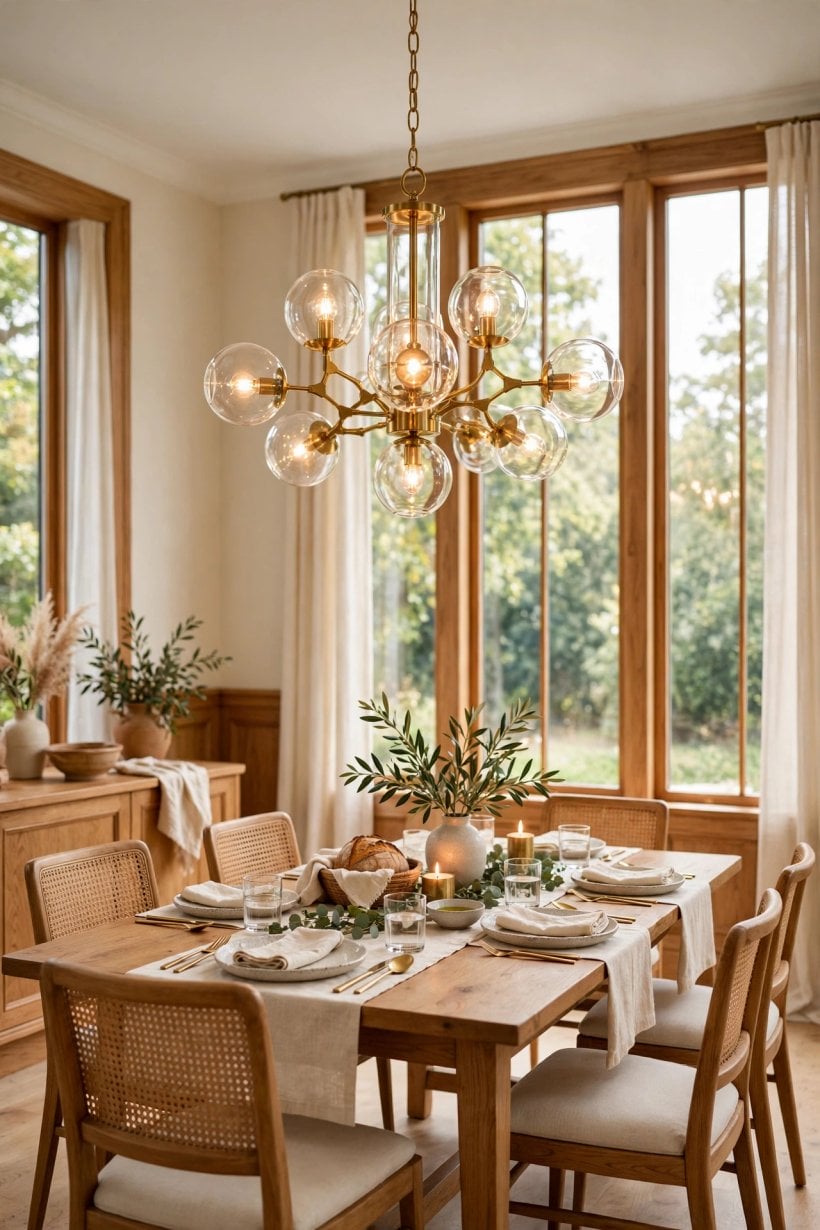
Finishes change a fitting’s character more than its shape does. Warm metallics feel classic and forgiving in busy family rooms; dark finishes ground pale schemes and show dust less in hallways; pale or painted finishes disappear gently into ceilings and suit low rooms where a fitting should not dominate. Where a finish is described as living or unlacquered, expect it to deepen and vary with touch and time — many people love that character, but you should choose it deliberately, not discover it.
Before ordering, compare the finish against your room in daylight and in the evening, because warm bulbs shift how metals read. Check what already exists: door handles, taps, frames and furniture feet. Two warm metals can coexist happily when their undertones agree; clashes usually come from undertones, not from the metal names themselves. Ordering a finish sample or viewing the piece in a showroom, where that is offered, is the most reliable check of all.
5. Sizing Pendants, Chandeliers and Sconces — Typical Guidance
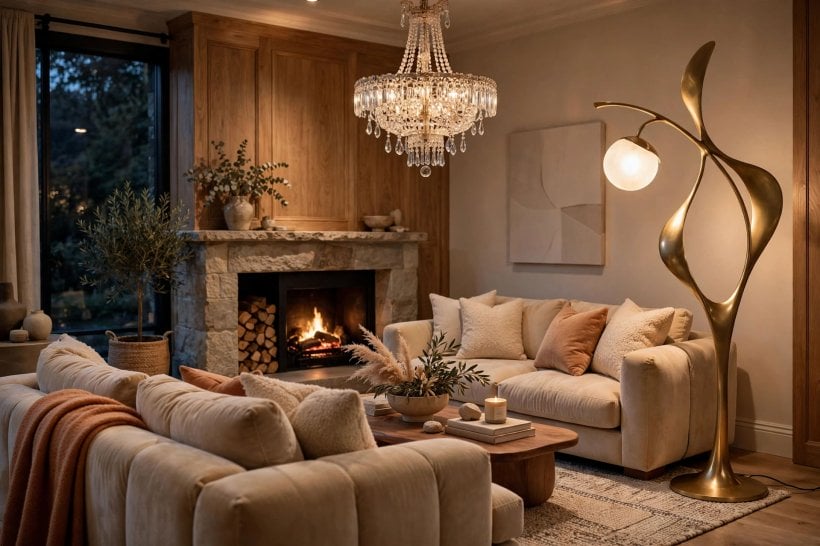
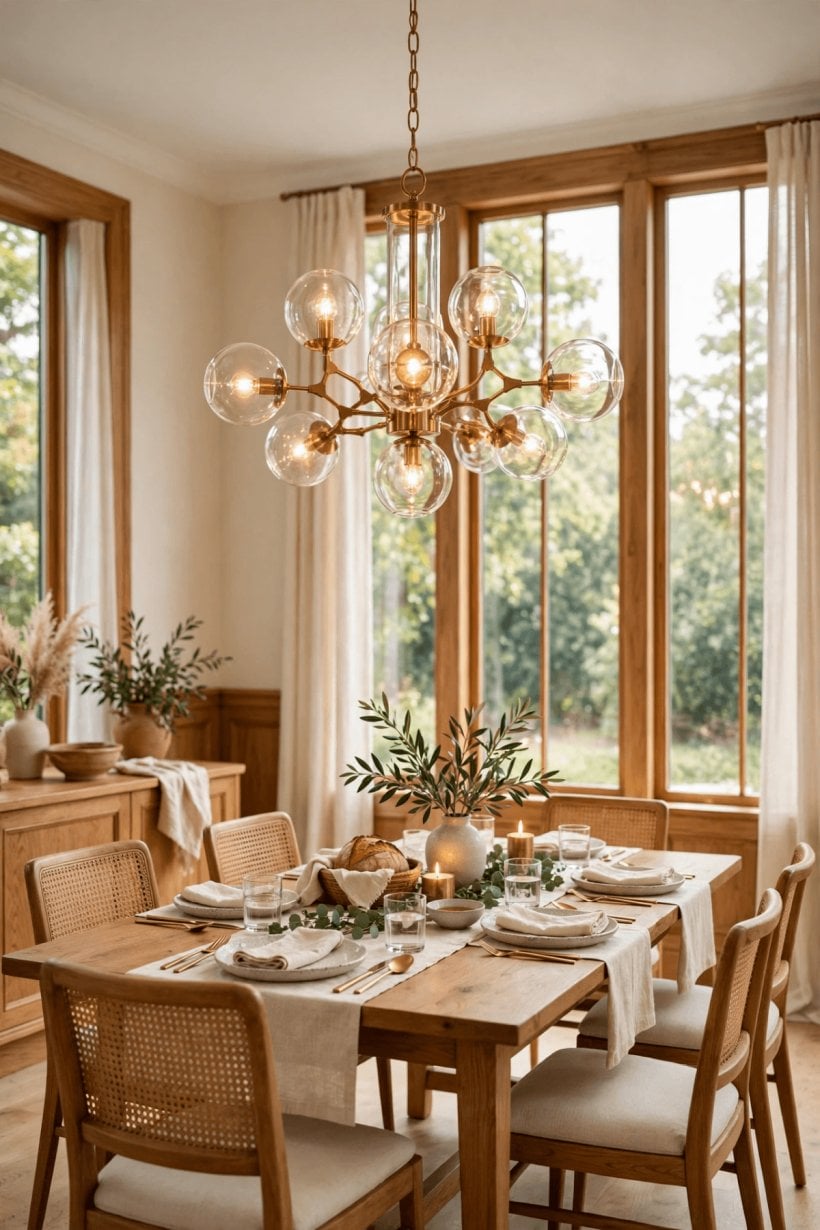
Sizing is where most returns are born, so treat these as typical starting points and always confirm against the actual dimensions on the product page. Over a dining table, a pendant or chandelier is commonly hung so its lowest point sits roughly 75–90 cm above the tabletop, with a diameter noticeably narrower than the table’s width. Over a kitchen island, two or three smaller pendants spaced evenly often balance better than one oversized piece, and the bottom of each shade should clear standing eye lines at the island’s ends.
For ceiling fittings in living rooms and bedrooms, leave comfortable headroom — around two metres or more from floor to the fitting’s lowest point in walk-through areas. Sconces are typically mounted with their light centre near eye level, a little above or below depending on the shade direction, and bathroom sconces work best placed either side of a mirror at face height rather than a single light above it, which casts shadows. Tape the fitting’s outline on the wall or ceiling before ordering; painter’s tape has saved more lighting budgets than any other tool.
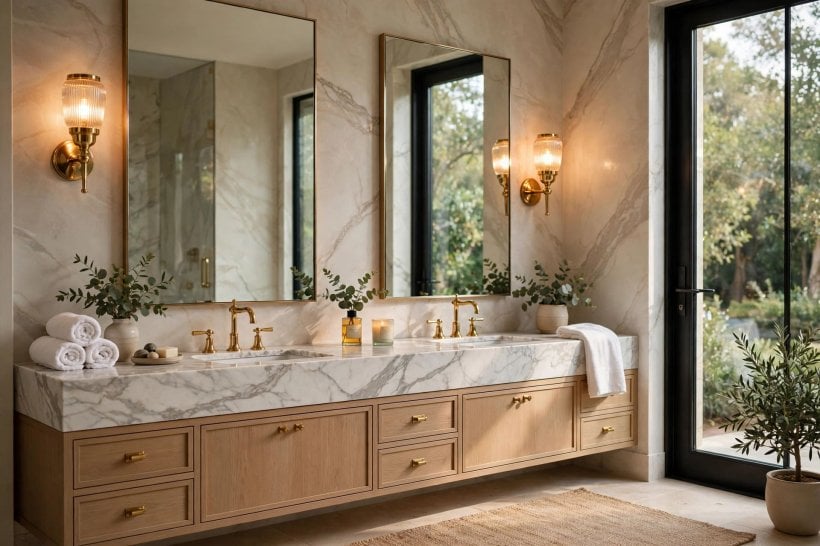
Scale matters even more in compact rooms, where our modern tiny house interior ideas show how one oversized piece can overwhelm an otherwise calm scheme.
6. Bulbs, Brightness and Colour Temperature
A fitting only delivers the light its bulbs allow. Check three things on every product page: the bulb base or integrated light source type, the maximum wattage or stated light output, and whether bulbs are included. If the source is integrated LED, ask about its colour temperature and whether the light output suits the room’s job — task areas like kitchen counters need more punch than a bedroom corner.
Colour temperature is described in kelvin. Warmer light, around the lower end of the scale, flatters evening rooms, skin tones and warm finishes. Cooler, crisper light suits workspaces but can make warm metallics look grey. Whatever you choose, keep temperatures consistent within one room, and buy bulbs from the same family for multi-bulb fittings so no single lamp glows a different colour. Shades matter too: opaque shades throw light up and down in pools, while pale fabric or glass shades spread a gentler, wider glow.
7. Dimmers, Switches and Controls
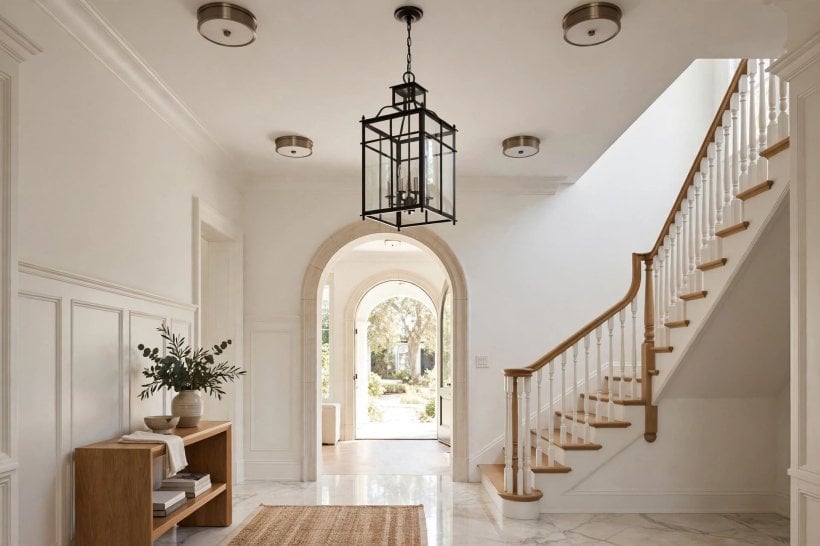
Dimming is the cheapest luxury in lighting: it turns one fitting into several moods. The check is compatibility. Confirm that both the fitting (or its bulbs) and your wall dimmer are made to work together, because mismatched pairs can flicker, buzz or only dim across a narrow range. If you are replacing a fitting on an existing dimmer, note the dimmer’s type before ordering and compare it with the product guidance.
Think about control positions while you are at it. Two-way switching for hall and stair lights, a dimmer within reach of the dining table, and separate switching for pendants versus downlights all make daily life smoother. In a home office, put task lighting on its own control so video calls and focused work can be lit without flooding the room; our home office design ideas for tiny houses cover the same layering logic for small workspaces.
8. Ceiling, Wiring and Installation Checks
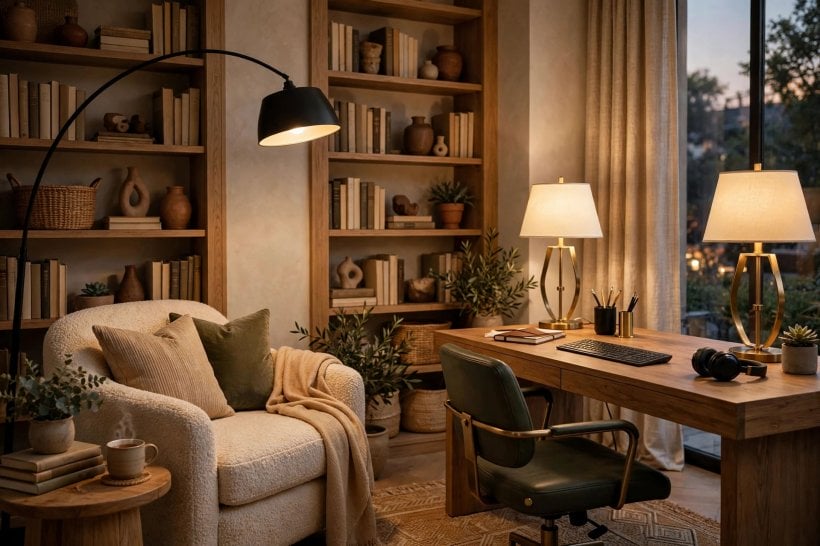
Most ceiling and wall fittings in this category are hardwired, which means three practical checks before you order. First, support: heavier fittings need a ceiling fixing that can carry their weight, which may mean reinforcing or a suitable mounting box. Second, position: confirm the existing electrical point is where you want the light, since moving it is electrician work, not a weekend whim. Third, condition: older wiring, unusual ceiling construction or bathroom zones all argue for professional advice first.
Unless you are properly qualified and your local rules allow it, plan for a licensed electrician to install hardwired fittings, and include that cost and timing in the project from the start. Keep the product’s instructions and specifications for the installer, and photograph the ceiling rose or junction area before they arrive if anything looks unusual. Plug-in lamps and sconces are the flexible exception — handy for renters and for testing a position before committing to wiring.
9. Delivery, Returns and What to Verify on Arrival
Lighting travels as glass, metal and ceramic, so plan the order like a small logistics project. Before paying, read the delivery information for your item: lead times vary by product, larger fittings may arrive in several boxes, and you will want to know who is responsible if a parcel is delayed or damaged. Save the confirmation and specifications somewhere you can find them on delivery day.
One last practical habit is worth adopting before any order: keep a single project note for the room you are lighting. Write down the ceiling height, the fitting position, the furniture it serves, the chosen finish family and the bulb or control decisions from the sections above. When the product page, the delivery email and the electrician all refer to the same short note, small misunderstandings get caught early instead of on installation day.
It is also sensible to order for one room at a time when you are new to a retailer. A single completed room teaches you how finishes photograph versus reality, how the stated dimensions feel in your space, and how delivery and packaging work in practice. Those lessons make the second and third rooms faster, calmer and far less likely to end in a return.
Finally, remember that good lighting is layered rather than loud. A considered ceiling fitting, one or two wall lights where faces and tasks need them, and a lamp for the quiet corners will almost always feel better than a single bright centrepiece working alone. Check each layer against this guide, and the room — not just the fitting — is what will succeed.
When the boxes arrive, inspect promptly while the returns window is comfortably open. Check shades for dents, glass for chips, finishes for marks, and count every small part — bulbs if included, mounting hardware, spare screws — against the instructions. Photograph any problem before installing anything, and contact the retailer through its stated process rather than attempting a repair that could complicate a return. Only book your electrician once the correct, undamaged fitting is physically in the house.

That inspect-first habit mirrors the approach in our tiny house interior designer guide, where deliveries are checked against the plan before any installation day is booked.
10. Budget Planning Without Guesswork
A realistic lighting budget has four lines, and the fitting is only one of them. Add bulbs where they are not included, the dimmer or switch changes you identified in section 7, and the electrician’s installation visit. Then hold a small contingency for the surprises older houses specialise in, such as a ceiling fixing that needs upgrading. Priced this way, there are no awkward pauses mid-project.
To stretch a budget without spoiling the effect, spend where eyes rest longest — the dining pendant, the hallway entrance, the living room’s main fitting — and choose simpler companions elsewhere in the same finish family. One considered piece per room, repeated finishes and good bulbs will always beat a cart of unrelated bargains. Kitchens reward the same discipline; our tiny house kitchen design guide shows how one strong choice anchors a whole scheme.
Final Considerations
Buying designer lighting well is mostly a measuring and checking exercise. Confirm the style language of your room, repeat one finish with intent, size the fitting with tape before you trust your eye, and verify bulbs, dimming, wiring and delivery terms on the actual product page. Do those things and the fitting should delight you twice: once when the box opens, and again every evening when you switch it on.
If a detail is unclear — a dimension, a finish description, a compatibility question — ask the retailer before ordering and keep the answer with your confirmation. And for the rooms around your new light, our round-up of new interior design ideas for tiny houses is a good next read for colours and layouts that let good lighting do its work.




0 Comments