
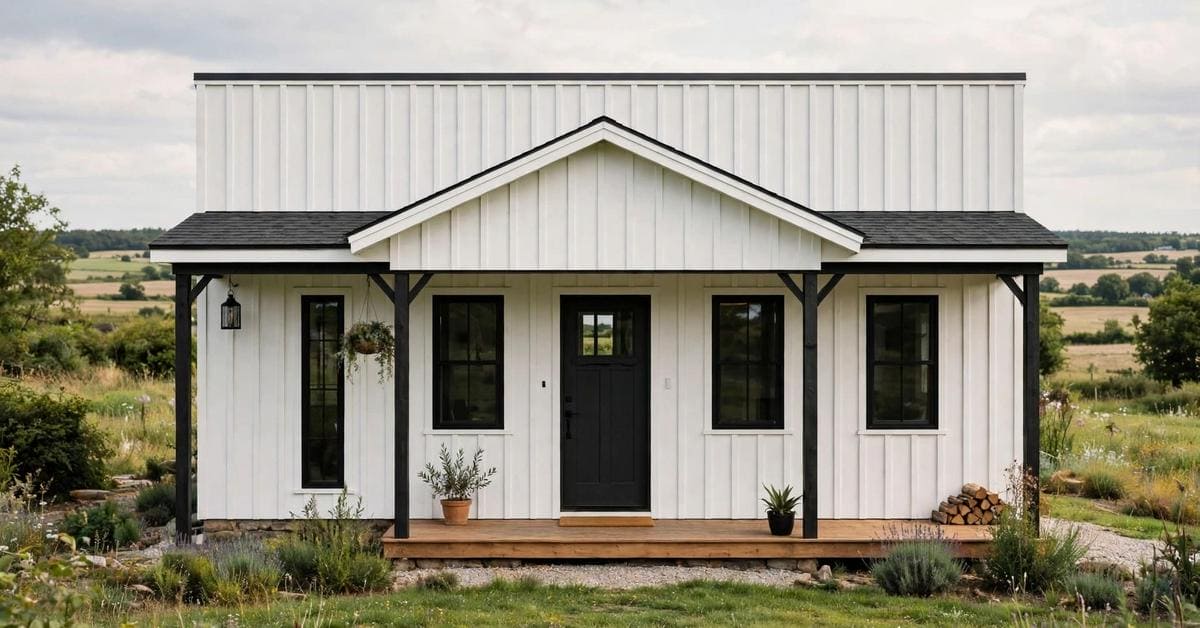
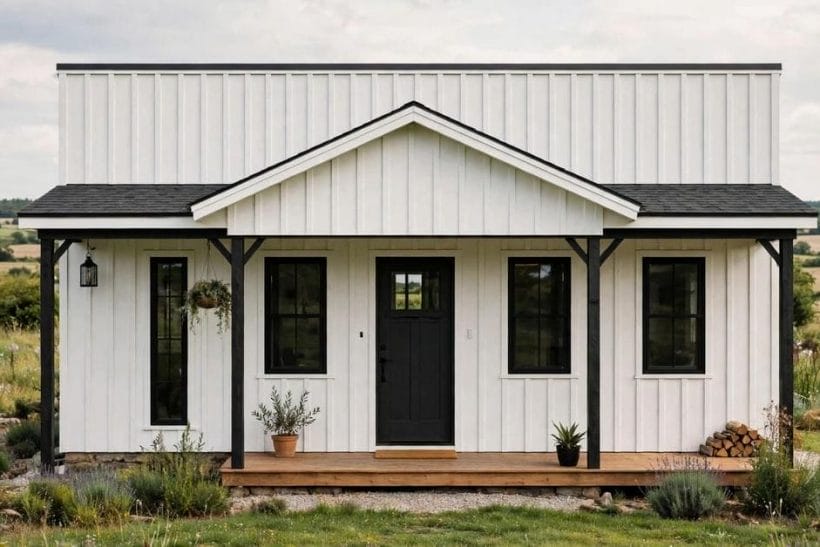
Stand in front of two houses clad in the same vertical siding and they can look surprisingly different, even when the colour matches and the boards are the same material. The difference is often the rhythm of the battens: the narrow strips that cover the joints between the wide boards and give this style its strong vertical lines. Change how far apart those battens sit and the whole wall changes character, from busy and finely striped to calm and broad. That is why so many people planning this cladding ask about typical board and batten spacing, and why the question deserves a careful answer rather than a single number handed over as if it settled everything.
This guide takes the spacing question on its own terms. It explains what the two spacings in the sheet’s own framing, the closer 16-inch rhythm and the wider 24-inch rhythm, actually do to the look of a wall, how wall size, board width, house style and light all push the choice one way or the other, and which questions are worth putting to a professional before anything is fixed in place. It is a spacing explainer in general terms only: it does not present either spacing as a rule, a code requirement or a maker’s specification, and where a decision touches structure, weatherproofing or fixing, it points you to local code and manufacturer guidance and to a professional fitter. For the wider picture of this cladding style beyond spacing, our general guide to board and batten siding ideas covers layouts, colours and material combinations.
One caution runs through everything that follows. Spacing is easy to judge badly from a sample board held in your hand or from a photograph on a screen, because a rhythm that looks fine close up can read very differently from the kerb, and a rhythm that looks calm on a small wall can look sparse on a tall one. The sections below therefore keep coming back to the same practical habit: look at real walls, at real distances, in real light, before you settle anything. The infographic after the first section sums up the comparison at a glance.
| Item | What it is |
|---|---|
| What Board and Batten Spacing Actually Means | Board and batten siding is built from two parts working together. |
| The Two Rhythms Side by Side | The question most people arrive with names two spacings: a closer rhythm around sixteen inches between battens, and a wider rhythm around twenty-four inches between battens. |
| How Closer Spacing Changes the Look | A closer rhythm suits houses that want detail. |
| How Wider Spacing Changes the Look | A wider rhythm suits houses that want calm. |
| Does Wall Size Change the Choice? | Wall size is one of the strongest practical guides to spacing, and it is worth thinking about before taste. |
| Board Width, Style and Setting | Spacing and board width belong together, and choosing one without the other leads to odd results. |
| Light, Shadow and Distance | Board and batten is a siding that lives by light. |
| Weather, Joints and Upkeep in General Terms | Spacing also has practical consequences that go beyond appearance, and they are worth understanding in general terms. |
| Questions to Ask a Professional Fitter | Because spacing sits inside a fitted system rather than standing alone, the most useful step in this guide is a conversation with a professional. |
| Common Mistakes to Avoid | The most common mistake is copying a rhythm from a house that looks nothing like yours. |
1. What Board and Batten Spacing Actually Means
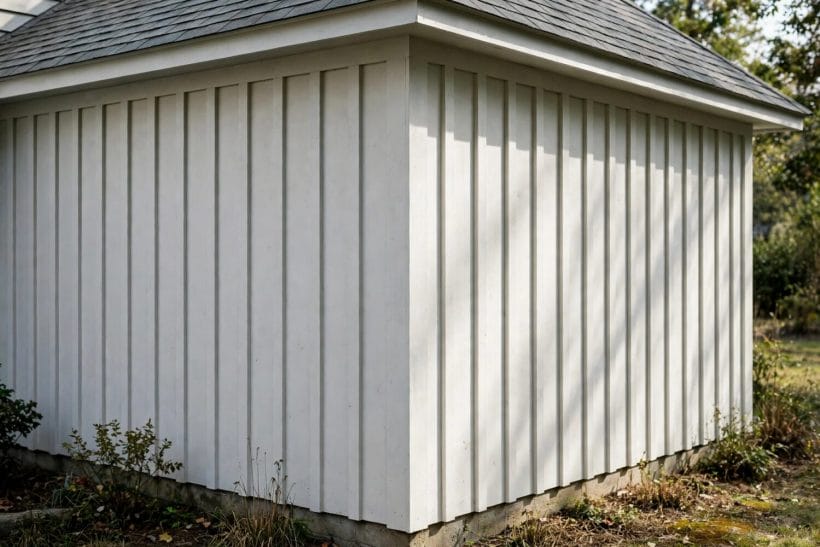
Board and batten siding is built from two parts working together. Wide vertical boards form the wall surface, and narrow vertical battens cover the joints where those boards meet. The battens are what your eye actually reads: they draw the strong upright lines that give the style its character, and the gaps between them set the rhythm of the wall. When people talk about spacing, they are talking about the distance from one batten to the next, which is also, in effect, the width of board showing between battens.
That single distance controls a surprising amount of what you see. Put battens close together and the wall gains many upright lines, so it reads as finely striped, textured and busy, with plenty of shadow in the grooves. Put them further apart and the wall gains fewer lines, so each board reads broader, the surface looks calmer and quieter, and the shadows fall less often across the wall. Neither effect is better in itself; each suits some houses and some tastes better than the other, which is why the choice is worth thinking through rather than copying from a neighbour’s house.
It also helps to know what spacing does not decide. It does not on its own decide whether a wall will last, stay dry or stand up to weather: those things depend on the boards, the fixing, the flashing, the detailing around windows and corners, and the skill of the fitting, all of which belong to a professional’s judgement. Spacing is a visual and practical choice within a system that has to be built properly whatever rhythm you pick. Keep that separation in mind and the rest of this guide falls into place.
2. The Two Rhythms Side by Side
The question most people arrive with names two spacings: a closer rhythm around sixteen inches between battens, and a wider rhythm around twenty-four inches between battens. Treat those two as the ends of a conversation, not as a verdict. The closer rhythm packs more upright lines into every stretch of wall, so the surface feels detailed, traditional and full of movement. The wider rhythm leaves broader boards on show, so the surface feels simpler, more modern and more restful to the eye.
Seen from the kerb, the difference is mainly about how much pattern your eye has to take in at once. A closer rhythm gives the eye a lot to follow, which can make a plain wall interesting and give a small house a sense of craft and detail. A wider rhythm gives the eye less to follow, which can make a large wall feel settled rather than fussy and can let other features, such as a porch, a gable or a strong roofline, carry the design. Walk past both kinds of wall if you can, rather than judging from a single photograph, because distance changes everything about how a rhythm reads.
Seen close up, the difference is about texture and shadow. Closer battens mean more edges catching light and more grooves holding shade, so the wall changes more through the day as the sun moves. Wider battens mean longer calm stretches of board between shadows, so the wall’s colour reads more evenly and small marks or unevenness in a single board show more plainly. Neither reading is a reason on its own to pick one rhythm; both are worth noticing, because you will live with the wall at both distances, every day. Where battens meet other materials, such as a brick base, the pairing needs the same care as any mixed wall, as our guide to siding materials paired with brick shows in general terms.
3. How Closer Spacing Changes the Look
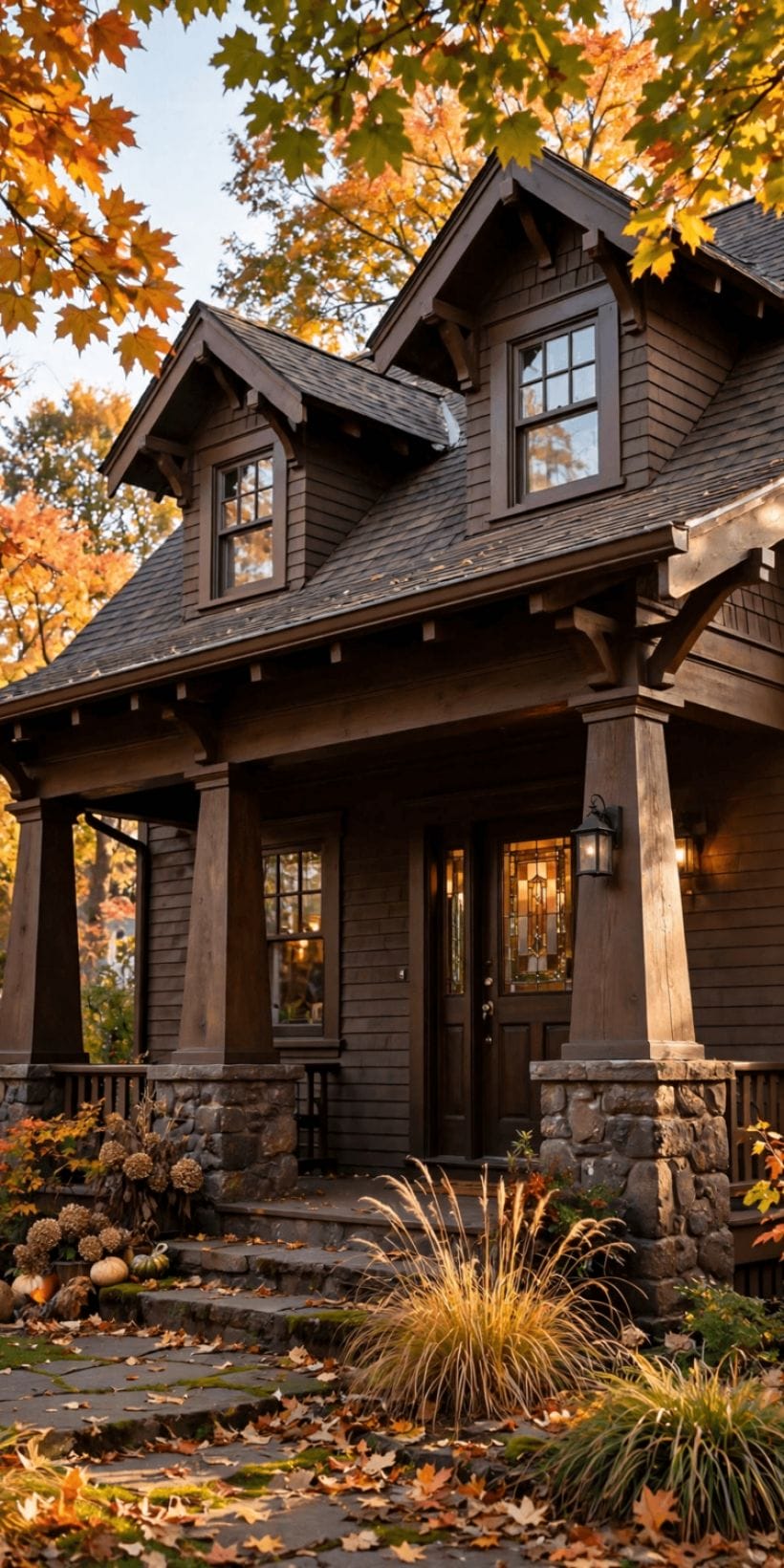
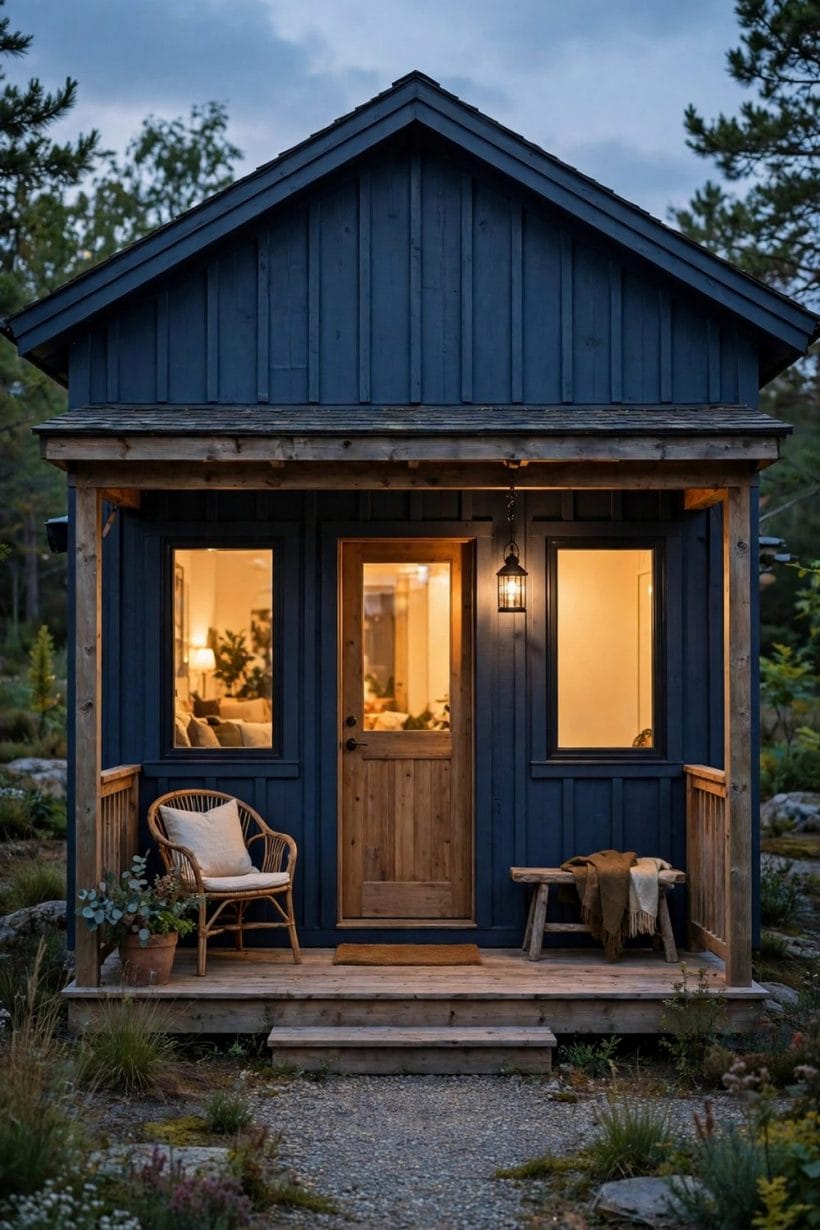
A closer rhythm suits houses that want detail. On a cottage, a farmhouse or a small home with a porch and trim, frequent battens echo the fine scale of the windows, the porch posts and the trim, and the whole front reads as one coherent, crafted surface. The wall stops being a blank background and becomes part of the decoration, which is a real advantage on a plain elevation that might otherwise look empty.
Closer spacing also forgives a great deal. Because the eye is busy following the upright lines, small differences between boards, slight changes in tone and minor marks tend to disappear into the overall pattern. That makes a closer rhythm a kind approach to natural timber, where every board has its own grain and colour, and to older houses, where walls are rarely perfectly flat and a fine rhythm helps the eye glide past small irregularities rather than stopping at them.
The trade-off is that a closer rhythm can feel too much on a large, plain wall. Where there is little else to break the surface, such as on a long side wall or a tall gable, many upright lines with nothing to interrupt them can start to feel relentless rather than detailed. If your house has long unbroken stretches of wall, stand at the far end of the garden and look at a similar wall before committing, and notice whether the rhythm still feels lively at that distance or whether it has turned into visual noise.
4. How Wider Spacing Changes the Look
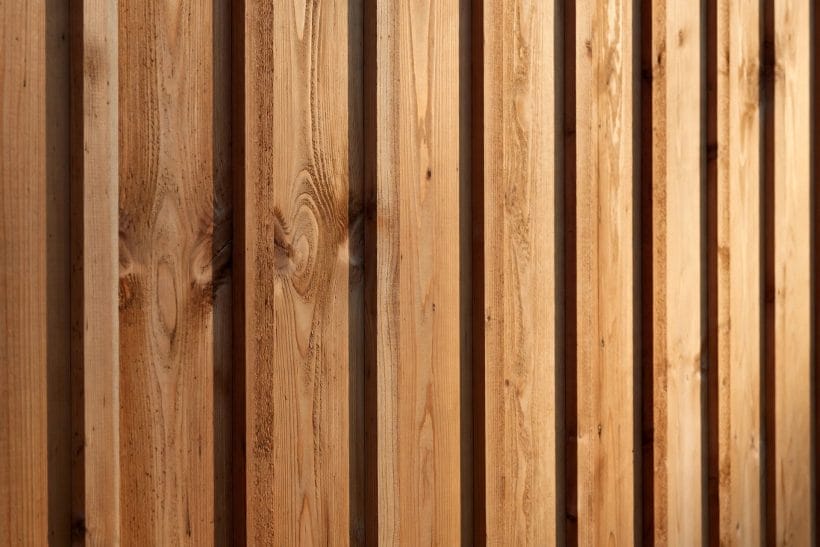
A wider rhythm suits houses that want calm. On a modern home, a tall home or a home with large windows and clean lines, broader boards and fewer battens let the shape of the house and the size of the openings do the talking. The wall becomes a quiet backdrop rather than a feature in itself, which is often exactly what a strong architectural form needs.
Wider spacing also shows off the boards themselves. Where boards are wide, well matched and evenly coloured, a wider rhythm lets that quality read clearly, board by board, without battens cutting the surface into narrow strips. That is why wider rhythms often pair well with smooth, painted finishes and with contemporary designs where the material is meant to look deliberate and controlled rather than rustic and varied.
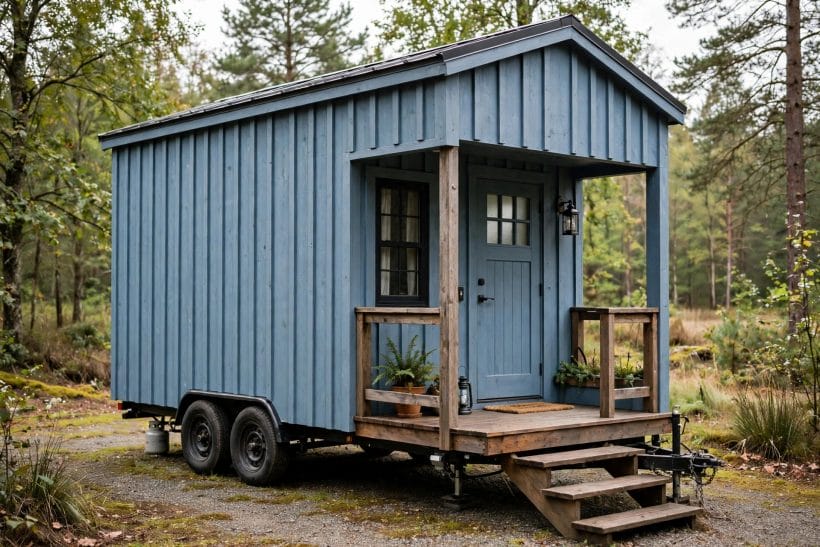
The trade-off runs the other way from the closer rhythm: a wider rhythm shows more of each board, so anything uneven in a board, any change in tone and any slight waviness in a wall has fewer upright lines to hide behind. It also asks more of the overall design, because a calm wall needs something else, a porch, a change of material, a strong window arrangement, to give the elevation interest. Look at how the whole outside of a small home holds together, as in our tiny house exterior ideas, and judge a wider rhythm as part of that whole rather than on its own.
5. Does Wall Size Change the Choice?
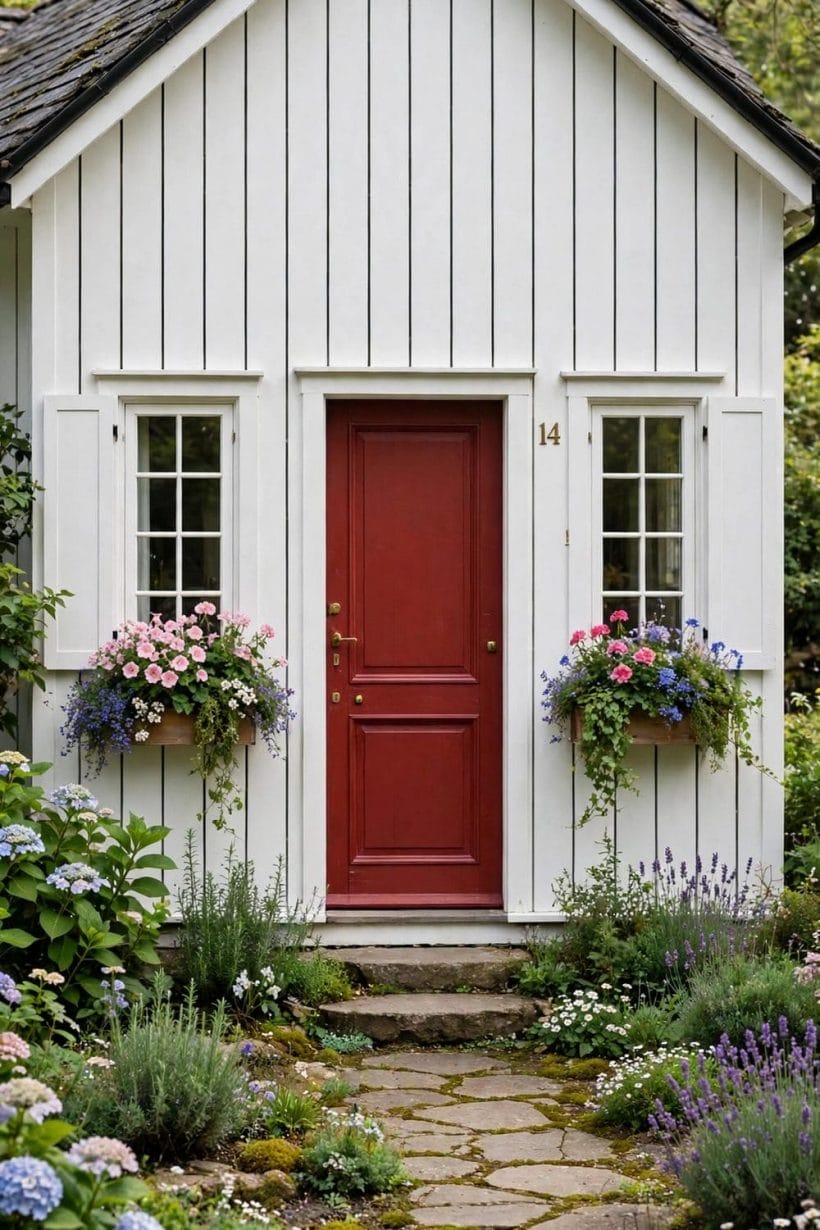
Wall size is one of the strongest practical guides to spacing, and it is worth thinking about before taste. On a small wall, such as a cottage front or a tiny house elevation, a closer rhythm usually feels at home, because the number of battens stays modest and the fine pattern suits the small scale. On a very small wall, a wider rhythm can leave so few battens that the pattern barely registers, and the wall can end up looking like plain vertical boarding with an occasional strip.
On a large wall, the balance shifts. A tall gable or a long side wall carries many more battens at a closer rhythm, and the pattern can grow tiring across that distance. A wider rhythm keeps the count of lines down and lets the sheer size of the wall read as a single calm surface, which is often more restful. That does not make a wider rhythm compulsory on large walls: a large wall broken by windows, a porch or a change of level can carry a closer rhythm happily, because the breaks stop the pattern from running on uninterrupted.
Height matters as much as width. A tall wall seen from below foreshortens, so battens near the top read closer together than battens at eye level, and a rhythm that looks even on paper can look tighter at the top of a gable. Walk well back from any tall wall you are using as a reference and look up at it, rather than judging from a straight-on photograph. If the top of the wall looks crowded while the bottom looks right, that is a sign the rhythm may be too close for that height, and it is worth discussing with a professional.
6. Board Width, Style and Setting
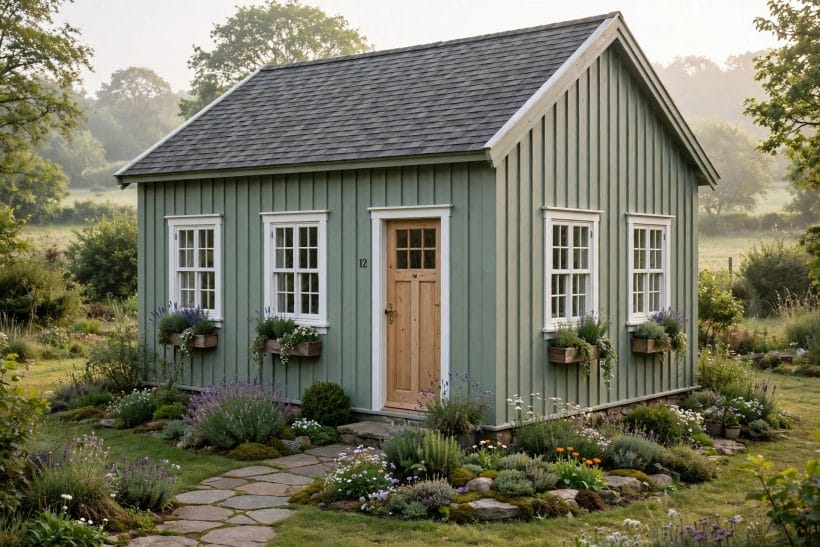
Spacing and board width belong together, and choosing one without the other leads to odd results. Broad boards with battens set close together leave only a sliver of board showing between battens, which wastes the breadth of the board and can look cramped. Narrow boards with battens set far apart leave wide gaps of board that can look out of proportion to the battens themselves. As a general guide, the rhythm should let the boards read as boards, with enough width on show to justify their size, and let the battens read as clear upright lines rather than as clutter.
House style pushes the same decision. Traditional farmhouses, cottages and rustic designs usually sit happily with a closer, more detailed rhythm, because their windows, trim and porches are themselves detailed and small in scale. Contemporary designs with large panes, flat trim and minimal decoration usually sit happily with a wider, calmer rhythm, because their details are few and bold. Neither pairing is a rule, and a traditional house can carry a wider rhythm well when its other features are strong, but style is a useful starting point when you are torn between the two.
Setting matters too. A house seen mainly from close quarters, such as a home with a small front garden and a path running alongside the wall, will be judged at close range, where a finer rhythm rewards attention. A house seen mainly from a distance, such as a home set back behind a long drive or an open garden, will be judged from far away, where a bolder rhythm reads more clearly. Think about where people actually stand when they look at your house, and choose the rhythm that reads well from those places. For the wider design picture, our modern house plans show how wall treatment sits within whole-house design.
7. Light, Shadow and Distance
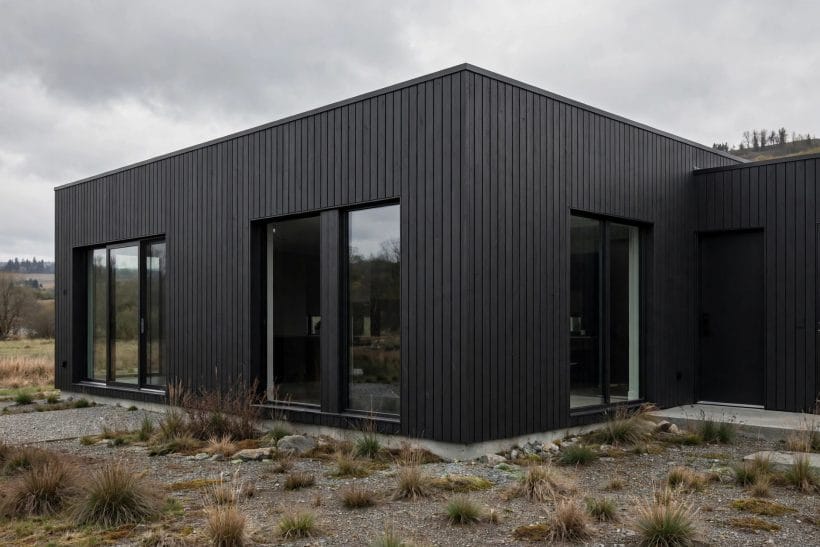
Board and batten is a siding that lives by light. The battens stand proud of the boards, so every batten casts a thin line of shadow, and the wall’s appearance changes through the day as the sun moves around the house. A wall that looks softly striped in morning light can look strongly lined at midday and almost flat on a dull day. Spacing decides how often those shadow lines fall, and therefore how dramatic that daily change feels.
On a wall facing strong sun, a closer rhythm produces a lively play of light and shade that many people love, but it can also make the wall look striped in a way that competes with windows and trim. On the same wall, a wider rhythm produces longer stretches of sunlit board between shadows, which reads calmer but can also look plain when the sun is high and shadows shrink. On a wall that rarely gets direct sun, the difference between rhythms softens a great deal, because without strong shadows the battens read mainly as colour and line rather than as relief.
The practical test is simple and worth doing properly. Find a house with the rhythm you are considering, visit it at different times of day if you can, and stand where visitors will stand: at the gate, on the path, from the garden and from the street. Photographs flatten all of this, because a camera evens out light and shadow in a way the eye does not. If you cannot visit a reference wall, look at photographs taken in different lights and be suspicious of any single image that seems to settle the question on its own.
8. Weather, Joints and Upkeep in General Terms
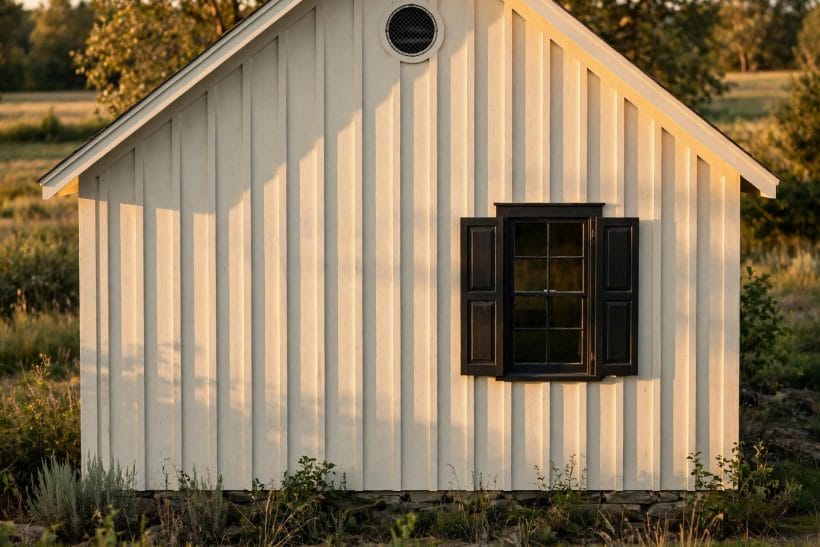
Spacing also has practical consequences that go beyond appearance, and they are worth understanding in general terms. Every batten is a joint cover, and every joint is a place where water, dirt and draughts would otherwise find a way in. A closer rhythm means more battens and therefore more covered joints across a wall, while a wider rhythm means fewer battens and broader boards between them. What that means for any particular wall depends on the boards, the fixing method, the detailing at corners, windows and bases, and the local weather, all of which are matters for a professional to judge on site.
Upkeep follows a similar pattern. A wall with many battens has many grooves where dust, pollen and cobwebs can gather, and cleaning it takes longer, though each groove is small and the overall pattern hides marks well. A wall with fewer battens has longer plain stretches that are quicker to wash down, though marks on those stretches show more clearly. Neither pattern is free of upkeep, and neither should be chosen on cleaning alone, but it is worth knowing which kind of upkeep you are signing up for, especially on walls that are hard to reach.
Movement matters as well, in general terms. Timber boards swell and shrink with moisture and temperature, and the joints between them are where that movement shows. Even, consistent spacing lets a wall move and settle as one surface, while uneven spacing draws the eye to every place where a gap has opened or closed. Whatever rhythm you choose, consistency from one end of a wall to the other matters more than the exact distance, and that consistency is a matter of careful setting out by whoever fits the wall. Other vertical profiles raise the same questions in their own way, as our guide to vinyl shake siding shows for a different textured surface.
9. Questions to Ask a Professional Fitter
Because spacing sits inside a fitted system rather than standing alone, the most useful step in this guide is a conversation with a professional. The first question to ask is how the rhythm you are considering will be set out on your actual walls: where battens will fall around windows, doors and corners, and whether the pattern will stay even across those breaks or will need adjusting at the edges. A good answer will talk about your walls specifically, not about spacing in the abstract.
The second set of questions concerns the system behind the rhythm: which boards and battens suit your house and your local weather, how joints, corners and bases will be detailed, and what the maker of those materials specifies for fixing and spacing. Makers’ guidance varies, and local code may bear on the work as well, so ask the fitter to point to the guidance they are following rather than accepting a general assurance. If an answer cannot be tied to a specific material or a specific wall, treat that as a reason to ask further, not as a reason to stop asking.
The third set of questions concerns the life of the wall afterwards: how it should be cleaned, how often it should be inspected, what to look for at joints and bases, and how a damaged board or batten would be replaced without disturbing the rhythm around it. A rhythm that cannot be repaired neatly is a rhythm that will slowly lose its evenness, and that matters more over years than the first impression on fitting day. For the material side of that conversation, our guide to fibre-cement siding ideas shows how a different cladding material frames the same kinds of questions.
10. Common Mistakes to Avoid
The most common mistake is copying a rhythm from a house that looks nothing like yours. A spacing that flatters a small cottage can look fussy on a tall modern house, and a spacing that calms a large contemporary home can look sparse on a small traditional one. Borrow ideas from houses of a similar size, style and setting to your own, and be wary of any photograph that does not tell you how big the wall in it actually is.
The second mistake is judging spacing from a sample or a screen alone. A single board held in the hand shows colour and grain beautifully and spacing not at all, and a photograph flattens light, distance and scale. Use samples for colour and material, and use real walls, visited in person and seen from the distances people will actually stand at, for spacing. If that is not possible, gather many photographs of the same rhythm in different lights and on different houses, and look for what stays constant across them rather than trusting one flattering image.
The third mistake is letting spacing drift during fitting. A rhythm is only as good as its consistency, and small changes made on site to get around a window or a corner can leave one stretch of wall visibly different from the rest. Agree the setting out before work starts, ask how breaks at windows and corners will be handled, and check the rhythm as work progresses rather than only at the end, when changes are far harder to make. The same care for the whole outside of a home, including how walls meet outdoor living spaces, is worth carrying into the garden side too, as our tiny house patio ideas show for small-home outdoor settings.
Final Considerations
There is no single spacing that suits every house, and that is the honest answer to the question this guide set out with. The closer rhythm gives detail, texture and forgiveness, and suits smaller walls, traditional styles and houses seen close up. The wider rhythm gives calm, breadth and a modern quiet, and suits larger walls, contemporary styles and houses seen from a distance. Most houses will lean one way or the other once wall size, board width, style, setting and light are all weighed together, and that leaning, tested against real walls, is a better guide than any number quoted on its own.
So return to the question of typical board and batten spacing with a clearer sense of what it can and cannot tell you. Typical spacings describe what is commonly seen, not what your house requires, and the two rhythms discussed here are starting points for judgement, not instructions. Look at real walls, weigh the factors in this guide, check local code and manufacturer specs for the materials you are considering, and put the final decision to a professional who has seen your walls. Chosen that way, the rhythm you pick will look right from the kerb and from the path, in sun and in shade, for years after fitting day.

0 Comments