

Anyone can call a chest of drawers “antique”, and a famous name can be attached to almost anything. This guide shows how to identify and evaluate top-quality American antique furniture makers for yourself: where marks hide, what honest joinery looks like, which woods and styles to expect, and the checks that separate a genuine, well-made piece from a hopeful story.
1. Key Questions, Answered Briefly
Serious collectors all start from the same handful of questions, and the honest answers are shorter than most sales pitches. Use this table as the frame for everything that follows: identify the maker if you can, verify the construction with your eyes and hands, and treat every claim, including anything implied by an antique furniture manufacturers list you find online, as a hypothesis until the piece itself confirms it. Quality in American antique furniture is rarely about one famous name; it is about consistent craftsmanship, good materials honestly used, and a surface that has been allowed to age with dignity.
| Question | Short answer |
|---|---|
| What makes a maker “top-quality”? | Sound joinery, fine primary and secondary woods, careful finishing and design that survives centuries of taste changes |
| Where do I find a maker’s mark? | Inside drawers, on backboards, under seats and tabletops, on labels, stencils, brands or paper tags |
| Does a famous name guarantee quality? | No. Big workshops produced varied grades, and unmarked regional work can be superb |
| What is a “marriage”? | Two unrelated parts joined later, such as a top from one piece fitted to the base of another |
| Original finish or refinished? | An intact original surface is usually prized; a sympathetic refinish is acceptable on working furniture |
| How can I verify age? | Construction details, saw and tool marks, wood oxidation, wear patterns and provenance together, never one clue alone |
| Restored or as-found? | As-found suits confident buyers; honest, disclosed restoration suits everyone else |
| Where should a beginner buy? | Reputable dealers and established auction houses that describe condition plainly and stand behind attributions |
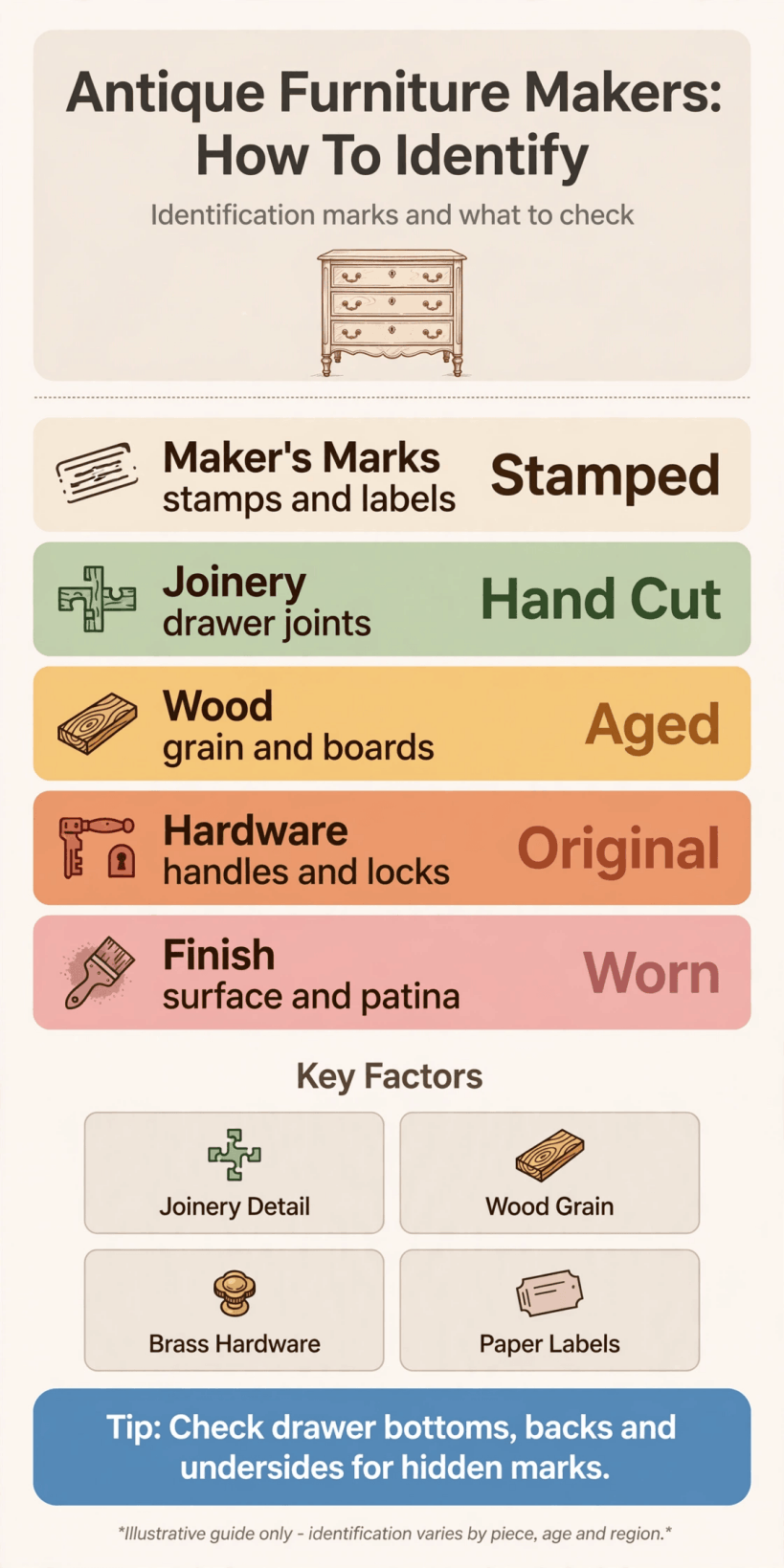
The evaluation loop at a glance: identify the maker, verify the construction, read the wood and wear, check the story, then decide.
2. Maker’s Marks, Labels and Stamps: Where to Look
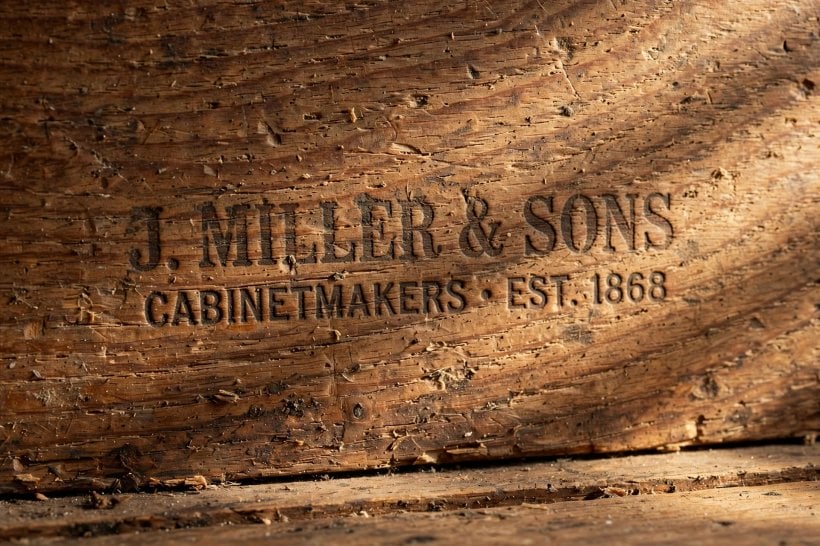
Marks are the closest thing furniture has to a signature, and American makers used more kinds than most buyers expect. Cabinetmakers in the great port cities, Boston, New York, Philadelphia and Newport among them, sometimes applied printed or handwritten paper labels inside cases; later workshops used stencilled names, branded stamps, chalk inscriptions, or metal tags. Production firms of the industrial era, in centres such as Grand Rapids and other Midwestern furniture towns, marked pieces more systematically, often with model numbers as well as names. Look in a set order: inside every drawer, especially the sides and back; on the backboards of case pieces; under chair seats and table tops; inside cupboard doors; and along the back rails of upholstered frames, where a torch shone at a low angle reveals faint stamps. Photograph anything you find before cleaning, because chalk and pencil marks vanish under a well-meant polish. Then be sceptical in both directions: labels can be transferred or faked, and the absence of a mark proves nothing, since many fine rural and Shaker workshops rarely marked their work at all. A mark starts the research; it never ends it.
3. Joinery and Construction Quality
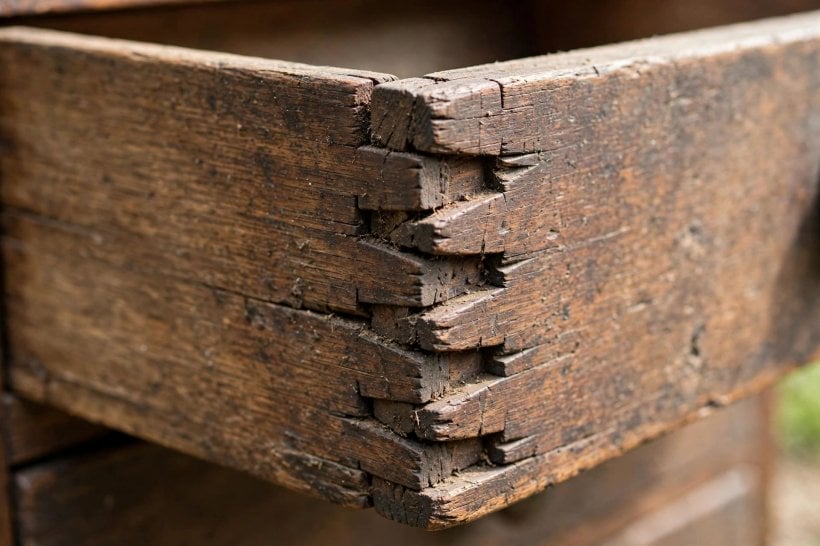
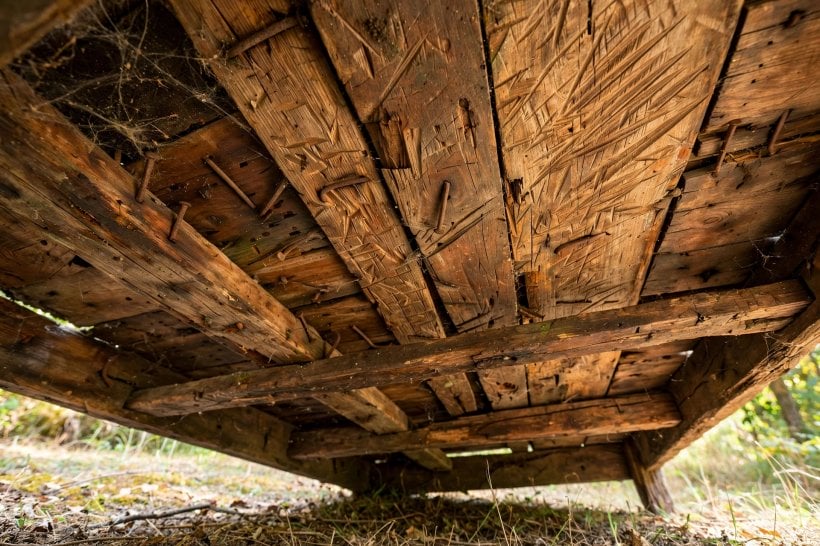
If marks are the claim, joinery is the evidence. Open drawers and look at the corners: hand-cut dovetails on early work are slightly irregular, with scribe lines and a hand-planed feel, while machine-cut joints are perfectly uniform, which itself helps date a piece. Mortise-and-tenon joints on chairs and tables should be tight, pegged on early examples, and free of the gaps that shims and modern screws try to hide. Turn the piece over where you safely can. Undersides and backs on honest antiques are rougher than show surfaces, but they are still competently made: drawer bottoms of solid boards rather than thin modern panels, secondary woods chosen sensibly, and tool marks consistent with hand work on early pieces. Run a hand along rails and inside cases; quality workshops finished even unseen surfaces more carefully than cheap ones. Beware the opposite trap as well: artificially distressed new work can imitate roughness, so judge the logic of the construction, not just its texture. A well-made chair feels planted and silent when you sit and shift; a table does not rack when pushed sideways. Construction quality you can test in the room will outlast any attribution.
4. Woods and What They Tell You
American furniture speaks in wood. Mahogany, imported and costly, signals urban, high-style work, especially in port cities; native cherry and walnut are the backbone of much fine regional cabinetmaking; maple, including figured “tiger” maple, is a New England signature; and painted pine or poplar served as honest country furniture and as the secondary wood inside quality pieces. Learn the secondary woods, because they are hard to fake convincingly: drawer sides, backs and undersides in pine, poplar or other local timber, oxidised to a mellow tone, tell you a piece grew old as one object. Colour helps too. Old surfaces darken from light and air in ways that are gradual and uneven, deepest where hands rarely touch; a uniformly “antique” brown sprayed over every surface, including inside drawers, is a warning sign. Veneers deserve a close look: early veneers were sawn comparatively thick and hand-laid, later ones are knife-cut and thin, and bubbling, patching or replaced sections should be priced into your thinking. None of this requires a laboratory: a torch, a magnifier and ten unhurried minutes will teach you more than an hour of reading listings.
5. Eras and Revival Styles at a Glance
Names help you place a piece, so long as you hold them lightly. Early American high-style furniture followed British pattern-book tastes: the carved cabriole legs and shells associated with the Chippendale manner; the lighter, shield-and-line work of the Hepplewhite and Sheraton manners in the Federal era; and, in the nineteenth century, a rolling programme of revivals, Gothic, Rococo and Renaissance among them, alongside the Empire style’s bold mahogany masses. Regional schools give American work its character: the block-and-shell carving linked with Newport, Philadelphia’s high-relief carving tradition, Boston’s elegant case work, Pennsylvania German painted furniture, and the Shakers’ radical simplicity, furniture reduced to honest function, which collectors prize precisely because it hides nothing. Later, the Arts and Crafts movement pushed back against factory ornament; workshops in the Stickley orbit made honest joinery itself the decoration, while large Grand Rapids firms industrialised quality for a national market. Revivals complicate attribution because twentieth-century makers revisited every earlier style, sometimes superbly. Style tells you what a piece wants to be; construction and materials tell you what it is.
6. Provenance: Paper Trails and Family Stories
Provenance is the piece’s biography, and like all biographies it mixes documents with legend. Useful evidence includes old sale receipts, auction catalogues, exhibition labels, inventory photographs showing the piece in a room decades ago, repairers’ labels, and inscriptions recording marriages, inheritances or house moves. Each document should be checked the way you check the furniture: does the paper, handwriting and terminology fit the period claimed, and does the description match this object, dimensions, woods, damage and all? Family stories are valuable leads and unreliable witnesses at once; “it came over with the family” attaches itself to furniture of every age. Treat provenance as a multiplier: strong documents raise confidence in a piece that already passes construction checks, but they cannot rescue a piece whose joinery contradicts its claimed date. When you buy, ask for copies of everything the seller has, and start your own file the day the piece arrives, photographs, receipts, correspondence, because the next owner’s verification begins with the care you take now. Pieces that will live in a small home benefit doubly from this discipline; our small-space interior ideas show how a few significant pieces, well documented, anchor a compact room.
7. Condition Grading and Honest Wear
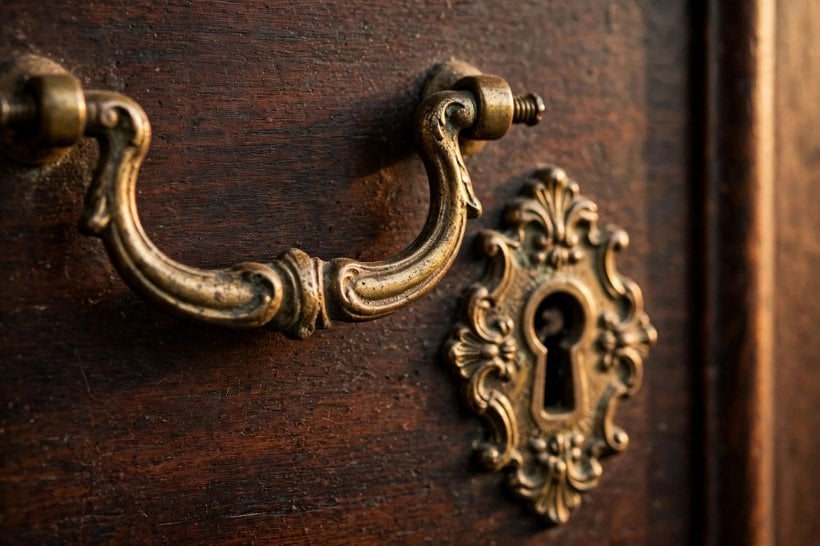
Condition is where money is saved or quietly lost. Learn to separate three kinds of change: honest wear, which is the polish of hands on drawer pulls, gentle softening of edges, and shrinkage gaps that open and close with the seasons; damage, such as breaks, veneer losses, water rings and replaced feet; and intervention, from sympathetic waxing to full stripping and refinishing. Collectors of early American furniture often prize an untouched, “dry” surface and old, possibly original finish, while buyers of later production furniture may accept, even prefer, a professionally refreshed surface. Either way, ask the grading question in plain language: what is original, what is repaired, what is replaced? Check the usual places: feet and stretchers for breaks, chair joints for looseness, drawer runners for wear, tops for splits along glue lines, and backs for replaced boards. Old repairs, done in period materials, are part of a piece’s history; fresh, undisclosed repairs are a negotiating point at best. A piece in honest, graded condition from a careful seller beats a gleaming mystery every time, and the same honesty-first approach guides our budget tiny house guide on buying anything second-hand.
8. Where Good Pieces Surface
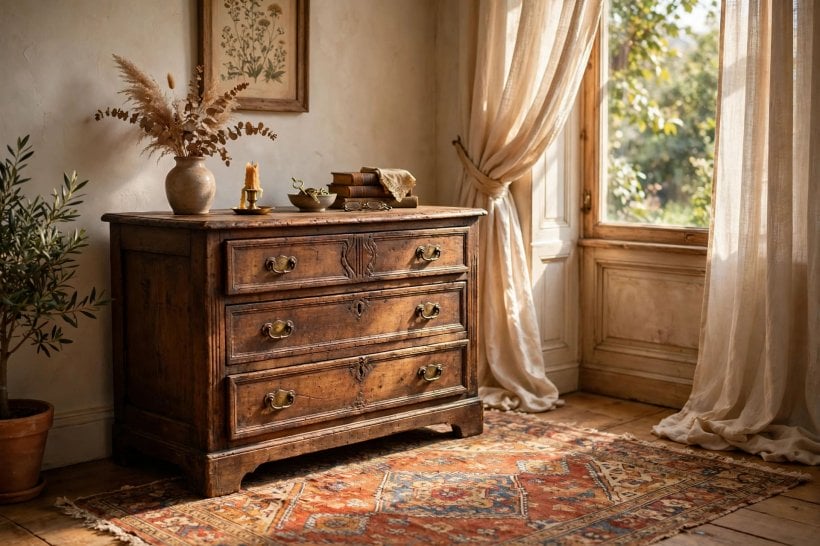
Top-quality American furniture turns up in predictable places, each with its own etiquette. Established regional auction houses disperse estate collections and publish condition reports; their archives of past catalogues are a free education in what forms and makers look like. Reputable antiques dealers cost more than a lucky find but sell attribution, condition disclosure and recourse, and the good ones are generous teachers. Antiques shows and vetted fairs concentrate expertise in one hall and let you compare five similar pieces in an afternoon. Estate sales and house clearances reward the prepared: arrive knowing the forms you want and the checks in this guide, because decisions there are fast and final. Museum deaccessions and historical-society sales occasionally release documented pieces. Online marketplaces widen the hunt and the risk together; insist on underside photographs, dimensions and a returns conversation before money moves. Wherever you buy, the pattern repeats: sellers who welcome questions, extra photographs and independent inspection are the sellers whose pieces tend to pass those checks. A documented antique also earns its place visually; see how period pieces sit inside the home library office and the blue and white tiny house interior.
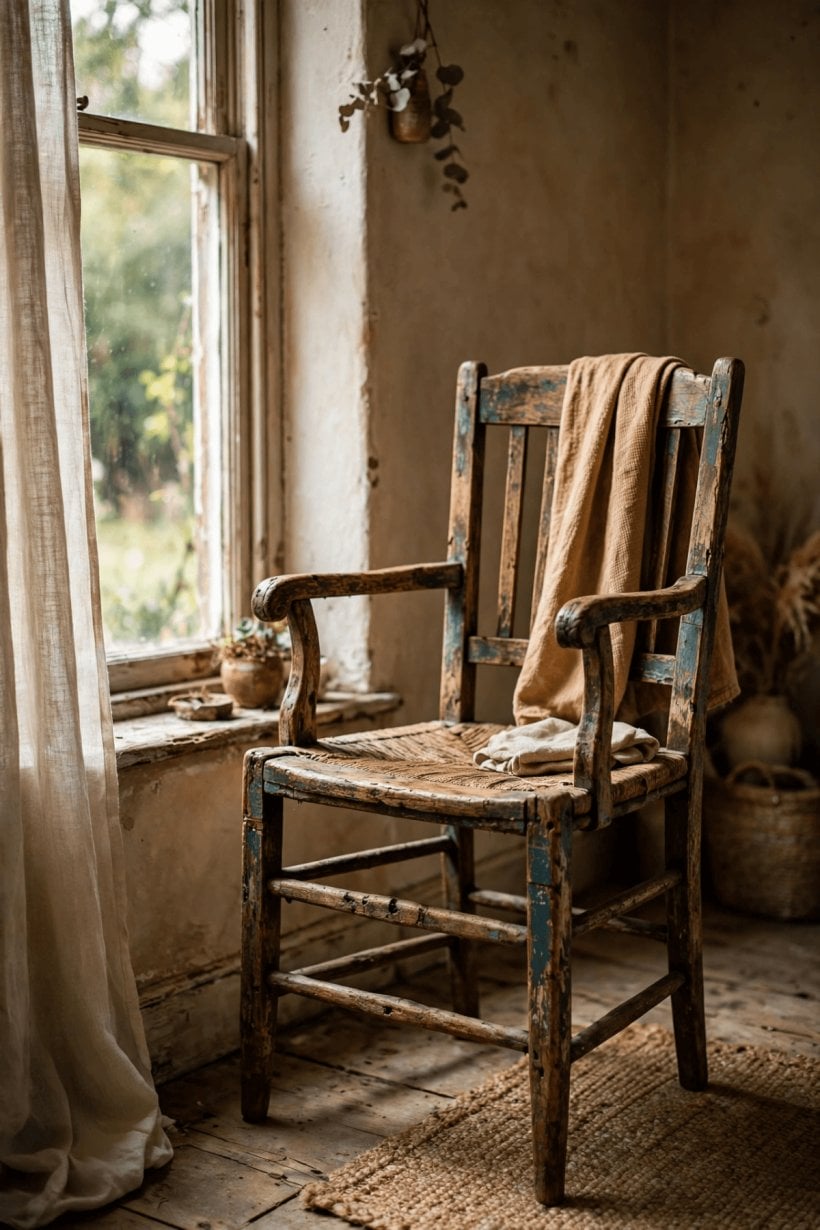
9. Buying Checks Before You Commit
Bring a kit and a routine. The kit: a torch, a tape, a small magnifier, a notebook and your phone for photographs. The routine, in order: stand back and judge proportion and presence; open every drawer and door; look inside, under and behind with the torch; test chairs by sitting, tables by leaning, drawers by sliding them full-length; smell for fresh finishes or recent glue where they should not be; and compare every surface that should match, colour, wear and tool marks, because inconsistency is how marriages and replacements announce themselves. Ask the seller the set questions: What is the attribution based on? What work has been done, and by whom? Is the finish original? What is the returns policy if an independent expert disagrees? Serious sellers answer these without drama. Use any antique furniture manufacturers list you consult as a map of names to investigate, then let the object vote last. If a piece is beyond a modest sum for you, an independent appraisal from a qualified appraiser or experienced dealer, paid by you and chosen by you, is money well spent, and professional bodies for appraisers can point you to credentialed specialists in your area.
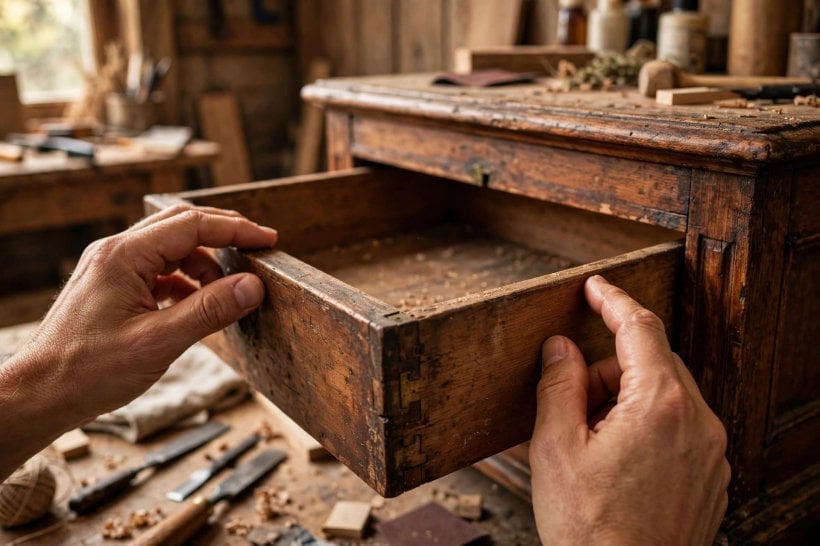
10. Fakes, Reproductions and Marriage Pieces
Three categories catch buyers out, and none of them is automatically shameful; only the undisclosed sale is. Reproductions are honest copies when sold as copies, and the twentieth century produced many fine ones, sometimes by the same firms that made period-style furniture for department stores and decorators. Trouble starts when age is simulated: artificial wormholes in suspiciously regular patterns, distressing concentrated where a camera looks, new wood under old-looking varnish, and hardware that is cast and aged to imitate the hand-forged or early machine-made originals. Fakes go further, adding spurious labels or carving a plain piece “up” into a rarer form. Marriages are subtler: a genuine top on a genuine but unrelated base, a bookcase fitted to a chest it never grew up with; each part may be old while the whole is an invention. Your defences are the habits of the earlier sections: construction logic, consistent oxidation, matching wear, and marks that agree with the object rather than decorate it. When in doubt, walk away politely; the supply of honest American antiques is large, and patience is the collector’s oldest tool. For contrast in how later design movements handled honesty of construction, our mid-century modern tiny house tour is a pleasant next read.
Final Considerations
Identifying top-quality American antique furniture is a learnable craft, not a gift: read the marks, but trust the joinery; learn the woods and the styles, but let wear and documents cross-examine every claim. Buy the piece whose evidence agrees from every angle, keep the paperwork you inherit and the paperwork you create, and choose sellers who welcome your questions. Do that, and each purchase adds not just a beautiful object to your home, but a verified piece of American making history.



0 Comments