

A tiny house has no spare room for a library — so the library moves into the office, and the office moves into the books. One wall of shelves, a desk at the centre and a chair that rewards the day’s work: designed well, the smallest room in the house becomes the one that thinks. Here is how to build it, shelf by shelf, in the order the room comes together.
Home Library Office: At a Glance
A home library office succeeds when its three parts are designed as one room: the books that surround and inspire, the desk that centres and produces, and the scholarly mood that holds the two together. This guide follows that build in its natural order — the concept, the shelves and the desk, the reading chair and the light, organising and curating the collection, styles and atmosphere, the working lives the room hosts, and finally the commandments, the budget and the mistakes — with every figure taken from the working reality of tiny libraries.
| Topic | What It Covers | Key Fact or Figure |
|---|---|---|
| 1. The Concept | Books surround, desk centres, scholarly mood | The room that thinks |
| 2. The Shelves | Full-wall, floating and ladder shelving | Floor-to-ceiling makes it grand |
| 3. The Desk | Partner, writing and modern desks | The desk centres the room |
| 4. The Reading Chair | Leather chair, floor lamp, side table | The chair is the reward |
| 5. The Lighting | Ambient, task and accent layers | Warm task light at 2700K |
| 6. Organising | By subject, the loved at eye level | The organised library is findable |
| 7. Curating | Loved, reference, beautiful, digital | 100–200 books, curated |
| 8. Styles and Atmosphere | Traditional, modern, eclectic; display | The displayed inspires |
| 9. The Working Library | Writer, student, researcher, children | Rituals make it lived |
| 10. Commandments and Budget | The ten rules, the honest spend, mistakes | The full room for $300 |
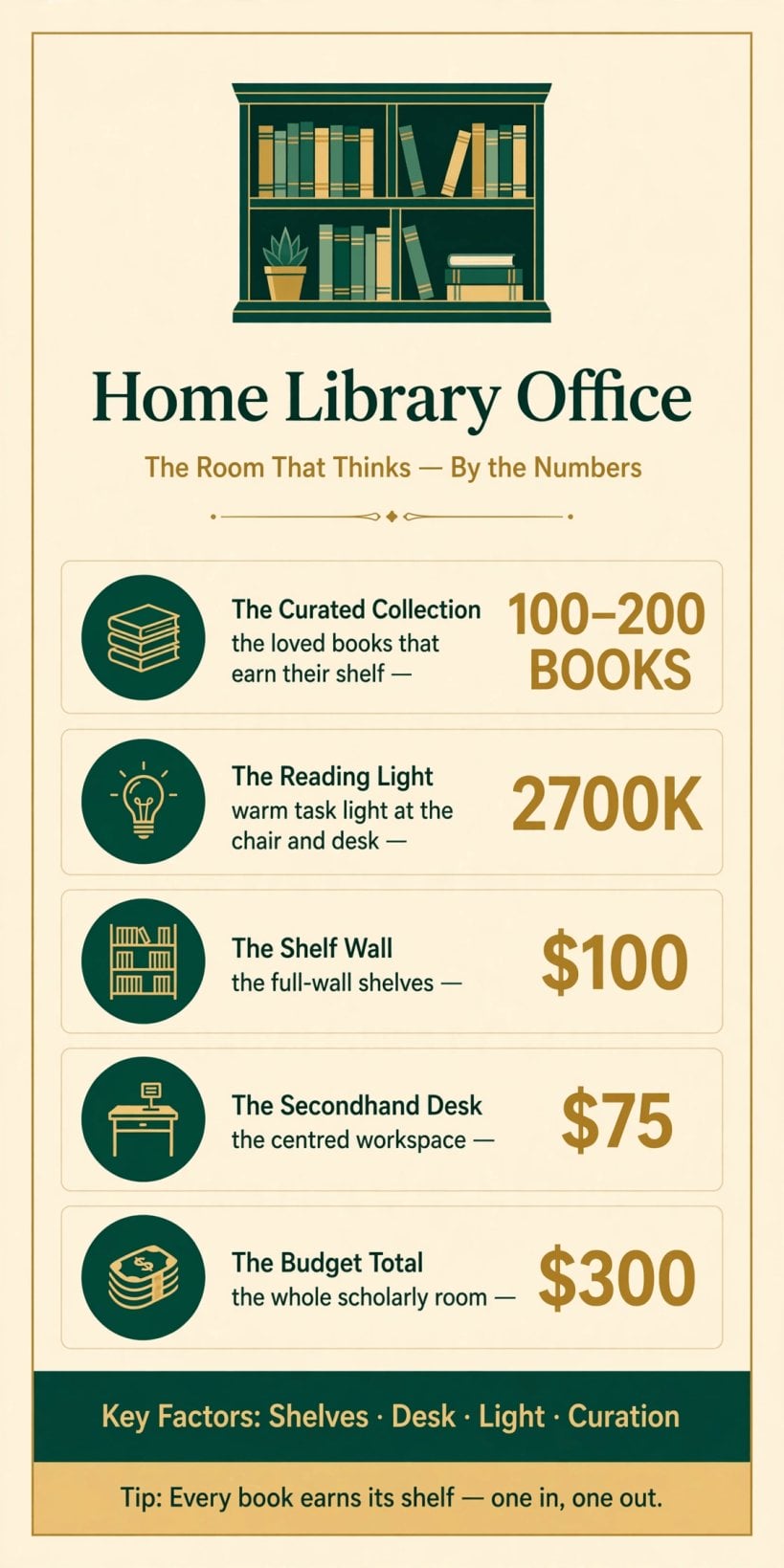
The library-office by the numbers: a curated collection of 100–200 books, warm reading light at 2700K, shelves at $100 and a secondhand desk at $75 — the whole scholarly room for a $300 budget total.
1. The Library-Office Concept: The Room That Thinks
The library-office is built from three parts, each with a job. The books are the surround: they line the room and inspire the work done inside it. The desk is the centre: the producing surface everything else arranges around. And the mood is scholarly and focused, the atmosphere that turns a corner with shelves into a room that thinks. The rule underneath all three is that the library thinks — because it is designed to, not because books happen to be stored in it.
Asked how to combine a library and an office, the classic answer is the concept itself: the books surround, the desk centres — the scholarly office. The shelves are the walls, the desk is the work, and the pairing is the oldest in the study tradition because each half completes the other: the office gives the library a daily purpose, and the library gives the office a mind. The wider framework for rooms that must do two jobs at once is set out in our tiny house and small-space interior design hub, and the dedicated-workspace version of the same thinking — found space, honest desk sizes, the closing ritual — fills our guide to tiny house office design ideas.
2. The Shelves: The Walls Are Books
Three shelving answers cover nearly every tiny library. The full wall is the library proper: built-in shelving that turns an entire wall into books, the maximum the room can hold. The floating shelf is the airy, modern answer, boards that seem to hover and keep a small room feeling light. And the ladder is the classic — shelving climbed by a rolling ladder, treated in full below. The rule decides among them without sentiment: the shelves are the walls — the books are the architecture.

Asked for the best shelving for a tiny library, the answer follows the wall and the collection: the full-wall built-in for maximum books, the floating shelf for the airy feel, the ladder arrangement for the classic one. The best shelving fits both. And the grandeur question has the same answer from the other side: floor-to-ceiling shelves, warm light, the ladder and the full collection are how a tiny library feels grand — the grandeur is the vertical, and the tiny library feels grand exactly when the books reach the ceiling. Whole-wall planning like this is decided at the scale of the whole home, as our guide to tiny house design: plans, layouts and 3D ideas shows — the library wall is drawn on the plan long before the first shelf is bought.
3. The Desk: The Centre of the Room
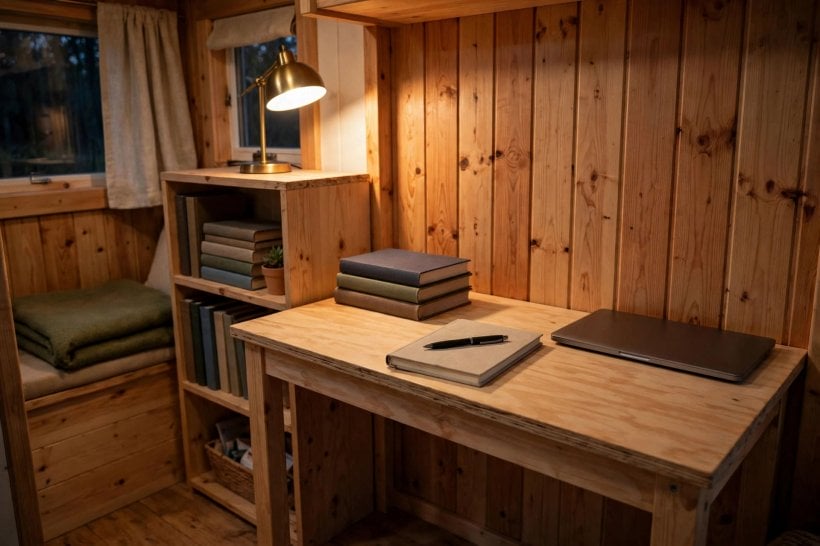
The desk is chosen the way the shelves are: by the work it must hold. The partner desk is the classic, facing into the room, two workers or one worker facing the life of the house. The writing desk is the traditional, the sloped surface made for the page. The modern desk is the clean, tech-led answer, a plain surface that disappears under a laptop. The rule is the section in one line: the desk centres — the room arranges itself around the producing surface, and a desk chosen honestly makes the shelves, the chair and the light fall into place around it.
In the smallest homes the desk and shelves compress into a single zone, and the original’s studio answer shows how: yes, a library-office works in a studio tiny house — one wall of shelves behind the desk, the reading chair in the corner. The studio library-office is a zone rather than a room: the books define the work, the wall of shelving draws the boundary no partition could, and the desk sits inside the library it serves. Nothing about the arrangement is a compromise; it is the concept at its most concentrated.
4. The Reading Chair: The Reward
If the desk is where the library works, the chair is where it pays. The classic is leather, the patina deepening with every year of reading. Beside it stands the floor lamp — the essential, the chair’s own task light. And beside that, the side table, sized for the tea and the current book. The truth of the section is short: the chair is the reward — the read at the end of the working day, earned by everything the desk produced.
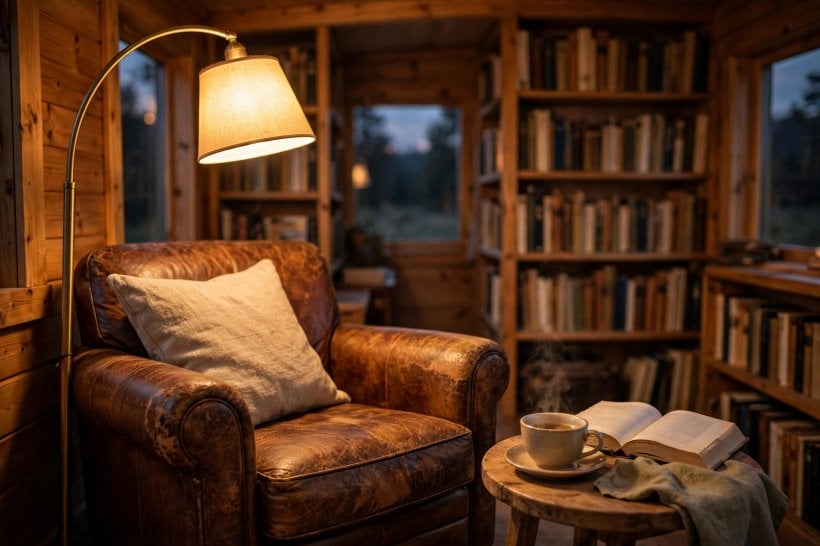
The chair’s finest version sits at the window. The window in the library gives the reading its natural light, the view gives the eyes their rest between pages, and the built-in window seat is the coveted seat of the whole house — a bench of books-by-daylight that guests ask for and readers defend. Place the chair where the light is, whether that is the lamp’s pool or the window’s, and the reading corner designs itself: chair, light, table, and the shelves within reach.
5. Library Lighting: The Warm Glow
Library light is built in three layers, like the room itself. The ambient layer is warm and scholarly, the room’s general glow. The task layer is focused, aimed at the desk and the chair where the eyes actually work. The accent layer displays the shelves, a gentle wash that turns the book wall into the room’s artwork after dark. The rule is that the library glows — warm, layered, and never lit like an office cubicle.

Two of the original’s most-asked questions are answered by those layers. How do you light a home library? Warm ambient for the room, the task light at the desk and chair, and the accent on the shelves — the library glows warm, in scholarly light. And what lighting is best for reading specifically? The warm task light at the chair and the desk, at 2700K, with the ambient for the room and the accent for the shelves around it: the reading light is the warm and the positioned — the page lit, the eyes easy. Light placed this deliberately is what separates a library from a storage wall with a chair in front of it.
6. Organising the Tiny Library: The Findable Shelf
A library you cannot search is a pile with shelving, so the tiny library organises or it fails. The curated collection is the foundation, treated in the next section. The system is the subject: books grouped by what they are about, so a title is found by thinking about it rather than remembering where it was left. And the overflow goes digital, the e-reader carrying what the shelves cannot — the subject of section 7. The rule orders the three: the tiny library curates — ruthlessly, and then keeps the curated findable.
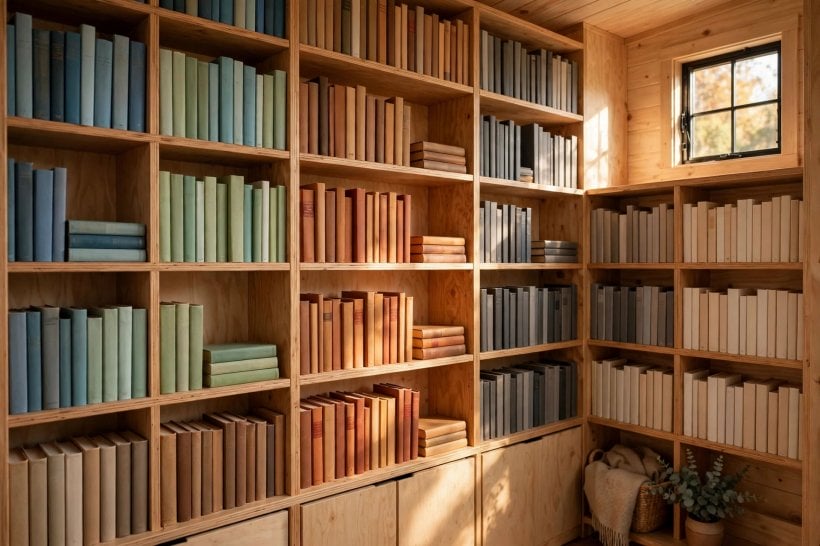
Asked how to organise books in a small space, the full answer is the system working together: by subject first, then the loved at eye level, where the daily books live within the easiest reach. The vertical does the heavy lifting — floor to ceiling, every inch of wall working. The digital takes the overflow. And the one-in-one-out rule maintains the whole arrangement against the slow creep of accumulation. The organised library is the findable one, and findability, in a room this size, is the difference between a collection and a hoard.
7. Curating the Collection: Every Book Earns Its Shelf
Curation sorts the collection into four honest classes. The loved are reread and kept, the heart of the library. The reference are used and shelved, the working books within reach of the desk. The beautiful are displayed — the art, covers out, treated in the next section. And the rest go digital, carried on the e-reader. The rule is the library’s constitution: every book earns — the shelf. The truth underneath it: curation is the library — the loved, kept on purpose.
The numbers that discipline makes possible are the original’s own. How do you fit a library in a tiny house? One wall of shelves, a curated collection of 100–200 books, the reading chair, and the digital overflow — the tiny library is the edited: the loved books, beautifully shelved. And how many books can a tiny house hold altogether? 100–300 comfortably — the one wall, the curated; the e-reader holds the rest, because the tiny library is the collection that matters, not the accumulation. The e-reader is the infinite shelf in this arrangement: the thousands, carried lightly, while the physical shelf holds the loved. The balance is both — the wise library keeps the shelved for love and the digital for everything else. And when books threaten to take over anyway, the defences are structural: the shelf limit as the physical boundary, one-in-one-out, the digital overflow, and the regular cull. The boundary is the design — the shelves end, so the collection ends.
8. Styles, Atmosphere and the Displayed Book
Three styles dress the library-office reliably. The traditional is wood and leather, the classic study. The modern is white and minimal, the shelves as calm geometry. The eclectic is collected and personal, the shelves as autobiography. The rule chooses among them the way it does everywhere in the tiny house: the style that reads — the personal one, the look that belongs to the reader who lives in it. The calm end of that range is explored in our guide to minimal interior design ideas for tiny houses.
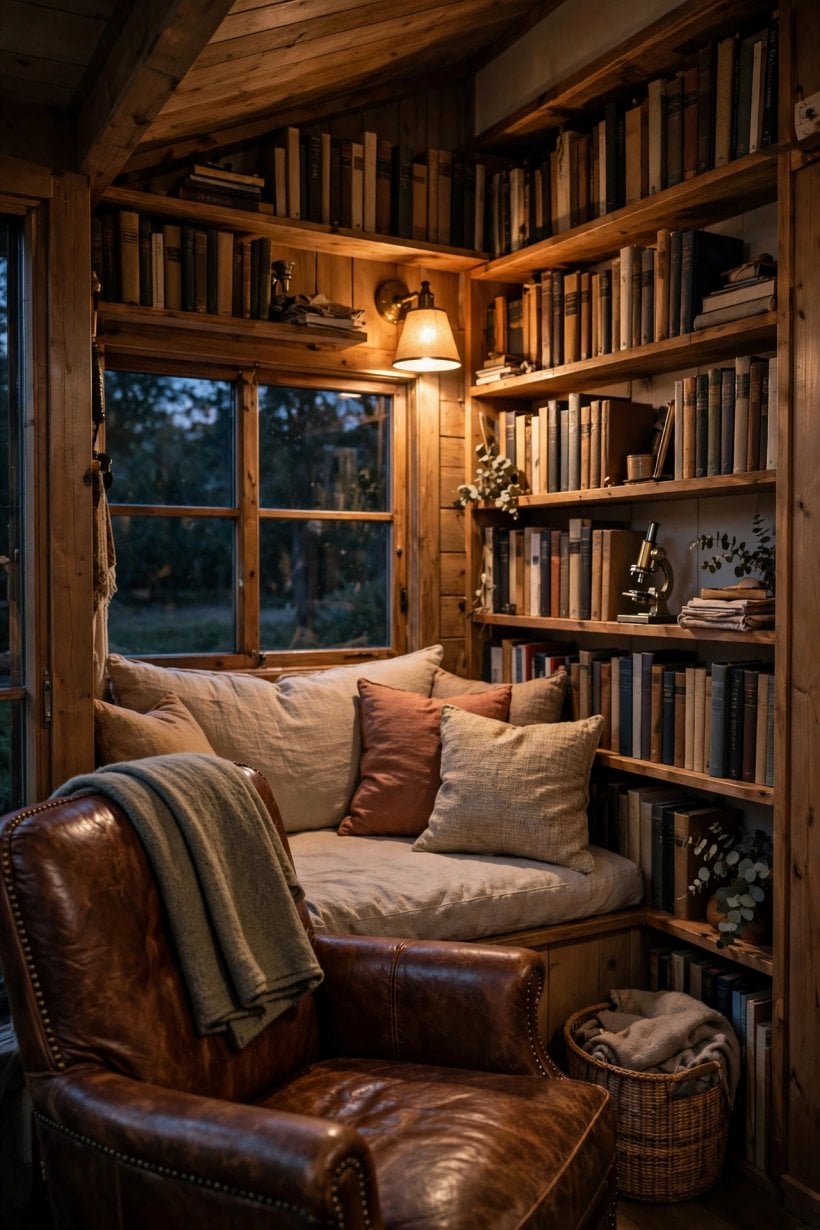
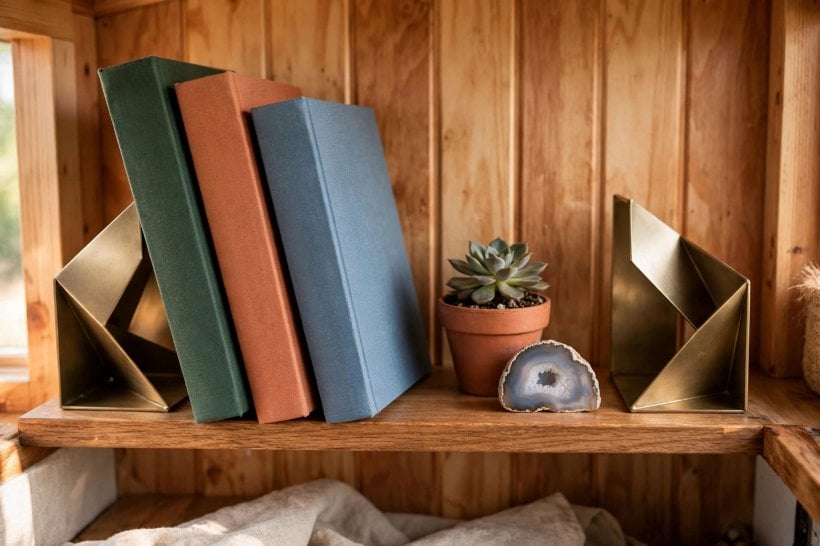
Atmosphere is what makes the styled room a library rather than a bookshop. The scent is paper and leather — the library smell no candle quite fakes. The sound is quiet, the pages turning. The warmth is the lamp’s glow against the shelves. The truth: the atmosphere is the library — the felt thing, the hush the books themselves absorb and deepen, the focus the quiet enables, the retreat behind the closed door. Styling the shelves completes it: the beautiful book displayed with its cover faced out as art, the bookends and objects that punctuate the shelves — the functional holding the row, the sculptural displayed as art, the personal collected as story — and the rotation that keeps the display seasonal and fresh. The displayed inspires because it is seen; the wider craft of styling small rooms this way fills our guides to tiny house decorating ideas and interior design home decorating ideas for tiny houses.
9. The Working Library: Writer, Student, Researcher, Child
The library-office hosts four working lives, and each arranges the same shelves differently. The writer’s office keeps the desk clear for the page, the referenced books near, the quiet protected and sacred, and the ritual daily — the words. The study corner serves the student: focused and small, the textbooks organised on their shelves, the desk clear for study, the light good and essential. The researcher’s office surrounds itself with knowledge: the reference wall consulted constantly, the desk large enough for the spread, the files organised and found. The truth common to all three: the working library works — the words, the learning, the knowledge, each within arm’s reach of its shelves.
The fourth life is the youngest. The children’s library corner keeps its shelves low and reached, its cushions cozy for the read, and its small collection rotated so the library stays fresh — the children read because the corner invites it. Around all four lives run the rituals that make the room lived rather than merely used: the morning pages that start the day, the work that references the shelves, the evening chair that rewards it. Deeper desk-and-workday setups for the grown-up versions of these corners are covered in our guide to home office design ideas for tiny houses and small spaces, and the reading chair itself often lives in the room these corners open from — the layouts in our guide to living room interior design ideas for tiny houses show where it sits.
10. The Commandments, the Budget and the Mistakes
The ten commandments of the library-office compress the whole guide: curate the collection; shelve the walls; centre the desk; light warmly; chair the reading; organise the findable; digitise the overflow; display the beautiful; quiet the space; read daily. They are not decoration tips — they are the room’s operating rules, and the mistakes to avoid are simply the commandments broken. The too many: books crammed and unfindable. The no system: chaos, the lost title. The dark: the cave, unreadable at noon. The uncomfortable: the chair nobody uses. The rule under both lists: the library serves — the reading.
The budget proves how little the serving costs. The shelves are the IKEA wall at $100. The books are thrifted at $1. The desk is secondhand at $75. The chair is vintage at $50. The total is $300 — the scholarly room, complete. The truth the numbers tell: the budget reads — rich, because the expensive parts of a library were never the furniture; they are the books, the light and the habit. And the habit is where the library ends and begins again: the legacy library collected across a lifetime, annotated in the margins, passed to children as an inheritance; the first book that started it, beloved and shelved; the last page of each finished book, closed in satisfaction with the next already chosen. The payoff gathers all of it — the mind fed daily, the work inspired by its surround, the home distinguished by its soul. For the library is the soul of the house, and it is built the way it is read: one book at a time.
Final Considerations
The home library office is the tiny house at its most thoughtful: the books that surround, the desk that centres, the chair that rewards, and the warm light that makes all three glow. Curate the collection until every book earns its shelf, organise it until every title is findable, and let the digital carry the overflow — then sit down in the room that thinks. Shelve, sit, read: the library awaits.


0 Comments