

A broken oven, a silent fridge or a washer that stops mid-cycle leaves you with the same urgent question: who should you trust to open it up? Booking a repair visit well is less about finding a name fast and more about checking a few things first.
This guide walks through what to check before, during and after a visit — authorisation, fees, estimates, parts, safety and paperwork — in general terms, for any appliance.
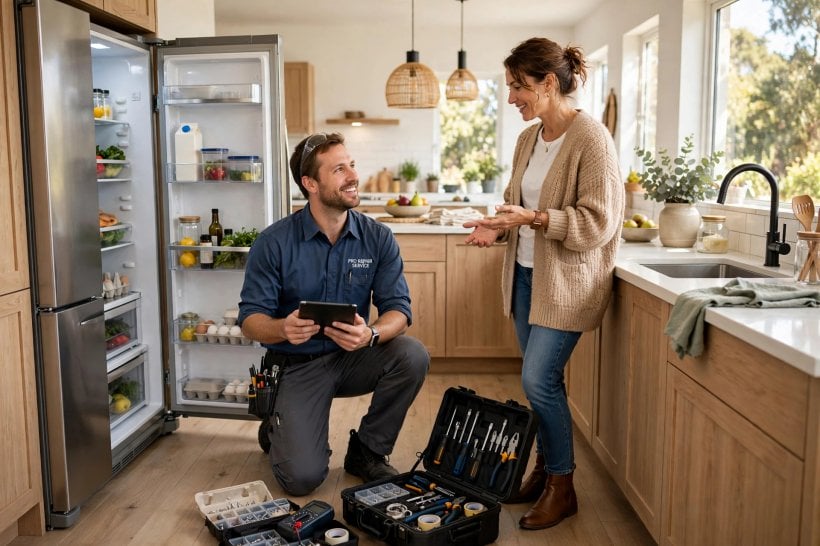
1. Appliance Repair Service at a Glance
An appliance repair service is, at its simplest, a business that diagnoses and fixes household machines — cookers, refrigeration, laundry and dishwashing appliances, and small heating and water appliances among them. Beyond that simple definition, services differ a great deal: in who authorises them, which brands and ages of machine they will take on, how they charge for a first visit, where they source parts, and what guarantee they put on their work. None of those differences is visible from an advert or a van door. All of them become visible if you ask a handful of plain questions before you book, while the visit is happening, and again before you pay. This guide works through those questions in order, in general terms that apply whichever type of service you choose.
| What does authorisation actually mean? | It generally means a manufacturer or brand has approved that service to work on its appliances, often with brand training and access to its parts and technical information — it is a relationship with the brand, not a general mark of quality. |
| Should I check my warranty first? | Yes. If the appliance is still covered, its terms may require warranty work to go through an authorised route, so check before booking anyone else. |
| What should I ask about fees? | Ask what a call-out covers, whether a diagnostic charge applies, and how payment works — before the visit, not at the door. |
| What paperwork should I end up with? | An itemised invoice, a record of parts fitted and work done, and the terms of any guarantee on the repair, in writing. |
| What is a general red flag? | Pressure to decide on the spot, a refusal to put an estimate or guarantee in writing, or a diagnosis that cannot be explained in plain language. |
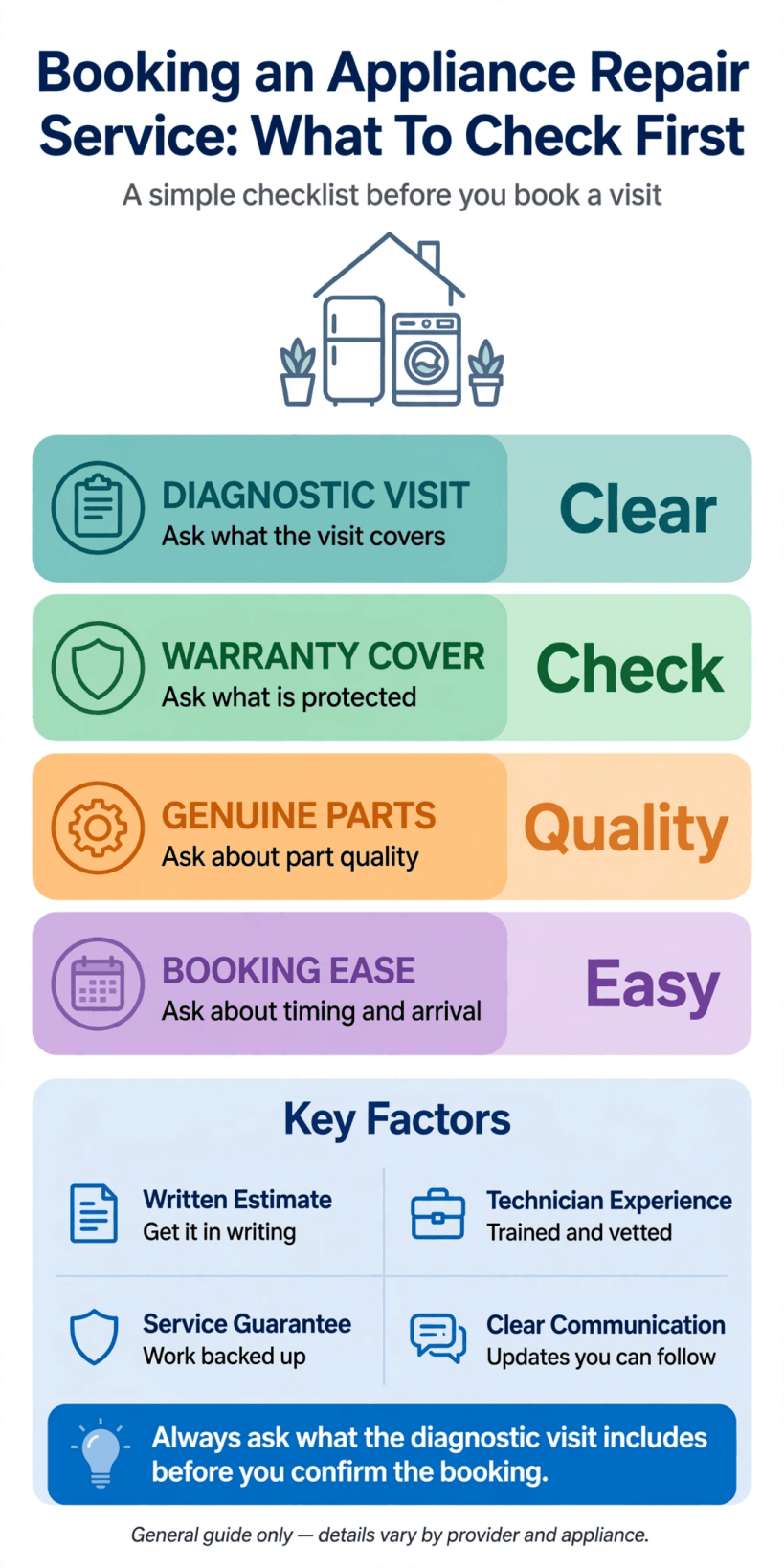
At a glance: check authorisation and warranty before you book, fees and estimates before work starts, and guarantee and paperwork before you pay.
2. Factory-Authorised or Independent: What the Labels Mean
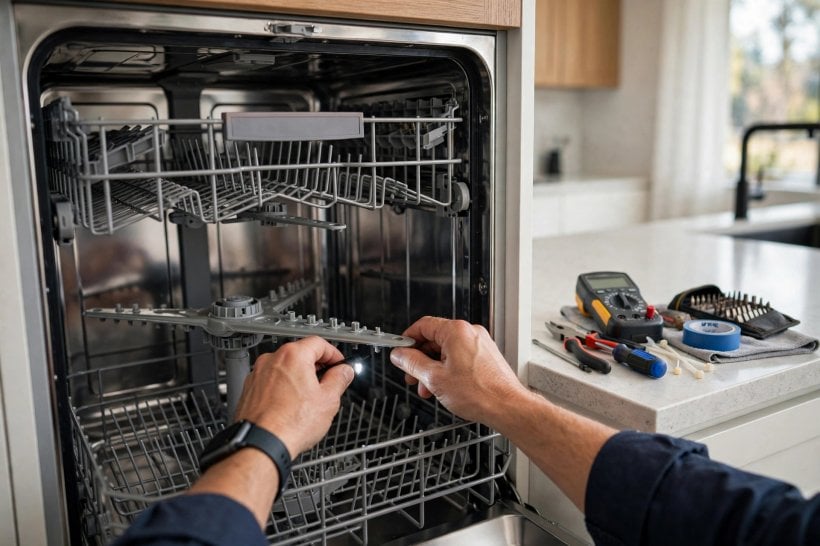
A factory-authorised service is one that a manufacturer has approved to repair its appliances. In general terms, that approval usually brings brand-specific training, access to the maker’s technical manuals and fault information, and a route to genuine parts supplied through the brand’s own channels. Authorised services are also normally the route for work carried out under the manufacturer’s own warranty. An independent service, by contrast, works for itself rather than for a brand. Independents commonly cover many brands in one visit list, take on older machines that authorised networks may no longer support, and build their reputation locally rather than through a manufacturer’s name. Neither label, on its own, guarantees a good repair — it tells you who stands behind the business, not how carefully the individual technician works.
So choose by fit, not by label alone. Ask an authorised service whether your exact model is within its agreement, and ask an independent how familiar they are with your brand and model, where they obtain its parts, and what they would do with a fault that needs brand-only information. The question matters most where appliances are specialised or space-saving: the models covered in our guide to compact kitchen appliances for tiny houses, for example, can need model-specific parts and access know-how that a generalist may not carry. An honest service of either type will answer those questions plainly — and will tell you, before booking, if your machine is one they would rather not take on.
3. Check the Warranty Status of Your Appliance First
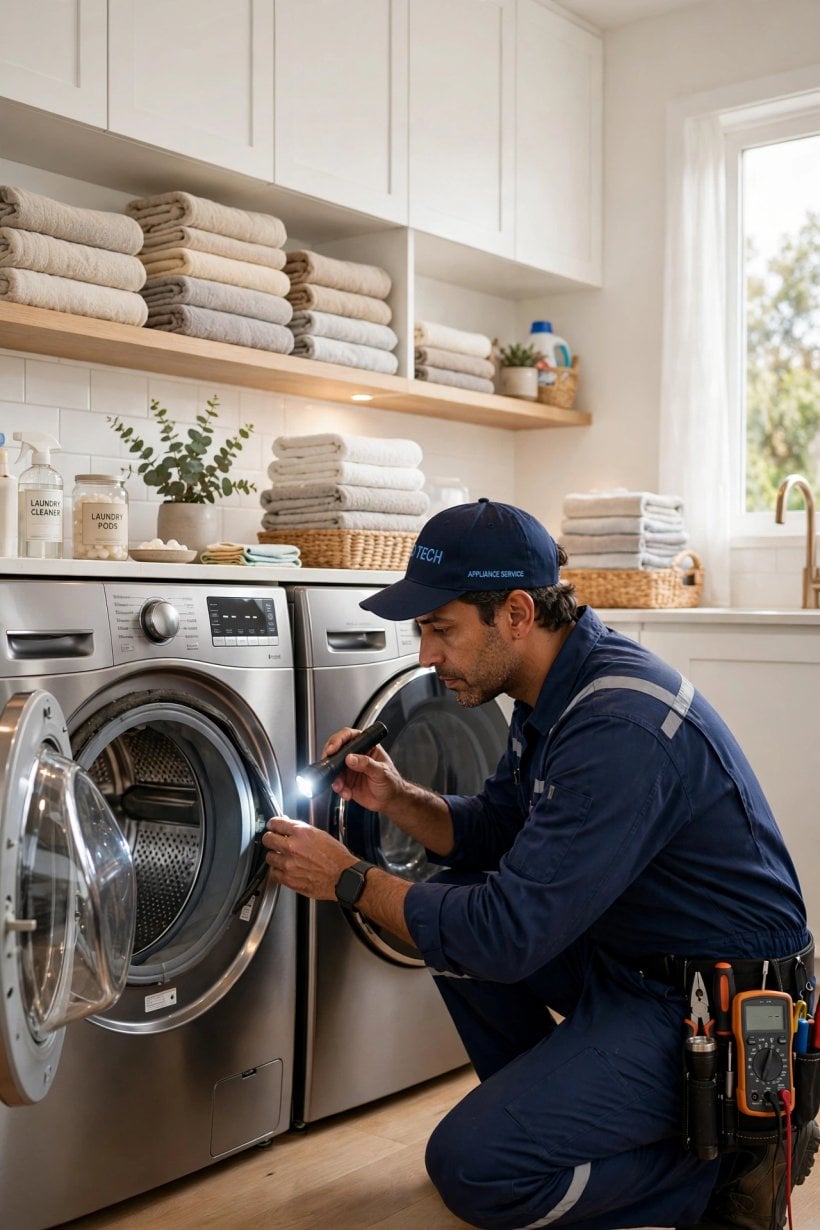
Before you book anyone, establish whether the appliance is still covered and by what. Look for the purchase receipt, any guarantee card or registration confirmation, and the manual, which usually explains the cover the maker provides and what it excludes. You may also have separate cover to consider, in general terms: an extended plan taken out after purchase, a retailer arrangement, or home insurance that touches certain breakdowns or accidental damage. Each has its own terms and its own required route for making a claim, and those terms — not habit or convenience — decide who should do the work. If the machine is still under the manufacturer’s warranty, repairs outside the authorised route can sit outside those terms, so read them first and ask if you are unsure.
If the appliance is out of cover, you are free to choose on other grounds — experience with the model, parts access, fees and guarantee — but the paperwork still earns its keep. Find the rating plate and note the model and serial numbers exactly as printed; you will be asked for them when you book, and they are how the right parts are identified. Write down the fault in plain words too: what the machine does or stops doing, any error code it shows, when the problem started, and whether it has happened before. A clear description, given at booking rather than at the door, helps the service send the right person with the right likely parts — and helps you judge, later, whether the diagnosis you are given matches the fault you reported.
4. Call-Out, Diagnostic Fees and Written Estimates

Fee arrangements vary from service to service, so the check is not what the fee is — it is whether the policy was explained before the visit. Ask whether a call-out charge applies simply for attending, whether diagnosis is charged separately from repair, and what that first charge actually covers: a look, a tested diagnosis, a written estimate, or a completed small fix. Ask whether any diagnostic charge is taken into account if you go ahead with the repair, when payment is expected, and whether visits at less convenient times are charged differently. A reputable service states all of this plainly at booking. What you are avoiding is the worst arrangement of all: learning the fee structure for the first time while a technician stands in your kitchen and the appliance sits in pieces.
Then ask for the estimate in writing before work beyond diagnosis begins. A useful estimate separates labour, parts and any call-out or diagnostic element, describes the work proposed, and makes clear what is not included. It should also say what happens if opening the machine reveals a second fault — the honest answer being that work pauses and you get a revised estimate to approve, rather than a larger bill explained afterwards. Understanding your own machine helps you read that estimate: for laundry and dishwashing appliances in particular, our tiny house plumbing layout guide explains the water supply and drainage connections a technician will be testing, so terms like inlet, waste and trap mean something when they appear on the page in front of you.
5. Parts: Sourcing, Waiting and the Warranty on Parts
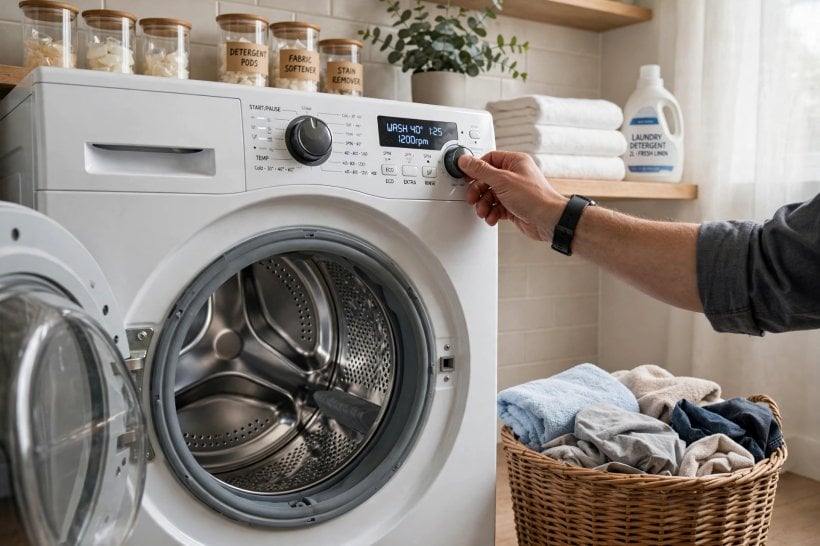
Most repairs stand or fall on a part, so ask where parts come from before you agree to have one fitted. In general terms, a service may fit a genuine part supplied through the manufacturer, a compatible part made by another supplier, or occasionally a reconditioned part — each can be a reasonable choice in the right situation, and each should be a choice you hear about, not one you discover later. Ask which type is proposed for your machine and why, whether it is in stock or must be ordered, and what the wait means in practice: a second visit, an appliance left safe but unusable, or a machine that can still be run carefully in the meantime. If a part is being specially ordered for you, ask what you are committing to before it is ordered.
Ask, too, what cover comes with the part itself, because a part’s warranty and a guarantee on labour are two different things and are not always the same length or on the same terms. Get both stated in writing, ideally on the estimate or invoice, so there is no argument later about which element failed. Keep any paperwork that comes with the part, and feel entitled to ask to see the old part that was removed — it is yours, it is evidence of what was replaced, and a straightforward service will hand it over or show it without being pressed. If a repair involves more than one part in sequence, ask whether each stage is diagnosed on its own merits, so you are approving one tested step at a time rather than funding a process of elimination.
6. Who Is Actually Coming to Your Door?
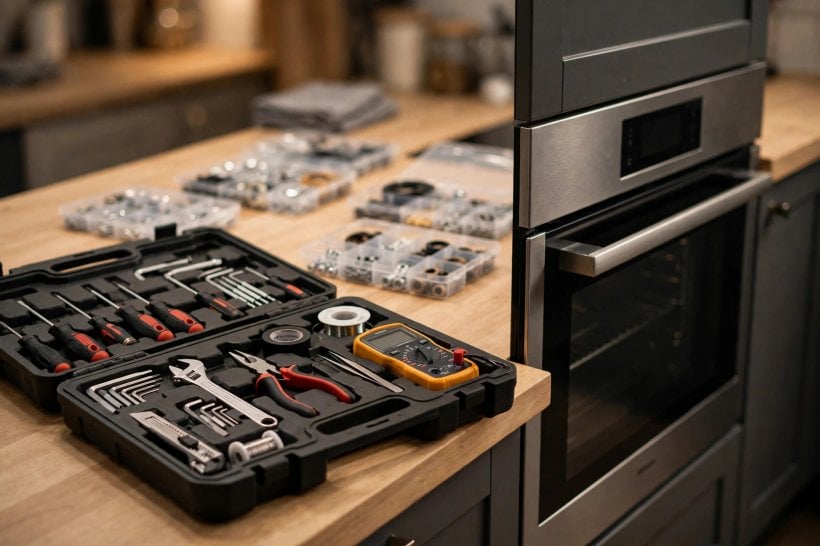
A booking is a promise that a stranger will be let into your home, so confirm the practical details in advance: the name of the firm, the name of the technician if it can be given, an arrival window, and how the visit will be confirmed. On the day, ask to see identification before the door is fully opened and check it against the booking you made — a genuine technician expects this and will not be offended by it. If anything does not match, there is a simple test: contact the firm yourself, on the number from your own booking confirmation rather than any number you are handed at the door, and check before letting the visit proceed. Subcontracting is common in repair work and is not a problem in itself, but you are entitled to know if the person arriving works for a different firm from the one you booked.
Prepare the working visit as well, because a little preparation protects both your home and your bill. Clear access to the appliance and to anything the technician may need to reach, keep pets and small children out of the working area, and know in advance where your own household shut-offs are — the water stopcock, and the electrical consumer unit — in case they are needed quickly. Have your notes ready: the model and serial numbers, your description of the fault, any error codes you photographed, and invoices from previous repairs to the same machine. Good information at the door shortens diagnosis, and a clear working space means the time you are paying for is spent on the appliance rather than on moving furniture.
7. During the Visit: Diagnosis, Explanation and Honest Judgement

A good diagnosis can be explained. When the technician has tested the machine, ask what was checked, what failed, and what evidence points that way — a test result, a visible failure, a part that no longer does what it should. You do not need engineering knowledge to follow a clear explanation, and a professional will give one in ordinary words, show you the failed component where that is practical, and separate what is certain from what is a judgement call. Be more cautious when a diagnosis arrives instantly, before any real testing, or when it cannot be explained at all beyond a price. Also ask what the repair does not fix: an older machine may have other worn parts, and it is better to hear that honestly during this visit than to be surprised by a second breakdown shortly afterwards.
The other judgement you are paying for is repair versus replace, and it should be argued, not assumed. In general terms, the honest weighing-up considers the appliance’s age and overall condition, whether parts are still obtainable, what the repair leaves you with — a machine otherwise sound, or one likely to need further work — and whether a replacement would offer a real improvement in efficiency or safety rather than just newness. The same weighing-up applies well beyond kitchen machines: our guide to how to heat a tiny house shows how many replacement options a heating appliance can have, which is exactly why a technician’s reasons matter more than a technician’s preference. Ask for the reasoning, take time to consider it if the machine is safe to leave, and remember that declining a repair after a fairly charged diagnosis is a legitimate outcome of the visit.
8. Safety First: Gas, Electric and Water Isolations
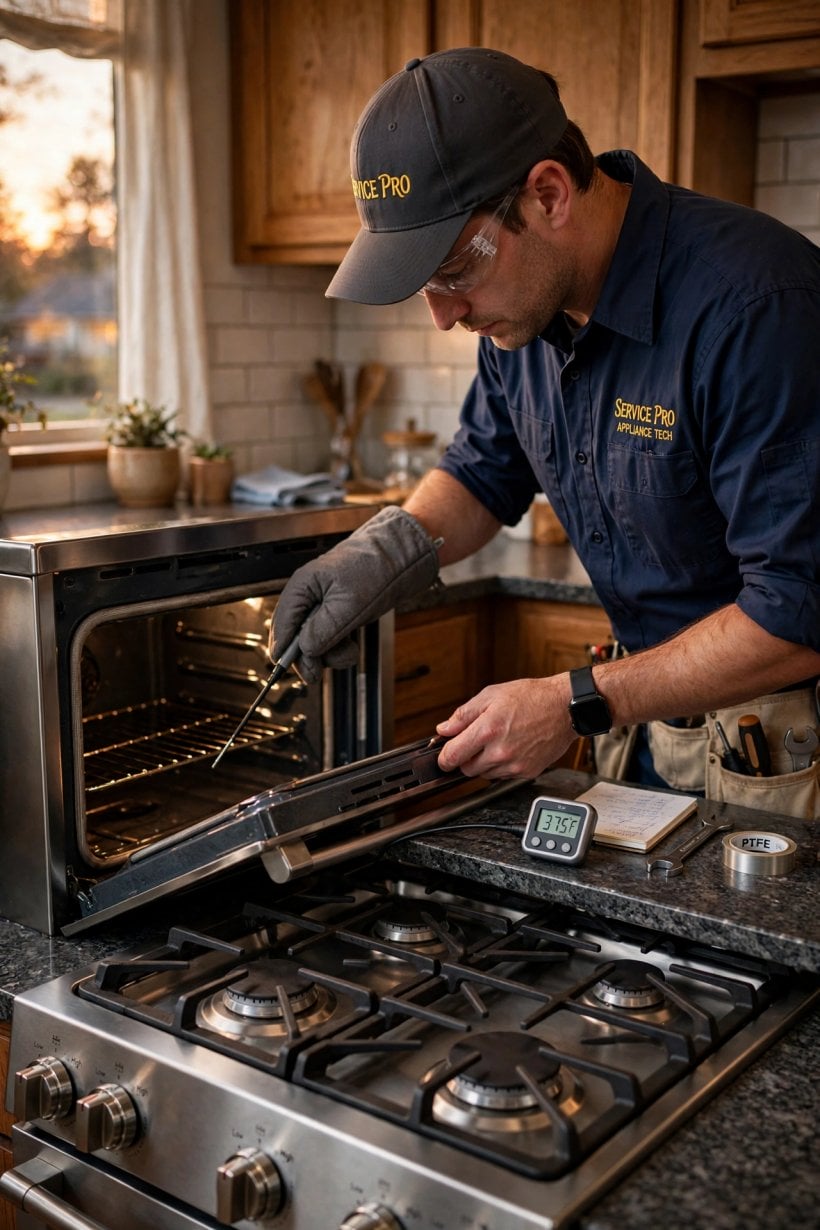
Appliances combine the three services that can hurt people and homes — electricity, gas and water — so ask, before and during the visit, how the machine will be made safe while it is worked on. For electrical work, that generally means isolating the appliance from the supply, not merely switching it off at its own controls, and treating a faulty machine as out of use until it is cleared: unplug it where you safely can, and do not keep running an appliance that trips circuits, smells of burning or behaves erratically. Gas appliances raise the stakes further: work on gas components is a job only for a technician properly qualified and registered for that work in your area, and you are entitled to ask for that credential directly. Our guide to tiny house electrical wiring explains household circuits and supplies in plain terms, and our comparison of propane and electric systems in tiny houses shows why gas and electric appliances each demand their own discipline.
Water deserves the same respect, because a slow leak can do more damage than a dramatic one. Ask how the supply to the machine will be isolated, where the water goes when hoses and connections are opened, and what happens if a valve or hose is found to be deteriorated once it is disturbed — a common moment for a small job to grow, and one a good technician warns you about before, not after, it happens. Know where your stopcock is before the visit, keep towels and a container within reach as basic prudence, and check the area again later in the day and the following morning after any plumbing connection has been remade. If a fault leaves an appliance unsafe to use, get that instruction clearly — and if necessary in writing — rather than guessing whether one more wash or one more meal is worth the risk.
9. After the Visit: Guarantee, Invoice and Service Records
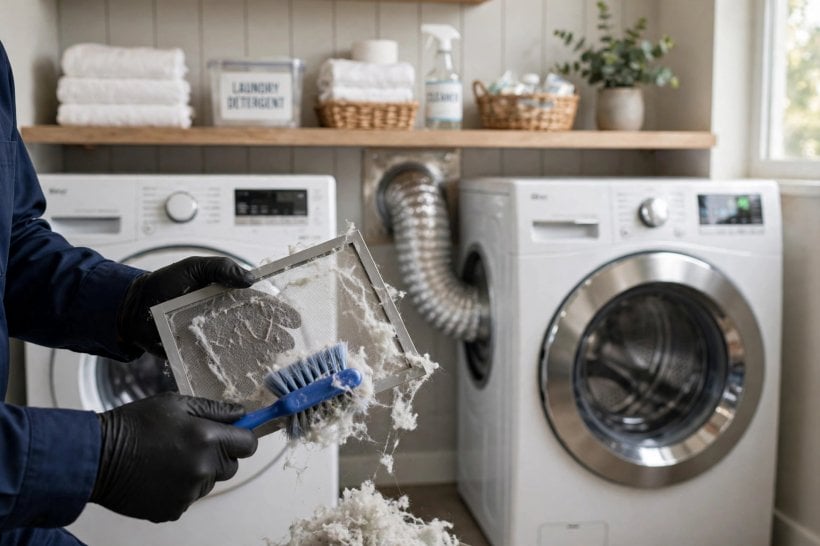
The visit is not finished when the machine runs again — it is finished when the paperwork matches the work. Ask what guarantee the service puts on the repair itself, in addition to any warranty on parts fitted: what it covers, usually the same fault and the work done, what it does not cover, and how long it runs, with the end point stated plainly. Get those terms in writing, on the invoice or a guarantee note, before you pay the final balance rather than after. Pay by a method that leaves a record, and check the invoice before the technician leaves: the date, your appliance’s model and serial numbers, the work carried out, the parts fitted, and the amounts charged should all match what was agreed in the estimate, with any difference explained and agreed rather than simply presented.
Keep that paperwork as the start of a service record for the appliance, filed with its manual, purchase receipt and any earlier invoices. A running record is what turns your next breakdown — on this machine or a related one — from guesswork into history: the next technician can see what was replaced, when, and under what guarantee. It is the same habit that our guide to solar panel maintenance recommends for household systems generally: small, dated records kept as you go are worth far more than memory when something fails. And if the same fault returns, act on the paperwork promptly: contact the same service first, quote the job or invoice reference, describe how the fault has recurred, and check the guarantee terms before paying anyone else to open the machine — a second repair by another firm can complicate a guarantee claim on the first.
10. Final Checks Before You Say Yes
Run the booking in order. Authorisation: is this service authorised for your brand, or independent — and are you comfortable with what that means for parts and know-how? Warranty: is the appliance still covered, and do its terms require a particular route for repair? Fees: do you know what call-out and diagnosis cost, what they cover, and when you pay? Estimate: have you seen it in writing, with labour and parts separated, before work beyond diagnosis starts? Parts: do you know what type of part will be fitted, where it comes from, and what warranty it carries? Identity: do you know which firm, and ideally which person, is coming — and will you check identification at the door? Safety: are the gas, electric and water isolations for this job clear, and is the technician properly qualified for the gas or electrical work involved? Guarantee: will the terms on the repair itself be in writing before you pay?
If any answer is missing, ask the question before you confirm the booking — none of these checks needs technical knowledge, and a good service answers every one of them without hesitation. The services worth using treat your questions as a normal part of the job, because they are: a repair visit is a purchase like any other, and the checks above are simply how you know what you are buying.
Final Considerations
There is no single type of service that is right for every breakdown. An authorised service brings a manufacturer’s training, information and parts channel, and is usually the required route while a warranty runs; an independent brings breadth across brands, experience with older machines, and a local reputation to protect. Either can do excellent work, and either should be able to satisfy the same basic checks — clear fees, a written estimate, identified parts with their own cover, verifiable identification, safe working on gas, electric and water systems, and a written guarantee backed by an itemised invoice. Judge the answers, not the label.
Do that, and a repair visit stops being a leap of faith. You will know who is coming, what the first stage costs, what will be fitted and what stands behind it — and if the fault ever returns, you will hold the records that turn an argument into a simple phone call.




0 Comments