

Few garden features change a space like moving water, and these backyard pond waterfall ideas show how a small cascade can bring sound, wildlife and calm to almost any plot.
Work through 75 practical options for layouts, stonework, planting, pumps and upkeep, then pick the combination that suits your garden, your time and your budget.
1. Planning First: Position, Size and the At-a-Glance Summary
Start with position. A pond you can see and hear from the house gets enjoyed daily, while one hidden at the far fence is easily forgotten. Think about sun and shade through the day, overhanging trees that drop leaves, access for a power supply installed by a qualified electrician, and where the excavated soil will go. Keep water away from boundaries and building foundations, and check local rules with your city or county, especially for fencing, depths and protected wildlife. Garden-wide planning help sits in these tiny house landscaping ideas, which cover small plots in useful detail.
| Question | Short answer |
|---|---|
| Best layout for a small garden? | A compact raised or corner pond with a short, wide cascade you can see from the patio. |
| Easiest waterfall to build? | A preformed spillway or a simple stacked-stone chute fed by a modest pump. |
| Best look for a cottage garden? | Weathered stone, a meandering stream section and soft marginal planting. |
| Best look for a modern garden? | A clean sheet of water over a smooth blade into a still, dark pool. |
| Key wildlife tip? | Add a shallow beach edge so birds and amphibians can get in and out safely. |
| Key check before digging? | Underground services, drainage and local rules — confirm everything before the first spadeful. |
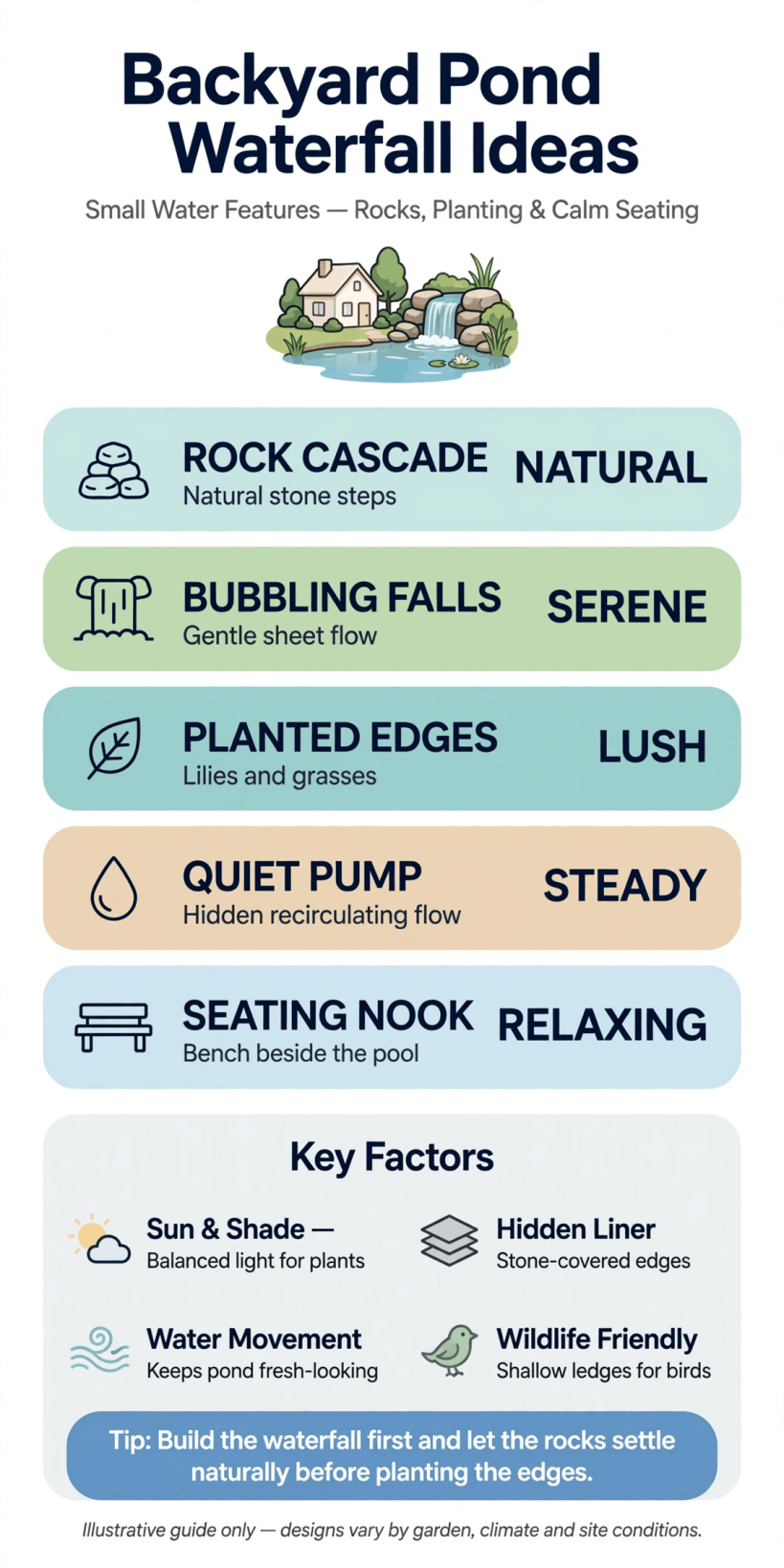
A quick visual summary of the main choices — layout, cascade style, planting and care — covered in this guide.
2. Layouts for Gardens of Every Shape
Layout decides how the water sits in the garden and how you move around it. If the pond is part of a bigger build, the sequencing in the complete guide to building your own tiny house is a useful reminder to plan services and levels before decorative work begins.
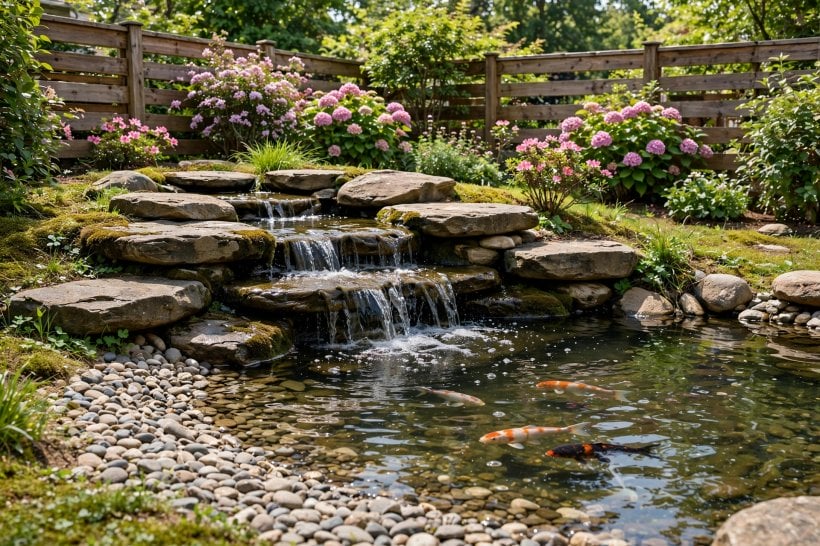
1. Classic kidney pond. A soft kidney outline with the cascade at the narrow end looks natural in most gardens and leaves generous planting shelves around the edges.
2. Corner cascade pond. Tuck the pond into a corner with the fall spilling from the fence line, freeing the middle of a small garden for lawn or seating.
3. Raised formal pond. A raised rectangle with a neat spout fall suits patios and courtyards, gives comfortable sitting edges, and keeps toddlers at a safer distance.
4. Stream-fed pond. A short, shallow stream tumbling over pebbles into the main pool adds movement and gentle sound along the whole route, not just at one point.
5. Two-tier ponds. A small header pool above the main pond creates a longer fall and a natural place for filtration planting between the two levels.
6. Wildlife pond layout. Irregular edges, a shallow beach and a fall kept to one end leave calm refuges where frogs, birds and insects can thrive undisturbed.
7. Koi-style deep pond. A deeper, simpler outline with a strong fall for aeration; plan filtration and shade carefully and take specialist advice before stocking fish.
8. Patio plunge pond. A compact, deep pool with a wall-mounted cascade cools a hot patio corner and reflects light into nearby rooms beautifully.
9. Woodland pond. In shade, a still pool with a low, mossy trickle fall feels like a clearing in a wood and asks for ferns, not lilies.
10. Split-level terrace ponds. On slopes, terrace two or three small pools down the gradient so each fall is short, safe and easy to maintain individually.
3. Cascade Styles From Gentle Trickles to Bold Sheets
The fall is the personality of the feature. Match its energy to the garden: a whisper near a reading bench, a lively tumble beside a busy family patio where it can mask traffic noise.
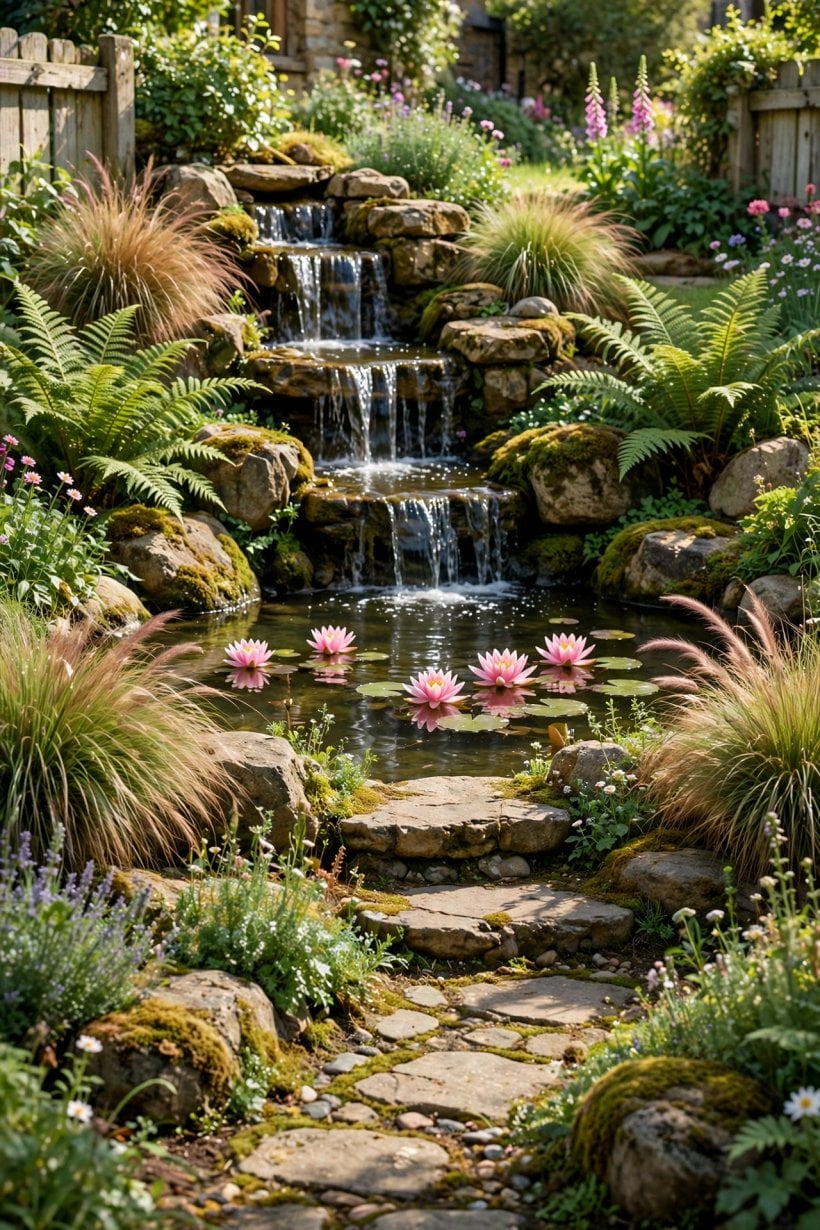
11. Stacked-stone chute. Flat stones layered like steps give a broken, sparkling fall that looks convincingly natural and is forgiving for first-time builders to adjust.
12. Smooth water blade. A hidden slot releasing an even sheet of water delivers a calm, contemporary sound and a mirror-like curtain over still water.
13. Boulder tumble. Water weaving between rounded boulders feels like a hillside spring; leave planting pockets between stones for a settled, mature look.
14. Stepped cascades. A series of small drops rather than one big fall keeps sound gentle, oxygenates well, and is safer and cheaper to build.
15. Spouting ornament. A simple spout — a bamboo cane, a metal rill or a stone channel — adds a precise, musical note to small formal ponds.
16. Curtain fall. Letting water drop clear of the rock face into the pool creates a louder, brighter sound and a space behind the curtain for planting.
17. Meandering rill fall. A shallow channel that zigzags down a bank slows the water, spreads the sparkle and suits informal, naturalistic planting schemes.
18. Double falls. Two smaller cascades entering from different sides animate the whole surface and let you tune one quieter than the other.
19. Seasonal trickle. A fall designed to run low and slow in dry months still looks intentional, with wet stone and mosses carrying the effect.
20. Dry-creek illusion. When the pump rests, a well-shaped stone channel still reads as a feature — design the dry route as carefully as the wet one.
4. Stone, Edging and Colour Around the Water
Stonework frames everything. Borrow colours from the house and paths so the pond feels placed rather than dropped in, and echo planting colours from schemes like these colourful tiny house interior ideas if the pond sits beside a garden room or studio.
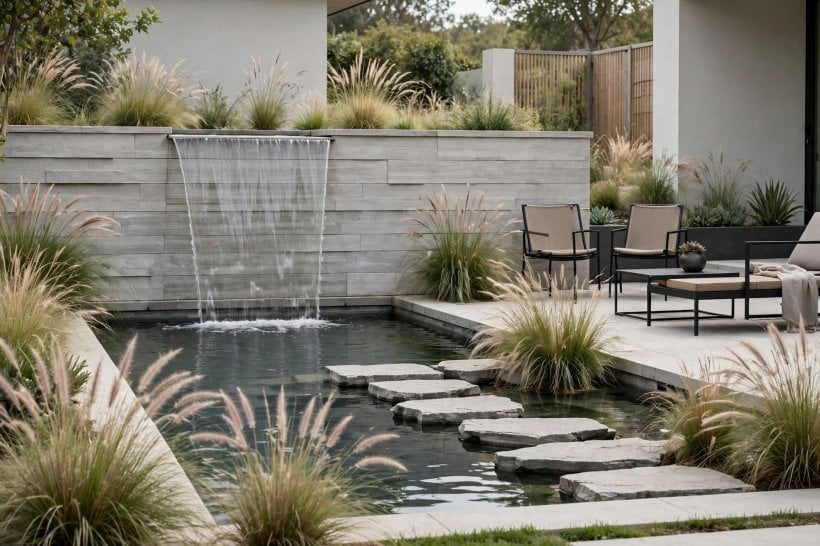
21. Local stone match. Using stone similar to your walls and paths ties the feature to the place and weathers at the same gentle pace.
22. Pebble beach edge. A sloping pebble margin hides the liner edge, gives wildlife easy access, and makes the waterline look soft and natural.
23. Slate and dark stone. Dark wet stone deepens water colour, shows off pale fish and flowers, and suits shaded or contemporary gardens especially well.
24. Warm sandstone surround. Honey-toned stone glows in evening light and pairs with terracotta pots and Mediterranean-style planting around a sunny pond.
25. Timber deck edge. A deck boardwalk edge lets you sit with feet near the water and gives clean access for netting leaves and maintaining pumps.
26. Brick formal edging. A neat brick soldier course matches traditional houses and raised beds, keeping the outline crisp through every season.
27. Boulder groupings. A few large feature boulders, bedded in firmly, anchor planting and make small cascades look convincingly part of the landscape.
28. Gravel margin. A gravel collar drains well, discourages mud, and provides a dry maintenance path all the way around the water.
29. Moss and creeping plants. Low creepers softening the stone joints blur the built edge; keep them trimmed back from the fall itself so flow stays clear.
30. Two-tone contrast. Pale coping against dark water, or the reverse, sharpens the outline and photographs beautifully from the house in all seasons.
5. Pumps, Filtration and Clear Water Without Fuss
Clear water is mostly plumbing and patience. Size equipment for the pond you actually have, keep pipe runs short, and plan access so cleaning a filter is a five-minute job, not an excavation.
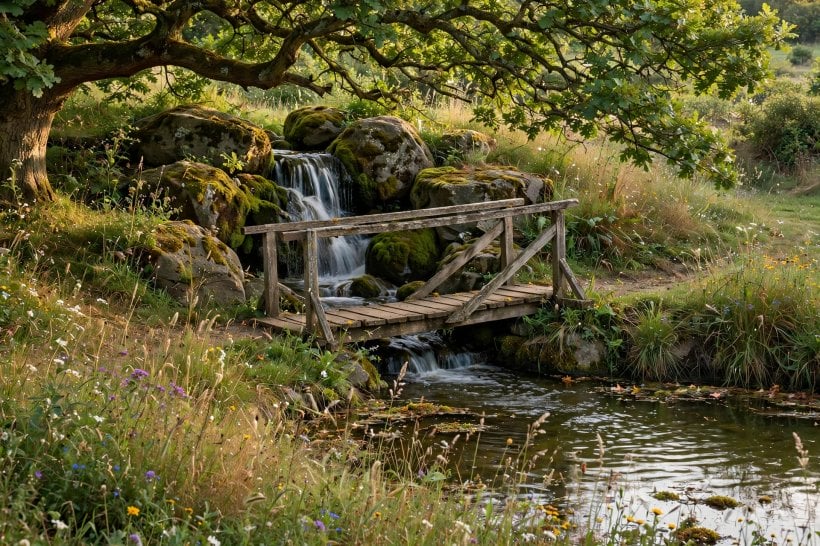
31. Right-sized pump. Choose a pump matched to the fall height and width you want; an oversized pump wastes energy and makes a noisy, splashy fall.
32. Hidden filter box. A filter tucked behind planting or in a lidded chamber near the edge stays invisible but reachable for routine rinsing.
33. Planted filtration. A gravel-and-plants top pool can polish water naturally as it passes through roots before returning over the fall.
34. Skimmer for leaves. In gardens under trees, a surface skimmer saves endless netting and keeps the fall running cleanly through autumn.
35. Bottom drain thinking. Even on small ponds, a low point that can be siphoned makes the annual clean dramatically easier — plan it at build time.
36. Safe electrics. All outdoor power should be properly rated and installed or checked by a qualified electrician, with cables protected and accessible.
37. Solar assistance. Solar pumps suit tiny wildlife ponds and gentle trickles in sunny spots, accepting that flow will pause on dull days.
38. Shade for balance. Partial shade over the water slows algae growth; floating leaves and a pergola edge both help without darkening the whole pond.
39. Barley straw tradition. Many keepers use barley straw to help keep water clear as it breaks down; replace it as directed and watch results over weeks.
40. The patience rule. New ponds cloud before they clear. Let plants and filter biology establish before changing products or emptying anything.
6. Planting That Makes Water Look Settled
Plants soften stone, shade the surface and feed wildlife. Use widely grown, reliable choices and give each plant the depth it likes on the pond shelves you built for it.
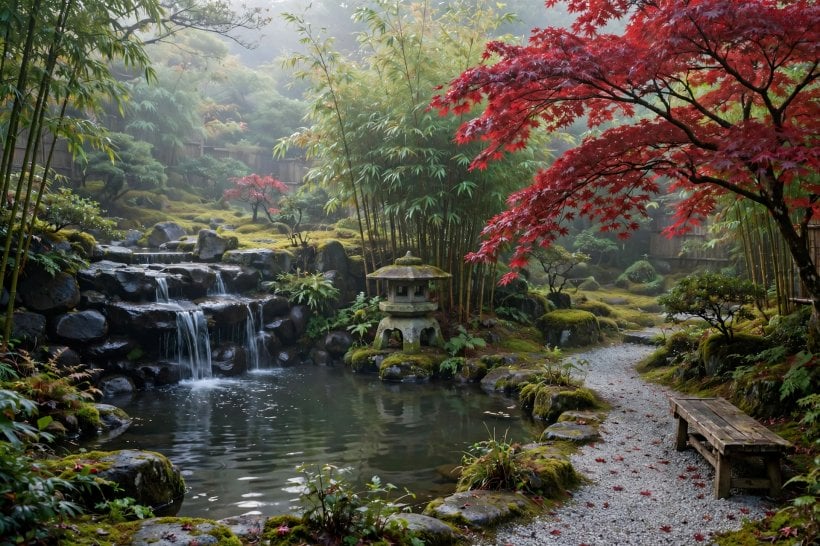
41. Water lilies. The classic surface leaf and flower for sunny ponds; plant in baskets and lower them to the depth the variety prefers.
42. Iris at the margins. Iris leaves give upright structure at the edge and flowers in season, while their roots help knit the margin together.
43. Hostas in the shade. Around a shaded pond, hostas give lush, architectural leaves that look wonderful reflected in still, dark water.
44. Ferns on the banks. Ferns love the damp shade near a fall and soften stone with fine texture through spring, summer and autumn.
45. Ornamental grasses. Grasses behind the pond catch evening light, move in the breeze and hide fences or filter boxes without heaviness.
46. Marsh marigold. A cheerful spring flower for shallow margins that wakes the pond up early and feeds the first insects of the year.
47. Pickerel weed. Upright spikes and glossy leaves suit sunny margins and give dragonflies perches above the water all summer long.
48. Creeping jenny edging. A low, trailing plant that knits edges and tumbles over stone, easy to trim whenever it wanders too far.
49. Oxygenating plants. Submerged oxygenators support clear water and pond life; add them early and thin them whenever they crowd the surface.
50. One specimen tree. A small Japanese maple or similar feature tree nearby gives dappled shade and reflections; keep heavy leaf-fall species further away.
7. Small Gardens, Patios and Tiny Homes
Small plots succeed with one strong feature rather than many small ones. The same discipline behind this tiny house and small-space interior design guide applies outdoors: measure honestly, build in storage and access, and let the water be the single star.
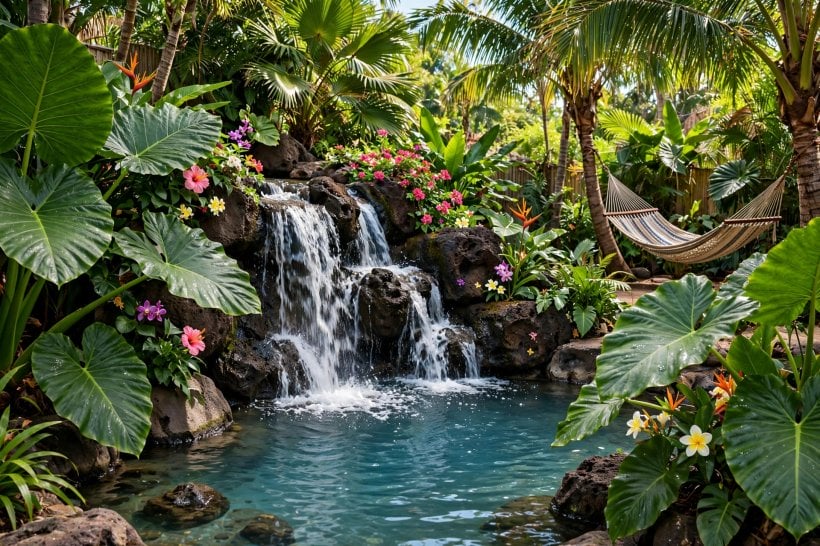
51. Barrel and half-barrel ponds. A sealed barrel with a tiny spout cascade makes a complete feature for the smallest patio and can move house with you.
52. Wall-mounted cascade. A blade or spout on a wall above a slim trough pond gives sound and movement while using barely any floor area.
53. Raised sleeper pond. Railway-style sleepers or chunky timbers build a raised pond quickly, with a sitting edge and space beneath for hidden pipework.
54. Mirror-still mini pond. Skip the fall and use a tiny bubbler under a grid of pebbles for a safe, subtle feature beside paths and play areas.
55. Corner rill. A narrow rill running along a fence into a small pool stretches the sound of water across a long, thin garden.
56. Pond in a raised bed. Dropping a lined pool into an existing raised bed structure hides edges and plumbing inside planting you already maintain.
57. Balcony water bowl. Where digging is impossible, a wide bowl with a small solar bubbler and one miniature lily brings water to upper floors.
58. Hidden reservoir fall. A pebble-covered reservoir under the cascade keeps open water minimal while the fall itself looks generous and natural.
59. Seating-first layout. In a tiny garden, place the bench first and design the pond and fall entirely around that single favourite viewpoint.
60. Night-first design. If the garden is mostly used after work, plan the fall where evening light and a warm lamp will catch it best.
8. Budgets and Build Routes, Kept Honest
Money mostly follows excavation, stone and electrics. A modest pond built carefully will outperform an expensive one built hastily, so spend first on the liner, the pump and safe power, and keep finishes simple until the water has run clear for a season.
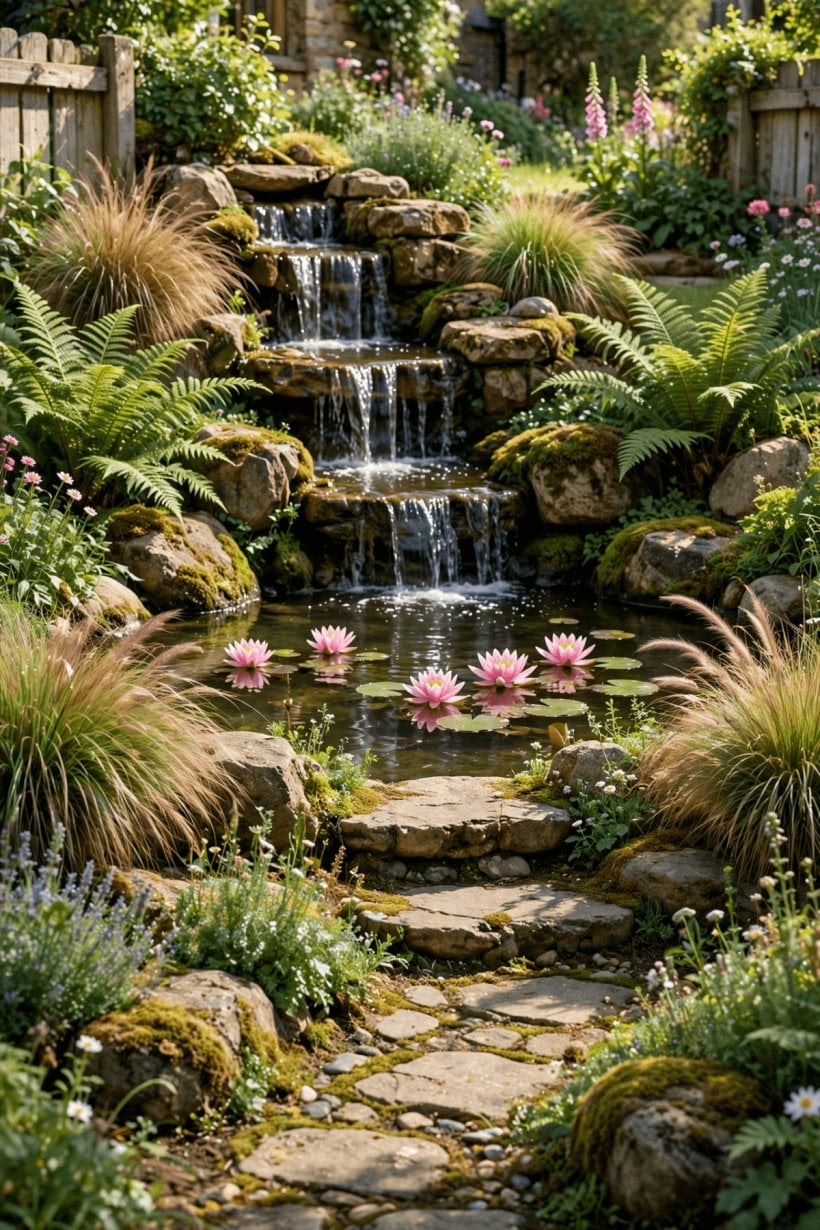
61. Start with a kit-free plan. Many simple ponds need only liner, pump and stone you source yourself; list every item before buying so nothing is duplicated.
62. Dig by hand, save the hire. On small ponds, hand digging is realistic and lets you shape shelves precisely; plan where the soil will improve beds or levels.
63. Phase the planting. Structure plants first, flowers later. Marginals establish while you learn the pond, and later additions slot in without waste.
64. Buy stone once, well. Cheap stone that flakes or stains water costs twice. Choose sound, pond-safe rock from the start and keep spare pieces.
65. Protect the electrics budget. Safe outdoor power is not the place to economise; have it installed or checked professionally and keep certificates with house papers.
66. Allow a contingency. Ground hides surprises — roots, rubble, old foundations. Hold back part of the budget so a discovery does not stall the build.
67. Compare quotes on the same spec. Ask builders to price identical dimensions, liner type and equipment in writing, so you compare workmanship rather than omissions.
68. Check permissions and services. Depths, fencing and work near boundaries can be regulated, and cables or pipes may cross the plot — verify both before digging.
9. Lighting, Seating and Wildlife Finishing Touches
The best ponds earn their keep at dusk and in winter, not just on summer afternoons. Small additions — a lit fall, a dry seat, a shallow beach — multiply the hours you spend by the water, much like the finishing layers in these tiny house decorating ideas.
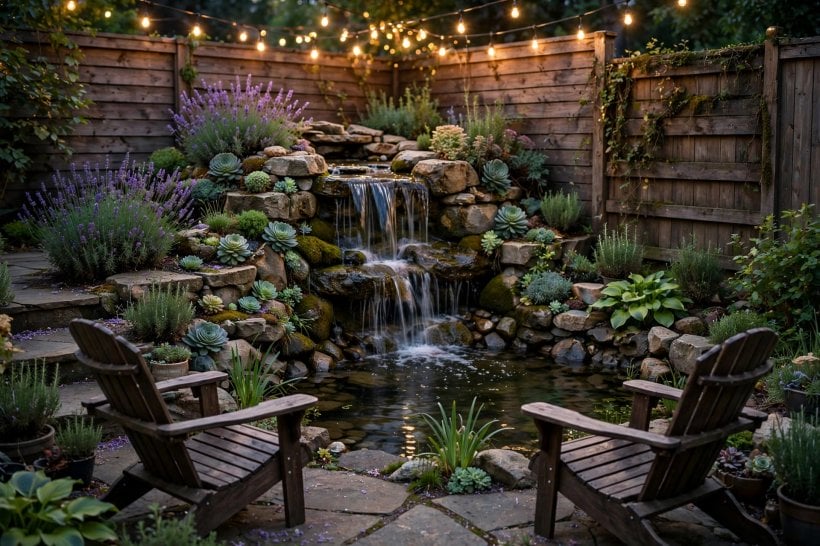
69. A light behind the fall. One warm light tucked behind or beneath the cascade makes the water glow after dark without lighting the whole garden.
70. A viewing bench. A simple bench at the pond’s best angle, on a dry gravel pad, will be used far more than any ornamental extra.
71. Stepping stones for access. One or two flat stones give dry standing room for feeding, netting and pump checks without muddy shoes or trampled plants.
72. A shallow wildlife beach. A pebble slope at one edge lets birds bathe and hedgehogs drink and climb out safely — a small kindness with big returns.
73. A heron-aware design. Where herons visit fish ponds, steeper sides, planting cover and a taut line system help; take local advice on what works.
74. Winter interest. Grasses, seed heads and evergreen structure around the pond keep it handsome when the fall is resting in hard frosts.
75. A simple care calendar. Note spring clean, summer top-ups, autumn netting and winter checks on one page, and tape it inside the shed door.
10. Maintenance Through the Seasons
Little and often wins. Skim leaves before they sink, rinse filter media in a bucket of pond water so its biology survives, and top up levels in hot spells with rainwater where you can. In spring, remove winter debris and check pump cables and the fall for shifted stones. In summer, thin oxygenators and floating leaves so light and air still reach the water, and watch fish ponds closely in thunderstorms. Autumn is netting season under trees, and cutting back dying marginal foliage keeps it out of the water. In winter, stop ice sealing the surface completely on stocked ponds, and switch the fall off if plumbing risks freezing in your climate — local pond keepers and your city or county guidance will say what is normal locally. The same steady rhythm described in these tiny house interior design ideas — small regular care over big rescue jobs — keeps a pond clear and calm for years.
Final Considerations
Choose the pond you will actually maintain, in the spot you will actually see it, with a fall whose sound suits the neighbours as well as you. Build the structure carefully, plant generously, and give the water time to settle before judging it. Done well, backyard pond waterfall ideas stop being a project and become the place everyone in the house drifts towards — first with morning coffee, then again at dusk. For the rooms that look out on it, these tiny house living room ideas will help you frame the view from inside too.

0 Comments