
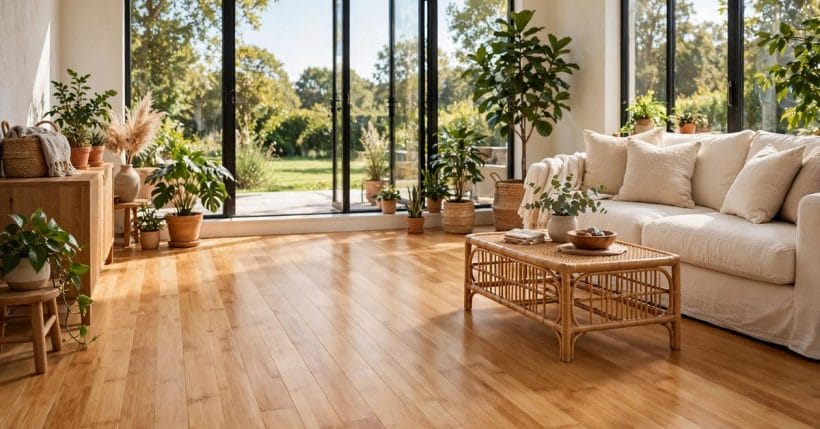
Bamboo flooring has a warmth that photographs well and lives well too, but the floor you fall in love with in a showroom is not always the floor that suits your home. Planks can look alike at a glance while behaving quite differently once they are down, walked on, spilled on, and lived with through changing seasons. A careful check before you buy saves you from the slow disappointment of a floor that is too pale for the room, too glossy for your taste, or too fussy for the way your household actually lives.
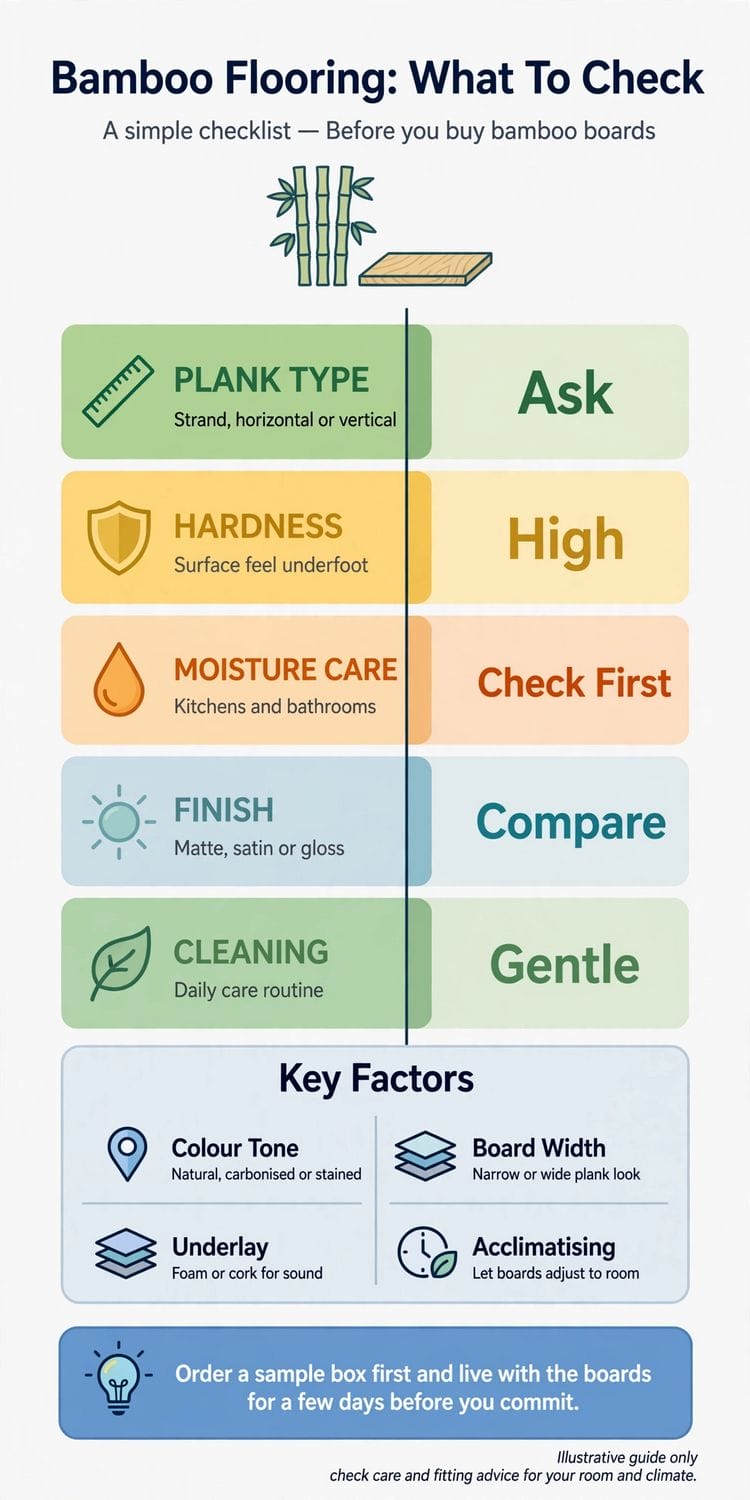
This guide walks through the checks that matter, in the order you are likely to meet them: the kind of plank, how hard it feels underfoot, the colour it will bring into the room, the width of the boards, the finish that protects the surface, and the practical questions of moisture, settling time, underlay, and cleaning. None of these checks needs specialist knowledge. Each one is something you can look at, touch, and ask about before you commit, and together they give you a clear picture of whether a particular bamboo floor is right for your rooms.
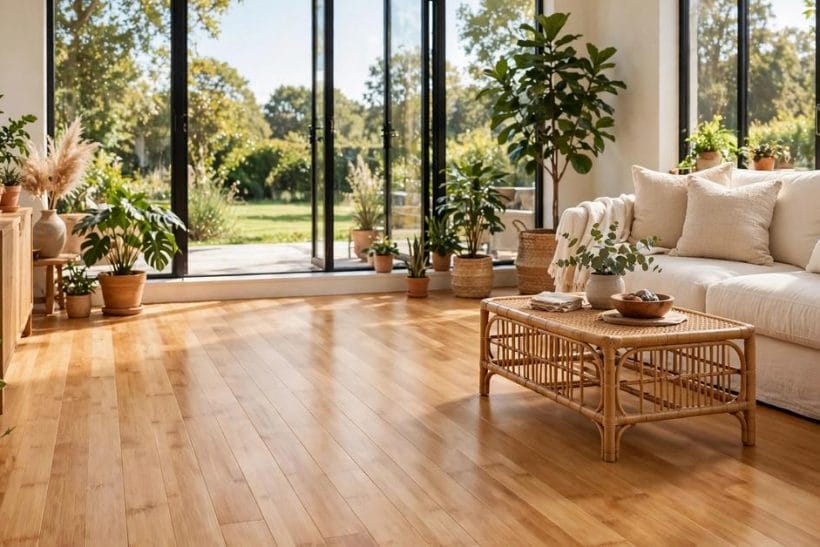
1. Plank Types and How They Are Made
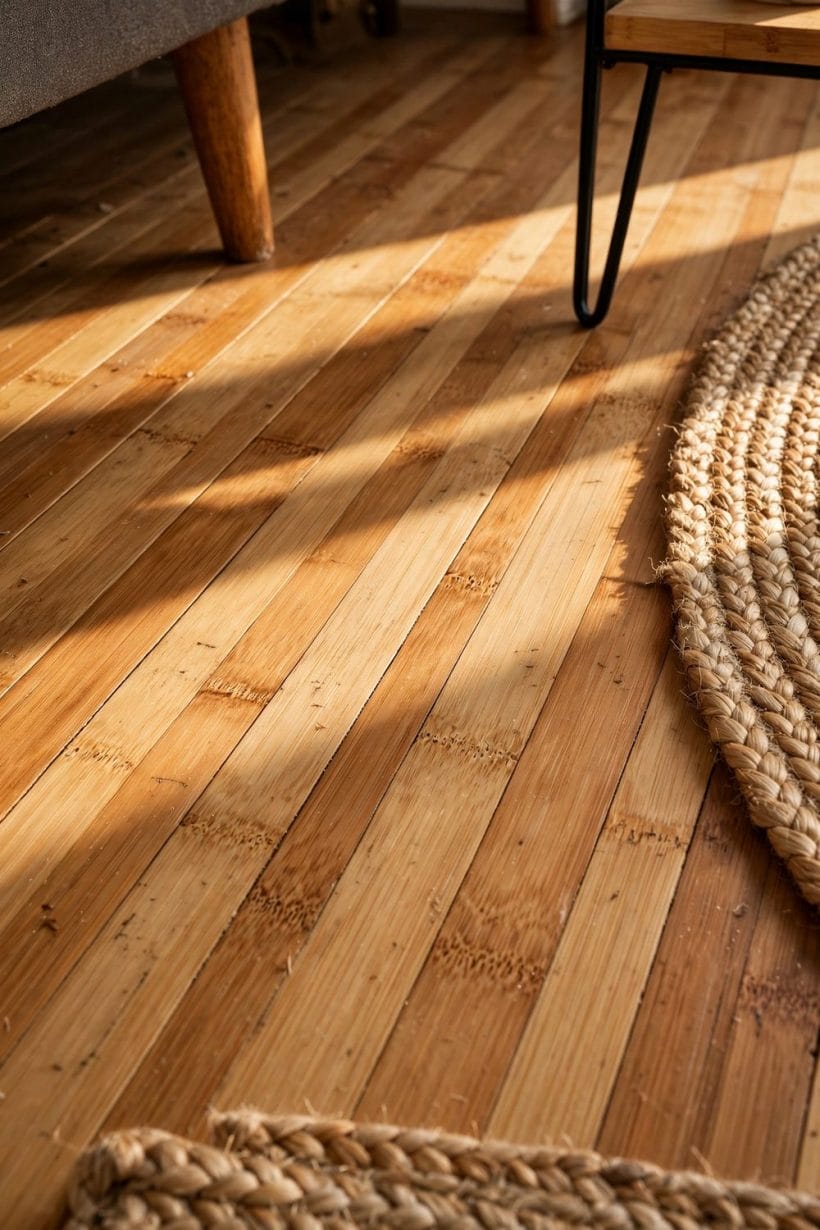
Bamboo planks are not all made the same way, and the way the material is put together shapes how the finished floor looks and feels. Some planks show the bamboo in long, natural strands, with the grain running openly along the board. Others press the fibres together more tightly, which gives a denser, more uniform appearance and a surface that reads as smoother and more even. Both approaches produce a genuine bamboo floor, but they do not look identical, and the difference is worth seeing in person rather than guessing from a small picture.
When you are comparing plank types, look closely at the face of the board. Notice whether the grain is bold and varied or quiet and consistent, and whether the colour changes gently along the length of the plank or stays much the same from end to end. A board with lively variation will make a room feel natural and informal, while a board with a calmer face will sit more quietly beneath furniture and rugs. Neither character is better in itself; the question is which one fits the room you are flooring and the mood you want that room to have.
It also helps to look at the edge and the end of a plank, not just its face. The way the board is built up, and how its layers sit together, tells you something about how solid it will feel once it is laid. Hold the sample, turn it over, and notice its weight and stiffness in your hand. A floor is something you live on every day, so the sense of it under your hand at this stage is a fair guide to how it will feel under your feet later. If you are weighing up flooring ideas for a smaller home, this hands-on check matters even more, because every board is close at hand and constantly in view.
Finally, ask how the planks join together and whether they are made to be fixed down or to float over the subfloor. The answer affects the feel underfoot, the sound of footsteps, and the kind of preparation the room needs before laying begins. You do not need to master the technical details, but you do need a plain explanation you understand, and a sense that the laying method suits your home. A supplier who can explain this clearly, and show you a joined sample, is giving you exactly the information this check is for.
2. Hardness Feel Underfoot
Hardness in a floor is not an abstract quality; it is something you notice every time you walk across a room in bare feet, drop a toy, or drag a chair. Bamboo is generally known as a firm, hard-wearing surface, but different planks still feel different. Some feel distinctly solid and unyielding, while others have a touch more give, and that small difference shapes how comfortable a room feels over a long evening at home.
The best way to judge hardness is to stand on a sample rather than simply reading a description of it. If a showroom has a laid display, walk across it slowly, in the shoes you wear at home, and notice how your feet meet the surface. Pay attention to whether the floor feels cool and hard, or slightly warmer and more forgiving, and whether footsteps sound sharp or muted. These impressions are personal, and they matter, because a floor that feels right to one household can feel too hard to another, especially in rooms where people spend a lot of time standing.
Think too about who uses the room and how. A hallway takes constant traffic and the scuff of shoes coming in from outside. A bedroom is walked on gently, often barefoot, and a living room sits somewhere in between, with furniture moved, children playing, and pets crossing back and forth. Matching the hardness feel to the life of the room is more useful than chasing the hardest plank available, because comfort and durability need to work together. A floor that is pleasant to live on is a floor you will look after, and a floor you look after lasts.
One more check belongs here: look at how the surface responds to everyday knocks. Press a fingernail gently into an offcut if one is offered, and look at whether the surface marks easily or resists the pressure. This is not a laboratory test, and it should never damage a sample you do not own, but a simple, honest look at how the surface copes with ordinary contact tells you a great deal. Combined with the feel underfoot, it gives you a realistic sense of how the floor will age in your home.
3. Colour Tone and How It Sits in a Room
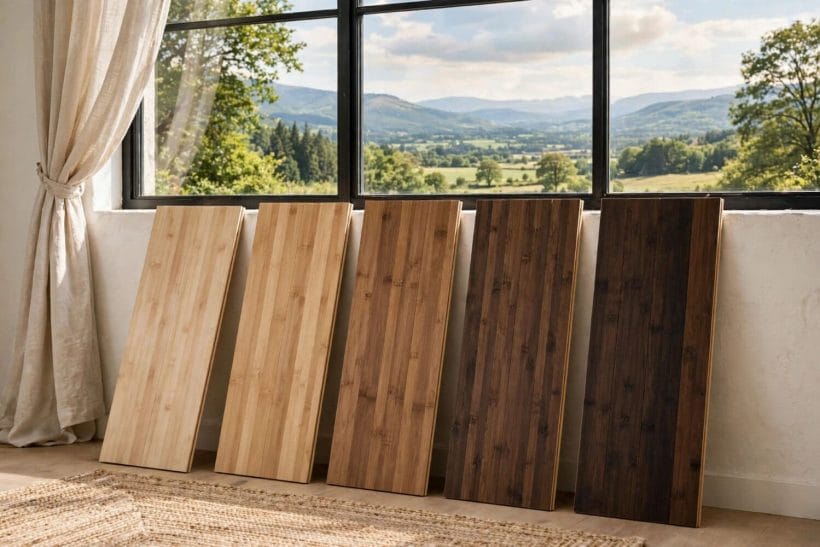
Colour is often the reason a particular bamboo floor catches your eye, and it is also the easiest thing to get wrong. Bamboo ranges from pale, almost blonde tones through warm honey shades to deeper, darker colours, and the same plank can look quite different under shop lighting, in daylight, and in a dim room in the evening. The tone you choose will set the temperature of the whole room, so it deserves a slower look than a quick glance at a swatch.
Take samples home whenever you can, and live with them for a few days before deciding. Lay them on the floor of the actual room, against the wall colour, beside the furniture, and near the curtains or blinds. Look at them in daylight, in lamplight, and on a dull day, because a tone that feels fresh and bright at noon can feel cold or flat by evening. This small habit prevents the most common flooring regret, which is not that the floor was poor, but that its colour never quite settled into the room around it.
Consider the size and light of the room as well. Pale bamboo tends to lift a small or shaded room, making it feel airier and more open, while a deeper tone can make a large, bright room feel grounded and cosy. Darker floors also show dust and footprints more readily, which is worth knowing if the room is a busy thoroughfare. In a small living room, where the floor is a large part of what the eye takes in, the tone you choose does a lot of the work of the whole decorating scheme, so it is important to get it right.
Finally, remember that bamboo, like other natural materials, can change tone gradually as it is exposed to light over time. Ask whether the tone you are considering is likely to deepen, mellow, or stay much as it is, and whether that change would please you or trouble you. A floor is a long-term companion, and choosing a tone you will still like as it settles and ages is a quieter, wiser aim than chasing the shade that looks most striking on the day you first see it.
4. Board Width and the Look of the Floor
Board width changes the character of a floor more than many buyers expect. Narrow boards give a floor a busy, detailed rhythm, with many joints breaking up the surface and a traditional, crafted feeling. Wide boards give a calmer, more expansive look, with long, uninterrupted runs of grain that make a room feel open and contemporary. Both are attractive, and the choice is largely about the feeling you want the room to have.
In a compact room, width deserves particular thought. Wide boards can make a small space feel less chopped up, because there are fewer joints for the eye to stop at, while narrow boards can add texture and interest to a room that might otherwise feel plain. Neither rule holds in every case, which is why laying a few sample boards on the floor, in the direction they would actually run, is so helpful. Stand back, look from the doorway, and notice which width makes the room feel the way you want it to feel.
The direction the boards run matters almost as much as their width. Boards running toward the main light source, or along the longest wall, tend to draw the eye through the room and make it feel longer. Boards running across a room can make it feel wider, but they can also chop the space into stripes if the room is narrow. When you are planning a small-space interior, this kind of visual trickery is not a gimmick; it is a practical tool, and a few minutes spent trying directions with loose samples can change the whole feel of the result.
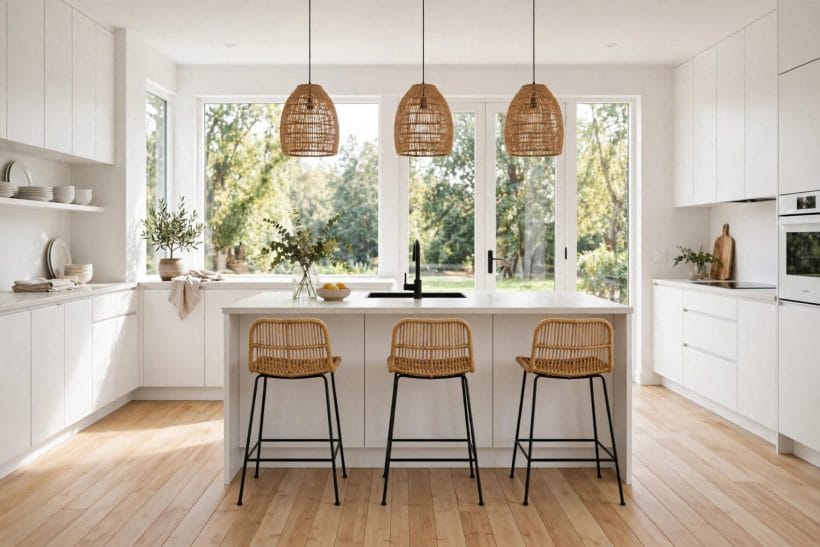
Also check how the width of the board relates to the rest of the room: the skirting, the door thresholds, and any steps or changes of level. A very wide board meeting a narrow doorway can look awkward, while a board width that echoes the proportions of the room tends to sit comfortably. These are small details, but flooring is a surface you see in full every day, and the details are exactly what your eye returns to. A floor that respects the proportions of its room looks considered rather than simply installed.
5. Finish: What Protects the Surface
The finish is the thin layer that stands between your bamboo and daily life, and it decides how the floor looks, how it feels, and how much care it needs. Some finishes leave a soft, natural, almost matte surface that shows the grain honestly and feels close to bare wood. Others give a gentle sheen that catches the light and makes the room feel brighter, or a stronger gloss that looks polished but shows every mark. The finish you choose is therefore both a visual choice and a practical one.
Ask what the finish is made to resist. Everyday life brings grit from shoes, the scrape of chair legs, the occasional dropped object, and the slow wear of feet crossing the same path day after day. A good finish should cope with this ordinary wear gracefully, dulling slowly and evenly rather than flaking or peeling in patches. Ask also whether the finish can be refreshed or recoated in time, and what that process involves, because a floor whose finish can be maintained is a floor that can be kept looking good for years rather than replaced.
Sheen level deserves a deliberate decision, not a default. A matte or low-sheen finish hides dust, scratches, and uneven wear more forgivingly, and it suits rooms that aim for a relaxed, natural feeling. A higher sheen looks smart and reflective, but it asks more of you in cleaning and shows marks sooner. Walk on finished displays if you can, look at them from a low angle toward the light, and notice how much of the room they reflect. That reflected glare, pleasant or distracting, will be part of your room every day.
Finally, check how the finish feels to the touch. Run your hand across a sample and notice whether it feels smooth and silky, slightly textured, or almost plasticky. The feel of the finish under bare feet is part of the daily pleasure of a wood floor, and it is easy to overlook when you are focused on colour. A finish that feels good, looks honest, and can be cared for without fuss is doing its job, and it is one of the most important checks on this whole list.
6. Moisture, Spills and Everyday Care
Bamboo is a natural plant material, and like all such materials it responds to moisture. That does not make it fragile, but it does mean that water habits matter. Spills should be wiped up promptly, standing water should never be left on the surface, and rooms that are regularly wet need honest thought before bamboo goes down. A floor that is right for a living room may not be the right choice for a room where water is a daily fact of life.
Think about the wettest moments in your home: drinks spilled during a gathering, wet feet coming in from the garden, a pet bowl tipped over, a plant watered a little too generously. None of these is a disaster on a well-finished bamboo floor if it is dealt with quickly, but each one is a reminder that the floor needs a household habit of prompt wiping. If your household is busy, with children and animals and frequent comings and goings, choose with that reality in mind rather than with an ideal of a perfectly dry home.
Humidity through the seasons matters as well. Air that is damp for long stretches, or very dry for long stretches, can make natural boards expand or contract slightly, and gaps or tight joints can appear as a result. A home with steady, moderate indoor conditions suits bamboo best, and rooms with big swings in dampness deserve a conversation with your supplier about whether bamboo is sensible there at all. This is not a reason to avoid bamboo; it is a reason to place it where it will be happiest, and to keep it out of rooms where it will always be fighting the conditions.
In a tiny house kitchen, where cooking, washing, and eating all happen within a few steps of each other, moisture care becomes a daily rhythm rather than an occasional chore. A mat by the sink, a cloth kept close at hand, and a habit of wiping splashes straight away will protect the floor far better than any single product. If that rhythm sounds like something your household can keep up happily, bamboo can work beautifully in a kitchen; if it sounds like a burden, another room may be a kinder home for it.
7. Acclimatisation Before Laying
Acclimatisation is the unglamorous step that makes a real difference, and it is simply the practice of letting the planks settle into the conditions of your home before they are laid. Boxes of bamboo are brought into the room where they will be fitted, opened or stacked as advised, and left for a period so the boards can adjust to the temperature and humidity of that room. Skipping this step, or rushing it, is one of the quietest causes of later gaps and movement.
Ask your supplier or fitter how long the planks you are considering need to acclimatise, and what conditions they need during that time. The answer will depend on the plank, the season, and the room, and a clear, specific answer is a good sign. A vague answer, or a suggestion that the floor can go straight down on the day of delivery, is worth questioning. This is your floor for years to come, and the days spent letting it settle are a small investment in that future.
Practical planning matters here too. Acclimatising boards take up floor space, and they need to be kept dry, out of direct heat, and away from damp walls while they settle. Plan where the boxes will live during this period, and make sure the room is at something close to its normal living temperature, not cold from a building project or overheated from heaters running at full tilt. A room that is lived in normally gives the truest settling conditions, and the floor that results will be calmer for it.
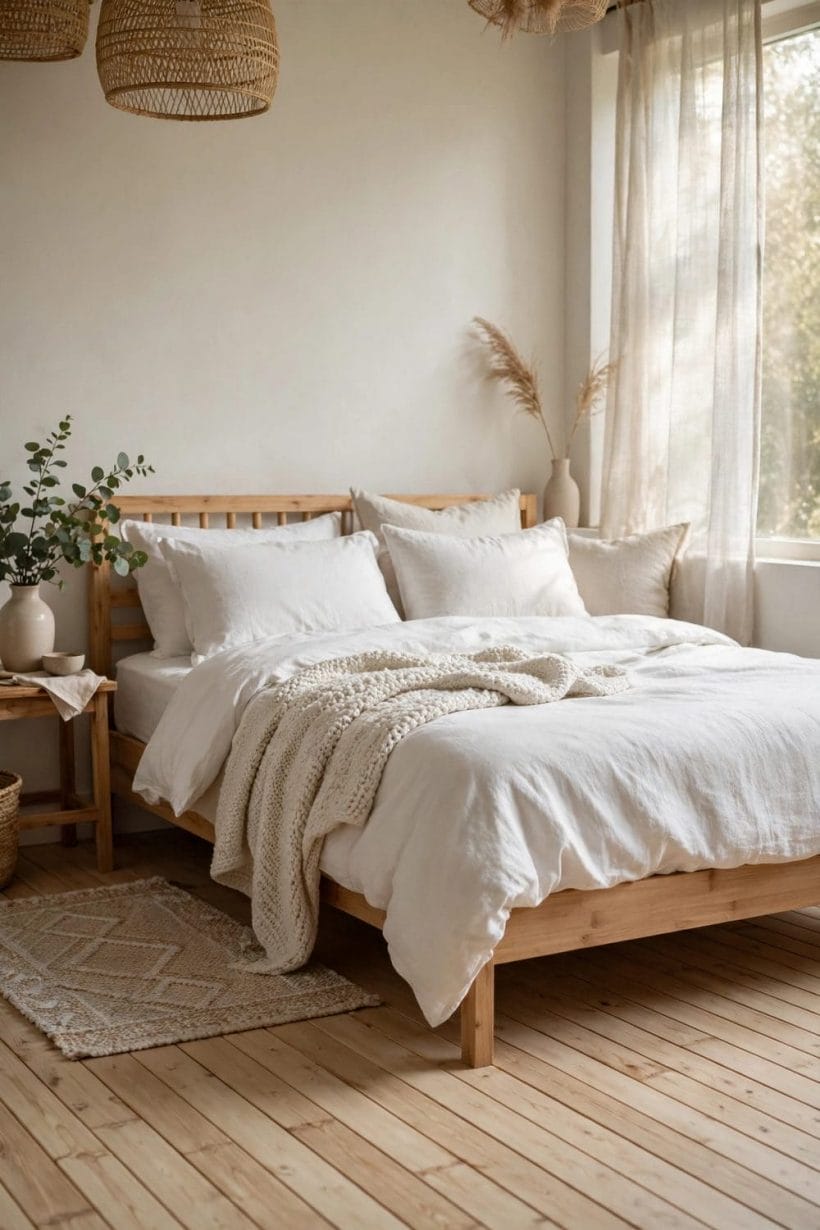
It is also worth asking what happens if the room conditions change sharply after laying, for instance when heating comes on for the first cold spell of the year. A fitter who can explain, in plain terms, how the floor is expected to behave through the seasons, and what small movements are normal, is giving you peace of mind as well as a floor. Knowing what is normal stops small seasonal changes from feeling like faults, and it helps you tell the difference between a floor settling naturally and a floor that genuinely needs attention.
8. Underlay and What Lies Beneath
What lies beneath a bamboo floor shapes how it sounds, how it feels, and how level it sits, yet it is the part buyers think about least. Underlay is the layer between the planks and the subfloor, and its job is to smooth out tiny unevenness, soften footsteps, and reduce the hollow sound that a floating floor can otherwise have. A good underlay is felt more than seen, which is exactly why it is easy to overlook.
Start with the subfloor itself. It needs to be clean, dry, and reasonably level before anything goes on top of it, and any dampness in the subfloor needs to be dealt with first rather than covered up. Ask how your subfloor will be checked, and what will happen if it is found to be uneven or damp. This conversation, held before the planks arrive, prevents the most annoying kind of flooring problem: a beautiful surface laid over a problem that was always going to show through.
Then ask about the underlay itself: what it is made of, how thick it is, and what it is meant to do in your particular room. In an upstairs room, sound softening matters, because footsteps travel. In a ground-floor room, a barrier against damp from below may matter more. In a room where comfort underfoot is the priority, a slightly softer underlay can make a real difference. There is no single best underlay for every home, only the right one for your floor, your subfloor, and the rooms above and below.
When you are working from a tiny house floor plan, the underlay choice is tightly linked to the layout, because rooms flow into each other and a change in floor height at a doorway is felt with every step. Keeping levels consistent across adjoining rooms, and choosing an underlay that suits the whole run of flooring rather than one room alone, gives a smoother, more professional result. It is a detail to settle on paper before a single plank is laid, and it repays the attention many times over.
9. Cleaning Without Wearing the Floor Out
A bamboo floor does not ask for elaborate care, but it does reward a gentle, regular routine. The main enemy is grit: fine dirt and sand tracked in from outside act like sandpaper under shoes and furniture, dulling the finish a little more with each passing week. A doormat, shoes left at the door where that suits your household, and a soft brush or vacuum with a hard-floor setting will do more for your floor than any special product.
For day-to-day cleaning, a lightly damp mop is usually enough, with the mop wrung out well so that no standing water is left on the boards. Strong cleaners, harsh chemicals, and soaking wet mops are not friends of a natural floor, and steam cleaners deserve particular caution, because heat and moisture together can stress both the finish and the boards beneath. If a cleaner is recommended for your particular floor, use that one, and use it sparingly; more product rarely means a cleaner floor, and residue left on the surface can dull the finish it was meant to protect.
Furniture care belongs in the same routine. Felt pads under chair and table legs, a rug or mat under a rolling chair, and a habit of lifting rather than dragging heavy pieces will prevent the scratches that no finish can entirely resist. These are small habits, but they are the difference between a floor that still looks cared for after years of use and one that carries the story of every dragged chair. In a tiny house bedroom, where the floor is often bare and the light falls low across it, such care shows, and the floor repays it with a calm, unmarked surface to wake up to.
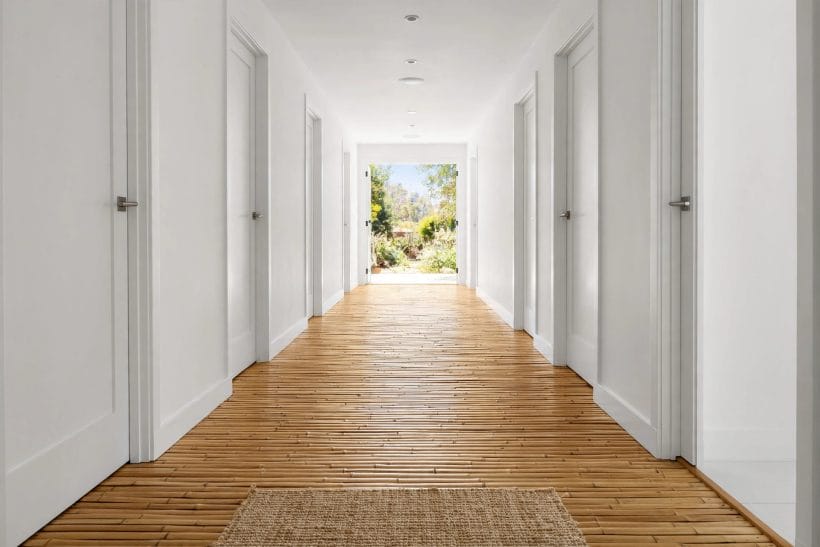
Finally, keep an eye on the finish as the years pass, and refresh it before wear becomes damage. A floor that is recoated or refreshed at the right moment keeps its protection intact, while a floor left until the finish has worn through in busy paths is harder to restore. Ask, at the time of buying, how you will know the moment has come, and what refreshing involves for your particular floor. A floor with a care plan is a floor with a future, and that plan begins with the simple routines described here.
10. Checking Samples and the Room Together
The last check brings all the others together, and it happens in the room itself, with samples in hand. Lay the leading samples side by side on the floor, step back, and look at them as a whole rather than one board at a time. Notice how the colour, width, grain, and sheen work together, and whether the combination feels calm or restless. A single beautiful board does not always make a beautiful floor, and this whole-room view is what protects you from that surprise.
Bring the room into the check as well. Hold a sample against the skirting, beside a door frame, and next to the largest piece of furniture in the room. Look at how the bamboo sits with the wall colour, the curtains, and the other materials already in the space, such as stone, tile, or fabric. A floor does not live alone; it lives in conversation with everything around it, and a tone or finish that clashes with a fixed feature, like a fireplace surround or a kitchen worktop, will nag at you long after the excitement of new flooring has faded.
Light deserves a final, deliberate look. Natural light changes through the day and through the year, and a floor that glows in summer daylight can look quite different under winter lamplight. Visit the room at different times if you can, or at least move the sample between the brightest and the darkest corners, and notice how much it changes. A floor that pleases you in both bright and dim light is a safe choice, while one that only pleases you in one kind of light is a gamble worth thinking twice about.
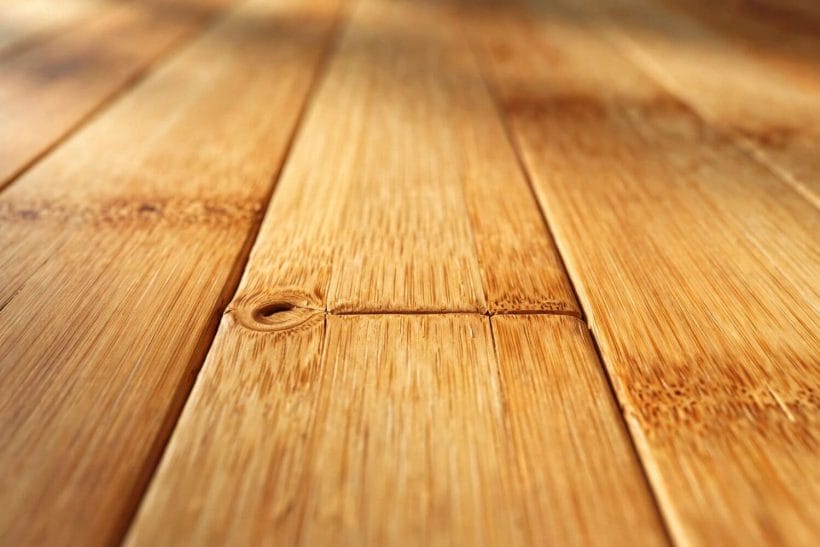
Use this final check to ask any last questions, and to be honest about any doubts. If a sample troubles you in some small way, that trouble will not disappear once the floor covers the whole room; it will grow. It is far better to pause, compare one more option, or change the tone or width now than to live with a doubt underfoot. In a tiny house living room, where the floor is always in view and the room is always in use, this honest final look is the check that turns a good choice into a choice you are glad about for years.
Check the transitions as well, because a floor rarely ends neatly at a single doorway. Notice where bamboo will meet another surface, such as tile, carpet, or a step, and ask how that join will be finished. A neat threshold, level and secure, makes the whole floor feel intentional, while a clumsy join draws the eye every time you cross it. This is a small detail to settle before laying begins, and it is far easier to get right on paper than to correct once boards are down.
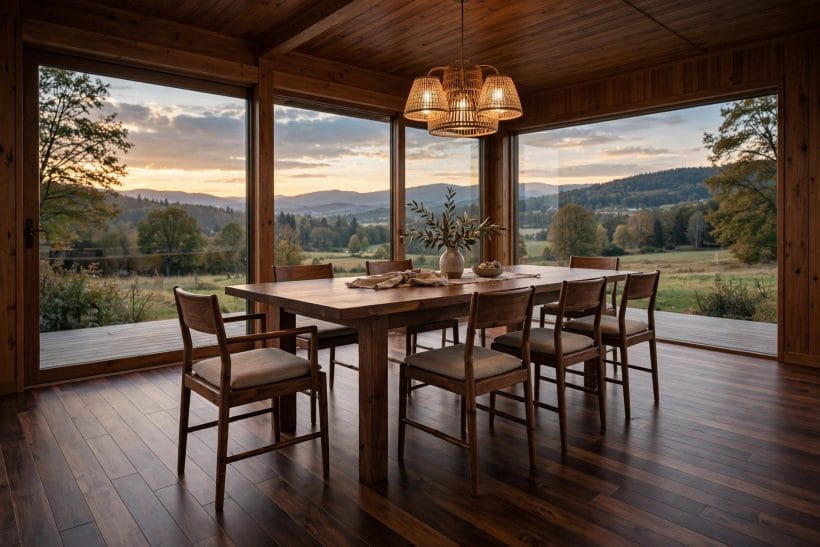
Ask your fitter, too, about the order of work in the room. Flooring is often best laid after dusty building work is finished but before delicate finishing touches are at risk, and a clear sequence protects both the floor and the rest of the room. A fitter who can talk you through that sequence, and tell you how the floor will be protected while other work continues, is showing the kind of care that leads to a good result. The conversation itself is a useful check on the whole project.
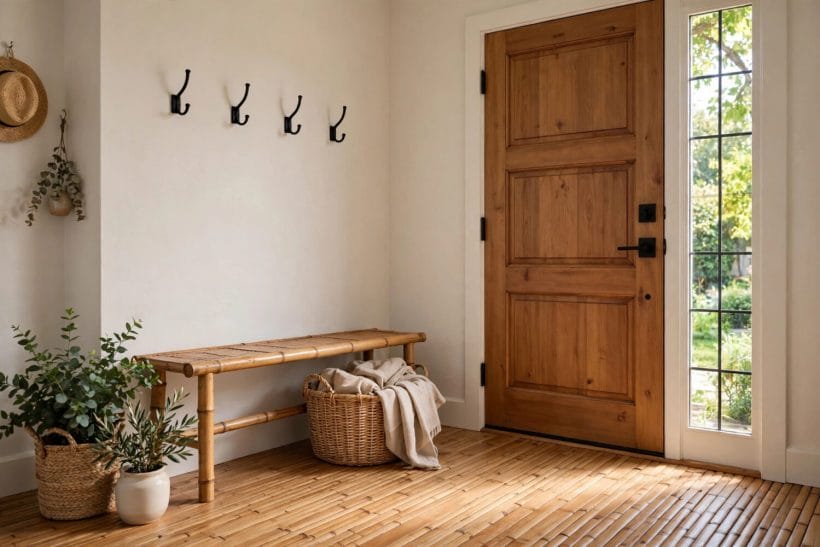
Finally, keep a few spare planks if you can, stored flat, dry, and out of direct light. Spare boards are a quiet insurance policy: a damaged plank can be replaced with a matching board rather than leaving a repair that stands out. Ask how many spares are sensible for your room, and where they should be kept, because a floor with spares to hand is a floor that can be kept whole for years, whatever daily life brings.
With samples checked, transitions planned, and spares set aside, you are ready to decide with confidence rather than hope. The checks in this guide are not hurdles; they are simply the habit of looking closely before committing, and that habit is what turns a purchase into a floor you enjoy living on. Take the time, trust what your eyes and feet tell you in the real room, and choose the bamboo that feels most at home there.
Final Considerations
Choosing bamboo flooring well is less about finding a perfect plank and more about matching a real floor to a real home. The plank type gives the floor its character, the hardness feel decides how it lives underfoot, the colour tone sets the mood of the room, and the board width shapes how spacious or detailed the floor appears. The finish protects all of that, moisture care keeps it safe, acclimatisation lets it settle, underlay shapes its sound and feel, and gentle cleaning keeps it looking cared for. No single check decides the matter alone; it is the pattern of answers, taken together, that tells you whether a floor is right.
Before you buy, give yourself the time to run through these checks without hurry. Take samples home, walk on displays, ask plain questions, and listen for plain answers. Notice how each option feels in the actual room, in the actual light, beside the actual furniture, and trust what you see and feel there more than any description. A floor chosen this way is not just a surface; it is a background to daily life, quiet, warm, and easy to live with, and that is exactly what a good bamboo floor should be.


0 Comments