
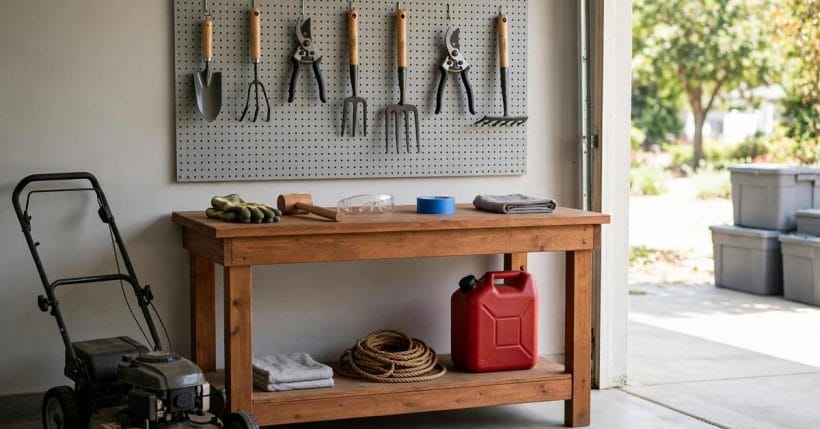
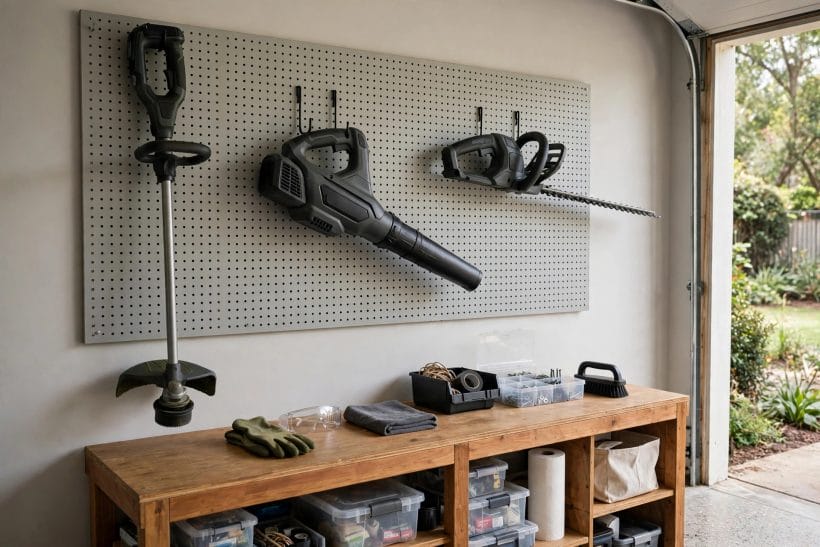
Most garages hold a quiet collection of machines that only wake up now and then: a mower for the lawn, a trimmer for the edges, a blower for autumn leaves, and perhaps a small generator kept for emergencies. Between uses, those machines sit, and the fuel inside them sits too. That simple fact is the whole subject of this guide. Fuel is a chemical product, and like many chemical products kept in a home garage, it can change while it waits. Nothing in this guide recommends a product, and nothing here replaces the instructions printed on a label or the advice of a qualified professional. It is a general explainer, written to help a homeowner notice what is going on, think calmly about it, and know when to stop and ask someone qualified.
The idea of stale fuel can sound dramatic, but in everyday terms it is quite ordinary. A liquid that was made to burn cleanly in a small engine may, after a long period of sitting, behave a little differently from fresh liquid. An engine that once started on the first pull may need more coaxing. An engine that once ran smoothly may sound uneven. Sometimes nothing noticeable happens at all, and the machine runs as it always did. The range of outcomes is wide, and that width is part of the point: stale fuel is not a single predictable event, but a gradual change with uncertain effects. A cautious owner treats old fuel as something to think about, not something to panic over, and not something to ignore completely either.
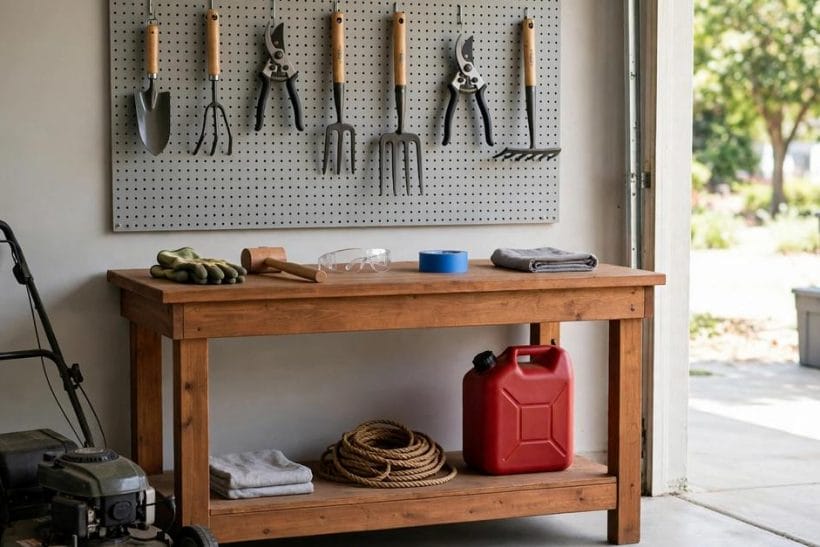
1. What Stale Fuel Means in Plain Terms
When people say fuel has gone stale, they usually mean that the liquid in a tank or a can no longer behaves the way it did when it was fresh. The change is chemical rather than visible in any dramatic sense. Fuel is a blend of compounds, and some of those compounds can evaporate or react with air and warmth over time. What remains may be a little different in character from what went in. The shift is usually gradual, and it can be hard to pin down by looking at a can or a tank, which is why the word stale can be misleading if it suggests something obvious like sour milk. There may be no clear smell, no change in colour that a casual glance would catch, and no simple test a homeowner can apply by eye. The honest description is therefore a cautious one: fuel can change while it sits, and that change can matter for how an engine runs, even when nothing looks wrong.
It helps to separate the fuel itself from the machine it feeds. A mower that refuses to start after a long rest may have a fuel problem, an engine problem, a battery problem, or several small issues at once. Blaming the fuel outright can be tempting because it feels like a single explanation, but engines are assemblies of many parts, and age affects all of them. Gaskets can dry out, filters can clog, and moving parts can stiffen during a long rest. The fuel question is one thread in a larger picture, and a careful owner keeps that picture in mind. This guide stays with the fuel thread because that is the topic at hand, but it does not pretend that thread explains every starting problem a garage machine can develop.
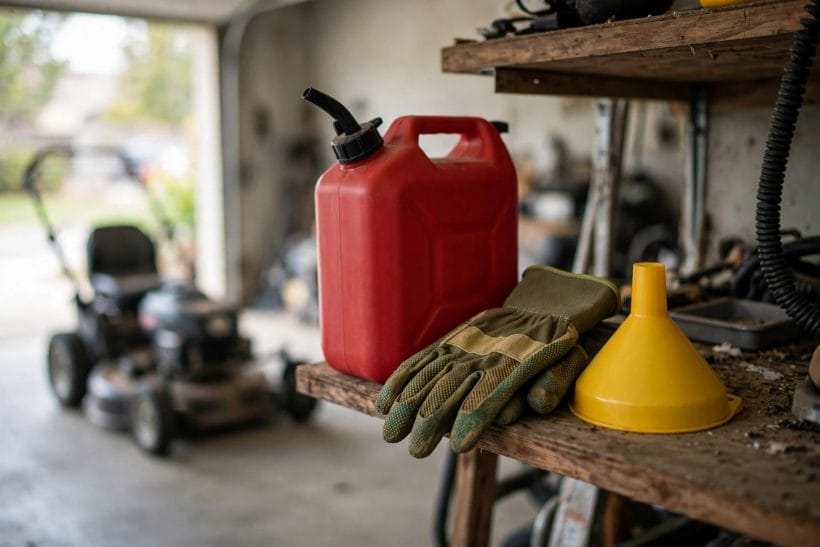
Another useful distinction is between fuel in a machine and fuel in a separate can. Fuel inside a tank is in contact with the machine’s own parts and passages, and it may sit in a small space with limited air. Fuel in a can is a stored liquid waiting for a use. Both can age, and the conditions around them can differ: a can on a shelf may experience different warmth and light from a tank inside a machine parked near a door. Neither situation is automatically better or worse in every case. What matters is the general principle that time passes for both, and that a long rest deserves a moment of thought before the machine is put back to work. That moment of thought is the real subject of the sections that follow.
2. Why Fuel Changes While It Sits
Fuel changes while it sits for reasons that are easy to grasp in general terms. Some of its lighter parts can escape as vapour, especially when a container is opened and closed repeatedly or when warmth encourages evaporation. Air can reach the liquid and encourage slow chemical reactions. Moisture from humid air can find its way into a partly empty container, and temperature swings can encourage condensation on inner surfaces. None of this requires neglect or misuse. It is the ordinary physics and chemistry of a volatile liquid kept in a domestic setting, and it can proceed quietly in a well-kept garage just as it can in a cluttered one. A tidy shelf does not stop time, and a careful owner does not need to feel at fault for noticing that old fuel behaves differently.
Warmth is often mentioned in discussions of stored liquids, and it deserves a careful, general statement. A garage that grows hot in summer and cold in winter subjects everything on its shelves to a cycle of expansion and contraction. Liquids, metals, plastics and rubber seals all respond to that cycle in their own ways. A can kept in steady, moderate conditions may age differently from a can kept beside a sun-warmed wall, but this guide offers no threshold and no rule of thumb, because the honest answer depends on the product, the container, and the conditions in ways that only the product’s own label and a qualified adviser can address for a particular case. The general point stands without numbers: conditions can matter, and they are worth noticing when you look at your own garage.
Air is the other quiet actor. A container that is mostly empty holds more air above the liquid than a full one, and that air can interact with the surface of the fuel. A container that is opened often is exposed to fresh air each time. Again, no measurement is offered here, and no container is declared good or bad. The point is simply that storage is not a frozen state. A can on a shelf is not a photograph of the day it was filled; it is a living chemical situation, changing slowly, and the change is one reason why old fuel deserves a second thought before use.
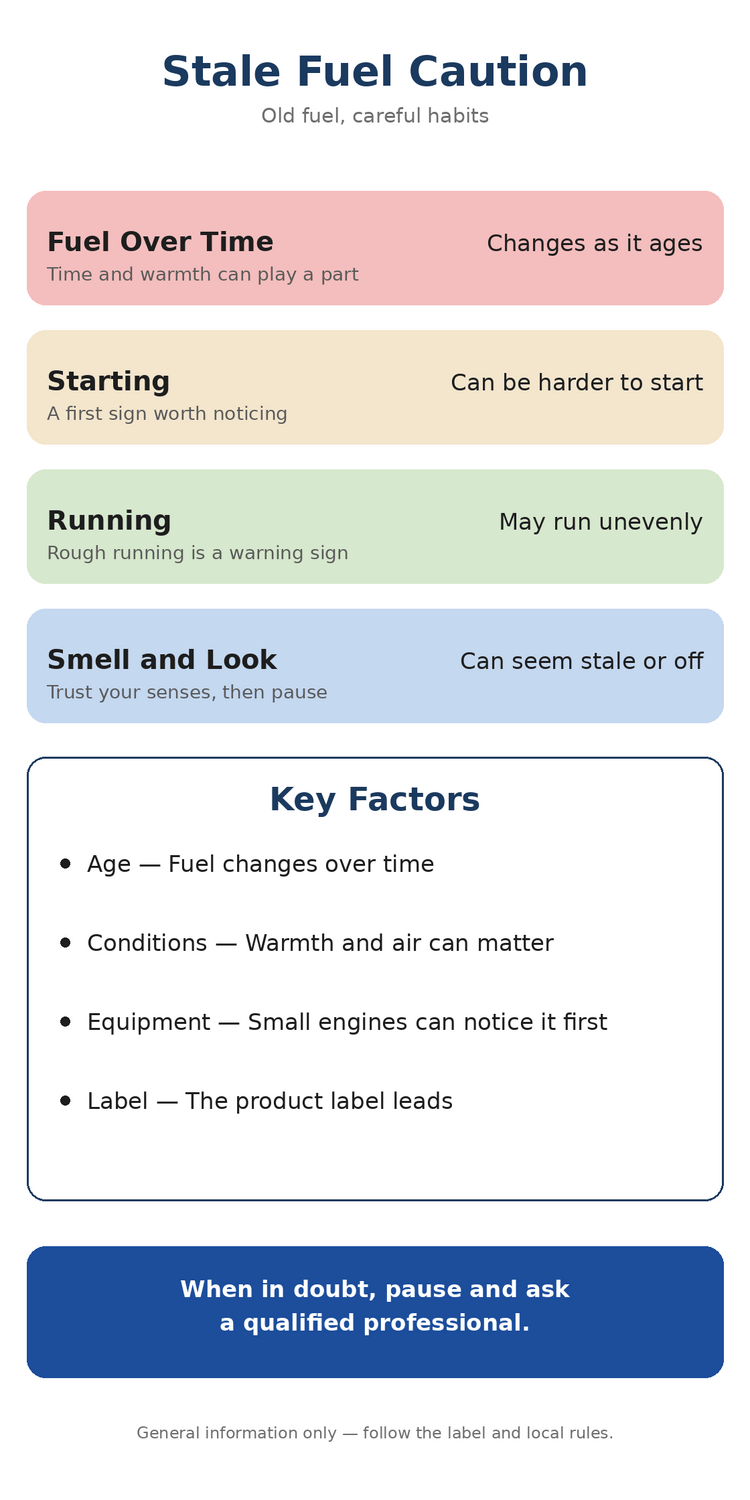
3. Signs Equipment May Show
When an engine is fed fuel that has changed, the signs it may show are familiar to many owners, and they are worth describing in hedged terms. Starting can become harder. An engine that once caught quickly may need several attempts, or may catch and then stop. Running can become uneven, with a rhythm that rises and falls rather than settling into a steady note. Power can feel reduced, so a mower may labour where it once moved easily, or a blower may seem less forceful. None of these signs proves that fuel is the cause, and all of them can arise from other causes too. They are clues, not verdicts, and treating them as clues is the cautious approach.
There are also subtler signs that owners sometimes report. An engine may produce a different smell from its exhaust, or may leave deposits that a service technician later notices. A machine may run well for a short while and then falter as it warms up, or may behave differently from one day to the next. Inconsistency itself can be a clue, because a mechanical fault often repeats in a stable pattern, while a fuel-related issue can vary with temperature, with how long the machine sat, and with how much old liquid remains mixed with newer liquid. Even so, inconsistency proves nothing on its own. It is a reason to pause and consider, not a reason to declare a diagnosis.
The most important sign may be the absence of a sign. Some machines run acceptably on older fuel, and an owner may notice nothing at all. That does not mean the fuel is fresh, and it does not mean the fuel is harmless to the engine over a longer period. It means only that, on that day, in those conditions, the machine coped. A cautious owner does not take one easy start as proof that everything is fine, just as a careful owner does not take one hard start as proof of disaster. Both events are single data points, and single data points are a poor basis for strong conclusions about a chemical that changes gradually.
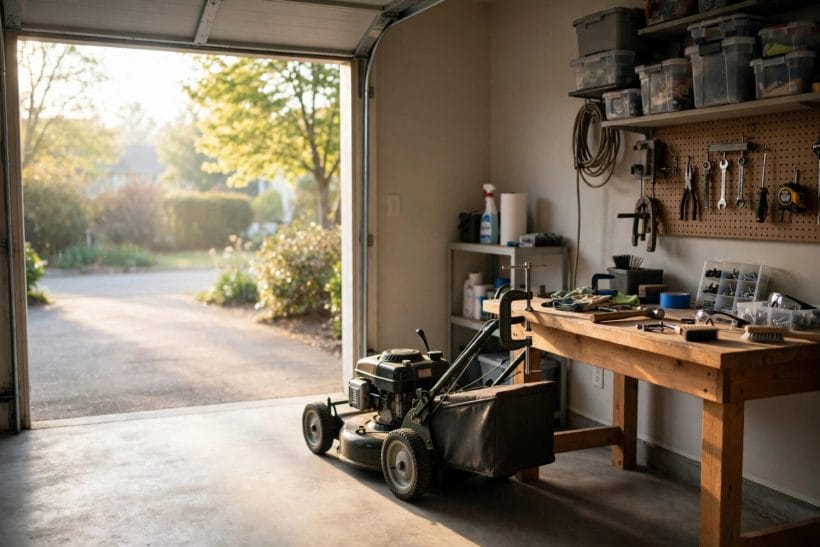
4. Small Engines and Seasonal Tools
Small engines deserve special mention because they are the machines most often affected by long rests. A mower, a trimmer, a blower and a small generator all share a pattern: bursts of heavy use separated by long idle periods. A car, by contrast, is usually driven often enough that its fuel turns over regularly. A seasonal tool may sit untouched for a whole stretch of the year, and that stretch is exactly when fuel has time to change. The tool’s small fuel passages and fine jets can also be more sensitive to small changes in the liquid than the larger passages of a bigger engine. Sensitivity is not a guarantee of trouble, but it is a reason why seasonal tools feature so often in conversations about stale fuel.
Seasonal patterns also mean that problems tend to appear at inconvenient moments. The first mow of spring, the first leaf clear of autumn, or the first emergency use of a generator are all moments when an owner wants the machine to work at once. Discovering a hard start at that moment can feel frustrating, and frustration can push people toward hasty decisions. A calmer rhythm is to think about fuel before the season changes, while there is still time to pause, to read a label, and to seek advice if something seems off. This guide does not prescribe a seasonal routine, because routines belong to the product label and to professional advice. It simply notes that the calendar of a seasonal tool makes fuel age a recurring question rather than a one-time curiosity.
It is also worth remembering that a seasonal tool ages in other ways during its rest. Rubber parts can lose flexibility, metal parts can develop surface corrosion in damp air, and dust can settle into openings. A machine that has rested for a long time may therefore present several small issues at once, and separating them is work for a qualified technician rather than guesswork in a driveway. The fuel question sits within that wider ageing, and a professional looking at the whole machine will often notice things an owner, focused on one suspect, might miss.

5. The Garage Shelf: What to Notice
A garage shelf tells a story if you look at it slowly. Cans may carry labels that have faded, dented corners from years of handling, or caps that no longer seal as crisply as they once did. A label that cannot be read is more than a cosmetic problem: it is the loss of the very information an owner needs most, namely what the product is and what its maker says about it. A container with no readable label cannot be identified with confidence, and confidence matters when the contents are flammable. Noticing a faded label is not a cause for alarm, but it is a cause for pause, and pause is the recurring theme of this guide.
The arrangement of a shelf can also be worth noticing. Cans stored near heat sources, in direct sun through a window, or in a spot where they are frequently knocked may experience more stress than cans in a calm corner. A shelf that is crowded can hide a can at the back for a very long time, and a hidden can is a can whose age is unknown. None of these observations is a rule, and this guide does not rank storage spots. It simply invites the owner to look at the shelf as a whole, to notice which cans are oldest in memory, which labels are readable, and which containers seem sound. That kind of looking is free, it takes a few minutes, and it often reveals more than a hurried grab for the nearest can.
For readers thinking about the wider garage, the way a space is organised shapes how easily such checks happen. A garage with clear zones for tools, machines and stored liquids makes a quick look far simpler than a garage where everything is piled together. Ideas for organising such a space can be found in garage storage ideas, and the dimensions that decide whether a layout works are covered in garage measurements. Organisation does not change the chemistry of fuel, but it does change how likely an owner is to notice a can that has been sitting far longer than intended.
6. Reading Labels Before Anything Else
If this guide has a single standing instruction, it is this: always follow the product’s own label. A label is written by the maker for that exact product, and it carries the maker’s guidance about handling, storage and use. General articles, however careful, cannot replace it, because they do not know which product is in your hand. A label may warn about flammability, about keeping the product away from children and pets, about ventilation, or about conditions to avoid. Those warnings deserve to be read in full, not skimmed, and they deserve to be taken seriously even when they seem familiar. Familiarity can breed a casual attitude toward a flammable liquid, and casual attitudes are exactly what caution is meant to correct.
Labels can also be a source of humility for a general guide like this one. Where a label and a general article appear to disagree, the label wins, because the label is specific and the article is general. Where a label is missing or unreadable, the honest response is not to guess but to seek advice from a qualified professional or from the maker’s own support channels. Guessing about a chemical product is a poor strategy, and the cost of a phone call or a visit is small beside the cost of a mistake. This is not a counsel of fear; it is a counsel of proportion. A few minutes spent reading or asking can prevent a much longer problem.
There is a further reason to read labels carefully: products change. A product bought years ago may have a different formulation, a different set of warnings, or a different recommended practice from the version sold today. Memory of what a product used to say is not a substitute for what the label in your hand says now. An owner who reads the label each time, rather than relying on habit, is practising the same kind of attention that this guide recommends for the garage shelf as a whole: slow down, look, and let the specific information in front of you guide the decision.
7. Starting Trouble: A Calm Way to Think About It
Starting trouble is the moment when theory becomes personal. A machine that will not start, or that starts and stops, can disrupt a day’s plans and tempt an owner to try one thing after another in quick succession. The calm approach is to stop, to note what happened in plain terms, and to resist the urge to improvise with chemicals or with force. Note whether the machine has rested for a long time, whether the fuel in it is old in your memory, whether the weather has been very hot or very cold, and whether the machine showed any uneven running the last time it was used. Those observations are useful, and they are exactly the kind of information a qualified professional will ask for. Writing them down, even briefly, can turn a frustrating morning into a useful conversation later.
It is worth being explicit about what this guide does not do. It does not offer a sequence of repair steps, it does not recommend opening fuel systems, and it does not suggest mixing, treating or discarding fuel in any particular way. Those are matters for the product label and for qualified advice, because they involve flammable liquid, pressurised parts, and engines that can be damaged by a wrong move. An owner who is unsure should treat uncertainty as information, not as a challenge. Uncertainty is the signal to pause and to ask, and asking a professional is a sign of competence, not of failure. Many professionals would far rather answer a question before a problem grows than repair a machine after an improvised attempt.
There is also a social dimension to starting trouble that is easy to overlook. Neighbours, friends and online forums are often full of confident advice about fuel, and some of that advice may be sound for a particular product in a particular situation. But advice that is sound for one product can be wrong for another, and advice given without seeing the machine, the label or the fuel in question is necessarily general. A careful owner listens, thanks the adviser, and then checks the specific label and, when in doubt, a qualified professional. That extra step is not distrust; it is the difference between a story about someone else’s machine and a decision about your own.
8. Local Rules and Responsible Handling
Fuel is not only a garage topic; it is also a community topic, because how old fuel is handled affects drains, soil, waterways and waste services. Most places have rules about how unwanted fuel and other garage chemicals should be handed in, and those rules are stated generally here on purpose: they differ from place to place, and only the local authority or waste service for your area can give the rule that applies to you. What can be said generally is that old fuel should be treated as a regulated chemical rather than as ordinary rubbish, and that pouring it away casually is the kind of act that rules exist to prevent. A responsible owner finds out what the local route is before acting, rather than assuming that a convenient route is an acceptable one.
The general principle behind such rules is easy to understand. Fuel that reaches soil or water can harm plants, animals and water supplies, and fuel that enters a drain can travel far beyond the property where it was poured. Waste services that accept garage chemicals are set up to handle them with the right equipment and precautions. Using those services is not merely a matter of following a rule; it is a way of keeping a private garage problem from becoming a neighbourhood problem. The cost of doing it properly is usually small, and the benefit is shared by everyone downstream, in the most literal sense of the word.
Responsibility also extends to storage while a decision is being made. A can of fuel that is waiting to be handed in should be kept in the same careful way as any other fuel can: upright, capped, labelled if possible, and away from sources of ignition and from children and pets. If a label has been lost, telling the waste service honestly that the contents are uncertain is far better than guessing at a label. Waste handlers deal with uncertain containers regularly, and honesty helps them handle the material safely. The theme, once again, is pause and ask rather than hurry and guess.
9. Talking to a Qualified Professional
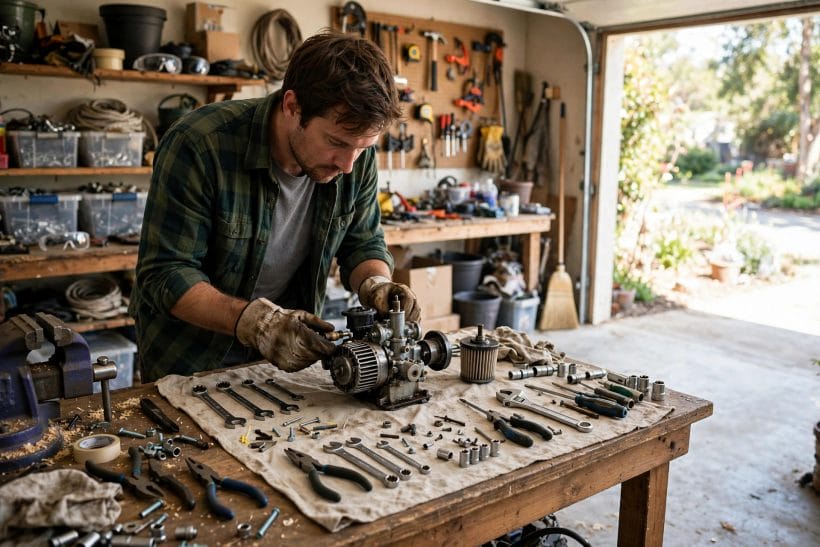
Knowing when to ask a professional is a skill in itself, and it is worth describing plainly. If a machine will not start and the cause is unclear, if fuel is old and its label is unreadable, if there is a smell of fuel that will not go away, or if anything about the situation feels unsafe, those are all good moments to seek qualified help. A professional can look at the whole machine, ask about its history, and give advice that fits the specific product and the specific engine. That specificity is the value being bought, and it is something no general article can supply, however thorough. The fee for a consultation or a service is part of the cost of owning machines that burn fuel, and it is best thought of that way rather than as an unexpected penalty.
Choosing a professional deserves the same calm attention as the rest of this guide. A small-engine repair shop, a dealer for the machine’s maker, or a technician recommended by people you trust are all reasonable starting points. It helps to arrive with clear information: what the machine is, how long it rested, what fuel you believe is in it, what symptoms you noticed, and what the label says if it can still be read. Clear information leads to clearer advice, and it also helps the technician distinguish a fuel question from the many other questions a resting machine can raise. A good professional will explain what they find in plain terms, and will not mind being asked to explain again.
There is no embarrassment in asking. Machines that burn fuel combine chemistry, mechanics and flammability, and even experienced owners meet situations they have not met before. The owners who get into trouble are often not the ones who ask too many questions, but the ones who ask too few and act too quickly. A question asked early is a cheap precaution; a repair undertaken late can be an expensive one. Keeping that proportion in mind makes it easier to pick up the phone, and easier to accept advice that differs from what you hoped to hear.
10. Building Cautious Garage Habits
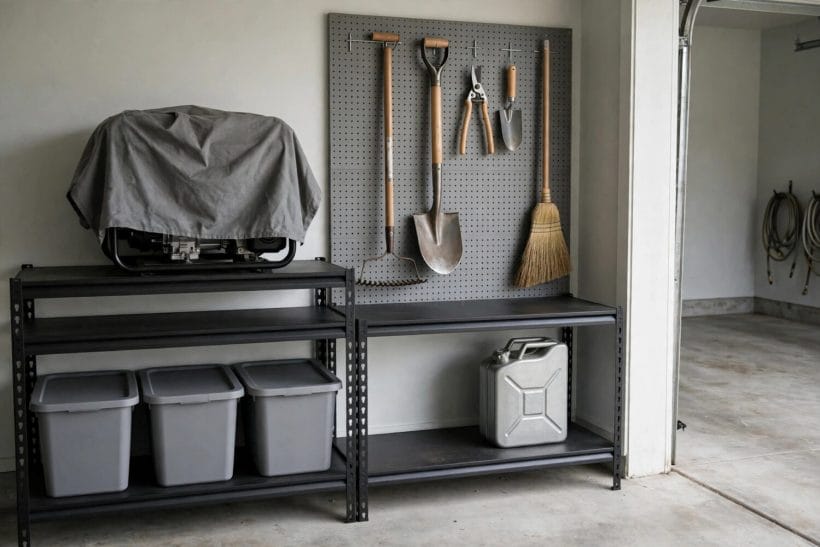
Cautious garage habits are less about dramatic gestures and more about small, repeated acts of attention. Noticing which cans have been sitting longest, keeping labels readable, keeping the garage organised enough that a can does not vanish behind a pile, and pausing before using fuel whose history is uncertain are all habits of the same kind. None of them requires special equipment or expertise, and none of them guarantees that a machine will start first time. What they do is reduce the number of surprises, and surprises are where most garage frustration begins. A habit is a decision made in advance, and deciding in advance to pause is easier than deciding in the heat of a frustrating morning.
Habits also extend to the machines themselves. A garage that gives each machine a place, with room to walk around it and to look at it, makes inspection a natural part of putting the machine away and taking it out again. Readers planning such a space may find inspiration in cool garage ideas and in detached garage ideas, while shed ideas and tiny house designs show how smaller buildings can still give tools and machines a proper home. A machine that lives in a shed or a detached garage faces the same fuel questions as one in an attached garage, and the same habits of attention apply wherever the machine rests.
Finally, habits are worth sharing within a household. If more than one person uses the garage machines, everyone should know where fuel is kept, which cans are oldest in memory, and what the household rule is when something seems uncertain. A shared rule, such as pausing and asking before using fuel whose history is unknown, prevents the situation where one person unknowingly uses a can another person had already set aside. Households run on such small agreements, and a garage is no exception. The agreement need not be written down or formal; it needs only to be understood, repeated, and respected when the moment comes.

This section may seem like a detour, but it belongs here because a garage is a system, and fuel is only one part of it. A garage door that sticks, a sensor that misreads, or a power interruption can all affect how and when machines are used, and a machine that cannot easily be taken out for inspection is a machine that is less likely to be inspected. Keeping the door, its drive and its safety features in good order is part of the same habit of attention that this guide recommends for fuel. Readers who want to think about that side of the garage can start with garage door opener checks, which cover the drive, the sensors, safety and power in general terms.
Access also matters for the simple reason that a garage used only in a hurry is a garage where problems hide. If taking a mower out requires moving several other things, the mower is less likely to be looked at closely. If the fuel cans are buried behind boxes, their age is less likely to be noticed. Organising for easy access is therefore not a luxury; it is a practical step toward the kind of noticing this guide has described. A few minutes spent clearing a path can be the difference between spotting a faded label in spring and discovering a problem on the first day the machine is needed.
None of this turns a homeowner into a technician, and none of it should. The point of a well-ordered garage is that it supports good decisions, not that it replaces professional judgment. A tidy garage with a working door, clear zones and readable labels is a place where an owner can pause, look, read and ask. That is the whole ambition of this guide, and it is an ambition that any garage, large or small, can meet without special tools or specialised knowledge.
Final Considerations
Stale fuel is a quiet topic, and quiet topics reward quiet thinking. Fuel can change while it sits, and that change can make equipment harder to start or cause it to run unevenly, though it can also pass unnoticed. Conditions such as warmth and air can play a part, seasonal tools can be more sensitive than everyday machines, and a faded or missing label can remove the very information an owner needs most. None of these points is dramatic, and none of them calls for alarm. Together, they call for attention: look at the shelf, read the label, notice the signs, and know the local rules for handling unwanted fuel in your area.
The strongest habit this guide can recommend is the simplest one. When in doubt, pause, and ask a qualified professional. That sentence appears more than once here because it is the safest summary of everything else: general information can frame a question, but only the product’s own label and a qualified adviser can answer it for your machine, your fuel, and your garage. Treat old fuel with respect, treat uncertainty as a reason to stop rather than a reason to hurry, and the garage will remain what it should be: a useful, orderly place where machines wait patiently for their season, and where their owners are ready when that season comes.




0 Comments