

A drain that slows down every spring, clears, then slows again is usually not a blockage problem — it is a root problem. Tree roots find the moisture leaking from a pipe joint and grow toward it, year after year, until the pipe is a root ball with water struggling through it.
This guide explains how to choose and use a root killer for drain clearing safely: how roots get in, the types of product on the shelf, the label checks that protect your pipes and septic system, and the point where chemicals stop being the answer.

1. Root Killers at a Glance
A root killer is a chemical treatment — most often copper-based crystals or a foaming herbicide preparation — applied through a drain or toilet to kill roots growing inside a sewer or drain line without killing the tree they belong to. The entity’s defining attributes are its contact action (it kills the roots it touches, inside the pipe), its limits (it does not repair the cracked joint the roots entered through, and roots regrow), and its safety conditions (pipe material, septic system and local rules decide which products may be used at all). Read as a maintenance tool inside a wider drain-care plan — alongside the layout principles in this guide to tiny house plumbing and DWV design — a root killer earns its place. Read as a cure, it will disappoint you on a schedule.
| What does a root killer actually do? | It kills roots inside the pipe on contact and slows regrowth for a period. It does not remove the root mass instantly, seal cracks, or fix a damaged pipe. |
| What are the main product types? | Copper sulfate crystals, foaming root treatments that coat the pipe’s upper walls where roots hang, and salt-based mixtures — each with different pipe, septic and safety conditions. |
| Is it safe for septic systems? | Some products are labelled for septic use and some are not; copper compounds in particular can harm the bacterial action a septic tank depends on. The label, not the shelf talk, decides. |
| When is a root killer the wrong answer? | When the pipe is collapsed, bellied or badly displaced, when blockages are grease or objects rather than roots, and when the blockage is complete — that is inspection and mechanical work. |
| What is the honest expectation? | A treated line usually needs repeat treatment on the maker’s schedule, and a root-prone joint eventually needs repair or replacement. Chemicals buy time; they do not buy permanence. |
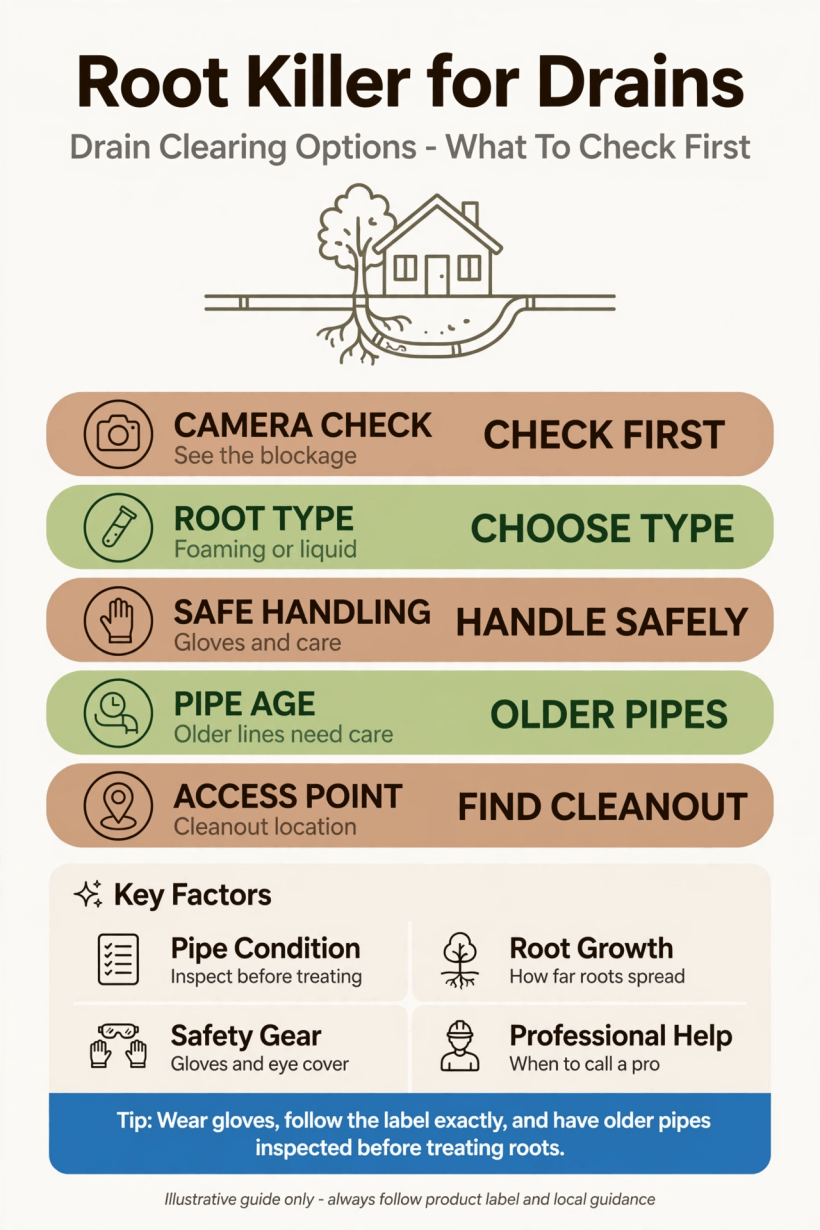
At a glance: confirm it is roots, choose by pipe and septic label first, apply exactly as directed, and treat the result as maintenance — not a repair.
2. Why Roots Get Into Drains in the First Place
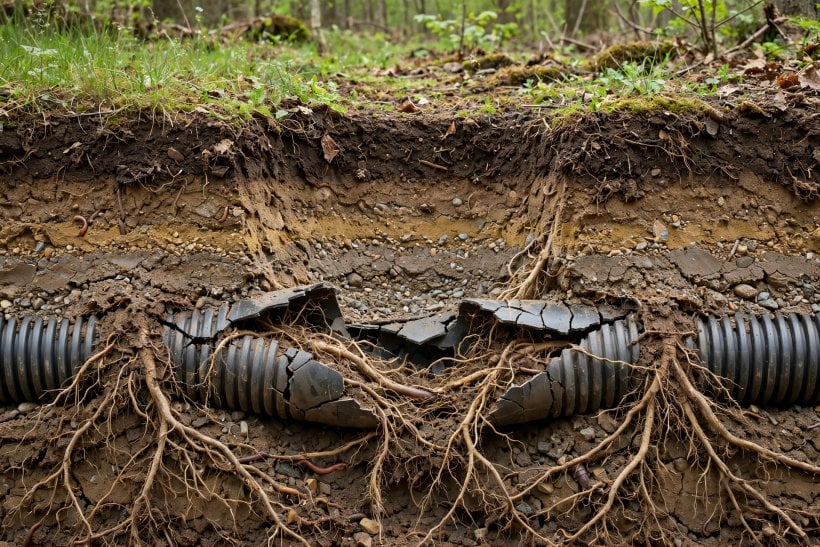
Roots do not break into sound pipes. They enter through what is already open: the joints of older clay or concrete pipes whose seals have aged, cracks from ground movement, and connections that were never perfectly made. A pipe leaking even slightly advertises itself to every root nearby — the escaping water vapour and moisture mark the line as a water source, and fine feeder roots grow toward it, slip through the gap, and then thrive in the warm, wet, nutrient-rich flow inside. Once in, they thicken year by year into the fibrous mass that catches everything the household sends down the line.
That mechanism explains the pattern homeowners know so well: the drain that is fine for months after clearing and then slows again, because clearing removed the mass but left the entry point, the roots outside it, and the tree. It also explains why the problem concentrates in particular places — the line’s run past large trees, older jointed pipe materials, and shallow lines in well-watered ground. Knowing which pipe you have, and roughly where the trees stand over it, is the diagnostic groundwork; the wider water-and-waste picture in this guide to how tiny houses get water and plumbing shows how supply and drainage lines are meant to be laid out, and older conventional lines follow the same logic at a larger scale.
3. Signs the Blockage Is Roots — and When It Is Not
Root blockages have a signature. Drains slow gradually rather than stopping overnight. Several fixtures on the same line misbehave together — the lowest ones first, a shower draining into a floor waste or a toilet that gurgles when the washing machine empties. The problem returns on a seasonal rhythm, worst when the trees are growing hardest. And a cleared line that blocks again within a year, in a house with mature trees near the sewer run, is roots until proven otherwise.
Other causes wear similar clothes, and treating them with root killer wastes money and time. Grease build-up narrows kitchen lines gradually but sits close to the kitchen, not out at the tree line. Collapsed or bellied pipe — a section that has sunk, cracked or dropped — blocks at the same spot repeatedly and no chemical reaches the cause. Objects, wipes and sanitary products block suddenly and completely. The honest way to know is a camera inspection: a drain professional runs a camera down the line and shows you roots, cracks or collapse on screen. For a one-off blockage that may be overkill; for the recurring pattern above, it is the cheapest certainty you can buy, because it converts every later decision — chemical, mechanical or excavation — from a guess into a plan.
4. The Main Types of Root Killer
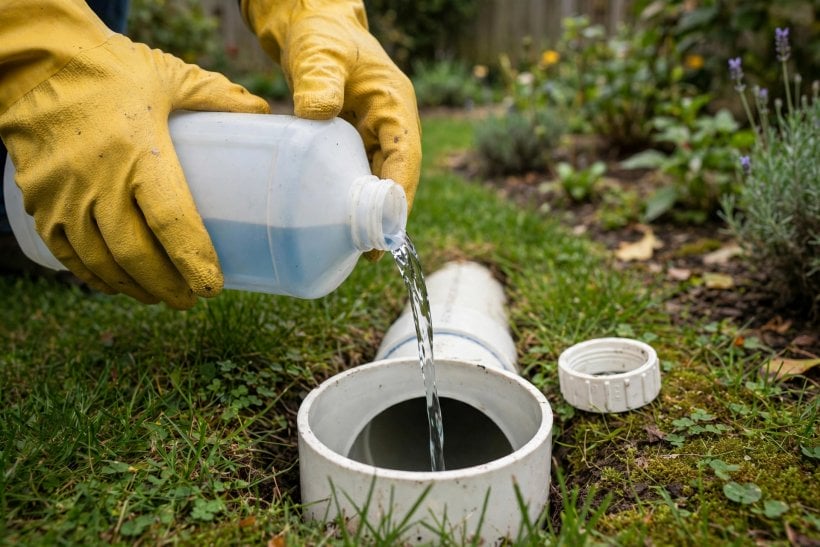
Copper sulfate crystals are the oldest type: a copper compound, usually tipped into the line in measured doses, that kills roots it contacts. Copper products carry the heaviest cautions of the group — they are restricted or prohibited for drain use in some jurisdictions, they can be hard on some pipe materials and septic biology, and copper accumulating in soil and waterways is a genuine environmental concern. Foaming root killers combine a herbicide with a foaming agent that expands to fill the pipe, coating the top and sides where roots hang down — the foam is the point, because a liquid dose runs along the pipe’s floor and can miss roots entering from above.
Salt-based and caustic drain products form the third group and are the ones to read most carefully: rock-salt mixtures have a long folk history for root control, and strong caustic cleaners will burn through organic matter — but neither is a targeted root treatment, and caustics bring serious handling hazards and can damage some pipes and septic systems. Enzyme and bacterial drain maintenance products sit at the gentle end: they digest organic build-up and are sold for keeping lines free-flowing, but they are maintenance aids for grease and sludge, not root killers, whatever the shelf placement implies. The type decision is therefore simple to state: choose a product actually formulated and labelled for root control in drains, in the format — crystals or foam — that suits your pipe’s size and the roots’ position, and let the label checks in the next section veto anything unsuitable.
5. The Label Checks: Pipes, Septic Systems and Local Rules

Three checks come before any purchase. First, pipe compatibility: note what your line is made of — clay, concrete, cast iron, PVC or the older materials found in mid-century homes — and confirm the product is labelled safe for it. Some treatments are discouraged for particular metals or for lines in poor condition, and a pipe already crumbling gains nothing from chemistry. Second, the septic check: if the house drains to a septic tank rather than a public sewer, the product must be explicitly labelled septic-safe; copper-based products in particular can suppress the bacteria the tank relies on, and a killed septic system costs far more than a blocked drain. Homes managing their own waste streams — the systems surveyed in this guide to greywater systems — should apply the same label discipline to anything poured into any drain in the house.
Third, local rules: some water authorities and municipalities restrict or ban copper sulfate for drain use outright, because of what it does downstream. The restriction, where it exists, is not fine print to gamble on — it can carry penalties, and the hardware store’s willingness to sell a product is not proof it may legally be used in your drains. Add the household checks: keep products away from children and animals, store them dry and sealed, and never use a root treatment in a line that connects to a system it is not labelled for. If any of the three checks fails, that product is not the best root killer for your house regardless of its reviews — the best one is the one your pipes, your tank and your local rules all permit.
6. How to Apply a Root Killer Properly
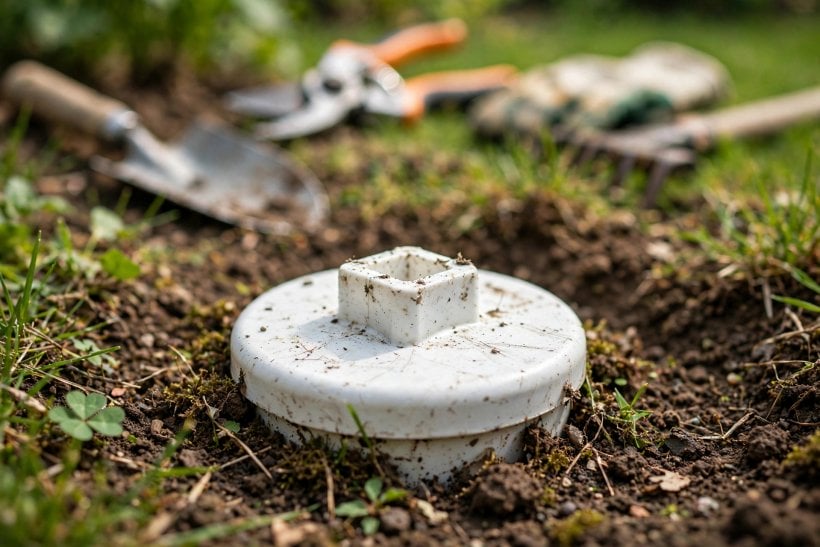
Application follows the maker’s directions — this category is not one for improvisation — but the pattern is consistent. Apply when the line is flowing slowly but not fully blocked, because the treatment must reach the roots and stay in contact with them; a completely stopped line needs mechanical clearing first. Apply at a time of low water use — typically last thing at night — so the product is not flushed straight past its target, and follow the stated dwell instructions before normal use resumes. Use the stated dose for your pipe size: under-dosing wastes the treatment, and over-dosing buys nothing but extra chemical in the waterway.
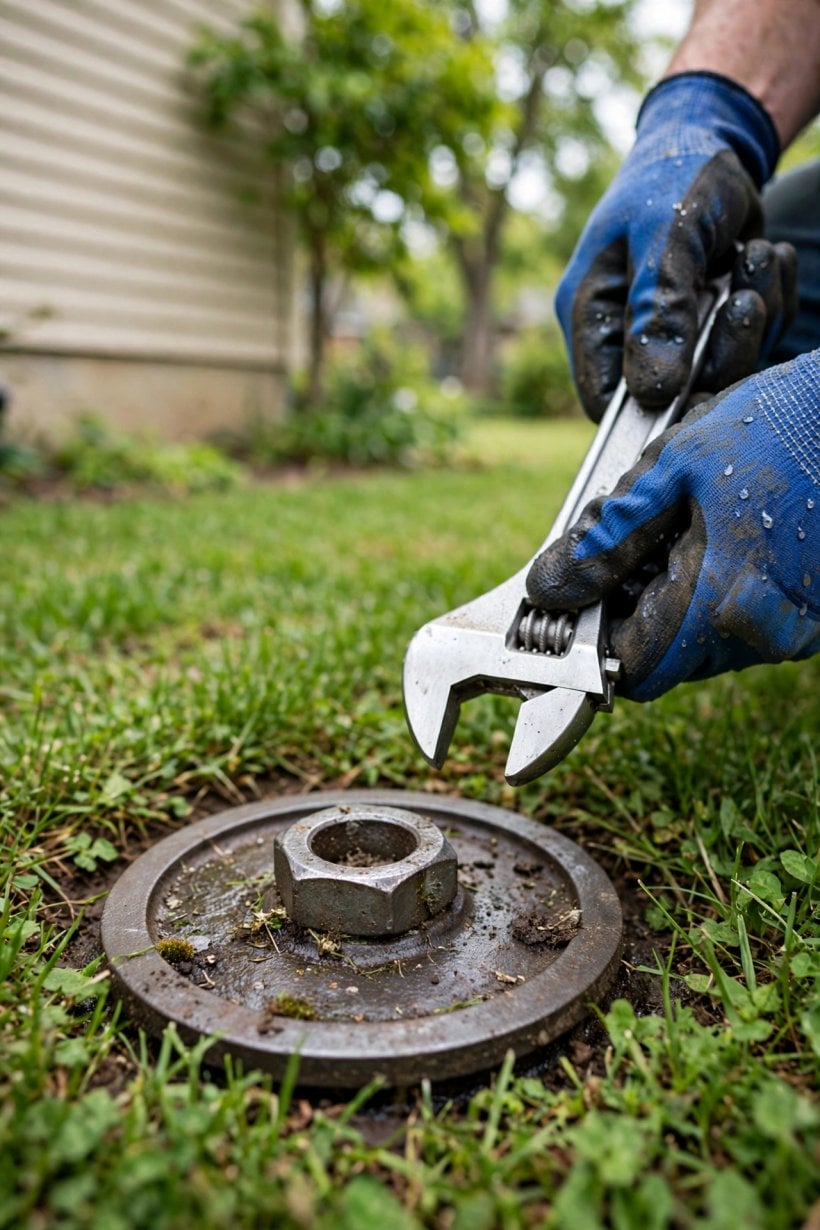
Access matters. A cleanout or the toilet on the affected line gives the treatment the shortest path to the roots; pouring through a distant basin wastes dose on clean pipe. After treatment, judge the result over days, not minutes — killed roots die back and fragment gradually, and flow improves as the mass breaks down and washes through. Mark the date and the product on a calendar or the shed wall: root control is a rhythm, typically revisited on the maker’s stated interval, and the households that stay ahead of root blockages are the ones treating on schedule rather than waiting for the spring slowdown to announce itself again.
7. Safety for People, Pets, Trees and Waterways
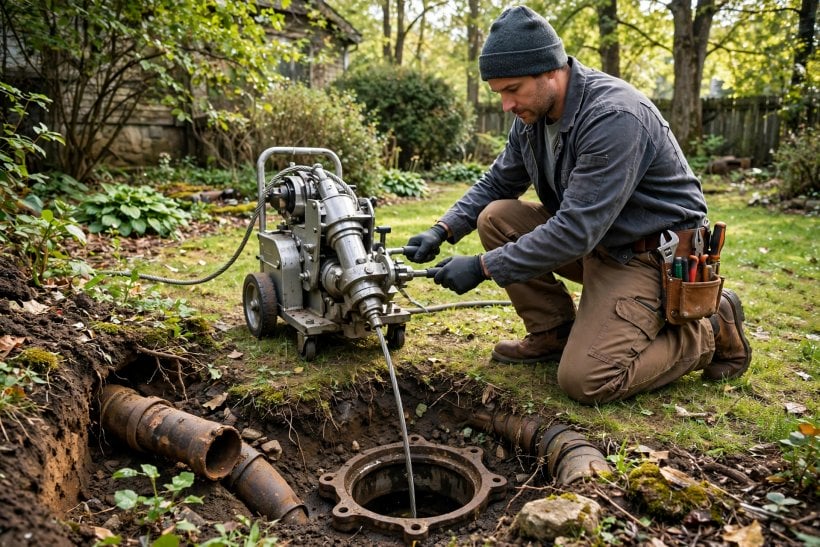
Handle every product in this category as the chemical it is. Gloves and eye protection when measuring and pouring; no eating, drinking or smoking until hands are washed; never mix products, and never combine a chemical treatment with a caustic cleaner used earlier the same day — if a drain has had one treatment, let it clear fully before another is even considered. Splashes and spills follow the label’s first-aid and cleanup directions, not improvisation. Keep containers sealed, dry, labelled and out of reach, and dispose of empties as the label directs rather than in general recycling.
Two wider safety points complete the picture. The tree: a correctly used root killer kills the roots inside the pipe, not the tree — the dose travels the line, and the tree’s root system beyond the pipe is vast by comparison. That is the design intent, and it is another reason to dose as directed rather than doubling up “to be sure”. The waterway: everything sent down a sewer is treated or reaches the environment by some path, which is why the local-rule check exists and why the minimum effective dose is the right dose. Around the house, the same care applies to the other places chemicals and drains meet — the pipe runs protected in this guide to tiny house skirting and pipe insulation are a reminder that most drain disasters are prevented by physical care first, with chemistry in a supporting role.
8. Mechanical Clearing, and the Limits of Chemistry

Root killer and mechanical clearing are partners, not rivals. A professional’s cutting machine — a rotating cable with root-cutting heads — physically removes the mass from the pipe and restores full flow the same day; it is the right first move for a badly blocked line, and the camera inspection usually rides along with it. Chemical treatment then does what the cutter cannot: it reaches into the joints the blades passed, kills the root tips left behind, and slows the regrowth that restarts the cycle. Owners of root-prone lines often settle into exactly that rhythm — cut when flow demands it, treat on schedule to stretch the interval.
Chemistry’s limits are structural, and naming them protects your wallet. It cannot lift a bellied pipe back into fall, knit a cracked joint, or stop roots re-entering a gap that remains open — regrowth through the same joint is a matter of time, which is why repeated root problems at the same location are really a pipe-repair conversation wearing a drain-clearing costume. Modern repair options — sectional lining, pipe bursting, or straightforward excavation and replacement of the worst run — each reprice the problem as a one-time fix against years of treatments. The copper and plastic pipe choices in this comparison of PEX vs copper plumbing illustrate the wider point: pipe material and joint quality decide a line’s whole future, and a replacement section with modern sealed joints removes the root’s doorway in a way no bottle can.
9. Prevention: Planting, Pipes and Habits
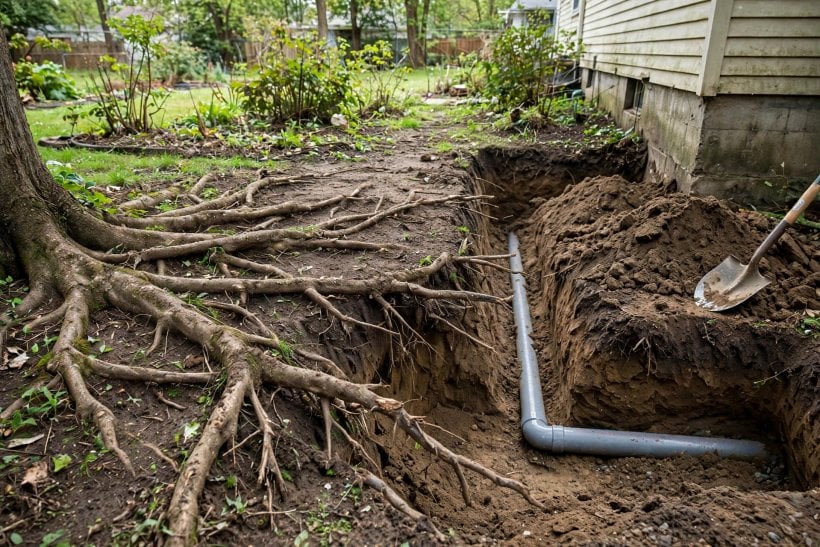
The cheapest root treatment is the one never needed. When planting, keep trees — especially vigorous, water-seeking species — at a sensible distance from the sewer line’s known route; the line’s path can usually be traced from inspection covers and the house’s drainage plan. When replacing or extending a line, modern pipe with sealed, root-resistant joints removes the entry points that start the whole story, and a properly accessible cleanout turns future maintenance from excavation into an afternoon’s work. When buying a house with mature trees and old drains, a pre-purchase camera inspection is money well spent — it prices the root problem into the negotiation instead of into your first year.
Habits help at the margins. Keep grease and wipes out of the line: roots catch what flows past, and a root fringe plus a grease habit blocks far faster than either alone. Note the early signs — the first gurgle, the first slow shower — and act while the line is still moving, because every treatment in this guide works better on a slow drain than on a stopped one. And keep records: where the line runs, when it was cut, when it was treated, and with what. Drain memory is what turns a recurring emergency into a managed maintenance line in the household budget — unglamorous, and exactly the point.
10. Costs and Choosing What to Buy
Costs in this category are refreshingly legible. A household root-killer treatment is one of the cheaper items in the drain-care cupboard — small money next to a professional call-out, and trivial next to excavation. A professional mechanical clearing with camera inspection sits in the middle: real money, spent once, that buys certainty about the line’s condition. Lining or replacing a failed section is the expensive tier, and it is bought once per generation rather than once per year. The honest comparison is never bottle versus call-out in a single year — it is the total cost of a decade of each path, for your line, with your trees.
So the buying decision runs in a fixed order. Confirm the blockage is roots — camera if the pattern is new, history if it is the known cycle. Check the label against your pipe material, your septic or sewer arrangement, and your local rules, and let any failure veto the product. Choose the format that reaches your roots — foam where roots hang from the top of the pipe, crystals where the label’s method suits your access point. Apply exactly as directed, at low-use time, on a slow-but-moving line. Then schedule the repeat and start the pipe-repair conversation in parallel if the same joint keeps inviting the forest in. Judged that way, the “best” root killer is rarely a brand name — it is the permitted, compatible product, used on time, inside a plan. Surface drainage above the same ground benefits from the same plan-first thinking, as this guide to dry creek bed drainage shows: water and roots both follow the paths the landscape offers them.
Final Considerations
A root killer is a good servant and a bad strategy: it kills the roots in the pipe, buys a season or more of clear flow, and does nothing about the joint that let them in. Used with the label checks done and the schedule kept, it is one of the best-value maintenance products a house with trees and old drains can buy.
Confirm it is roots, respect the pipe, the tank and the local rules, and treat on rhythm rather than in crisis. And when the same spot blocks for the third time, spend the next money on a camera and a repair quote — that is the moment the honest answer changes from a bottle to a spade.




0 Comments