
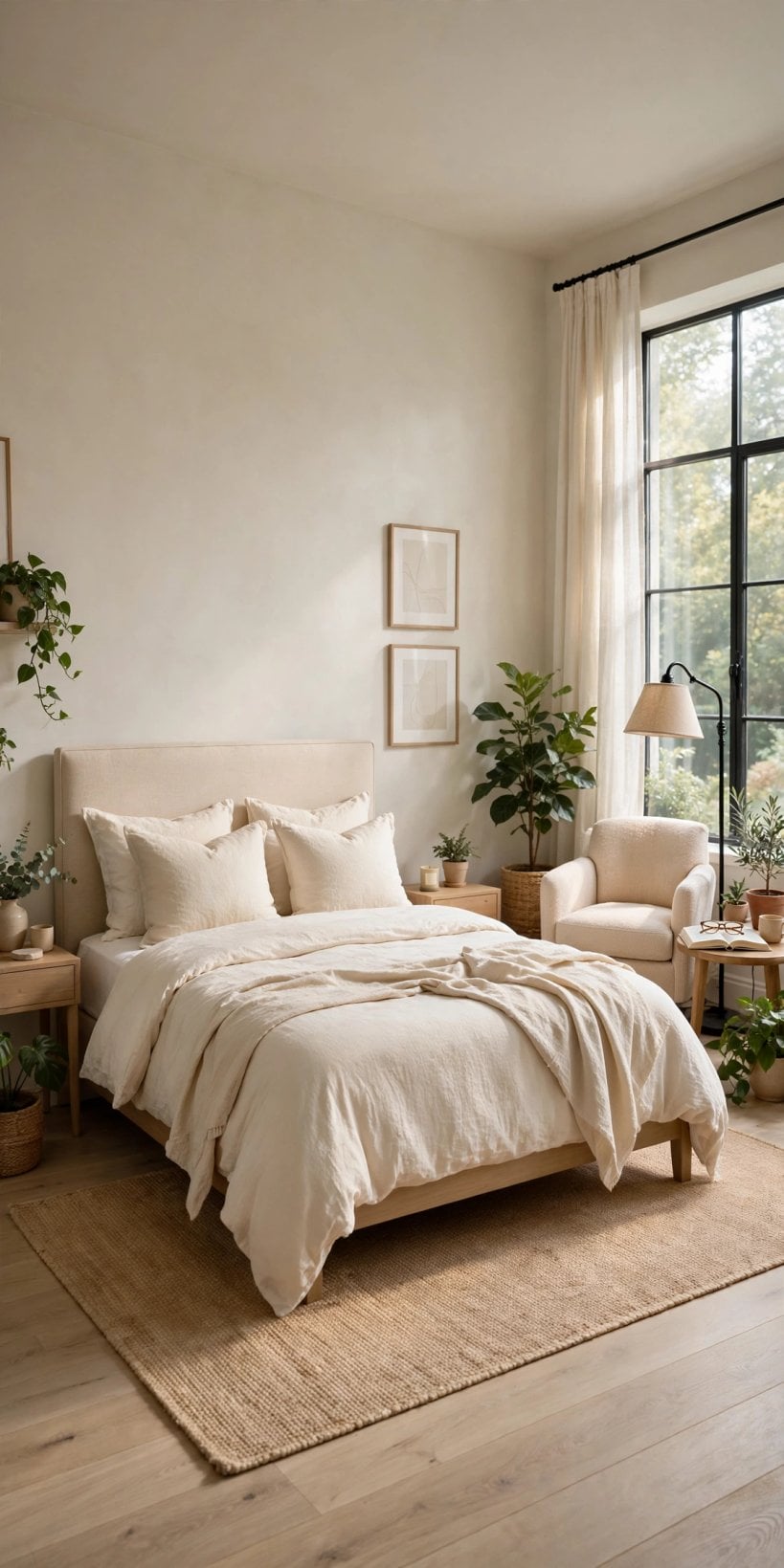
A large bedroom should feel like a retreat, not an echo. The secret with big bedrooms is giving the space a plan: zones for sleeping, dressing and lingering, tied together with colour, texture and light.
These 75 ideas work through layouts first, then the bed, colour, storage and styling, so a generous room ends up feeling generous — not empty.
Start With Space: What a Large Bedroom Actually Needs
Square footage alone does not make a restful room. The most successful big bedrooms behave like a small suite: a sleeping zone that feels sheltered, a dressing zone that keeps clothes and clutter out of sight, and a third zone — a chair, a desk or a window seat — that gives the room a reason to exist beyond the bed. Deciding on those zones before choosing furniture is the single decision that separates a calm, hotel-like room from a large one that somehow feels unfinished.
Measure the room properly, including ceiling height, window positions and the swing of doors. Note where morning light lands and where the draughts sit in winter. Work with those facts rather than against them: beds love the quietest wall, desks love the light, and wardrobes love long, unbroken runs. For contrast, look at how much planning goes into the modern tiny house bedroom — the same thinking, applied in reverse, tells you exactly where your extra space can be spent.
| Question | At a Glance |
|---|---|
| How many zones? | Three works well: sleeping, dressing and one of seating, work or reading |
| Where does the bed go? | On the calmest wall, ideally facing or angled towards the best view or window |
| Biggest risk | Furniture that is too small, scattered around the edges, leaving a hollow middle |
| Quickest warmth | One large rug, layered lighting and curtains hung wide and high |
| Storage priority | One full wall of closed storage beats several small pieces dotted around |
| Best first step | Draw the zones on paper, then size the bed and rug to the sleeping zone |

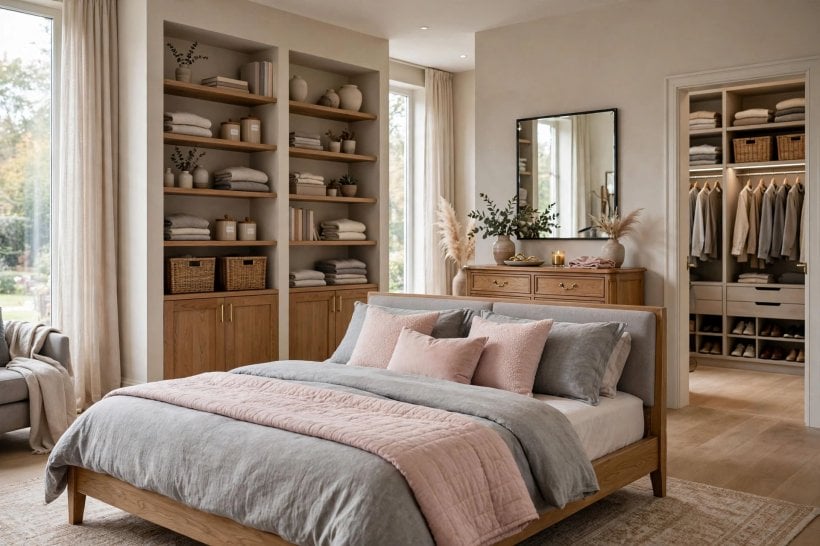
A visual guide to zoning a large bedroom: sleep, dress and linger, each with its own light and floor space.
The sections below follow the order a decorator would use: layout, bed, colour, storage, extra zones, lighting, soft furnishings and styling. Steal the whole sequence or dip into the part your room is missing; even two or three changes, made at the right scale, will shift how the whole space feels at bedtime and on slow weekend mornings.
Layouts That Use the Whole Room
Layout is where large rooms are won or lost. These arrangements give every part of the floor a job, borrowing the zone discipline used in good tiny house bedroom ideas and scaling it up.
1. Bed centred on the long wall. Centring the bed on the longest unbroken wall gives the room its axis and leaves balanced space for wardrobes and a seating zone at the far end.
2. Bed facing the window. If the view deserves it, face the bed towards the glass and let morning light become the room’s alarm clock and its best decoration.
3. Sleeping zone at the quiet end. Put the bed furthest from the door and bathroom traffic so the sleeping area keeps a sheltered, end-of-the-journey feeling.
4. Dressing zone behind a screen. A screen, open shelving unit or half wall between bed and wardrobes creates a dressing area without building a separate room.
5. Reading corner by the best light. One comfortable chair, a small table and a lamp near a window build a second destination that stops the room revolving only around sleep.
6. Desk along the spare wall. A proper desk zone keeps work out of the bed’s sightline and gives laptops and paperwork a home that is not the duvet.
7. Symmetrical nightstands, generous walkways. Matching tables either side of the bed suit large rooms; keep clear walking space around three sides so the layout feels airy, never squeezed.
8. Bench or trunk at the foot. A long bench anchors the bed, catches throws and morning clothes, and fills the visual gap between bed and the rest of the room.

Beds and Headboards With Presence
In a generous room the bed must hold its own; undersized furniture is the fastest route to a room that feels like a hall. Choose scale and softness together.
9. The largest bed that fits the zone. If the sleeping zone allows it, size up; the extra width transforms sleep quality and finally makes the bed proportional to the room around it.
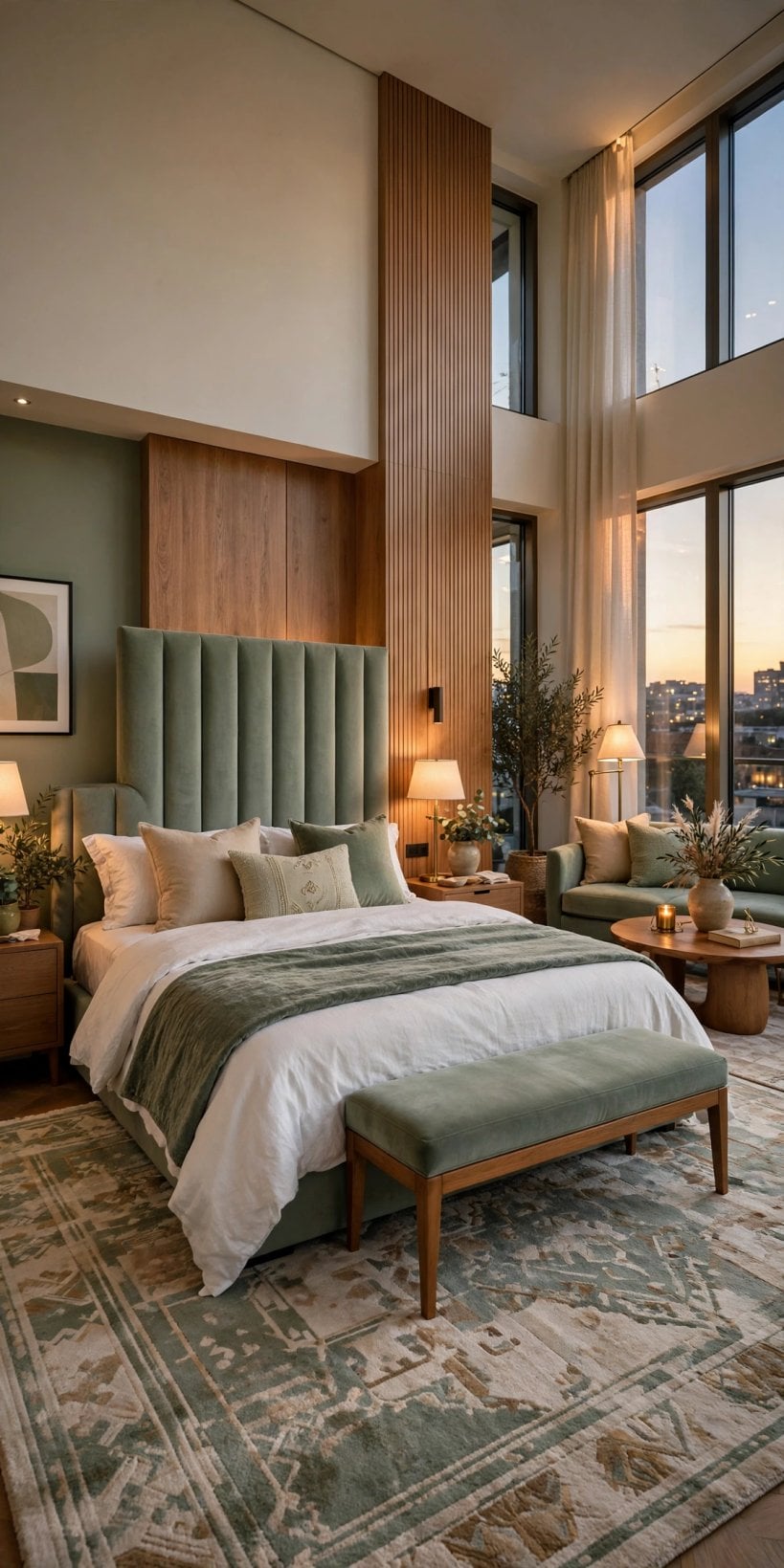
10. Tall upholstered headboard. A high, padded headboard gives the bed a backdrop, softens wall echo and makes reading in bed as comfortable as it looks in photographs.
11. Canopy or four-poster frame. Vertical posts define a room within the room, a classic solution that adds architecture exactly where large bedrooms can feel featureless.
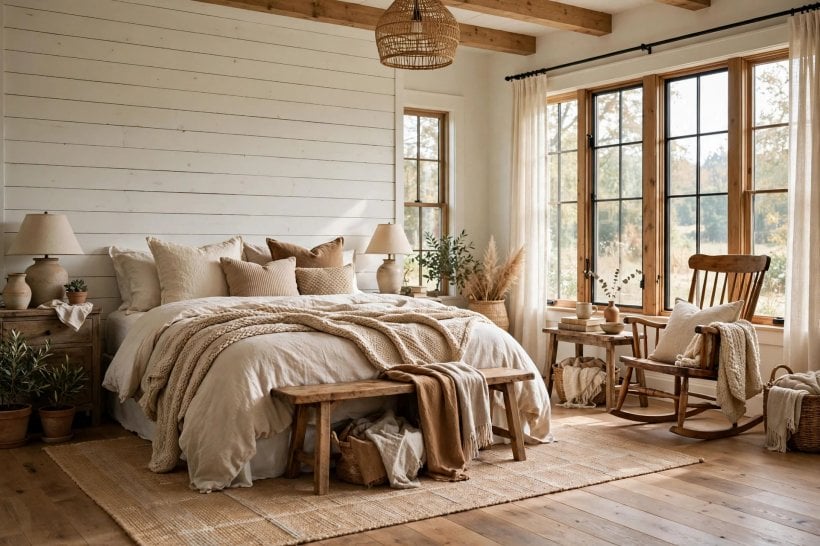
12. Timber frame with weight. A chunky wooden frame grounds lighter bedding and suits both rustic and modern schemes, especially repeated in side tables or a bench.
13. Layered bedding, always. Duvet, throw, a folded blanket at the foot and pillows in two sizes: layers add the visual bulk a big bed needs to look inviting.
14. A bedcover with drape. Bedding that falls generously over the sides looks luxurious at this scale, where skimpy covers read as a mistake rather than minimalism.
15. Headboard wall treatment. Panelling, paint or paper on the wall behind the bed creates a feature zone, letting the other walls stay calm and uncluttered.
16. Two bedside lamps with real size. Small lamps get lost here; choose substantial bases and wide shades that throw pools of light worthy of the room’s proportions.
Colour Schemes for Generous Rooms
Large rooms can take colour bravely, but they punish hesitation: timid colour at this scale just looks washed out. Use the wall, textile and wood palettes below with the confidence of the tiny house interior paint colours that work in far smaller spaces.
17. Deep colour on all four walls. Committing to a saturated shade everywhere wraps the room and makes its size feel intentional, especially paired with pale bedding for contrast.
18. Warm whites instead of bright whites. Creamy, warm whites stop large walls feeling gallery-cold and flatter skin tones in morning light and lamplight alike.
19. Two-tone walls. A deeper shade below picture-rail height and a lighter one above lowers high ceilings visually and gives long walls a designed rhythm.
20. Colour carried onto the ceiling. Painting the ceiling a shade softer than the walls removes the stark lid effect that can make tall rooms feel like boxes.
21. One accent colour, repeated five times. Cushions, a throw, a vase, art and a book jacket in the same family of colour tie distant corners of a big room together.
22. Wood tones as colour. Warm timber floors and furniture count as part of the palette; balance cool wall colours with them deliberately rather than by accident.
23. Pattern at large scale. If you love pattern, this is its natural home: a big floral, wide stripe or oversized check that would overwhelm a small room breathes here.
24. Test at full height. Paint large test patches and view them from the door and the bed; colours read paler over big areas than they do on a small card.
Storage That Keeps the Floor Clear
Spacious rooms collect clutter at exactly the speed small ones do; the difference is you have room to hide it properly. These ideas borrow the discipline of tiny house closet design ideas for compact storage at generous scale.
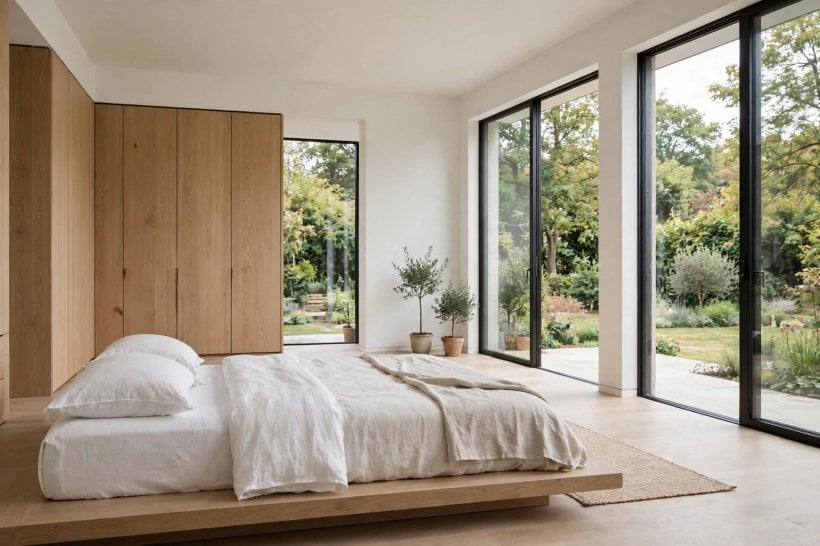
25. One full wardrobe wall. A single run of fitted wardrobes beats scattered chests; closed doors give the room one calm, architectural wall and swallow everything behind it.
26. A dressing table inside the wardrobe zone. Mirror, stool and drawers grouped with the wardrobes keep the morning routine in one place and the sleeping zone purely for rest.
27. Under-bed drawers. The footprint of a large bed hides serious storage; use it for spare bedding and out-of-season clothes rather than leaving it to dust.
28. A blanket box with a second job. A trunk at the foot of the bed stores throws and works as seating, a surface and a visual anchor all at once.
29. Closed storage for visual quiet. In rooms this size, open rails and visible shelves quickly look like a shop; keep most storage behind doors and display little, deliberately.
30. Hooks and a valet stand. Tomorrow’s outfit and today’s discarded layers land on a valet stand instead of the floor or the reading chair.
31. Linen press or tallboy for textiles. Bulky spare duvets and pillows deserve one tall, dedicated home so wardrobes stay for clothes alone.
32. Hidden charging drawer. A drawer fitted with sockets ends the nightly cable sprawl across bedside tables and keeps the room’s calm surfaces cable-free.
Seating, Desks and Second Zones
The extra zones are what turn size into luxury. Furnish them as seriously as the bed, echoing the multi-use planning in these tiny house living room ideas, where every seat earns its place.
33. A pair of armchairs, not one. Two chairs and a shared table make a conversation spot; a single chair in a vast room tends to look like it is waiting for the dentist.
34. Window seat with storage. A built-in seat under the window uses the view, hides bedding inside and becomes the most contested seat in the house.
35. A chaise for afternoon naps. A chaise longue gives the room a holiday mood and a nap spot that is not the bed, which sleep coaches quietly applaud.
36. Desk with a view, screen turned away. Place the desk to enjoy the window while awake, but angle screens so the bed never stares at a glowing reminder of work.
37. Yoga and stretch space. Leave one clear floor area deliberately empty; a mat’s worth of open boards is a feature, not wasted space, in a wellness-minded room.
38. A small library wall. Low bookcases along one wall add colour, texture and the pleasant suggestion that this room is for slow evenings.
39. Vanity with good light. A dressing table near natural light, with a mirror that can be closed or turned, keeps cosmetics and clutter elegantly contained.
40. Plants at architectural scale. One tall plant in a big pot matches the room’s proportions and softens a corner far better than three small pots scattered about.
Lighting in Layers
One ceiling light cannot serve a room this size; it flattens everything and strands the corners. Layer lighting the way hotels do, and let each zone have its own glow.
41. A central pendant with presence. Choose a ceiling fitting scaled to the room; a generous pendant or chandelier over the centre gives the ceiling a reason to be looked at.
42. Bedside light you can read by. Wall-mounted or table lamps at pillow height, one each side, on separate switches so one reader never keeps the other awake.
43. A lamp for every zone. Reading corner, desk and dressing table each need their own light source; carrying one lamp around the room is the sign of an unplanned scheme.
44. Dimmers everywhere. Dimming turns the same fittings from bright morning mode to evening calm, and is the cheapest atmosphere upgrade available at any scale.
45. Warm bulbs, consistently. Match bulb warmth across the room so zones blend; a single cold-white bulb in one lamp will glare like a mistake.
46. Curtains and blinds in two layers. Sheers for daytime privacy and blackout-lined curtains for sleep give large windows both softness and function.
47. Candlelight points. A tray with candles on the dresser or by the chaise adds the flicker no fitting can fake; use them safely and never near bedding.
48. Light the art and the corners. A picture light or a small uplighter in a dark corner stops the room shrinking to a pool of light around the bed at night.

Rugs, Curtains and Soft Furnishings
Softness is what makes size feel like comfort. Textiles absorb the echo, warm the floor and carry the colour scheme from zone to zone.
49. One very large rug. The rug should run under the bed and out on all sides, with floorboards showing as a border; small rugs adrift in big rooms look like accidents.
50. Rugs to mark the other zones. A second, smaller rug under the chairs or desk ties each zone together and stops furniture floating on a sea of flooring.
51. Curtains hung high and wide. Fix poles well above and beyond the window so curtains stack back onto wall, not glass; the window looks bigger and the light survives.
52. Bedding textiles with texture. Linen, washed cotton, a knitted throw: mixing textures at close range rewards the person in the bed, whatever the room’s scale.
53. Cushions with restraint. Two or three good cushions in the room’s accent family are enough; a mountain of them reads fussy and makes the bed nightly work.
54. A throw at the chaise and the bed. Repeating one throw style in both sleeping and seating zones stitches the room’s two halves together visually.
55. Upholstered pieces in the same story. Headboard, chair and bench fabrics need not match, but they should share a temperature — all warm or all cool — to feel collected.
56. Sound-softening extras. A padded headboard, fabric blinds and a fabric-covered bench all eat echo; large hard rooms can sound as empty as they look without them.
Finishing Touches and Spacious Styling
Styling at this scale means editing, not adding. These touches follow the spirit of the best tiny house bedroom decor: few things, well chosen, given room to breathe.
57. Art at generous scale. One large piece over the bed or opposite it suits the proportions; a scatter of small frames gets lost on big walls.
58. A mirror that borrows light. A tall mirror opposite the window doubles daylight into the room’s far side and gives the dressing zone its finishing piece.
59. Books on the nightstand, edited. A short stack of current reading looks lived-in; a teetering pile looks like storage, and large rooms invite the difference to show.
60. A tray for the small things. Jewellery, watch and glasses land on one tray on the dresser, keeping wide surfaces pleasingly empty elsewhere.
61. Fresh or dried stems, simply. One vase with tall stems on the dresser or table echoes the room’s vertical space better than low, fussy arrangements.
62. Scent as a finishing layer. Linen spray, a cedar block in the wardrobe or a candle by the chair gives the room a signature you notice on entering.
63. Matching metals, loosely. Lamp bases, handles and frames in one or two metal families stop a big room’s many objects feeling like strangers.
64. Negative space on purpose. Leave one wall mostly bare and one surface completely clear; spaciousness is a styling choice you can see.
65. A place for morning coffee. A small tray permanently set with cups near the chair turns waking up in a big room into a small daily ceremony.

Mistakes That Make Large Rooms Feel Cold
Finally, the traps. Each of these errors is common precisely because the room is big, and each has a simple, budget-friendly correction.
66. Furniture pushed to the walls. A ring of furniture around an empty centre feels like a waiting room; pull pieces into zones and let walls breathe behind them.
67. Everything at one height. Beds, chairs and storage all at the same level flatten the view; add height with the headboard, a tall plant, art and the mirror.
68. A rug that is too small. The classic big-room error; measure so the rug extends well beyond the bed’s sides and foot before ordering anything.
69. One lonely ceiling light. Already covered above, but worth repeating as a mistake: zones without their own light simply stop being used after dark.
70. Too many small objects. Dozens of tiny ornaments dissolve into visual noise at this scale; swap quantity for size in almost every category.
71. Ignoring the fifth wall. A bare, bright ceiling over a warm room feels unfinished; paint it softly or give it a fitting worth glancing up at, as these tiny house home office ideas do for small workspaces.
72. No door-side thinking. If the view from the doorway is wardrobes and a laundry basket, the room fails its first impression; style the doorway view deliberately.
73. Treating it as storage overflow. Spare furniture, boxes and exercise bikes gravitate to the biggest room; defend the bedroom’s purpose or it becomes the house’s attic.
74. Matching everything exactly. A full suite of identical furniture flattens a large room into a showroom; mix two woods and several fabrics for a collected feel.
75. Forgetting the night-time test. Judge the room lying in bed at night, lamps on: if it does not feel sheltering then, rearrange until it does.
Final Considerations
A large bedroom rewards the same virtues as a small one — planning, proportion and restraint — it simply gives you more room to practise them in. Zone the space, size the furniture honestly, layer the light and textiles, and let storage keep the floor as clear as the day the room was finished.
Start with the layout and the rug, the two decisions everything else hangs from, and live in the room before buying the finishing pieces. The best spacious bedrooms feel inevitable, as if they could never have been arranged any other way — and that feeling is available at any budget, one well-judged zone at a time.


0 Comments