
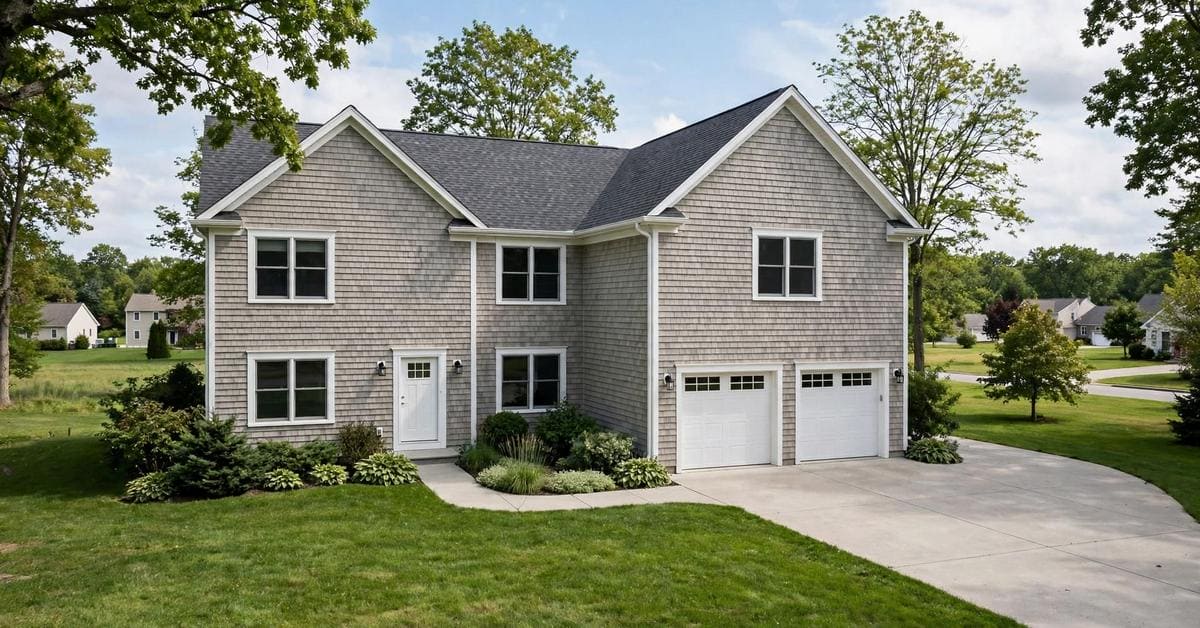
Vinyl shake siding gives a house the look of hand-split cedar shakes without the upkeep that real timber demands: a textured, overlapping wall covering that reads as shingles from the street and shrugs off weather that would age wood. It suits cottages, gabled houses and any home where texture matters more than flat panels. This guide works through what vinyl shake is, how it differs from other sidings, and the checks that keep it looking like shakes rather than plastic.
Shake siding is a material of shadow and texture — each shake casts a small shadow on the one below, giving the wall depth that flat siding cannot. Vinyl reproduces that profile in moulded panels, and the quality of the result depends on the moulding, the colour and the fitting far more than on the material’s name. The checks below keep all three honest.
1. What Vinyl Shake Actually Is
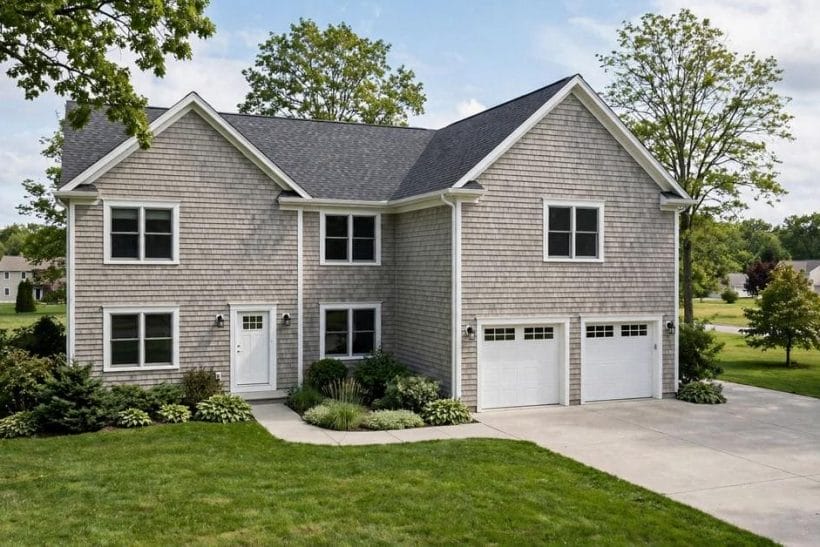
Vinyl shake siding is a wall covering made from moulded vinyl panels shaped to imitate cedar shakes — the tapered, rough-textured shingles traditionally split from timber. The panels interlock and overlap like real shakes, and they are fitted over the house’s weather barrier in courses, just as timber shakes would be. From the street, a well-fitted vinyl shake wall reads as timber; only close up does the material reveal itself.
The key difference from timber is maintenance, not appearance: vinyl does not rot, split or need repainting, and it resists the insects and moisture that age timber shakes. The trade is authenticity of touch — vinyl feels uniform where timber varies — and longevity of colour, which depends on the product’s own formulation rather than on any coating you apply.
2. Shake Against Other Sidings
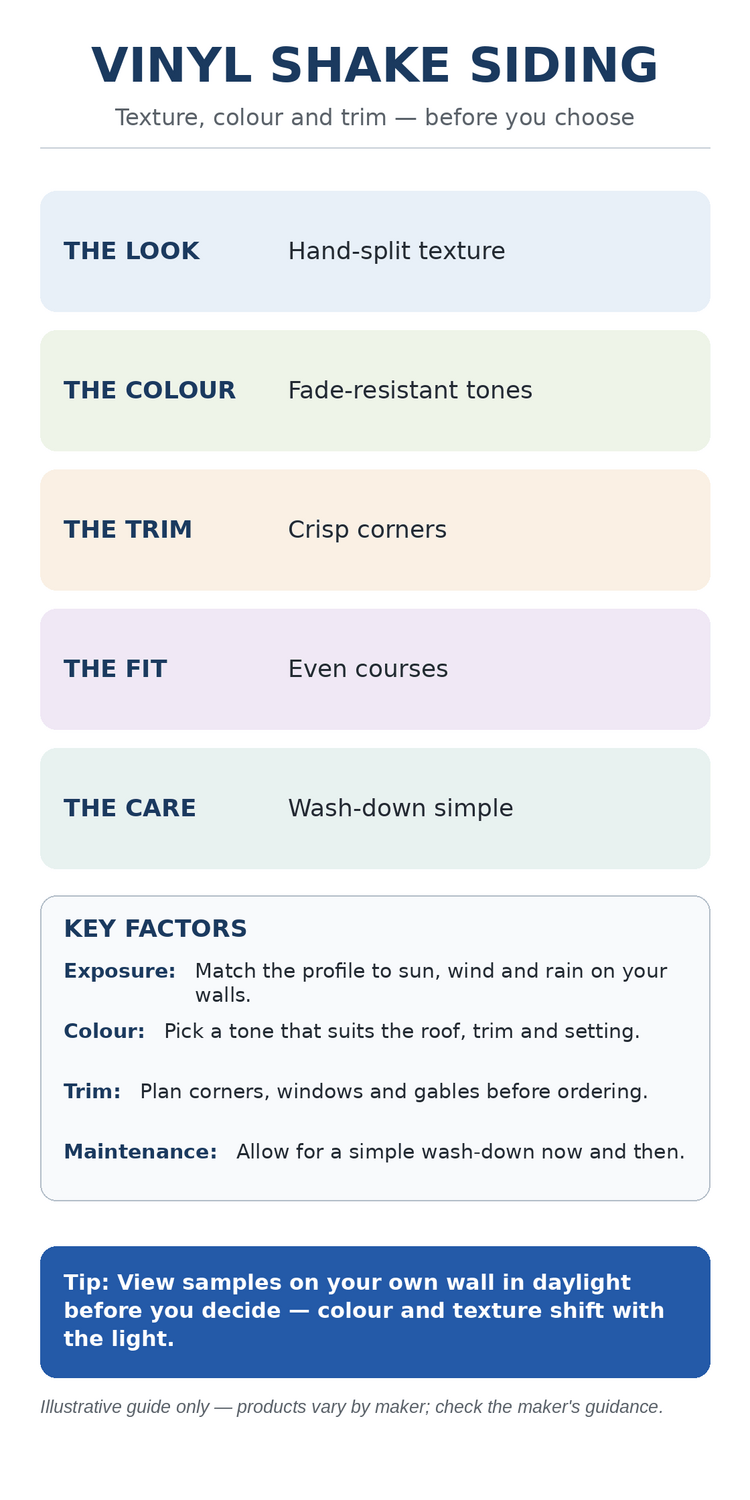
Shake sits between two neighbours: flat vinyl panels, which are cheaper and flatter, and real timber shakes, which are richer and need more care. Against flat panels, shake wins on texture and character — a flat wall reads as plain, while a shake wall reads as crafted. Against timber, vinyl wins on upkeep and loses on variation — every timber shake is unique, while vinyl repeats its mould.
The choice usually turns on the house itself. A cottage, a gabled house or a home with strong trim suits shake, because the texture complements the architecture; a very modern, flat-roofed house may sit better with flat panels that match its lines. Let the house’s existing character decide, not the siding sample alone.
Board-and-batten siding is the other neighbour worth comparing. Where shake reads as small, overlapping units, board-and-batten reads as tall vertical lines — a rhythm that suits farmhouses and taller walls. Shake suits houses where texture should break up a wall into small pieces; board-and-batten suits houses where vertical emphasis should lift the facade. The two can even combine, with shake on gables and board-and-batten below, provided the junction between them is trimmed cleanly. The lesson is the same in every comparison: let the house’s proportions and existing character choose, and judge the combination as a whole wall, not as isolated samples.
3. Colour: How Vinyl Holds Its Tone
Vinyl siding colour runs through the material rather than sitting on it as paint, which is why it resists peeling — but it is not immune to change. Dark colours absorb more heat and can show fading or distortion sooner than light ones, and the sunniest wall of a house will age differently from the shaded side. Choose a colour with the sun in mind: lighter tones are the safer long-term choice on south-facing walls.
Judge colour on a large sample in daylight, not on a small chip indoors. A shake wall covers a large area, and a colour that looks subtle on a chip can dominate a whole facade. View the sample against the roof, the trim and the stone or brick it will meet, since the siding never appears alone.
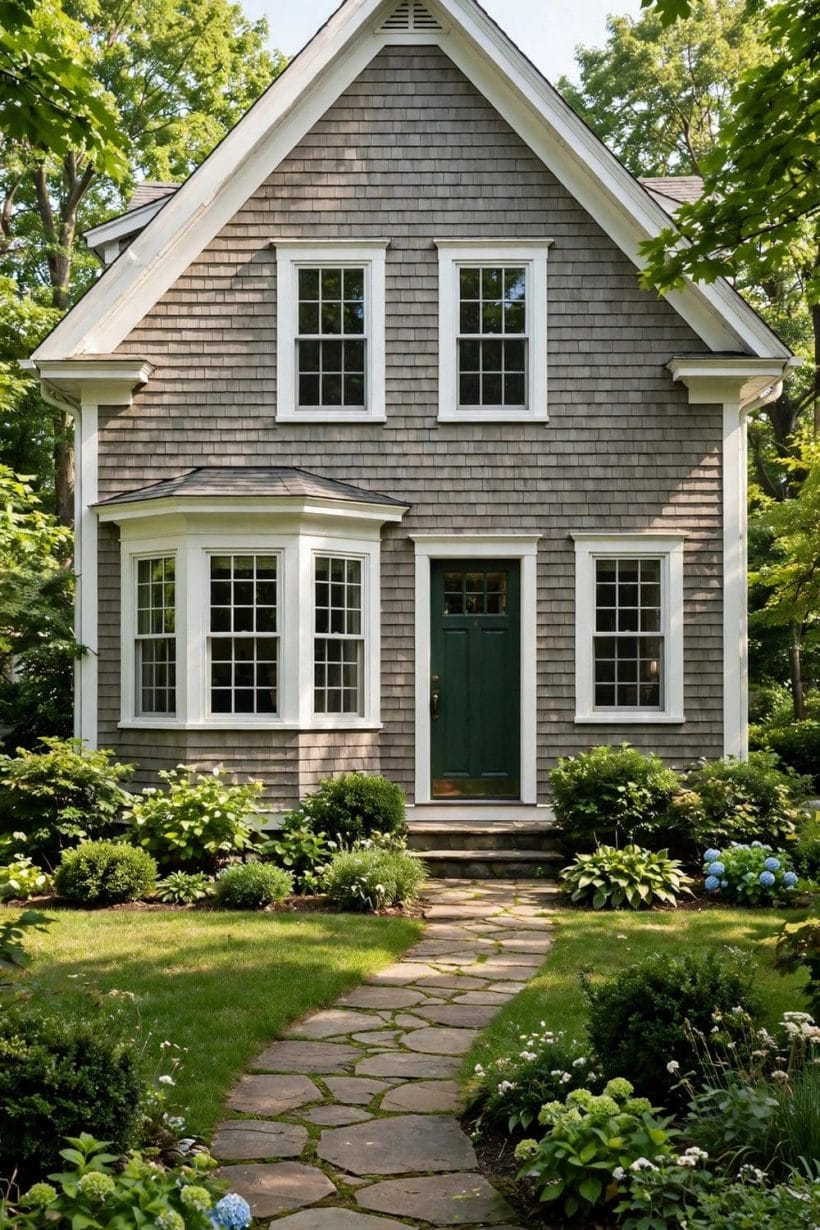
Colour also interacts with the neighbouring materials in ways that are easy to miss on a sample. A shake colour that harmonises with the roof will clash with the brick chimney, or a trim colour that suits the shake will fight the stone foundation. The only reliable test is to view all the materials together, in daylight, at the scale of the house — a sample board that holds the shake, the trim, the roofing and the masonry side by side reveals clashes that individual samples hide. Photograph the board in the house’s own light if you must decide indoors, but prefer the decision made on site, with the real materials against the real house.
4. Texture and Profile: What Reads as Real
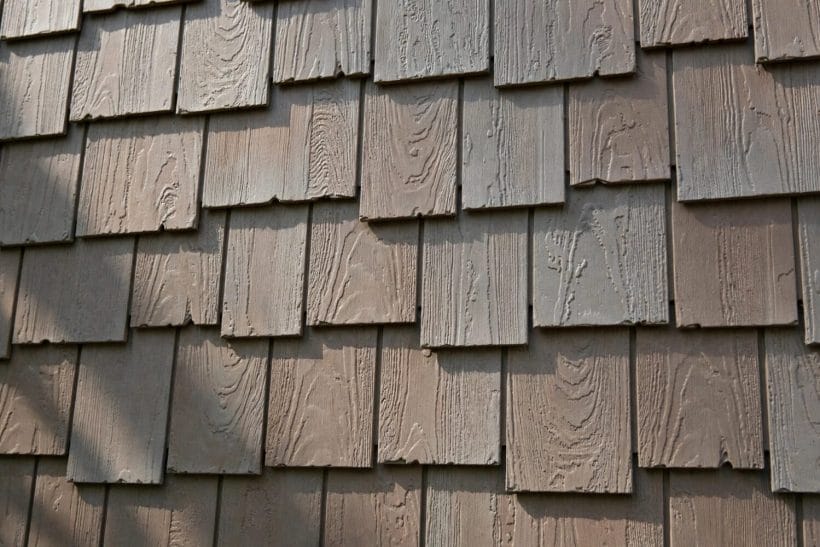
The realism of vinyl shake lives in its profile: the depth of each shake, the irregularity of its edge, and the shadow it casts. Deep, well-defined shakes with varied edges read as timber; shallow, uniform shakes read as panels pretending. When comparing products, look at a fitted wall, not a loose sample — the course lines and shadow gaps are where realism succeeds or fails.
Course height matters too. Narrow courses read as refined and traditional; wide courses read as bold and modern. Match the course to the house’s scale — a small cottage suits narrower courses, while a large gabled house can carry wider ones without the wall looking busy.
5. Trim: Where Shake Walls Succeed or Fail
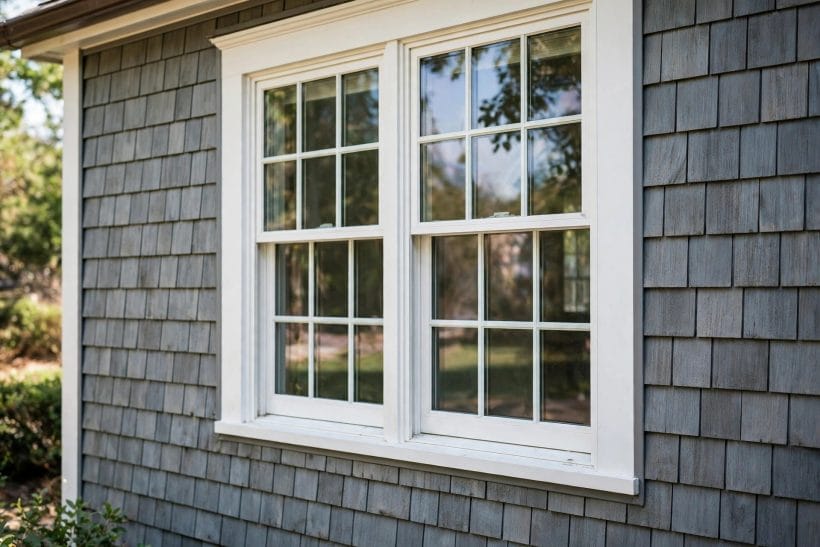
Trim is where a shake wall proves itself. Corner boards, window surrounds, frieze boards and water tables must meet the shake courses cleanly, without awkward cuts or exposed edges. A wall with crisp, well-fitted trim reads as crafted; the same wall with ragged trim reads as cheap, whatever the shake quality.
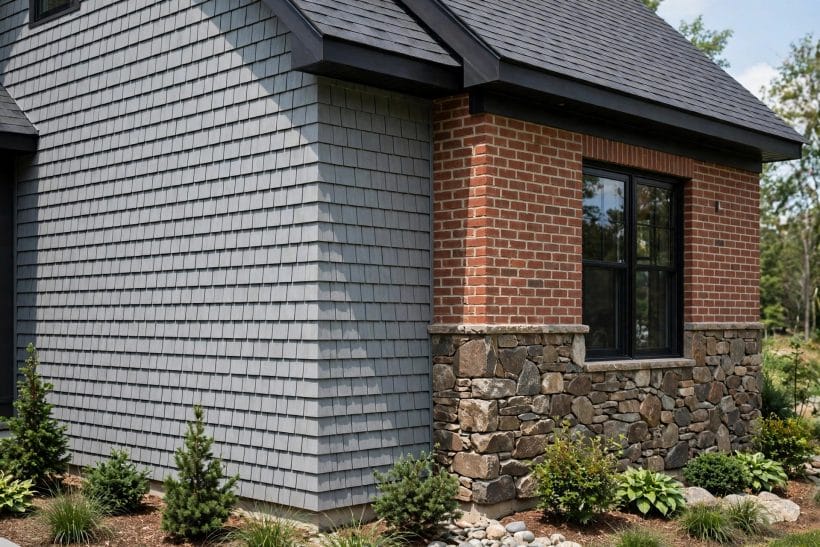
Plan trim before the siding goes up, not after. The trim’s width and profile should suit the shake’s depth — shallow trim against deep shakes leaves gaps and shadows in the wrong places. Where shake meets another material, such as stone or brick, a proper transition piece keeps the junction tidy and weather-tight.
Windows deserve particular care: shake courses must be cut and fitted around them without leaving slivers or uneven reveals. A window that sits cleanly in a shake wall is the sign of a careful fit; a window ringed with filler pieces is the sign of a rushed one.
6. Fitting: The Work That Shows
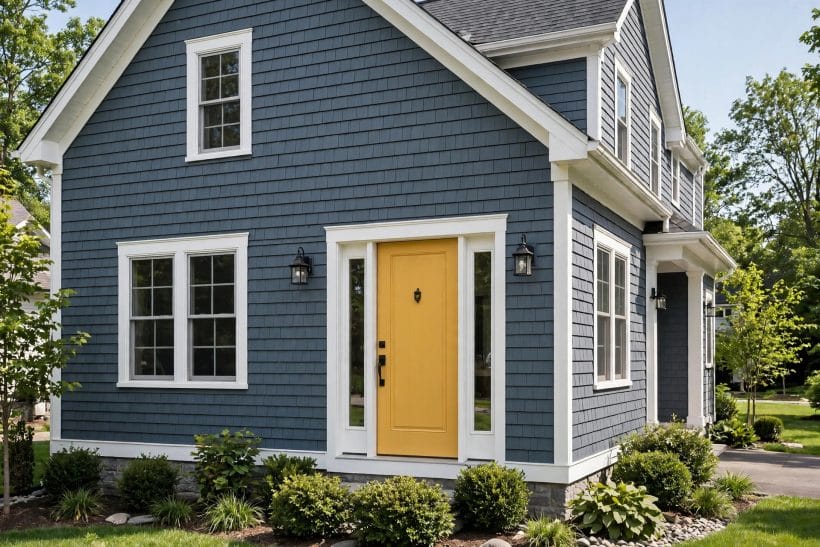
Fitting is the part of a shake wall you cannot judge from a sample. Courses must run level, overlaps must be consistent, and the wall must be able to move slightly with temperature — vinyl expands and contracts, and a wall fitted too tightly will buckle while one fitted too loosely will rattle. These are fitting questions, and they belong to the fitter’s skill, not the product’s brochure.
Ask how the wall handles movement, how corners and junctions are finished, and what happens at the base and the top of the wall. The answers reveal whether the fitter understands vinyl as a material or is treating it like timber. Fitting work belongs to qualified professionals — a shake wall is a weather barrier as well as a finish, and a badly fitted one fails at both jobs.
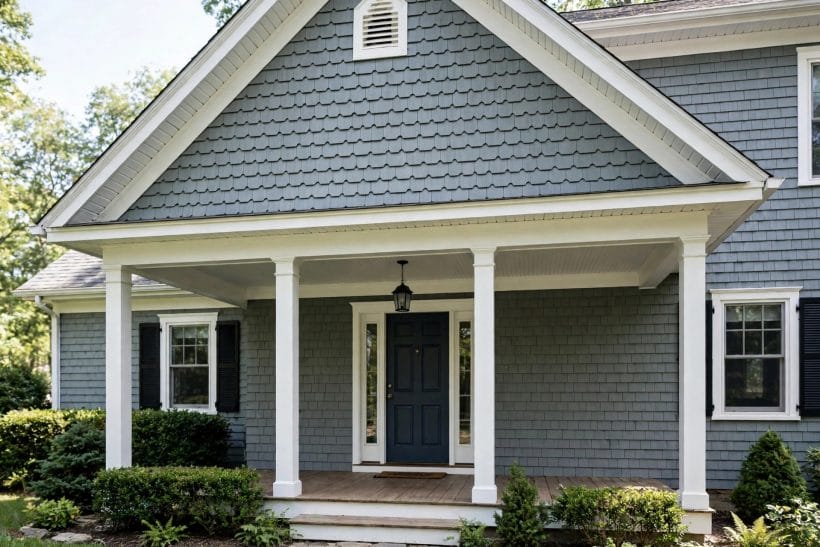
Behind the shake, the weather barrier and flashing do the quiet waterproofing work. The shake itself sheds most water, but wind-driven rain reaches behind any siding, and the barrier beneath must carry that water down and out without letting it reach the structure. Flashing at windows, doors, corners and the wall base directs water away from junctions, and its absence shows up as damp long after the siding looks fine. When a shake wall is fitted, the barrier and flashing deserve as much attention as the visible courses — they are the wall’s real raincoat, and the shake is its handsome outer layer.
7. Weather and Durability in General Terms
Vinyl shake resists the enemies that age timber — rot, insects and moisture — and it needs no painting or sealing to do so. It is not invulnerable: severe hail can mark it, extreme heat can distort dark colours, and a careless impact can crack a panel. The honest claim is low maintenance, not no maintenance.
Check how damaged panels are replaced. A system where a single panel can be swapped without disturbing its neighbours is worth more than a marginally cheaper system where a repair means stripping a whole course. Ask before fitting, not after damage — the answer shapes the wall’s whole life.
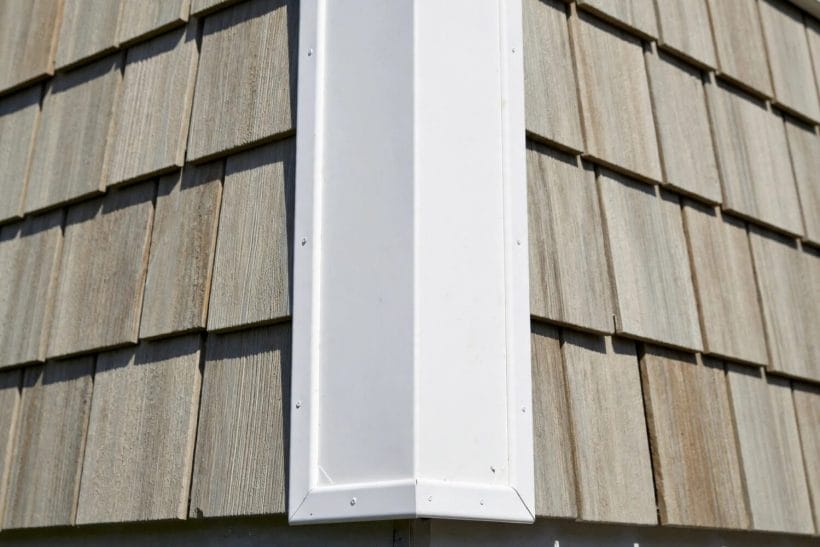
Seasonal movement is another quiet test of a shake wall. Vinyl expands in heat and contracts in cold, and a wall fitted in summer will behave differently in winter. The fitting must leave room for that movement — courses that are nailed too tightly will buckle when they warm, while courses left too loose will rattle in wind. A good fitter understands this and leaves the right clearances, and a homeowner who understands it will not panic at the small seasonal creaks and shifts that are normal for the material. What is not normal is buckling, warping or courses pulling free, and those faults deserve prompt attention before water finds its way behind the wall.
8. Cleaning and Keeping It Looking Right
Cleaning vinyl shake is straightforward: a wash-down with water and a soft brush removes most dirt, and the textured surface hides minor marks better than flat panels do. Avoid harsh abrasives and high-pressure washing at close range, both of which can damage the surface or drive water behind the courses.
Inspect the wall occasionally, especially after storms: look for cracked panels, loose courses and trim that has shifted. Catching a single damaged panel early keeps water out and keeps the wall looking uniform. A wall that is checked once a year will outlast one that is never looked at, whatever the material.

9. Where Shake Suits — and Where It Does Not
Shake suits houses with texture already in their language: cottages, coastal homes, gabled houses, homes with stone or timber accents. It suits gables and upper storeys particularly well, where its texture breaks up a large wall without overwhelming it. A full shake house can be beautiful; a shake gable on an otherwise flat-walled house is often the smarter use.
Shake suits less well where the architecture is deliberately flat and minimal — a house whose character is clean planes and sharp edges will fight the texture rather than welcome it. In those cases, flat panels or a smooth render honour the architecture better. The siding should serve the house, not impose a style on it.
10. Cost Drivers Without Invented Figures
The cost of a shake wall is driven by area, complexity and access rather than by the shake itself alone: a plain rectangular wall costs less to clad than a wall broken by windows, gables and corners, because every opening means cutting and trim. Height and access matter too — a second storey costs more to reach than a ground floor, whatever the material.
Compare quotations on the same basis: the same area, the same trim scope, the same preparation and the same warranty terms. A quotation that omits trim or preparation is not cheaper — it is incomplete. And remember that the cheapest wall is rarely the best value: a well-fitted wall that lasts is worth more than a poorly fitted one that needs early repair. Get local quotations for your house, since no guide can price your walls.
Value, finally, should be judged over the wall’s life rather than on the day of fitting. A shake wall that needs no painting, resists rot and insects, and allows single-panel repairs will cost less in time and attention across the years than a cheaper wall that needs regular coating or early repair. That long view is the honest way to compare sidings: not the cheapest panel, but the wall that looks right and stays right with the least intervention. A well-chosen, well-fitted shake wall does exactly that, and it does it while giving the house a texture no flat wall can match.
Finally, think about the wall’s neighbours — not just the materials beside it, but the houses around it. A shake wall should sit comfortably in its street: it should relate to the neighbouring houses without copying them, and it should suit the area’s character rather than imposing an alien texture on it. A street of brick houses can welcome a shake gable; a street of flat modern render may not welcome a full shake facade. The house you clad is part of a larger picture, and a siding choice that respects its neighbours will age better in every sense — visually, socially and in value — than one chosen in isolation.
Final Considerations
Vinyl shake siding succeeds when three things align: a profile deep enough to cast real shadow, a colour judged in daylight against the whole house, and a fit that respects the material’s movement and the trim’s discipline. Miss any one and the wall reads as imitation; hold all three and it reads as craft.
Choose it for houses whose character welcomes texture, fit it through qualified professionals, and judge it as a wall, not a sample. The result is a house that carries the warmth of shakes without the upkeep of timber — and that keeps carrying it for years. For the rest of the exterior, our exterior entryway, ranch exterior paint, ranch house, fence gates, interior design ideas, tiny house designs and kitchen ideas follow the same judge-the-whole-house logic.




0 Comments