
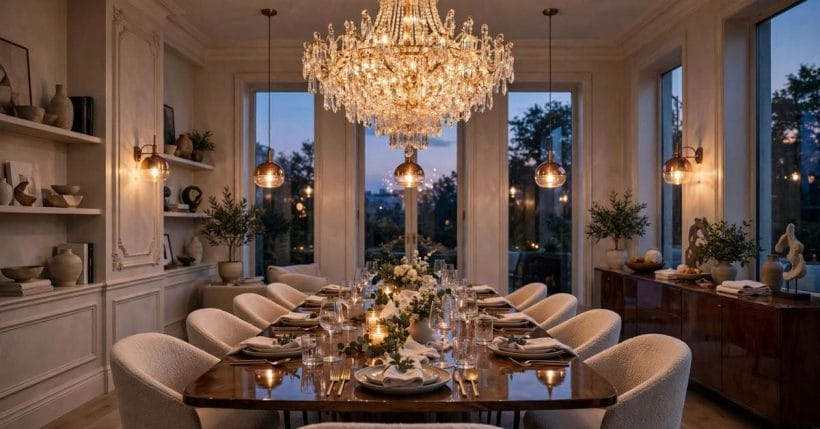
Every dining room has two pieces of furniture: the table, and the light above it. The second is the one guests remember — a chandelier or a row of pendants is the room’s ceiling-level centrepiece, the thing that turns a table with chairs into a place.
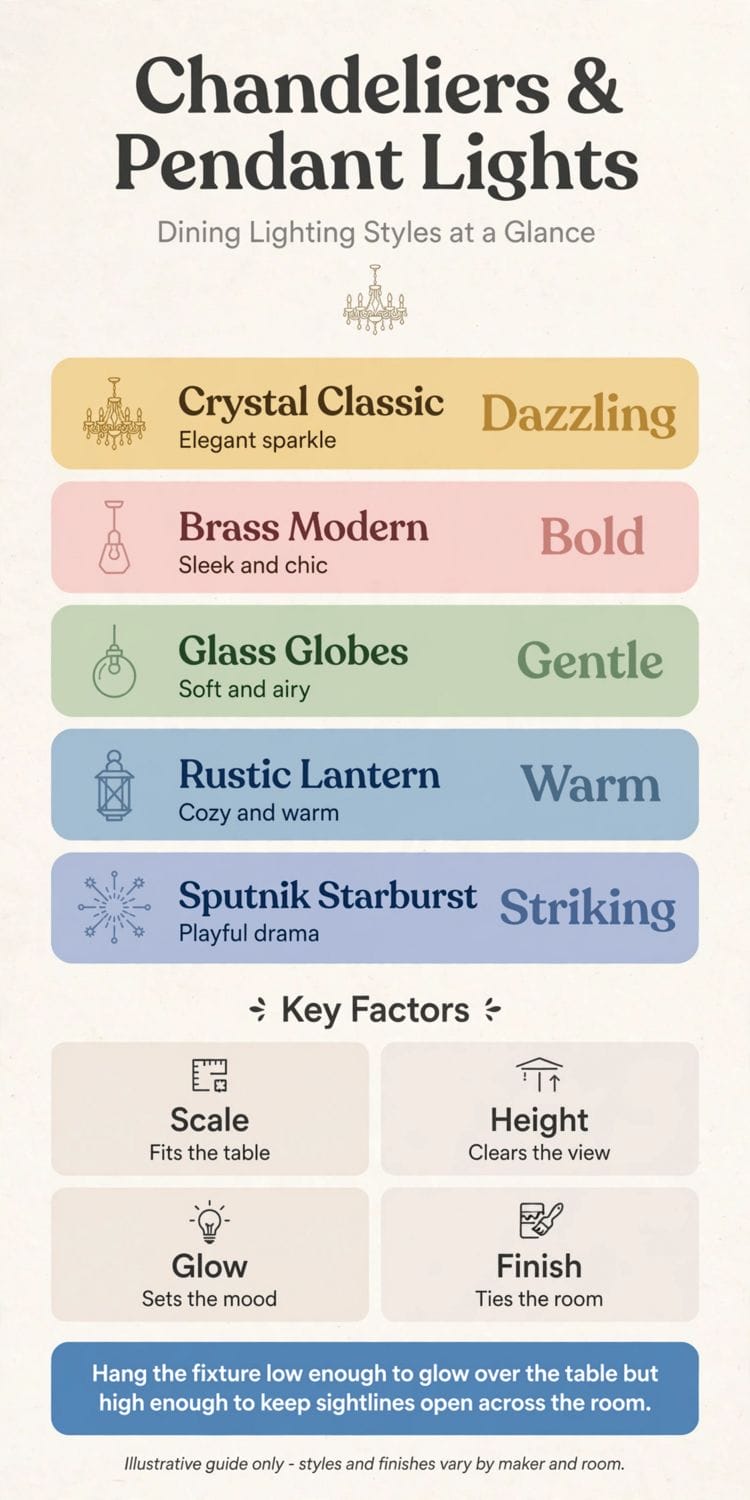
These twenty dining rooms show the fixture doing that work in every register — crystal drama, brass and black metal, gentle glass globes, rustic lanterns, sculpture and the long-table pendant row — with the sizing, hanging and bulb checks that make the difference between a photograph and a room that works.
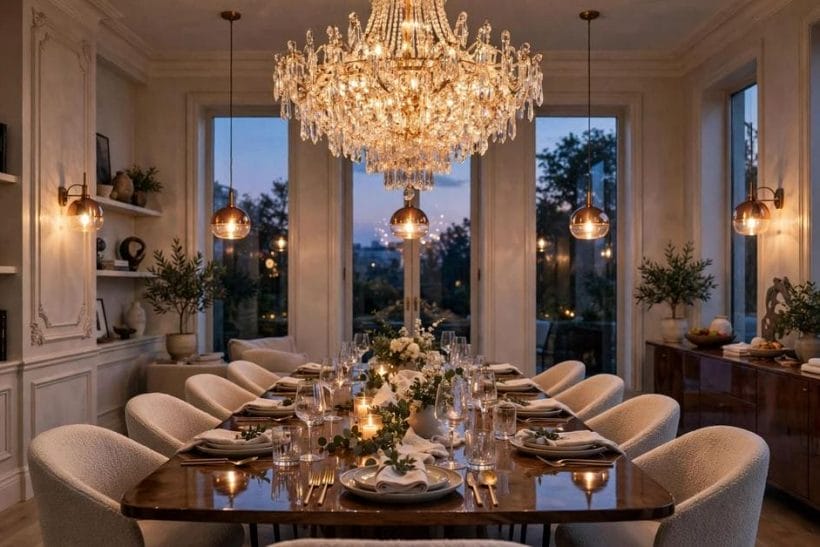
1. Dining Room Chandeliers at a Glance
The central entity is the dining room light fixture: a chandelier or pendant arrangement hung over the table as the room’s focal point, sized to the table, hung for faces rather than ceilings, and dimmable to the hour. The wider room survey belongs to the dining room ideas pillar, and the lighting-layer thinking here is shared with the living room ideas pillar across the hall; this post stays above the table, where one fixture carries a whole room’s atmosphere. The twenty rooms below are grouped by fixture character — read the group that matches your table, then use the closing sections for the measuring and bulb checks that apply to all of them.
| Question | Short answer |
|---|---|
| Chandelier or pendants? | One fixture centres a round or square table; a row of pendants serves a long one — the rooms below split along exactly that line |
| How big should it be? | Generous but clear of sightlines and heads — the sizing section gives the checks; err large, as fixtures shrink visually once hung |
| How low should it hang? | Low enough to feel intimate and light faces, high enough to see across the table — the hanging section works through it |
| What matters more, looks or bulbs? | Both — a beautiful fixture on harsh bulbs fails nightly; the bulb section is the cheapest upgrade in this post |
2. Crystal and Classic Drama
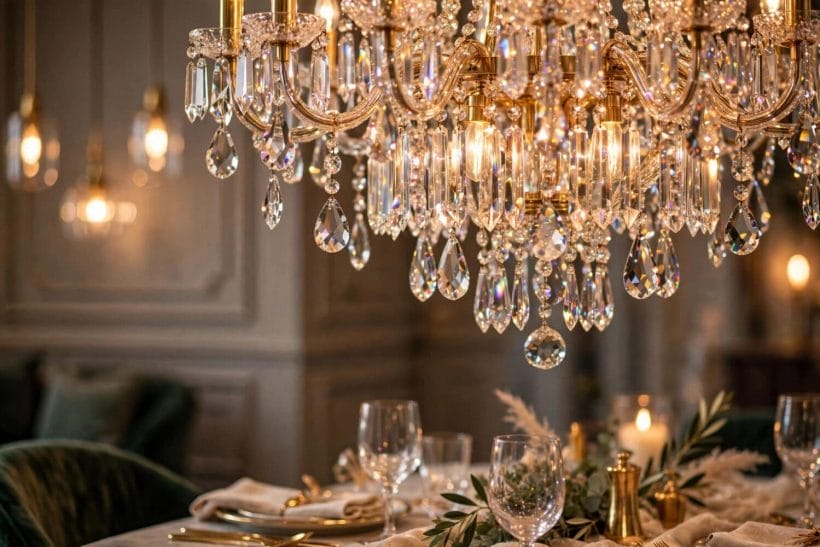
The chandelier in its original register — crystal, candle-forms and ceremony. These four rooms show classic drama working in formal and surprisingly unfussy settings alike.
1. The full crystal chandelier
Tiered crystal over a polished table is the dining room’s oldest portrait — light shattered into a hundred small suns. It suits rooms with height and ceremony, and it demands dimmers: full brightness is for cleaning, never for dinner.
2. Crystal softened by linen
The same drama with the edges off — a crystal fixture over a linen cloth, rush chairs and unpolished silver. Mixing the grand fixture with humble textiles is how classic rooms stay liveable rather than museum-still.
3. The candle-style chandelier
Exposed candle-forms on curved arms, no shades, no crystals — formality reduced to a line drawing. Candle chandeliers suit smaller dining rooms where full crystal would shout, and their bulbs must be the warmest you can find.
4. The tiered empire silhouette
A bowl-and-tier silhouette — fabric or glass gathered into a shallow empire curve — spreads light downward in a pool. Empire shapes flatter long tables and low ceilings, where spiky fixtures would stab at the plaster.
3. Brass, Black and Modern Metal
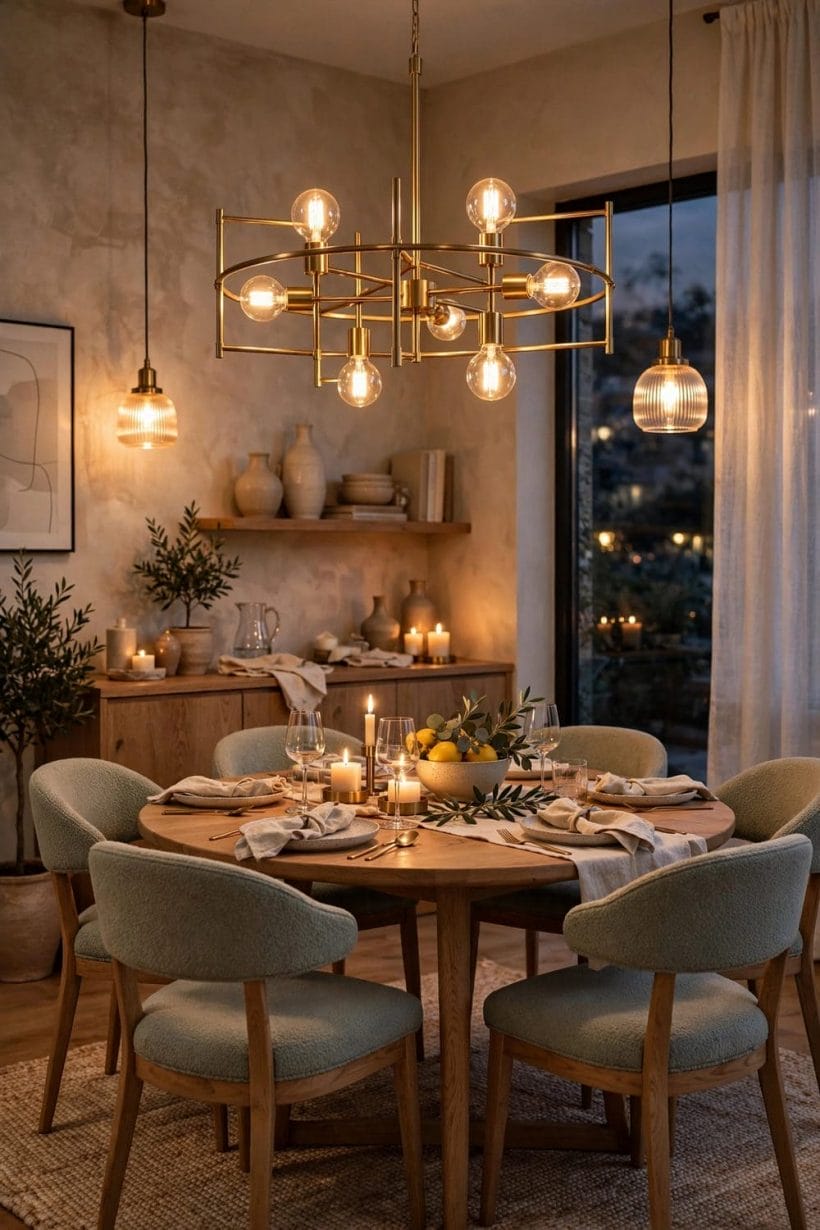
Metal fixtures are the modern dining room’s default — linear, sculptural, and honest about being objects. Four rooms in brass and black, the pair that divide the style between them.
5. The brass linear suspension
A long brass bar or branch of lights stretched over a rectangular table — the fixture echoing the table’s own geometry. Linear suspensions are the rectangle’s natural partner and the easiest dramatic fixture to live with.
6. Black iron, softened
A black metal chandelier — hoop, branch or cage — reads graphic against pale walls and disappears against dark ones. Black is the fixture colour that partners every table material, from marble to farm timber.
7. Mixed metals, one fixture
Brass arms on a black frame, or nickel with warm bulbs — mixed-metal fixtures solve the room where the door handles and the table legs refuse to agree. The fixture brokers the peace by containing both.
8. The minimalist ring
A single slim ring of light floating over a round table — modern minimalism’s chandelier. Rings suit uncluttered rooms and low-key luxury; against a busy room they vanish, so give them plain surroundings or choose louder.
4. Glass Globes and Gentle Light
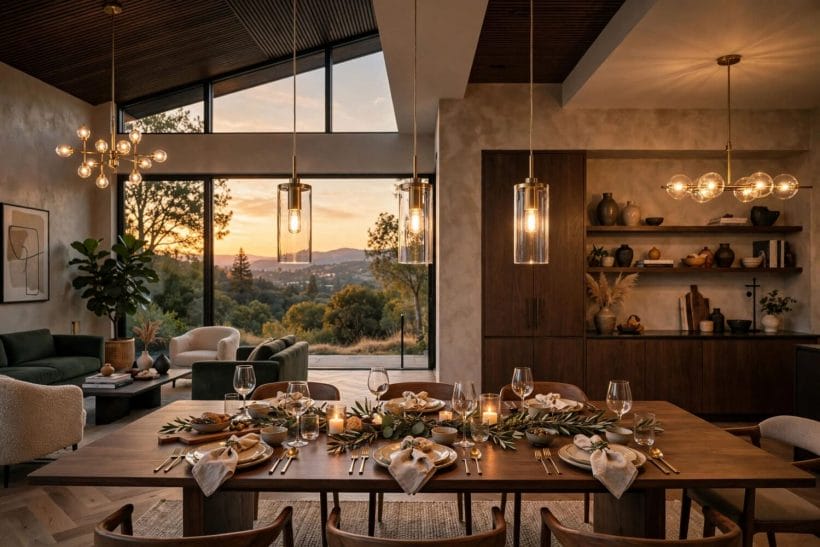
Glass shades trade sparkle for glow — the fixture as a small moon rather than a firework. Three rooms for the households who eat by soft light.
9. The opal globe cluster
Milk-glass globes clustered at varied heights diffuse light in every direction — no glare at eye level, no dark corners at the table’s ends. Clusters forgive irregular tables and ceilings alike.
10. Clear glass and the visible bulb
Clear shades put the bulb itself on show — choose filament forms meant to be seen and keep them dim. Clear glass suits industrial and farmhouse tables, where the fixture’s machinery is part of the charm.
11. The smoked-glass pendant trio
Smoked and amber glass warm the light as it passes — three pendants in a row over a long table, each a small sunset. Smoked glass is the evening cook’s friend: everything on the table looks richer beneath it.
5. Lanterns, Rustic Iron and the Farmhouse Table
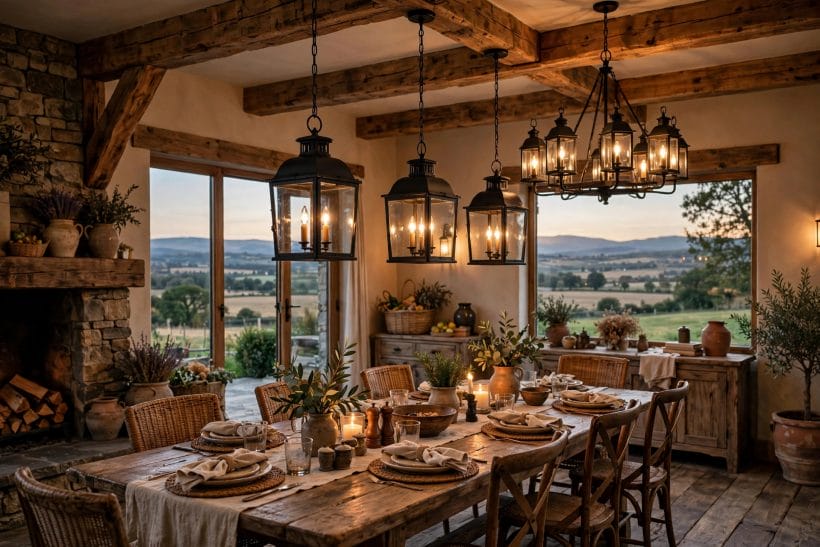
The country register — lanterns, cages and candle-forms in iron and wood, made for long tables and longer lunches. It is the fixture family of the french country dining room, where candlelight is a design material.
12. The lantern pendant
A glazed lantern — candle cluster inside a metal-and-glass cage — hangs like a piece of the garden brought in. Lanterns suit farmhouse and coastal tables, and their glass asks for a cloth and five quiet minutes now and then.
13. The wagon-wheel ring
A great iron ring set with candle-forms — the wheel chandelier — anchors rustic rooms with size rather than detail. It needs ceiling height and a table to match; in a small room it lands like a cartwheel in a parlour.
14. Wood-and-iron beams
A timber beam fitted with candle lights or small shades carries the farmhouse ceiling down to the table. Beam fixtures belong in rooms with beams to answer them — or in plain rooms brave enough to import the whole mood at once.
6. Starbursts, Sculpture and the Statement Piece
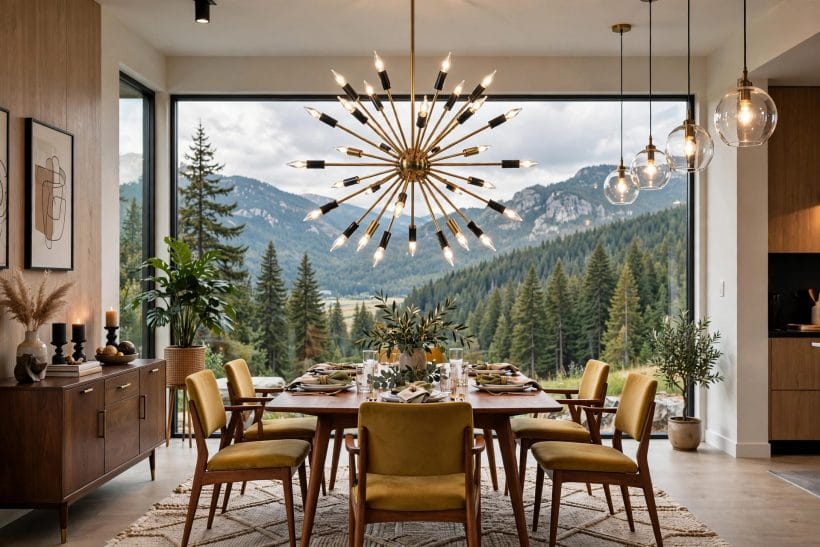
Some fixtures are jewellery; these are sculpture. Three rooms where the light is the art collection — and the table keeps its clothes plain in deference.
15. The starburst
Rays of brass or steel tipped with small lights — the mid-century starburst still stops conversations. It throws patterned shadows, so keep walls plain and let the ceiling wear the decoration.
16. The organic branch
A fixture grown rather than built — branching arms in brass or plaster-white, lights scattered like fruit. Organic fixtures soften rectangular rooms and pair with curved chairs and round tables best.
17. The oversized single pendant
One enormous shade — woven, metal or paper — centred over the table like a held breath. Oversizing is the whole idea: a merely adequate pendant looks apologetic, a giant one looks like a decision.
7. Pendants in a Row: The Long-Table Answer
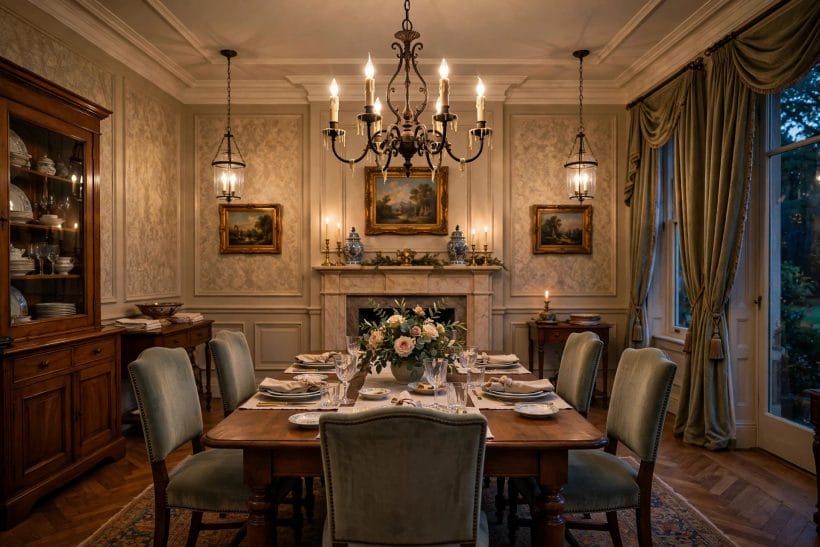
The final three rooms solve the long table, where a single centre fixture leaves the ends in twilight. The row is also the kitchen island’s solution — the kitchen ideas pillar works the same geometry over counters.
18. Three matching pendants
The classic row: identical pendants, evenly spaced, hung at one height along the table’s spine. Matching sets read calm and architectural — the choice when the room already owns pattern elsewhere.
19. The mismatched row
Different pendants, one family — same metal, varied shapes; or same shape, varied glass. The gathered row suits eclectic rooms and rewards collectors; keep one element constant so the row reads curated, not accidental.
20. Two large pendants
For the longest tables, two substantial pendants divide the table into a pair of centres — each end gets its own pool of light and its own conversation. Two-fixture rows also simplify wiring where a single long run would wander.
8. Scale and Height: Fitting the Fixture to the Table
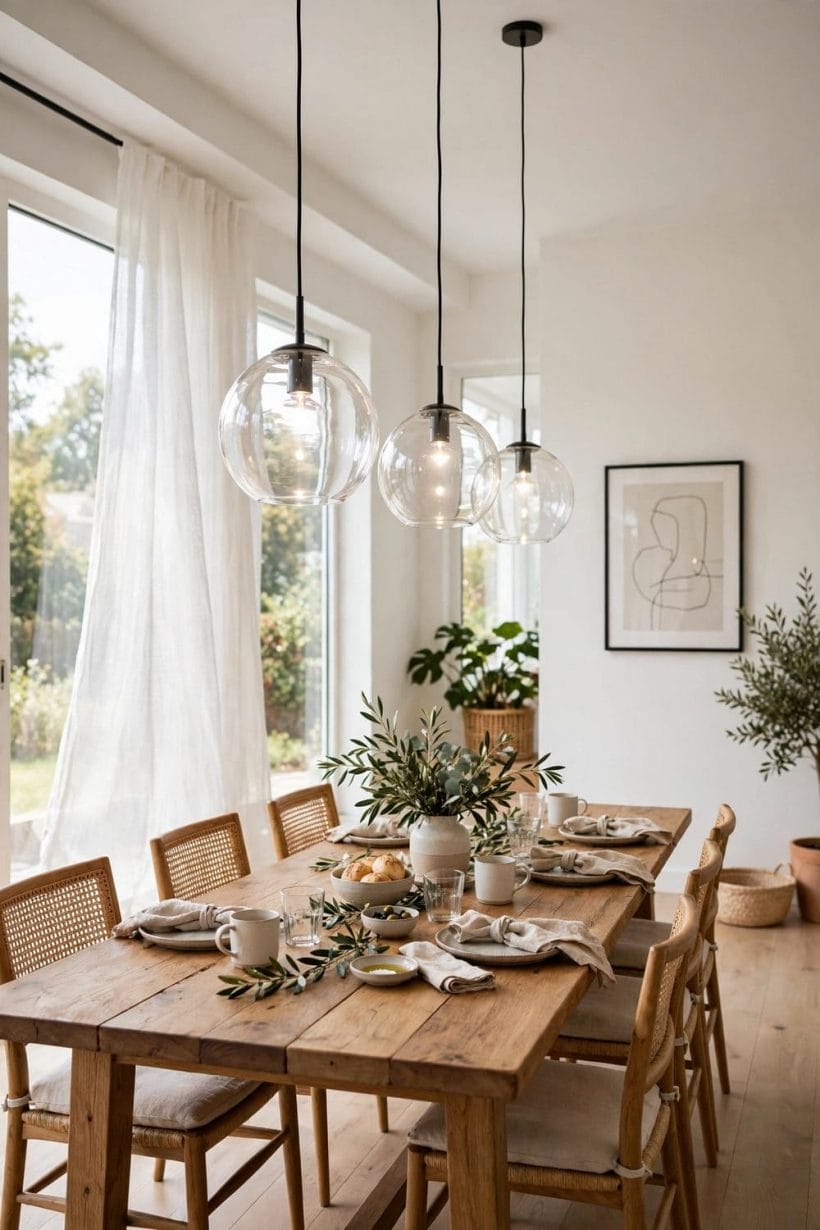
Every room above obeys the same quiet arithmetic, and it is worth stating plainly. The fixture should belong to the table, not the room: centred on the table even when the table sits off the room’s centre, and scaled so its spread relates to the tabletop rather than the floor plan. A fixture that looks slightly too large in the shop will look right above the table; the one that looked perfect in the shop usually reads timid at home.
Height is about faces. Hang the fixture low enough that its light pool gathers the table into an island — and high enough that seated guests see each other, not the hardware. If diners must duck their heads to talk, the fixture has failed its only social duty, however beautiful it is. In rooms where the table moves — extendable tables, shifting layouts — a fixture on a longer drop that can be re-centred earns its keep; and where the ceiling is low, wide and shallow fixtures beat tall ones every time. The same respect for the surface beneath governs the ceiling designs for the living room, where the fixture and the ceiling it hangs from are designed as one piece.
9. Bulbs, Dimmers and Layered Light
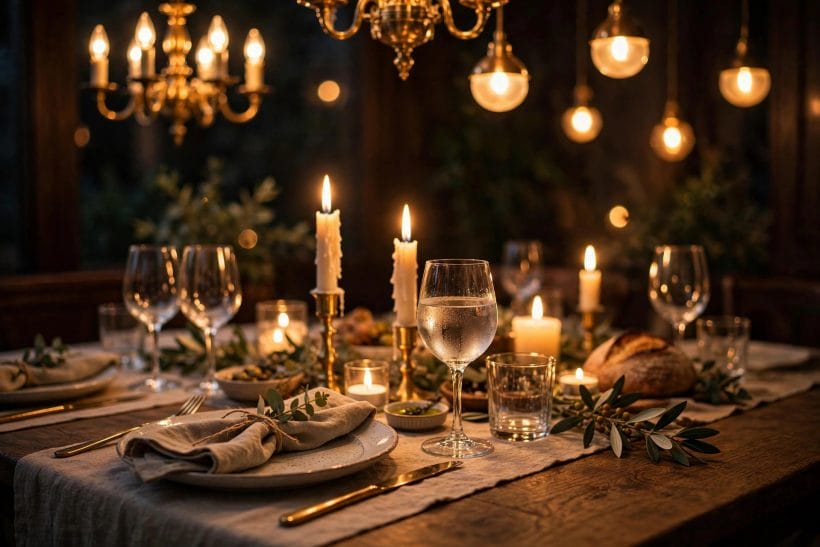
The prettiest fixture in this post will fail nightly on the wrong bulbs. Warm light is the dining room’s non-negotiable — it flatters faces and food, the room’s two subjects — and every bulb in the fixture should match in warmth, or the chandelier will argue with itself. Exposed-bulb fixtures ask for filament forms made to be looked at; shaded fixtures forgive plainer bulbs but repay good ones in the quality of the pool they throw.
Dimmers are not an upgrade; they are half the fixture. Dinner wants the light low and the room’s edges dark; homework at the same table wants the opposite. A chandelier that cannot dim is a chandelier stuck at one hour of the day. And no fixture should work alone: a lamp in the corner, candles on the table, the kitchen’s glow beyond the door — the layered approach this site’s lighting posts share with the vanity lighting checks, where the same rule holds: one source flatters nobody, layers flatter everyone.
10. Choosing Well, Fitting Safely and What It Costs
Choose in this order: the table’s shape first, which decides chandelier or row; the room’s register second, which decides crystal, metal, glass or iron; the ceiling third, which decides how much fixture it can hold. Then stand in the shop, look up at the fixture from directly beneath it, and imagine it over your own table at midnight — the view from below is the one you will actually live with.
Fitting is electrical work above a table where your family eats: heavy fixtures need support fixed to structure, not plaster, and any new point or moved fitting belongs to a qualified electrician. That is not caution theatre — a chandelier is the heaviest object most rooms ever hang over people’s heads, and it should be hung like it matters.
Costs follow materials and scale — crystal and hand-finished metal at the top, simple glass and iron at the accessible end — with fitting and a dimmer circuit worth budgeting as part of the fixture, not an afterthought. The money is well placed: no other single purchase is looked at, and looked through, at every meal the room will ever serve.
Final Considerations
Judge a dining fixture at the meal, not in the showroom: sit at the table, look across it, look down its length, and check that every face is lit and nothing glares. If the fixture gathers the table into a pool of warmth and lets the rest of the room fall kindly dark, it is the right one — whatever style label it wears.
A great dining light is twenty rooms’ worth of one lesson: the fixture is the room’s second piece of furniture, and the first one your guests will remember. Choose it for your table, hang it for your faces, dim it for the hour — and every dinner afterward takes place underneath a small, deliberate piece of theatre.

0 Comments