

Modular flooring promises an easier route to a soft, warm floor: fit it piece by piece, lift a single square when life happens, and change the look without starting again. This guide explains what to check before you buy carpet tiles, in plain, practical terms and without brand names or hype.
Work through the questions in order, from the room itself to pile, backing, fitting and care, and you will know whether tiles suit your floor at all.
1. Carpet Tiles at a Glance: Questions and Answers
Most buying mistakes happen before a single tile is chosen, when the room, the floor underneath and the way the space is used have not been thought through. Tiles are forgiving in some ways and demanding in others: they ask for a reasonably flat, dry base, they reward accurate measuring, and they repay buyers who keep spares. Use this question-and-answer table as a first filter, then read the matching sections for the detail behind each short answer.
| Question | Short answer |
|---|---|
| Where do tiles work well? | Living spaces, bedrooms, home offices, hallways and playrooms with a sound, dry, fairly level floor. |
| What floor preparation matters? | Clean, dry and smooth. Lumps, grit and damp underneath will show through or cause problems later. |
| How much should I order? | Measure carefully, allow for cuts and mistakes, and keep spare tiles from the same batch for future swaps. |
| Can I replace one tile? | That is the main appeal: a damaged or stained tile can usually be lifted and replaced individually. |
| Do tiles need underlay? | It depends on the tile and the floor. Check what the maker intends the tile to be laid on, and follow that. |
| Are they easy to clean? | Everyday care is vacuum and prompt spot cleaning, plus the option to lift a tile for deeper attention. |
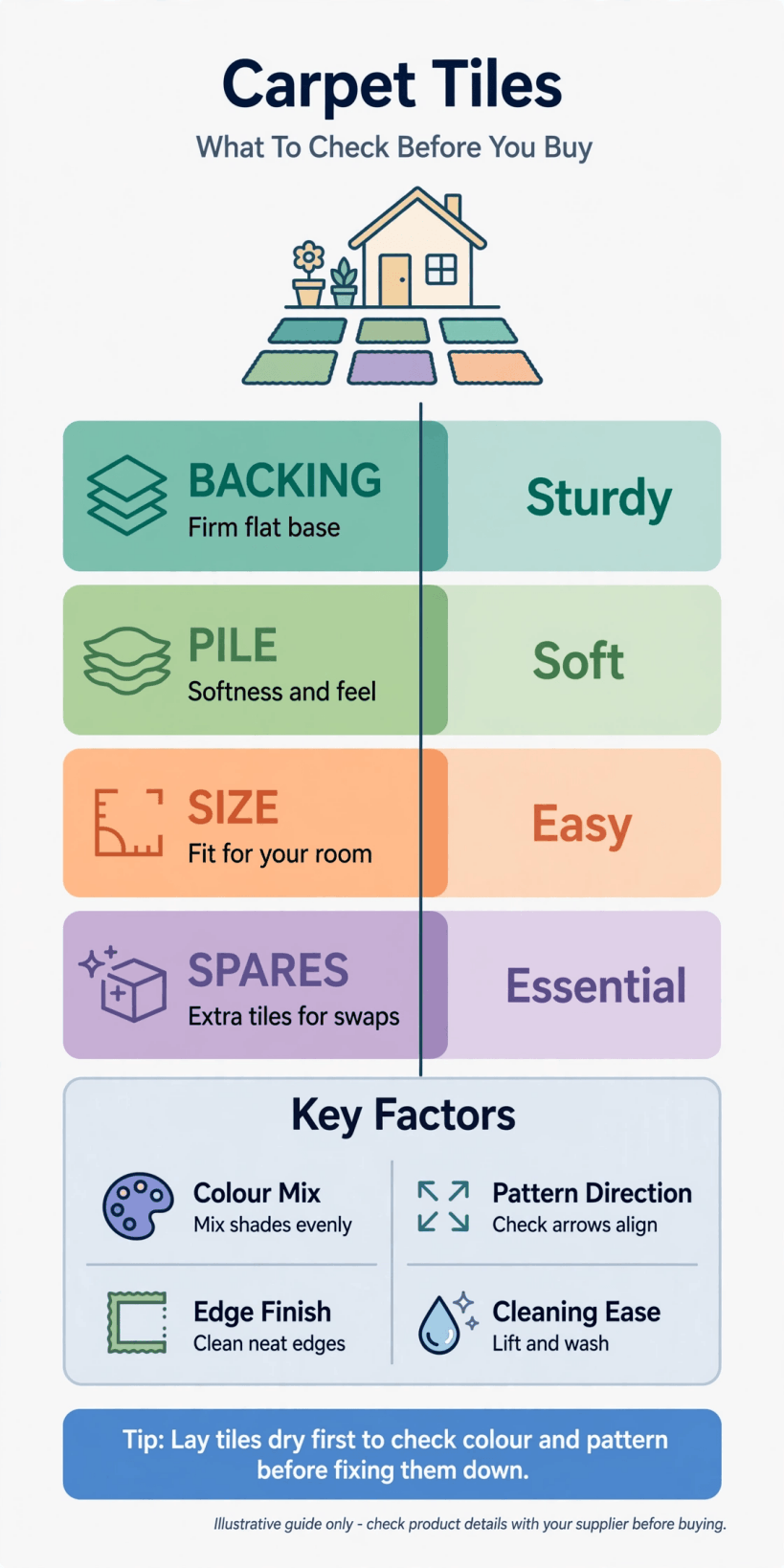
A visual summary of the room, floor, fitting and care checks to make before you order.
Hold on to one idea from this table: tiles are a system, not just a surface. The tile, its backing, the floor beneath, the way edges meet walls and doorways, and your stock of spares all work together. A beautiful tile laid over a damp or bumpy floor disappoints, while a modest tile laid carefully on a sound base looks smart for years. The sections that follow take each part of that system in turn, so by the end you can judge any tile you are offered against your own room rather than against a showroom.
2. Check the Room and the Floor Underneath First
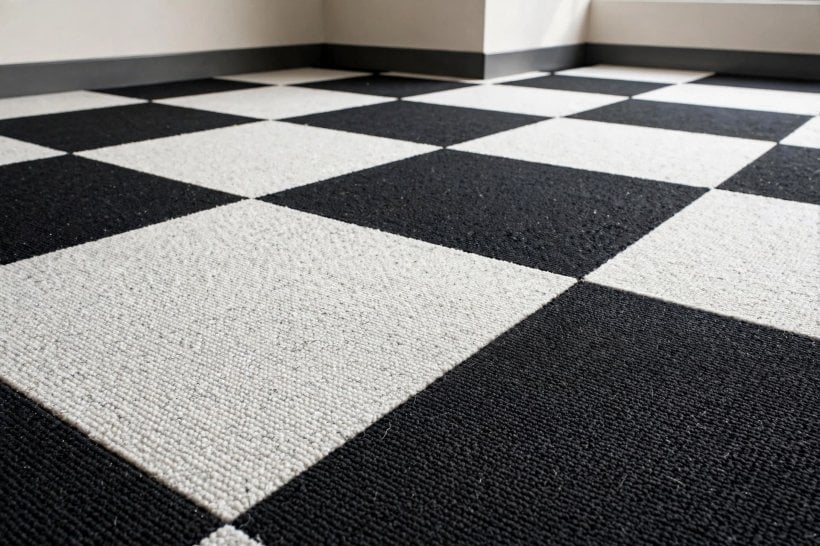
Start with the floor you already have. Tiles need a base that is dry, stable and reasonably smooth, because their neat, regular shape shows up ridges, grit and sagging boards rather than hiding them. Walk the room slowly and feel for movement, bounce or sharp edges underfoot. Look at the skirting line and door thresholds, and think about how a new floor layer changes clearances: doors may need clearance, and adjoining rooms will meet your tiles at an edge that should look deliberate, not accidental.
Moisture deserves honest attention. A floor that feels dry on a good day may still carry damp from below, and covering it can trap problems where you cannot see them. If a room has a history of damp, condensation or leaks, solve that first and let the floor dry fully before flooring becomes the priority. Bathrooms and very wet areas need particular thought, since frequent standing water and soft flooring are uneasy partners; in many homes, hard, washable surfaces serve those rooms better.
This floor-first thinking is familiar to anyone planning compact living well. Our tiny house living room ideas return often to the same principle: the finish only performs as well as what sits beneath it. Tiles reward that patience more than most finishes, because each square is honest about the surface below.
3. Measure Carefully and Plan the Layout on Paper
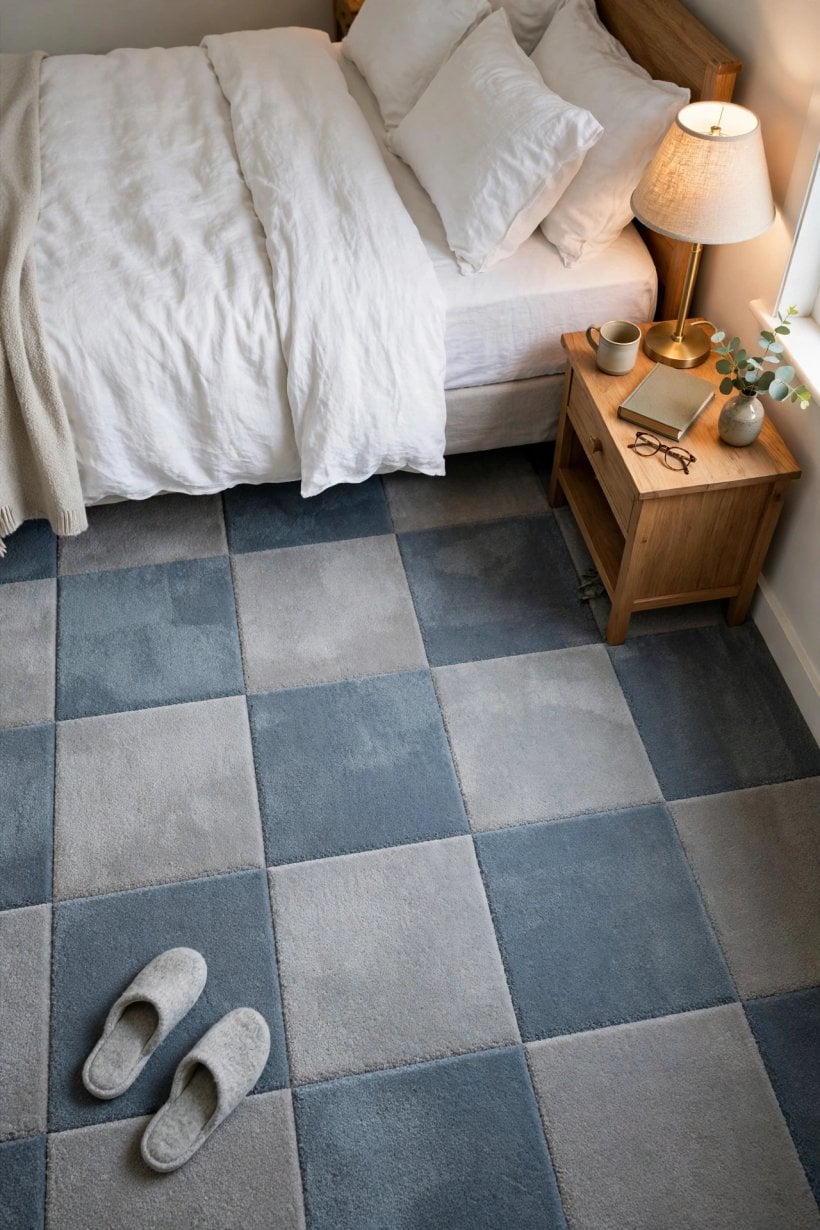
Measure the room in more than one place, because walls are rarely perfectly parallel, and sketch a simple plan showing doors, alcoves, fireplaces, built-in furniture and any odd corners. That plan decides where whole tiles fall and where cut tiles land, and a few minutes spent shifting the starting point on paper can mean cuts hide under furniture instead of waving at you from the doorway. The centre of the room or the main sightline from the door is usually where the neatest pattern should sit.
Order with cutting and mistakes in mind. Every room needs edge cuts, some tiles will be cut wrong, and keeping spares from the same batch protects you when a tile is damaged years later, because colours and batches vary. Store spares flat, clean and somewhere dry, labelled if you have several rooms. Buying the bare minimum saves a little money once and can cost a whole floor later, when one stained square cannot be matched.
Direction is a layout choice with real visual effect. Tiles can all run one way for a calm, broadloom-like look, or alternate direction to create a subtle chequered texture from the pile itself. Dry-lay a patch both ways before committing, and view it from the doorway and in evening light. Our guide to tiny house landscaping ideas makes a similar point outdoors: simple materials look designed or accidental depending entirely on the pattern and edges you choose, and tiles indoors are no different.
4. Understand Pile: Fibre, Height and Feel
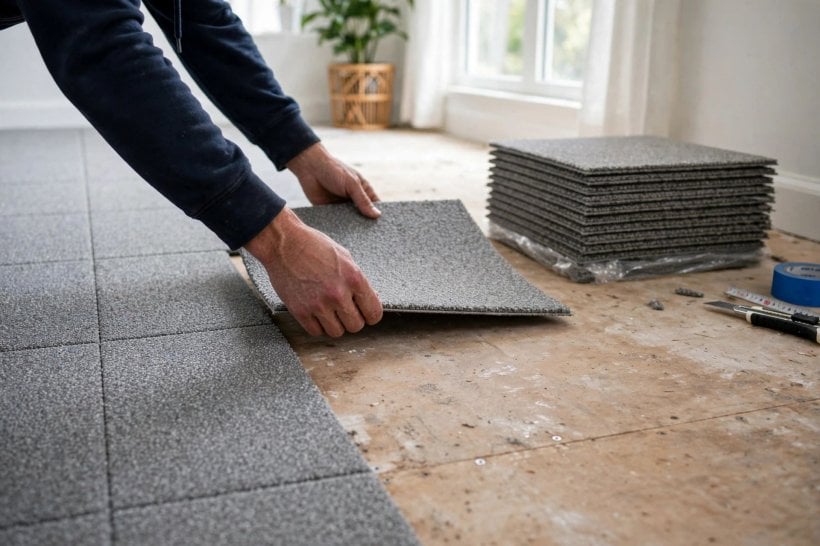
Pile is the surface you see, feel and vacuum, and it shapes both comfort and upkeep. Loop piles tend to look neat and textured and cope well with everyday traffic. Cut piles feel softer and more traditional underfoot. Textured and patterned piles are forgiving of the small marks of daily life, because variation hides crumbs, footprints and light soiling between cleans. Plain, pale, flat surfaces show the most and ask the most of their owners; choose them with open eyes, especially in hallways and family rooms.
Fibre choice is a balance of feel, resilience and care rather than a league table with one winner. Different fibres handle crushing, sunlight, spills and cleaning differently, and honest product information should describe what a tile is suited to rather than promising everything. Match the tile to the room’s reality: a quiet bedroom, a busy hallway and a home office where a chair rolls all day are three different briefs, and the pile that delights in one may tire quickly in another.
Always handle a sample before deciding, in the room if you can. Press it, bend it, look at it in daylight and lamplight, and drop the kinds of things your household drops. Samples are the cheapest research in the whole project, a habit our colourful tiny house interior feature recommends for any finish: colour and texture change dramatically between a shop and your own four walls, and carpet is no exception.
5. Look Closely at Backing, Size and Edges
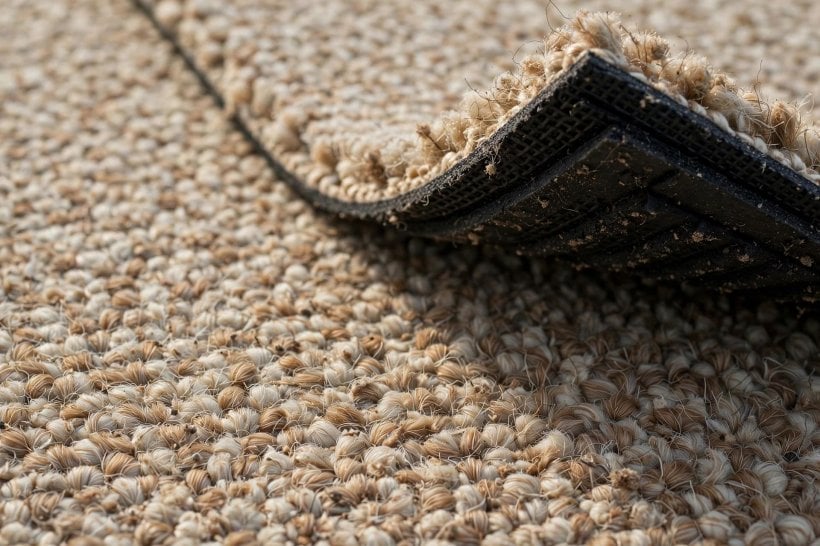
Turn the tile over. The backing gives a tile its stability, influences how it feels underfoot, how it sits on the floor and how it is fixed, if it is fixed at all. A tile should feel coherent and well made, with edges that are straight and consistent, because tiles meet hundreds of times across a room and small irregularities add up into wandering seams. Check several tiles from a pack, not just the top one, and sight along the edges before you commit to a roomful.
Tile size changes both fitting and appearance. Larger tiles cover a floor in fewer pieces and can look calmer in a big, simple room. Smaller tiles give more flexibility around awkward shapes and can make pattern play easier, at the cost of more seams and more cuts. Neither is automatically better; the right answer depends on the room’s size, shape and how visible seams will be in the pile and pattern you have chosen. Lay samples in a grid to see seams honestly.
Edges are where quality tells over time. Seams should sit tight and level, without lips that catch socks, vacuum heads or chair castors. If sample tiles rock, curl or refuse to sit flat on a flat surface, believe them and walk away. That same respect for fit and finish runs through our look at a tiny barn house interior, where simple materials succeed because junctions are handled carefully, and flooring junctions deserve exactly that respect.
6. Decide How the Tiles Will Be Fitted
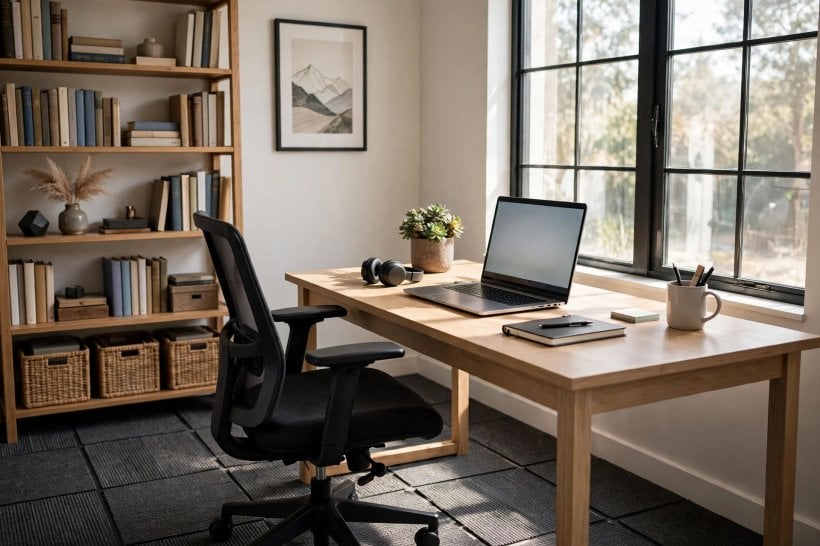
Tiles are fitted in different ways depending on the product and the room: some are designed to sit loose with help at edges and in doorways, others use adhesive, tacky compounds or interlocking systems intended by their maker. There is no universal method to improvise, so the check that matters is simple: understand exactly how the tiles you are buying are meant to be installed, what that requires of the floor, and whether you are happy doing it or paying for fitting. Guessing at fixing is how neat floors creep, gap or lift.
Fitting order shapes the result. A typical careful approach works from a planned starting line, keeps seams tight and consistent, checks alignment as rows build, and leaves perimeter cuts until the field of whole tiles is settled. Doorways, thresholds and transitions to other flooring need a plan too, with a tidy finishing edge rather than a raw cut hoping for the best. Keep offcuts and spares as you go; today’s offcut is tomorrow’s perfect patch by a door.
Be honest about skill and time. Laying tiles is within many people’s ability, but it rewards patience, accurate cutting and a tidy workspace more than speed. Awkward rooms, stairs-adjacent edges and pattern matching raise the difficulty. Our overview of how to build your own tiny house makes a useful distinction that applies here: know which jobs you can learn as you go and which deserve experience, then plan the budget of money and weekends accordingly.
7. Judge Colour and Pattern in Your Own Light
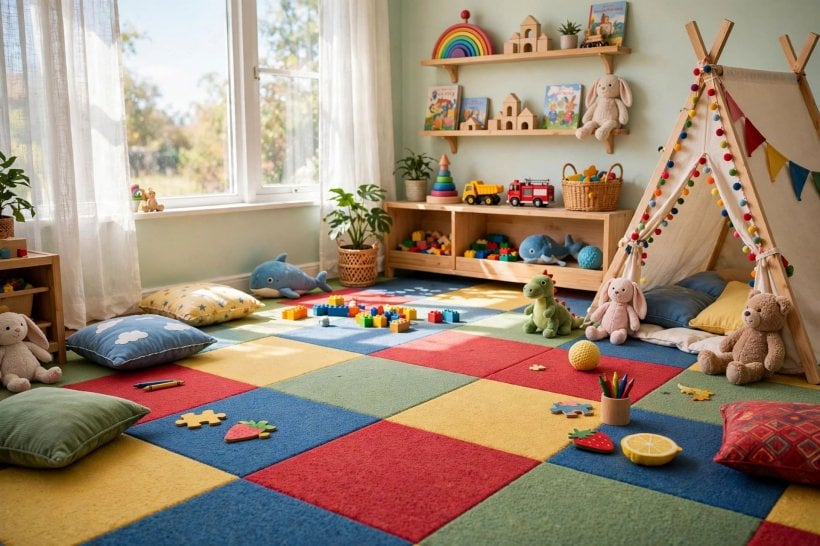
Flooring covers the largest single surface in a room, so its colour sets the mood more than any cushion or print. Mid-toned, slightly varied colours are the great forgiving middle ground: they hide everyday dust and marks better than very pale or very dark plains, and they sit comfortably with changing furniture. Strong pattern brings energy and can be wonderful in playrooms, offices and halls, but live with a sample at full scale if you can, because pattern repeats behave differently across a room than on one square.
Light changes everything. North-facing rooms cool colours down, sunny rooms warm them up, and evening lamplight shifts them again. Judge samples at several times of day, beside the furniture and wall colours that will stay. Also consider the view between rooms: tiles seen through a doorway against an existing floor should look like a deliberate pairing, not an argument. A simple trick is to choose tile colours that pick up one tone already present in the adjoining space.
Think about ageing, too. A floor cannot be swapped as casually as a rug, so very fashionable colours deserve a second thought unless you genuinely enjoy change and plan to use the tiles’ modular nature later. That modular freedom is real: refreshing a zone or a single room years from now is easier with tiles than with one fitted sheet. Our bedroom interior design for tiny houses coverage offers the same advice at room scale: let the permanent layers stay calm and flexible, and let movable pieces carry the fashion.
8. Plan for Cleaning, Spills and Single-Tile Swaps
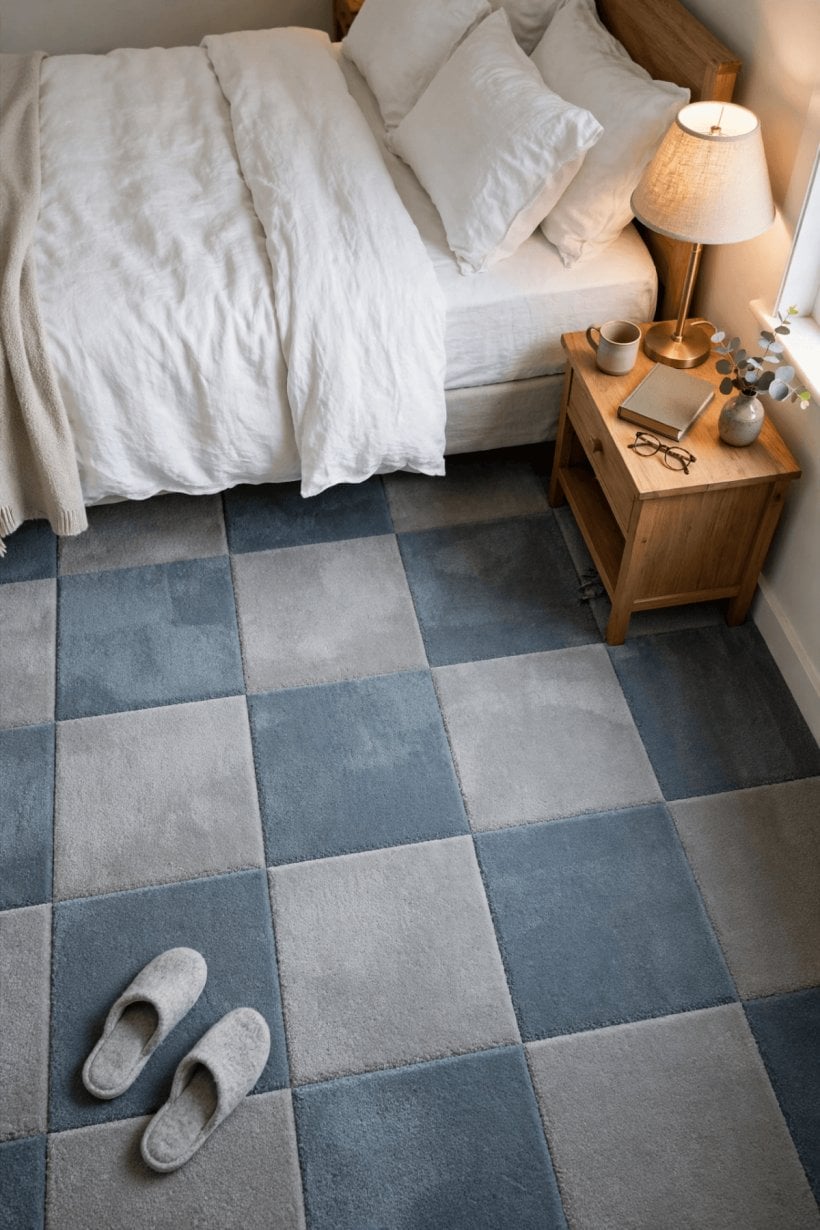
Everyday care is straightforward in principle: vacuum regularly so grit does not grind into the pile, deal with spills promptly by blotting rather than scrubbing, and follow the care guidance supplied with your tiles rather than improvising with strong products. Entrance mats, a no-shoes habit if your household accepts one, and felt pads under furniture all reduce the work the floor has to do. Chair castors in a home office are a particular test, so check suitability and consider a chair mat where rolling is constant.
The famous advantage of carpet tiles is the single-tile swap, and it is worth planning for rather than just admiring. Keep spares accessible, note how your tiles were fitted so a replacement can be seated the same way, and expect a new tile to look fresher than its neighbours at first; rotating a spare into a low-visibility spot, or swapping a small group, can help it blend. A tile under a spill-prone desk or dining spot is exactly where this system earns its keep.
Deep cleaning should follow the tile maker’s guidance, because methods that suit one backing may harm another. Whatever you use, let tiles and floor dry fully before furniture returns and normal life resumes. That moisture-aware patience is the same habit our tiny house bathroom ideas encourage in wet rooms: soft finishes and water are manageable partners, as long as drying is treated as part of the job, not an afterthought.
9. Compare the True Cost of the Whole Job
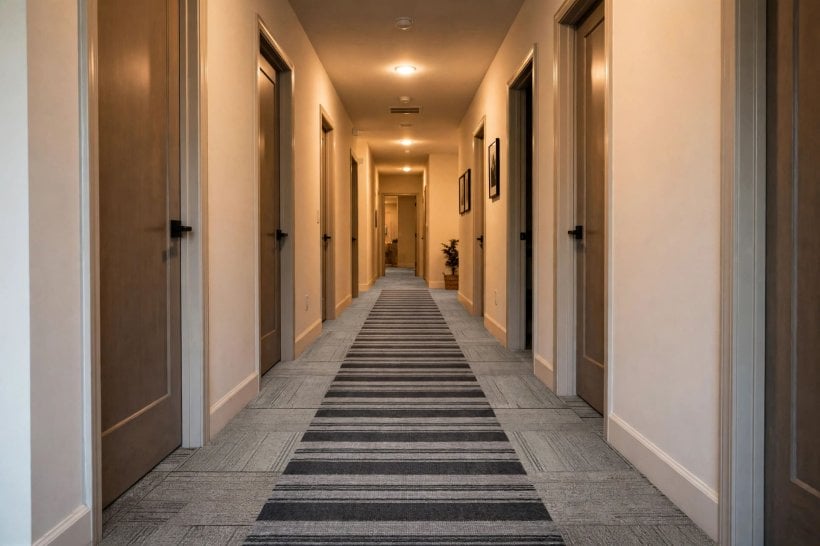
Compare like with like. The tile price is only the start: add fitting or the tools and materials to fit them yourself, any floor preparation, edge trims and transitions, delivery, and the spare tiles you would be wise to keep. Against that, weigh the savings tiles can offer elsewhere, such as simpler phased fitting room by room, less waste in awkward spaces, and the ability to replace one damaged square instead of re-covering a whole floor. A fair comparison looks at the finished, usable room, not the box price.
Value also lives in longevity and suitability. A slightly better tile that suits the traffic, sits flat, cleans well and still pleases you in five years is cheaper in every way that matters than a bargain that shows seams, marks and wear within a year. Read what a product is intended for and believe it: using a light-duty tile in a heavy-duty spot is the classic false economy, and it is the buyer’s check, not the seller’s promise, that prevents it.
Phase the spending if the budget needs it. Floors are hard to phase within one room, but a home can absolutely be floored room by room, starting where the benefit is greatest, a strategy our tiny house bedroom ideas also favour for renovations generally: finish one space completely and enjoy it, rather than spreading money thinly across everywhere at once. Keep notes and spares from each stage so later rooms match and repairs stay easy.
10. Run a Final Checklist Before You Order
Before paying, walk the whole decision once more. Is the floor dry, sound and smooth enough, and have you solved any damp or damage first? Have you measured twice, planned the layout and starting point, and allowed for cuts, mistakes and spares from the same batch? Have you handled samples in the room’s own light, checked pile against the room’s traffic, turned a tile over to judge its backing and edges, and confirmed exactly how it is meant to be fitted?
Then check the human factors. Do the colour and pattern still please you at arm’s length and from the doorway? Does the plan handle thresholds and neighbouring floors neatly? Do you know how you will clean it, where the spares will live, and what you will do when, not if, something is spilled at the worst possible moment? If any answer is a shrug, pause. Flooring punishes shrugs more than almost any other purchase, because you will walk over the decision every day.
Finally, keep the paperwork and a labelled spare tile together somewhere sensible. Batch details, fitting notes and care guidance are dull on delivery day and priceless three years later when one square meets a bottle of something red. Good buying is partly choosing well and partly making future-you’s maintenance easy, and tiles, more than most floors, reward that foresight.
Final Considerations
Carpet tiles suit people who want softness and warmth with a practical streak: a floor you can fit in stages, clean sensibly and repair one square at a time. They ask in return for a sound, dry base, careful measuring, honest pile and colour choices, and a small stock of spares kept from the start.
Check the room before the product, handle samples in your own light, understand the backing and the fitting method, and compare the cost of the finished job rather than the box. Buyers who do those unglamorous checks rarely regret tiles; they just get on with enjoying a floor that quietly fits their life.


0 Comments