

A carpet cleaner that is not cleaned itself soon stops cleaning anything else: tanks sour, brushes clog with hair and hoses lose suction. The fix is a simple routine after every use. This guide walks through tanks, brushes and hoses step by step, using only warm water, patience and a few household basics.
1. At a Glance: The Whole Routine in Brief
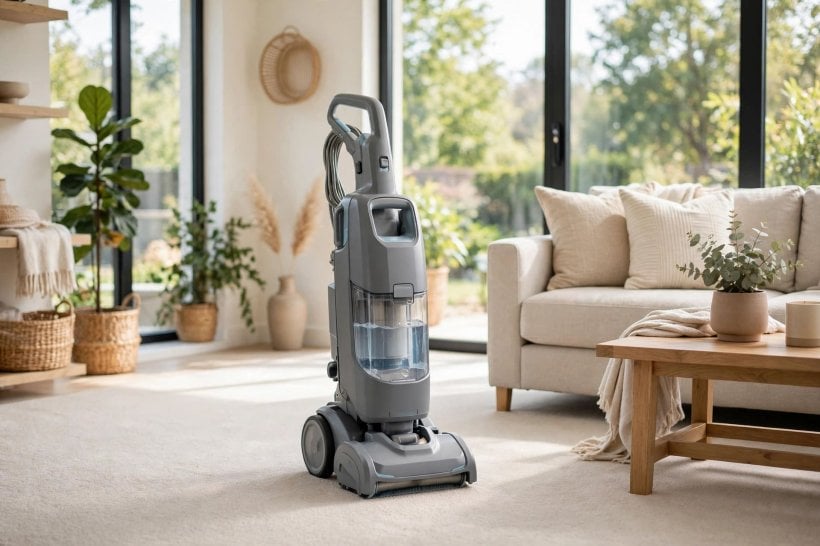
Cleaning an upright carpet cleaner is mostly rinsing. Dirty water, detergent residue and carpet fibres collect in predictable places: the recovery tank, the clean-water tank’s cap and filter, the brush roll and its belt area, the nozzle, and the hose and tool attachments. Work through them in that order, from the dirtiest to the cleanest, and let everything dry fully before storage. A machine put away dry smells fresh, keeps its suction and is ready the moment a spill happens, instead of greeting you with a sour tank and a clogged brush when you need it most.
| Question | Short answer |
|---|---|
| When should I clean it? | After every use, while residue is still wet and easy to rinse away. |
| What do I need? | Warm water, a soft cloth, an old toothbrush, scissors and a sink or bucket. |
| What matters most? | Emptying and rinsing the dirty-water tank, and clearing hair from the brush roll. |
| Can I use harsh cleaners? | No — warm water and a little mild detergent are enough for the machine itself. |
| How should it be stored? | Fully dry, tanks unlatched or ajar, cord loose, in a frost-free place. |
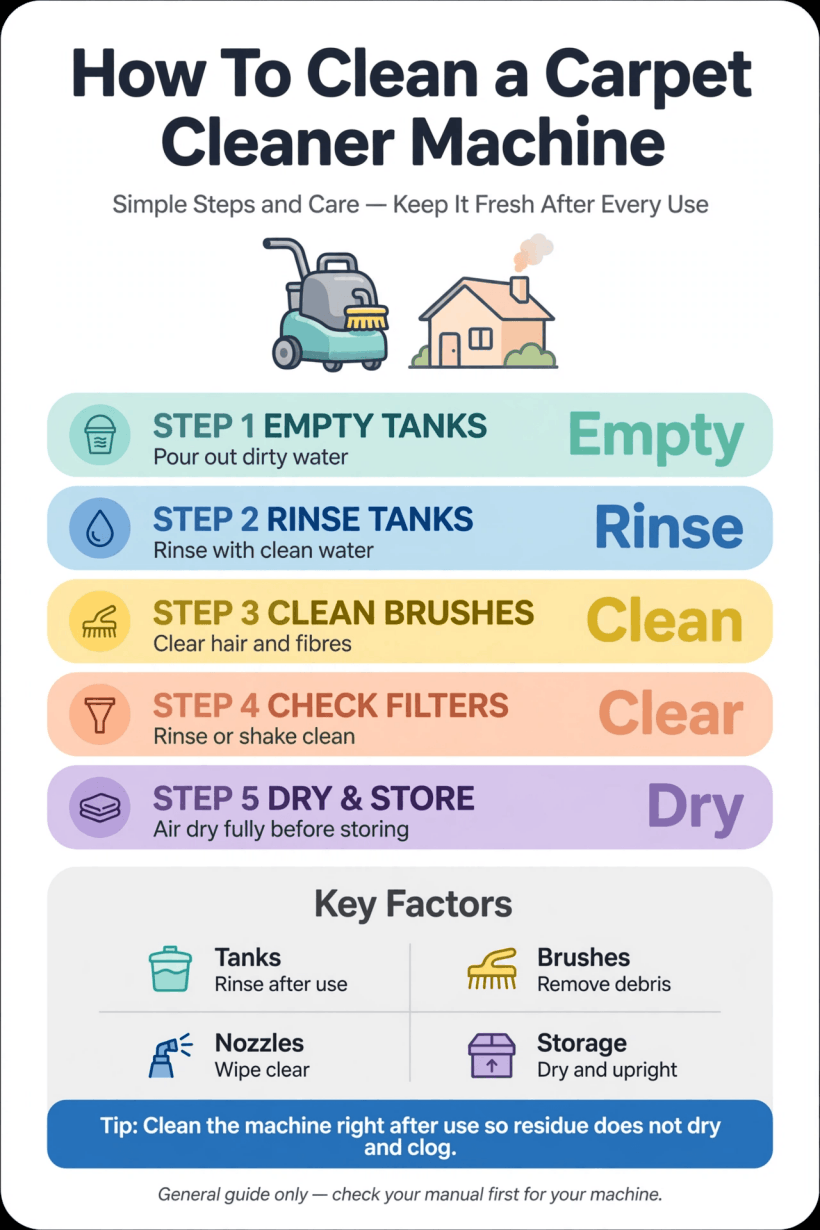
At a glance: empty, rinse, clear the brush, flush the hose, then dry everything before storage.
Safety first, as with any appliance that mixes water and electricity. Unplug the machine before you begin, work away from the sink’s splash zone when handling the motor body, and never immerse the main unit. Only tanks, tools and removable parts go under the tap. Keep the manual nearby if your model has one, because latch positions and removable panels vary, although the sequence below suits the great majority of upright machines sold for home use.
2. Step 1: Empty and Rinse the Dirty-Water Tank
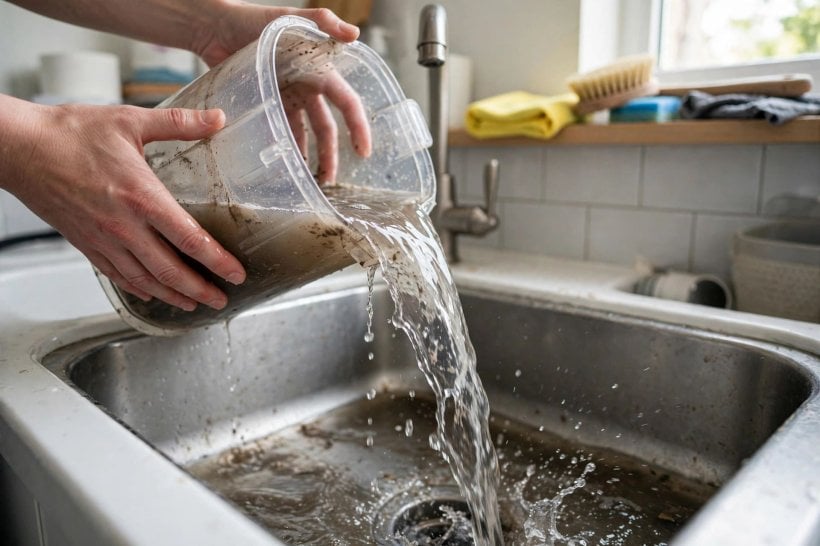
Start where the dirt lives. Release the recovery tank, carry it to the sink by its handle, and pour the dirty water away slowly so sediment goes with it rather than splashing back. Remove the lid and any float or filter assembly your model has, and rinse every part under warm running water. A soft cloth or sponge lifts the grey film that clings to the corners, and an old toothbrush reaches the seams around the float, where grit loves to lodge. If the tank smells sour, soak it briefly in warm water with a small amount of mild detergent, rinse thoroughly and shake out the last drops. Check the rubber seals as you work; gritty seals leak, so wipe them clean and confirm they sit flat. This single habit answers most of what owners mean when they ask how to clean a carpet cleaner machine, because a clean recovery tank restores suction, prevents odours and stops yesterday’s dirt being misted back over tomorrow’s carpet. Leave the tank and lid separate to air while you continue with the rest of the machine.
3. Step 2: Rinse the Clean-Water Tank and Cap
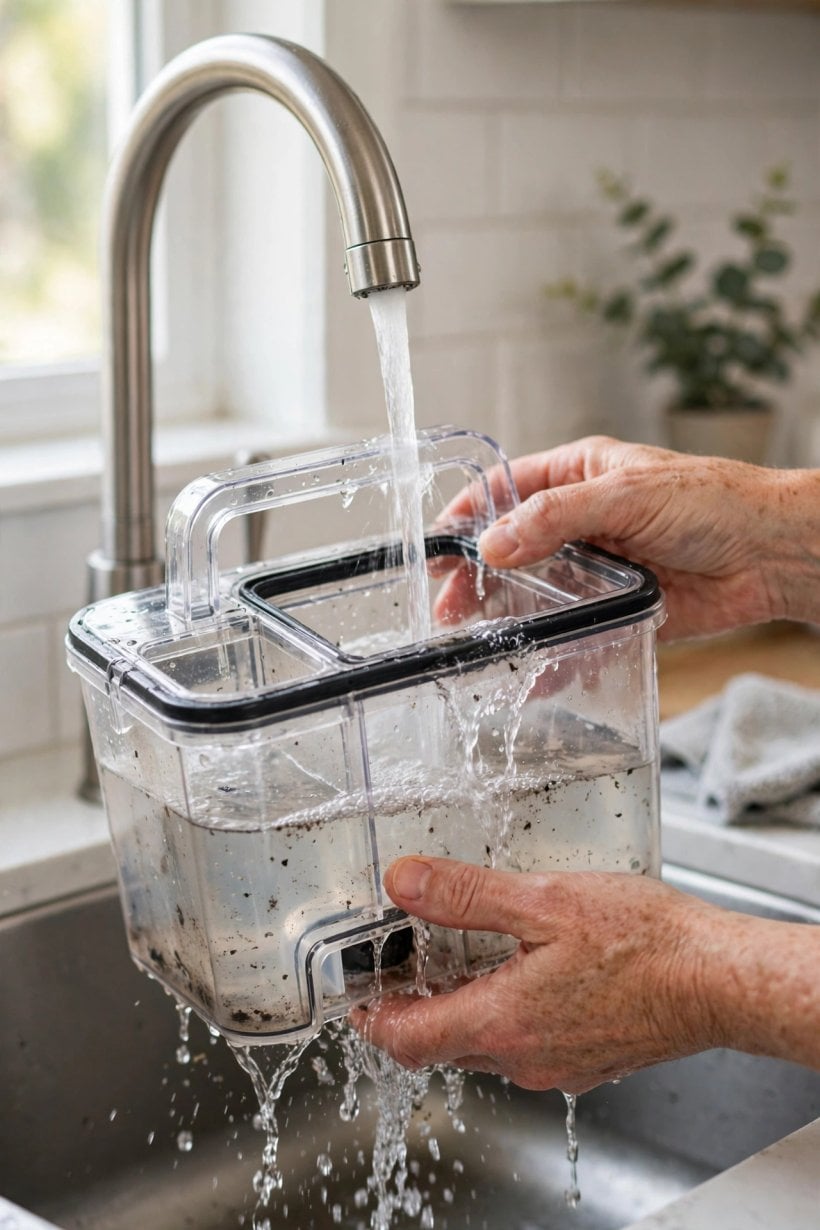
The clean-water tank is easy to forget because it looks innocent, yet detergent residue dries inside it into a sticky film that can clog the outlet and feed musty smells. Empty any leftover solution — never store a machine full, because standing solution goes stale and can leave deposits. Rinse the tank with warm water, swirling it into the corners, and pay attention to the cap and its valve or filter mesh, where residue concentrates. If your model uses a separate formula container, rinse that too and let it drain upside down. Use only warm water and, if needed, a drop of mild detergent, rinsed out completely; strong descalers and bleach have no place here and can damage seals and plastics. Reassemble loosely or leave the cap off while drying so air can circulate. Households that keep up this small habit find the machine doses evenly next time, with none of the sputtering that clogged outlets cause. It is the same preventive logic that keeps compact homes running well in our tiny houses for sale in Orange County, California guide: little and often beats a heroic rescue twice a year.
4. Step 3: Clear the Brush Roll of Hair and Fibres
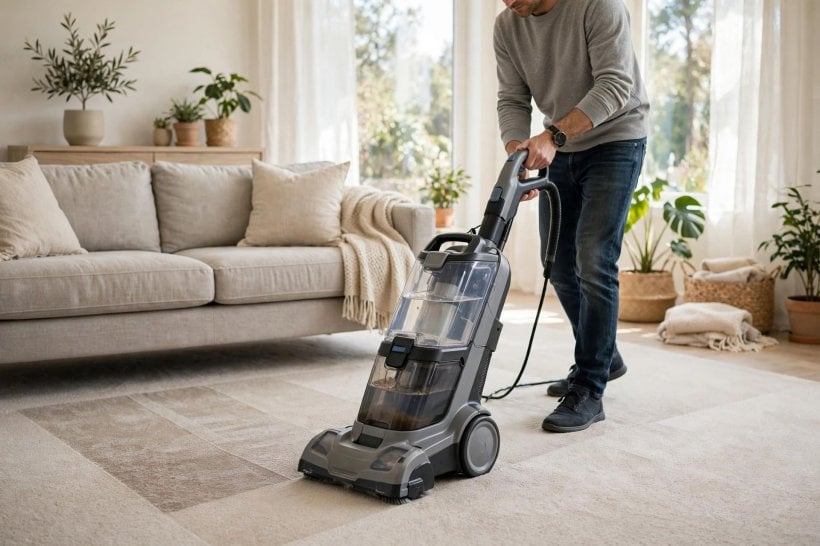
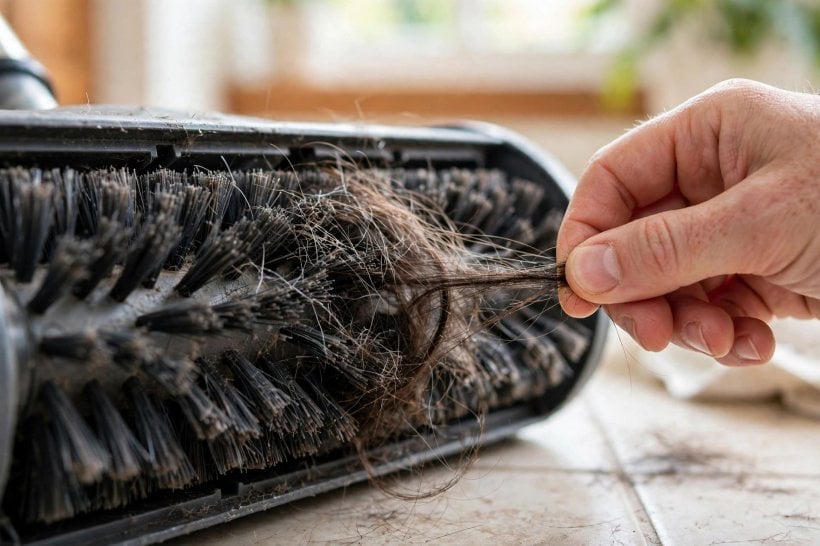
Turn the machine over or tilt it back as the manual allows, and look at the brush roll. On any home with pets or long hair, it will be wearing a tight sleeve of hair and thread that strangles its rotation and smears dirt back onto the carpet. Work scissors carefully along the brush’s groove, snipping the wrapped strands without cutting bristles, then pull the loosened mat away in sections. Rotate the roll by hand and repeat until it spins freely. Many models let you slide the roll out after removing a belt cover or end caps; if yours does, take it out, wash it in warm water, clear the end caps of the hair that packs behind them, and check the belt for cracks or slackness while you have access. A stretched belt makes the brush lazy and cleaning disappointing. Let the roll dry before refitting, and spin it once more by hand to confirm it turns smoothly. While the base is open, wipe the nozzle window and the suction channel with a damp cloth, since a clear nozzle is what lets you see dirty water being pulled up as you clean.
5. Step 4: Wipe the Nozzle, Foot and Wheels
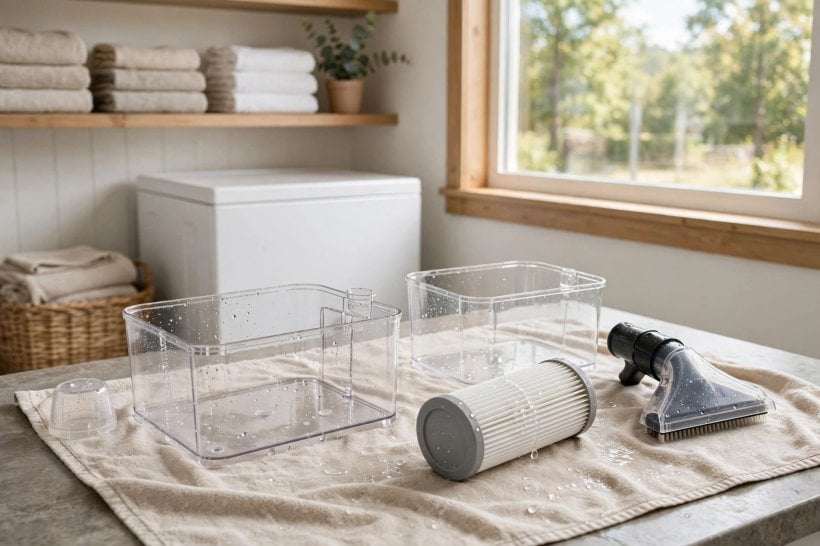
The underside tells the truth about every job the machine has done. With the brush roll clean, wipe the whole foot — the nozzle, the squeegee strip behind it and the wheels — with a cloth dampened in warm water. Grit caked around the wheels makes the machine drag and can scratch hard floors when you wheel it between rooms, so roll each wheel under your cloth until it turns cleanly. Inspect the suction path for the classic blockages: a compacted plug of fibres at the nozzle throat, or debris caught where the foot meets the tank inlet. A blunt wooden skewer or the toothbrush clears these without risk to the plastic. If your model has a removable nozzle cover for rinsing, take it off and rinse it in the sink; seeing daylight through the suction channel is the goal. This is also the moment to check for cracks or damaged seals around the foot, because small air leaks here are a common, invisible cause of weak pickup. Wipe the exterior body and handle down as well — detergent drips left on plastic go sticky and attract dust in storage.
6. Step 5: Flush the Hose and Hand Tools
Hoses hide more dirt than owners expect. Detach the hose if your model allows it, and flush it through with warm water from the tap, holding it in a gentle curve so water carries sediment out instead of pushing it into a bend. If the hose stays attached, fill the clean tank with plain warm water, fit the hand tool, and run the machine over a sink or bucket, spraying and suctioning clean water through the tool and hose until what comes back runs clear. Clean the upholstery or stair tool itself with the toothbrush, clearing its small brush strips and nozzle, because a clogged tool dribbles and streaks furniture. Check the hose cuffs and the tool’s trigger valve for grit, and confirm the hose has no splits near the ends, where flexing is greatest. Shake out as much water as you can and hang or drape the hose so it drains. Anyone who has revived a tired hose will understand the satisfaction our readers describe in our tiny houses for sale in Dallas, Texas guide when a small space or tool is finally working exactly as it should.
7. Step 6: Check Filters and Screens

Most upright machines guard their motor and tanks with one or more small filters or mesh screens, and these quietly decide how strong the suction feels. Find yours — commonly a foam or mesh piece near the recovery tank or in the lid — and remove it over the bin, tapping off loose debris first. If the manual allows rinsing, wash it in warm water, press out the moisture with a towel and let it dry completely before refitting; a damp filter put back into a closed machine is a mildew starter kit. Mesh screens in tank lids and at hose inlets deserve the same treatment with the toothbrush. While parts dry, look at the filter honestly: foam that crumbles, stays stained or keeps its smell after washing is telling you it has done its service, and replacements are among the cheapest performance upgrades any appliance offers. Never run the machine with the filter removed to ‘improve’ suction; that simply moves the dirt into the motor. Filter care is unglamorous, exactly like the porch upkeep in our gift shop interior design ideas for tiny houses — small, regular and the reason everything else keeps working.
8. Step 7: Run a Plain-Water Rinse Cycle
With tanks, brush, hose and filters clean, reassemble the machine and give it a short rinse cycle. Fill the clean tank with plain warm water — no detergent — fit the empty, rinsed recovery tank, and make several slow passes over a sink-friendly surface, a patch of hard floor or an old towel laid in the bath. You are flushing the internal lines, pump and spray jets of detergent residue, which otherwise dries into the same clogging film you removed from the tanks. Watch the spray pattern: even fans of water mean healthy jets, while spitting or one-sided spray points to a jet that needs a gentle wipe or a soak of its removable tip as the manual directs. Empty the recovery tank again afterwards, because this rinse water will not be as clean as it looks. Owners who do this after deep-cleaning days notice the machine’s next job starts fresher and its jets rarely block. Think of it as the machine washing its own face — the closing step in learning how to clean a carpet cleaner machine properly, and the one that separates a stored appliance from a stored problem.
9. Step 8: Dry Everything Before Storage
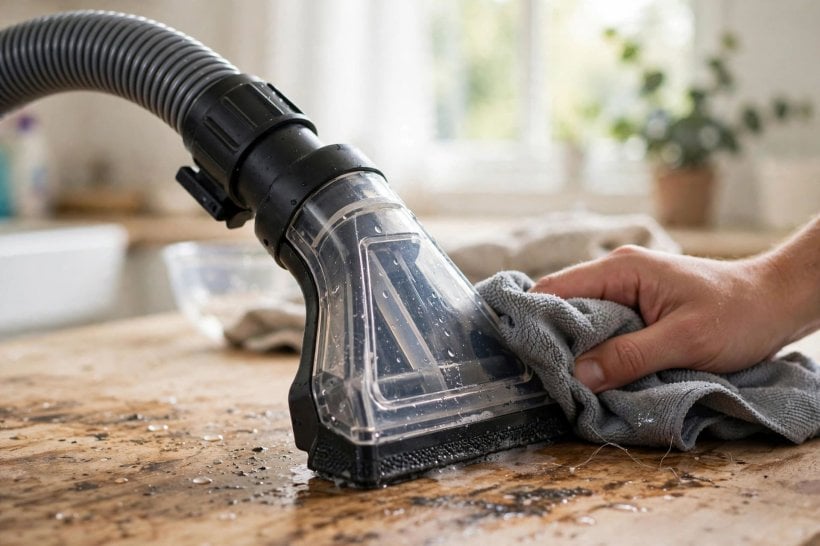
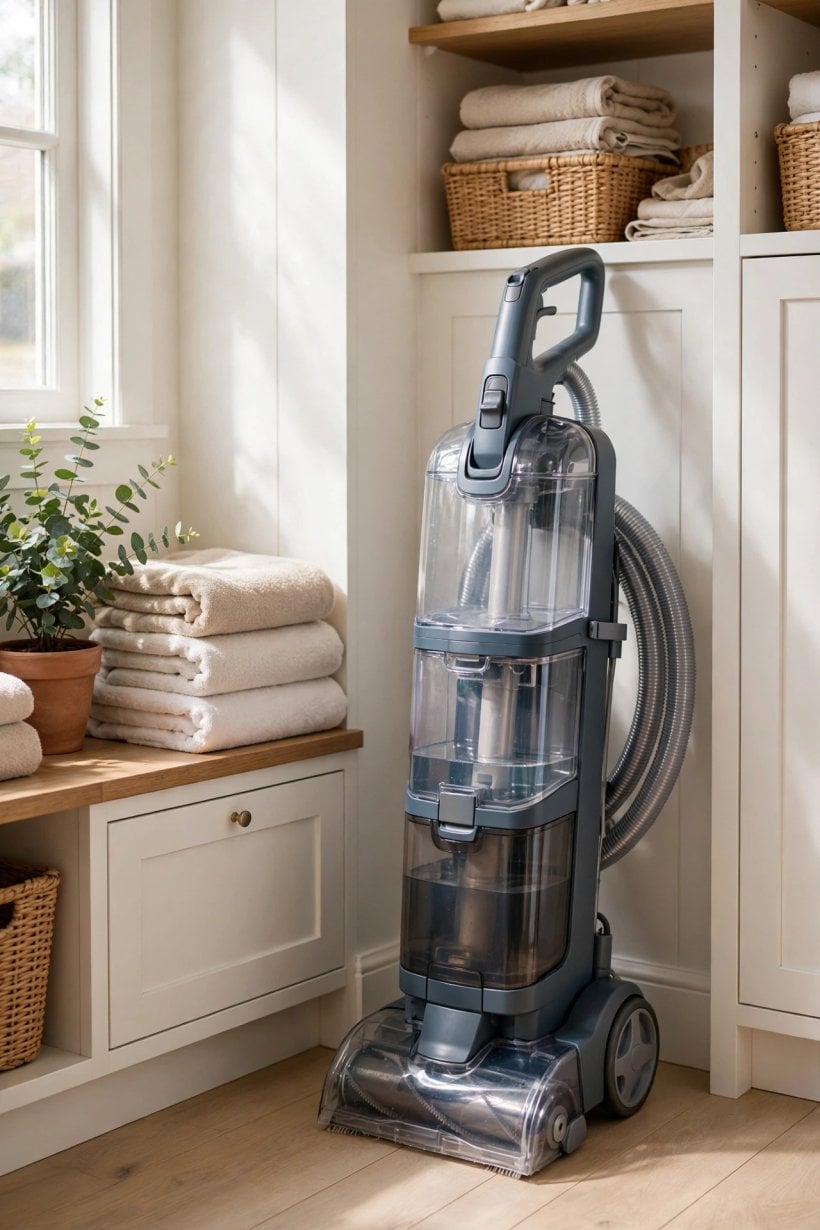
More machines are ruined by damp storage than by hard work. Leave tanks unlatched and lids ajar, stand the brush area where air can reach it, and drape the hose so its low point can drain, ideally overnight in a ventilated spot before the machine goes back into a cupboard. Wipe the cord as you coil it loosely — tight coils stress the cable and the cord often trails through the very water you have been cleaning up. Store the machine upright, indoors and frost-free, with hand tools clipped in their places so nothing is lost. If your cupboard is small, take heart from the storage discipline in our modern interior design ideas for tiny houses: everything dry, everything in its spot, nothing sealed away wet. Before the next use, a ten-second check — tanks seated, filter in place, brush spinning freely — prevents most mid-job frustrations. A machine stored dry also smells neutral, which matters more than people admit: a sour cleaner makes a freshly washed carpet smell suspect, undoing your good work in the minds of everyone who walks into the room.
10. Troubleshooting: Weak Suction, Smells and Leaks
When performance drops, work through the same parts in the same order before assuming the worst. Weak suction is most often a full or badly seated recovery tank, a clogged filter, hair strangling the brush, or debris in the nozzle — all covered above. A machine that smells even after tank rinsing usually has residue in the hose or a filter past its best, so flush and inspect those two before anything else. Leaks typically trace to a tank seal sitting on grit, a cap valve not closing cleanly, or a perished hose near its cuff; clean, reseat and inspect in that order. Spray problems point to empty solution, a clogged jet or an outlet blocked by dried detergent in the clean tank. Only when these simple causes are eliminated does a repair visit make sense, and arriving with a clean machine and a clear description saves everyone time, much as planning ahead with our guide to solar panel costs for a tiny house saves money. Keep a note of what you checked, much as the methodical owners in our tiny houses for sale in Augusta, Georgia guide log their home maintenance — future you, facing the same symptom next year, will be grateful for the record.
Final Considerations
A carpet cleaner asks for about fifteen minutes of care after each job and repays it with years of strong suction, fresh tanks and brushes that actually brush. Empty and rinse both tanks, clear the brush roll, flush the hose, wash the filter, run a plain-water rinse and store everything bone dry. Make that sequence a habit and the machine will be ready whenever life — muddy paws, spilled drinks, a puppy in training — demands it. Clean machine, clean carpet, calm household: that is the whole secret, and it is entirely within your routine’s reach.




0 Comments