

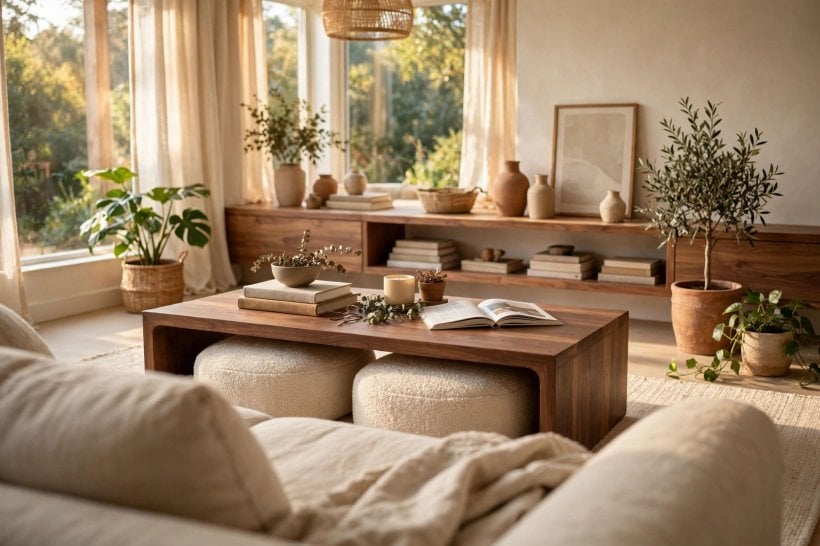
Four extra seats, two footrests and a blanket store — all hiding in the dead space under your coffee table. A coffee table with ottomans underneath is the hardest-working furniture arrangement a small living room can own.
This guide covers how to choose, size and style the pairing: table shapes, ottoman types, clearances, colours, and the mistakes that make the set jam instead of glide.
1. Coffee Tables With Ottomans Underneath at a Glance
The arrangement pairs a coffee table — usually open-framed or with a low stretcher shelf — with two or four small ottomans, poufs or cubes sized to slide completely beneath it. Out, they are seats, footrests and side tables; away, they vanish, returning the floor area that small rooms cannot spare.
| What is it? | A coffee table designed or chosen so matching ottomans store fully underneath it. |
| Best for? | Small living rooms, apartments and tiny houses needing flexible seating without clutter. |
| Key measurement? | Ottomans must clear the table’s apron height and fit between its legs with room to grip. |
| Typical set? | Two ottomans under a rectangular table, or four cubes under a large square one. |
| Main trade-off? | Storage and seating in exchange for a lower, more open table design — no deep drawers. |
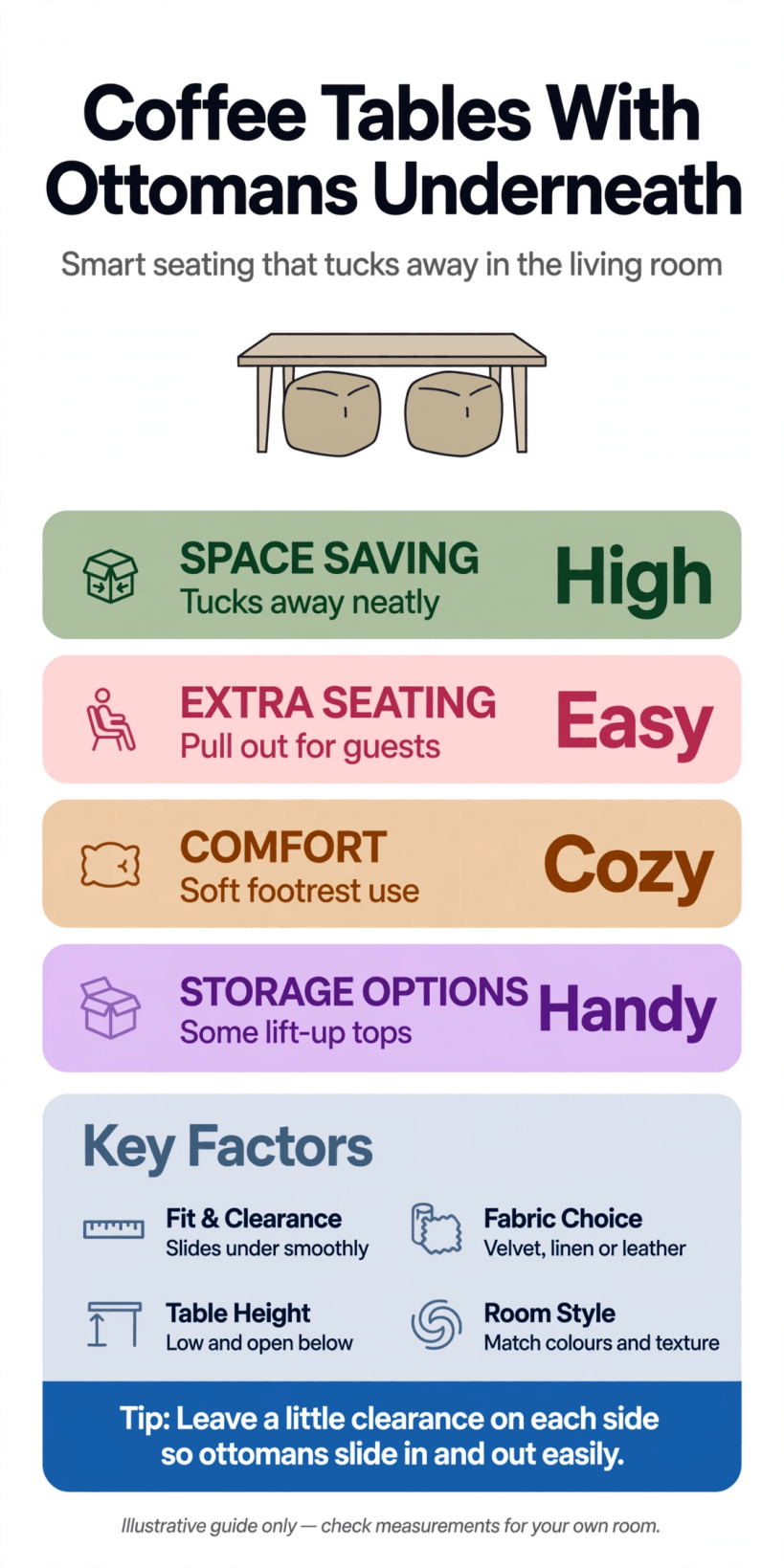
At a glance: measure the clearance first, then choose ottoman type, fabric and colour around it.
2. Why the Arrangement Works in Small Rooms
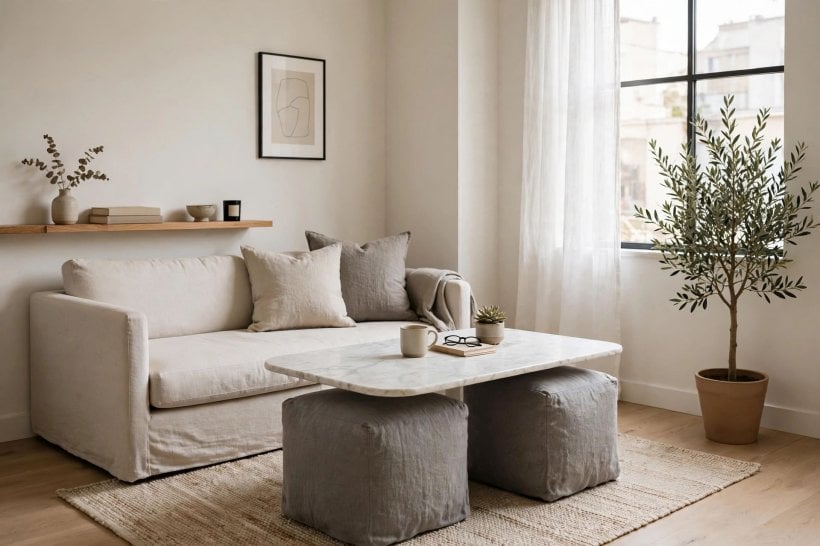
Small rooms fail on flexible seating: guests perch on arms, footstools colonise the walkway, and extra chairs live in other rooms. Under-table ottomans solve the geometry — the seats exist only in the minutes they are needed. It is the same one-piece-three-jobs logic behind the best small space interior design ideas: furniture that changes role beats furniture that just sits there.
1. Seating That Disappears
Two to four real seats appear for guests and vanish afterwards — no folding chairs in a cupboard, no perching.
2. Footrests Exactly Where Feet Are
An ottoman pulled to the sofa edge is a footrest at the right height; pushed back, the floor is clear again.
3. A Clear Floor for Daily Life
With ottomans docked, the room keeps its full floor area for play, exercise, cleaning and simply walking through.
4. Side Tables on Demand
A firm-topped ottoman beside the sofa holds a drink or book during a film, then returns to base.
3. Table Shapes and Frames That Accept Ottomans
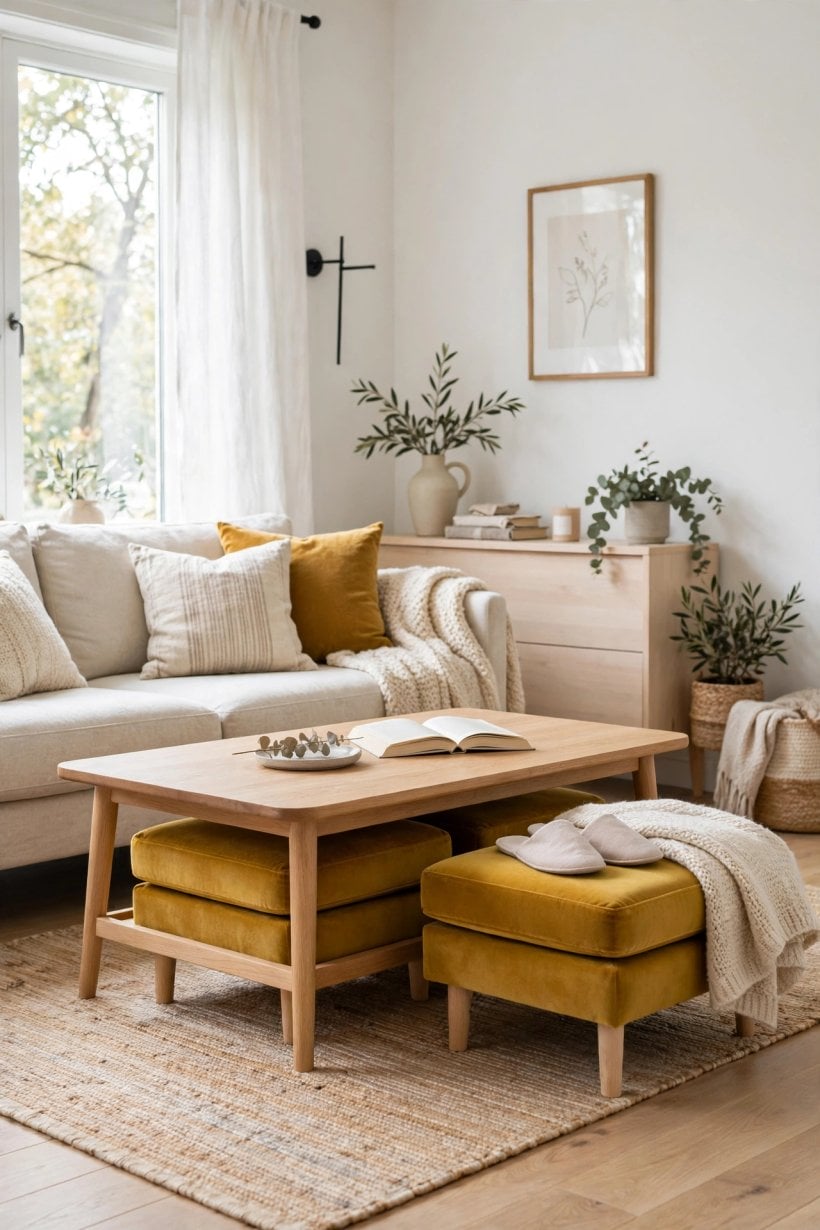
Not every coffee table can host ottomans. The frame needs an open underside: four legs, a clear apron height, and no low shelf or drawer box stealing the docking space. If you are buying the table for this purpose, treat the underside as the specification — the top is the easy part. Styling the top once the set is chosen follows the same balance rules as any of these tiny living room decorating layouts: one tray, one stack of books, nothing that has to move before the ottomans dock.
5. Open Four-Leg Frames
The classic host: legs at the corners, nothing between them, and the full footprint available for docking.
6. Waterfall and Parsons-Style Tables
Solid-ended tables dock ottomans from the long sides only — check the inside width between the end panels.
7. Round Tables With a Central Pedestal
A pedestal base leaves the perimeter free; small round ottomans tuck around it like slices of a pie.
8. Avoid Low Stretcher Shelves
A shelf a few inches off the floor looks useful and blocks everything — ottomans need the full height to the apron.
4. Ottoman Types: Cubes, Poufs, Stools and Benches
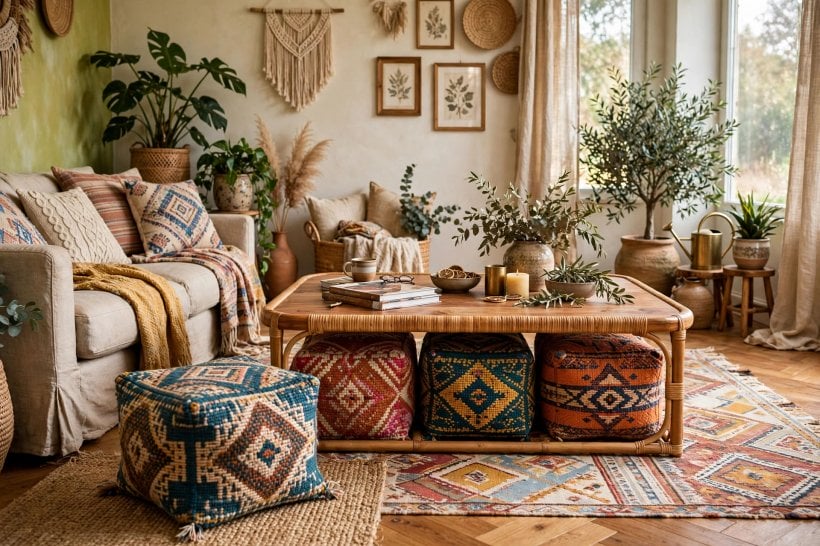
The ottoman half of the pairing decides comfort. Cubes are the firm, stackable, drink-friendly option; poufs are softer and more casual; upholstered stools read most like real furniture. Match the type to the job you will actually give them — daily footrest, weekly guest seat, or emergency side table.
9. Upholstered Cubes for Structure
Cubes hold their shape, line up neatly in a row, and give the firmest seat and the most stable tray surface.
10. Round Poufs for a Softer Look
Poufs soften a rectangular room and suit footrest duty best; they seat guests less formally and compress over time.
11. Storage Ottomans for the Double Win
Hollow ottomans swallow blankets, games and remotes — the under-table space then stores both the seats and the clutter.
12. A Low Bench Instead of Singles
One long, low bench under a long table seats two, docks in one move, and works as a window seat elsewhere.
Children change the calculation in the best way: ottomans are the seats kids actually claim, at a height that suits them and with no chair legs to topple. A pair of sturdy cubes becomes a fort, a stage and a tea-party table in the same afternoon, then docks away before dinner. Households with small children should weight firm, washable cubes higher than elegant poufs — the ottomans will work harder in a family room than any other seat you own.
5. Measuring: Clearances That Make It Glide
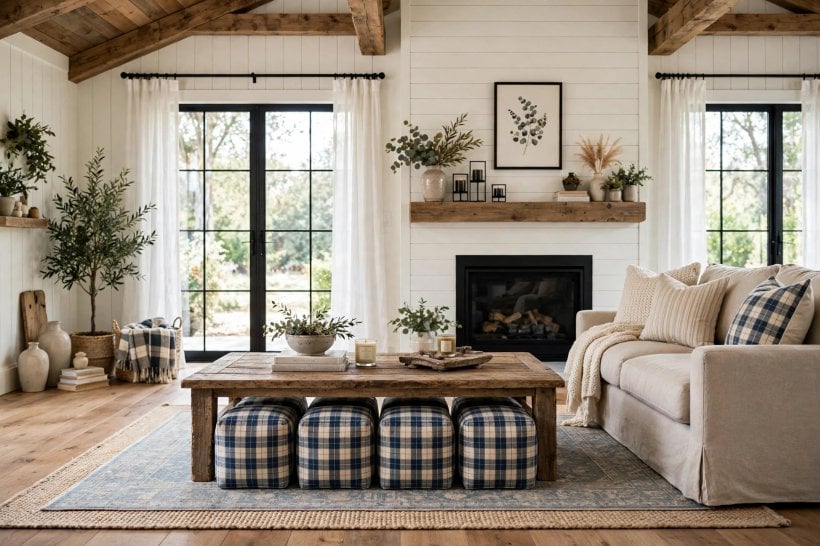
This arrangement lives or dies on three measurements: the height from floor to the underside of the table apron, the width between the legs, and the ottoman’s own height and width with a small working gap on every side. Measure the ottoman compressed, too — upholstery squashes under a hand but the frame does not. Rooms planned this carefully tend to follow the discipline in these tiny living room ideas: every centimetre of the central floor is accounted for twice, once open and once in use.
13. Leave a Finger Gap All Round
A small clearance on each side lets ottomans slide without scuffing legs or catching on rug pile.
14. Check the Apron, Not the Tabletop
The apron or frame under the top is the true ceiling — measure to its lowest point, including any cross-brace.
15. Mind the Rug
Ottomans that glide on hard floor stall on deep pile; low-profile glides or a flatweave rug keep the docking smooth.
16. Keep Walkways Honest
With ottomans out, a path around the table must remain — if the room cannot spare it, choose slimmer ottomans.
6. Colours, Fabrics and Finishes
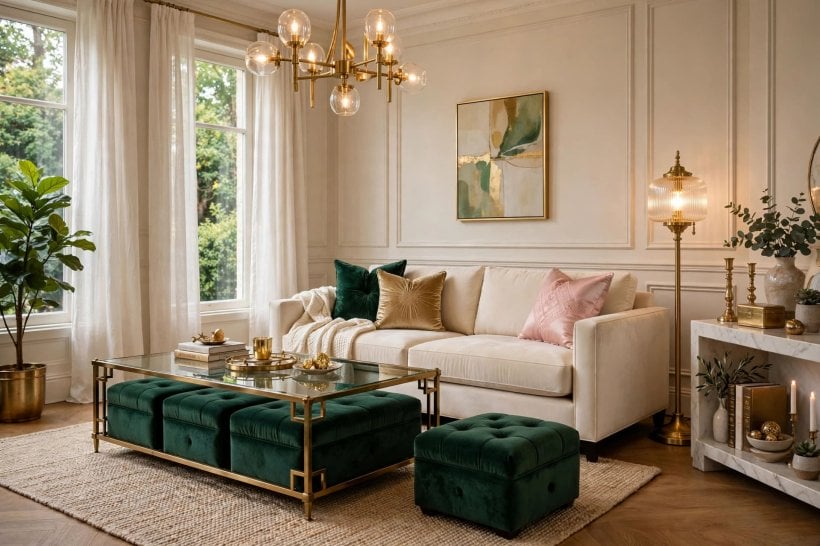
A docked row of ottomans reads as one block of colour under the table, so the pairing’s palette matters more than either piece alone. Match, tone or deliberately contrast — but decide it as a single composition. Fabric choice follows use: feet and guests are hard on pale upholstery, while the table top takes the drinks and the knocks.
17. Match the Ottoman Fabric to the Sofa
Same-family upholstery makes the set read as one designed suite and keeps the docked block calm.
18. Contrast for a Designed Accent
A deep colour under a pale table — or the reverse — turns storage into the room’s deliberate accent band.
19. Choose Stain-Tolerant Fabrics
Feet, shoes and snacks meet ottomans daily; textured weaves and mid-tones hide the evidence best. Coordinate with the room’s wider scheme, using the approach in our living room paint for tiny houses guide — walls, table and upholstery chosen as one palette.
20. Leather and Faux Leather for Wipe-Clean Use
Smooth surfaces shrug off spills and pet hair, and suit ottomans that double as everyday footrests.
7. Layouts for Different Room Shapes
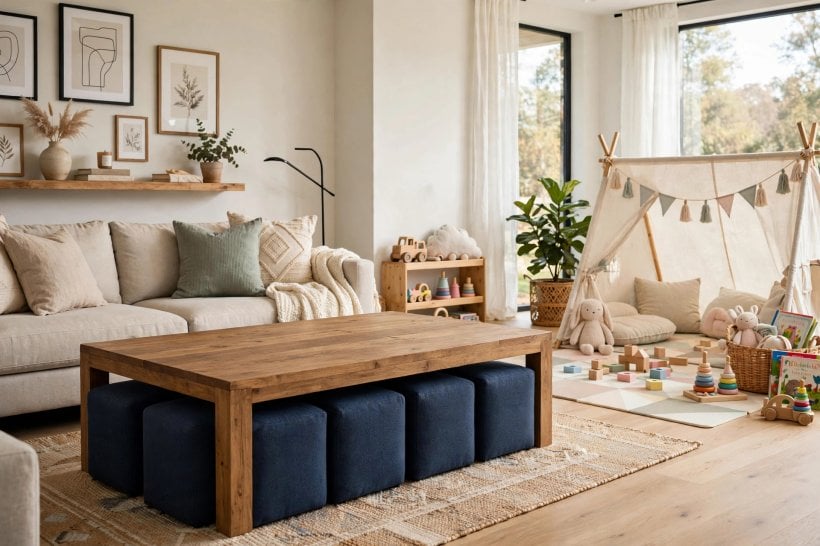
The set behaves differently in every plan. In a long room, ottomans dock on the long sides and pull toward the sofa and armchair. In a square room, a four-cube set under a square table can serve seating on three sides. Tiny and open-plan rooms gain most, because the coffee table zone is also the dining overflow, the play area and the guest space — the multi-role thinking behind these small living room ideas generally.
21. Two Ottomans for the Classic Sofa Layout
The standard arrangement: a rectangular table facing the sofa, two ottomans docked on the room side, pulled out for guests.
22. Four Cubes for Square Rooms and Sections
A large square table with a cube per side seats a group in the round and docks back to a clean block.
23. One Ottoman in the Smallest Rooms
Even a single ottoman under a narrow table earns its place — one footrest, one spare seat, zero footprint.
8. Styling the Set Day to Day
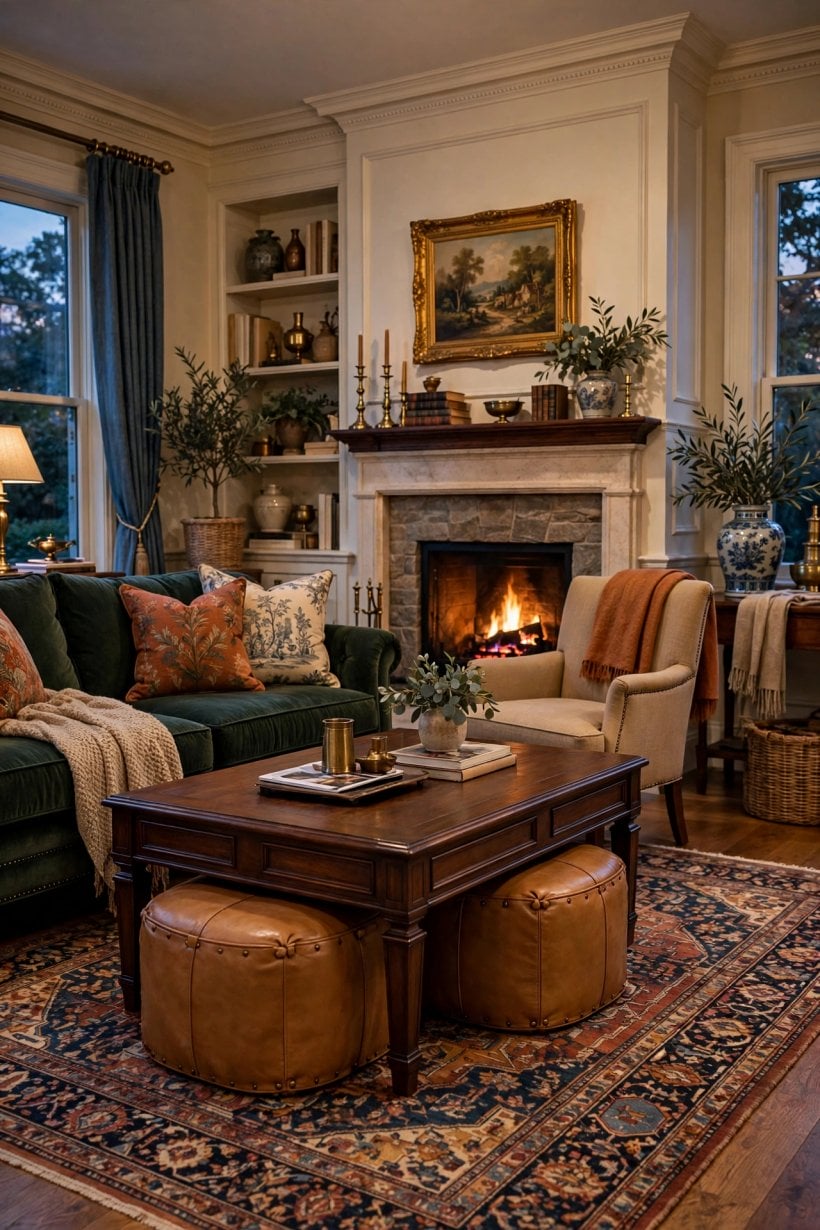
Docked ottomans create a strong horizontal band under the table; style the tabletop to balance it — low and wide beats tall and fussy. Keep the docking path sacred: nothing stored in front of the ottomans, nothing under the table but the ottomans. When guests arrive, the transformation should take ten seconds and no furniture moving beyond the pull.
24. Keep the Tabletop Low and Clear
A tray and one stack of books leave room for the drinks the ottomans will hold and keep the set looking intentional.
25. Rotate Ottomans to Even the Wear
The favourite ottoman fades and compresses first; swapping positions monthly keeps the set wearing evenly. The same rotate-and-refresh habit keeps the whole scheme feeling new, much like the seasonal re-styling in these tiny house living room ideas.
9. Costs and Buying Checks
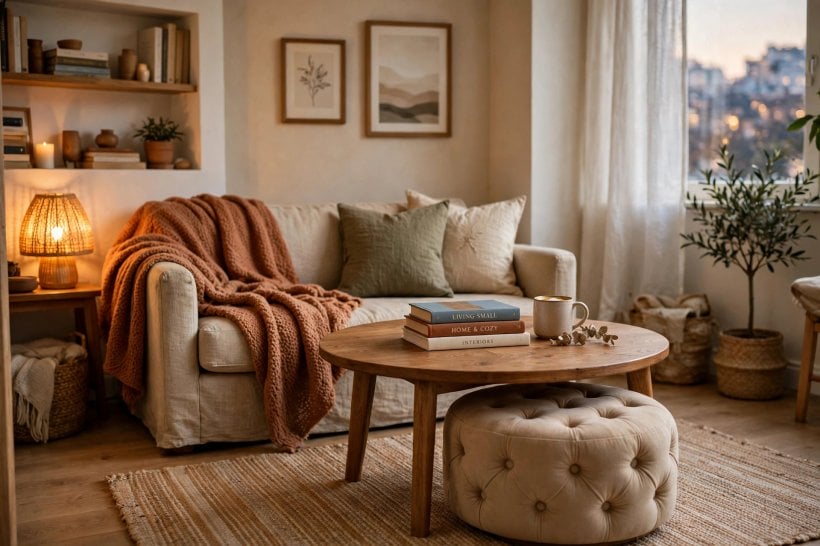
Matched sets cost less than separate pieces and guarantee the fit — but lock you into one fabric and finish. Buying separately costs more and risks the measurements, in exchange for better ottomans. Either way, the checks are the same, and they are physical: sit on the ottoman, slide it under the table, and rest a drink tray on it before committing.
Budget honestly: a coffee table with ottomans underneath replaces a footstool, spare chairs and sometimes a storage unit, so judge its price against the three pieces it replaces, not against a plain table. Frame quality decides the lifespan — solid legs and a rigid apron on the table, dense foam and strong stitching on the ottomans. In the many modern living room interior design ideas for tiny houses we publish, this pairing recurs precisely because it survives daily docking without loosening or sagging when the joinery is sound.
10. Mistakes to Avoid
Care is the quiet part of ownership. Upholstered ottomans collect crumbs, pet hair and shoe dust faster than any other seat in the room precisely because they live at foot height — vacuum them weekly with the sofa, and treat fabric with a protector before first use if the maker allows it. Wooden table aprons take knocks from docking; felt pads on the ottoman tops’ edges save both surfaces. Once a season, check cube foam for compression and swap the set’s positions, and tighten any table leg bolts the daily sliding has worked loose. None of this is burdensome — five minutes a month — but it is the difference between a set that still glides and docks cleanly in year five and one that wobbles, scuffs and gets abandoned beside the sofa by year two.
Most failures are measurement failures. Ottomans bought by eye arrive a centimetre too tall for the apron and live forever beside the table instead of under it — the clutter the arrangement exists to prevent. The second failure is softness: a pouf chosen as a guest seat that compresses to cushion height under an adult. The third is fabric regret — pale linen under daily feet.
Buy in this order: table first, measurements second, ottomans last, with the tape measure — not the product photo — making the final decision. Test the full cycle in the shop or on delivery day: dock, pull, sit, rest a tray, dock again. If any step snags, exchange before the set becomes permanent.
Final Considerations
A coffee table with ottomans underneath succeeds on clearance, firmness and discipline: ottomans that truly fit, seats that truly seat, and a docking space kept clear so the system stays effortless. Get those three right and the smallest living room gains a guest-ready seating plan that takes up no space at all.
It is not the answer for everyone — if you want deep table drawers or a solid blocky table, this pairing asks too much compromise. But for small rooms that must flex between quiet evenings and a table full of guests, few arrangements return so much function per square foot. Measure twice, then live with the set for a week before judging it: ottomans earn their place in the small daily moments — feet up after dinner, an extra seat when friends call round, a tray balanced for movie night — and a combination that serves those moments without crowding the room is the one worth keeping.


0 Comments