

Steps are the handshake of a house. Brick front porch steps do that job with more warmth and permanence than any other material — and, built well, they will outlast the porch they serve.
This guide stays on the steps themselves: design, brick patterns, safe proportions, build and repair basics, lighting, planting and upkeep.
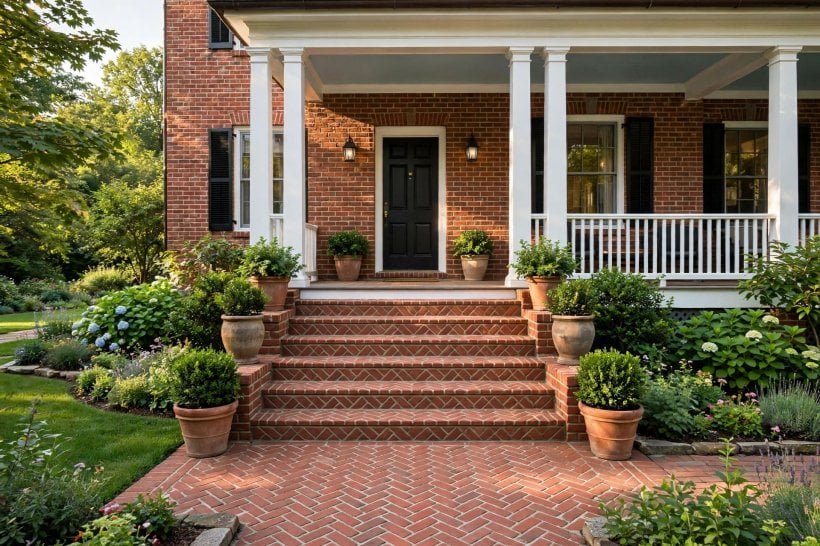
1. Brick Front Porch Steps at a Glance
Brick steps are a masonry structure, not a finish: a solid or filled core carries brick treads and risers, and the whole flight stands on a footing below the frost and movement that crack careless work. Design, proportion and drainage decide whether they feel grand or merely steep.
| What makes them last? | A proper footing, a solid core, sound mortar and water shed away from every joint. |
| Comfort rule? | Even risers and generous treads — consistency matters more than any single dimension; check local code. |
| Best brick? | Clay pavers or engineering-grade brick rated for ground contact and freeze-thaw, not soft facing brick. |
| Main enemy? | Water sitting in joints, then freezing — drainage and pointing are the maintenance that matters. |
| Style range? | Straight flights, flared and curved fronts, cheek walls, bullnose treads and patterned risers. |
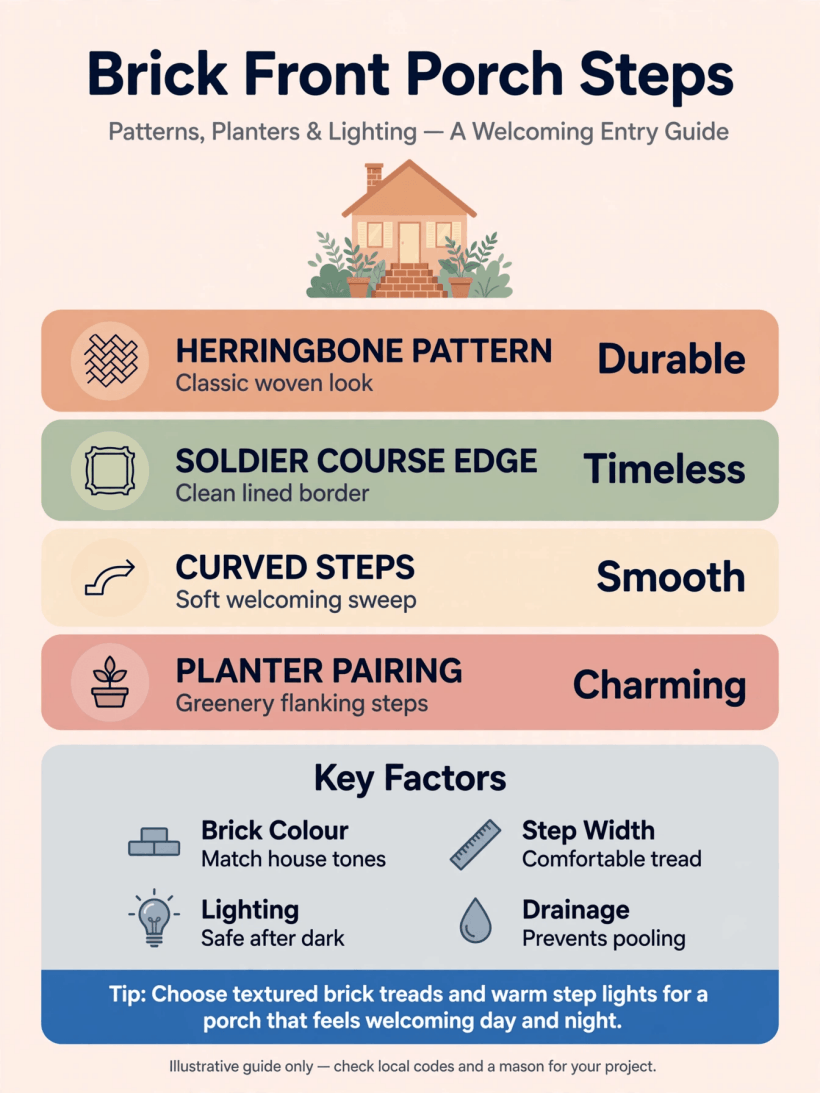
At a glance: footing and drainage first, even proportions second, pattern and planting last.
2. Step Designs and Layouts
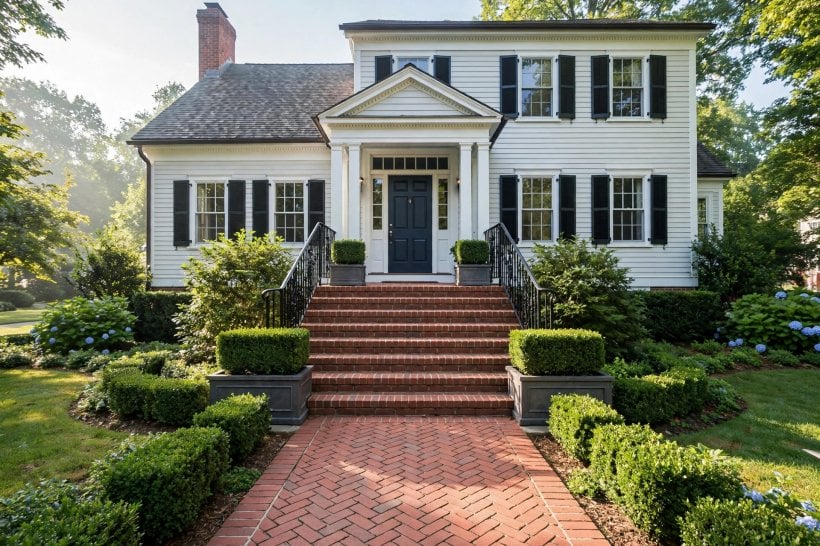
The flight’s shape sets the house’s welcome. A straight flight is honest and economical; flared or curved fronts soften the approach and suit wider porches. Match the steps’ width to the porch and door, not to the path — steps narrower than the doorway always feel like a bottleneck. The approach as a whole works like the masonry paths in our dry-stack stone path guide: each element earns its place by how feet actually travel.
1. The Straight Flight
The classic: even treads in a direct line from path to porch, cheapest to build and easiest to keep consistent.
2. Flared Bottom Steps
Lower steps widening toward the garden open the flight like a fan — welcoming, and kinder to groups arriving together.
3. Curved or Bullnose Fronts
A gentle curve or rounded tread edge removes the hard corner, suits traditional houses and sheds tripping angles.
4. Cheek Walls Either Side
Low brick walls flanking the flight carry lamps, pots and house numbers, and give the steps a finished, built-in feel.
5. Landing Steps for Tall Porches
A mid-landing on high porches rests the climb, turns the flight gracefully and gives deliveries a level place to land.
6. Match the Step Width to the Porch
Steps as wide as the porch bay they serve look intentional; narrow flights bolted onto wide porches never do.
3. Brick Patterns and Bonds
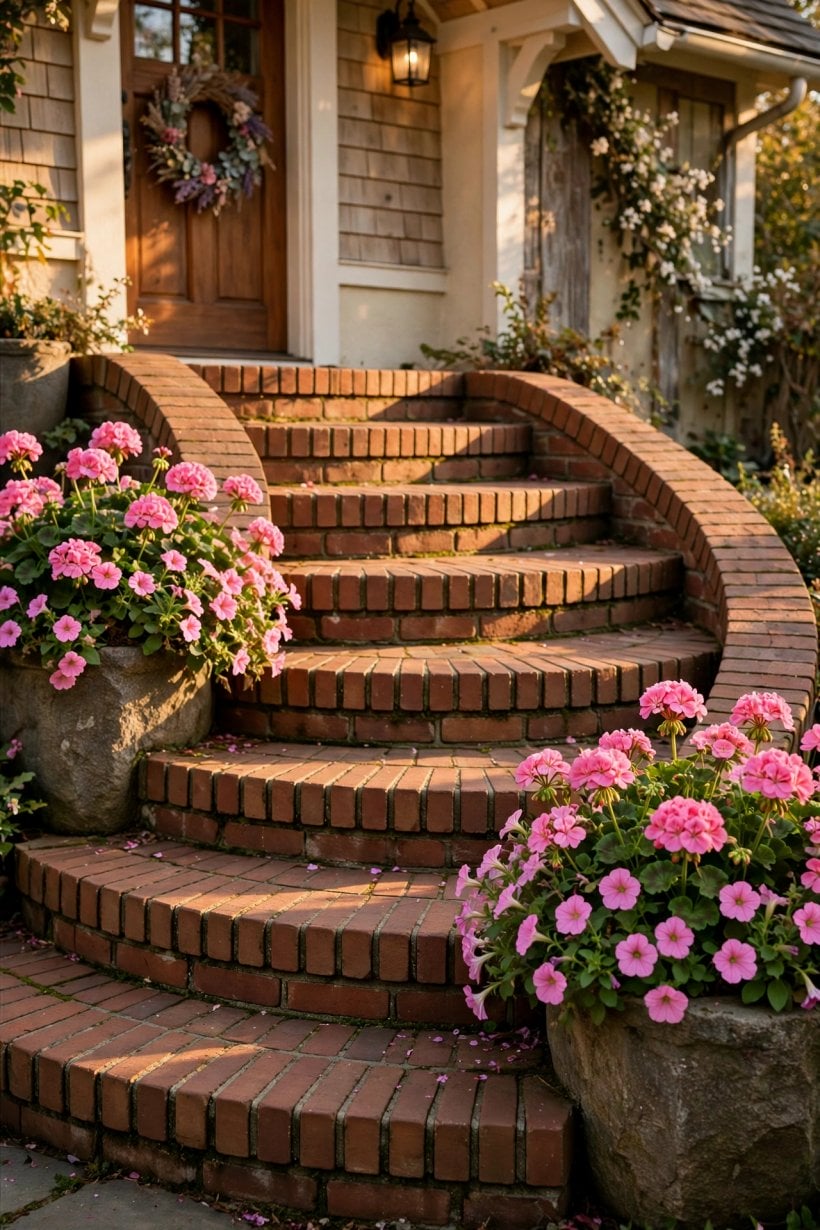
Pattern is where brick steps earn their character. Treads take the wear, so their bond is structural as much as decorative; risers are the canvas, where a contrasting brick or a soldier course can carry the design. Keep patterns calm — one feature bond per flight — and let the brick’s own colour variation do the rest.
7. Rowlock Treads for Grip and Edge Strength
Bricks laid on edge across the tread give a hard-wearing, slightly textured walking surface with a crisp front line.
8. Soldier-Course Riser Detail
Upright bricks along one riser or the top step add a traditional accent that reads from the street.
9. Basketweave on Landings
On the flat landing, a woven pattern spreads load visually and marks the pause before the door.
10. Blend Two Brick Tones
A tread in a darker, harder brick against lighter risers defines each step edge — beauty that is also a safety cue.
4. Safe Proportions and Comfort
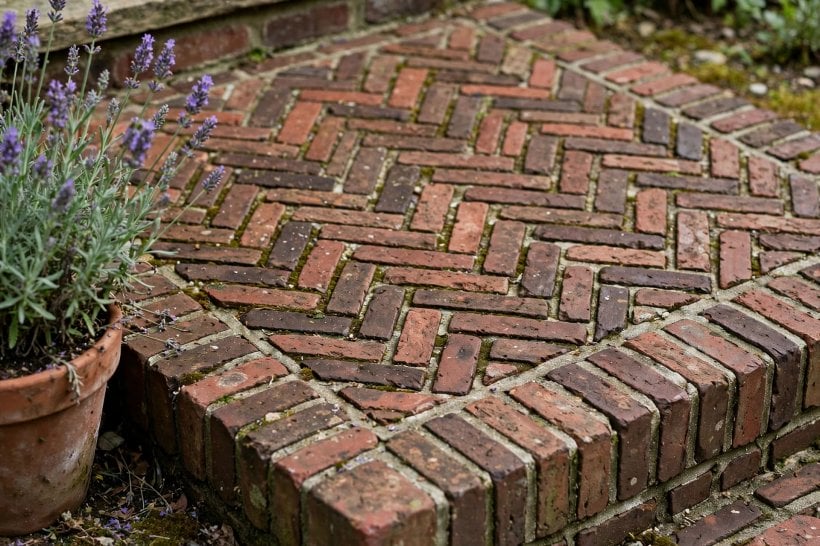
Comfortable steps are boring in the best way: every riser identical, every tread deep enough for a whole foot, nothing that surprises a guest carrying shopping in the rain. Exact dimensions are set by local building codes, which vary — treat the principles here as the design brief and confirm figures locally. The non-negotiables are consistency and a handrail where the flight is more than a step or two, especially on the routes older visitors and children use daily — the same human-first thinking behind these Japanese genkan tiny house entryways.
11. Keep Every Riser Identical
The first and last risers cause the trips; a flight whose risers vary by even a small amount will catch feet forever.
12. Give Treads a Full Foot’s Depth
Shallow treads force a sideways descent; generous treads let everyone walk down facing forward, hands free.
13. Add a Handrail That Matches the House
Black metal or painted steel against brick is the classic pairing — fixed into the masonry, it serves every age.
14. Slope Treads a Fraction to Shed Water
A barely visible fall on each tread stops puddles sitting on the walking line and freezing overnight.
5. Build Basics: Footings, Core and Mortar
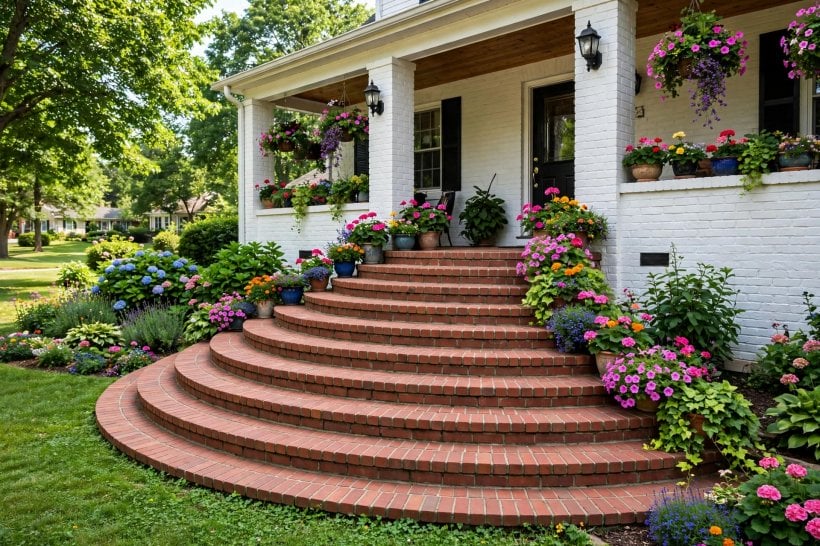
Under the visible brick sits the real structure: a concrete footing, a solid core of block, concrete or compacted fill, and mortar matched to the brick’s hardness. Skipping the footing is the classic false economy — the flight moves, the joints open, water enters, and the repair bill arrives within a few winters. Work with a mason or follow the same discipline as the builders in our tiny stone cottage masonry guide: foundations first, faces last.
15. Dig the Footing Below Frost and Soft Soil
A footing on undisturbed or properly compacted ground stops the seasonal lift that cracks rigid brickwork.
16. Build a Solid Core, Not a Hollow Box
Solid-filled steps resist the drum-hollow movement of thin shells and carry cheek walls and rails without flexing.
17. Use Pavers or Rated Brick at Ground Contact
Soft facing bricks spall where they meet wet ground; dense pavers and engineering brick shrug off the splash zone.
18. Tool the Joints Slightly Recessed and Sound
Well-tooled joints shed water; crumbling or flush-smeared joints invite it in — pointing quality is weatherproofing.
6. Lighting and Visibility
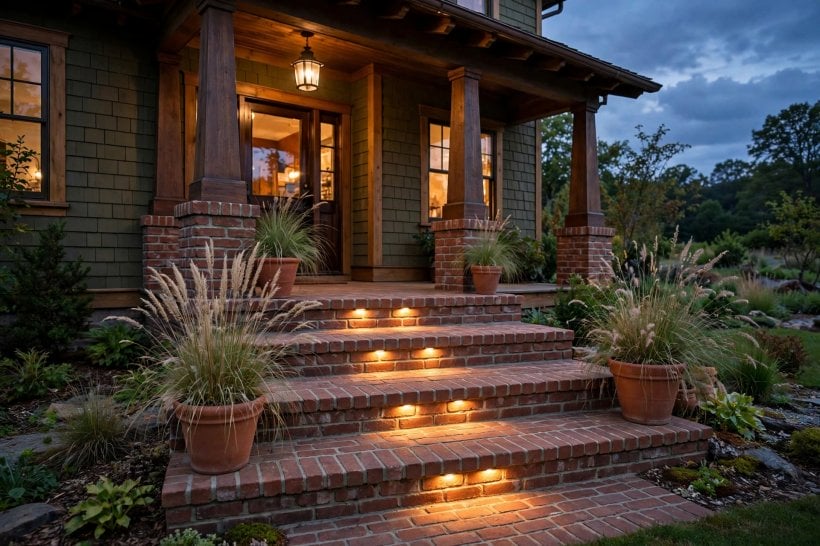
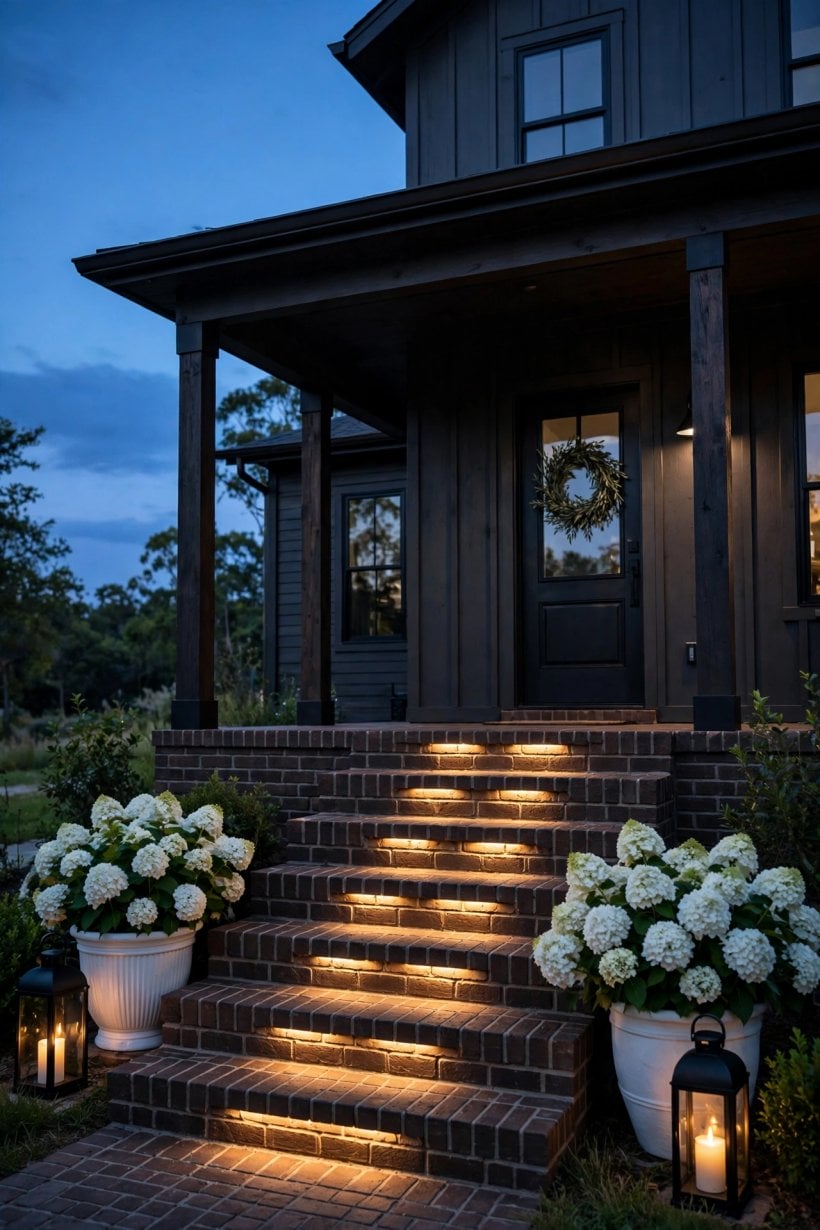
Steps are used hardest in the dark — winter evenings, guests leaving after dinner, deliveries at dawn. Light the tread line, not the visitor’s eyes: low fittings washing across each tread show the edges without glare. A lit flight is also the house’s evening welcome, multiplying the effect of every other welcoming detail on the porch.
19. Recess Lights Into the Cheek Walls
Small fittings at tread height mark each level change and keep the light where feet need it.
20. Put a Lantern at the Top Step
One warm light beside the door anchors the flight and signals home from the street.
21. Consider Solar Markers Only as Accents
Solar studs fade and fail; treat them as decoration and keep real visibility on wired or porch light.
Plan the wiring with the build, not after it. Conduit and cable runs disappear into the core while the flight is open and become a surface-mounted compromise once the mortar sets. If a full lighting scheme is beyond the first budget, at least lay the empty conduit and a junction point at the top step — the cheapest future-proofing on the whole project, and the detail owners most often wish they had thought of on day one.
7. Planting and Dressing Around Steps
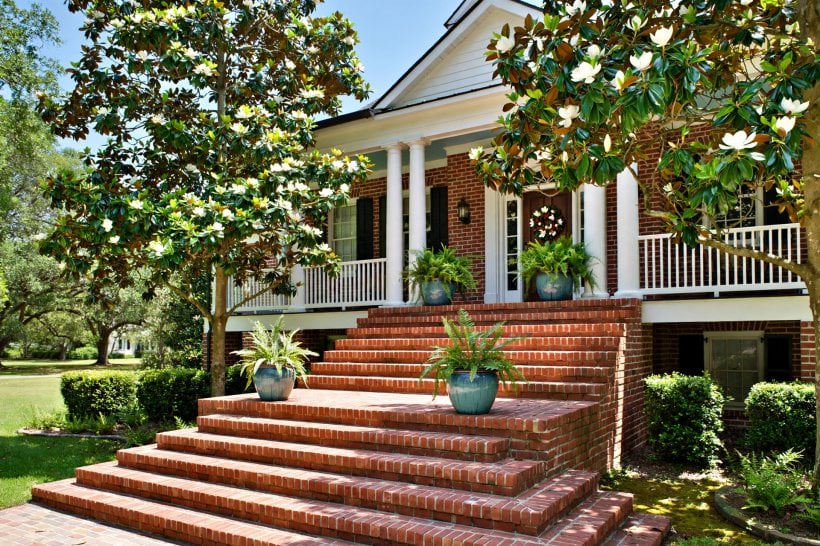
Planting softens masonry’s geometry — but belongs beside the flight, not on it. Pots on cheek walls, low planting at the base and a clear walking line keep the welcome lush and the footing safe. Frame the steps the way considered front yard curb appeal frames a whole frontage: every plant placed so the structure reads first.
22. Pair Pots on the Cheek Walls
Matching pots at the top step are the oldest welcome in the book — change them seasonally for year-round effect.
23. Keep Planting Below Railing Height at the Base
Low mounds of planting ground the flight without hiding its edges or brushing wet leaves across treads.
24. Never Let Climbers Cross the Treads
Growth over the walking line is a slip hazard and traps moisture against the brick — train climbers to the walls.
8. Repair, Repointing and Cleaning
Brick steps rarely fail suddenly; they fade by degrees — a softening joint here, a rocking tread there. Caught early, repairs are small: rake out failed mortar and repoint, re-bed a loose tread, replace one spalled brick. Left alone, water does the demolition for free. An annual once-over in spring, with a stiff brush and a hose, is the whole maintenance philosophy — gentler than the approach for the paths in our gravel path and rock border walkway guide, because brick asks for inspection more than intervention.
25. Repoint Before Joints Recede Deeply
Mortar is sacrificial by design; renewing it while the brick is sound is cheap, and after is not.
26. Clean With Water and a Brush, Not Pressure
Pressure washing blasts joint faces and drives water deep into the flight — a brush, water and patience clean safely.
27. Replace Spalled Bricks With Matched Spares
One frost-shattered brick swapped early protects its neighbours; keep spares from the original batch if you can.
9. Weatherproofing and Winter Care
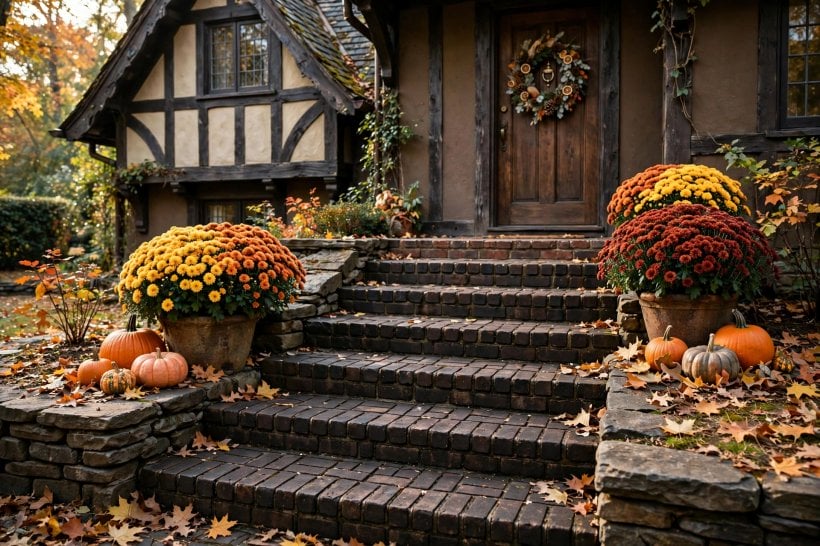
Freeze-thaw is brick’s lifelong opponent, and every weatherproofing habit serves one goal: keep water out of the joints and off the treads. Breathable sealers on sound brickwork can help in exposed spots; film-forming coatings that trap moisture inside do the opposite. In winter, clear snow with a plastic shovel and use sand for grip — salt and harsh de-icers attack both mortar and brick faces over a season.
28. Keep Water Off the Flight
Gutters, porch drips and downpipes should never discharge onto or beside the steps — reroute them before anything else.
29. Seal Only Sound, Dry Brickwork
A breathable water repellent on a dry, sound flight reduces absorption; on damp or cracked steps it locks trouble in.
30. Sweep Autumn Leaves Off Promptly
Wet leaf litter holds moisture against treads, stains the brick and turns slick — a weekly sweep is winter insurance.
Steps and porch belong to one composition: the flight delivers visitors to the door the porch frames, so style them together — brick tones that echo the porch floor, lighting that continues up the flight, planting that connects both to the garden. Our tiny house plans with screened porches show how naturally a well-built masonry entry pairs with the sheltered room behind it.
10. Costs and Who Should Build
Brick steps cost more than timber or precast concrete and less than dressed stone, with the spread driven by the flight’s size, the footing, cheek walls and pattern work. Materials are the smaller half of most quotes; skilled masonry time is the larger. That argues for getting the design right once — a well-built flight is close to permanent, and altering masonry is never cheap.
Confident DIYers with masonry experience can tackle a short, straight flight on a proper footing; curved fronts, tall flights and anything touching the house’s structure belong with a mason whose local work you can inspect. Whichever route you choose, the checks before paying are the same: risers even, treads sound underfoot, joints fully tooled, water shedding away from every surface, and the site left with the drainage working — not promised. The surrounding garden should be planned with the flight, not after it; these backyard landscaping ideas show how paths, planting and levels compose around hard landscaping.
Final Considerations
Good brick front porch steps rest on three things: a footing that never moves, risers that never vary, and joints that never let water settle. Get those three right and the design choices — pattern, flare, cheek walls, planting — are free to be as traditional or as simple as the house itself wants.
Brick asks more upfront than timber and gives more back: decades of solid, quiet service, a welcome that improves with age, and repairs measured in single bricks rather than whole flights. Build the structure honestly, keep the pointing sound, and the steps will shake hands with visitors long after the porch furniture has been replaced twice over. Walk the finished flight in wet shoes and in the dark before you call it done: brick steps should feel steady, shed water, and read clearly underfoot at every hour, and a flight that passes those simple tests will welcome guests safely for decades with nothing more than an occasional repointing and a wash. Do that, and each arrival at your door begins the way it should — on steps that feel as solid and welcoming in year twenty as they did on the day they were laid.




0 Comments