

A deck should be somewhere you live, not somewhere you maintain. Endless sanding, staining and splinter repairs steal the very weekends the deck was built for.
These seventy-five composite ideas cover boards, railings and furniture zones, so you can plan a deck that looks good in year one and still looks good years later, with little more than a wash.
1. Start With Board Colours: Greys, Browns and Weathered Tones
Colour is the first decision and the one you will notice every day. Browsing composite deck pictures before you order samples is a sensible way to narrow the field, but always judge the finalists outdoors in your own light, because boards read warmer in sunshine and cooler in shade. Composites range from pale, driftwood greys to deep, espresso browns, and most homes suit one of eight starting points below, each of which pairs naturally with the relaxed planting in tiny house landscaping ideas.
| Decision | Ideas | Key Question |
|---|---|---|
| Board colours | 1–8 | Warm, cool or weathered? |
| Laying patterns | 9–16 | Straight, diagonal or patterned? |
| Borders and frames | 17–24 | One colour or a framed edge? |
| Two-tone schemes | 25–32 | Where does the contrast live? |
| Metal railings | 33–40 | Slim and modern or classic? |
| Glass and cable | 41–48 | How much view do you keep? |
| Steps and levels | 49–56 | One platform or several zones? |
| Dining zones | 57–64 | How many seats, how much shade? |
| Lounging zones | 65–71 | Sun, shade or both? |
| Finishing details | 72–75 | Light, storage and care sorted? |
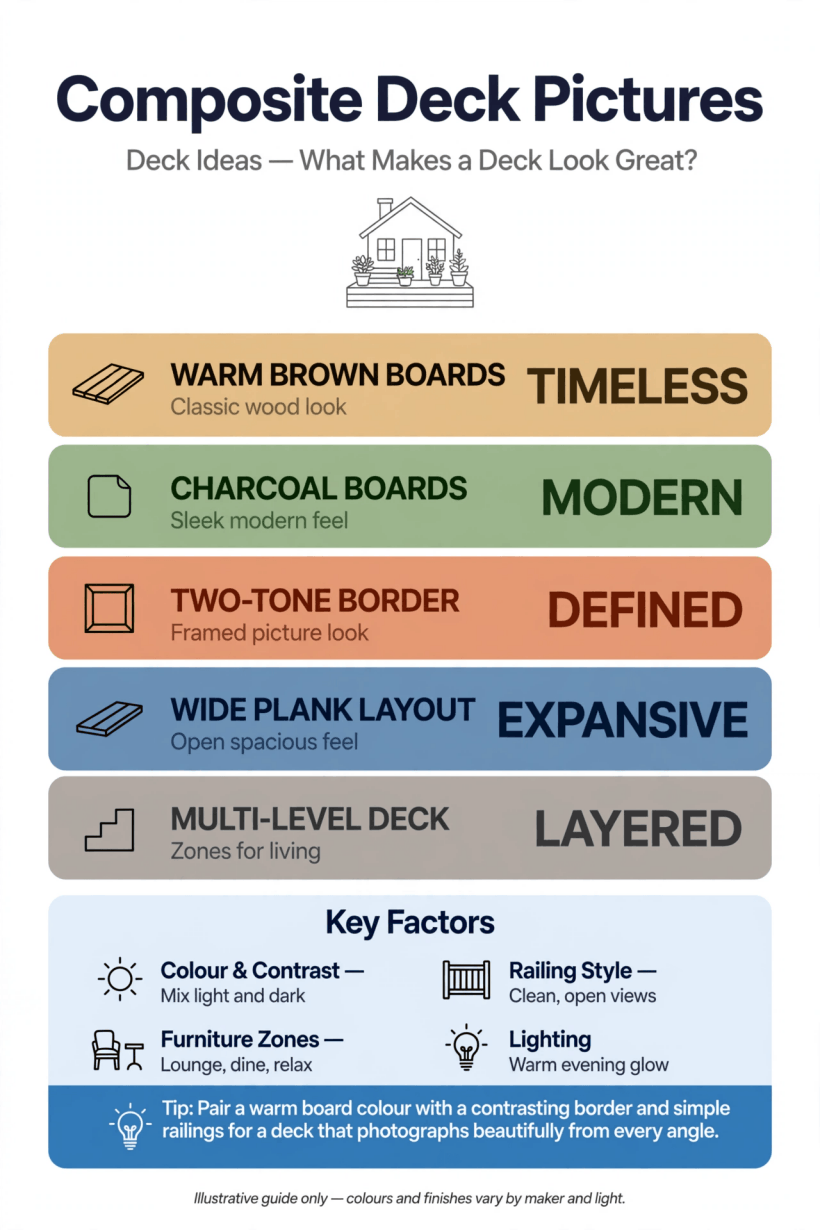
At a glance: the ten decisions behind a composite deck, from board colour and laying pattern to railings, furniture zones and finishing details.
1. Weathered grey. A silvery, coastal grey that suits white or pale house walls and looks better with every season of sun.
2. Warm teak tone. Golden brown boards that borrow the look of classic timber, friendly beside brick and warm-toned render.
3. Walnut brown. A deep, rich brown for a smart, grounded deck that makes pale furniture and planting stand out.
4. Pale ash. Light, modern boards that keep small decks feeling open and bounce daylight into the rooms behind.
5. Slate grey. A darker, blue-leaning grey with a contemporary feel, handsome with black railings and simple planting.
6. Rustic multi-tonal. Boards with varied streaks of brown and grey, forgiving of dust, leaves and everyday garden life.
7. Charcoal boards. Near-black decking for drama in sunny gardens, balanced best with light furniture and plenty of greenery.
8. Sandy beige. A soft, warm neutral that sits quietly with stone, gravel and Mediterranean-style planting in dry gardens.
2. Laying Patterns That Change the Whole Feel
The same board can look plain or designed depending on how it runs. Pattern also steers the eye, making a deck feel longer, wider or more deliberate, in the same way layout does indoors in tiny house and small-space interior design guide projects.
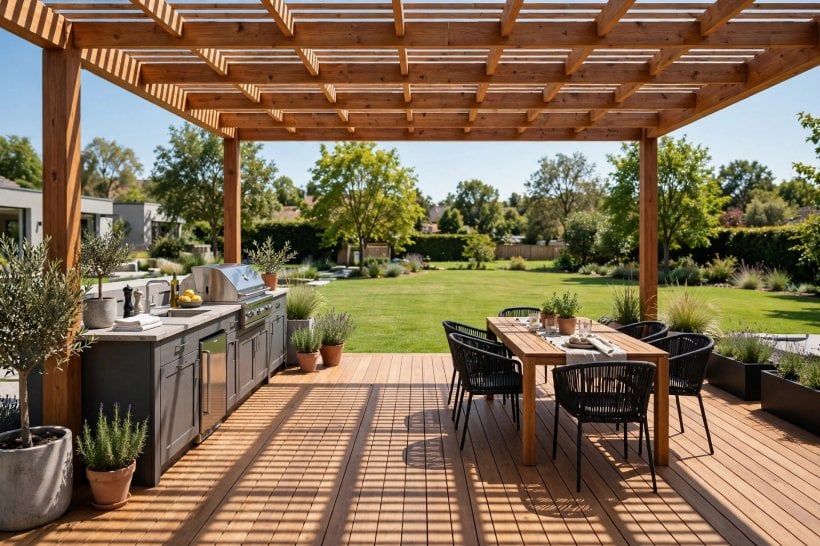
9. Straight run, boards away from the house. The classic direction, leading the eye out into the garden and making the deck feel longer.
10. Straight run, boards across. Running boards side-to-side widens a narrow deck visually and slows the eye down pleasantly.
11. Diagonal lay. Boards at forty-five degrees add energy and hide the squareness of boxy plots and plain fences.
12. Herringbone feature. A patterned centre panel turns the middle of a plain deck into its main event, worth the extra cutting.
13. Chevron entrance. A chevron panel at the door or steps gives arrivals a designed moment before they even sit down.
14. Deck tiles over a patio. Interlocking composite tiles can refresh an existing slab area without building a whole new frame.
15. Mixed-width boards. Alternating wide and narrow boards create gentle rhythm and a slightly more bespoke, crafted feel.
16. Direction change at zones. Turning the boards ninety degrees between dining and lounging areas quietly separates the two without walls.
3. Borders, Picture Frames and Edge Details
Edges are where decks look finished or forgotten. A framed border costs a little more thought and material, and pays it back every time you look at the deck from the house or the lawn.
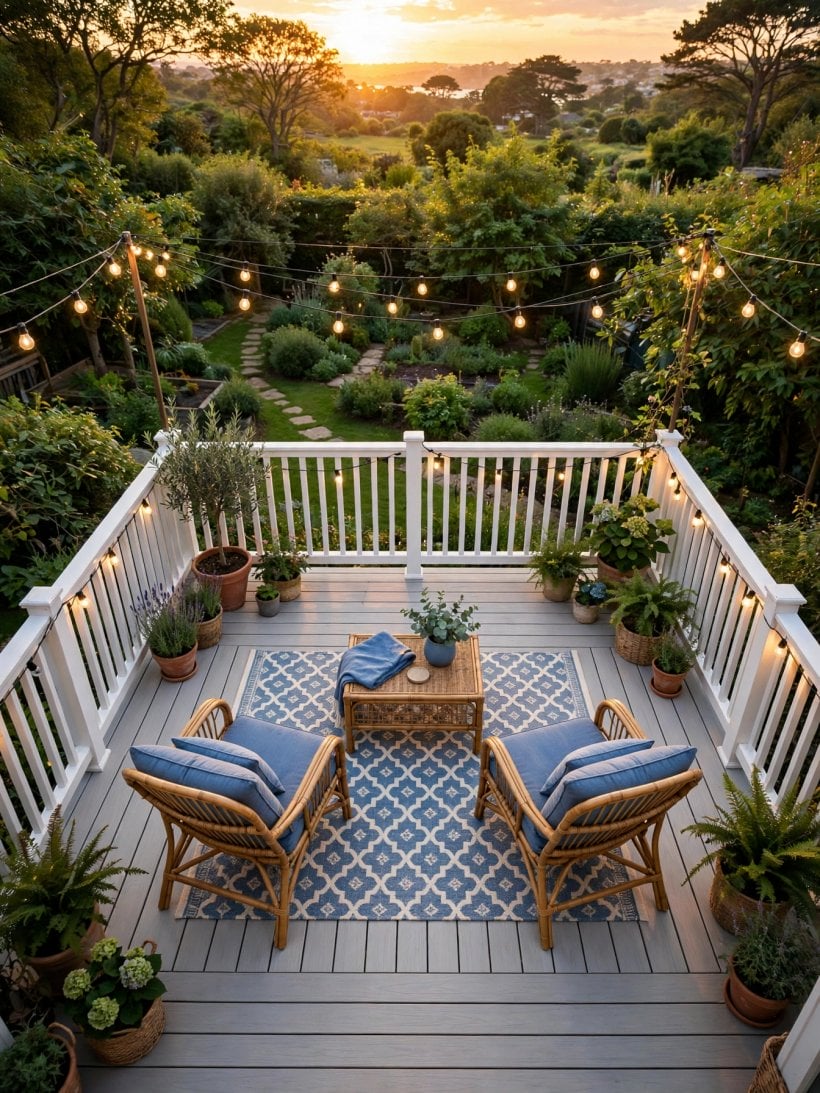
17. Single picture-frame border. One row of boards around the edge tidies every cut end and gives the deck a tailored outline.
18. Double border in a darker shade. Two rows of deeper-toned boards frame pale centres dramatically, like a mount around a picture.
19. Border in the same colour. A same-colour frame keeps the finish calm while still hiding end grain for a cleaner edge.
20. Mitred corners. Angled corner joints on the frame look joinery-smart and reward careful measuring during the build.
21. Fascia boards to match. Covering the deck’s side with matching fascia makes raised decks look solid and intentional from the garden.
22. Contrasting fascia. A darker fascia under lighter boards grounds the whole structure and hides scuffs at ground level.
23. Curved edge. A gentle curve where deck meets lawn softens hard rectangles and echoes planting beds beautifully.
24. Bullnose-style step edge. A rounded, highlighted edge board on steps improves both looks and confidence underfoot at dusk.
4. Two-Tone Schemes and Colour Zoning
Two colours are usually enough. Used with restraint, a second tone can mark zones, borders and steps, and give a large deck the structure that furniture alone cannot, much like the zoning tricks in tiny house kitchen and small-space design ideas.
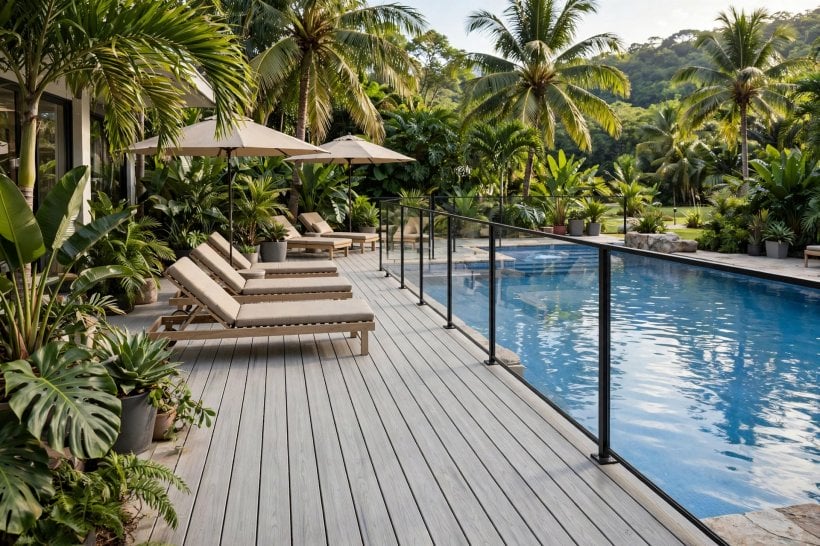
25. Pale centre, dark frame. The most popular pairing: light underfoot where you sit, dark at the edges to define the shape.
26. Dark centre, pale frame. The reverse scheme, dramatic in sunny gardens where pale edges keep the outline readable.
27. Grey boards, brown border. Cool and warm together feel collected rather than matched, and suit most house colours comfortably.
28. Zoned by colour. A different tone for the dining platform and the lounging platform ties colour to purpose across levels.
29. Steps in the border colour. Matching steps to the frame colour connects the levels visually and makes the staircase read clearly.
30. Inlay stripe at the door. A single contrasting stripe outside the door adds a designed threshold without pattern everywhere.
31. Two greys, light and dark. A tonal grey pairing is calm, modern and very forgiving of mixed garden furniture.
32. Colour echoed in furniture. Repeating the border tone in chair cushions or a table ties the whole deck scheme together.
5. Railings in Metal: Slim, Classic and Practical
Railings decide how open a deck feels and how much view survives. Where local rules require a railing, usually on raised decks, check what applies to your home and deck height before choosing, and build to that guidance rather than to looks alone.
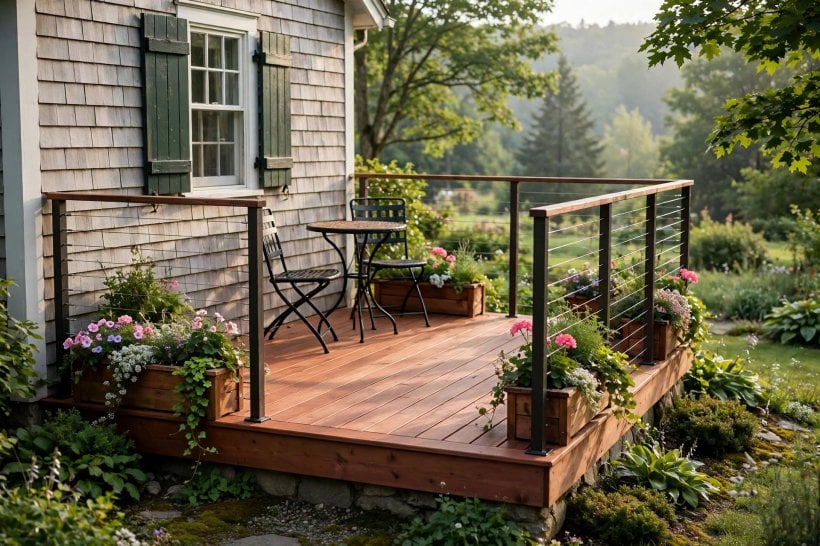
33. Slim black aluminium. Thin dark rails almost disappear against planting, keeping the view while satisfying the need for a barrier.
34. White classic railing. A white, more traditional profile brightens coastal and cottage gardens and echoes painted fences.
35. Bronze-toned metal. Warm metallic rails pair beautifully with walnut and teak-toned boards for a softer modern look.
36. Wide top rail for drinks. A flat, generous handrail doubles as a resting place for cups and glasses along the sunny edge.
37. Railing with a wooden-look top. A composite cap in the board colour ties railing to deck while keeping metal’s slim strength.
38. Balusters spaced for pets. Closer spacing, chosen within your local guidance, helps keep small dogs safely on the deck side.
39. Gate to match. A railing gate in the same style keeps children and pets contained without a visual jolt.
40. Partial railing. Rail only the high sides and leave low edges open with steps, keeping the deck airy where height allows.
6. Glass, Cable and Open-View Railing Ideas
Where the view is the point, in gardens, on slopes, or in the big-sky settings celebrated in A-frame tiny house interior ideas, near-invisible railings earn their place.
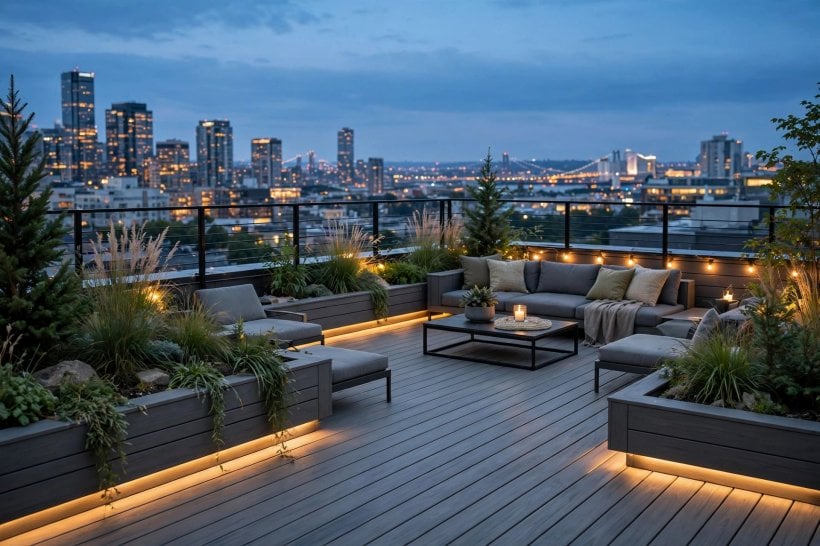
41. Frameless-look glass panels. Glass keeps wind off and views open; expect regular wiping to keep it looking its best.
42. Glass with a slim top rail. A handrail over glass gives hands confidence and the panels a finished, deliberate line.
43. Stainless cable rails. Horizontal cables feel nautical and light, and suit modern houses and coastal gardens especially well.
44. Cable with chunky posts. Bigger posts with fine cables balance sturdiness and openness on larger, higher decks.
45. Mesh panel infill. Fine mesh keeps the view, helps with pets and children, and has a relaxed, contemporary character.
46. Railing planters. Planters hung on the railing soften its line and put herbs within reach of the cook.
47. Bench as barrier. On low decks, a fixed bench edge can define the boundary socially where rules allow, with planting behind.
48. No-railing ground deck. At ground level, skip rails entirely and let wide steps and planting edges do the framing.
7. Steps, Levels and Platform Ideas
Levels turn one flat platform into a small landscape. Even a single step down can separate cooking from lounging, and give each area its own mood, as any fan of tiny house kitchen design ideas to borrow zones will recognise.
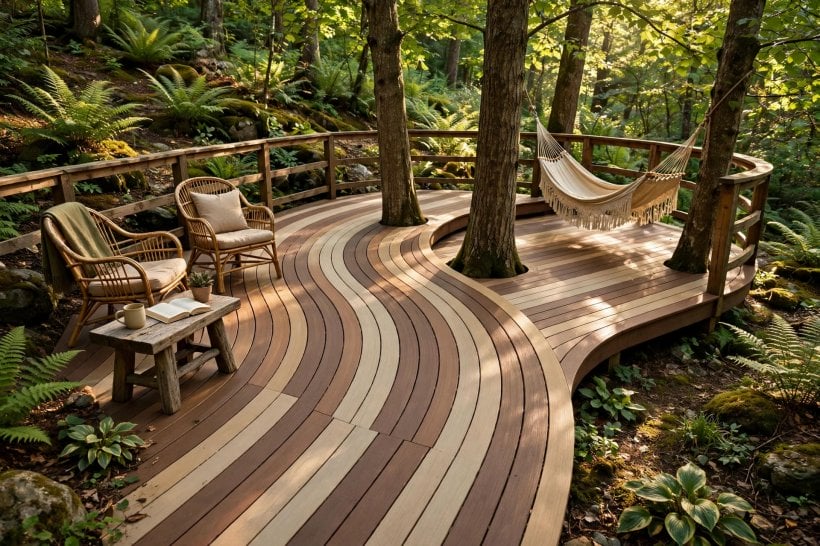
49. Wide garden steps. Broad, shallow steps double as casual seating during gatherings and make the deck feel generous.
50. Two-level deck. Dining up top near the house, lounging below near the lawn: a classic split that organises big gardens.
51. Corner platform. A small raised corner deck for two chairs can rescue an unused garden corner completely.
52. Deck around a tree. Building boards around an existing tree keeps the shade and makes the deck feel grown into the garden.
53. Raised deck for sloping plots. A level platform on posts turns an unusable slope into the garden’s best room, built to proper guidance.
54. Step lighting strips. Low lights along step edges look smart at night and help everyone find the level change safely.
55. Landing at the door. A slightly deeper threshold platform makes carrying trays in and out of the house far less of a juggle.
56. Storage steps. Deep steps with hinged or boxed storage beneath swallow cushions and garden games out of sight.
8. Dining Zones: Tables, Shade and Outdoor Cooking
Plan the dining zone around the table you actually own or want, with honest elbow room around it. Chairs need space to push back, and cooks need a route that does not squeeze behind seated guests.
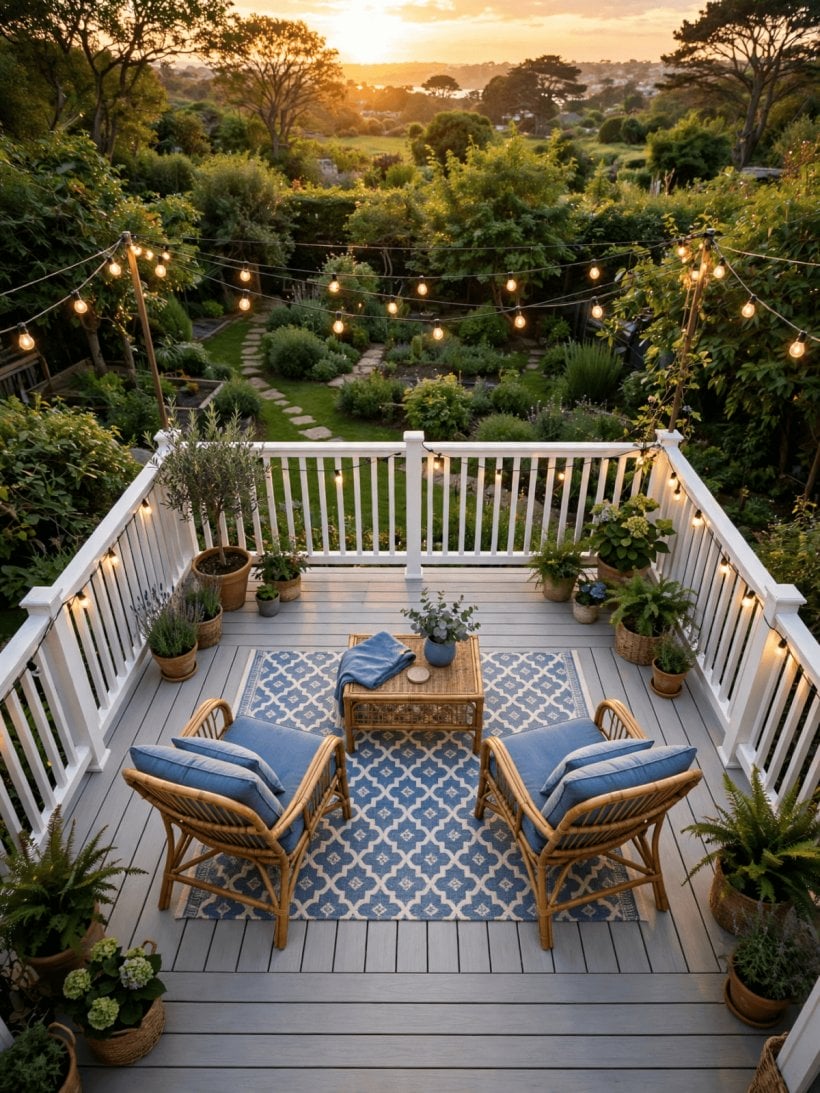
57. Six-seat classic layout. A rectangular table near the house door keeps food runs short and the zone feeling sociable.
58. Round table corner. A round table in a sunny corner suits slow breakfasts and takes up less visual space.
59. Pergola over dining. A simple pergola frames the eating zone and carries shade cloth, climbers or festoon lights happily.
60. Sail shade zone. A removable shade sail cools the table at midday and comes down when you want the stars.
61. Outdoor kitchen edge. A worktop run along one edge, planned with qualified help for any services, keeps cooking outdoors sociable.
62. Bench seating one side. A fixed bench along the table saves space, seats extra friends and stores cushions underneath.
63. Bistro set for small decks. A folding two-seat set proves even the smallest composite platform can host coffee and cake properly.
64. Dining under the slope. On sloping plots, tuck the table on the level nearest the house and let the view do the decorating.
9. Lounging Zones, Planting and Cosy Corners
The lounging zone is where the deck earns its keep on ordinary evenings, not just parties. Think in terms of sun at the hour you will actually use it, and borrow the calm, planted thinking of Zen interior design ideas for tiny houses.
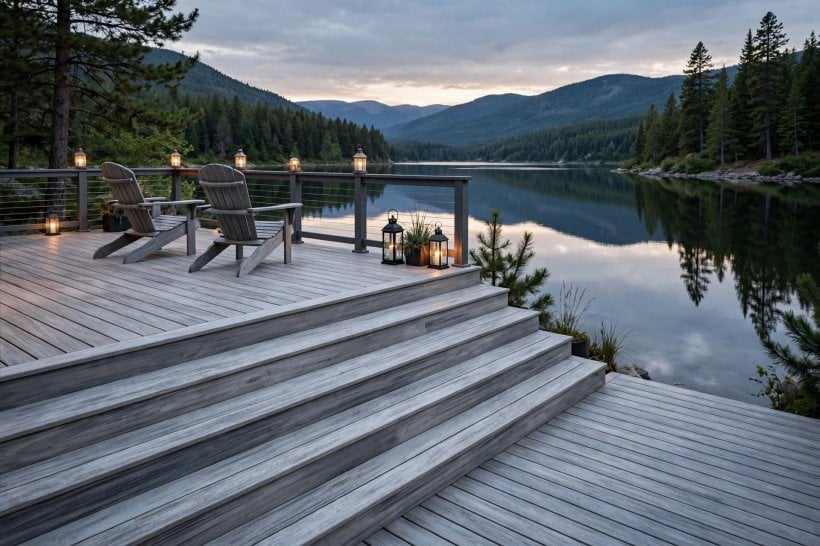
65. Two loungers, sun side. A pair of loungers on the sunniest edge is the simplest luxury a deck can offer.
66. Sofa corner with rug. An outdoor sofa and rug create a true living-room zone, anchored away from the dining traffic.
67. Fire feature focal point. Where local rules and maker guidance allow, a fire feature extends deck evenings deep into autumn.
68. Planters as walls. Big planters at the deck edge give privacy, greenery and a sense of enclosure without building anything.
69. Hot tub platform. A reinforced, professionally planned platform zone can work well; always get structural advice for the weight involved.
70. Reading nook. One good chair, a side table and shade in the quietest corner becomes the most-used seat in the garden.
71. Hammock posts. Sturdy posts planned into the build give a hammock a home without relying on trees being the right distance.
10. Finishing Details: Light, Storage and Simple Care
The last four ideas are unglamorous and decisive. Decks fail on details long before they fail on boards, so finish the planning with light, storage and a care routine you will actually keep, in the practical spirit of the how to build your own tiny house guide.
72. Recessed deck lights. Small lights set into boards or risers mark edges and steps and make the deck glow after dark.
73. A storage bench by the door. Cushions, blankets and garden games live here, two steps from where they are used.
74. Hose and wash routine. Composite asks little: a sweep, an occasional wash with soapy water as the maker advises, and leaves cleared from gaps.
75. Leave room to grow. Plan the deck a touch simpler than your grandest idea; zones and planting can evolve, but the platform should serve from day one.
Final Considerations
Seventy-five ideas is a menu, not a shopping list. The best decks pick one board colour with confidence, one railing that suits the view and the rules, and two or three clear zones for eating, lounging and passing through. Everything else is seasoning. Sketch your garden, mark the sun’s path at the hours you will use the deck, and let those two drawings choose for you.
Before building, gather samples, walk on them barefoot, and check the current guidance for your area on raised decks, railings and any services you plan to run. Prices vary widely with size, height and finish, so compare like-for-like quotes and favour clear, written scopes of work. Do that, and your search through composite deck pictures will have ended the best way possible: with a real deck outside your door, asking almost nothing of you but company.


0 Comments