
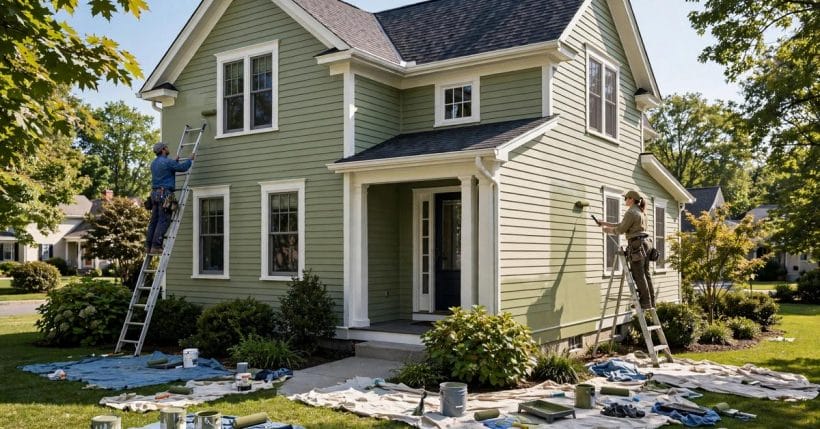
Two houses on the same street, painted in the same month, can carry quotes that barely resemble each other — and both painters can be honest. The difference is not the paint. It is everything the paint has to cover, climb and survive.
This guide explains the cost to paint exterior of house honestly: not a calculator pretending to know your walls, but the drivers that move every real quote, stated in general terms, and the questions that make local quotes comparable.
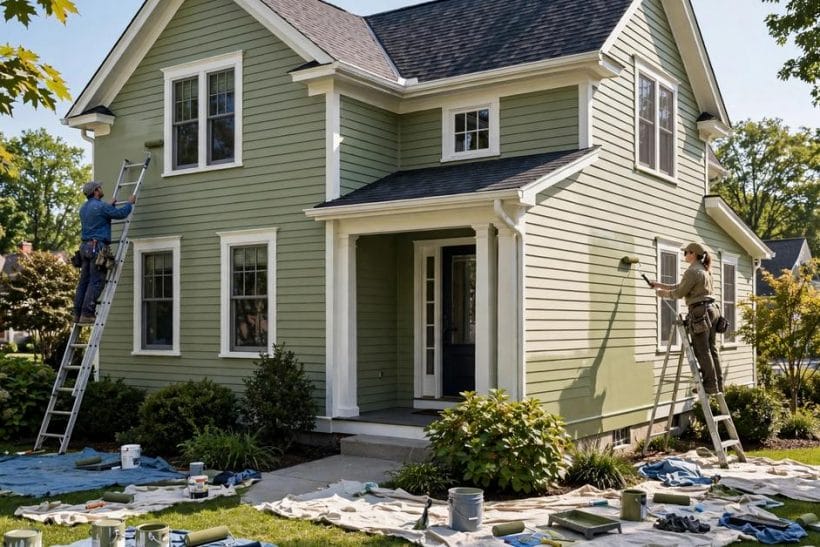
1. Exterior Paint Job Cost at a Glance
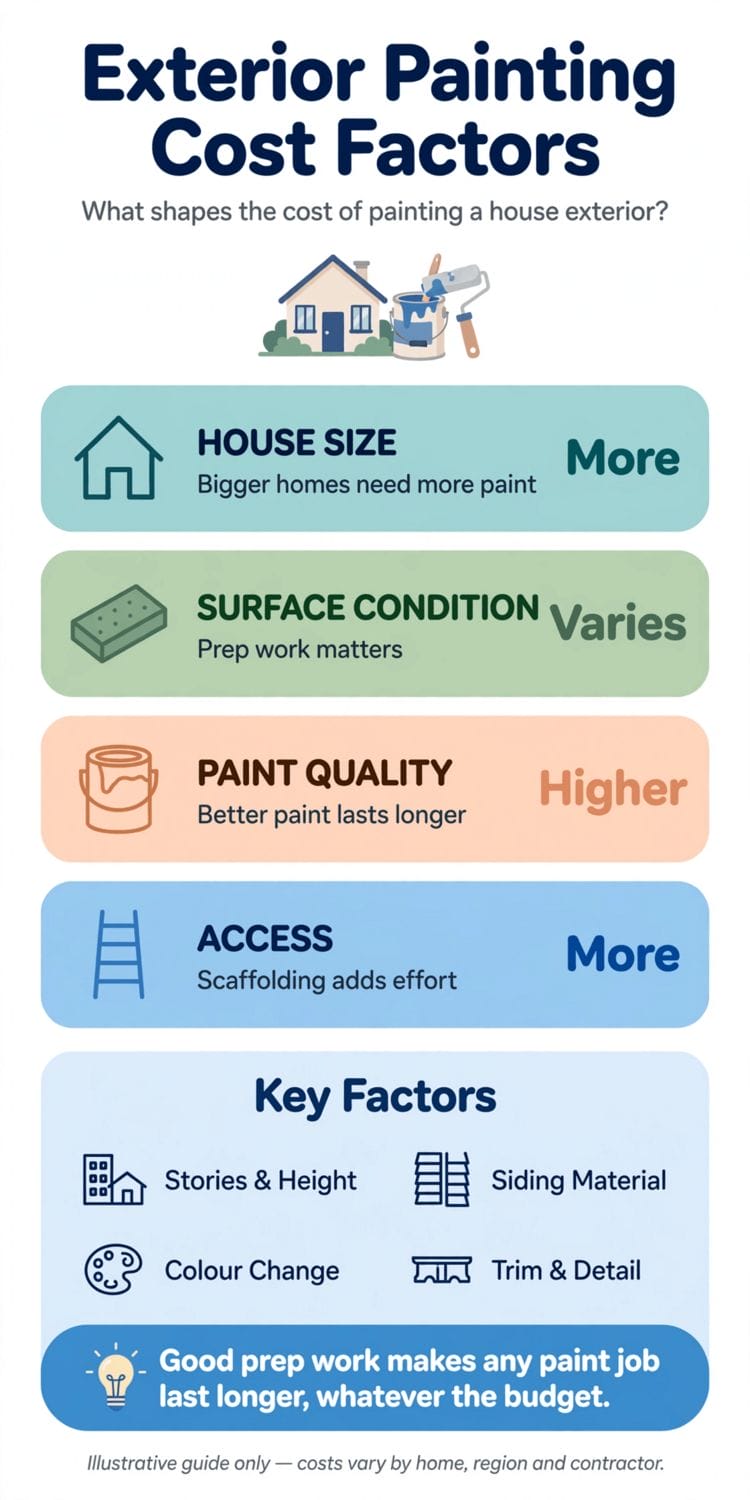
The central entity is the exterior paint job: the renewal of a house’s outer skin, whose cost attributes are the size and shape of the building, the condition of its surfaces, the preparation they demand, the paint system chosen, the access the work needs, and the labour that ties them together. Any estimate that names a figure before it has weighed those attributes is guessing with arithmetic. Read the drivers first — size and storeys, prep and condition, paint quality, access and local labour — and then collect quotes for your own house, in your own area, because exterior painting is priced house by house and place by place, never from a national average. The colour and finish side of the decision lives in the wider exterior family: coastal exterior home ideas for sea-light palettes, gray exterior home ideas for the neutral range, and blue exterior home ideas for the bolder end — this post stays on what the work costs and why.
| Question | Short answer |
|---|---|
| What decides the total most? | The painted area and its condition: how much wall there is, how tall it stands, and how much preparation it needs before paint can hold |
| Why do quotes for one house differ? | Because quotes include different things — prep depth, coats, trim and details, access equipment and repairs are in one quote and missing from another |
| Does better paint pay? | Generally, yes: labour is the larger share of most jobs, so a longer-lasting paint system usually costs less per year of service |
| Can this guide give my figure? | No — and no honest guide can. It gives the drivers; your figure comes from local quotes measured against them |
| What is the money mistake? | Choosing on the headline figure alone, then paying again sooner when thin prep and thin paint fail early |
2. What Decides the Total in the First Place
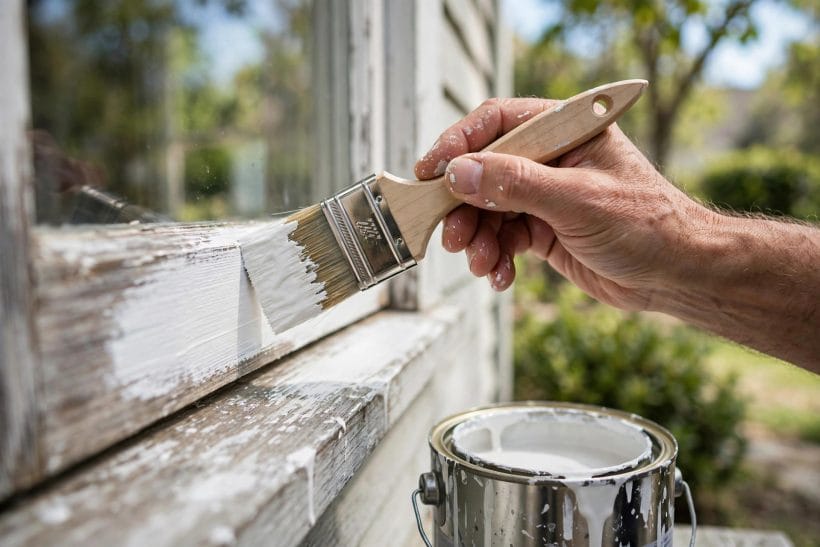
Every exterior paint quote is built from the same small set of drivers, and the brushwork in the gallery photograph — a hand cutting in carefully around old timber — is where several of them meet. The painted area sets the scale: walls, gables, soffits, fascia and trim all consume paint and hours. The condition of those surfaces sets the preparation, and preparation is where honest quotes grow and cheap ones quietly shrink. The paint system sets both the material cost and how long the result lasts. Access sets the equipment: a bungalow painted from a step ladder and a tall house painted from scaffolding are different jobs wearing the same name. Labour, finally, is usually the largest single share, which is why the same house costs different amounts in different places — painters price their time by their local market, not by the paint manufacturer’s label.
Hold those five drivers — area, condition, paint system, access, labour — in mind and every section that follows is a closer look at one of them. A quote that explains itself in those terms is a quote you can compare; a quote that is only a figure is a quote you cannot.
One more truth belongs at the start: exterior painting is partly weatherproofing, not merely decoration. The paint film is the house’s raincoat — it sheds water off timber, seals the joints where damp would enter, and slows the sun’s slow bleaching and cracking of everything beneath. That is why the economics of the job are never just about how the street sees the house. A finish allowed to fail does not merely look tired; it admits water, and water admitted becomes rot, and rot becomes carpentry bills that dwarf the painting quote that was postponed. Painters know this, which is why good ones talk about condition and preparation before they talk about colour. When you weigh a quote, weigh it as maintenance bought by the year: the relevant question is rarely what the job costs, but what each year of a sound, well-prepared finish costs — and by that measure, thorough work is almost always the bargain on the page.
3. Size, Storeys and the Shape of the House
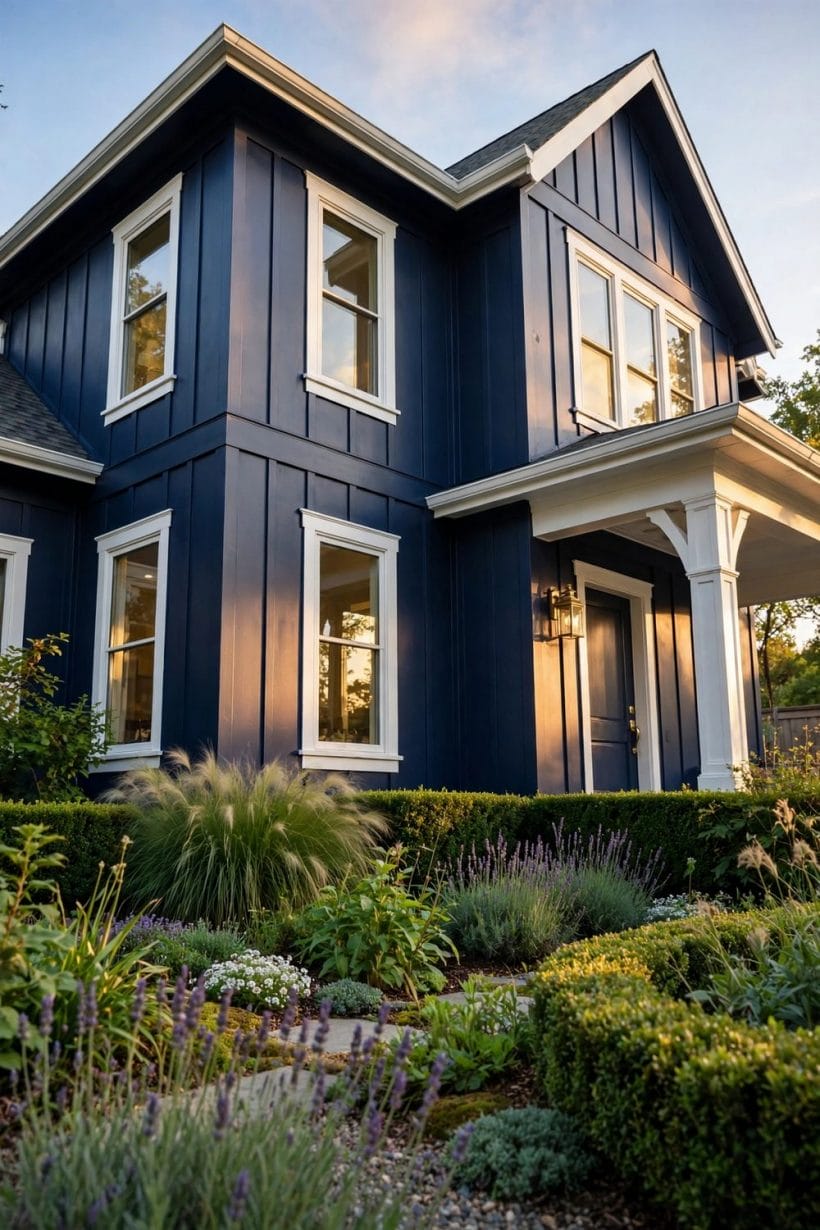
Size is the driver everyone expects, and it works in two ways at once: a bigger house has more wall to coat and more wall to prepare. Storeys multiply more than area. A second storey adds height, and height adds slower working, longer ladders or hired access equipment, and more care around roofs and windows — so two houses with similar floor plans can price quite differently when one spreads out and the other stacks up. Shape matters too. A plain rectangular elevation paints quickly; a house broken into gables, bays, porches and dormers asks for constant cutting-in, masking and ladder moves, and the hours follow the complexity. Trim is the quiet multiplier: every window surround, corner board and length of fascia is slow, skilled brushwork, and a house rich in painted trim carries a richer quote than its wall area alone suggests. When you compare your house with a neighbour’s painted price, compare storeys, shape and trim before you compare figures — if those differ, the figures were never going to match.
4. Colour, Paint Quality and the System on the Wall
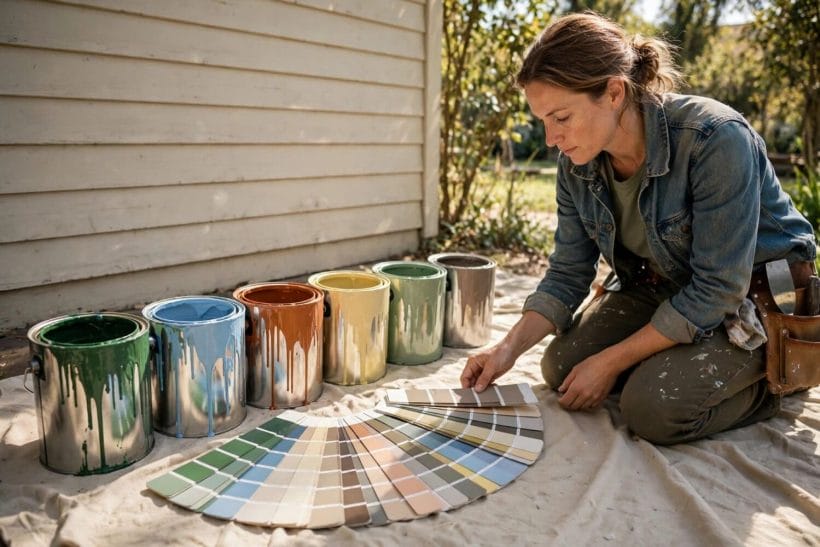
The painter in the gallery photograph is doing the cheapest valuable work on the whole job: choosing carefully before anything is opened. Colour itself moves cost in one specific way — change. Repainting in a similar colour covers kindly; a dramatic change, dark over pale or pale over dark, can demand extra coats before the old colour stops shadowing through, and extra coats are extra paint and extra hours. Colour choice is also where this post hands over to the colour guides: taupe colour for the warm neutral family that covers and forgives well. Paint quality is the other half of the section. Exterior paints are sold in grades, and the better grades generally carry more of what makes paint last — the solids that build a durable film and the chemistry that resists sun and weather. Because labour dominates most quotes, stepping up a grade usually adds a modest share to the total while adding years to the finish: the expensive paint job is the one repeated too soon. What matters is the system — primer where the surface needs it, and the recommended coats of finish — applied as the manufacturer directs, not a single hopeful coat stretched thin.
5. Prep and Condition: Washing, Scraping and Repairs
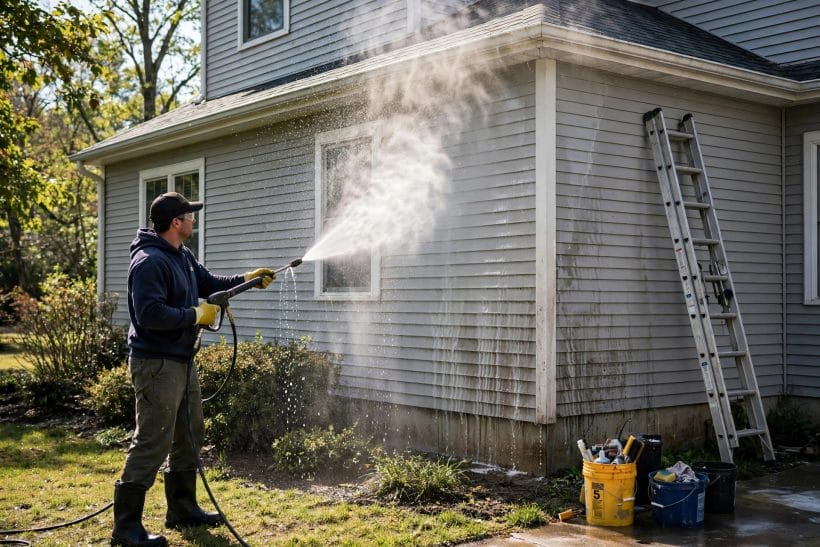
Preparation is the driver that separates a paint job from a paint coating. Paint does not fail first; the surface under it does — and the gallery photograph’s pressure washing is the opening move of doing it properly. A sound exterior job generally runs through the same honest sequence: wash the walls so the new paint meets a clean surface rather than a layer of dirt and chalk; scrape and sand what is loose, because paint cannot grip what is already letting go; fill and repair small failures; replace or repair rotten timber rather than painting over it; seal gaps where water enters; and prime bare or repaired areas so the finish coat bonds evenly. Each of those steps is labour, and a house whose paint has been neglected asks for all of them at full weight. This is why condition can outweigh size in a quote: a small house with peeling, weather-worn siding can cost more to paint well than a larger house whose old finish is tired but sound. When a quote seems high, ask what preparation it contains before you judge it — and when a quote seems low, ask the same question twice.
Repairs deserve their own sentence in any quote, because they are the cost that hides. A painter who finds rotten sill boards, failed render or rusted metalwork mid-preparation faces a choice — repair it properly, or coat it and leave the problem sealed in paint for the next owner of the ladder. Honest quotes either include an allowance for the repairs the painter can already see, or state plainly how discoveries will be priced and agreed before work continues. Ask which of those your quote does. Rot does not negotiate, and the cheapest moment to fix a board is when the scaffold is already standing and the surface is already open — the dearest is two winters later, from the beginning, all over again.
6. Surfaces: Siding, Brick, Render and Trim
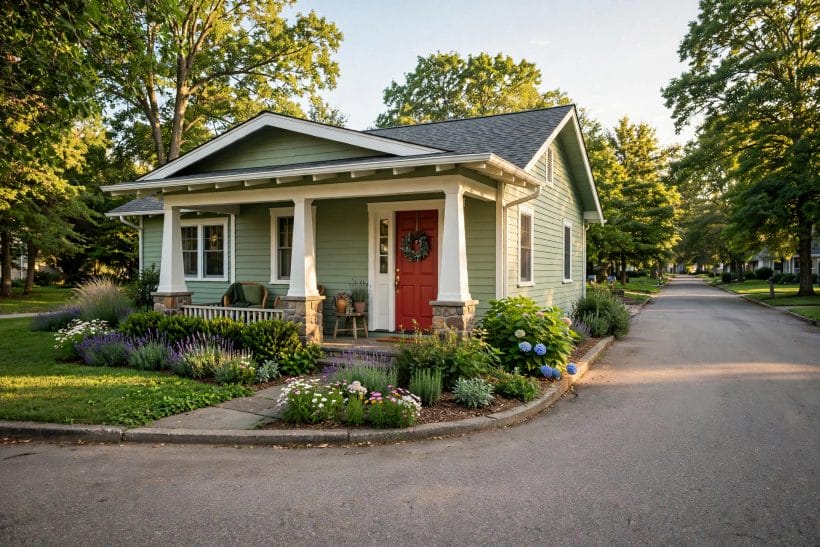
Different walls drink paint differently, and the finished bungalow in the gallery photograph — smooth siding, crisp white trim, a door painted as an accent — is the tidy end of a spectrum. Timber siding is the classic painting surface: it takes paint well, asks for care at joints and end grain, and punishes neglect with rot that must be repaired, not coated. Fibre-cement and similar boards are stable and thirsty in their own way, generally holding paint for long stretches once properly primed. Brick is painted less often and more reluctantly: unpainted brick asks for little, while painted brick commits the house to repainting forever, and masonry paints and preparation differ from siding work. Render and stucco bring texture that swallows paint and slows the roller, with cracks to fill before coating. Metal and previously painted surfaces each carry their own preparation logic. The practical point for quotes: a price built on one surface does not transfer to another, and a painter who asks what your walls are made of before quoting is a painter pricing the real job.
7. Access, Height and the Scaffolding Question
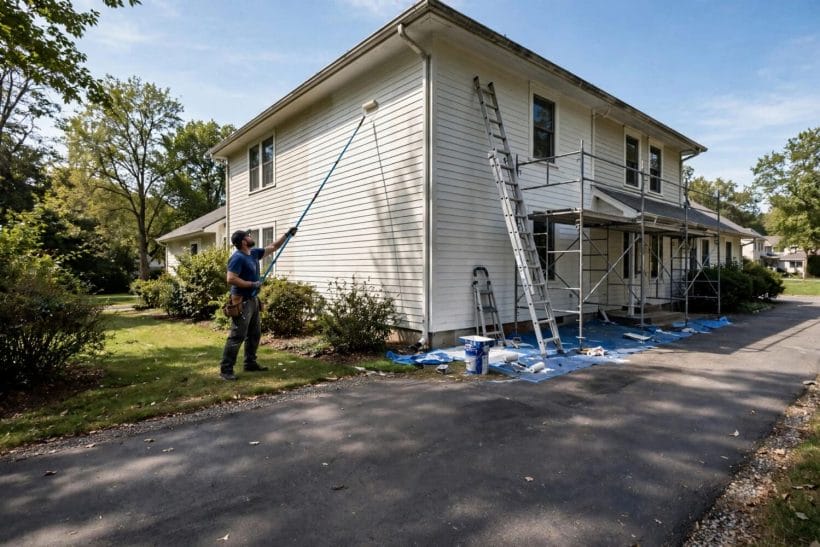
Access is the driver homeowners forget until it arrives on a truck. The tall house in the gallery photograph shows the reality: ladders, scaffold boards and a painter working methodically along an elevation that cannot be reached from the ground. Ground-floor walls are quick and cheap to work on; high gables, walls above conservatories and roofs, and elevations over sloping ground all slow the work and raise its equipment needs. Scaffolding, where the job needs it, is a real cost with real benefits — a stable platform means steadier, safer, better work than a ladder leaned at an angle, and painters price it into the quote or hire it as a visible extra. Ground conditions matter quietly too: soft planting, tight side passages and close boundaries all constrain where ladders and towers can stand. When you collect quotes, make sure each painter has seen the same access reality — the high, awkward elevation included — because the cheapest quote is sometimes simply the one that has not yet noticed the hard side of your house.
8. Labour, Method and the Painter’s Day
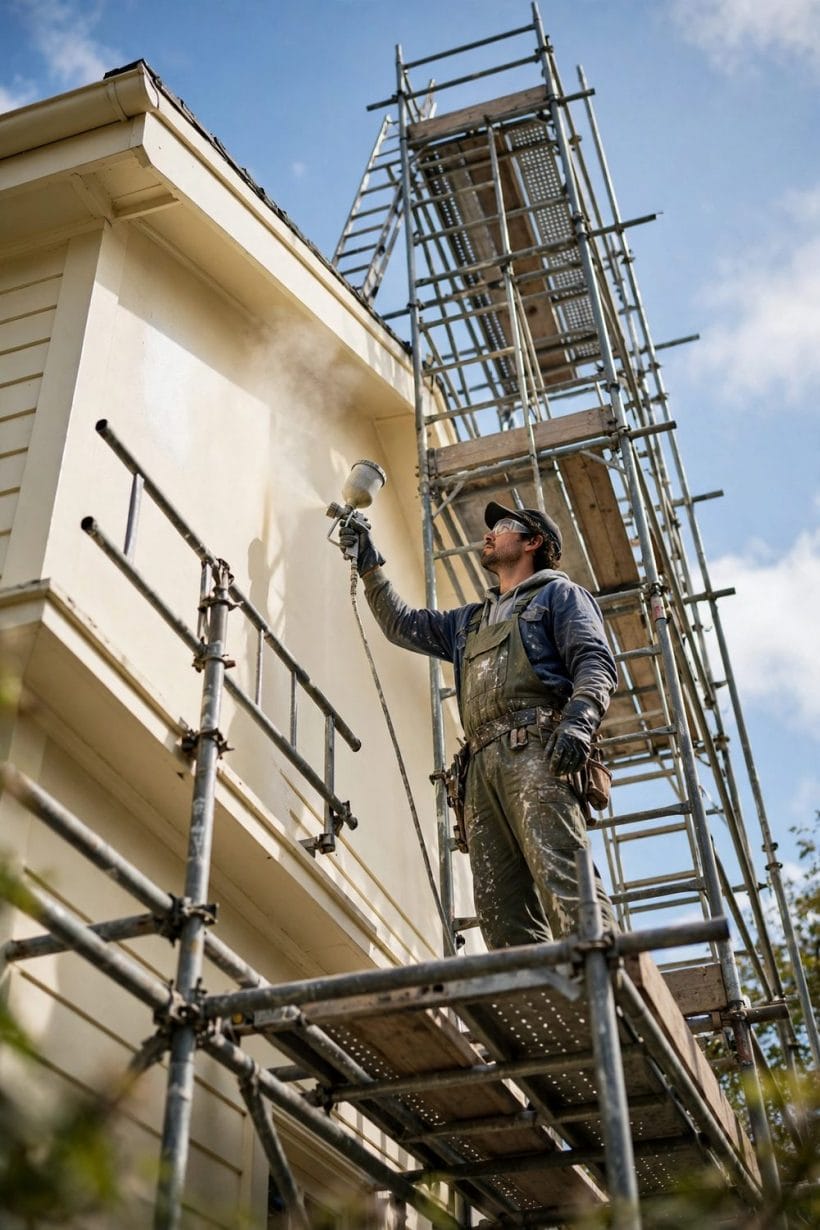
Most of what you pay for is skilled time, and the second pin photograph — a painter spraying a high wall from a scaffold tower — shows one of the two great methods that time can take. Spraying applies paint quickly and evenly over large, well-masked areas, and suits broad siding and shuttered details; brushing and rolling work more slowly but press paint into texture, suit older and rougher surfaces, and need less masking around gardens, paths and neighbours. Many good jobs combine both. What you are buying either way is a crew’s days: their number, their experience and their local rate, which is why identical houses in different towns carry different prices and why an unusually cheap quote usually means fewer days — less prep, fewer coats — rather than a generous painter. Ask how many coats, how many painters and how many days a quote assumes. Those three answers, more than the figure, tell you what you are actually buying, and they are the same discipline Togaze applies to indoor projects in guides like door installation cost, where the fitting labour is likewise the honest core of the price.
9. Timing, Weather and Reading the Quote Itself
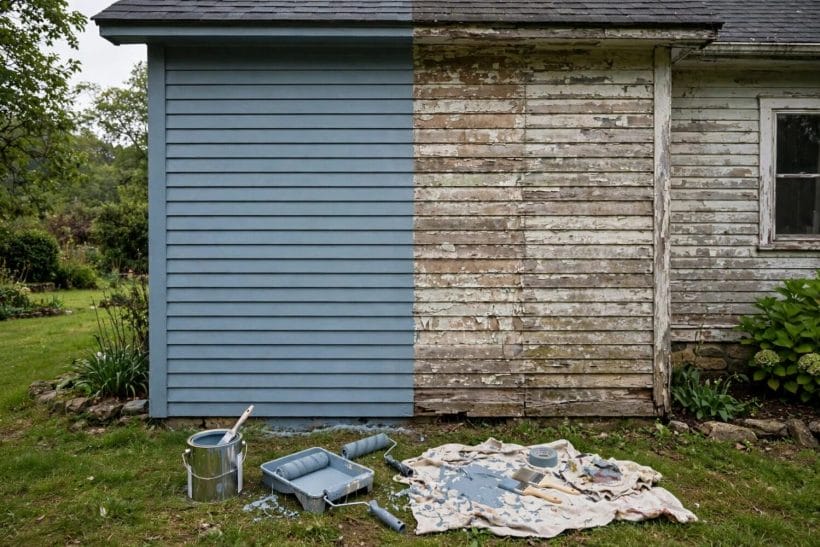
The gallery photograph’s half-finished wall is the moment every quote is trying to price: the line between the weathered past and the painted future, and all the work hiding along it. Timing shapes what you pay in softer ways. Painters are busiest in the warm, dry seasons, and a booked-out painter can hold firm prices where a quiet one may sharpen a pencil — but weather windows matter more than bargaining: exterior paint needs the conditions its manufacturer specifies, and a job rushed into cold, wet or blazing weather pays for the shortcut in early failure. Season and region also decide how long a finish lasts, which belongs in any cost conversation: a paint job is bought by the year, not by the day. Then, read the quote itself as a document. A useful quote states the preparation, the paint system and coats, the surfaces included — walls, trim, doors, soffits — the access arrangements, and what is excluded. Two quotes that both state those things can be compared line by line; a single-figure quote can only be believed or doubted, and doubt is not a pricing strategy.
There is also the question of who paints. A homeowner with time, a head for heights and a modest house can take the work on, and the saving is real — but it is a saving of labour bought with weekends, hired access and a learning curve written on the most visible walls the family owns. The honest comparison is not the painter’s figure against zero; it is the painter’s figure against your own days, your own safety on ladders, and the finish a practiced hand leaves behind. Many owners split the difference sensibly: professionals for the high, weather-beaten elevations, themselves for the low garden wall or the porch. Whichever way you divide it, the drivers in this guide price both sides of the decision.
10. Pulling It Together: Comparing Quotes and Spending Well
Collecting quotes well is a method, not a haggle. Give every painter the same brief — the same surfaces, the same colour intention, the same standard of preparation — and ask each to itemise along the drivers this guide has covered: area and access, prep, paint system and coats, labour and days. Itemised quotes reveal themselves: the one missing its prep line, the one whose coats have quietly halved. Spend where the years are: preparation first, paint quality second, and only then consider trimming scope — painting the sheltered rear elevation a season later is a legitimate saving, while thinning the prep on the weather side is a debt. Keep a contingency for what opening up reveals, because rotten boards and failed render announce themselves mid-job, and a painter who flags them early is protecting your money, not spending it. The same drivers-first thinking governs Togaze’s other cost guides, from detached garage cost to the wider surveys under home design ideas — the figures are always local, but the anatomy of a fair price is the same everywhere.
Final Considerations
A last word on records. Keep the paint names and colours, the system used and the date of the work somewhere the house keeps its papers, and photograph each elevation when the scaffold comes down. The next painter — perhaps you, perhaps a stranger pricing the job years from now — will read that record the way this guide has taught you to read a quote: as the starting evidence of condition, system and care. Houses remember what their owners write down, and a documented paint history quietly raises every future conversation about the exterior, from repainting to selling.
An exterior paint job is priced by its drivers, not by its paint: size and storeys, the condition of the surfaces, the preparation they honestly need, the quality of the system applied, the access the house allows, and the local labour that does the work. This guide has deliberately given no figures, because a figure without your house, your surfaces and your town attached to it would be a decorated guess. Gather local quotes, itemised against the drivers, compare what each one includes rather than what each one totals, and spend first on the preparation and paint that decide how many years pass before you pay again. That is the whole economics of the painted house — drivers understood, quotes compared like for like, money spent where the years are — and it is enough to make you the best-informed customer your painter meets all season.


0 Comments