

Dark gray is the colour that makes a house look instantly composed — modern without trying too hard, calm against green planting, and dramatic against snow or a pale sky. A well-planned dark grey house is all about the pairings around the grey.
These 75 ideas cover siding materials, trim colours, roof pairings, doors, stone and lighting, so you can build a scheme that suits your house and your street.
1. Dark Grey House at a Glance
| Element | Strong Pairing | Why It Works |
|---|---|---|
| Siding | Charcoal fiber cement, deep grey vinyl or painted brick | A rich mid-to-dark grey reads elegant rather than gloomy |
| Trim | Crisp white, soft off-white or matching dark trim | White sharpens the outline; dark-on-dark looks sleek and modern |
| Roof | Black or dark charcoal shingles, or a standing-seam metal roof | A roof close in tone keeps the whole silhouette calm |
| Front door | Natural wood, black, or one bold colour | The single accent every grey scheme needs |
| Accents | Stone, cedar and black metal details | Texture stops a flat colour scheme feeling flat |
| Landscaping | Green planting, pale gravel, warm lighting | Contrast and warmth balance the cool grey |
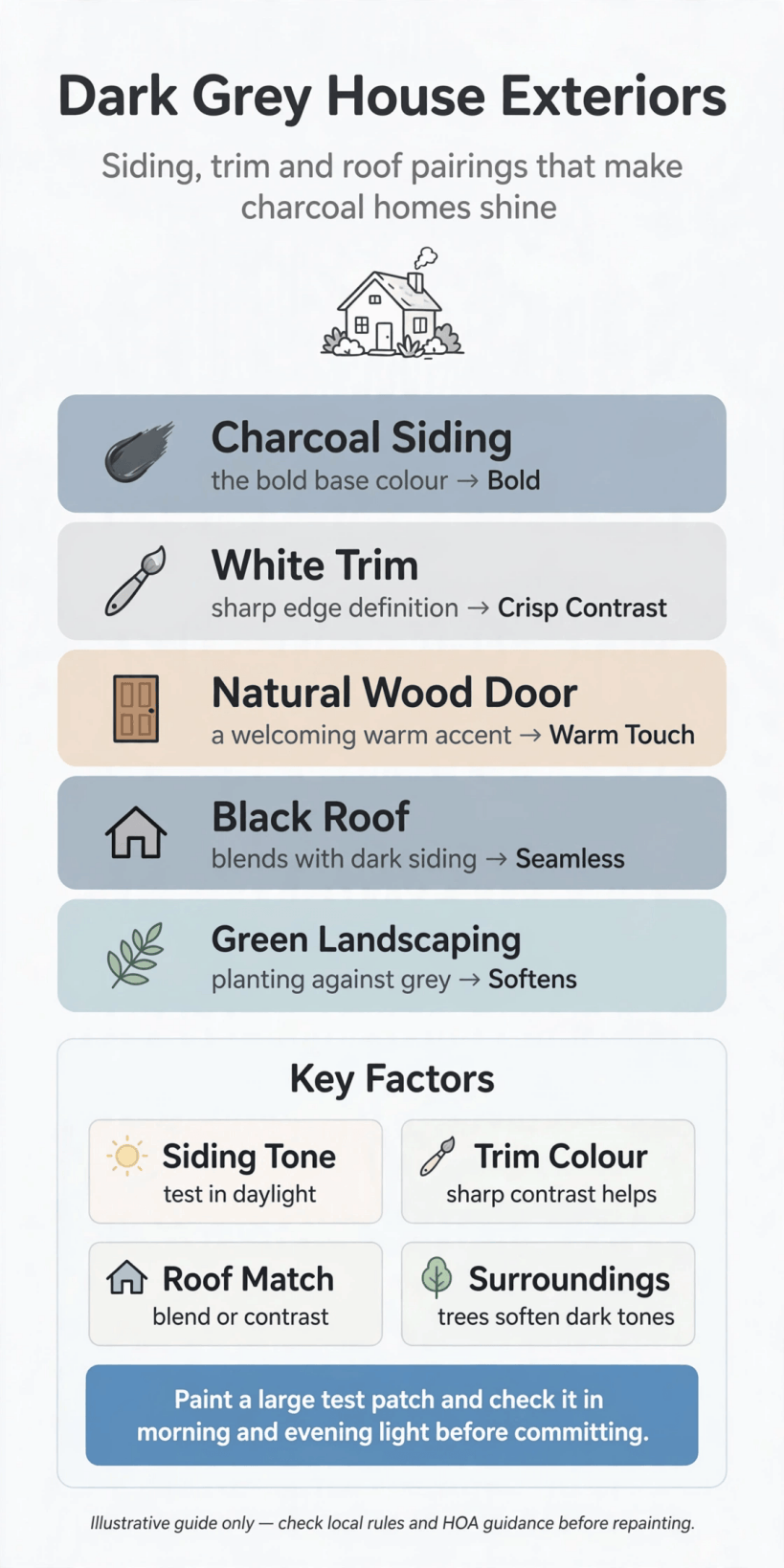
The scheme at a glance — grey siding, sharp trim, a calm roof and one warm accent — before the detailed pairings below.
Grey is a family, not a single colour: blue-greys feel cool and coastal, green-greys feel earthy, and warm greiges sit happily beside brick and stone. The same paint can look two shades lighter on a sunny south wall than in shade, which is why every section below keeps returning to samples, daylight and the existing fixed elements of the house — roof, stone, driveway and neighbours — that the grey has to live with.
2. Choosing the Right Shade of Grey
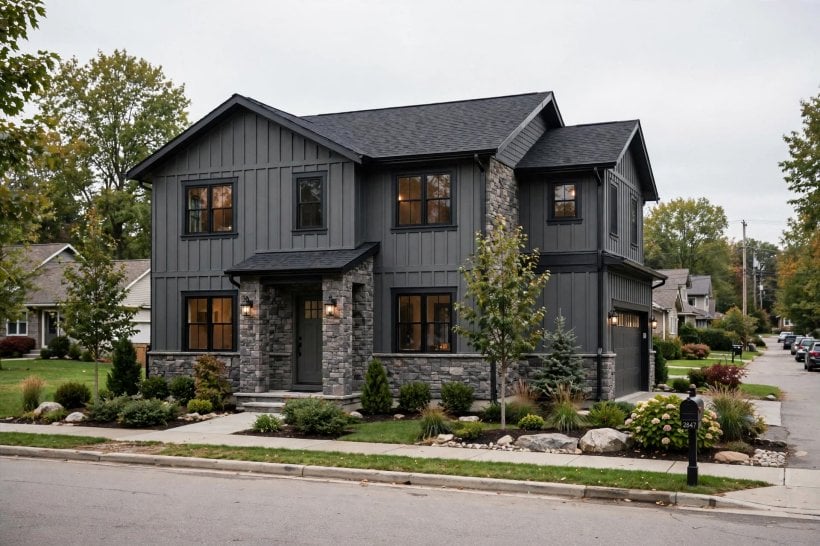
Start with the undertone. Hold paint samples against your existing roof and any stone or brick that is staying, in morning and evening light: a grey that looks neutral on the card can turn blue beside warm stone or green beside lawn reflections. Mid-charcoal is the forgiving middle ground — dark enough for the crisp, tailored look, light enough to show the building’s details and shadows rather than swallowing them.
Very dark greys, close to black, look stunning on simple modern shapes and on houses with generous glass, but they show dust, pollen and salt more readily and can flatten a detailed facade. Slightly softer graphite keeps the drama while staying kinder in daily life. Whatever you choose, paint a large test area — a full board length or a sheet of lining paper pinned up — and live with it for a couple of days before committing.
Always check the exterior paint or siding manufacturer’s guidance for surface preparation, primer and the light reflectance considerations for dark colours on your specific material, because some products have recommendations about very dark shades on certain sidings.
3. Siding Materials in Dark Grey
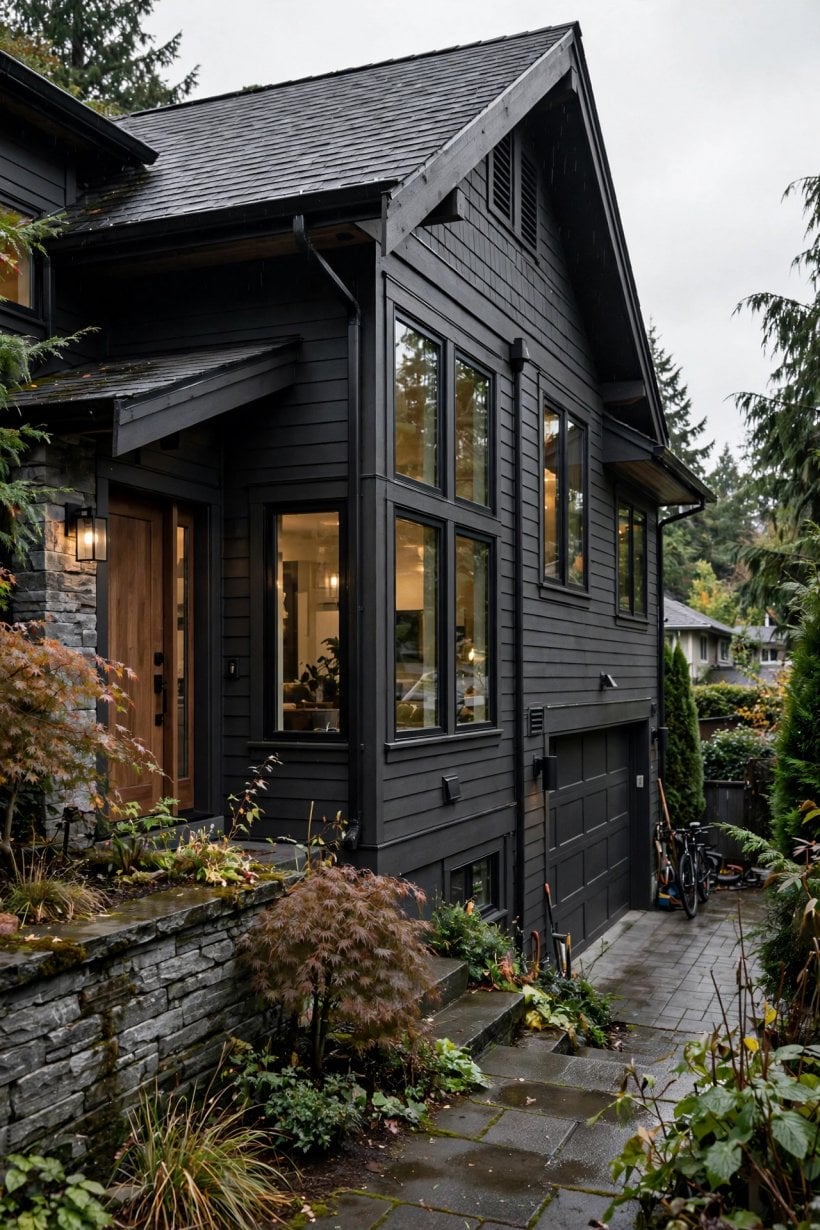
The material changes the colour as much as the pigment does. Horizontal lap siding in charcoal throws fine shadow lines that give a traditional house quiet rhythm; board-and-batten in the same shade reads more vertical and rustic-modern; shingle siding softens the grey with texture; and smooth panels or stucco make it sleek and architectural. Fiber cement and engineered wood take factory-applied dark colours well, vinyl comes in deep greys from most ranges, and painted brick in graphite is a transformation for tired masonry — confirm preparation and coating systems with the manufacturer for each.
Mixing two materials in related greys adds depth without adding colours: board-and-batten on gables over lap siding below, or a stone-clad ground floor under grey boards. Keep the tones either clearly matched or clearly different — near-miss greys side by side look like a mistake.
The front elevation of even a tiny barn house interior project follows the same logic outside: one main material, one supporting texture, nothing competing for attention.
4. Trim Pairings That Sharpen the Grey
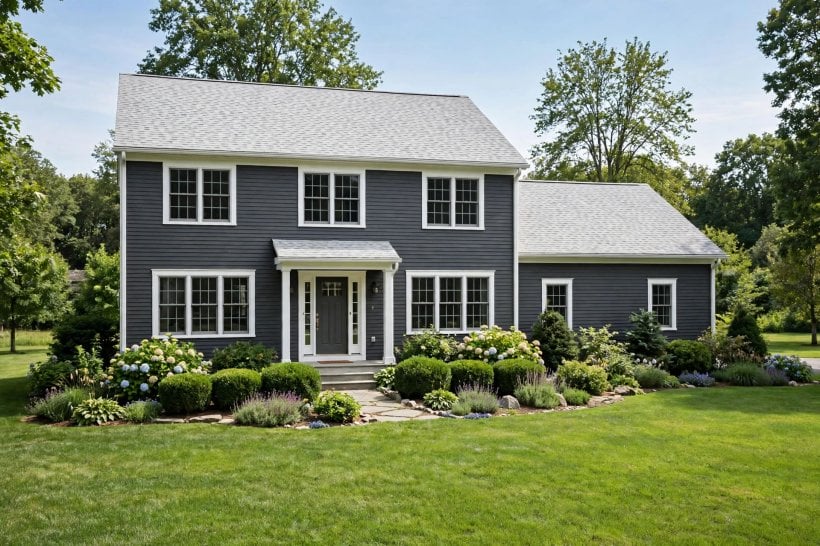
White trim is the classic partner: it outlines windows, corners and eaves, makes the grey look richer by contrast and keeps the whole house feeling fresh. Choose pure white for a crisp modern edge or a soft off-white where the grey is warm-toned, and carry the same trim colour through window frames, fascia, corner boards and the garage door for a scheme that looks designed rather than assembled.
Dark-on-dark is the confident alternative: trim painted the same grey as the siding, or a shade deeper, produces a monolithic, contemporary silhouette that suits simple forms and big windows beautifully. The details then come from texture and shadow instead of contrast. Black trim sits between the two — darker than the siding, sharper than matching trim — and pairs especially well with black window frames.
Whatever the pairing, keep the number of exterior colours to three at most: siding, trim and one accent. More than that and even the best grey loses its calm.
5. Roof Pairings for Grey Houses
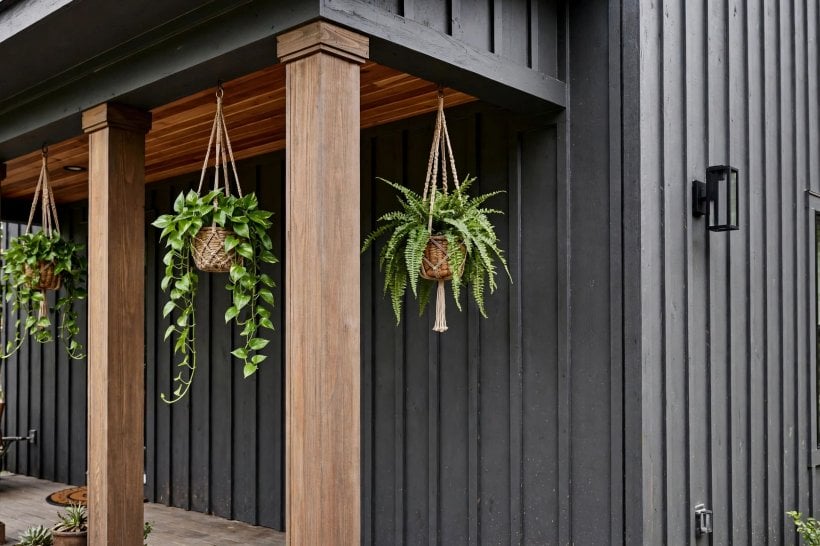
The roof is the largest surface after the walls, and on many houses it is the fixed element the grey must be chosen around. Black or dark charcoal shingles are the safest marriage with dark grey siding — close in tone, they let the house read as one composed shape. A standing-seam metal roof in black or dark grey sharpens a farmhouse or modern profile, and its clean lines echo board-and-batten siding particularly well.
Lighter grey roofs can work where the siding is at the darkest end, giving gentle separation between wall and sky; weathered wood-look shingles add warmth for rustic settings. What rarely works is a roof and siding at the same mid-tone in different materials — the house turns into an undifferentiated block. Aim for either a clear match or clear contrast in value.
Roofing is a major investment, so if a replacement is due, choose the roof and siding colours together from real samples rather than brochures, and check the roofing manufacturer’s colour guidance alongside your siding choice.
6. Front Doors and Garage Doors
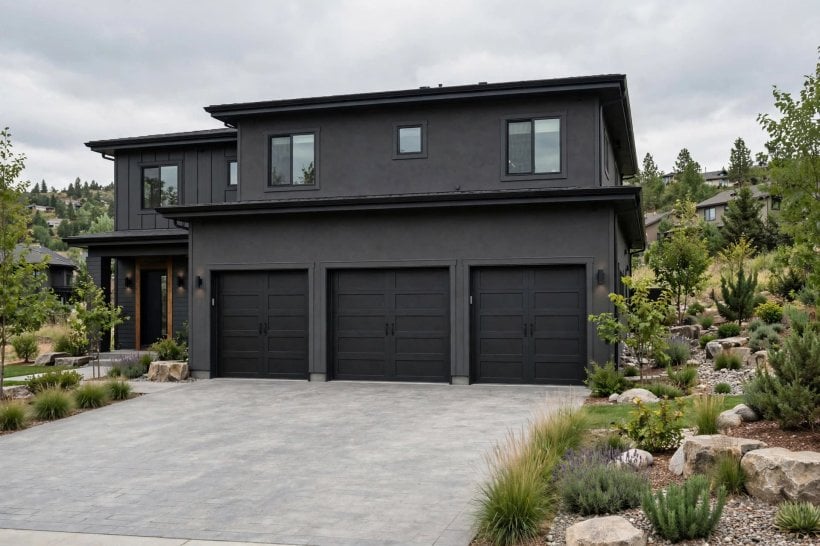
Against grey, the front door becomes the house’s handshake. Natural wood — cedar, oak-look or a warm stained finish — is the most loved pairing, because the warmth flatters the cool grey and the combination suits everything from cottages to new builds. Black is the sleek option, disappearing elegantly into a dark scheme, while one bold colour — deep red, navy, sage or mustard — gives a traditional house its single note of personality. Keep bold to the door alone; the moment the shutters and garage join in, the effect is gone.
Garage doors usually look best quiet: matched to the siding for a seamless modern frontage, painted in the trim colour on traditional houses, or finished as wood-look carriage doors where the style calls for warmth. Hardware in black or brushed metal, a decent-sized house number and a lantern either side of the door complete the entrance at modest cost.
Do not forget the view from the street at dusk: a warm bulb in the porch light makes grey walls glow rather than brood, a detail worth planning alongside the tiny house landscaping ideas that frame the approach.
7. Stone, Wood and Metal Accents
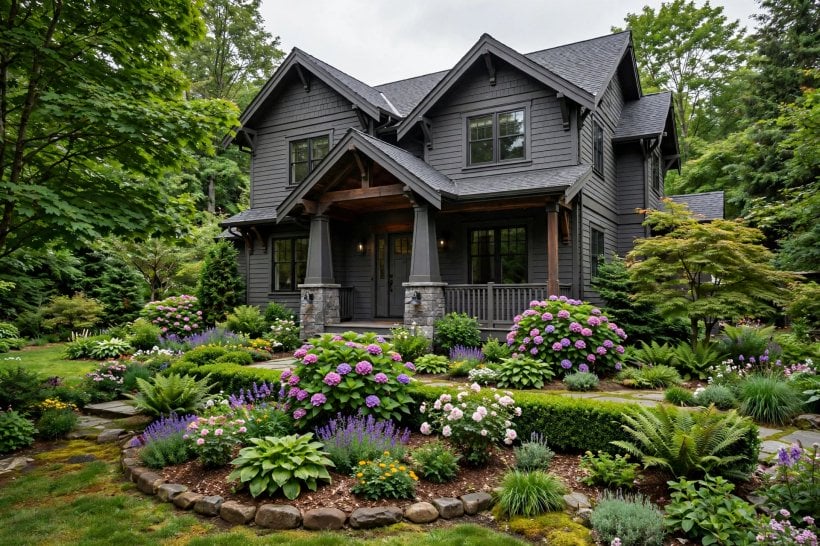
Texture is what separates a sophisticated grey house from a grey box. A stone-clad chimney, porch piers or a ground-floor skirt in grey-toned stone adds weight and permanence; cedar shutters, brackets or a pergola bring the warm note; and black metal — railings, light fixtures, window frames, a standing-seam porch roof — supplies the crisp outline. Each accent should appear at least twice so it reads as a theme.
Stone choice matters: cool grey and blue-grey stones blend seamlessly, while warm tan stones create deliberate contrast that needs the door or wood accents to echo the warmth somewhere. Take siding samples to the stone yard, not the other way round — stone varies by the pallet, and it is the one material you cannot repaint if the tones fight.
Inside a home like this, the same material conversation continues — which is why touring a living room interior design for tiny houses is useful: stone, wood and metal in balanced thirds work indoors exactly as they do on the facade.
8. Windows, Lighting and the Details
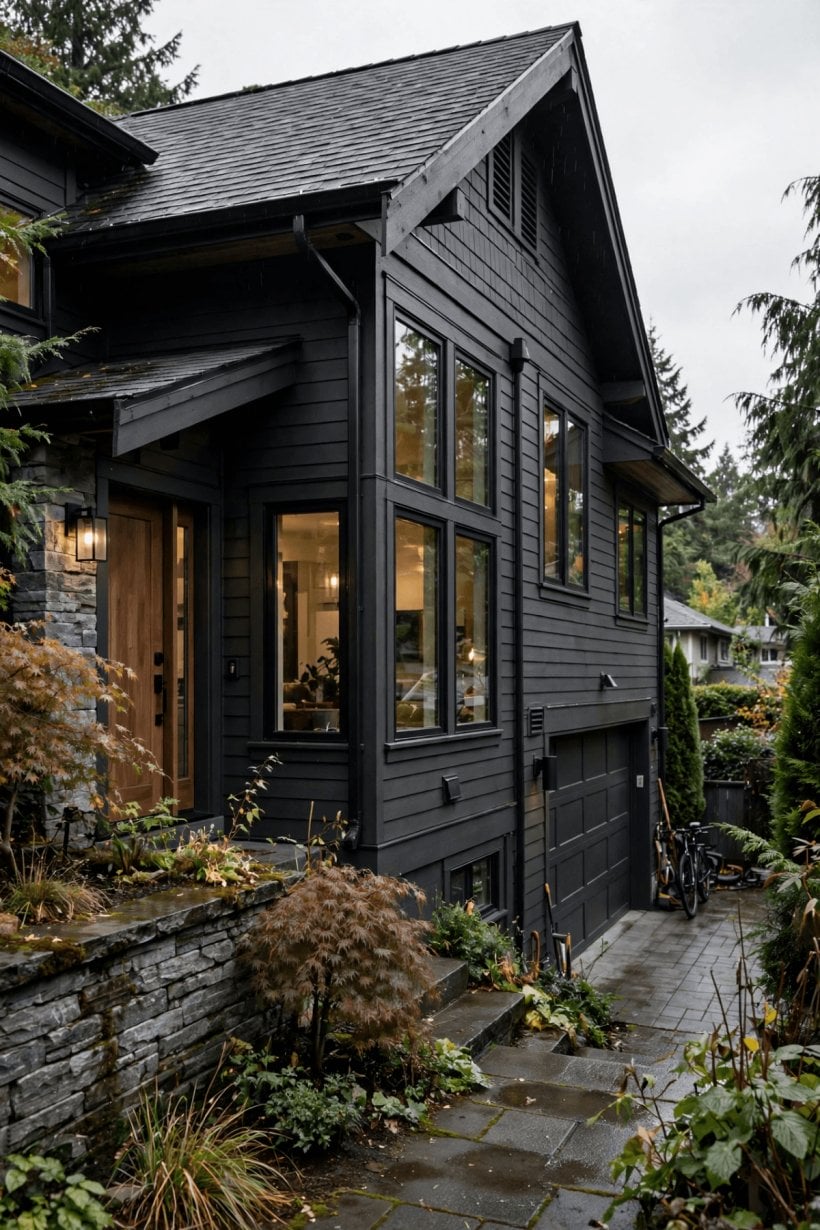
Black window frames against dark grey siding are the defining detail of the modern grey house: the glass reads as part of the architecture, and interiors gain a gallery-like frame for the view. White frames with white trim give the cottage version of the same scheme. Grilles and muntins should follow the house’s style — simple or none for contemporary builds, traditional patterns for colonial and cottage shapes.
Exterior lighting deserves the same design attention as the paint. Choose fixtures in black or dark bronze, sized generously — undersized lanterns are the most common exterior mistake — and place them to wash the walls gently: beside the door, at the garage, and along paths. Warm-white bulbs keep grey friendly after dark.
House numbers, a letterbox and door furniture in one consistent metal finish are the jewellery of the scheme; small, cheap to change, and they make the whole front look finished.
9. Landscaping Against Dark Grey
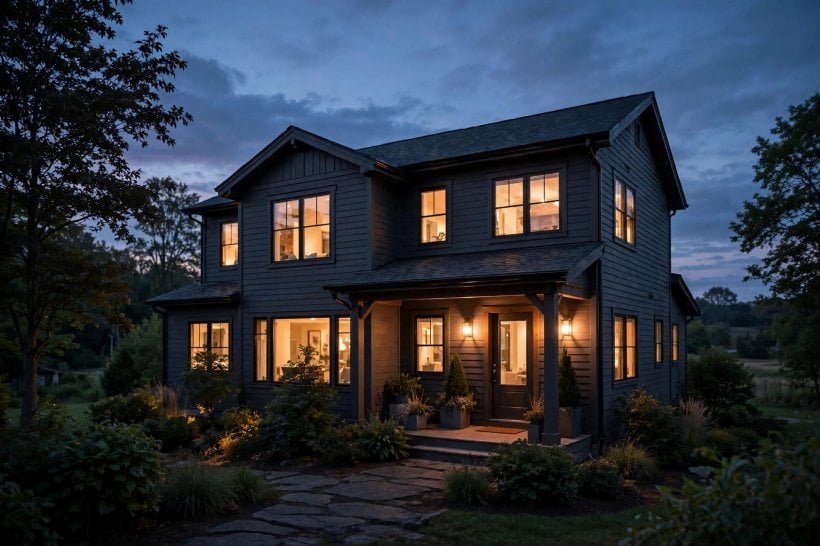
Green is grey’s best friend. Dark walls make lawns look lusher, foliage look deeper and flowers look brighter, so planting that felt ordinary against a pale house becomes a feature against charcoal. Layer evergreen structure shrubs near the walls, soften the base of the house with planting rather than a hard edge, and use pale gravel, light paving or a concrete path to give the eye a bright foreground line.
Silver and grey-green foliage plants echo the house colour beautifully, while white and yellow flowers light up against it; deep purple foliage can disappear, so place it against the pale path or lawn instead. A tree with warm autumn colour near a grey house is a small annual fireworks display — one more reason the setting matters as much as the siding.
For compact plots the principles scale down happily: the planting discipline behind good tiny house landscaping ideas — layered greens, one pale surface, warm light — is exactly what a small grey house needs.
10. Checks Before You Commit, and Keeping It Looking Good
Before ordering a single tin, do the boring checks. If your home sits within a homeowners’ association, conservation area or any local design control, confirm whether exterior colours need approval and what the process is — rules vary widely by place, and it is far cheaper to check first. Look honestly at the street, too: a grey that echoes neighbouring roofs and stone will settle in, while a scheme that fights every house around it can feel exposed rather than elegant.
Then maintain the scheme kindly. Dark siding shows pollen, dust and cobwebs more than pale colours, so plan on a gentle wash-down as the siding manufacturer recommends, and keep the product details of your paint or siding colour on file for touch-ups. Trim and doors, being lighter or glossier, usually want refreshing sooner than the main walls.
Finally, photograph the house from the street in each season before and after. Grey is a colour that changes its mood with light and landscape — snowy, leafy and golden-hour versions of the same house are all worth enjoying, and the photos will remind you why the calmest colour on the street is also the most adaptable.
One last practical thought: build the scheme in the right order. The roof, stone and other fixed elements come first in your thinking, then the siding colour, then the trim, and only then the accents you can change cheaply — door paint, planters, house numbers and light fixtures. That order protects the budget, because the expensive decisions are made with the most information in hand, and the inexpensive ones can still be adjusted if the finished result feels too cool, too dark or too plain once you live with it for a while. Keep a small sample board with your final colours and materials pinned together, and note the exact product names and finishes somewhere safe; future touch-ups then become a ten-minute job instead of a colour-matching expedition. Grey rewards patience more than any other exterior colour: live with the samples, watch them in rain and in sunshine, and trust the pairings that still please you after a full week of weather.
Final Considerations
A dark grey exterior succeeds on pairings, not on the paint card alone: an undertone matched to roof and stone, trim chosen for crispness or calm, one warm accent at the door, texture from stone and wood, and green planting to set it all off. Sample generously, check any local approvals before you start, and the result will be a house that looks composed in every season — quietly confident, and unmistakably yours.

0 Comments