

There is a particular kind of quiet you only find inside old log walls — the smell of timber, the glow of a stone hearth, rooms that feel gathered rather than decorated. A characterful log cabin inside rewards simple, honest styling.
These 75 ideas cover wood walls, fireplaces, kitchens, bedrooms and all the cosy details in between, whether your cabin is a weekend retreat or a full-time home.
1. Log Cabin Inside at a Glance
| Element | Classic Choice | Why It Works |
|---|---|---|
| Walls | Exposed horizontal logs, chinking kept clean and sound | The timber itself is the decoration — texture, colour and history in one |
| Fireplace | Local stone surround, generous hearth, wood store beside it | A real focal point that also heats the main living space |
| Floors | Wide wood planks with woven rugs in traffic areas | Warm underfoot and forgiving of boots, dogs and daily life |
| Furniture | Solid wood, leather, wool and linen in earthy tones | Natural materials sit comfortably against log walls |
| Lighting | Warm lamps, wall sconces and candles for evenings | Soft light flatters timber and deepens the cosy mood |
| Textiles | Plaid blankets, woven cushions, sheepskins and curtains | Layers soften acoustics and add colour without paint |
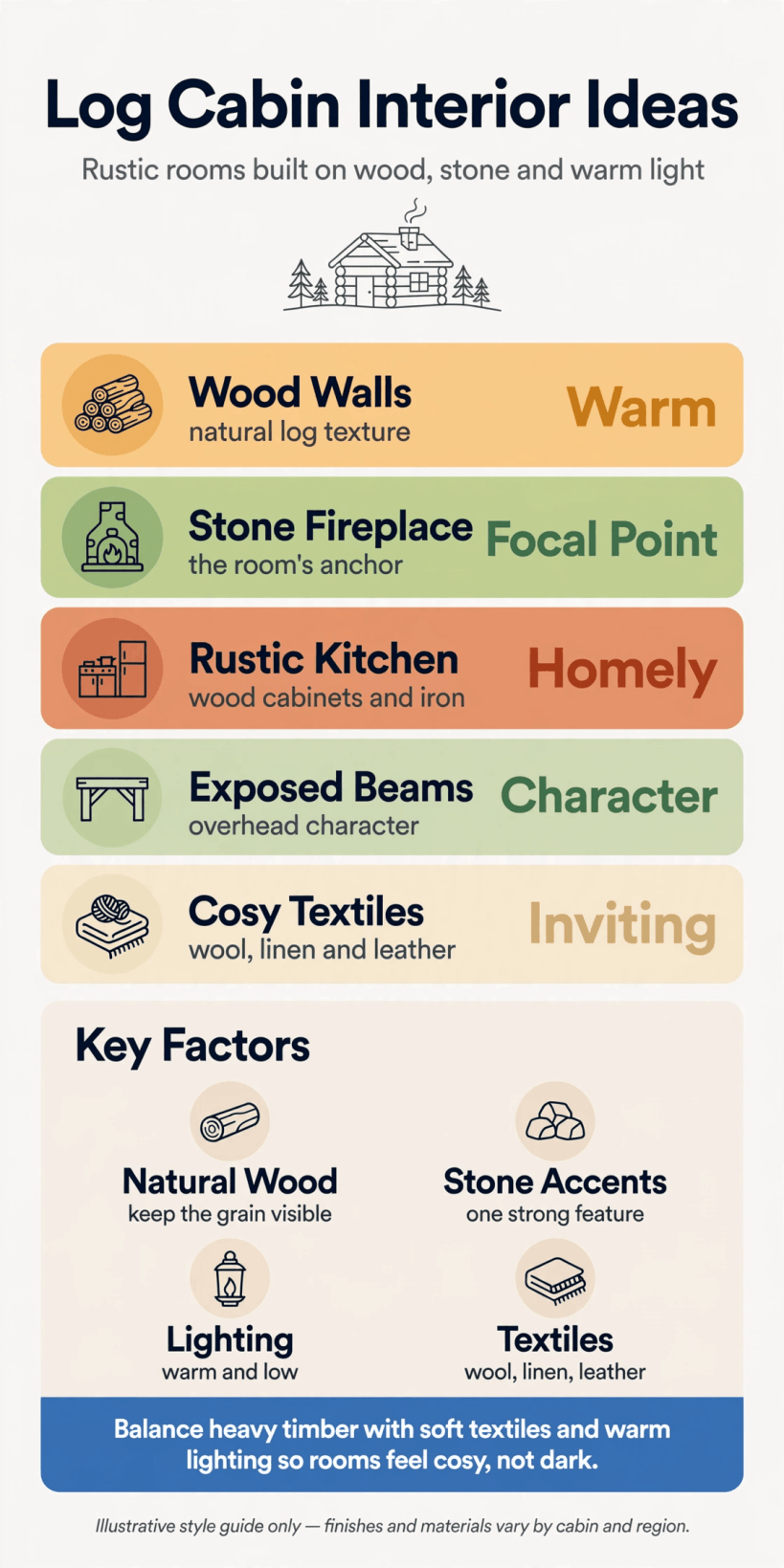
The essentials at a glance — timber, stone, wool and firelight — before the room-by-room ideas below.
Old cabins have quirks modern houses do not: logs that settle, walls that are never quite straight, and light that changes character through the day as it moves across timber. Good cabin styling works with those quirks instead of fighting them. The sections that follow take each element in turn — walls, fireplaces, floors, furniture, kitchens, bedrooms, bathrooms, light, textiles and maintenance — so you can refresh one corner at a time without losing the soul of the building.
2. Wood Walls: Letting the Logs Lead
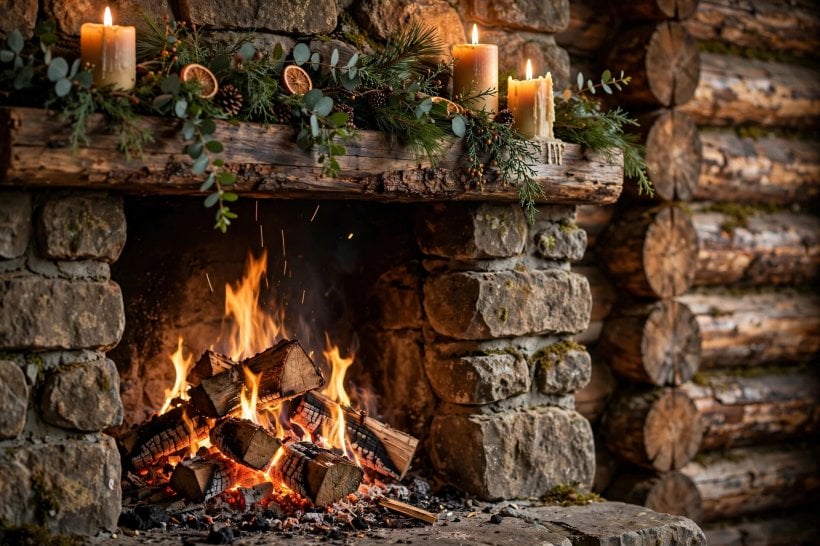
In most rooms the walls are a backdrop; in a cabin they are the main event. Horizontal logs bring strong lines, natural colour variation and deep shadow gaps that no wallpaper can imitate. Keep them clean and sound — a gentle brush-down, attention to any failing chinking (the material between logs), and treatment only with products the manufacturer recommends for interior timber — and the walls will reward you by doing all the decorating themselves.
Because log walls are visually busy, everything hung on them should be simple and generously spaced. One large woven hanging, a pair of framed landscape prints or a plain mirror will hold its own; a cluster of small pictures will disappear into the texture. Where a wall is too dark or the logs are in poor condition in one area, a section of vertical tongue-and-groove boarding painted in a soft cream can rest a busy corner while staying true to the building.
Chinking colour changes the whole feel: bright white chinking sharpens the contrast and reads almost Scandinavian, while a warm grey or sand tone keeps the look mellow and aged. If you are re-chinking, test a small hidden area first and check the product guidance for interior use, flexibility and compatibility with your logs.
3. Stone Fireplaces and Wood Stoves
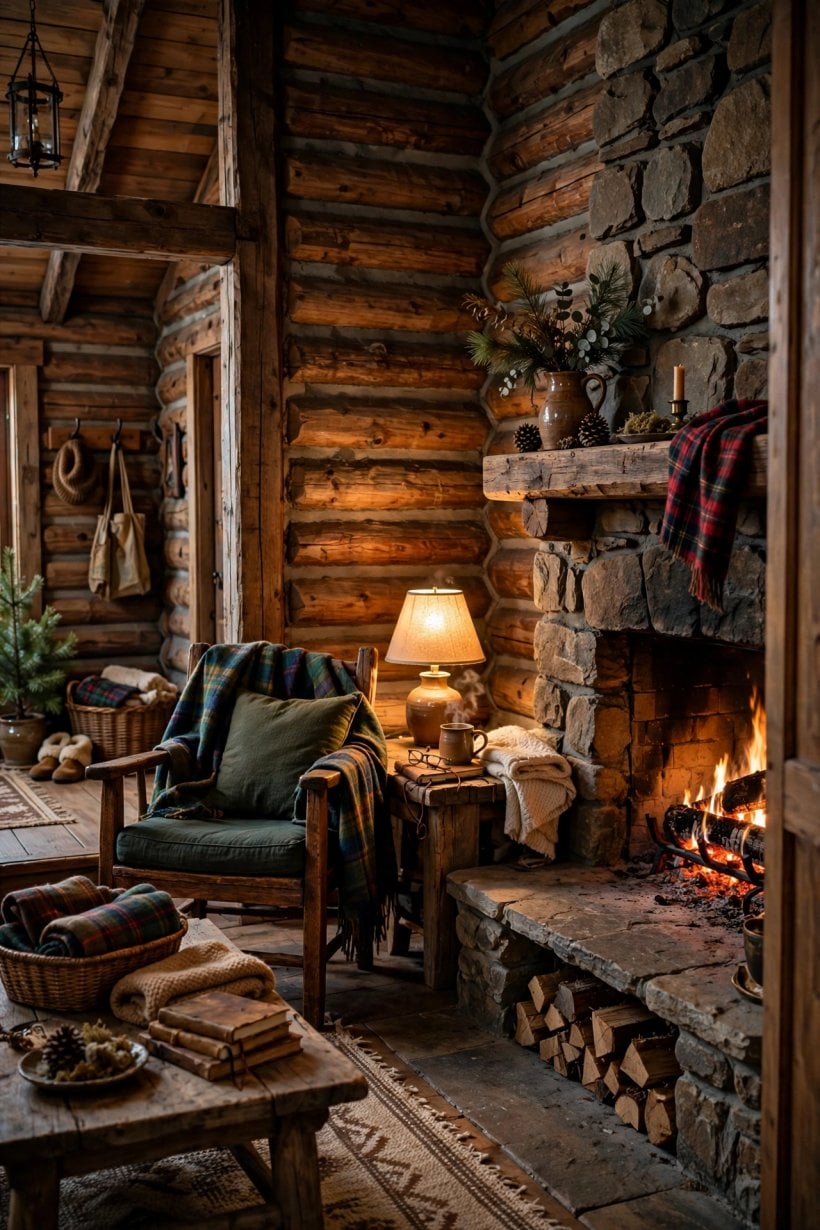
The fireplace is the cabin’s heart, and in an old building it is often a handsome stone stack that deserves centre stage. Arrange seating around it in a close, conversational arc — a sofa and two chairs rather than a row pushed against the walls — and keep the hearth dressing simple: a log basket, a companion set and perhaps a kettle or a candle lantern. A chunky timber mantel shelf, if the fireplace has one, needs only two or three objects to look complete.
Safety and upkeep come first with any real fire. Chimneys should be swept and inspected regularly by a qualified sweep, stoves serviced according to the manufacturer’s instructions, and alarms for smoke and carbon monoxide fitted and tested — check the guidance for your area and your appliance, because requirements and recommendations vary. Keep soft furnishings and the wood store at the clearances the appliance maker specifies, not just where they look good.
Where there is no working fire, the hearth still earns its place: stack it neatly with logs, stand a group of candles in the opening, or place a dried arrangement there in summer. The stone surround in a tiny barn house interior works the same way — one honest, heavy material given room to breathe becomes the whole room’s anchor.
4. Floors, Rugs and Warmth Underfoot
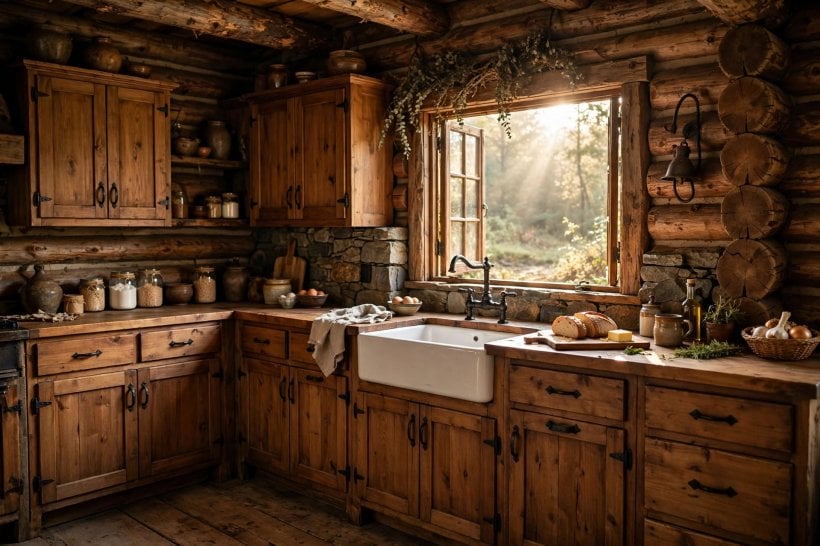
Wide plank floors suit log walls perfectly: the scale matches, the grain echoes the timber, and scuffs blend into character rather than showing as damage. If original boards survive under later coverings, lifting and restoring them — sanding gently and finishing with a matt, natural product — is usually more sympathetic than laying anything new. Between the boards and bare feet, rugs do the warming work: flat-weave wool or cotton rugs in the kitchen and hall, deeper pile beside the bed and in front of the fire.
Rugs also zone an open-plan cabin. One under the dining table, one defining the fireside seating and a runner in the kitchen pull a single big room into comfortable neighbourhoods without a single partition. Choose patterns that can hide a bit of woodland life — ash dust, muddy paw prints and dropped pine needles are part of cabin reality, and a forgiving pattern in earthy tones keeps the room looking good between cleans.
Underfloor comfort matters in winter: thick rug pads, draft excluders at doors and curtains drawn at dusk all help an old building hold its heat. Where floors are being relaid, ask your contractor about insulation options suitable for the building’s construction, because older cabins vary enormously in how they were built.
5. Furniture: Honest Materials, Comfortable Shapes
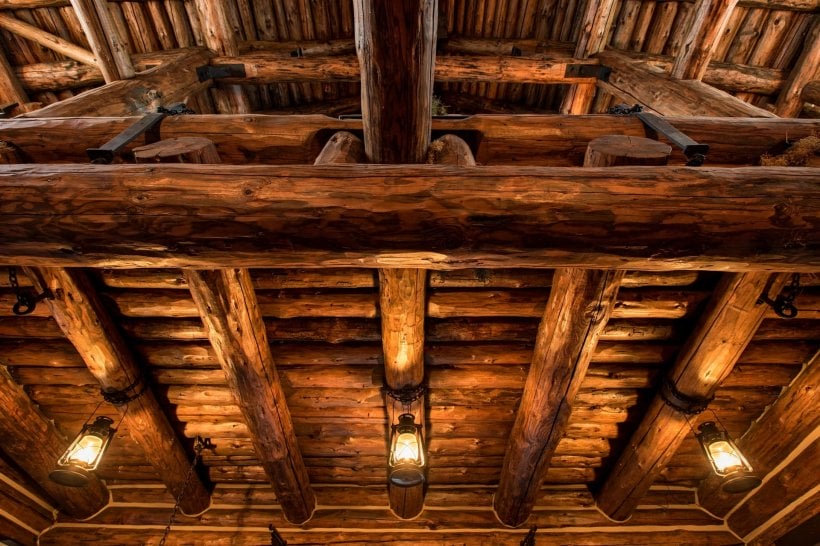
Cabin furniture should look like it could survive the cabin: solid wood tables with visible grain, leather sofas that improve with age, iron and stone accents, and upholstery in wool, linen and canvas rather than shiny synthetics. A farmhouse dining table that seats everyone, benches that tuck underneath, and a dresser or hutch for storage and display give the main room everything it needs without crowding it.
Scale needs care. Log walls make rooms feel smaller than their measurements, so choose furniture with legs that show the floor, keep tall pieces against the tallest walls, and leave walking routes clear. Built-in bunks, window seats with storage beneath and wall-mounted shelves all earn their footprint twice over in a small cabin — the same space discipline that makes a-frame tiny house interiors work so well in triangular spaces.
Second-hand furniture suits cabins beautifully. Old pine, worn leather and hand-made pieces carry exactly the patina a cabin asks for, and they can be refreshed with cleaning, wax and new cushions rather than replaced. Mix eras freely — a modern lamp beside a Victorian chair looks collected, not confused, when the materials stay natural.
6. Cabin Kitchens That Work Hard
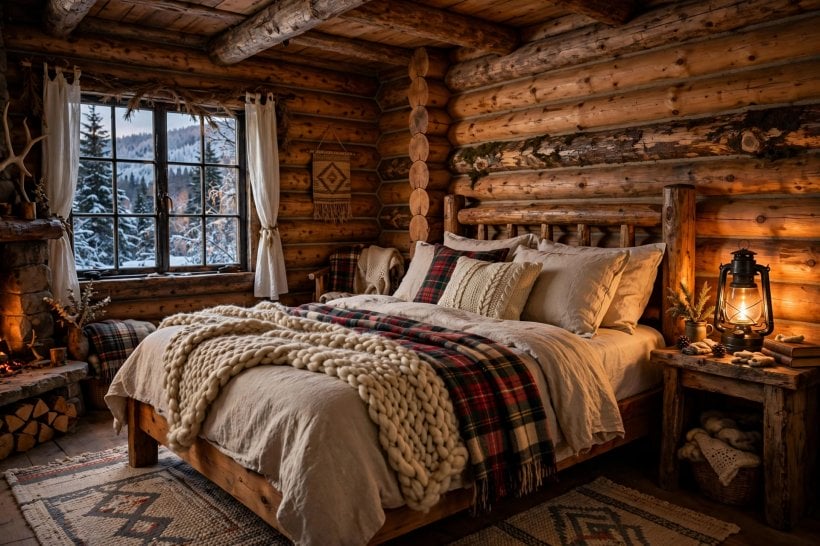
A cabin kitchen should handle muddy boots, big breakfasts and preserving gluts with equal ease. Open shelves or glass-fronted cupboards in painted wood keep everyday dishes visible and quick to grab; a deep farmhouse sink, a sturdy range and a big table that doubles as preparation space cover most needs. Keep worktops as wood or stone-look surfaces that tolerate heat and age gracefully, and confirm heat clearances and care with the manufacturers of your cooker and surfaces.
Storage is the difference between charming and chaotic. Rails for pans and utensils, hooks under shelves for mugs, baskets for vegetables and a larder or cool corner for stores keep everything reachable in a small footprint. Open storage only works if it is edited — everyday items out, rarely used gadgets in a cupboard or box.
Lighting matters more in kitchens than anywhere: a pendant over the table, task light over the worktop and a lamp in the corner for evenings turn a purely practical room into the cabin’s social centre. The planning approach mirrors good tiny house kitchen design — zones for cooking, washing and storing, with clear surfaces and everything in arm’s reach.
7. Bedrooms and Sleeping Lofts
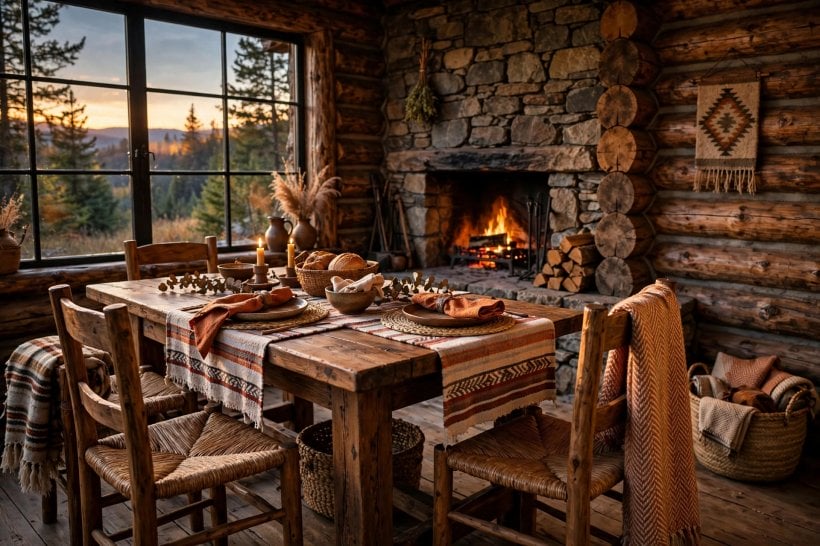
Cabin bedrooms ask for little beyond a good bed, warm layers and darkness. Iron or simple wood bed frames suit the architecture; dress them with linen or brushed cotton, a wool blanket folded at the foot and cushions in plaid or faded stripes. Under sloping loft ceilings, keep the bed low and the furniture minimal, and let the roof timbers be the decoration — waking under old beams is one of cabin life’s great pleasures.
Storage in small bedrooms means drawers under the bed, hooks behind the door and a chair that works as a clothes stand. Blackout-lined curtains or shutters help in summer when dawn comes early at northern latitudes, and a small lamp with a warm bulb on each side of the bed beats any ceiling light for bedtime reading.
Guest sleeping deserves the same care: a proper mattress where space allows, spare blankets within reach and a carafe of water by the bed. The layered, low-fuss approach in modern tiny house bedroom ideas translates directly — in a small sleeping space, every item should be there because it earns its place.
8. Bathrooms in Old Cabins
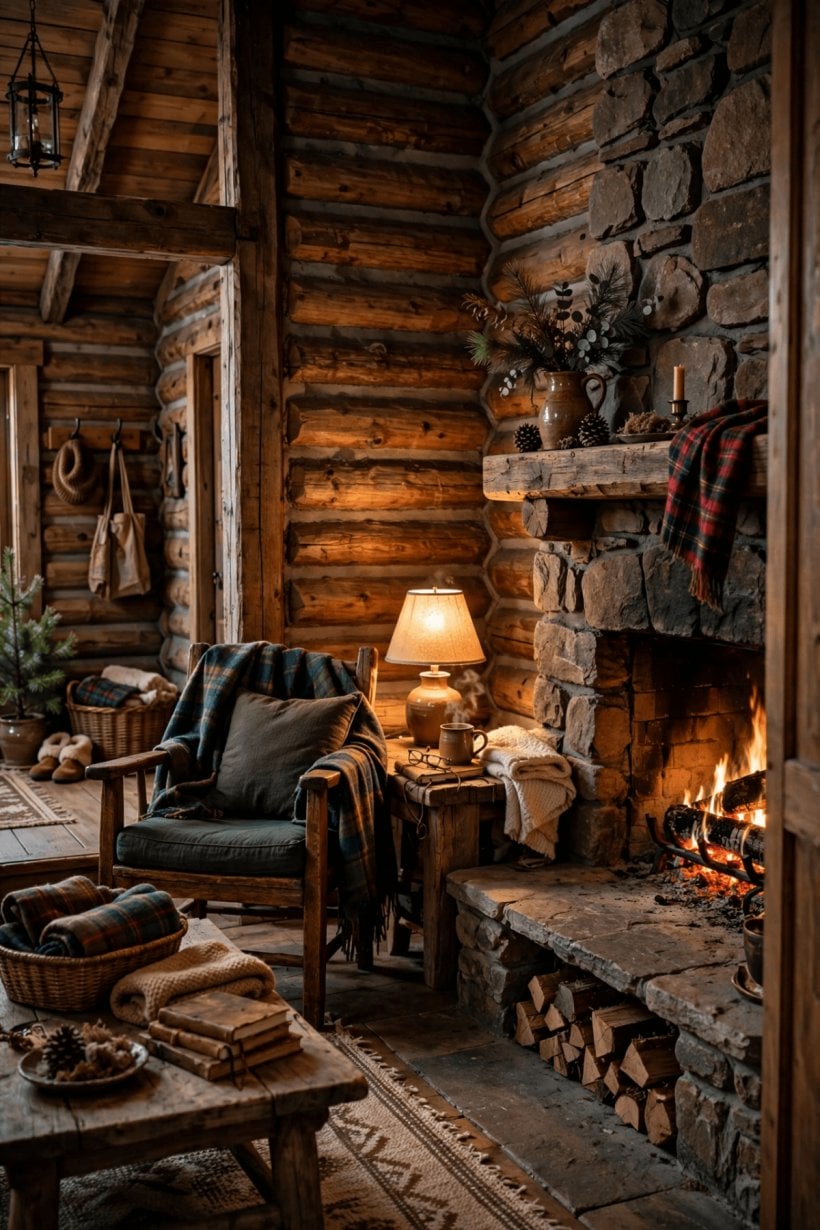
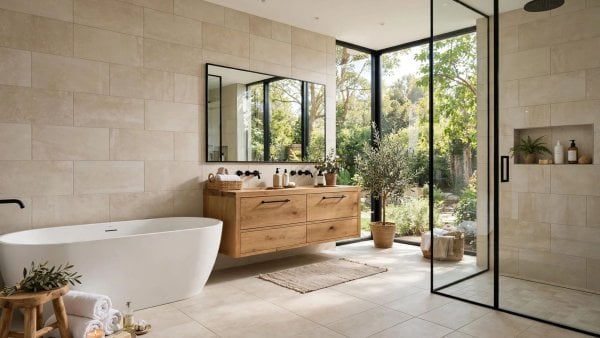
Many old cabins gained their bathrooms later in life, and the best ones blend modern plumbing with cabin materials: a simple white suite, wood-look or stone flooring that tolerates splashes, tongue-and-groove panelling where walls allow, and black or aged-brass fittings that sit happily against timber. A freestanding bath, where the floor structure can support it — check with a builder or engineer if in doubt — makes a small bathroom feel like a retreat.
Moisture is the enemy of log construction, so ventilation is not optional. An extractor fan sized for the room, a window that opens, and prompt attention to sealant around baths and showers protect the building as much as the decor. Keep the manufacturer’s care guidance for any stone or wood finishes in wet areas, and reseal or re-oil surfaces at the intervals the product recommends.
Small comforts finish the room: hooks and a rail near the bath for towels, a stool or small bench, a mirror that does not fight the logs for attention, and a basket for spare towels so guests never have to ask.
9. Light, Windows and Evenings
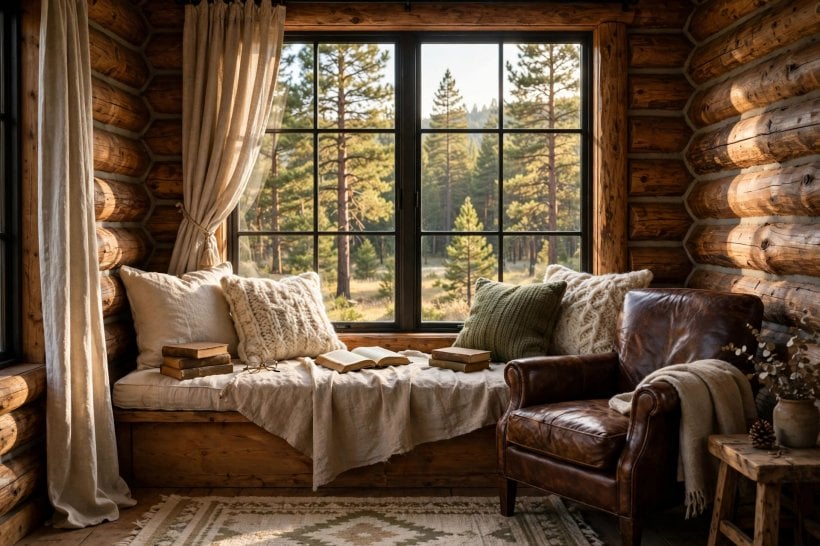
Log interiors drink light. Timber absorbs brightness that white walls would bounce back, so plan for more lamps than you would in a modern house, and place them at the heights where life happens — beside sofas, at desks, by beds. Warm-toned bulbs keep the glow golden rather than clinical, and dimmers let the room soften as the evening draws in.
Windows deserve simple treatment: linen curtains, wooden blinds or plain shutters that open fully by day. Deep window sills in thick log walls make natural display shelves for plants, lanterns and found objects — a row of pine cones, a stack of field guides, a jug of whatever is growing outside. Mirrors placed to catch window light help brighten the darkest wall.
Evenings are when a cabin comes into its own: firelight, lamplight and candlelight layered together, with screens off and the wood store full. Outdoor light matters too — a lantern by the door and a lit path make winter arrivals magical and safe, the same welcome you would plan with tiny house landscaping ideas for any small home set in greenery.
10. Textiles, Colour and the Cosy Layer
Colour in a cabin mostly arrives through textiles, because the walls are already spoken for. The classic palette — rust, ochre, forest green, cream and charcoal, in plaids, stripes and small folk patterns — has lasted because it echoes the landscape outside the window. Wool blankets, woven cushion covers, braided or rag rugs and sheepskins thrown over chairs add the softness that hard timber and stone need, and they can be swapped seasonally: lighter cottons and bare floors in summer, full layers in winter.
Keep the mix disciplined: two patterns at most per room, repeated in at least two places so they look chosen rather than accidental. Plain fabrics in between give the eye rest. Natural fibres wear better, feel better and age into the cabin rather than clashing with it; check care labels and wash gently, because wool and line-dried linen only improve with careful handling.
Finally, scent and sound complete the cosiness in ways photographs cannot show: woodsmoke, beeswax candles, a kettle on the stove, the tick of a cooling fire. Style the senses, not just the shelves, and the cabin will feel right to everyone who walks in — the true test that all this decoration is serving.
Final Considerations
An old cabin does not need decorating so much as understanding. Let the logs and stone lead, choose furniture and textiles that respect the building’s materials, keep fires safe and moisture managed, and add colour through layers you can change with the seasons. Do those things and the interior will feel the way a cabin should — gathered, warm and quietly timeless, ready for another generation of evenings by the fire.

0 Comments