

A baby girl’s nursery is the room you will remember at 3 a.m. and at her first birthday in equal measure — so it should be beautiful, calm and quietly practical. The most magical baby girl rooms are not the most expensive ones; they are the ones where colour, light and comfort have been thought through together.
These 75 ideas cover themes, colour palettes, safe furniture, storage, textiles and decor, so you can build the room in layers, at your own pace.
1. Magical Baby Girl Rooms at a Glance
| Element | Lovely Choice | Why It Works |
|---|---|---|
| Colour palette | Blush, cream and sage — or soft white with one accent colour | Gentle colour keeps the room calm for sleep and flexible for photos |
| Cot / crib | A sturdy cot that converts to a toddler bed | One purchase serves for years; check it meets current safety guidance |
| Feeding corner | Comfortable chair, side table and a soft lamp | Night feeds become a ritual instead of an endurance test |
| Storage | Dresser with drawers, baskets and a wardrobe or rail | Tiny clothes, nappies and blankets all stay within arm’s reach |
| Lighting | Blackout curtains plus a warm, dim night light | Darkness for naps; a glow that never fully wakes the baby |
| Decor | Wall art, a mobile, bunting and treasured keepsakes | The magic layer — easy to add, easy to change as she grows |
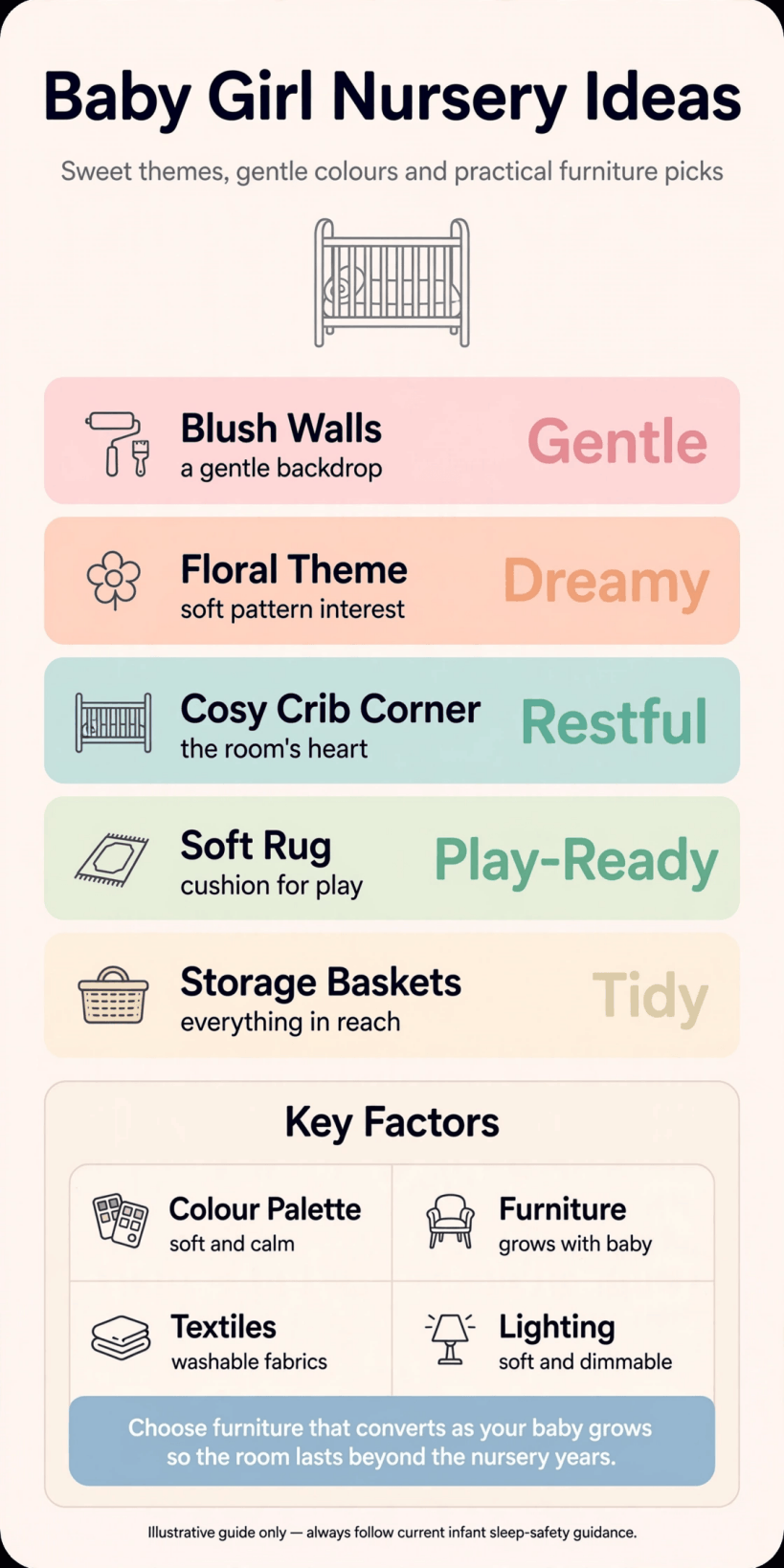
The essentials at a glance — colour, a safe cot, smart storage and soft light — before the theme-by-theme ideas below.
A nursery works in layers: the fixed layer of paint and flooring, the furniture layer that anchors the room, and the soft layer of textiles and decor that carries the theme. Planning in that order keeps the spending sensible — the expensive pieces stay neutral and hardworking, while the theme lives in curtains, cushions, prints and toys that cost little to change. The sections below follow that order, from themes and colour through furniture and safety to the finishing touches and the inevitable question of what happens when she is no longer a baby.
2. Themes That Set the Story
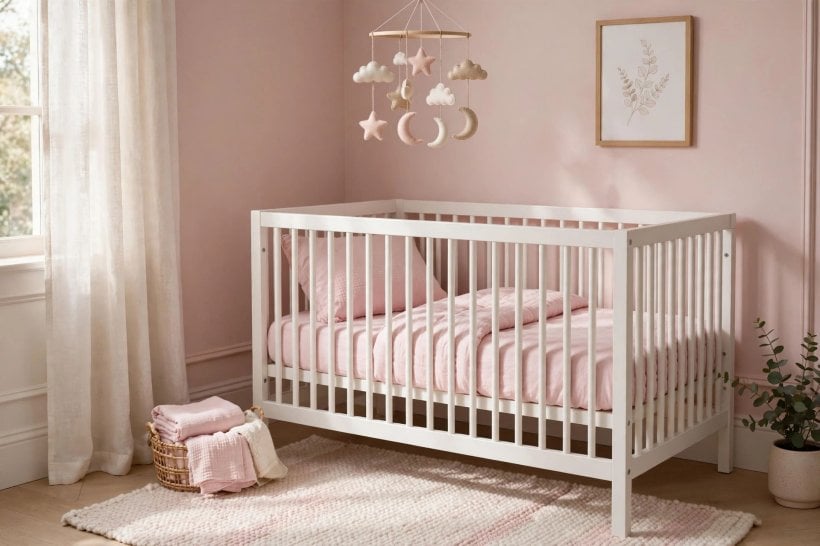
A theme gives every later decision a shortcut. Woodland themes — foxes, owls, trees and mushrooms in soft greens and blush — suit parents who love nature and work beautifully in small rooms because the palette is naturally calm. Garden and floral themes build on flower prints, butterfly details and a hand-painted or wallpapered feature wall. Storybook and fairytale themes invite castles, stars and moons; celestial nurseries in soft navy, cream and gold feel magical at night and surprisingly sophisticated by day.
Animal themes remain the most flexible of all: bunnies, swans, elephants or a gentle safari in neutral tones can start almost monochrome and gain colour as toys and books arrive. Rainbow themes in muted, dusty shades give you every colour to play with while staying soft. Whatever you choose, let the theme speak through three or four repeated motifs rather than covering every surface — restraint is what makes a themed room look designed instead of decorated by a catalogue.
One more test before committing: imagine the theme with the cot bedding removed and the toys tidied away. If the room still looks lovely, the theme is in the bones — paint, prints and textiles — and it will survive the daily reality of laundry and clutter.
3. Colour Palettes: Beyond the Obvious Pink
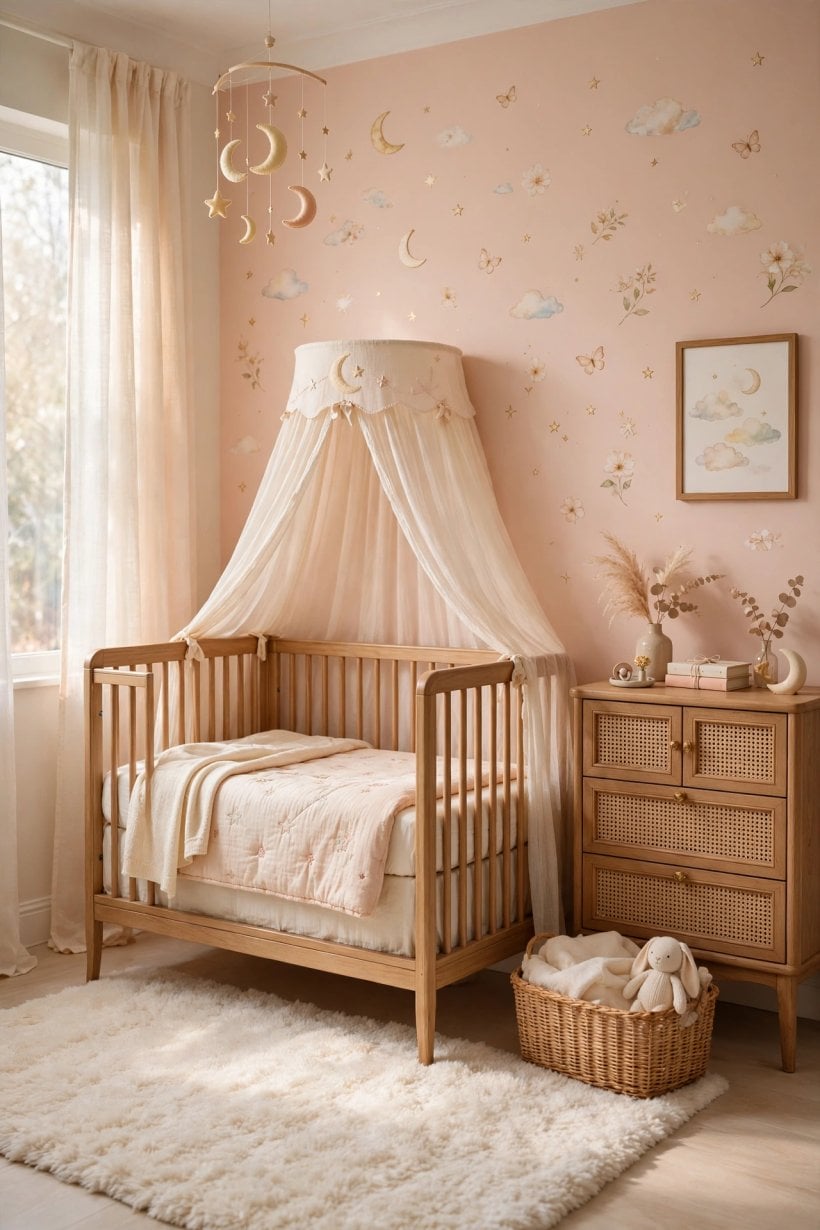
Blush pink endures because it is flattering, warm and easy to layer — but it is only the beginning. Soft sage green with cream and natural wood feels fresh and restful; lavender and lilac bring a storybook softness that pairs beautifully with white furniture; peach and apricot glow in north-facing rooms that need warmth. For a calmer, more grown-up base, warm white or pale greige walls let the colour live in textiles and art, which is the easiest scheme of all to update.
Deeper accents have their place too: a dusty rose feature wall, a muted teal reading corner, or navy stars on one wall can make a small nursery feel jewel-like rather than sugary. Keep the proportions gentle — roughly two-thirds soft neutrals, one-third colour — and repeat the accent colour in at least three places so it looks intentional.
Whatever palette you love, test paint on the wall and check it in daylight and lamplight, and choose finishes the manufacturer describes as suitable for children’s rooms, following their guidance on ventilation and drying time before the room is used. Babies spend their days looking up, so do not forget the ceiling: the palest tint of the wall colour, or a few removable stars, rewards all that upward gazing.
4. The Cot and Sleep Corner
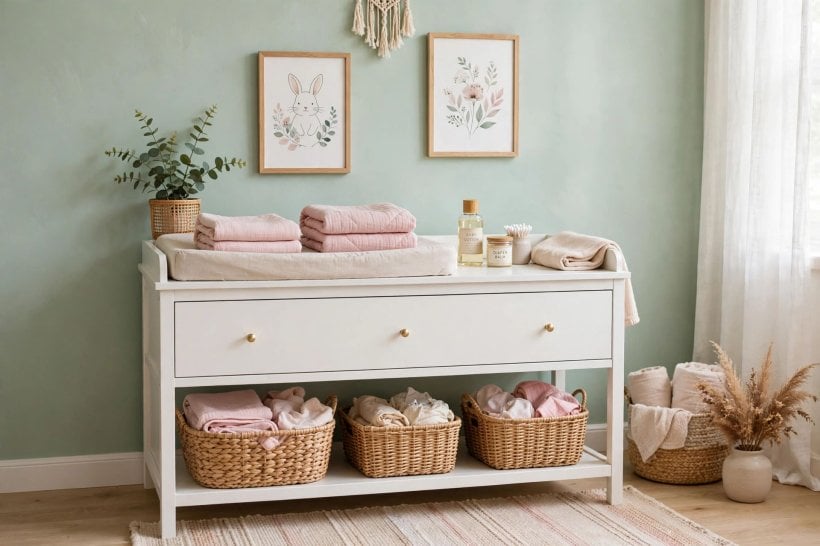
The cot is the room’s anchor, and safety comes before style every time. Choose a cot that meets the current safety standards in your country, follow the manufacturer’s instructions for assembly and mattress fit exactly, and keep the sleep space itself simple — current safe-sleep guidance in most places recommends a firm, flat mattress with a fitted sheet and nothing soft or loose in the cot. Always check the latest guidance from your health authority or paediatric source, because recommendations are updated as evidence develops.
Convertible cots that become toddler beds, and later sometimes a small sofa or desk, spread their cost over years of use; white, natural wood and soft grey finishes all sit happily in girl nursery schemes. Position the cot away from windows, curtain cords and radiators, and think about the view from the doorway — a pretty canopy or a wall decal above the cot photographs beautifully, provided anything overhead is fitted securely and well out of reach, in line with the maker’s instructions.
Beside the cot, plan the practical trio: a monitor if you use one, a dim light you can reach half-asleep, and somewhere for the middle-of-the-night water glass. Sleep corners are small, but getting them right shapes every night of the first year.
5. The Feeding and Cuddling Corner
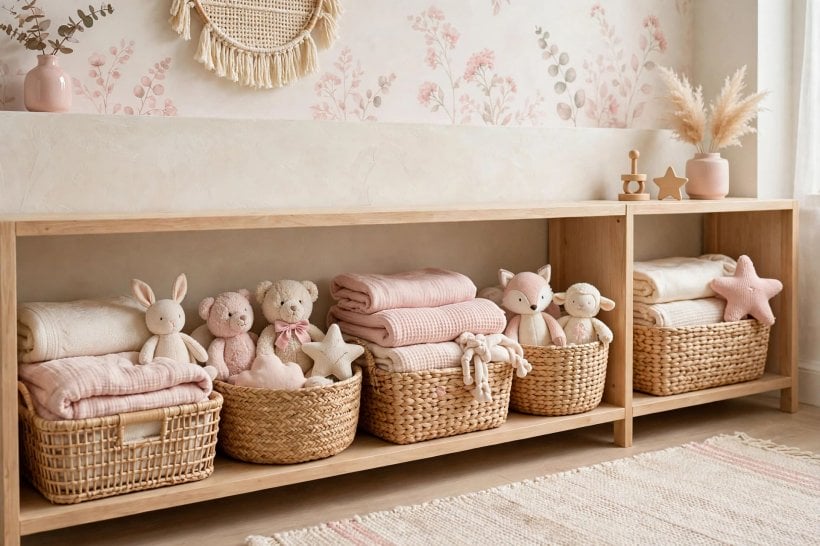
You will spend hundreds of hours in the feeding chair, so choose it like furniture, not like an accessory. A chair with good back support, armrests at a comfortable height and a washable or easily cleaned fabric earns its floor space many times over; a small footstool and a cushion for the lower back complete the posture. Rockers and gliders soothe babies beautifully, but a stationary armchair with a floor cushion works just as well in a tiny room.
Set the corner up properly: a side table for water, snacks and the phone; a lamp with a warm, low bulb or a dimmer; and a small basket for the current book, muslins and the remote. A soft rug under the chair defines the corner as its own little room within the room.
This corner is also where the nursery’s prettiness concentrates — the best cushion, the folded heirloom blanket over the chair back, the framed print at eye level for the feeding parent. Designing comfort for the adult as carefully as for the baby is the secret of nurseries that feel magical at 3 a.m., and the layered approach in tiny house bedroom decor — texture, lamplight and one beautiful object — works at nursery scale too.
6. Storage for Very Small Things
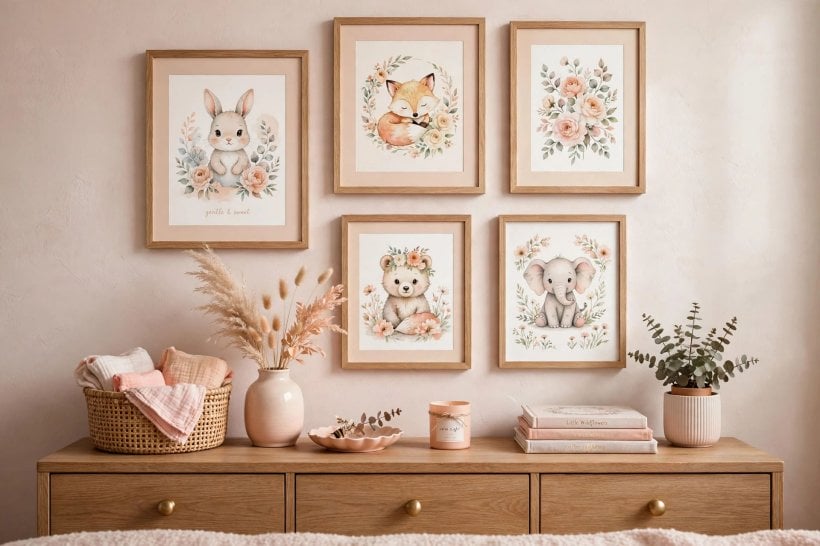
Babies are small; their equipment is not. A dresser that doubles as a changing station, with drawers for clothes sorted by size, keeps the daily rotation painless. Open baskets on shelves hold nappies, wipes and creams at the changing spot; a lidded basket swallows laundry; and a small wardrobe or hanging rail keeps the outgrown and not-yet-grown clothes separate, which saves money and sanity.
Labels earn their keep here: tiny clothes move through sizes quickly, and a labelled drawer system means anyone can dress the baby or put laundry away without a briefing. Storage under the cot, hooks behind the door and a slim bookcase for the growing library all add capacity without adding furniture bulk — the same discipline that makes tiny house bedroom ideas work in the smallest footprints.
Safety note for storage as for everything else: fix tall furniture to the wall with the straps or brackets the manufacturer supplies, keep heavy items low, and re-check fixings as your baby becomes a climbing toddler.
7. Walls, Art and the Pretty Layer
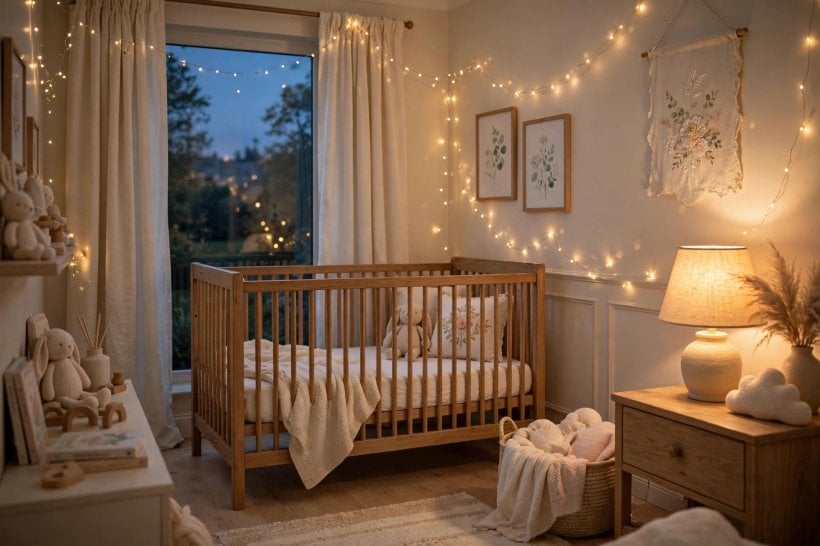
Walls carry the theme more cheaply than anything else. A gallery of framed prints — animals, flowers, her initial, a favourite storybook illustration — can be composed on the floor first and hung as one arrangement. Removable wall decals give renters and commitment-phobes the mural effect without the paint commitment, and bunting in fabric or paper adds instant celebration across a window or above the cot’s wall.
Personal pieces make the room hers: a framed hand-knitted cardigan too lovely to wear out, footprints from the first weeks, the hospital name card beside a first photograph. A small shelf for treasures — a music box, a porcelain bunny, gifts from grandparents — creates the changing display that keeps a nursery feeling alive through the year.
Keep anything hung above the cot or changing area fitted with proper fixings and checked regularly, and as she begins to stand and reach, move the tempting pieces higher. Pretty and practical are not opposites in a nursery; they are the same decision made carefully.
8. Textiles: Softness You Can Wash
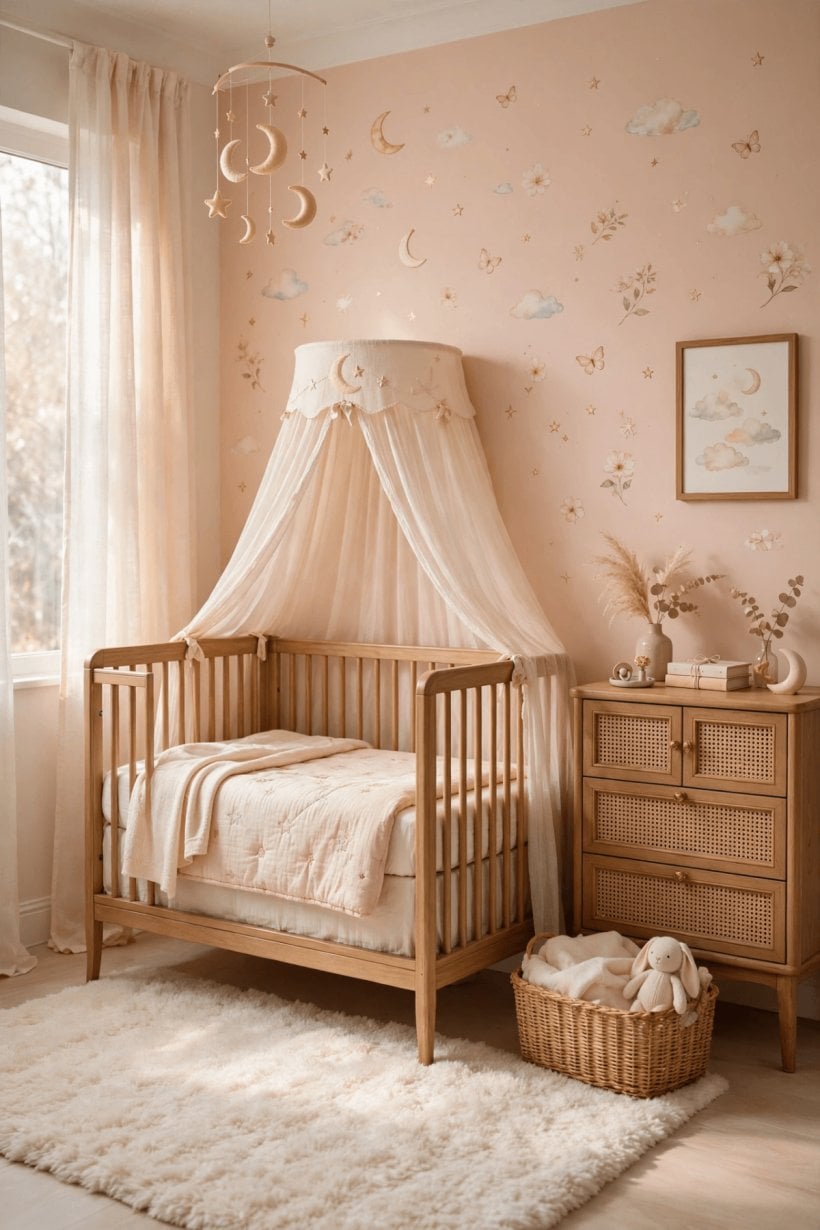
Textiles decide how a nursery feels against the skin — and how it survives the washing machine. Cot bedding should follow current safe-sleep guidance for your country (a fitted sheet on a firm mattress is the usual foundation; check your health authority’s latest advice). Beyond the cot, layer the room: a washable rug thick enough for tummy time, curtains that can be laundered, cushions with removable covers for the feeding chair, and a rotation of blankets for the chair and pram rather than the sleep space.
Fabric is where pattern lives: a floral curtain, a gingham cushion, a star-print rug — choose two patterns in the palette and let everything else stay plain, and the room will look pulled together. Natural fibres feel lovely and wash well; whatever you choose, follow the care labels, and keep a spare set of the hardest-working pieces so a 2 a.m. change never becomes a laundry emergency.
Texture matters to babies before colour does — a knitted blanket, a quilted play mat and a smooth wooden floor give tiny hands a world to explore during floor play, which is where the day’s happiest hours usually happen.
9. Small Nurseries and Shared Corners
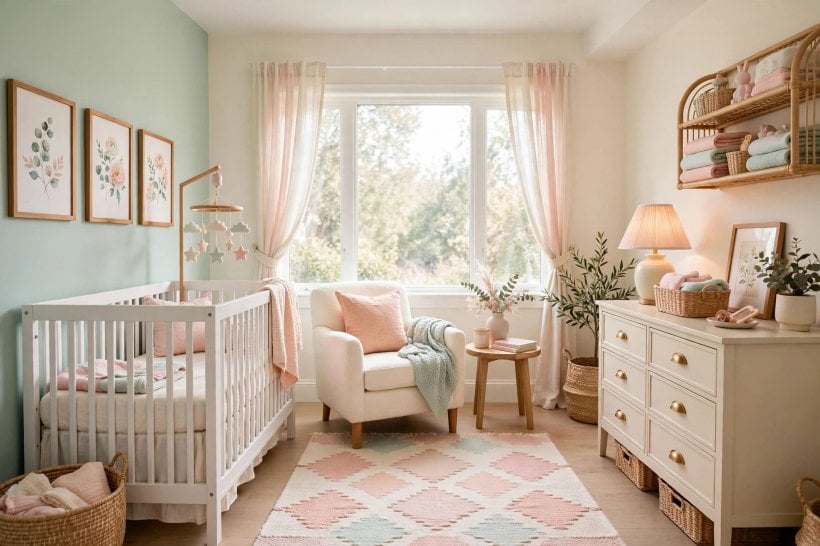
Many baby girl rooms are a corner of the parents’ bedroom, a box room or half of a sibling’s room — and they can be every bit as magical. Define the nursery zone with a rug and, if space allows, a low shelf or curtain that gives the corner its own boundary. A mini cot or space-saving cot, a compact dresser-changer and wall shelves instead of floor furniture keep the footprint tiny while covering every function.
Colour is the small nursery’s best tool: one palette carried across bedding, storage boxes and a print or two makes a corner read as a designed room rather than a collection of equipment. Vertical storage — shelves, hooks, over-door organisers — buys back the floor for play.
The planning mindset is pure small-space thinking: every item earns its place, and beauty comes from cohesion rather than quantity, exactly as in the best modern tiny house bedroom layouts or a well-planned tiny house bedroom nook adapted for a first baby.
10. Growing With Her: Updates and Care
A nursery designed in layers grows gracefully. The cot converts, the changing top comes off the dresser, and the theme softens as prints swap from bunnies to ballerinas to whatever she loves at four. Planning the room’s second and third acts from the start — neutral big pieces, themed small pieces — means each update costs a little and feels like a celebration rather than a renovation.
Care routines keep the magic intact: wash textiles as labels advise, wipe painted furniture with gentle products the manufacturer recommends, and do a seasonal safety sweep as her abilities change — cot base lowered in line with the maker’s instructions, cords and small objects out of reach, furniture fixings re-checked. Babies change faster than rooms; a half-hour check each season keeps the two in step.
Finally, photograph the room as it evolves. The nursery you are building now, with such care, will be a place she only knows from pictures — and those pictures, of her first magical little room, become part of the family story.
Final Considerations
Build the room in layers — calm colour, safe and convertible furniture, storage that respects how fast babies grow, and the pretty theme carried by textiles and art you can change in an afternoon. Follow current safety guidance, check manufacturers’ instructions, and spend your energy on the corners where you will actually live: the feeding chair at midnight, the rug at tummy time, the cot at dawn. Do that, and the magic looks after itself.



0 Comments