

Steps decide whether a deck feels like an invitation or an obstacle. Get them right and the whole garden opens up.
These 75 deck stairs ideas work through stringers, treads, railings and lighting, so you can plan a staircase that feels steady underfoot and looks like it always belonged there.
1. Deck Stairs at a Glance: Stringers, Treads, Railings and Lighting
| Element | What to look for | Why it matters |
|---|---|---|
| Stringers | Sound, well-supported boards or steel sections that carry every step | They are the backbone of the staircase and set its strength |
| Treads | Generous depth, a grippy surface and consistent sizing | They decide comfort and confidence with every climb |
| Risers | Open or closed, but even from the first step to the last | Even rises feel natural; uneven ones cause trips |
| Railings | A handrail you can grasp, with infill that suits the view | They steady everyone, from toddlers to grandparents |
| Lighting | Soft light on each tread, without glare in your eyes | It keeps evening trips to the garden safe and welcoming |
| Fixings and footings | Corrosion-resistant hardware seated on firm support | They quietly decide how long the staircase lasts |
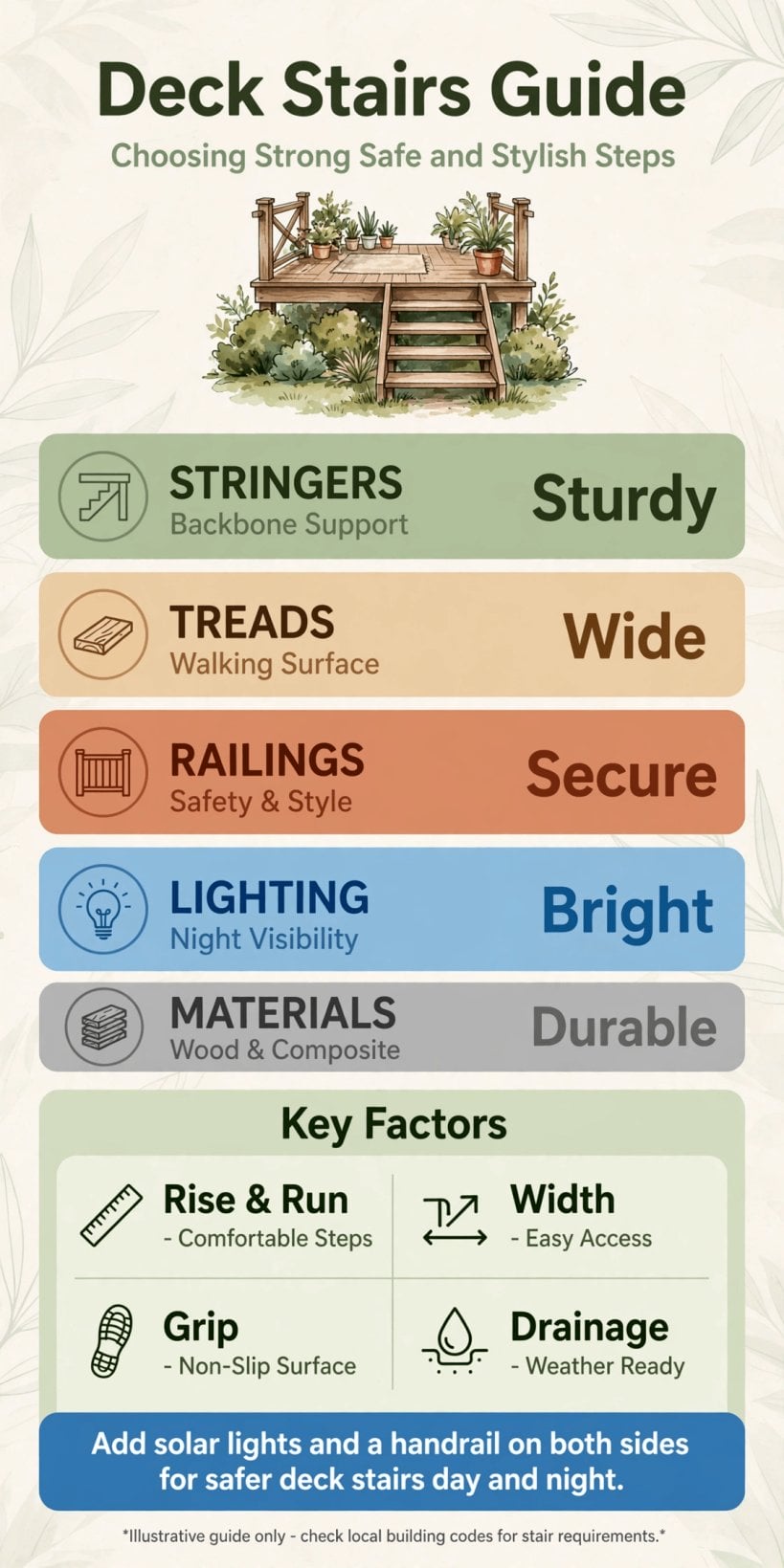
A quick visual summary of the parts that make a deck staircase safe, comfortable and good to look at.
Think of a staircase as a small structure with its own job to do. The stringers carry the load, the treads take the wear, the railings protect the edges and the lighting looks after everyone after dark. When each part is planned together, the steps feel calm and predictable, and the deck gains a finished, built-in quality rather than looking like an afterthought bolted on at the end of the project.
Start by walking your own route. Where do people naturally arrive from the house, the lawn or the gate? A staircase placed on that desire line gets used happily, while one tucked round a corner tends to be ignored in favour of a risky hop down. Note the sun, too: steps that sit in shade stay damp and slippery for longer, so a slightly sunnier line, or a tread surface with real grip, is worth planning from the start.
2. Stringers That Carry the Whole Design
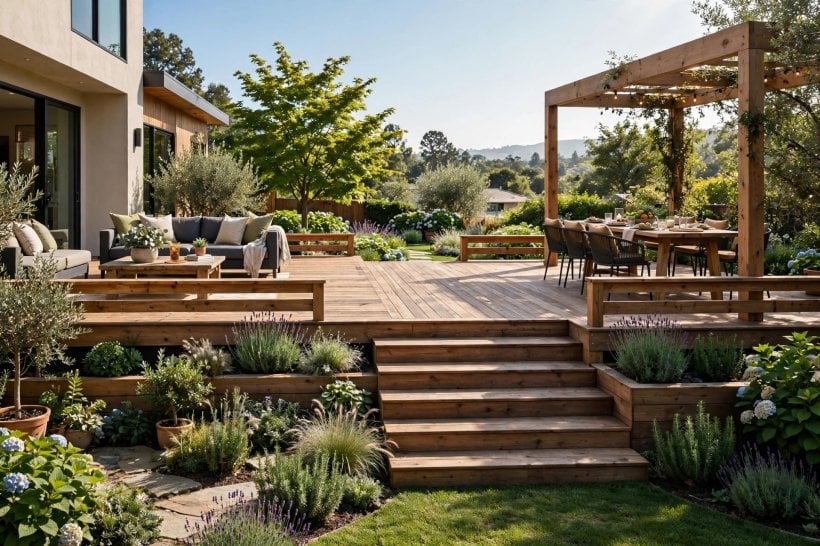
Every staircase in this collection stands or falls on its stringers, the sloping members that carry the treads. Cut timber stringers, where the steps are notched into the board, give a classic, crafted look and work beautifully with wide feature staircases. Closed stringers, where the board runs in one clean diagonal beneath the steps, suit modern decks and hide the structure for a calmer outline.
Steel and aluminium stringers bring a slimmer profile. A single central spine can make treads appear to float, while paired steel channels give crisp lines beside composite decking. Whichever material you choose, the stringer needs proper support at the top and bottom, and a footing that will not settle or heave with the seasons. Ask your builder how the load travels down to the ground, and check with the manufacturer which spans and spacings their system is designed for.
Spacing matters as much as strength. Treads that span too far between stringers feel bouncy, and that bounce loosens fixings over time. Adding a middle stringer on wide stairs is a quiet upgrade that pays off every day. Finish the sides neatly, keep end grain protected from standing water, and the backbone of your staircase will stay solid for years. For outdoor inspiration that ties steps into the wider garden, browse these tiny house landscaping ideas before you commit to a layout.
3. Treads With Grip, Comfort and Character
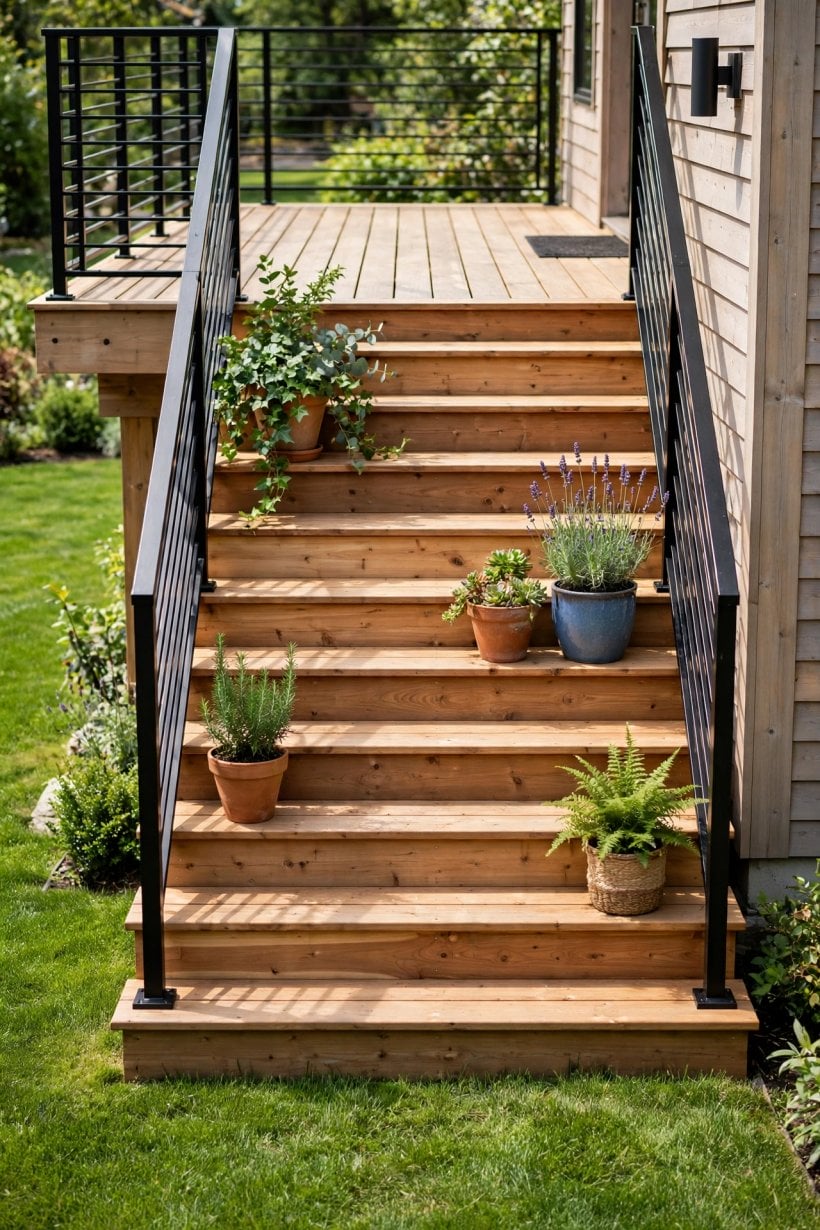
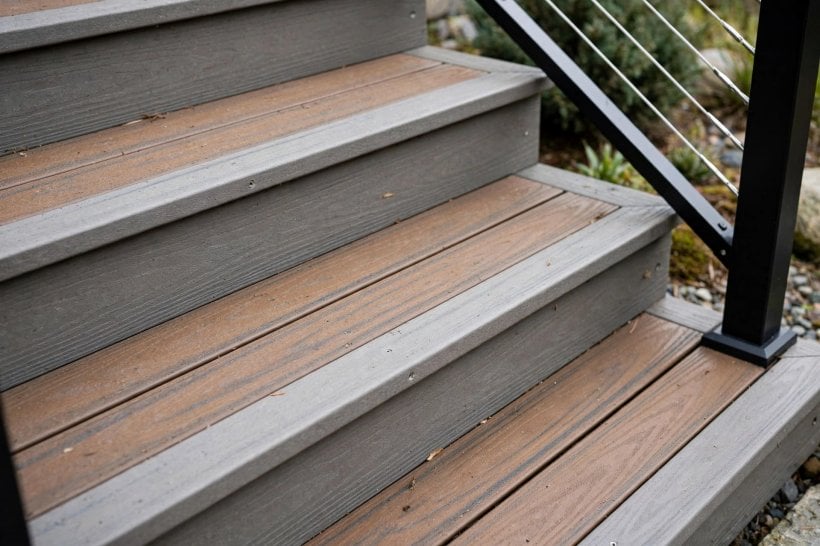
Treads are where your feet judge the staircase. Generous, deep treads feel generous to climb, especially when carrying a tray, a toddler or a basket of laundry. Many of the most-loved designs here use two deck boards per tread with a slim shadow gap between them, which sheds water, adds grip and gives a satisfying, solid feel underfoot.
Surface texture is a safety feature. Smooth, polished boards can be treacherous when wet, so look for grooved, brushed or anti-slip finishes, and ask the manufacturer how their boards perform in the rain. Bullnose edges soften the front of each step and are kinder to bare feet and small knees, while a contrasting nosing strip in a deeper tone helps everyone read the edge of each step at a glance.
Character comes from honest materials. Weathered hardwood treads silver gracefully beside a cottage garden, chunky sleeper-style steps suit a rustic plot, and sleek composite treads keep a contemporary deck looking sharp with very little upkeep. Whichever direction you take, keep every tread in a flight the same depth. Consistency is what makes a staircase feel effortless, and it is the detail guests notice without ever knowing why.
4. Risers, Nosing and the Rhythm of the Climb
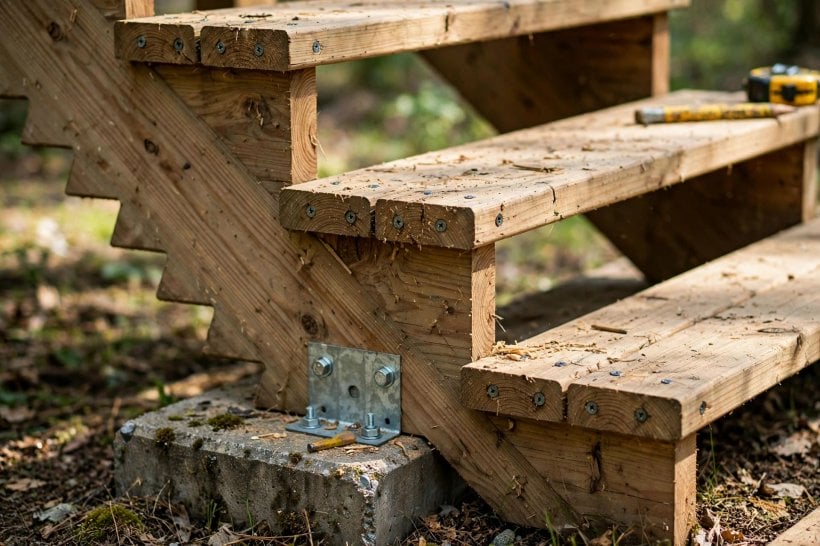
Between the treads sit the risers, and they quietly set the rhythm of the climb. Closed risers give a finished, furniture-like staircase and stop small feet, pets and dropped phones slipping through. Open risers keep a staircase light and airy, let breezes and daylight pass underneath, and are a favourite on decks that overlook a view you do not want to block.
The golden rule is evenness. Our legs learn a rhythm within two steps, so a flight where every rise matches feels safe, while one odd step, often at the top or bottom where levels were fudged, is where stumbles happen. Measure the total rise carefully, divide it evenly, and check the finished floor levels at both ends before anything is cut. Ask your local building office or inspector what riser and tread dimensions they expect, because requirements vary and this is not a place to guess.
Nosing, the slight lip where the tread meets the riser, deserves attention too. A gentle overhang gives toes room on the way up and throws a slim shadow line that makes each step easier to see. On closed-riser designs, painting or staining the risers a shade lighter or darker than the treads adds definition and a tailored, designed feel for very little extra effort.
5. Railings That Frame the View
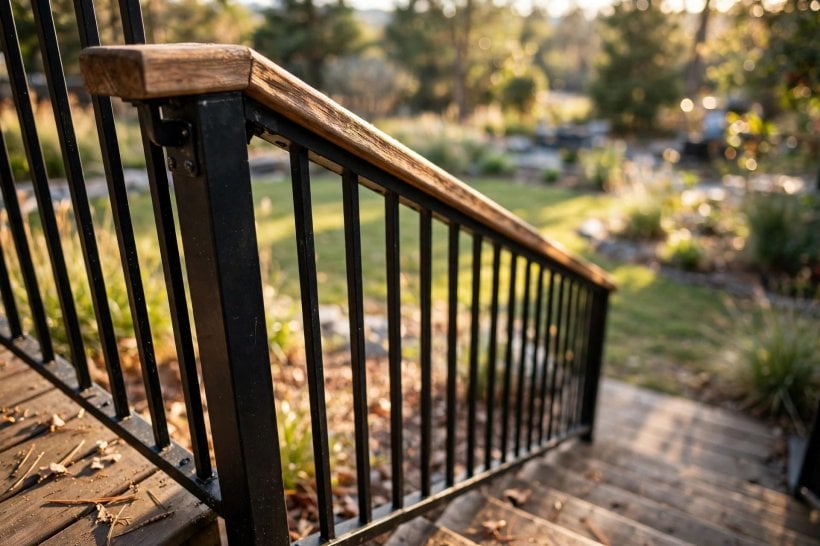
Railings do two jobs at once: they keep people safe and they frame what you see from the deck. Slim metal balusters in a dark finish almost disappear against planting, while horizontal cable runs give a crisp, coastal feel and keep sightlines open. Glass panels are the clearest option of all, turning the staircase into a quiet frame for the garden beyond.
Timber railings remain the warmest choice. A chunky handrail with a comfortable, rounded profile invites hands, and traditional vertical spindles suit period homes. Mixing materials works well too: a smooth timber handrail on slim metal posts combines warmth where hands land with lightness everywhere else. Whatever style you choose, the handrail itself should be easy to grip all the way down, continuous around landings where possible, and fixed so it does not wobble when leaned on.
Think about who uses the stairs. Households with small children or visiting grandchildren often prefer closer-spaced infill or mesh panels that little climbers cannot scale, and gates at the top of a flight can be planned in from the start rather than improvised later. Check with your local building office what guarding they require for stairs and deck edges, then design well within it. When the whole outdoor scheme is coming together, these tiny house home design ideas show how steps, terraces and planting can be planned as one picture.
6. Balustrades, Gates and Safe Edges
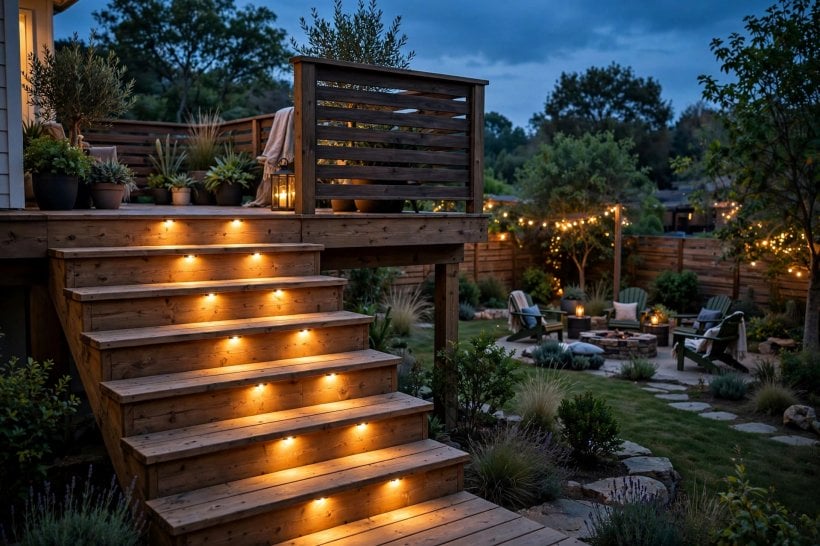
Beyond the handrail, the balustrade fills the gap between steps and safety, and its pattern becomes part of the architecture of the house. Vertical balusters read as classic and tailored, diagonal patterns feel playful, and woven or slatted screens can echo fencing elsewhere in the garden so the staircase feels designed rather than added.
Edges deserve the same care as the middle of the flight. A contrasting strip or a change of texture on the first and last tread helps anyone with low vision find the start and end of the stairs. Keep the route clear: plant pots, hoses and stored garden gear creep onto wide bottom steps, so plan a home for them nearby instead. Where the staircase meets the lawn, a firm landing pad of pavers or gravel stops muddy feet carrying slipperiness up the flight.
Gates and lighting work together here. A gate that matches the balustrade looks intentional, and a handrail that returns neatly into a post or wall avoids snagged sleeves and bags. Take time over these small junctions, because they are the parts you touch every day, and they are what separates a staircase that merely passes from one that feels genuinely well made.
7. Lighting Every Step After Dark
A staircase that works beautifully at noon should work just as well at ten in the evening, and that is where lighting earns its place. Recessed tread lights wash each step in a soft pool of light, while slim LED strips tucked under each nosing draw a clean line down the flight and make every edge unmistakable.
Riser lights are a gentler option, glowing from the face of each step so the light points down at the tread rather than into your eyes. Post-cap lights and a lantern at the top and bottom of the flight help with orientation, and solar stakes along the path at the foot of the stairs carry the welcome onward into the garden. Avoid a single bright spotlight: it creates harsh shadows and glare, and steps disappear exactly where the contrast is strongest. Layers of low, warm light are both safer and prettier.
Plan the wiring while the staircase is being built, not after, and ask an electrician about low-voltage options, outdoor-rated fittings and simple timers or dusk sensors so the lights look after themselves. Warm-toned bulbs flatter timber and planting, and dimmers let you turn the flight from practical route to ambient backdrop when the deck is in party mode. For cosy evenings that start indoors, these tiny house living room ideas pair beautifully with a softly lit garden beyond the doors.
8. Landings, Switchbacks and Space-Smart Layouts
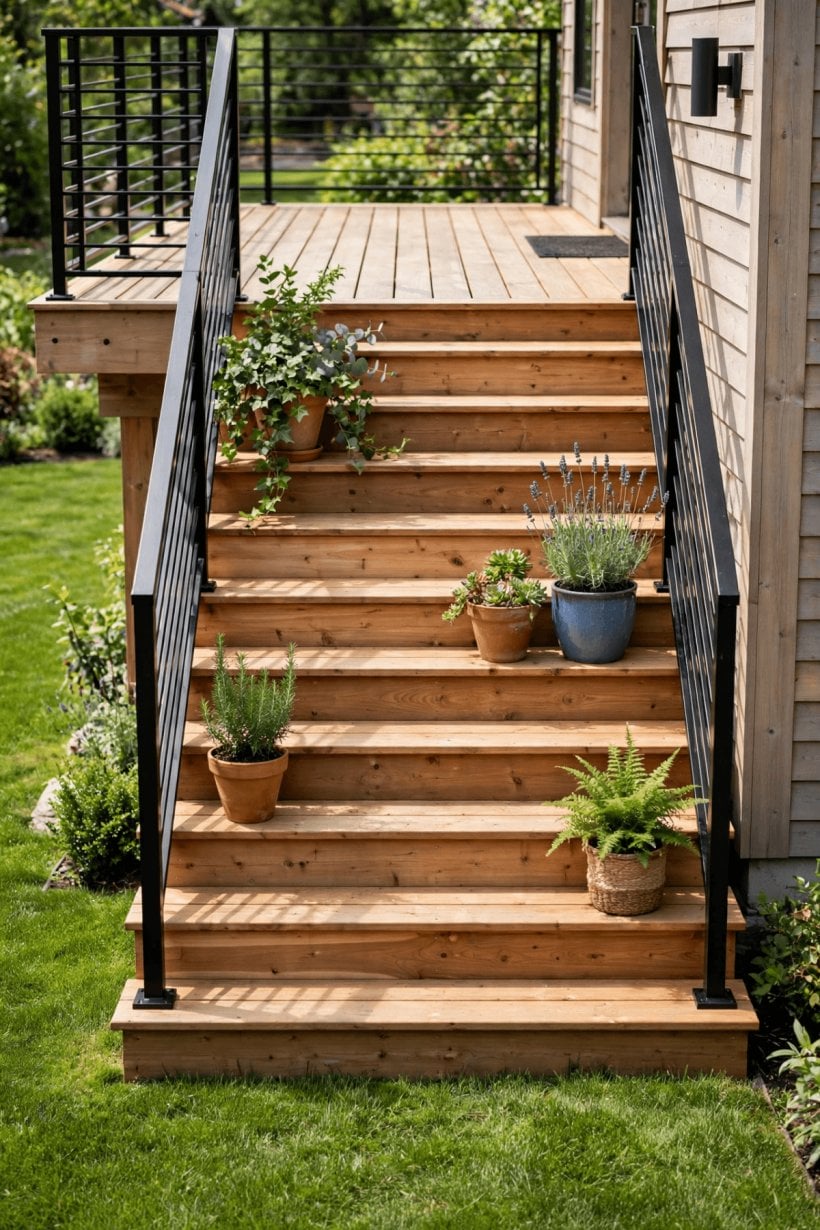
Not every garden can give a staircase a long, straight run, and some of the cleverest ideas in this collection turn that constraint into a feature. A switchback flight, doubling back on itself with a landing between, climbs a tall deck in half the footprint. L-shaped stairs turn a corner gracefully, and a landing part-way up gives climbers a natural pause and a place for a bench, a planter or a view.
Wrap-around steps are the social butterflies of the staircase world. Running wide steps around two or even three sides of a deck creates amphitheatre seating for gatherings, gives children a favourite perch, and removes the formality of a single guarded route. Fan-shaped corner steps soften a square deck, and a split-level design, where two short flights meet at a small terrace, can solve sloping ground with real elegance.
Whichever layout you pick, sketch the route people actually take: door to lawn, kitchen to barbecue, gate to seating. Keep headroom comfortable where a flight passes beneath a deck edge or pergola, and leave room at the bottom for the swing of a mower or the turning circle of a pushchair. Good layouts feel obvious once built, which is exactly the point. If your project is part of a bigger build, the guidance in how to make a cheap tiny house shows how much value early planning adds.
9. Materials, Finishes and Weatherproofing
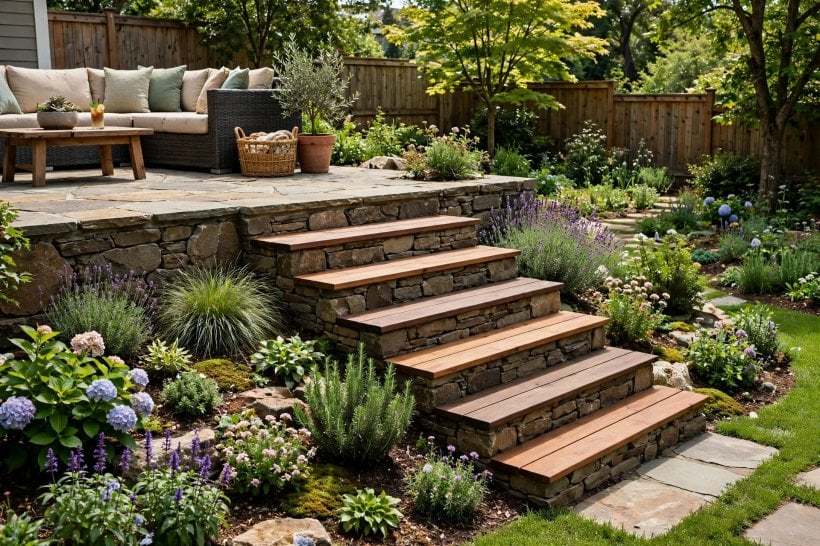
Staircases live harder lives than decks. They take concentrated foot traffic, full sun and the worst of the rain, so material choices here should be led by durability. Naturally durable hardwoods shrug off the weather and feel wonderful barefoot, while pressure-treated softwood is the budget-friendly workhorse that takes stain and paint well. Composite and PVC treads resist rot and splinters and keep their colour with little fuss.
Steel and aluminium structures powder-coated in a deep charcoal or a soft sage give a tailored finish and pair happily with both timber and composite treads. Whatever you choose, ask the manufacturer how the product should be fixed, cleaned and re-coated, and keep offcuts for future repairs so colours match. End grain is the thirsty part of any board, so seal cut ends, keep treads very slightly sloped so water runs off, and clear leaves before they compost into a slippery film each autumn.
Finishes change grip as well as colour. Heavy gloss coatings can be slick when wet, so look for exterior finishes with a matt or satin feel, and test a sample board under the hose before committing. A yearly wash, a check of fixings each spring and prompt attention to any board that starts to flex will keep the whole flight feeling new far longer than the deck around it.
10. Planning, Measuring and Checking the Rules
Great staircases are won on paper. Measure the total rise from deck surface to ground level more than once, on more than one day, and after any landscaping levels are final. Photograph the site, note where water pools, where the bins roll and where winter ice lingers, because the best staircase avoids all three. Then sketch two or three layouts at full size on the ground with chalk or a hose: walking a pretend flight reveals more than any drawing.
Rules matter here. Stair dimensions, handrail heights and guarding are regulated in most areas, and the details differ between jurisdictions, so check with your local building department or a licensed contractor before you build, and ask whether your project needs a permit or inspection. Treat any numbers you find online, including general guides like this one, as a starting point for that conversation rather than a specification. It is far cheaper to adjust a sketch than a finished flight.
Finally, budget honestly for the whole route: structure, treads, railing, lighting, fixings and the landing at the bottom, plus the finishing touches that make it feel complete. Much like planning the cooking zone in these tiny house kitchen design ideas, the staircase rewards money spent on the parts you touch every day. Get quotes that itemise those parts, and keep a little back for the detail you fall for at the last minute; there is always one. For colour confidence when you stain or paint the finished flight, these tiny house living room paint ideas are a helpful companion.
Final Considerations
The best staircase for your deck is the one nobody thinks about: steady, even, well lit and handsome from every angle. Let the stringers do their quiet structural work, choose treads your feet will thank you for, give hands a rail they trust, and layer in light so the route stays welcoming after dark.
Work through these ideas with your own garden in mind, check the local rules before you build, and confirm specifications with manufacturers and your builder as you go. Do that, and your steps will stop being a way down from the deck and become one of the best-designed parts of the whole home.

0 Comments