

Two pale gravels, two very different gardens: one packs down into a firm, walkable crust, the other stays loose and crisp underfoot like a resort path. Choosing between them is the whole personality of your landscape in one decision.
This guide compares crushed granite vs decomposed granite head to head, then widens the lens to the five gravel and stone types worth knowing — so paths, patios and planting beds each get the material that suits them.
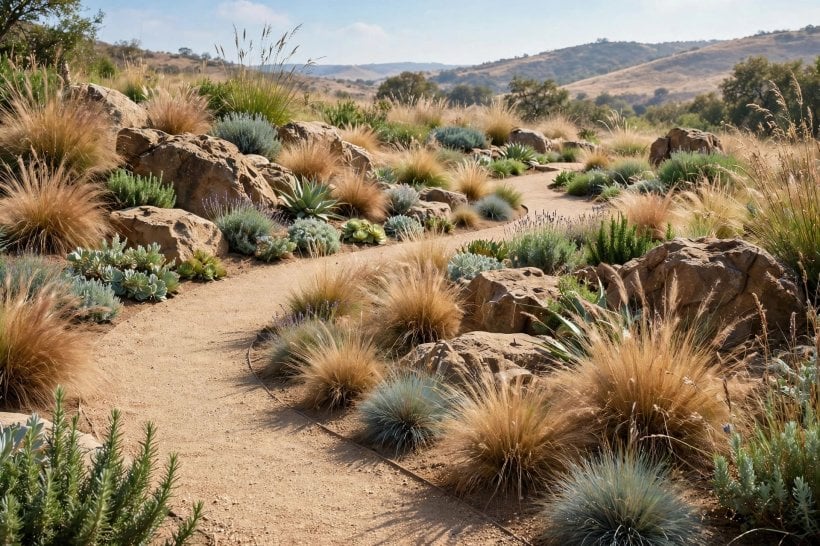
1. Crushed Granite vs Decomposed Granite at a Glance
Both materials begin as granite, but they part company at the quarry. Crushed granite is rock mechanically crushed to a graded size — hard, angular fragments that stay loose and distinct. Decomposed granite (DG) is granite that weathered in the ground into a mix of small angular stones and stone dust; that dust content is the whole story, because it lets DG bind and compact into a semi-firm surface. Two close cousins, opposite behaviours — the comparison below treats each attribute in turn.
| What are they? | Crushed granite: mechanically crushed rock in graded sizes. Decomposed granite: naturally weathered granite with its own binding dust still in the mix. |
| Surface feel? | Crushed granite stays loose and crunchy. Stabilised decomposed granite firms up to a walkable crust. |
| Best at? | Crushed granite: drainage, mulch cover, loose-fill paths. Decomposed granite: firm paths, patios, driveways and pet areas. |
| Weeds? | Both suppress weeds as a deep mulch; DG’s firm crust discourages them further once compacted. |
| Main weakness? | Crushed granite migrates and crunches into the house. Unstabilised DG can dust, track and wash in heavy rain. |
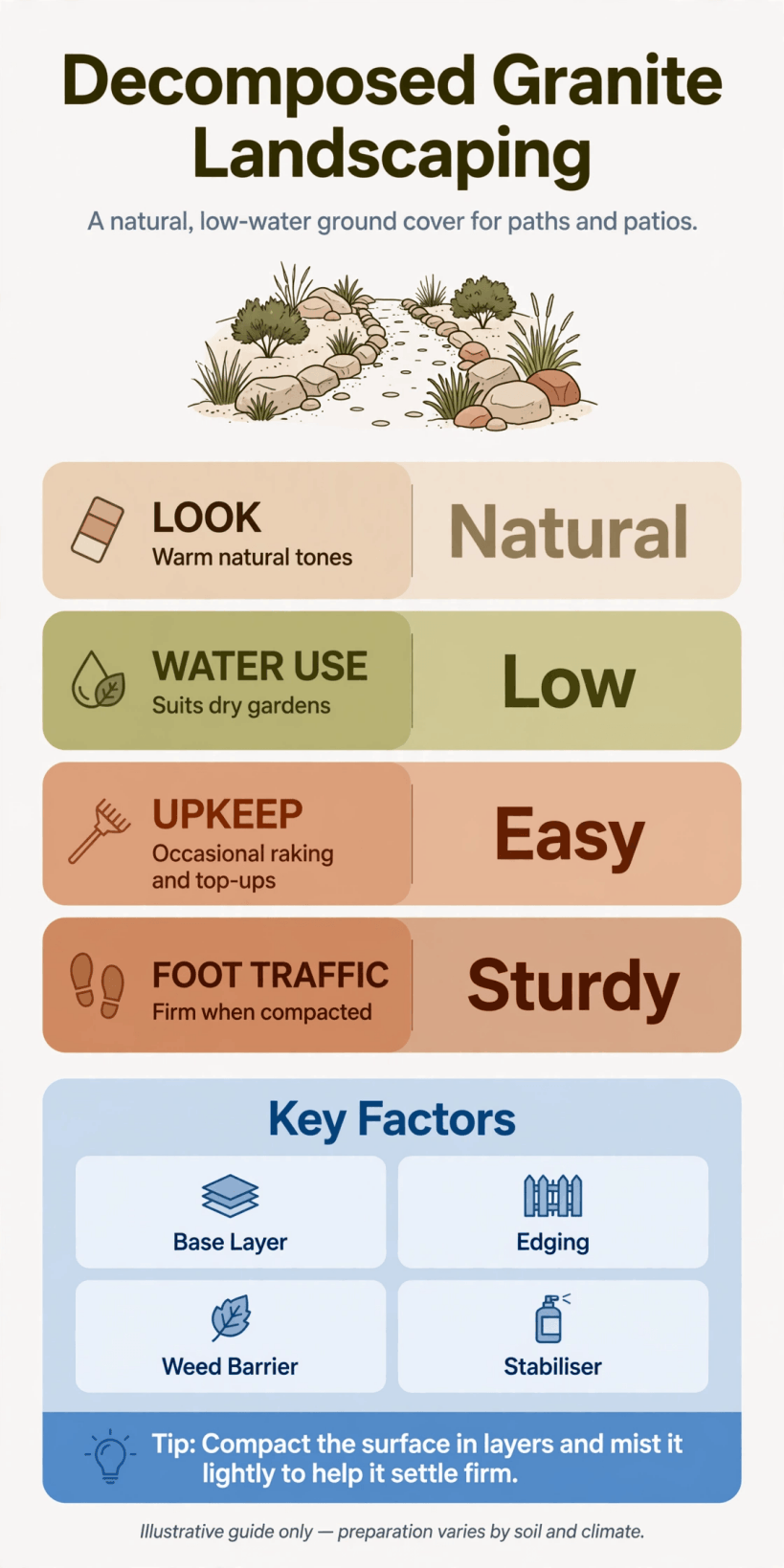
At a glance: want it firm, choose decomposed granite and stabilise it; want it free-draining and loose, choose crushed granite.
2. How Each Material Is Made
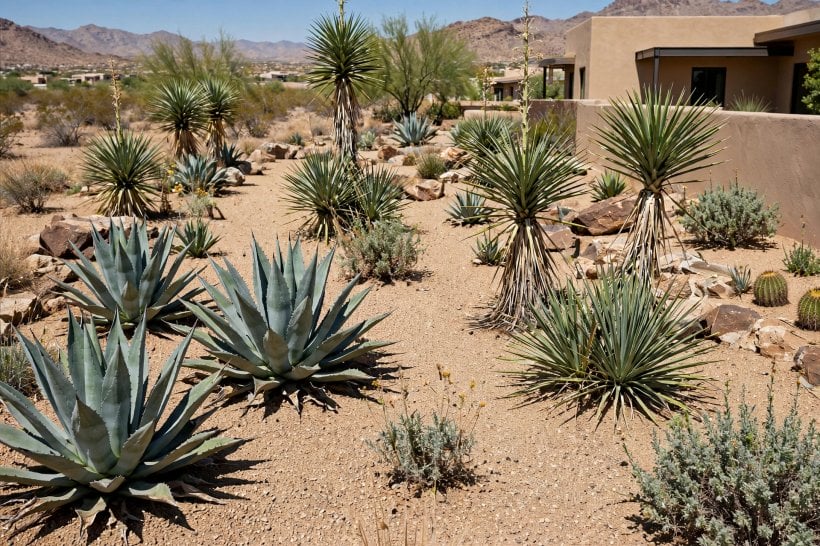
Crushed granite starts as solid rock — blasted, crushed and screened to a chosen grade, from fine grit to chunkier landscape sizes. Every particle is fresh-fractured, hard and angular, with almost no dust in a washed grade. Decomposed granite skips the crusher because geology did the work: over ages, granite outcrops crumble along their crystal boundaries into a natural blend of gravel-sized fragments and fine mineral dust. Quarries simply dig and screen it. That inherited dust is not a flaw — it is the binding agent that lets DG compact. Hold a handful of each and the difference announces itself: crushed granite feels like tiny clean chippings that pour through your fingers and rinse off without a trace, while decomposed granite feels like coarse sand mixed with grit, and it leaves your palm dusty. That dust is clay-fine weathered feldspar, and when it is wetted and rolled it knits the larger particles into a crust the way flour binds a crumble. Every behaviour difference in the sections that follow — firmness, drainage, tracking, maintenance — traces back to that one handful test, which is why any landscape yard worth using will let you perform it before you order. The wider family of landscape aggregates, and where each belongs, is surveyed in our landscaping rock types guide; this post stays with the granite pair and their closest working alternatives.
3. The Five Gravel and Stone Types Worth Knowing
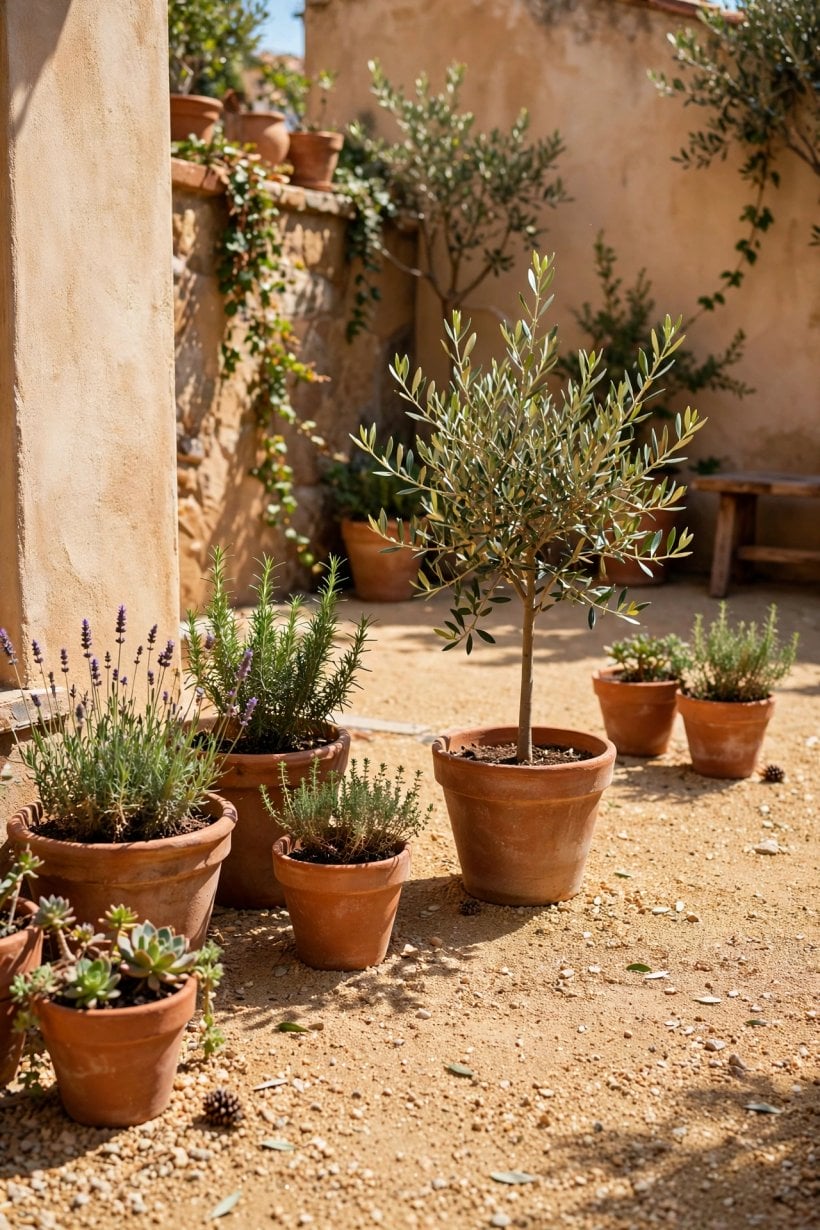
The sheet promise was five types, and here they are — the two granites first, then the three alternatives every landscape yard will offer you instead.
1. Decomposed Granite
The compactor of the family: spread, levelled, wetted and rolled, it sets into a firm, natural-looking surface in warm earth tones. The default for paths and informal patios in dry and Mediterranean-style gardens.
2. Crushed Granite
The loose-fill specialist: crisp, angular and free-draining, sold washed and graded. The tidy mulch for modern planting, the crunch layer for informal paths, and the stone that sharpens a rock garden’s edges.
3. Pea Gravel
Small, rounded, river-worn stones that roll underfoot and refuse to compact. Lovely in a courtyard or as a soft mulch, hopeless on a slope or a main path — it travels on shoe soles and behaves like ball bearings on a gradient.
4. River Rock and Cobbles
Larger rounded stones for dry creek beds, drainage swales, edging and accents. As a walking surface they are an ankle’s enemy, but nothing else reads as “water was here” so convincingly.
5. Crushed Stone and Quarry Fines (the Road-Base Family)
The utility cousins — limestone, basalt or mixed-rock crusher runs with fines that lock tight. Cheaper and greyer than the granites, they are the workhorse under pavers, behind retaining edges and on working driveways where looks come second.
4. Underfoot: Firmness, Comfort and Wheel Traffic
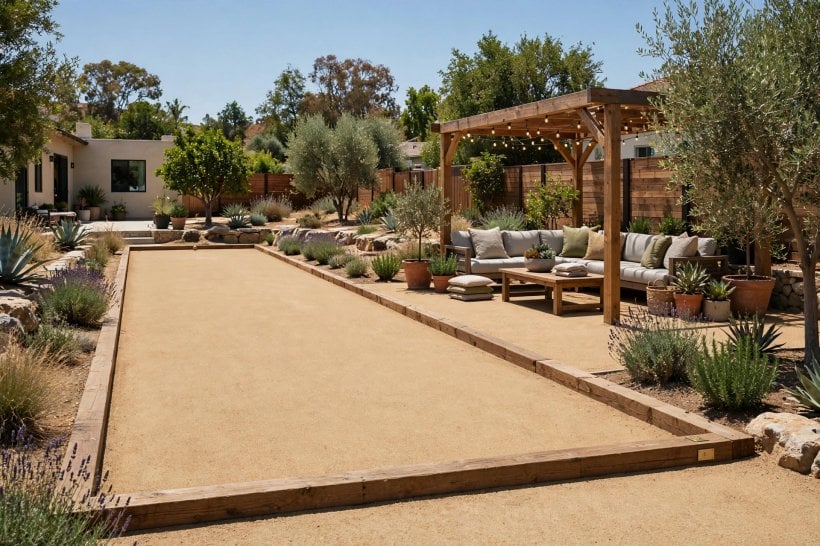
Underfoot is where the pair separate decisively. Properly installed decomposed granite — graded, compacted in layers, ideally with a stabiliser — firms into a surface you can push a wheelbarrow, a wheelchair or a pushchair across without a fight, and it holds a garden bench level. Crushed granite never firms: its clean, dust-free particles roll against each other forever, which is kind to drainage and hard on wheels, heels and bare feet. Think of it as the difference between a beach path and a gravel car park — both honest surfaces, chosen for opposite traffic. Accessibility sharpens the choice further: firm, stabilised DG is one of the few natural-looking surfaces that wheelchair users and people with walking aids consistently rate as workable, because wheels roll on the crust instead of ploughing through it, while loose crushed granite stops a caster wheel the way beach sand stops a suitcase. Bare feet vote the other way on texture but not on stability — crushed granite’s clean edges can feel sharp, DG’s crust feels like firm sand. And on any slope the verdict is unanimous: loose material of every kind walks downhill over a season, so paths with a gradient belong to the binding family or to proper paving, with crushed granite reserved for the level ground it stays put on. For seating areas and the routes between them, the firm family wins; for the low-traffic margins and mulched beds in designs like these rock landscaping ideas, loose fill is no drawback at all.
5. Drainage and Rain Behaviour
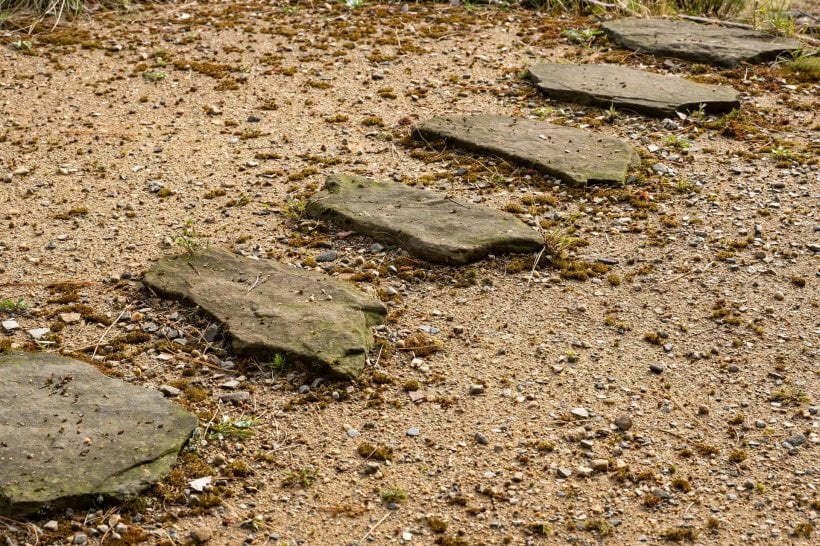
Crushed granite is a drainage material first: water falls straight through the voids between its angular stones, which is why it tops French drains, fills around perforated pipe and keeps splash zones off foundations. Decomposed granite sheds more water than it absorbs — the compacted crust acts a little like a soft paving, so slopes need thought: an unstabilised DG path on a gradient will rill and wash in a storm, carrying its fines downhill to stain whatever lies below. Stabiliser, proper edging and a gentle cross-fall tame it. In genuinely wet climates, DG’s dust can soften and track in winter; crushed granite is indifferent to rain and simply gets cleaner. Where a design must move water deliberately — swales, soakaways, the drainage runs in our gravel path and rock borders project — the loose, open-graded stones do the work, and DG stays on the flat, dry, high-traffic stages.
6. Looks: Colour, Texture and Style Fit
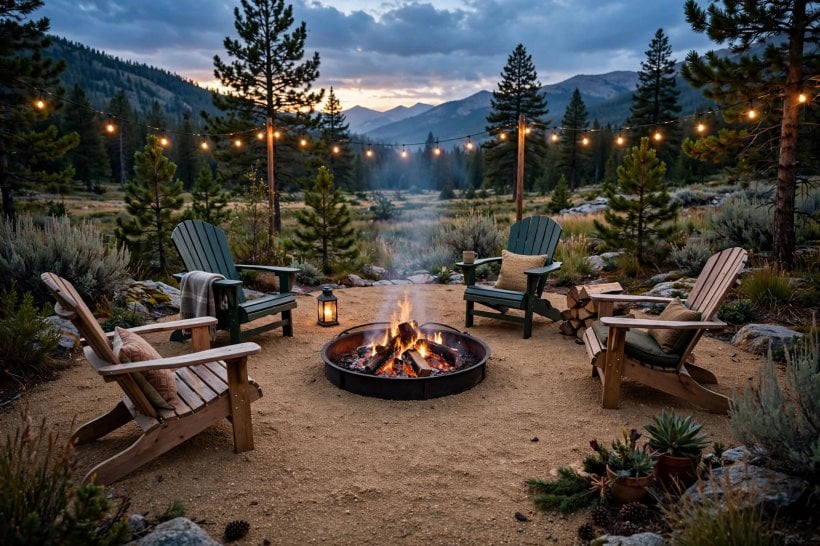
Decomposed granite reads as earth, not stone: warm tans, soft greys and muted rose tones that sit naturally against planting, timber and render. It photographs as a surface rather than a material — which is precisely its charm in Mediterranean, native and desert planting schemes, including the dry-climate designs in our landscaping rocks for high desert climates guide. Crushed granite reads as aggregate: brighter, sparklier, more obviously “gravel”, with the quarry’s colour — silver-grey, blue-grey, pink or white — showing in every particle. It suits crisp modern schemes, pale minimal courtyards and rock gardens where the stone itself is a feature. Neither is prettier; they flatter different gardens. Choose DG when the surface should disappear under the planting, crushed granite when the stone is meant to be seen. Both also change with weather and age, and it is worth choosing for the wet version, not the showroom version: rain darkens DG to a rich, peaty tone that makes green planting glow, while crushed granite brightens as it washes clean, its sparkle strongest just after a shower. Over years, DG weathers toward the colour of the local soil — gardens in granite country end up looking inevitable — whereas crushed granite keeps its quarry colour almost indefinitely, because fresh hard faces keep presenting themselves as the surface is walked and raked. If your scheme depends on a precise pale gravel note staying pale against dark planting, the crushed material holds the note; if you want the ground to settle into the landscape like it was always there, DG is the one that mellows.
7. Installation: Bases, Edging and Compaction
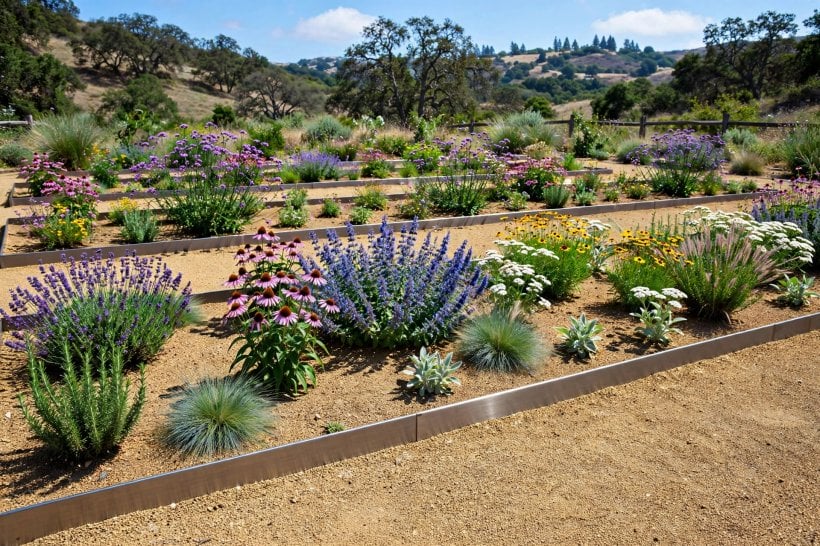
Both materials punish skimped preparation, in opposite ways. Decomposed granite wants a shaped, compacted sub-base, steel or stone edging to hold its crust, then its own layers spread, levelled, wetted and rolled — rush the wetting and rolling and it never firms, skip the edging and the crust feathers away at the margins. Crushed granite wants containment and depth: a firm base, a weed membrane where appropriate, edging to stop migration, and enough depth that feet do not churn through to the soil beneath. On paths, walk the finished surface before declaring victory; both materials settle, and a top-up pass in the first season is normal, not a failure. Depth is the quiet specification in both systems: too thin a layer of either material over soil and the two mix within a season into a muddy hybrid that does neither job, so the layer needs enough body to stay itself — a generous mulch depth for the crushed stone, and for DG a thickness that lets the crust form as a slab rather than a skin. Where a path meets lawn, paving or a doorway, finish with a deliberate threshold — a stone, a timber edge, a metal strip — because that junction is where loose particles escape and crusts crumble, and it is far easier to build the boundary than to police it weekly with a broom. The edging craft here is the same one that makes the dry-laid work in our dry stack stone path guide stay crisp — edges are where gravel gardens are won and lost.
8. Maintenance Over the Years
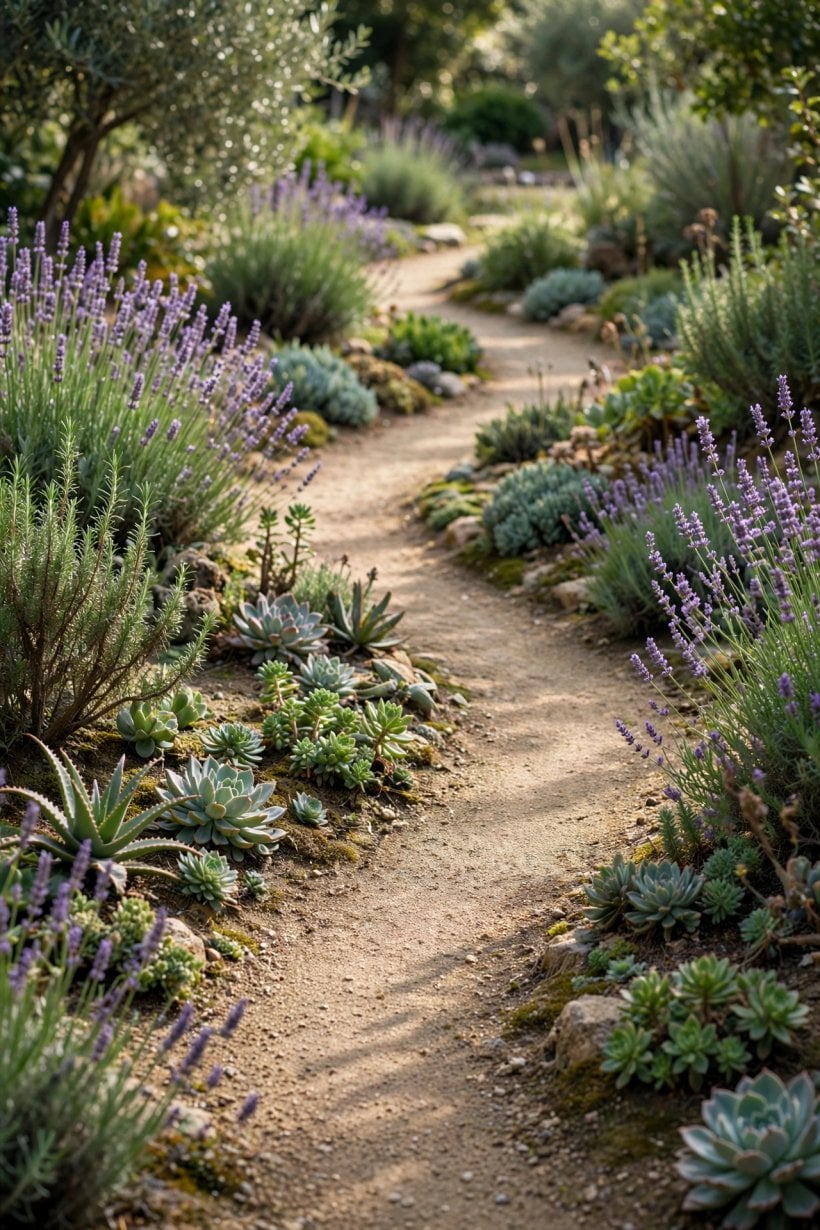
Decomposed granite asks for small, regular kindnesses: rake out footprints and leaf litter, top up worn traffic lanes, re-wet and roll patches that loosen, and expect the stabiliser to want renewal on the busiest stretches over the years. Its dust will find your shoes and thresholds in dry summers — a boot brush by the door is part of the system. Crushed granite’s maintenance is mostly containment: sweep strays back from lawns and paving, top up the depth where it thins, and lift and wash sections that soil and leaf mould eventually clog. Weeds colonise both eventually if the depth thins; both forgive a flame weeder or a hand fork better than a membrane full of holes. Neither material ever needs sealing, painting or replacing wholesale — a rare and underrated virtue, shared with the set-and-forget surfaces in these backyard landscaping ideas.
9. Costs and Availability
Costs for both are driven less by the stone than by distance: these are heavy, low-value materials, and haulage from the quarry decides the delivered price. Decomposed granite is abundant and cheap near granite country and scarce or premium far from it; crushed granite is available almost everywhere but priced by grade and washing. Price the whole job — stone, edging, membrane, stabiliser for DG, delivery and the labour of compaction — rather than the per-ton figure that catches the eye, the same whole-project discipline applied in our permeable rock pavers guide. Ask the yard for a sample bag of each and live with both on a test patch through a rainstorm before committing the garden to either; five square feet of evidence beats any showroom conversation, and colour in particular shifts between the dry bag and the wet garden.
10. Who Should Pick Which: The Verdict
Pick decomposed granite if your surface must work for a living: main paths, patios, driveways, play and pet areas, anywhere wheels, chairs or daily feet need a firm, quiet, natural-looking floor — and if your climate is dry enough, or your stabiliser budget real enough, to keep its crust honest. Pick crushed granite if the job is drainage, mulch or loose-fill texture: around foundations, over drains, in modern planting schemes, on gentle informal paths where the crunch is part of the pleasure and nobody pushes a wheelchair. Pick one of the wider five — pea gravel for soft courtyards, river rock for water features and swales, quarry fines for working bases — when the granites’ specific talents miss your specific job. The mistake is not choosing either granite; it is asking loose stone to behave like paving, or paving-priced DG to do a drain’s work.
Final Considerations
Crushed granite vs decomposed granite resolves to one question: should this surface set firm, or stay loose and draining? Everything else — colour, cost, maintenance — follows from that answer. Decomposed granite is the path-maker, binding its own dust into a walkable crust; crushed granite is the drainer and the mulch, forever free-running and crisp.
Test both on a patch, watch them in rain, walk them in the shoes your household actually wears — then order with confidence. Few landscape decisions cover so much ground, so literally, for so little money per square foot.


0 Comments