
A crisp edge makes the whole garden look cared for, even before a single plant flowers. These edging ideas for flower beds cover stone, brick, metal, timber and living borders, with layouts for straight runs, soft curves and tiny plots alike.
Start with the line you want, then choose a material that suits your soil, your budget and your patience for upkeep.
1. Start With the Bed: Shape, Soil and the Line You Want
The best edging ideas for flower beds begin on paper, not at the checkout. Sketch the bed, mark where grass creeps in, note sunny and shady stretches, and decide whether you want a formal straight line or a relaxed curve. Heavy clay, sandy soil and sloping ground each favour different materials, so a few minutes of honest checking now saves re-digging later. If you are planning the wider plot too, our guide to tiny house landscaping ideas shows how beds, paths and lawns can work together in a small space.
| At a Glance | Good First Choice | Why It Helps |
|---|---|---|
| Neatest lawn line | Metal strip or brick soldier row | Gives the mower a clean edge to follow |
| Lowest-cost start | Dug trench edge or gravel band | Uses labour and loose material rather than bought units |
| Longest-lasting border | Stone set on a firm base | Resists frost, strimmers and shifting soil |
| Softest cottage look | Living plant edge or woven willow | Blurs the line gently instead of hardening it |
| Key check before buying | Measure the full run, including curves | Curves use more material than most people expect |
| Upkeep rhythm | Little and often | A quick tidy each month beats a yearly rescue |
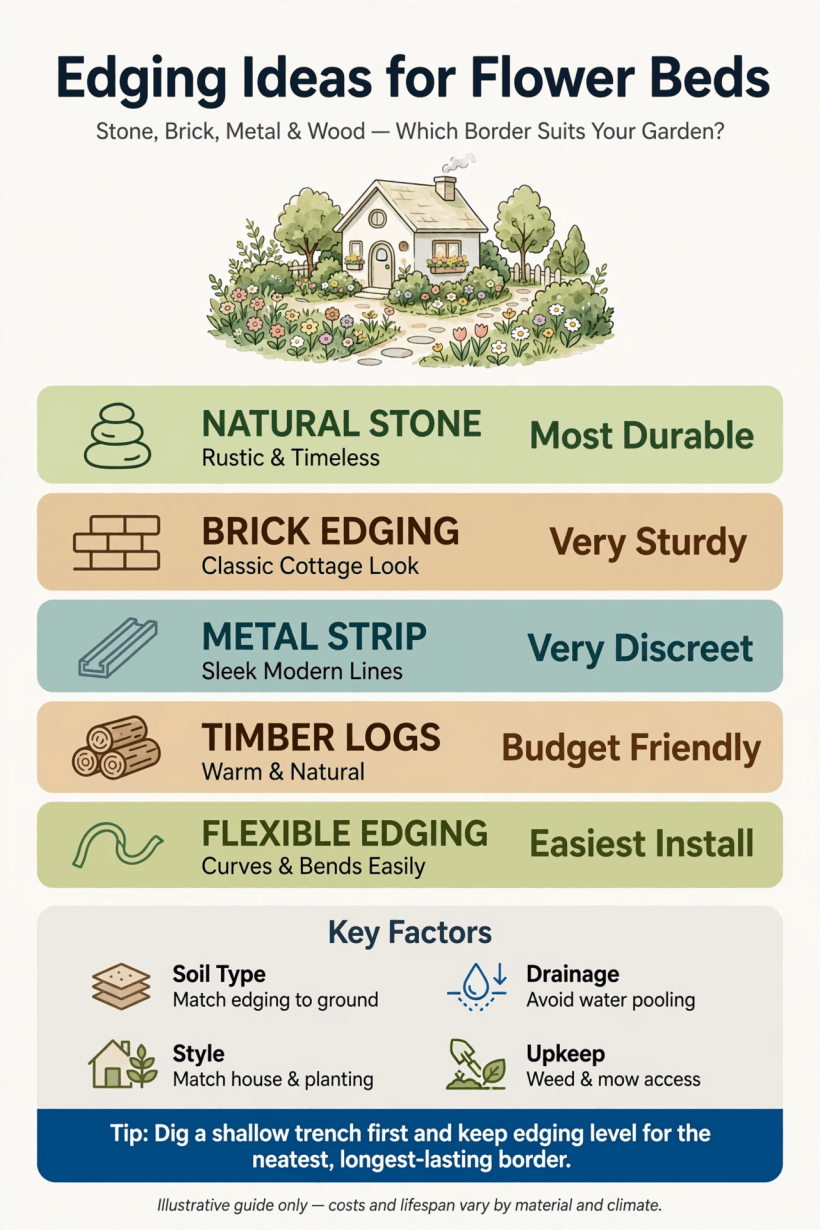
A quick visual guide to matching border materials with bed shapes, soil type and the upkeep you can realistically keep up.
2. Stone and Brick Borders That Last
Stone and brick are the heavy lifters of the border world. They suit front gardens, formal beds and anywhere you want the line to stay put for years with very little fuss once it is laid well.
1. Flat stone soldier row. Stand flat stones upright in a narrow trench, packed tightly shoulder to shoulder. The rhythm looks tidy from the street and stops mulch spilling onto the path after heavy rain.
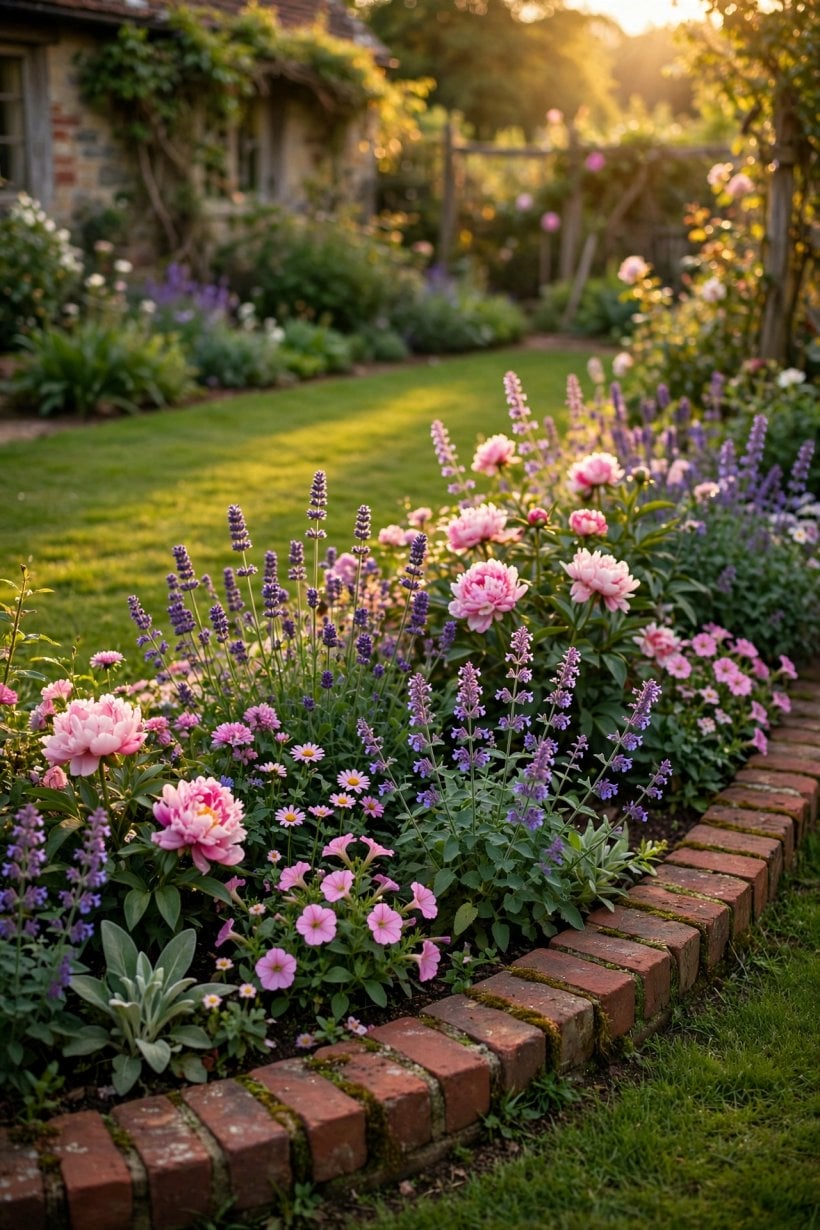
2. Brick laid on edge. Bricks set diagonally or on edge give a classic saw-tooth or soldier finish. Reuse sound bricks from a demolished wall where you can, checking each one for cracks first.
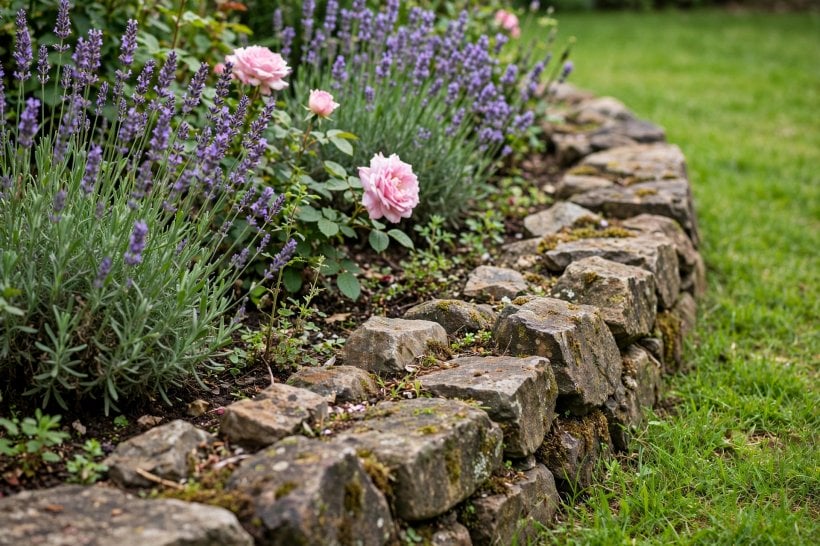
3. Dry-stacked fieldstone. Small fieldstones stacked without mortar feel relaxed and rural. Keep the wall low, lean it slightly back into the bed, and fill gaps with soil for stability.
4. Paver band two bricks wide. A double-width paver band creates a mowing strip, so the mower wheel runs on the pavers and the blade trims right to the bed without scalping the edge.
5. Cobble row in mortar. Rounded cobbles bedded in a shallow mortar strip suit period homes. The mortar keeps each stone honest on slopes where loose cobbles would wander over time.
6. Slate shards on end. Thin slate pieces pushed vertically into the soil make a sharp, dark line that flatters silver foliage and ornamental grasses, and offcuts are often cheap to source locally.
7. Granite setts for a front border. Small granite setts are dense, handsome and almost indestructible. They cost more per metre than most options, talked about in quality rather than price here, but they rarely need replacing.
8. Brick-and-flint mix. Alternate short runs of brick with flint or pebble panels for a patched, collected feel. It is a forgiving way to use up leftover materials from other garden jobs.
9. Stone step-over edge. One low course of stone, just proud of the soil, lets you step into the bed for weeding without compacting the planting soil or muddying your shoes.
10. Reclaimed kerb stones. Short lengths of old kerb give a municipal, architectural line that suits modern planting. Check with your local salvage yard and your city about any rules on reusing street materials.
3. Metal, Plastic and Invisible Edges
When the planting is the star, the border should whisper. Thin metal, recycled plastic and simple dug edges hold soil and mulch back while staying almost invisible from a few steps away.
11. Steel strip on a curve. Flexible steel strip bends smoothly around island beds. Tap it level with the lawn so the mower passes over it without catching, and the bed keeps its sweep.
12. Aluminium edge for modern beds. Light, rust-resistant aluminium suits contemporary schemes and raised planters in matching metal. It is easy to cut, so corners and short runs are simpler for beginners.
13. Recycled plastic roll edge. A corrugated plastic roll is a budget-friendly way to tame a long run quickly. Bury most of its depth or it will look wavy and cheap within a season.
14. Barely-there dug trench. The classic trench edge costs nothing but time: cut a neat V-shaped channel between lawn and bed, and re-cut it a few times a year to keep the shadow line sharp.
15. Black metal lawn edge. Powder-coated black steel disappears against dark soil and mulch, which makes pale planting and light gravel pop. It is a favourite trick in show gardens for a reason.
16. Plastic paver-style border. Interlocking plastic sections that mimic pavers give structure without weight. Peg them firmly on soft ground, or frost heave will lift the joints through winter.
17. Corten-style weathering steel. Weathering steel turns a warm rust tone that flatters ornamental grasses and autumn planting. Keep it away from pale paving, as early rust runoff can mark light stone.
18. Hidden edge under a mulch lip. Set any strip edge a fraction below soil level and let mulch roll over it. The bed looks soft and natural, yet the mulch stays where you put it.
19. Edging with a drip-line slot. Run a soaker hose or drip line just inside a metal edge so water lands in the bed, not on the path, and the border doubles as a tidy guide for the hose.
4. Timber, Logs and Rustic Wood Edges
Wood warms a garden instantly. It will not last as long as stone, but it is forgiving to install, easy to change, and perfect for cottage, woodland and family gardens where softness matters more than permanence.
20. Sleepers on edge. Landscape sleepers stood on edge make a bold, raised lip for deep beds. Use timber rated for ground contact and check local guidance on which treatments are suitable near food plants.
21. Log roll border. Half-round log rolls, wired together, unroll straight into a shallow trench. They are ideal for renters and quick makeovers because they lift out again just as easily.
22. Vertical log slices. Short log rounds set upright at slightly varied heights feel playful around a children’s garden or a woodland corner, and offcuts from tree work are often free for the asking.
23. Woven willow hurdle edge. Low willow hurdles soften any bed with woven texture. Expect a few good seasons rather than a decade, and enjoy them as a renewable, compostable border.
24. Split-rail mini fence. A knee-high split-rail line suits country gardens and keeps dogs and toddlers off young planting without building a real barrier or blocking the view.
25. Pallet-wood border, carefully chosen. Sound, untreated pallet wood can edge a temporary bed. Inspect stamps and condition carefully, avoid anything stained or oily, and treat it as a short-term, changeable solution.
26. Branch and twig edging. Bundles of straight prunings laid between short stakes use what the garden already gives you. It suits wildlife-friendly planting and costs nothing beyond an afternoon.
27. Timber boards on pegs. Straight boards screwed to sturdy pegs are the simplest way to square up a vegetable bed, and they double as a kneeling edge when you are sowing and thinning.
28. Chunky beam corner beds. Heavy beams mitred at the corners frame a feature bed like a picture. The mass holds soil on a slope better than thin boards ever will. For more structured small-space inspiration, see our round-up of modern tiny house interior ideas and carry the same clean lines outdoors.
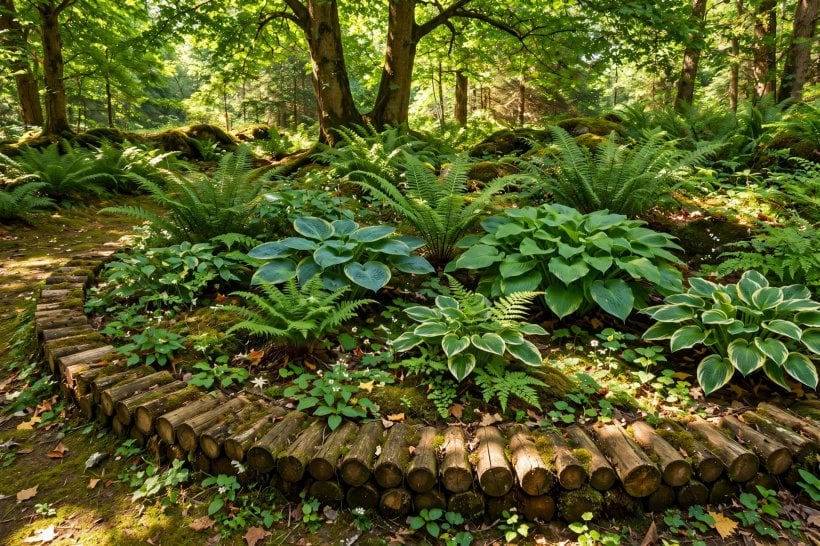
5. Living Edges: Plants That Draw the Line
A living border is the softest answer of all. Low, clumping plants hold the visual line, feed pollinators, and can be trimmed, divided and replanted until the whole garden shares the same green thread.
29. Low lavender row. A clipped lavender line scents the path and hums with bees in summer. Give it sharp drainage and sun; lavender forgives poor soil but never wet winter feet.
30. Box-style dwarf hedge. A miniature hedge, clipped twice a year, is the formal classic. Ask your nursery about locally suitable, disease-aware alternatives if box blight is common in your area.
31. Ornamental grass ribbon. Short, tufty grasses planted shoulder to shoulder make a swaying ribbon that looks good from spring to frost and hides a multitude of weeding sins behind it.
32. Creeping thyme seam. Thyme knits along the front of a sunny bed and releases scent when brushed by shoes. It needs sun and lean soil, and it hates being waterlogged in winter.
33. Heuchera colour line. Heucheras in one repeated colour make a deliberate, designed stripe that holds through winter in mild areas. Repeat the same variety rather than mixing, or the line turns patchy.
34. Strawberry edge for a kitchen bed. Fruiting strawberries edge a herb or vegetable bed prettily and productively. If you are planning beds near the cooking space, our tiny house kitchen design guide helps you think about the room the harvest is heading for.
35. Mondo grass border. Dark, strappy mondo grass is tough, evergreen and happy in shade where lawn sulks. It spreads slowly, so plant it densely if you want the line to read in the first year.
36. Annual flower fringe. A fresh fringe of annuals each spring is the cheapest living edge and the most changeable. It is perfect for gardeners who get bored and like to re-paint the border yearly.
37. Herb edging mix. Chives, parsley and low rosemary along a sunny bed give you a border you can eat. Keep taller herbs to the back of the line so the edge stays low and readable.
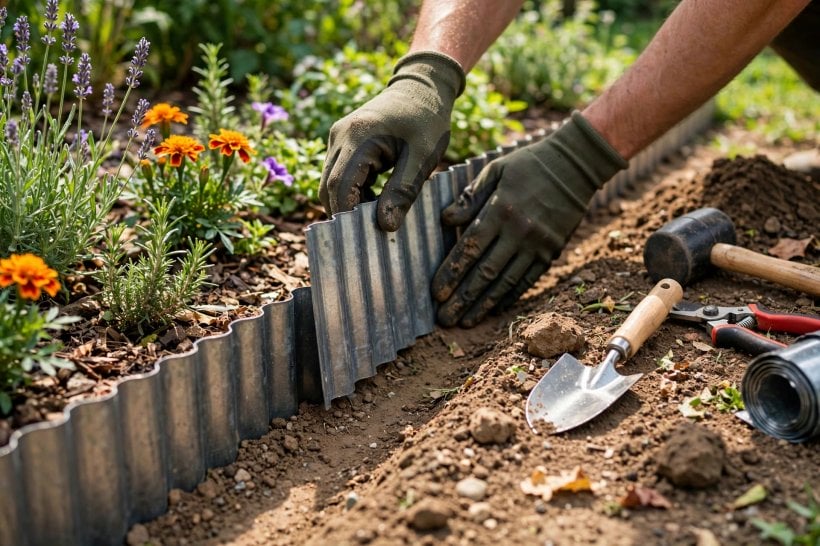
6. Gravel, Pebble and Mulch Edges
Loose materials make the friendliest transition between bed and path. They forgive wobbly lines, drain well, and can be topped up in minutes when the border starts to look tired.
38. Gravel band buffer. A hand’s-width band of gravel between lawn and bed catches stray mulch, discourages grass creep and gives the mower a forgiving margin to run alongside.
39. Pebble river edge. Rounded pebbles laid in a shallow, meandering row suggest a dry stream and suit Japanese-inspired and coastal planting, especially beside grasses and gravel mulch.
40. Crushed stone mowing strip. Compacted crushed stone, level with the lawn, acts like a permanent mowing strip that never needs re-cutting, though it appreciates a rake and a top-up each spring.
41. Bark-chip soft edge. A deep bark lip is the woodland way: informal, cheap and kind to knees. It will break down into the soil, which the bed enjoys, so budget time for yearly topping up.
42. Shell edge for coastal gardens. Crushed shell paths and edges brighten shady corners and crunch satisfyingly underfoot. Check local availability and any guidance on using shell near waterways before you order a load.
43. Slate-chip border. Angular slate chips lock together better than round gravel and give a smart, contemporary seam that flatters silver and purple planting in a modern scheme.
44. Sand seam for a beachy bed. A pale sand seam between paving and planting reads as a beach line. It needs a firm strip beneath it or the sand will migrate into the bed within weeks.
45. Gravel with stepping pads. Break a long gravel edge with flat stepping pads where you cross into the bed. Your shoes stay clean, the gravel stays in place, and the rhythm looks deliberate.
46. Mulch moat around island beds. A wide mulch moat isolates an island bed from the lawn, starves creeping grass of light at the seam, and makes the island’s shape read clearly from the house.
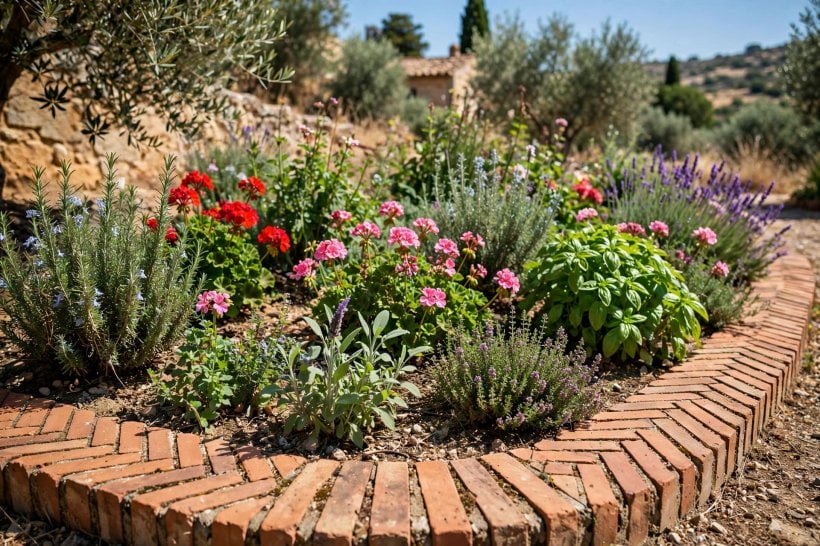
7. Curved, Tiered and Raised-Bed Layouts
Shape is half the effect. The same material looks formal in a straight run and romantic on a curve, so use layout, levels and rhythm to do the design work before you spend on premium materials.
47. Sweeping island curve. Lay a hose on the lawn to audition a curve before you cut anything. Gentle, generous sweeps are easier to mow and edge than tight wiggles, and they age gracefully.
48. Double-line formal border. Two parallel edges with a gravel seam between them give a grand, architectural frame for a long border, echoing the calm order you will find in our tiny house living room ideas, translated outdoors.
49. Tiered two-level edge. On a slope, split the bed into two low tiers with a stone or sleeper riser. Each tier is easier to plant, water and weed than one deep, sliding bank.
50. Raised bed with a seating cap. A wide, flat cap on a raised edge doubles as a perch for coffee, tools and tired gardeners. Keep the cap smooth and slightly overhanging so rain drips clear of the face.
51. Corner fan layout. In a corner bed, fan the edging out from the fence in widening arcs. The geometry organises awkward triangular soil and gives every plant a place in the pattern.
52. Checker rhythm edging. Alternate two materials in short, regular lengths for a checked rhythm along a straight bed. It turns leftover stone and brick into a deliberate design feature.
53. Sunken hidden edge. Set the border just below lawn level so only a clean shadow gap shows. The lawn seems to pour up to the planting, yet soil and mulch stay politely in place.
54. Stepped edge down a slope. Step a timber or stone edge down a slope in level sections rather than following the gradient. Water slows, soil stays, and the steps become part of the design.
55. Circular tree-bed ring. A crisp ring around a tree keeps mower and strimmer off the trunk and gives bulbs a protected circle. Leave room for the trunk to thicken over the years.
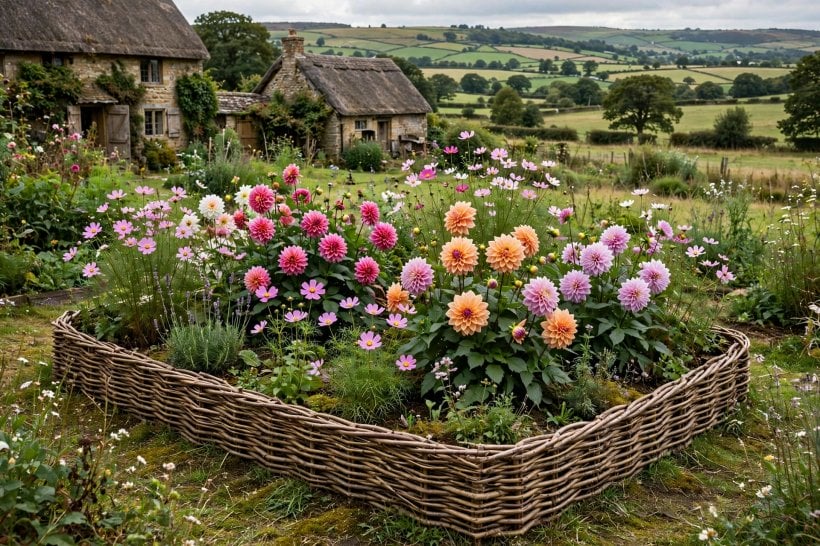
8. Paths, Lawns and Where Beds Meet Grass
Most borders fail at the junctions: where bed meets lawn, path or patio. Design those meetings deliberately and the whole garden feels joined up rather than assembled from separate projects.
56. Mowing strip beside the lawn. A flat strip of brick, stone or compacted gravel at lawn level is the single kindest thing you can do for whoever mows, ending strimmer duty along that bed for good.
57. Path-side gravel seam. A narrow gravel seam between path and bed catches drips, stops soil washing onto paving in storms, and gives trailing plants something forgiving to spill over.
58. Stepping-stone crossings. Place flat stones where feet naturally cross from path to bed. Protecting those two or three spots saves the edge everywhere else from being kicked apart.
59. Bedroom-window bed frame. Frame the bed outside a bedroom window with a slightly taller, tidier edge, since it is the view you wake to. Our modern tiny house bedroom ideas show how much a considered view matters in a small room.
60. Patio threshold edge. Where a bed meets the patio, use the patio’s own material for the first course. The threshold reads as one surface, and the garden feels like an outdoor room.
61. Driveway-side tough edge. Beside a drive, choose the toughest edge you can: setts, concrete or steel. Wheels, bins and delivery trolleys will test it weekly, so soft materials will not survive.
62. Gate and entry pinch points. At gates, keep the edge low, hard and set back a hand’s width. Gates swing, feet hurry, and a proud stone at ankle height will be cursed daily.
63. Lawn-to-bed mulch ramp. Slope mulch gently down to a hidden edge at lawn junctions. The ramp hides the strip, softens the meeting, and stops the mower scalping a raised lip.
64. Children’s play-lawn border. Around a play lawn, pick rounded, forgiving edges with no sharp metal or spiky stone at fall height, and keep the line simple so balls roll back into play.

9. Small Gardens, Corners and Budget Layouts
Small plots reward restraint. One material, repeated calmly, makes a tiny garden feel designed rather than cluttered, and the budget stretches further when the runs are short and the plan is simple.
65. One-material tiny garden. Edge every bed in a small garden with the same material and profile. The repetition does the designing, and offcuts from one bed become the next bed’s border for free.
66. Rental-friendly no-dig edge. Surface-laid log roll, pebble rows or pegged boards tidy a rental garden without digging or permanence, and everything lifts out cleanly when you move on.
67. Balcony and courtyard pots line. A soldier row of matching pots along a hard edge gives a border where there is no soil at all, and the whole scheme can move with the seasons.
68. Corner bed with a mirror line. Echo the same short edge detail in opposite corners of the garden. The symmetry, borrowed from the styling in our tiny house bedroom decor ideas, makes a small plot feel intentional.
69. Budget trench and mulch. The cheapest respectable edge is a well-cut trench plus deep mulch. It costs a Saturday, not a delivery, and it teaches you where your beds really want to be.
70. Free-cycle stone hunt. Garden stone is heavy, so people give it away. Watch local listings, collect patiently over a season, and let the mixed sizes become a relaxed dry-stone style.
71. Half-now, half-later phasing. Edge the most visible bed properly this year and trench-edge the rest. Phasing spreads cost and labour, and the finished bed shows you which materials deserve repeating.
72. Narrow-bed ribbon edge. For beds under a metre deep, a single slim ribbon of steel or brick keeps the proportions light. Chunky materials can swallow a narrow bed whole.
73. Shade-corner pale edge. In dark corners, a pale gravel or light stone edge bounces what light there is and stops the bed dissolving into gloom at the back of the garden.
74. Wildlife-gap edging. Leave occasional low gaps in solid edges at ground level so frogs and hedgehogs can pass between beds. Check local wildlife guidance for sensible gap sizes and placements.
75. The five-year test edge. Before committing the whole garden, edge one bed with your favourite material and live with it through all four seasons. Mowing, frost and rain will review it honestly.
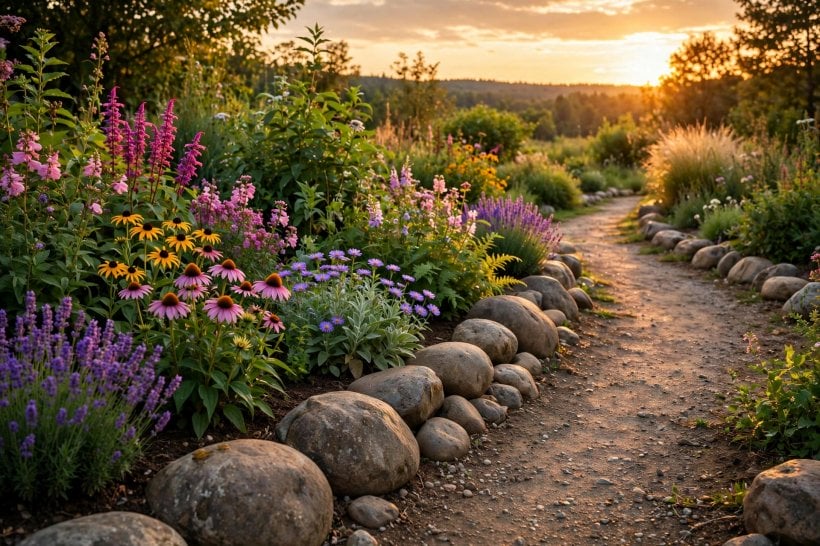
10. Installing, Costs and Keeping Edges Neat
Installation follows the same rhythm for almost every material: mark the line with a hose or string, cut the trench a little wider than the border, level the base, set the edge, backfill firmly, then mulch up to it. Working in dry weather makes levels honest and trenches cleaner. Costs vary widely with material and length, so think qualitatively: dug and living edges ask for time, stone and metal ask for money, and almost everything asks for less of both when the line is measured properly first. Before digging near boundaries, utilities or shared fences, check with your city or county office and your utility providers about local rules and safe-digging services, since requirements differ by place. For more small-space planning help, browse our tiny house bedroom ideas and notice how the same measure-twice habit pays off indoors too.
Upkeep is mostly rhythm. Walk the edges monthly with a bucket: push back escaped mulch, pull the brave grass runners, tap down anything frost has lifted, and re-cut trench edges before they blur. Timber appreciates a check for softness at soil level each spring, metal appreciates a wipe where soil sits against it, and living edges appreciate their trims little and often rather than one heroic annual cut.
Final Considerations
An edge is a promise a garden makes to itself: this side is lawn, this side is flowers, and both will be looked after. You do not need the most expensive material to keep that promise, only a line you have thought about, a base you have levelled, and a few minutes of attention each month. Start with one bed, learn what your soil and your mower prefer, and let that small success set the pattern for the rest of the garden.


0 Comments