
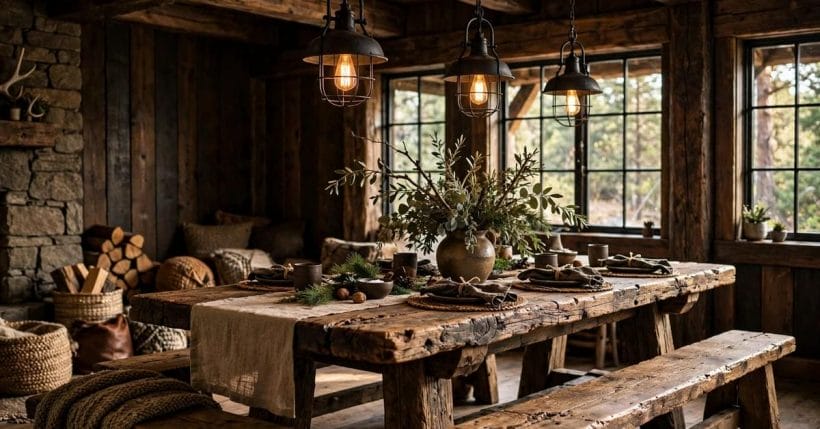
A rustic dining room is not a theme and it is not a farmhouse costume. It is what happens when a room is built from materials that show how they were made — timber with its grain left honest, stone that was never polished smooth, iron bent by hand — and then asked to do the oldest job in the house: feeding people well.
These seventy-five rustic dining room ideas work through the whole room in order: the table first, then seating, walls, floors, light, storage, dressing and colour. The dining room survey as a whole belongs to the dining room ideas pillar; this post is its rustic chapter, split cleanly from its siblings — the coastal dining room keeps the light, salt-washed palette, the french country dining room keeps the soft curves and painted finishes, and the rustic room keeps the raw materials and the weight.
1. Rustic Dining Rooms at a Glance
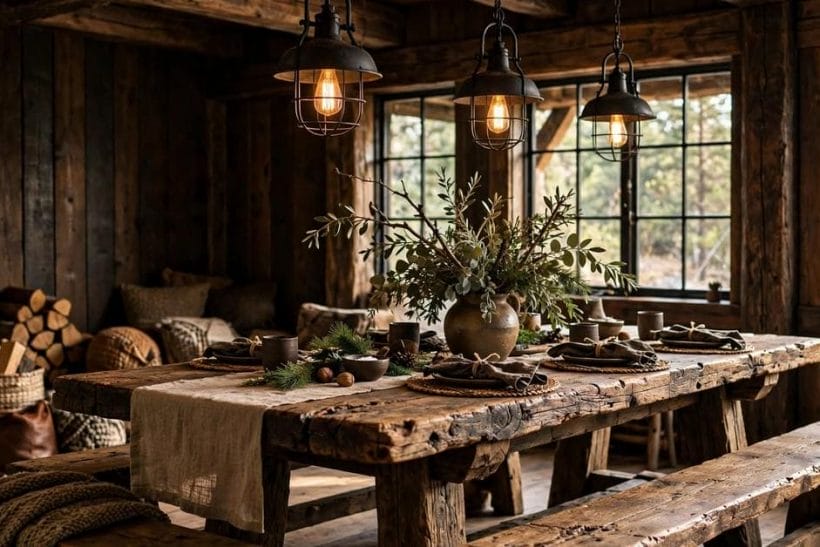
Rustic done well is a materials discipline, not a shopping list. One or two raw materials carry the room — usually timber, supported by stone, iron, linen or leather — and everything else stays quiet so the texture can speak. The moment every surface shouts texture at once, the room turns into a stage set; the ideas below keep returning to that balance, and to the practical truth that a dining room must seat people comfortably, light their faces kindly and survive gravy.
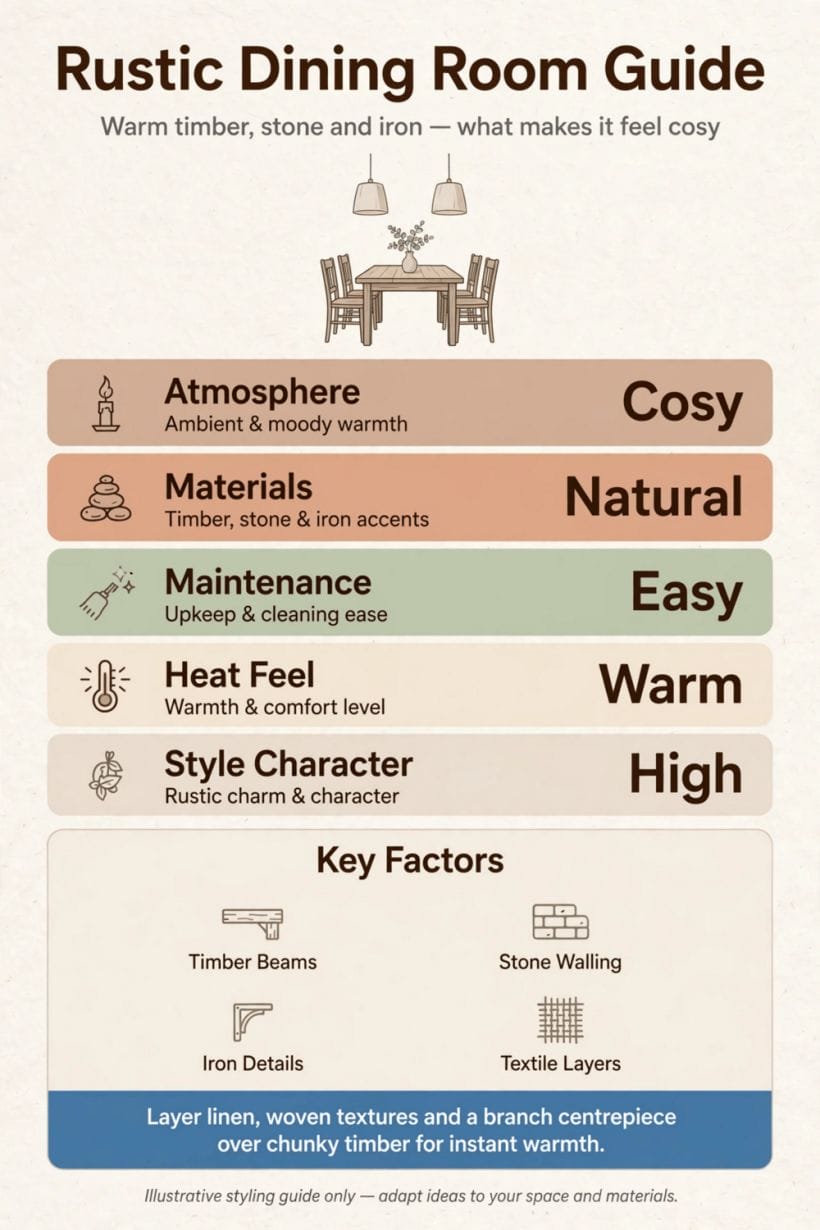
| Question | Short answer |
|---|---|
| What makes a dining room rustic rather than just wooden? | Materials left close to their natural state — visible grain, hand-worked edges, matte finishes — combined with simple, sturdy forms |
| How much texture is enough? | Two strong textures per view is a reliable ceiling; the table and one wall or floor can carry a whole room |
| Does rustic mean dark? | No — pale weathered timber, limewash and linen make a light rustic room; darkness comes from closed curtains and heavy colour, not from the style |
| Where does the money go? | The table first, then seating comfort, then lighting; the rustic details themselves are mostly inexpensive and often reclaimed |
2. The Table: Timber, Trestles and Honest Joinery
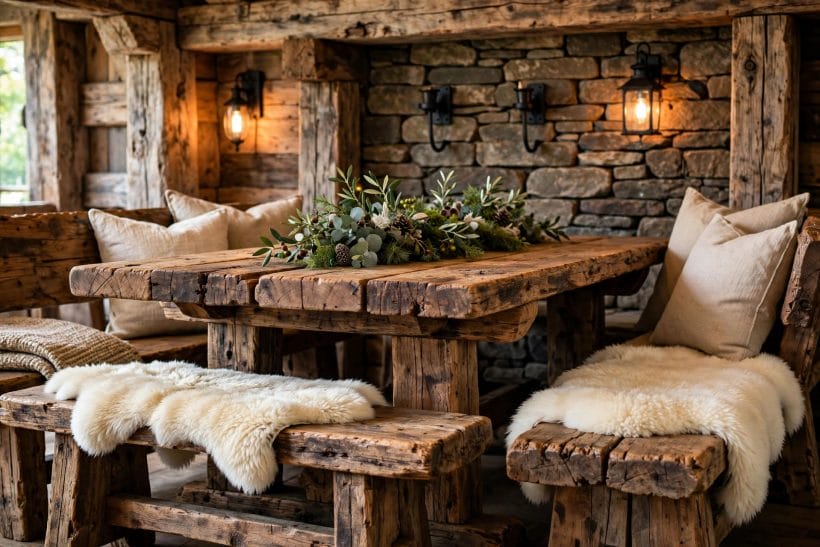
The table is the room. In a rustic dining room it should look capable of outliving its owners, show its construction without embarrassment, and seat everyone without a negotiation. Everything else in this post is support staff.
1. The long trestle table
Two trestle ends and a thick top: the oldest dining table form there is. The open ends seat people comfortably at the corners, the structure reads from across the room, and nothing wobbles because the engineering is visible and generous.
2. Plank-top construction
Wide boards laid side by side, their joins left as fine shadow lines rather than filled invisible. The top tells you it was once trees; that honesty is the whole rustic argument in one surface.
3. A live-edge statement table
One wavy, bark-line edge on an otherwise disciplined table brings the forest into the room. Keep the rest of the table plain — the edge is the ornament, and it only needs to appear once.
4. Reclaimed timber with a past
Barn boards, old joists and retired scaffold planks carry nail holes and saw marks no new board can fake. Ask how the timber was cleaned and finished; the history is welcome, the splinters are not.
5. The chunky farmhouse rectangle
Turned or square legs as thick as your wrist, an apron deep enough to notice, a top you can knock on like a door. This is the family-workhorse version of rustic, and it suits everyday rooms best.
6. A round rustic pedestal
Rustic does not have to mean rectangular. A heavy turned pedestal under a round top softens a small room, seats conversation better than any cornered table, and proves the style is about material, not shape.
7. Breadboard ends
The cross-piece pinned across a plank top is both a construction detail and a decoration. It keeps wide boards honest through the seasons and gives the table its unmistakable silhouette.
8. Matte oil and wax finishes
Shiny varnish argues with rustic. Oil and hard-wax finishes sink in rather than sit on top, deepen the grain, and — the practical prize — can be spot-repaired after a hot dish or a red-wine evening instead of needing a full refinish.
3. Seating: Benches, Windsors and Mixed Chairs
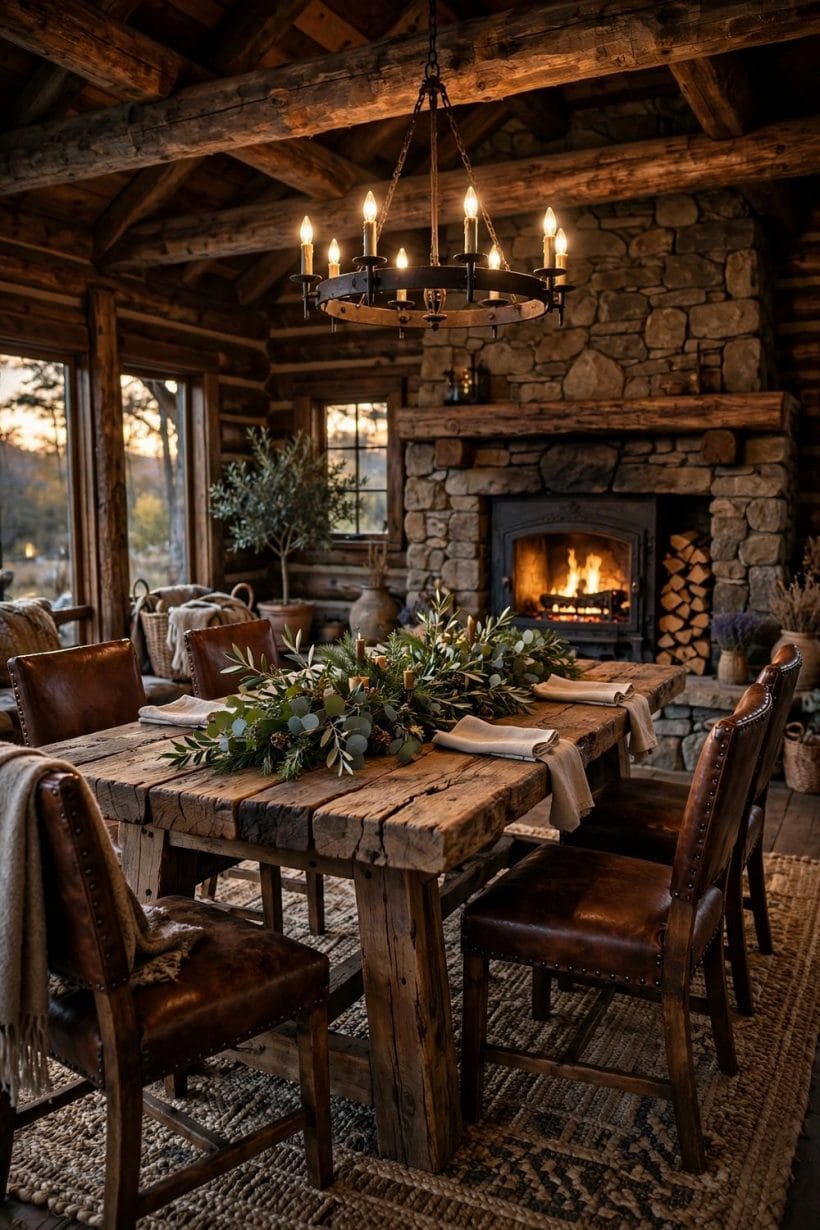
Rustic seating mixes on purpose. A bench along one side, chairs along the other and something with arms at the ends is not indecision — it is how farmhouse tables were always sat at, and it keeps a long table from looking like a boardroom.
9. The long bench
A bench seats three where chairs seat two, slides under the table to free the floor, and invites the squeeze-up that makes family dinners work. Add a long cushion in linen or ticking if the evenings run long.
10. Windsor chairs
Spindle backs, sculpted seats and legs that splay with intent: Windsors are rustic refinement, hand-made long before the word rustic existed. Painted black or left in worn timber, they lighten a heavy table beautifully.
11. Ladder-back chairs
Horizontal slats echo the plank top and the fence outside the window. Ladder-backs are the rustic dining chair in its purest form — upright, honest, and better with a woven rush or paper-cord seat.
12. Carvers at the ends
Two chairs with arms close the composition and give the hosts the good seats. In a rustic room the carvers should be bigger, not fancier — scale does the ceremony, carving is optional.
13. Mixed chairs, one family
Different chairs work when they share one thing: the same timber tone, the same paint colour, or the same seat material. Paint a gathered set one colour and strangers become a set by suppertime.
14. Leather-seated chairs
Leather seats warm with age, wipe clean after children, and bring the saddle-and-harness note that pairs naturally with iron and oak. Full-grain leather darkens where hands touch it, which in a rustic room counts as character.
15. Woven rush and seagrass seats
Hand-woven seats flex a little, which makes them kinder over a long meal than bare boards. They also add a second natural fibre to the room, so the texture story is not all timber.
16. A settle bench with a high back
The old high-backed settle along one wall is seating, draught-proofing and architecture in one piece. It turns the dining side of an open room into a place, and its back is a fine place to hang a wreath or a string of dried herbs.
4. Walls and Surfaces: Stone, Plaster and Wood
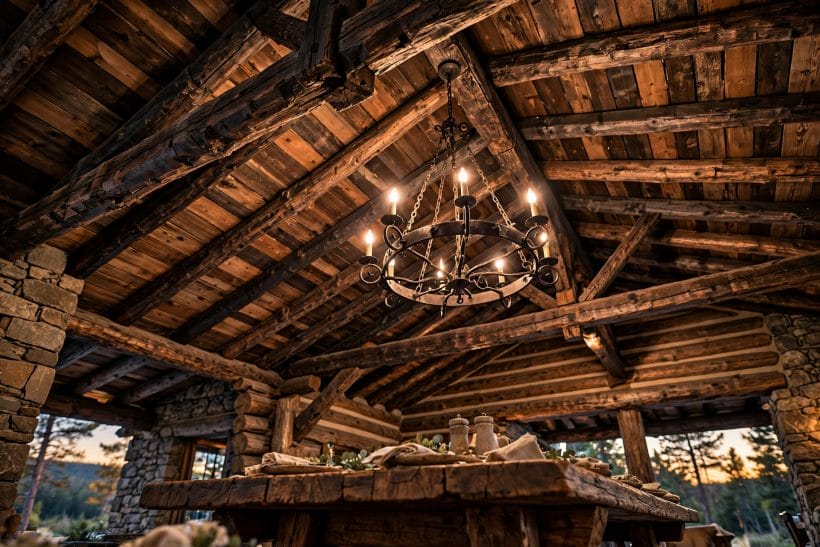
One rustic wall is a feature; four is a cave. Choose the wall the table points at, give it the strongest material in the room, and let the other walls step back in plaster, limewash or quiet paint.
17. An exposed stone wall
If the house has stone, uncovering it behind the dining table is the single most rustic move available. Point it softly, light it from the side so the relief shows, and hang almost nothing on it.
18. Limewash in warm white
Limewash dries cloudy and uneven in the best way, giving flat walls a hand-made movement that flat paint cannot. In warm white it keeps a rustic room light while still looking centuries old.
19. Board-and-batten wainscot
Vertical boards with battens over the joins protect the chair-height zone — the most battered band in any dining room — and give plain walls a farmhouse rhythm. Paint it to match the trim or stain it with the table.
20. Tongue-and-groove panelling
Run it to dado height, to the ceiling line, or up one wall entirely. Painted soft white it reads cottage; left in pine it reads cabin; either way the shadow gaps do the decorating.
21. Exposed beams overhead
Real beams are structure; boxed faux beams are theatre, and the room can usually tell. If beams exist, clean and oil them and stop there. If they do not, a single heavy lintel over a doorway carries the idea more honestly.
22. A brick accent, kept brick-coloured
Old brick brings red-brown warmth that timber alone cannot. Keep it unpainted in a rustic room, seal it against dust if it sheds, and let its colour set the room’s accent palette.
23. Rough plaster texture
A troweled, slightly uneven plaster finish catches light the way old walls do. It is the quietest rustic surface and the best background for one strong picture, a mirror in a worn gilt frame, or nothing at all.
24. One dark wall for depth
A single wall in deep green, oxblood or charcoal makes candlelight and pale timber glow by contrast. Rustic rooms tolerate one dark wall brilliantly because the materials keep it warm rather than cold.
5. Floors and Rugs: Grounding the Room
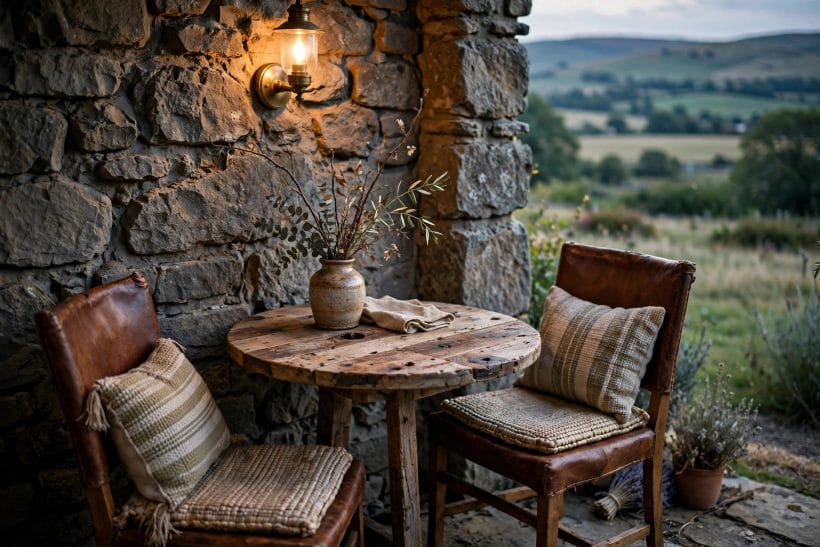
Dining floors take chair legs, dropped cutlery and the occasional flood of gravy. Rustic floors answer with width, wear and forgiveness: boards that improve with scuffs and rugs that hide a multitude of dinners.
25. Wide-plank floorboards
The wider the board, the older the room feels. Wide planks in a matte finish are the rustic floor standard — fewer joins, more grain, and a scale that matches a heavy table.
26. Stone flags in country rooms
Where the dining room opens to a garden or shares a floor with a kitchen, stone flags carry the outside in. They are cold underfoot in winter, which is what the rug and the wood stove are for.
27. A faded vintage rug
An old rug whose pattern has mellowed anchors the table, softens chair noise and brings the room’s accent colours in wool. Faded is a virtue here: a bright new pattern would fight the timber.
28. Jute and sisal for easy keeping
Natural-fibre rugs shrug off crumbs, suit bare feet and cost little enough to replace without grief. Layer a smaller patterned rug over a big jute one when the room wants both softness and pattern.
29. The rug sized to the chairs
Whatever the material, size the rug so chairs stay on it when pulled out. A rug that ends mid-chair-leg rocks every seat at the table and quietly cheapens the whole room.
30. Herringbone in brick or timber
A herringbone pattern — in reclaimed brick pavers or in wood — adds movement without adding a second material. It suits long rooms especially, running the eye down the table’s axis.
31. Checkerboard, softened
The farmhouse checkerboard works in stone-cream and charcoal rather than black and white. The geometry is formal, the tones are not, and the combination is pure country dining room.
32. Bare boards and a runner
In a small room, skip the full rug: good boards, a woven runner under the table’s length, and felt pads on every chair leg. The room breathes, cleaning is simple, and the timber does the talking.
6. Light: Pendants, Candles and Firelight
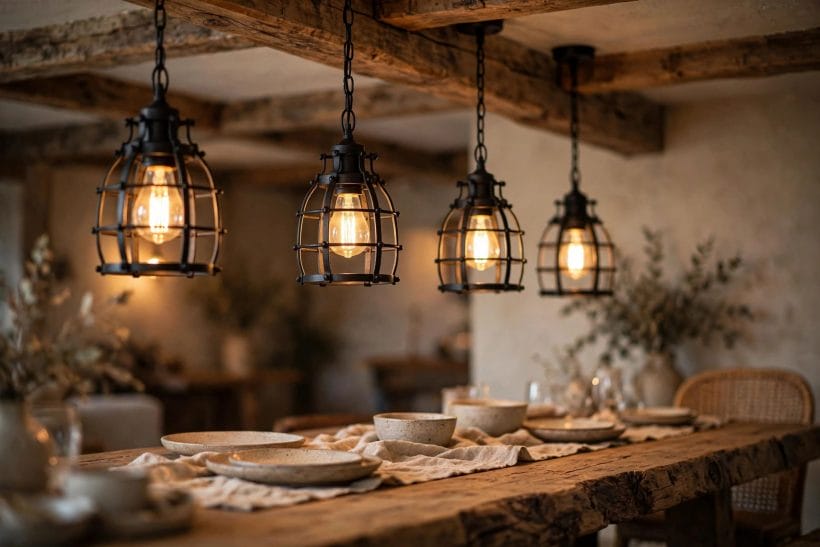
People forgive a rustic room almost anything except bad light at dinner. Faces want warm, low, shaded light; the table wants a pool of it; the corners can look after themselves. For the fixtures themselves, the dining room chandeliers and pendants post goes deeper — here it is about placing light in a rustic room.
33. A row of iron pendants
Two or three blackened-iron pendants over a long table divide the light into friendly pools and repeat the metal of the hinges and handles. Hang them low enough to feel intimate, high enough to see across.
34. The wagon-wheel chandelier, used sparingly
It is a cliché because it works: a ring of candles over a round or square table. Choose the plainest version, in real iron tones, and let it be the room’s one theatrical gesture.
35. Lantern pendants
Glass-and-metal lanterns bring the porch light indoors. They suit rustic rooms with garden doors especially, and their clear glass throws the warm, slightly wild shadows the style loves.
36. Candles as a working layer
Not decoration — infrastructure. A run of pillar candles or tapers in iron holders down the table’s centre lifts every face at the table and makes plain food look like a feast. Keep them unscented at dinner.
37. Wall sconces in blackened metal
Sconces wash the stone or plaster wall with grazing light and free the ceiling of clutter. On the feature wall they are what makes the texture perform after dark.
38. A fireplace or stove in the room
Firelight is the original rustic lighting and still the best. A small wood stove in the corner of a dining room changes winter evenings entirely; where a fire is impossible, candles grouped in a cold hearth borrow the effect.
39. Dimmers on everything
Rustic light is low light, but someone still has to carve and serve. Fit dimmers so the room can be bright at six and glowing by eight; it is the cheapest atmosphere in this entire post.
40. Daylight kept rustic
Linen curtains, a simple Roman blind, or bare windows with deep reveals — anything that filters rather than frames. Heavy formal drapes undo a rustic room faster than any other single choice.
7. Storage and Dressers: Sideboards, Hutches and Shelves
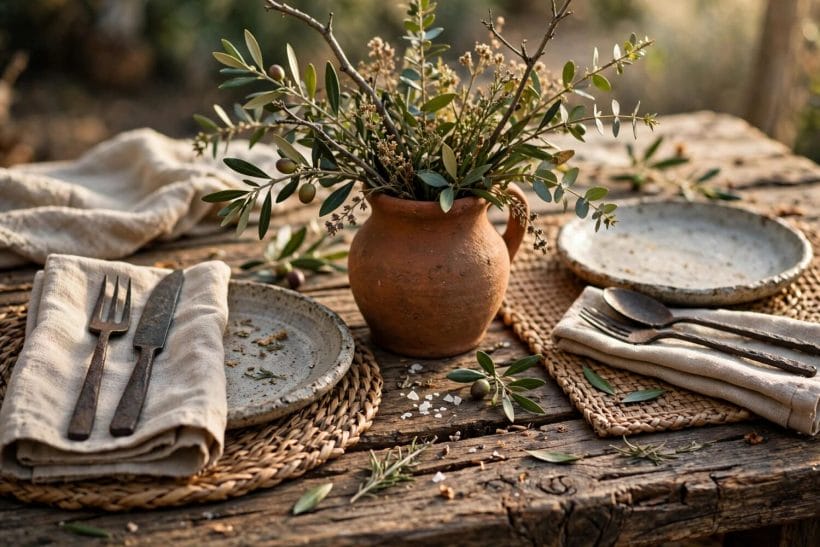
A dining room that cannot store its own tableware becomes a corridor with a table in it. Rustic storage is furniture, not cabinetry: dressers, sideboards and open shelves that look like they were carried in, not built in.
41. The pine dresser or hutch
Plate racks above, cupboards below, a century of precedent behind it. A dresser displays the best stoneware, hides the rest, and gives the room its second piece of serious timber.
42. A low sideboard for serving
Serving dishes need a landing strip that is not the table. A sideboard at serving height along the wall holds the overflow, the wine and the second helpings, and its top doubles as a bar at parties.
43. Open shelves with honest crockery
One wall of thick shelves carrying everyday stoneware, glasses and jugs: nothing hidden, everything in reach. The rule is use — shelves of objects nobody touches turn into a museum and then into dust.
44. Baskets for the soft things
Linen, napkins, candles and the table runner live in baskets on the low shelves. Woven storage repeats the room’s fibre story and swallows clutter at a speed no drawer matches.
45. A plate rack on the wall
The farmhouse plate rack is storage as decoration: plates upright, edges out, in daily rotation. It suits the best everyday plates — the ones too good for the cupboard and too used for display-only.
46. A corner cupboard
Dining rooms have one awkward corner; the tall corner cupboard was invented for it. Glazed above for glasses, closed below for the good linen, it turns dead space into the room’s hardest worker.
47. Iron hardware throughout
Swap shiny modern handles for blackened iron or aged brass on every cupboard and drawer. It is a small, cheap change that aligns all the furniture in the room to the same century.
48. A bar corner in a crate stack
Two or three old crates, a board across the top, bottles and glasses below: the rustic drinks station. It assembles in an afternoon, moves when the room changes, and looks like it was always there.
8. Table Dressing: Linen, Iron and Stoneware
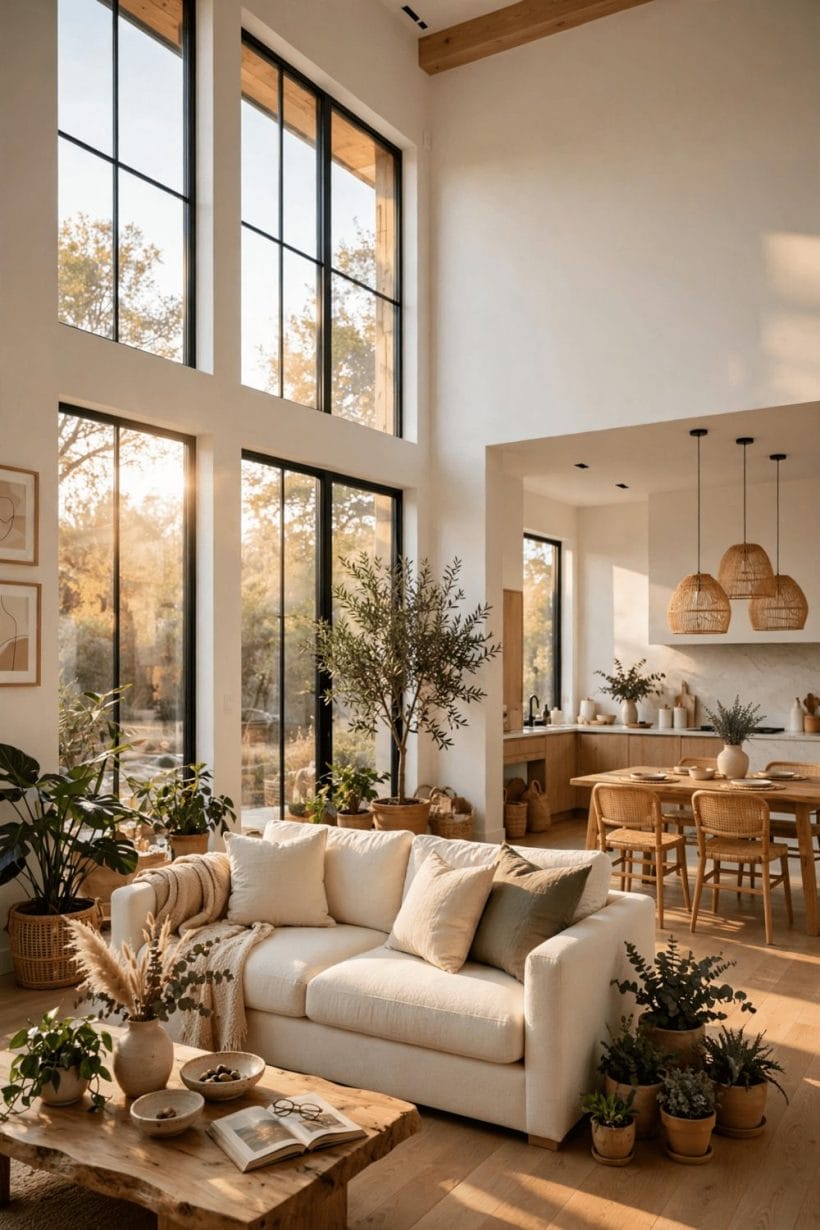
The dressed rustic table is a study in restraint: natural fibres, handmade-looking vessels, nothing lacquered, nothing matched too hard. Dress it down the middle and leave the ends for food.
49. A linen runner, unpressed
Linen is allowed to crease — that is its charm and the style’s whole philosophy in one cloth. A natural or faded-stripe runner down the centre softens the boards and silences plates.
50. Stoneware over porcelain
Heavy, speckled, slightly irregular stoneware belongs on a rustic table the way porcelain belongs in a formal one. It is also the practical choice: it chips less, keeps food warm and forgives dishwashers.
51. Wooden boards as serving plates
Bread, cheese and roasts arrive on boards, not platters. The boards echo the table, save the good china, and make an ordinary Tuesday supper feel deliberately simple.
52. Iron cutlery and horn handles
Matte, weighty cutlery — blackened, brushed or horn-handled — sits right on rustic linen. Shiny mirror-polish flatware is the one small thing that can make the whole table look like a restaurant by mistake.
53. A single branch or garden cutting
The centrepiece rule: one thing, from outside, in a plain vessel. A branch of blossom, dried grasses, a bowl of orchard fruit. Anything arranged by a florist breaks the spell.
54. Enamelware for everyday
Enamel jugs, mugs and basins bring the camp-and-farm note, cost little, and survive being dropped on stone floors. A big enamel jug of water belongs on every rustic table permanently.
55. Glass kept simple
Tumblers over stemware for everyday; the good glasses for Sunday. Slightly green-tinted, hand-blown-looking glass suits the room better than cut crystal ever will.
56. Napkins in rings of nothing
Cloth napkins, rolled or folded plainly, no rings, no swans. In a rustic room the luxury is the cloth itself — heavy linen or cotton that improves with every wash.
9. Colour and Pattern: The Earthy Palette
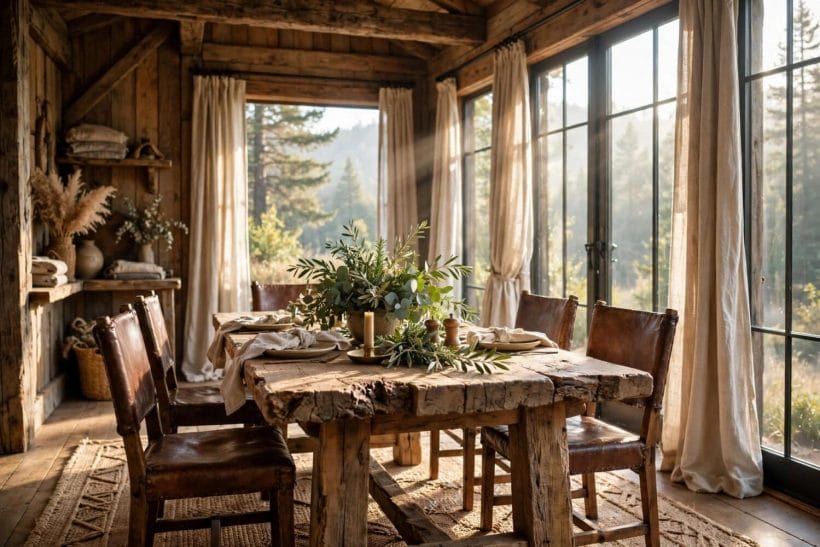
Rustic colour comes from the materials themselves — the brown of the wood, the grey of the stone, the cream of the linen — and paint should follow that lead. The living room ideas pillar shows the same earthy logic in the sitting room; here it is tuned for a room seen mostly by lamplight.
57. Warm whites and limewash creams
The background colour of the rustic world. Warm whites keep timber golden rather than grey and make evening light look like candlelight even when it is electric.
58. Sage and olive greens
The garden, brought in. Green is the rustic accent that never dates, because it is the colour of everything outside the window; use it on a wall, a dresser, or simply in upholstery and plants.
59. Clay, rust and terracotta
The warm earth tones echo brick, leather and autumn. A little goes far — cushions, a rug’s border, the inside of a dresser painted rust will warm a whole room.
60. Charcoal and blackened tones
Black iron, charcoal paint on one piece of furniture, a slate hearth: the dark notes are what stop rustic sliding into beige. Every rustic room needs something near-black to lean on.
61. Indigo and faded denim blue
The traditional farmhouse blue — in ticking stripes, old china patterns and painted chairs. Faded is essential; bright blue belongs to the coastal room down the corridor.
62. Ticking stripes and grain-sack lines
The rustic patterns are woven, not printed: ticking, grain-sack stripes, simple checks. They carry pattern without pictures, which is why they never fight the timber.
63. Plaid and wool checks for winter
A wool throw over the bench back and plaid cushions change the room with the season. Rustic rooms dress for winter better than any other style — lean into it.
64. Colour kept to the textiles
The safest rustic scheme: neutral walls and timber, all colour in things that can be washed, moved or replaced. When the palette tires, the room changes for the price of cushion covers.
65. A painted piece as the exception
One painted piece — a dresser in sage, chairs in faded blue, a cupboard in clay — among the natural timber gives the eye a resting place and the room its signature. One, though; two painted pieces start a theme.
10. Small Rooms, Tight Budgets and Finishing Touches
The last ideas are for the rooms rustic usually forgets: the small dining room, the dining corner of an open plan, and the rented room where nothing may be nailed to anything. Rustic scales down gracefully because it was born in small rooms. A tiny-house version of the same thinking lives in the tiny dining room ideas post.
66. A drop-leaf table for small rooms
Leaves down for two, up for eight: the drop-leaf is the original flexible dining table and it is pure farmhouse engineering. Against a wall it is a sideboard; in the middle it is Christmas.
67. The bench that stores
A hinged-top bench hides table linen, board games and the good candles, seats three, and needs no floor space beyond its own footprint. In a small rustic room it is the hardest-working object present.
68. One wall of shelves instead of a dresser
Where a dresser will not fit, two thick shelves and a rail of hooks carry the crockery and the jugs. The look is the same as the dresser’s top half, at a quarter of the floor space.
69. Rustic in a rental
Nothing here needs building in: a heavy table, a rug, linen curtains on a tension rod, candles, a crate bar. The rustic room is the most rental-friendly of all styles because it was always made of furniture, not fittings.
70. The single beam or lintel
One substantial piece of timber over a doorway or as a mantel shelf gives a plain room its rustic anchor. Buy it from a reclamation yard, oil it, and let it be the oldest thing in the house.
71. Dried herbs and wreaths
A wreath of dried herbs, bay or hops over the dresser is decoration that also scents the room and costs a garden walk. Replace it when it fades; the changing is part of the pleasure.
72. A mirror in a worn frame
One mirror doubles the candlelight and the sense of space. In a rustic room the frame should be timber, worn gilt or old iron — never a frameless sheet, which belongs to another century entirely.
73. The hearth rug and fire tools
If the room has a fire, dress its edge: a small thick rug, a plain iron companion set, a basket of logs close enough to be useful. Working objects arranged neatly are the rustic room’s favourite ornament.
74. Scent as a finish
Beeswax candles, woodsmoke, herbs on the table, bread in the oven next door. Rustic is the one style where smell is part of the specification, and the cheapest part of it to get right.
75. Leaving room for the meal
The final rustic discipline is negative space: a table that is mostly empty, walls that are mostly bare, a room ready to work. Rustic rooms are built for use, and a room set for dinner, with space for the food and the people, is the style completely expressed.
Final Considerations
A rustic dining room succeeds on materials and restraint: one great table, seating that invites lingering, light that flatters faces, and two honest textures carrying the whole room while everything else stays quiet. Build it in that order — table, seats, light, storage, dressing, colour — and resist finishing it all at once; rustic rooms are meant to accumulate, and the piece found next year at a farm sale will belong in a way a complete set bought in a day never quite does. Keep the splits in mind as you plan: this post owns the rustic angle, the pillar owns dining rooms generally, and the coastal and french country siblings own their own materials — a house whose dining rooms each commit to one idea will always read better than one room trying to be all three.


0 Comments