
It is the part of the house every visitor touches, every photograph frames and every winter tests — and it is usually chosen from a brochure in an afternoon.
These seventy-five front entry door ideas cover configurations and materials, styles and colour, glass and sidelights, hardware and security, weatherproofing and installation, and the care and cost drivers behind the door a house deserves.
Related Guide: Masonite vs Therma-Tru Benchmark Fiberglass Doors: Finishes, Glass, Systems and Who Should Pick Which
1. Front Entry Doors at a Glance
An entry door is a system, not a slab: leaf, frame, glass, hardware, seals and threshold working together against weather, wear and unwanted attention. This post is the entry-door survey — types, materials and the decisions between them. Its siblings split the family: the collected front door ideas post gathers door inspiration broadly, while double front doors treats the double configuration alone — here, single entry doors and their whole anatomy are the subject, and doors with sidelights get their own later treatment rather than a repeat of this one.
| Question | Short answer |
|---|---|
| What makes an entry door? | The complete system — door leaf, frame, glazing, hardware, seals and threshold — specified and installed as one unit |
| Which material is best? | Each has honest strengths: timber for craft and repair, steel for economy and security, fibreglass or composite for low upkeep, aluminium for slim modern lines |
| What decides comfort most? | Sealing and fit — a well-sealed ordinary door beats a grand door that leaks air at every edge |
| What about security? | Stated generally: a sound leaf, a proper frame, quality locks and fixings, fitted well — follow local guidance and the makers’ ratings |
| What does it cost? | Drivers only: material, size and configuration, glazing, hardware and the installation’s complexity |
2. Configurations and Layouts: The Shape of the Opening
Before material or colour, the opening itself must be decided: how wide, how glazed, how the door sits in its wall. Configuration is the decision every later choice decorates.
1. The classic single door, well proportioned
One leaf, honestly sized and generously panelled, remains the right answer for most houses. Its success is proportion — wide enough to welcome furniture and people, tall enough to hold its place on the facade.
2. A wider single door for modern plans
Oversized single leaves suit contemporary houses and make moving furniture mercifully easier. They demand strong hinges, a true frame and a closer look at the maker’s guidance for weight and fixing.
3. The door centred in a composed entry
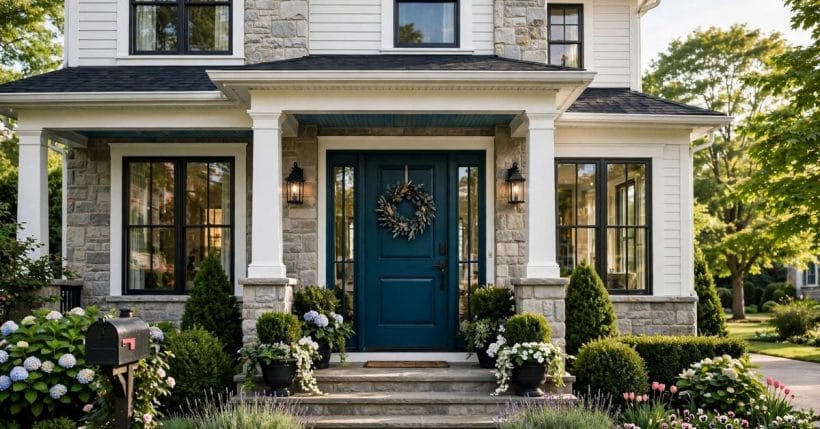
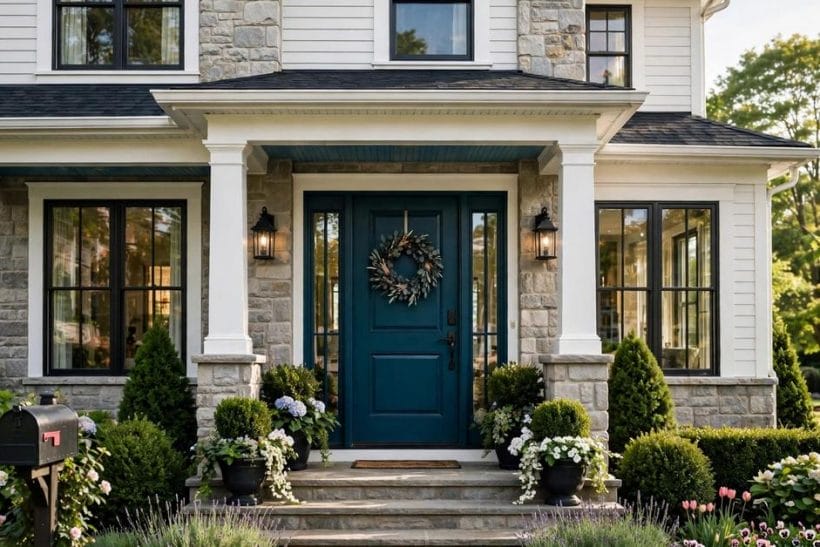
Where the facade allows, centring the door with balanced windows or planting either side gives the entry its ceremony. The feature photograph’s porch — columns, steps and a wreath — is the composed entry in full dress.
4. An offset door, honestly handled
Many real houses place the door off-centre; the answer is not disguise but emphasis — a path that leads to it fairly, lighting that marks it, and planting that balances the facade’s weight.
5. The door with a glazed panel in the leaf
A window within the door itself brings light into the hall while keeping the opening single. Its glass should be specified for safety and privacy as the maker and local rules require — obscure, patterned or clear by the hall’s needs.
6. A fully glazed modern entry door
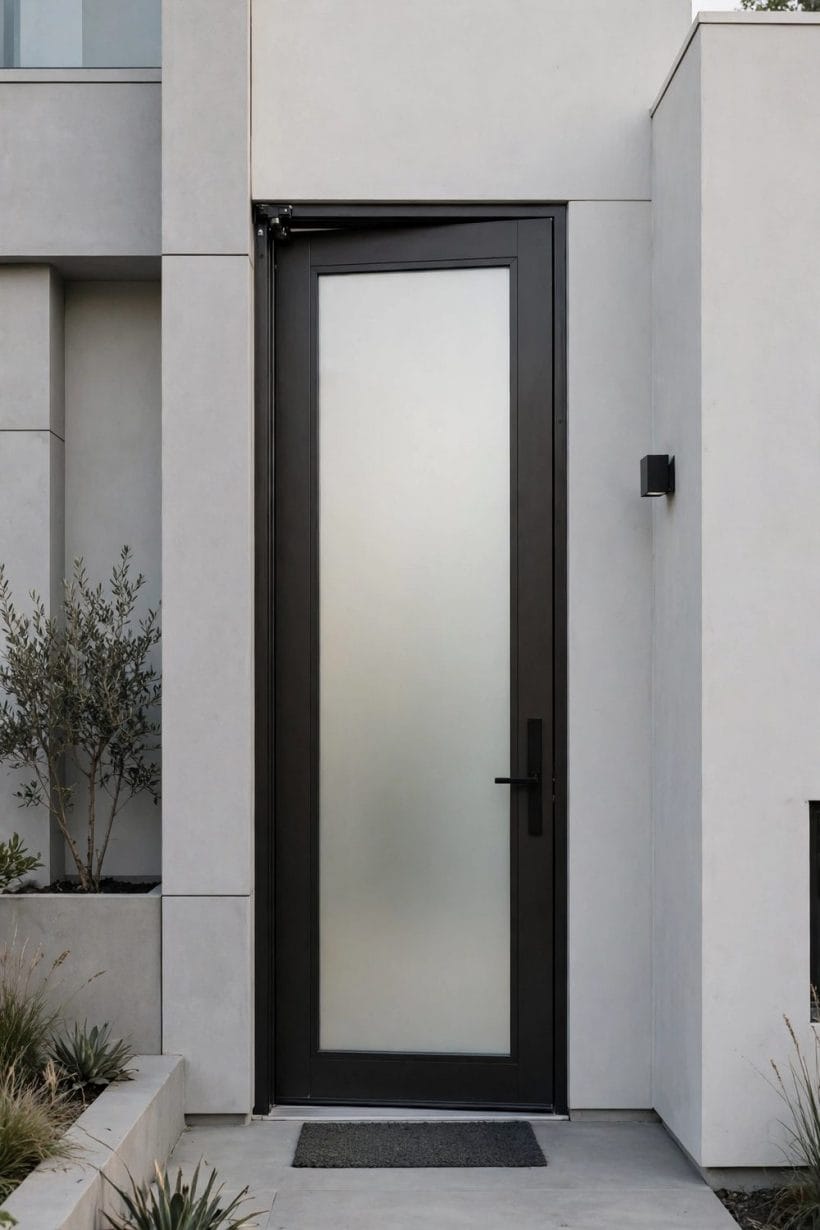
Glass-dominant doors flood halls with light and suit houses designed for them. Privacy, security and thermal performance are specification questions for the maker — ask them plainly and keep the answers in writing.
7. The stable or Dutch door at the front
A leaf split horizontally lets the top open for air and conversation while the bottom stays shut — charming on cottages and country houses, and a style a published set of dutch doors for tiny houses explores in its own small-house setting.
8. A door-and-a-half for the wide opening
One working leaf plus a narrower fixed or occasional leaf fills a wide opening without going fully double. It is the pragmatic middle configuration, giving everyday simplicity and occasional breadth for the sofa’s annual journey.
9. The recessed entry, sheltered by the house
Setting the door back into a porch recess or an alcove protects it from driven rain and gives callers shelter. Recessed entries age their doors kindly — weather is the entry door’s lifelong opponent, and architecture is the first defence.
3. Door Materials: Timber, Steel, Composite and Glass
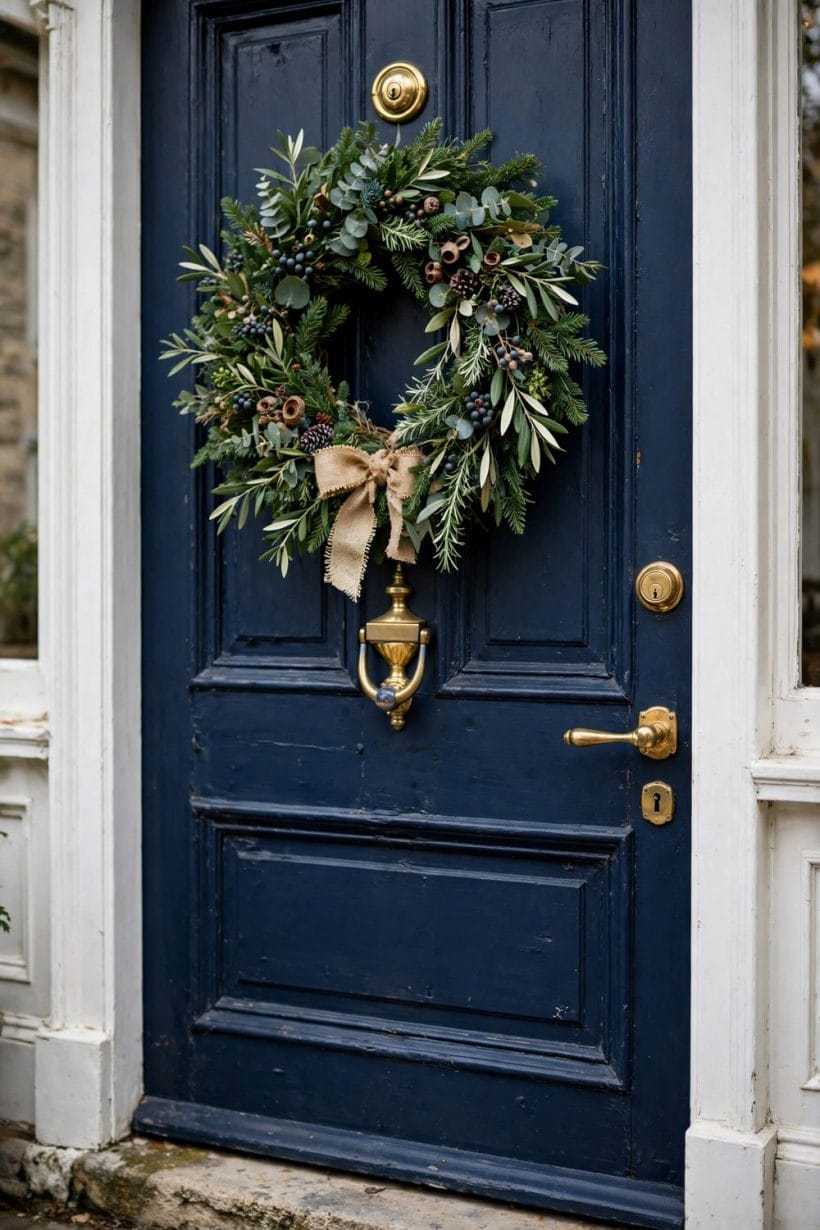
Material decides the door’s feel in the hand, its upkeep appetite and much of its price. Each of the main families below is honest when bought well and disappointing when bought by brochure alone.
10. Solid timber, the traditional standard
Wooden doors offer weight, warmth and panels with real depth, and they can be repaired, rehung and refinished across decades. Their price is maintenance: a finish maintained on the maker’s schedule, especially on sun- and rain-facing entries.
11. Engineered timber for stability
Modern wooden doors are often built with engineered cores beneath quality veneers, resisting the warping that plagued old solid leaves. They keep timber’s look and repairability with calmer behaviour through the seasons.
12. Steel doors for security and economy
A steel-faced door over an insulating core is the budget-conscious, security-minded staple, usually supplied as a complete pre-hung unit. Its enemies are dents and cut edges that rust — a finish kept intact, and damage touched in promptly.
13. Fibreglass doors that imitate wood
Moulded fibreglass can carry convincing timber grain with far less upkeep, shrugging off damp and temperature swings. Quality varies by maker; the better examples are hard to tell from wood until you knock.
14. Composite doors, the modern all-rounder
A composite leaf — typically a solid or foam core faced in a tough skin — combines insulation, security and low maintenance in one unit. It is the contemporary default for good reason, provided the frame and fitting match the leaf’s standard.
15. Aluminium doors for slim, modern lines
Aluminium suits large, glazed, contemporary entries with thin frames and powder-coated colour. Specify thermally broken construction for comfort, and expect to pay for the privilege of those slim sightlines.
16. Glazed doors and the privacy bargain
However the leaf is built, its glazing is a bargain between light and privacy, struck with obscure glass, blinds between panes or a hall curtain. Make the bargain deliberately at order time, not with frosted film in regret.
17. The pre-hung unit versus the leaf alone
Doors supplied with their frame as a factory unit arrive square, sealed and warranted as a system, which is why most replacements choose them. A leaf alone suits a sound existing frame and a carpenter’s careful hanging.
18. Ask what is inside before admiring the outside
Core, skin thickness, insulation and the security features are specification facts the maker can state. A door is bought once a generation; the five minutes spent reading its construction are the cheapest research in this whole post.
4. Styles: A Door That Agrees With Its House
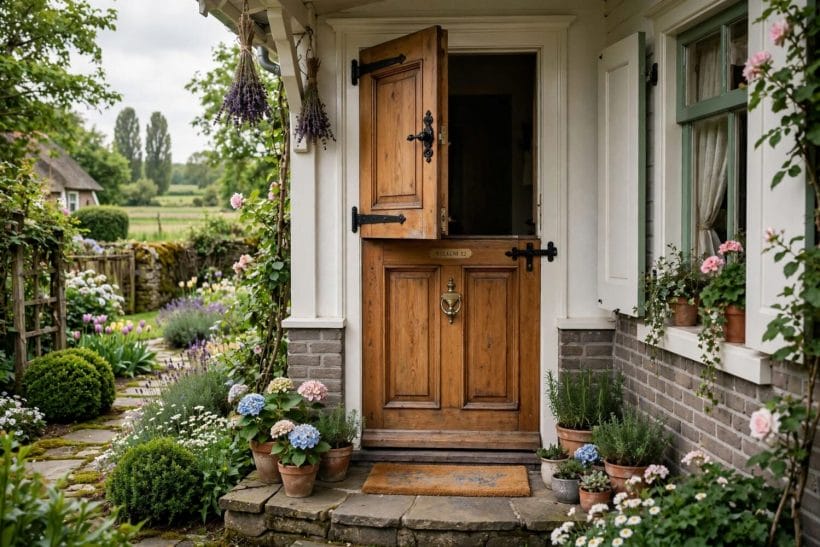
A front door should look inevitable — as if the house had been waiting for exactly it. These styles run from the panelled classic to the contemporary slab, each with the houses it flatters.
19. The six-panel classic
Raised panels in the traditional arrangement suit period houses and any facade with classical manners. The feature door’s deep-teal panels are this style in modern colour — proof the classic takes paint courage beautifully.
20. The cottage door, ledged and braced
Vertical boards with honest ledges belong on cottages, country houses and anything with a garden gate to match. Iron hardware and a thumb latch complete a door that looks grown rather than manufactured.
21. The Craftsman door with its glazed top
A fir or timber door with a small glazed upper section and a dentil shelf beneath it is the Craftsman signature. It welcomes light modestly and pairs naturally with porches and tapered columns.
22. The mid-century door, bold and simple
Flat or lightly grooved leaves in saturated colour, often with offset glazing or a row of small windows, carry the mid-century house. Long pull handles and a fearless paint colour are its whole wardrobe.
23. The contemporary slab with long hardware
Flush, unpanelled and finished in a single confident colour or timber veneer, the modern door relies on proportion and one dramatic handle. It suits houses of clean lines and looks lost on a cottage — style agreement cuts both ways.
24. The arched door for the arched opening
Where the opening itself is curved, a shaped door honours architecture that a squared leaf in a curved hole never can. Such doors are joinery commissions; measure from the opening, never from a catalogue’s promise.
25. A door with a speakeasy grille or a knocker’s theatre
Small traditional details — a little grilled window, a substantial knocker, a centre knob — give a plain door a personality. Choose one theatrical detail, not three; doors, like people, should not shout every trait at once.
26. Matching the door to the windows’ rhythm
Look at the facade whole: the door’s glazing pattern, panel rhythm and colour should converse with the windows rather than argue. Standing back across the street is the design review every entry deserves.
27. The storm door question, answered honestly
In climates that earn one, a well-made storm or screen door protects the main leaf and adds a ventilating layer. Choose one that complements rather than cages the door — the entry’s face should survive its protection.
5. Colour for the Front Door
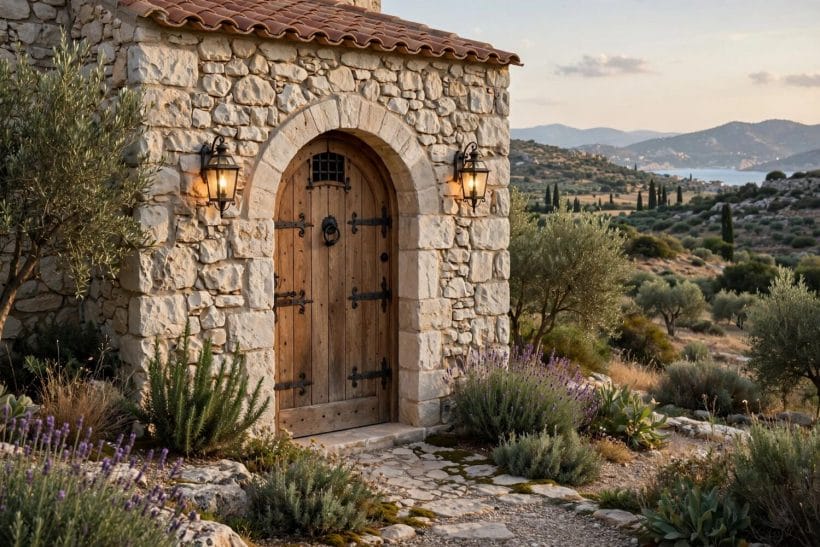
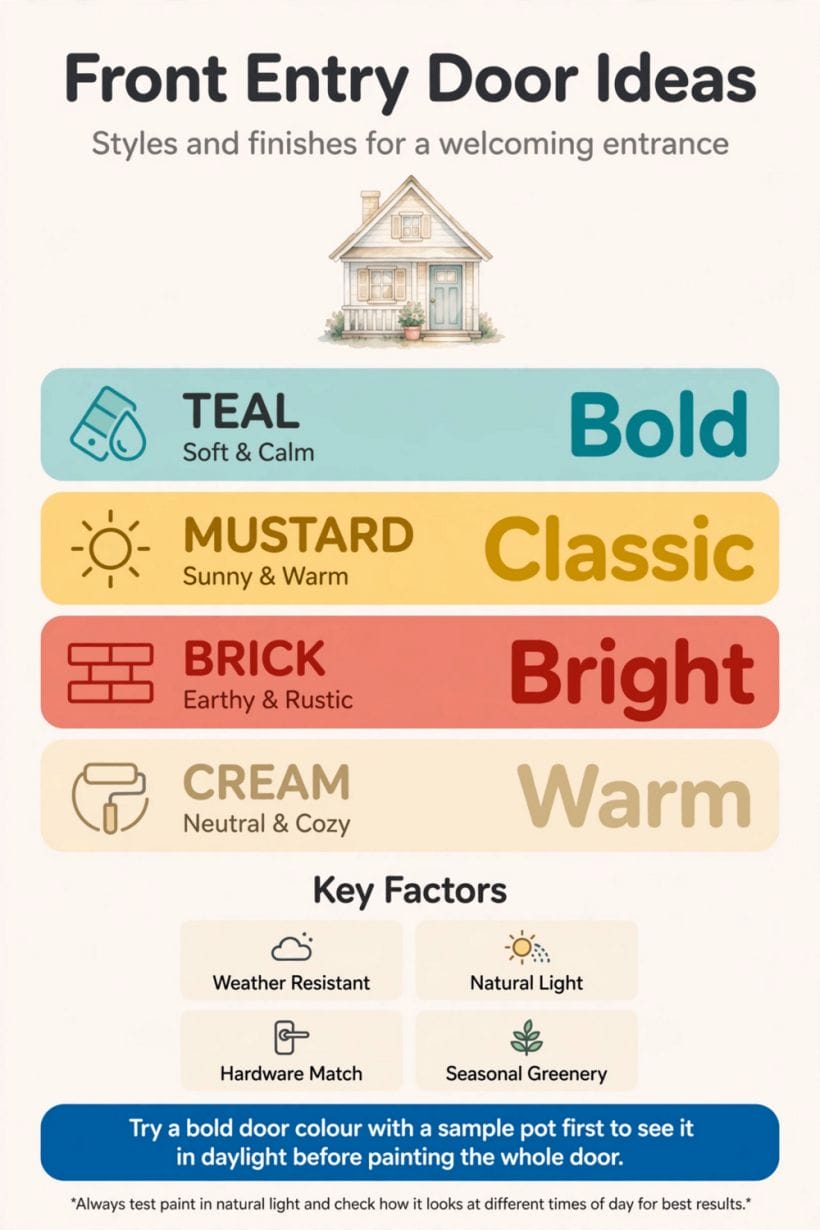
The infographic is a colour chart: teal, mustard, brick and cream, each with its temperament. Colour is the cheapest transformation a house owns — and the one most visible from the street.
28. Teal and deep blue-greens, the current classic
The feature door’s deep teal is the era’s favourite for good reason: it flatters stone, brick and white render alike, and reads both bold and calm. The infographic calls it bold and soft at once — an accurate paradox.
29. Mustard and ochre for warmth
Sunny, warm and quietly classic per the infographic, mustard doors glow against brick and grey stone and make a north-facing entry feel sunlit. They pair kindly with brass hardware and autumn planting.
30. Brick reds and terracotta, earthy and bright
Red-family doors are the oldest statement in the book — welcoming, traditional and unmissable. Against brick facades, choose a red clearly deeper or clearly brighter than the wall, never an accidental near-match.
31. Cream and white for the quiet facade
A cream door on a coloured facade, or a white door in a white composition, is the neutral, cosy choice the infographic ends with. It relies on hardware, glass and the porch’s styling to supply its character.
32. Black, the tailored default
A black door is the facade’s dark suit: formal, forgiving of grime and agreeable with almost every house colour. In gloss it is grand; in satin it is modern; it never apologises for being chosen.
33. Natural timber, varnished and honest
Where the door is beautiful wood, a clear finish that shows the grain suits country and contemporary houses alike. It commits the owner to upkeep — sun writes on clear finishes fastest — so choose it with eyes open.
34. Two-tone doors: colour outside, calm inside
The leaf’s street face can carry the bold colour while its hall face stays pale and quiet. It is a legitimate, traditional arrangement that solves the commonest colour argument in any household.
35. Test with a sample pot, in real light
The infographic’s tip is the section’s law: try a bold colour with a sample pot first and watch it through a day’s changing light before committing. Street light, porch shadow and seasons all vote on a door’s colour.
6. Glass, Sidelights and Transoms
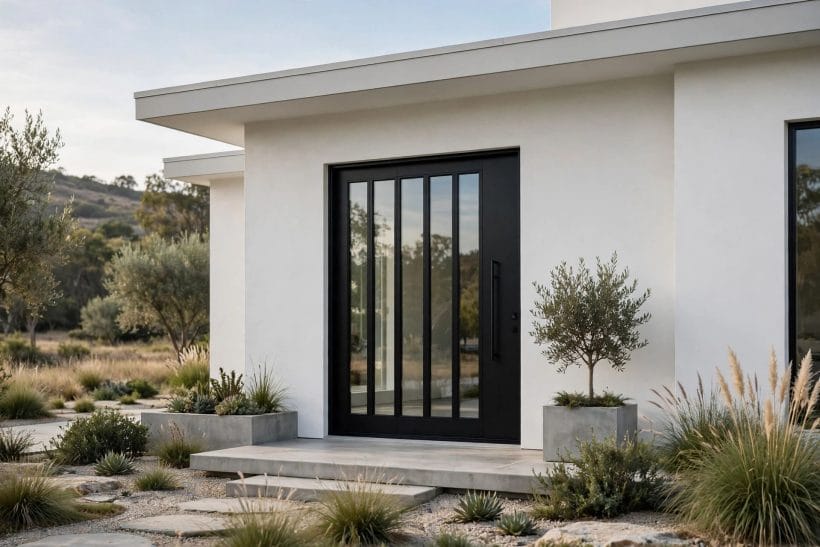
Glass around the entry decides how the hall feels at noon and how private it feels at midnight. Sidelights as a configuration get their own post later in this series; here, glazing is treated as one attribute of the whole door.
36. Sidelights that lend the hall its daylight
Narrow glazed panels flanking the door — as in the feature photograph — turn a dark hall into a lit room and widen the entry’s presence. Their glass specification, for safety and privacy, is a maker-and-rules question to settle at order.
37. A transom or fanlight above the door
Glazing over the door borrows height and light together, and suits tall-ceilinged period entries especially. In modern units it arrives as part of the frame system, sealed and matched.
38. Obscure and patterned glass for privacy
Reeded, frosted and patterned glasses admit light while dissolving silhouettes — the hall stays bright, the callers stay guessing. Order the pattern at the right scale; bold patterns in small panes can busy an entry.
39. Clear glass where the view is the point
A rural or garden-facing entry may honestly choose clear glass and enjoy the landscape through the door. The privacy bargain is the household’s to strike — struck knowingly, clear glass is a feature, not an oversight.
40. Leaded and stained accents
A panel of leaded or coloured glass gives a period entry its jewel and throws tinted light across the hall floor. Keep the design in the house’s period language and let one panel, not five, carry it.
41. Double and triple glazing in door units
Modern door glass is supplied as sealed units whose thermal and acoustic performance the maker can state. In a door, as in a window, the glazing specification is a comfort decision measured in winters.
42. Blinds and shutters between the panes
Some units offer blinds sealed inside the glass — privacy adjustable without a curtain in sight. They suit glazed modern doors whose owners want light control with the lines left clean.
43. Safety glass is not optional thinking
Glazing in and beside doors is a safety matter governed by rules that vary by place; reputable makers supply compliant glass as standard. Ask the question, keep the paperwork, and never substitute ordinary glass at door level.
7. Hardware, Locks and Security, Stated Generally
Security here is stated the way it should be bought: generally and properly — a sound door, a sound frame, recognised hardware, professional fitting where needed, and local guidance followed. No ratings are invented in this section; makers publish theirs.
44. One metal, chosen once, repeated
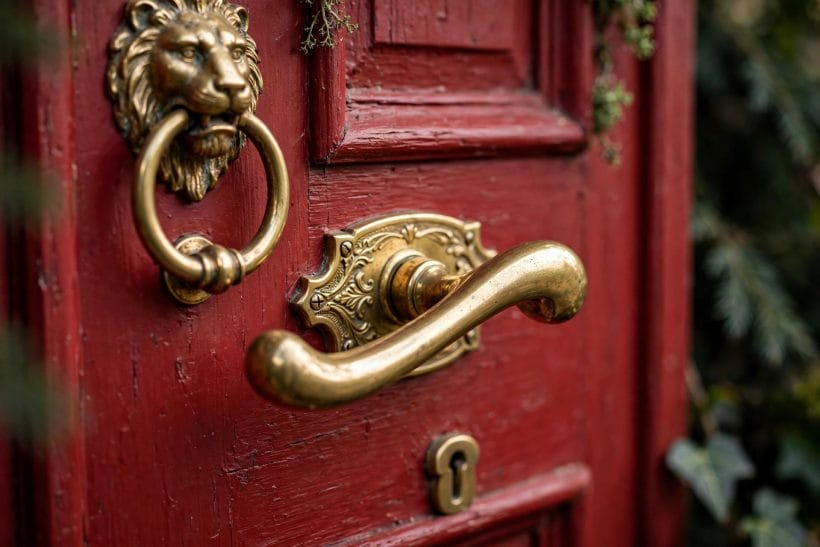
The infographic lists hardware match among its key factors: handle, knocker, letter plate, numerals and bell in one finish read as a single decision. Brass warms dark doors, black sharpens pale ones, chrome suits the modern slab.
45. Handles that suit the door’s style
Lever handles for accessibility and ease, a centre knob for the panelled classic, a long pull for the contemporary leaf. Hardware is handled daily; its feel in the hand is a quality test no photograph can pass for you.
46. Locks specified from recognised ranges
Choose locks and cylinders from established makers with published security ratings, matched to the door type and your insurer’s or local guidance. The fitting matters as much as the lock — a fine lock in a weak frame is decoration.
47. A multi-point lock as part of the system
Most modern door units lock at several points along the frame when the handle lifts, spreading security and improving the seal in one motion. It is a system feature, bought with the unit, not an afterthought.
48. Hinges, keeps and the frame’s honesty
Security lives in the unphotogenic parts: hinge quality, keep fixings, frame strength and the screws’ length. A reputable installer will discuss them happily; reluctance to discuss them is itself information.
49. Knockers, bells and the caller’s welcome
A knocker with weight, a bell that works, numerals a delivery rider can read at dusk: the entry’s manners are hardware too. The secure door and the welcoming door are the same door, specified completely.
50. Letter plates and keeping the seal
Where post comes through the door, a sprung, draught-sealed letter plate protects the hall’s warmth; where it does not, an external box keeps the leaf uncut. Either way, the hole for the post is a security and weather detail, not an afterthought.
51. Smart locks, considered soberly
Keypad and connected locks suit some households’ lives and not others; choose established products, keep a considered backup arrangement, and follow the maker’s guidance on fitting and batteries. Novelty is not a security feature — reliability is.
8. The Setting: Porch, Path and Planting
No door is seen alone: the porch, steps, lights and planting around it are half the photograph. The boundary it guards connects outward too — the gate ideas pillar continues the same welcome at the street.
52. A porch roof, however small
Even a slim canopy keeps driven rain off the leaf, callers dry at the bell and parcels alive until evening. It is the single kindest structure a door can be given, and porches with rails borrow their manners from front porch railing ideas.
53. Steps and a threshold that shed water
The step should slope its water away, the threshold seal against what remains, and neither should trip the postman. Wet leaves on a smooth step are the entry’s annual hazard; texture and drainage are its cure.
54. Lighting either side of the door
The feature photograph’s paired lanterns are both welcome and portrait: they light the caller’s face, the key’s search and the door’s colour after dark. Warm light flatters doors; harsh light interrogates them.
55. Planting that frames, not besieges
Pots and planting either side compose the entry — the feature’s box balls and hydrangeas exactly. Keep growth a hand’s breadth from the leaf’s swing and the path’s edge, or the welcome becomes an obstacle course each summer.
56. A mat, a boot scraper and the honest dirt line
The entry works for its living: a serious mat outside, another inside, and somewhere for wet boots that is not the hall carpet. Designing the dirt’s destination is unglamorous and transformative.
57. House numerals as part of the composition
Numerals sized to be read from the street, in the hardware’s metal, placed where the porch light finds them. They are the house’s signature on its own door — and the detail delivery riders write songs about.
58. The path’s contribution
A straight, sound, lit path makes the door look intended; a cracked, puddled one makes the finest door look apologetic. The entry is a sequence — gate, path, step, door — and reads as its weakest link.
59. Seasonal dressing, kept tasteful
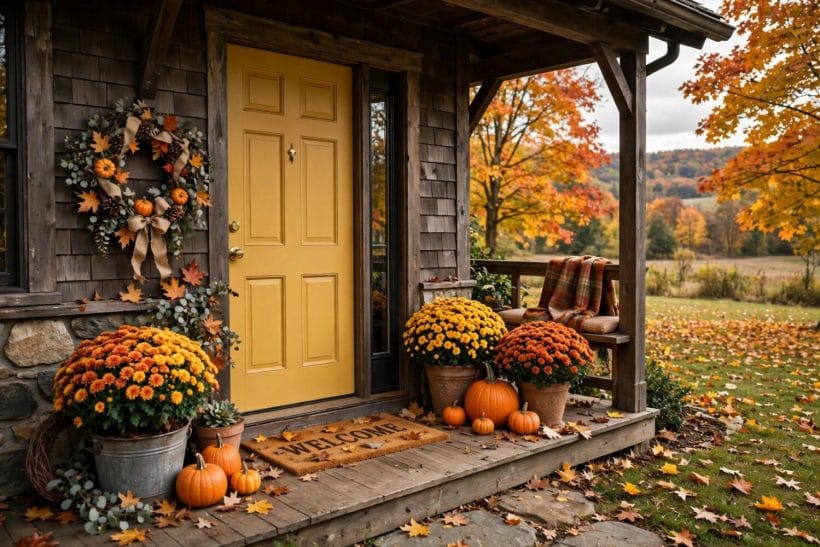
A wreath, as on the feature door, a pair of lanterns, a changed pot: the entry’s wardrobe rotates with the year. One gesture per season, well chosen — the door remains the subject, the dressing its frame.
9. Weather, Warmth and Installation
A door’s beauty is installed, not manufactured: the finest unit hung badly will whistle, stick and leak. This section covers the unphotogenic work that decides whether an entry performs — the ground the door installation cost guide prices as drivers.
60. Measure the opening three ways, twice
Width and height at several points, the frame’s squareness, the floor’s level: old openings are rarely the rectangles they pretend to be. Makers and installers measure before manufacture for a reason — copy their caution.
61. Seals and draught-proofing, the comfort core
The infographic names weather resistance first among its key factors, rightly: compression seals around the leaf and a proper threshold decide the hall’s temperature more than the leaf’s core does. Seals are consumables — plan to renew them across the door’s life.
62. The threshold and the driving-rain test
Where the door meets the step is where weather attacks hardest; a well-detailed threshold with drainage sheds what the seals miss. West- and coast-facing doors earn upgraded detailing and honest conversation with the installer.
63. Insulation stated, not assumed
Modern units publish their thermal performance; ask for it and compare like with like. In an otherwise insulated house, a leaky old door is the hole in the bucket — its replacement is an energy measure wearing a prettier coat.
64. Professional fitting for unit doors
A pre-hung unit’s warranty and performance presume square, plumb, properly fixed installation. Skilled fitting is not an optional garnish on the purchase; it is the purchase’s second half, and its cost belongs in the first budget.
65. Acclimatise and finish timber properly
Timber doors should be finished on every face and edge — including top and bottom, the forgotten faces where moisture enters — following the maker’s schedule. Most timber door failures are finishing failures wearing the door’s name.
66. Adjustments after the first seasons
New doors settle and houses move almost imperceptibly; a good installer expects a return visit to adjust keeps and seals. A door that needs a shoulder in winter is asking for adjustment, not replacement — ask the fitter first.
67. Sound, and the quiet hall
A solid, well-sealed entry noticeably quiets street noise — an underrated comfort in town houses. If quiet matters, say so at specification time; cores, glazing and seals all vote on the hall’s peace.
10. Care, Costs and Choosing
The last eight ideas are the ledger. Entry doors are bought rarely and judged daily, so the choosing questions are about honest specification and lifetime upkeep — costs stated as the drivers they are, since prices vary too widely by material, size and place for any figure here to be honest.
68. Cost driver: material and construction
Timber, steel, fibreglass, composite and aluminium each occupy their own territory of price and upkeep, and within each, construction quality spreads the range further. Compare complete specifications, not brochure photographs.
69. Cost driver: size, configuration and glass
Wider openings, sidelights, transoms and decorative glazing each add their share. The opening’s size is destiny: measure first, fall in love second, and let the configuration budget follow the hole that actually exists.
70. Cost driver: hardware and security specification
Recognised locks, quality handles and the extras — knockers, numerals, smart access — accumulate honestly. Hardware is handled every day of the door’s life; it is the worst place in the purchase to save visibly.
71. Cost driver: installation and making good
Fitting, disposal of the old unit, and the plaster, paint and step repairs around a changed frame belong in the first budget. The cheapest quote that excludes making good is rarely the cheapest door by winter.
72. Care: finishes on their maker’s schedule
Painted and varnished doors keep their looks and their warranty when finishes are renewed as the maker directs, sooner on harsh aspects. An hour’s inspection each year — seals, finish, drainage — is the door’s entire service routine.
73. Care: seals, hinges and moving parts
A drop of the right lubricant on hinges and lock mechanisms, seals wiped clean, drainage slots kept clear. Doors fail from neglected smallness far more often than from dramatic events.
74. Choosing by standing in front of examples
Doors are large, handled and seen at arm’s length: visit showrooms, knock on leaves, work the handles, read the specifications. The street’s-eye view from a photograph is the beginning of choosing, never its end.
75. The decade test for the front of the house
Finally: this door will be photographed at weddings, opened at midnight, and leaned on by generations of callers. Will its style still agree with the house, and its colour still please, in ten years of arrivals? Choose the door that answers yes without hurrying.
Final Considerations
An entry door is the house’s handshake and its shield in a single object, and it rewards being chosen as a system: configuration first, material honestly, colour bravely but tested, security properly and generally, and installation treated as half the purchase. The feature photograph’s teal door succeeds not because teal is fashionable but because every part around it — sidelights, lanterns, steps, planting — was decided as one composition. Decide yours the same way, keep the maker’s paperwork, maintain the finishes and seals, and the door will welcome two generations without asking for attention.

0 Comments