

Flooring is one of the hardest purchases to undo, so the checking matters more than the choosing. This guide walks through what to verify before buying evoke flooring or any similar range: the exact product on the box, samples in your own light, the specification sheet, the wear layer, room suitability, the installation method, and the warranty paperwork — in that order, before any money changes hands.
1. What To Check First: The Short Version
Start with the table. It condenses the whole buying check into six questions you can put to any retailer, in the shop or in writing. A seller who answers them clearly, and points you to the documents behind the answers, is giving you what you need. A seller who waves them away is telling you something too. The sections that follow unpack each row — what to ask, what to read, and what to keep — so that by the time you order, the floor you receive is the floor you thought you were buying.
| Question | What to check | Why it matters |
|---|---|---|
| Which exact product is this? | Range, product type, colour name and code on the box | Similar names hide different products |
| Can I take samples home? | Decent-sized samples, seen in your rooms and your light | Showroom light lies kindly |
| What does the spec sheet say? | Construction, dimensions and stated performance, in writing | Verbal claims are not specifications |
| What is the wear layer? | Its thickness and finish as stated by the manufacturer | It decides how the surface ages in busy spots |
| Is it suited to my rooms? | Moisture, heating and subfloor requirements per the guidance | The wrong room voids more than the look |
| What does the warranty actually cover? | The written terms: scope, conditions and exclusions | The headline is marketing; the conditions are the warranty |

the key checks before buying evoke flooring, from plank type and water resistance to wear, installation and care.
2. Confirm Exactly Which Product You Are Looking At
Flooring ranges are families, not single products. Under one brand umbrella there may be laminate, vinyl, engineered wood and more, in several quality tiers, and two boards that look near-identical on a display stand can be built completely differently. Before anything else, pin down the exact identity of what you are pricing: the range name, the product type, the colour name and its code, and the format — plank or tile, and its stated dimensions. Write them down, or photograph the box end and the display label, so the quote, the order and the delivery can all be checked against the same identity.
Ask directly whether the display board is the same product as the one being quoted. Displays are sometimes made from a premium tier while the quote is written for a lighter one, and the difference only shows up years later. If the retailer offers an alternative that is “just the same”, treat that as a new product and start its checks from the top of this guide: same checking, new candidate. Precision at this stage costs five minutes and prevents the most expensive misunderstanding in flooring — paying for one construction and receiving another.
3. Order Samples and Live With Them First
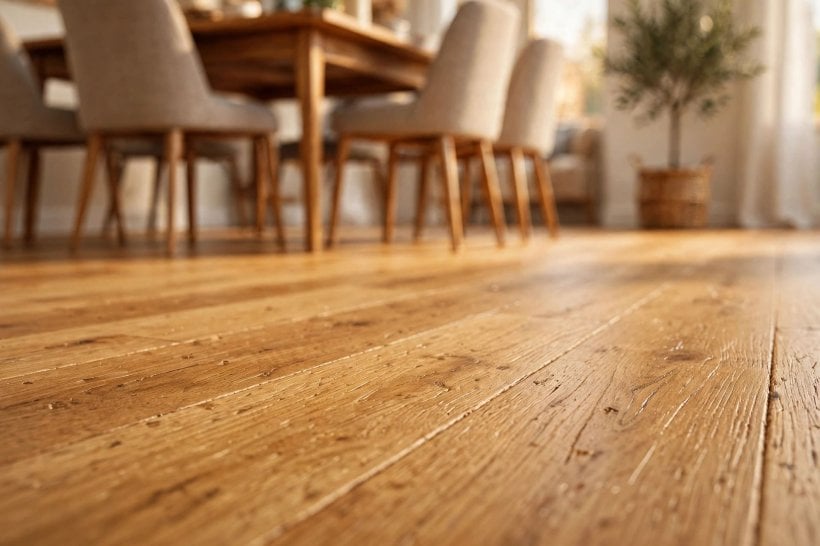
Never choose a floor from a showroom alone. Order the largest samples the retailer offers — full-width pieces if possible — and take them home. Put them where the floor will live: against the skirting, under the sofa’s shadow line, beside the window. Look at them in morning light, evening light and under your lamps, because colour temperature changes a floor’s character completely. Walk on them in socks and shoes. Put a chair leg on one. The goal is not to test durability in a weekend, but to catch the two things samples genuinely reveal: whether the colour is the one you imagined, and whether the surface look — gloss, texture, pattern repeat — pleases you at full room scale.
Sample discipline applies double in open-plan or multi-room jobs, where the floor must sit happily beside several paint colours and both north- and south-facing light. The restraint shown in tiny house living room ideas is a good model: fewer, better-checked choices. Also check how the sample’s edges and joints look butted together, and view two samples side by side to see the pattern variation — some designs vary plank to plank by design, others repeat obviously, and you should know which you are buying before it covers a whole room.
While the samples are home, test them against real life rather than admiring them. Drag a gritty shoe across one, leave a wet mug ring on another overnight, and drop the cutlery you would actually drop. You are not trying to destroy them; you are learning how the surface shows marks and how it cleans, which the manufacturer’s care guidance can then confirm or contradict. A sample that survives your household’s honest habits with grace has told you more than any star rating on a display card.
4. Read the Specification Sheet, Not Just the Display
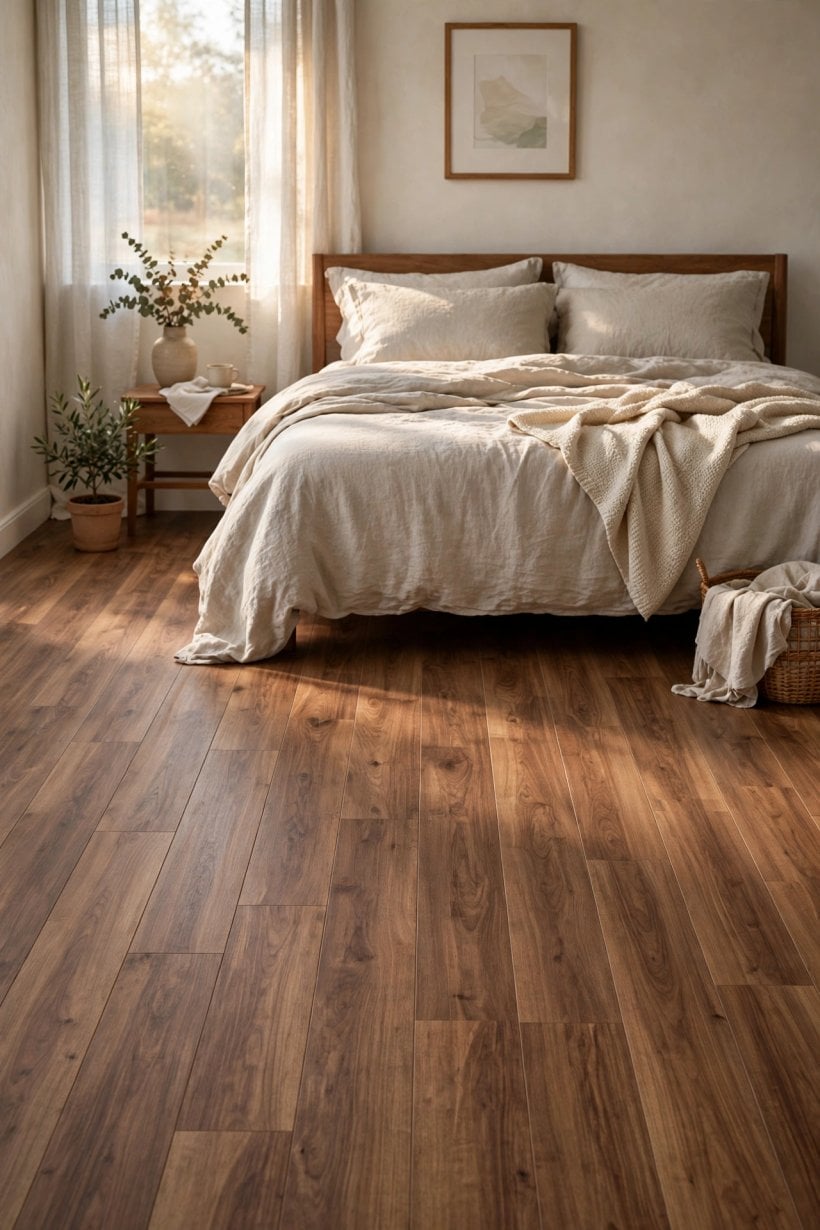
Every serious flooring product has a specification sheet; ask for it, or find it in the manufacturer’s own documentation, and read the unglamorous lines. What is the board’s construction — what is it made of, layer by layer? What are its stated dimensions and the coverage per box? What does the manufacturer say about where it can and cannot be used? Numbers here are not trivia: they decide whether your order quantity is right, whether the product suits your rooms, and what you can hold the seller to if something arrives different from what was described.
Cross-check the sheet against the box when the delivery arrives, before installation begins — range, code, dimensions and batch should all agree. Keep the sheet with your order paperwork; if a dispute ever arises, the specification you were shown at purchase is the evidence that matters. And be wary of any performance claim that exists only in conversation. If a feature matters to you — water resistance, suitability over heating, a particular finish — find it in the manufacturer’s writing or treat it as unconfirmed, however confidently it was described in the shop.

5. The Wear Layer and Surface Finish: What To Ask
On many hard floors, the surface you live on is a distinct wear layer over a decorative layer, and its stated thickness is one of the honest differences between product tiers. You do not need to memorise anyone’s numbers; you need to ask two questions and get the answers from the manufacturer’s documentation. How thick is the wear layer on this product, as stated in writing? And how does that compare across the tiers in this same range? A retailer who can show you both figures side by side is helping you buy with your eyes open; the comparison within one brand’s own range is the fairest way to judge what the extra money buys.
Finish matters alongside thickness. Ask what the surface finish is, what it is designed to resist, and what it needs from you: some finishes shrug off daily life but dislike standing water or harsh cleaners; others trade a little delicacy for a more natural look and feel. Match the answers to your household honestly — dogs, children, gritty shoes by the door, a chair that scrapes daily. A floor chosen for the house you actually live in, rather than the showroom house, is the one still making you nod in five years.
Texture deserves a question of its own. Many printed floors imitate wood grain or stone, and the better ones align the surface texture with the image so it feels as it looks. Run your palm across the sample in raking light: does the grain you see match the grain you feel? In bright, low sun, a mismatch can make even a well-chosen colour look flat and artificial. Also ask how the finish behaves underfoot when wet in a hallway or kitchen — grip is a safety matter, not a style one, and the care guide will usually say plainly what the surface is suited for.
6. Subfloor, Underlay and Room Suitability
More flooring disappointments are born under the floor than on it. Before buying, establish what your subfloor is — concrete, boards, old tiles — and what condition it is in, then check the manufacturer’s stated requirements: flatness, dryness, and whether an underlay or moisture barrier is needed, optional or built in. Ask whether the product is approved by its maker for each of your rooms, especially kitchens and bathrooms, where moisture changes the rules, and for any room with underfloor heating, where compatibility must be confirmed in writing rather than assumed.
Moisture-testing and subfloor preparation are unglamorous line items that protect everything above them; the same care with hidden layers shows in tiny house bathroom ideas, where what sits beneath the visible surface decides how long it lasts. If an installer is involved, have them see the subfloor before the order is placed, not after the boxes arrive. Their short visit can change the product, the underlay or the preparation work on the quote — all far cheaper to adjust on paper than on installation day.
7. Installation Method and What It Demands of You
Find out how the floor is installed — clicked together, glued down, nailed, or laid loose — and what that method asks of the room and of you. Click systems are often marketed as straightforward, but the fine print still matters: expansion gaps, door-bar transitions, how the floor meets stairs and hearths, and whether it can run continuously through doorways or needs breaks. Ask about acclimatisation: many products need to rest in the room before fitting, for as long as the manufacturer’s instructions state, and skipping it to save a day is a classic false economy.
If you are fitting it yourself, read the actual installation guide for the exact product before ordering — not a generic video — and honestly audit your tools, your subfloor and your patience against it. Anyone who has studied a how to build your own tiny house guide knows the pattern: the jobs that go wrong are the ones where the instructions were first opened on the day. If you are hiring a fitter, confirm whether their quote assumes the product you are buying, and who supplies trims, underlay and transitions, so nothing is missing when the work starts.
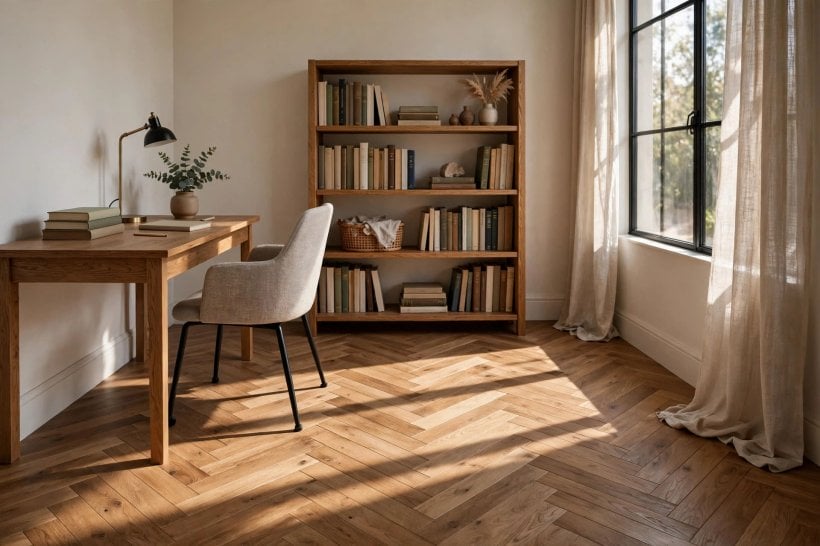
8. Warranty Paperwork: Read It Before, Not After
The warranty is a document, not a slogan. Before buying, obtain the actual written terms for the exact product and read the conditions as carefully as the headline promise. What is covered — surface wear, manufacturing defects, water damage — and what is excluded? What must you do to keep the cover valid: approved cleaning products, correct underlay, professional installation, moisture limits? Are commercial and residential terms different, and which applies to your use? How are claims made, and what proof of purchase and batch information would you need?
None of this requires legal training; it requires an hour and a highlighter. Note especially any condition you might accidentally breach — a steam mop habit, an unapproved underlay already ordered — because a warranty is only as good as your ability to keep its terms. Keep the warranty document, the specification sheet, the invoice and a note of the batch numbers together in one folder. If the retailer’s own returns or guarantee promises differ from the manufacturer’s, get theirs in writing too, and know which document you would rely on for which problem.
One more warranty question is worth asking before you buy, because it is rarely volunteered: what happens if the product is discontinued while you still own the floor? Ranges change, shades retire, and a claim or a repair years from now may depend on spares, an agreed equivalent, or a written remedy in the terms. You cannot control a manufacturer’s catalogue, but you can check whether the paperwork acknowledges the situation at all — and your spare box from the same batch, ordered on day one, quietly answers much of it on its own.
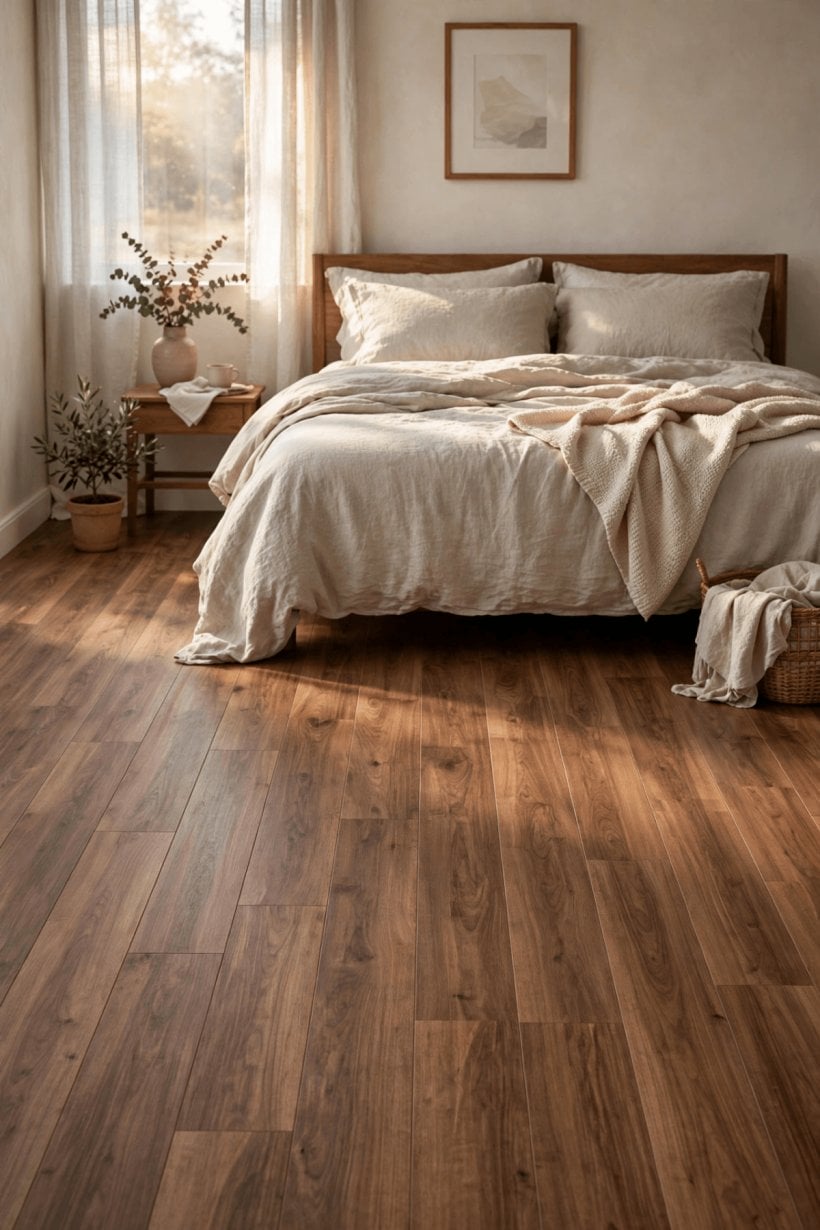
9. Quantities, Batches and the Extra-Box Rule
Measure each room carefully, then check how the retailer calculates the quantity with cutting waste included — and ask them to show the arithmetic. Floors are sold by the box, so the real question is boxes, not square metres, and the rounding should be visible in the quote. Before the order is final, confirm that all boxes will come from the same production batch or shade run where the product has one: colour and finish can drift slightly between batches, and a floor laid from mixed batches can show it in raking light, especially across a doorway where two areas meet.
Then apply the extra-box rule: order at least one box beyond the fitted quantity, from the same batch, and store it. It is the cheapest insurance in flooring — a damaged plank in three years can be replaced from your own shelf instead of prompting a hunt for a discontinued shade. The same foresight appears in tiny house bedroom ideas, where keeping spares of anything fitted is treated as simple good housekeeping. Record the batch details on the box itself, and photograph a box end before the packaging goes to recycling.
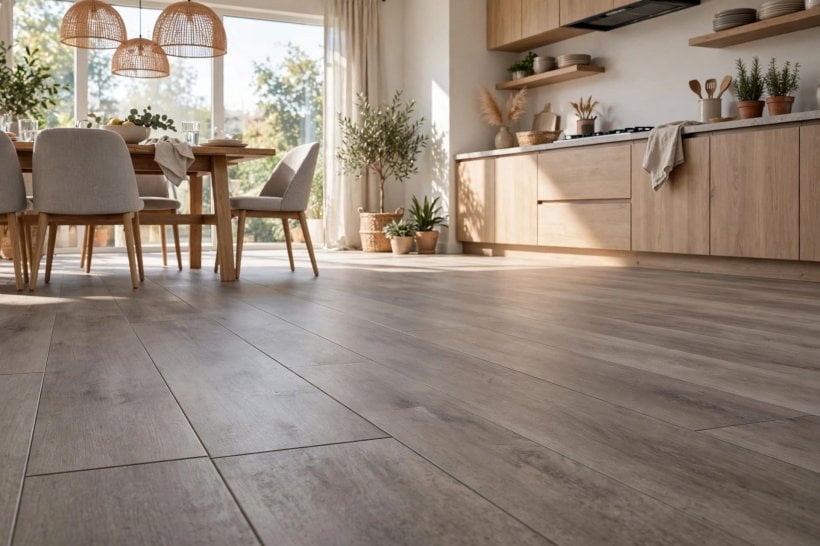
10. Delivery, Returns and Keeping Your Records
Finally, check the commercial details with the same care as the product. When will the flooring arrive, and does that date suit the installation plan — including any acclimatisation time the instructions require? Who unloads it, and where will the boxes live meanwhile? What is the returns position on unopened boxes, and within what period and condition — this decides how brave you can be with the extra-box rule. On delivery day, count the boxes, check the product code and batch on each against the order, and inspect for transit damage before signing; note any damage on the delivery record rather than discovering it silently later.
Keep the whole paper trail in one place: quote, invoice, specification sheet, warranty terms, delivery note and your photographs of samples and box ends. It feels like admin because it is admin — the quiet kind that resolves every future question in minutes. Houses with well-kept records, from cabins to tiny barn house interiors, get their problems solved faster, because nobody has to argue about what was actually bought. Your future self, mid-renovation, will be grateful for the folder.
Final Considerations
Buying evoke flooring — or any floor — well is mostly a matter of sequence: identify the exact product, live with samples, read the specification, question the wear layer, check the room and subfloor against the maker’s own requirements, understand the installation and the warranty paperwork, and order the right boxes from one batch with a spare. None of it is glamorous, and all of it is cheaper than the alternative. Do the checks in writing, keep the folder, and the floor you walk on in ten years will be the one you meant to buy.




0 Comments