

A toilet is the least glamorous fixture in a bathroom and one of the most consequential to get wrong. It is used every day, it sits at the junction of water supply and drainage, and a poor choice announces itself through weak flushing, constant running, rocking, leaks and cleaning battles that last for years. Choosing well has nothing to do with rankings or winners: it is a short list of checks — fit, flush, water use, comfort, installation and care — applied to the bathroom you actually have.
This guide names no maker, no model and no price, because those vary by shop and region, and it quotes no performance figures as fact, because a figure measured in a laboratory is not a promise in your bathroom. What follows is what to check before buying, in general terms, with plumbing work framed throughout as a professional’s job rather than a weekend experiment.
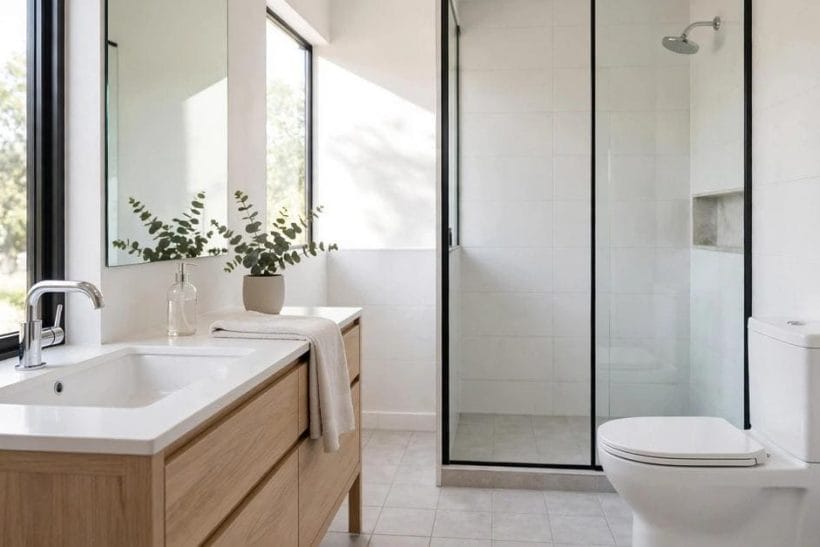
1. The Fit: Size, Shape and the Room Around It
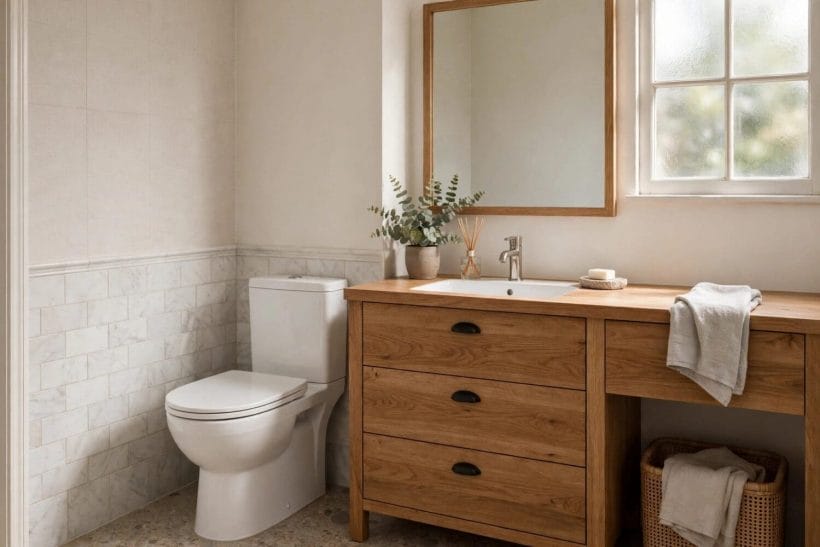
Fit comes first, because a toilet that does not fit the room cannot be rescued by any other virtue. Measure the space: the distance from the wall to the drain centre, the width available beside the bowl, and the clearance in front of it for knees and cleaning. A compact room may need a shorter-projection model; a generous room can take a fuller one. The measurements that matter are your room’s, not a catalogue’s ideal.
Shape matters too. Round bowls suit tight rooms; elongated bowls suit larger ones and many people find them more comfortable. Height matters as well — a taller seat suits taller users and those with stiff knees, while a standard height suits children and shorter users. Sit on the toilet in the showroom if you can: comfort is a physical fact, not a specification, and five minutes of sitting tells you more than any description.
Toilet room ideas show how a separate water closet changes the fit question entirely, because the room itself is the constraint rather than the corner of a larger bathroom.
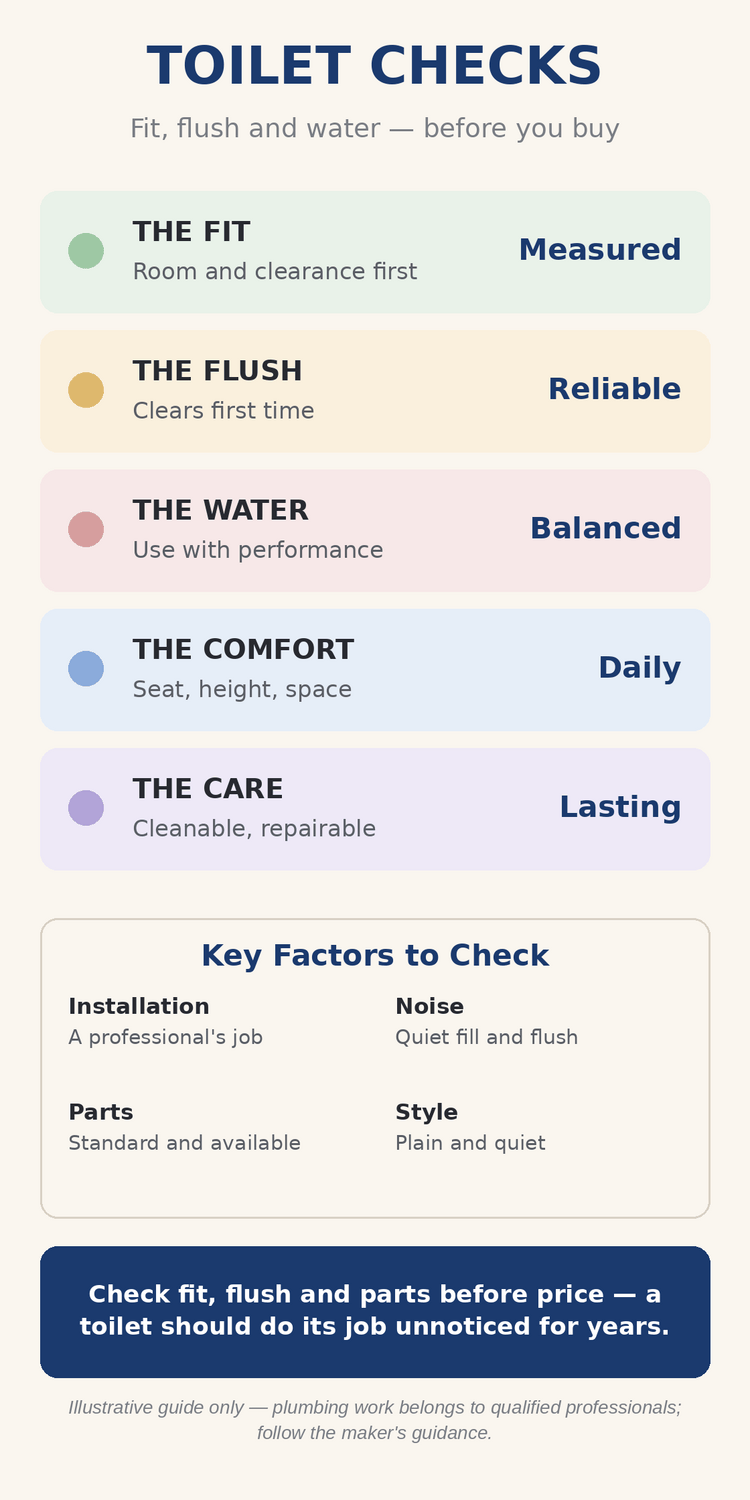
The infographic above summarises the five checks that carry a toilet choice: fit for the room, flush for the job, water for the bill and the conscience, comfort for daily use, and care for the years after.
2. The Flush: What a Good Flush Actually Means
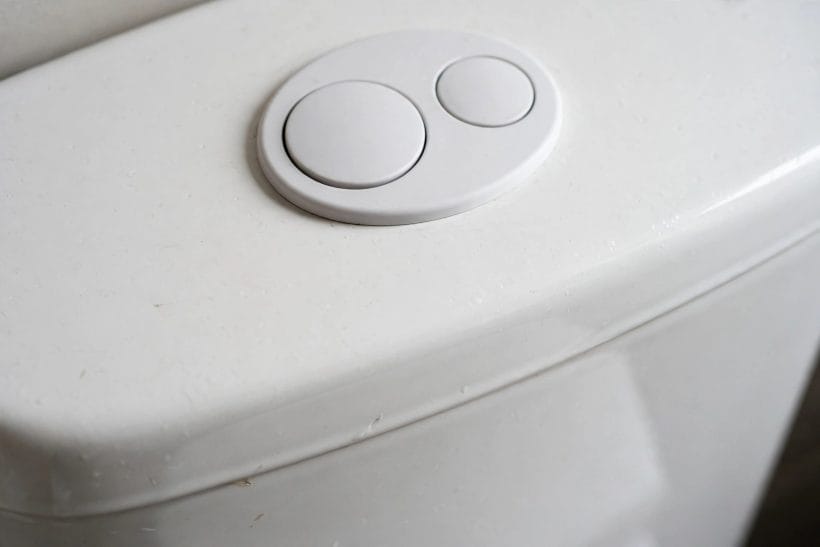
A good flush clears the bowl completely, first time, without drama and without leaving residue to clean. Flush mechanisms differ — gravity systems, pressure-assisted systems and dual-flush options all exist — and each has its own character: gravity is quiet and simple, pressure-assisted is forceful and louder, dual-flush offers a lighter option for liquid waste. None is universally better; the right one depends on the household, the plumbing and tolerance for noise.
Judge flushing by demonstration and by reputation, not by numbers quoted in marketing. Watch a working model flush in a showroom if possible, ask installers which mechanisms they see least often for repairs, and be sceptical of any claim that sounds absolute. A flush that works reliably in your home’s water pressure and drain run is worth more than any superlative on a box.
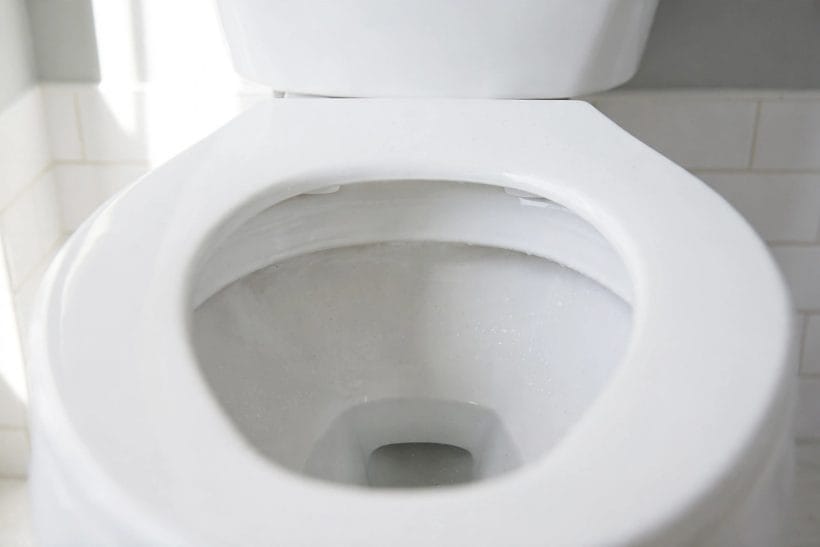
3. The Water: Use Stated Generally, Judged Honestly
Water use is a real consideration, both for bills and for conscience, and it should be discussed honestly rather than in absolutes. Modern toilets generally use far less water per flush than older ones, and dual-flush models add a lighter option that reduces use further across a household’s daily pattern. But the saving depends on the household: a family of five saves differently from a single occupant, and a lighter flush that needs a second flush saves nothing.
Check the water-use information the maker provides, and weigh it against the flush performance in the same model — the two belong together. A toilet that uses very little water but flushes poorly is a false economy, and a toilet that flushes powerfully while wasting water is a poor bargain in the other direction. The honest question is not how little water a toilet can use, but how reliably it does its job with the water it uses.
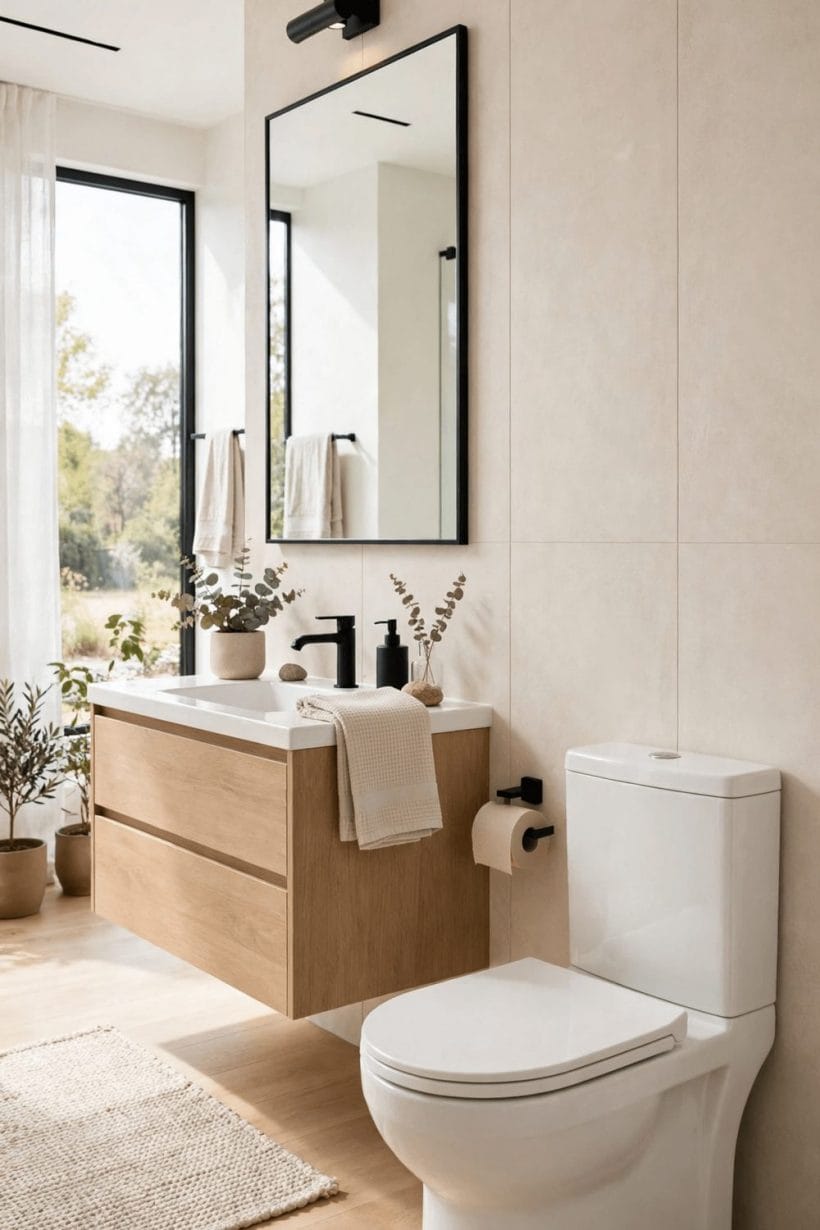
The household test is the most honest one a toilet can face, because a toilet serves everyone in the house, from the smallest child to the oldest visitor, and it serves them several times a day. Think about who actually uses the bathroom: children need a seat they can manage confidently, older users need a height they can rise from without strain, and guests need controls that explain themselves without instruction. A toilet that suits only one member of the household is a poor purchase however elegant it looks, and the household test — imagining each user, in turn, using it daily — catches more bad purchases than any showroom visit. Choose for the household you have, not the household in the photograph.
4. The Comfort: Seat, Height and Daily Use
Comfort is easy to overlook and miserable to regret. Seat shape, seat height, the space around the bowl for elbows and knees, and the ease of sitting and standing all shape daily experience, especially for older users, taller users and anyone with mobility concerns. A seat that is too low strains knees; one that is too high leaves feet dangling; a bowl cramped against a wall or vanity makes every visit awkward.
Consider the household as a whole rather than a single user. A family bathroom serves children, adults and guests of different heights, so a middle height and a comfortable, well-shaped seat usually serve well. Soft-close seats are a small luxury that prevents slamming and suits households with children, and a seat that lifts off easily makes cleaning — the toilet’s eternal chore — noticeably simpler.
Bookcase ideas may seem far from a bathroom, but the principle is identical: furniture and fixtures must fit the people who use them daily, not just the room that holds them.
5. The Installation: A Professional’s Job, Checked Properly
Toilet installation is plumbing work, and plumbing work belongs to professionals. The connection to water supply and to drainage, the sealing of the base, the levelling of the bowl and the testing of the flush all sit at the boundary between a bathroom that works and one that leaks, rocks or smells. A licensed plumber brings the tools, the fittings and the accountability that a do-it-yourself attempt cannot.
Even with a professional, know what to check afterwards: the bowl should not rock when pressed from any side, the base should be sealed neatly, the cistern should fill quietly and stop at the right level, and the flush should clear fully without running on. Ask the installer to demonstrate the flush and the fill before they leave, and keep the paperwork — model, fittings and warranty — with the house’s records.
6. The Surfaces: Glaze, Shape and Cleaning
A toilet’s glaze is its first defence against staining and its greatest help for cleaning. A smooth, well-fired glaze resists marks and wipes clean; a rough or thin glaze stains quickly and never quite recovers. Rimless or easy-clean bowl designs reduce the hidden ledges where grime collects, and a skirted base — where the trapway is concealed — removes the dusty curves that make cleaning behind a toilet a dreaded job.
Shape affects cleaning as surely as glaze does. A one-piece toilet has fewer joints to trap dirt than a two-piece one, though it is heavier to handle during installation. Whatever the design, the cleaning test is simple: can every surface be reached with a brush and cloth, without contortions? If the answer is no, the toilet will look worse every year, whatever it looked like in the showroom.
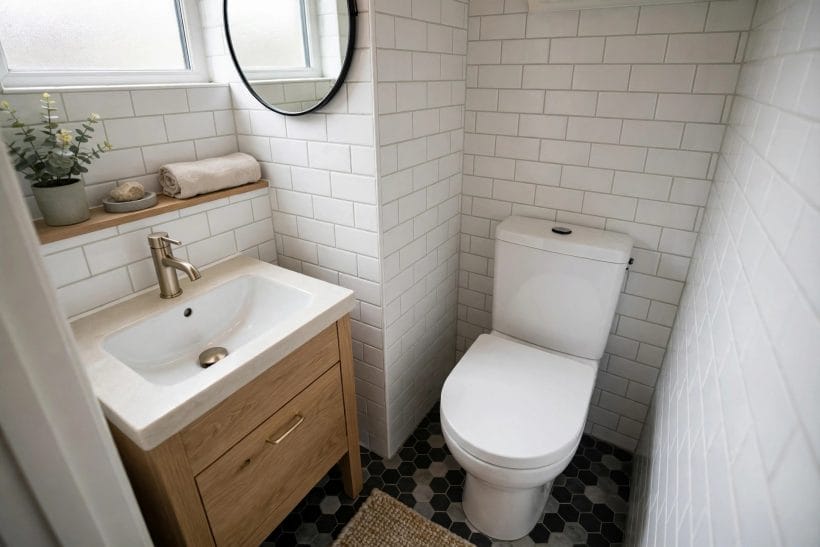
The guest bathroom rule is simple: the toilet in a guest bathroom should be the easiest one in the house to use, because guests will not ask how it works. A plain, familiar design with a single obvious control, a comfortable seat and no unusual mechanism is the right choice for a room used by strangers, and it is also the right choice for a household that values calm over novelty. Save unusual designs for the bathroom you use yourself, where you can learn their quirks, and keep the guest bathroom gloriously ordinary. Ordinary, in a guest bathroom, is a compliment.
7. The Noise: Fill, Flush and Household Peace
Toilet noise is a household-quality issue, not a trivial one. A cistern that fills with a hiss, a flush that thunders through a wall, or a valve that whistles at night all wear on the people who live with them, especially where a bathroom shares a wall with a bedroom. Fill valves and flush mechanisms differ in noise, and quiet operation is worth asking about specifically.
Noise also signals condition: a fill valve that suddenly grows loud, a flush that gurgles, or a cistern that runs on after flushing are all worth a plumber’s attention rather than tolerance. A toilet should be heard briefly and then be silent; anything else is either a poor choice or a developing fault.
LVT underlayment checks share the same discipline of checking what lies beneath a finished surface, and a toilet rewards the same attitude: what you cannot see — valves, seals, connections — decides how the visible part behaves.
8. The Longevity: Parts, Spares and Repairability
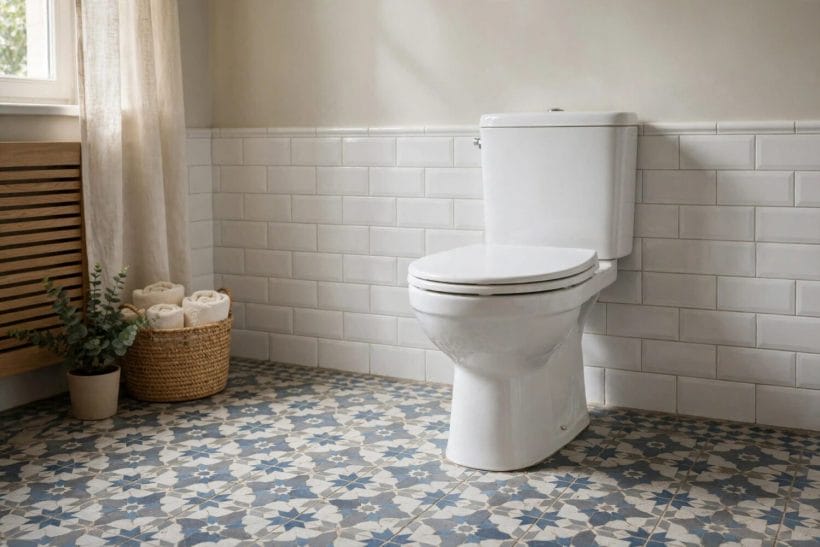
A toilet is a long-term purchase, and its long-term value depends on parts. Fill valves, flush valves and seals wear out, and a toilet whose parts are standard and available will be repaired in an afternoon, while one with obscure fittings can strand a household for days. Ask about parts availability before buying, and favour designs whose internals a local plumber recognises at a glance.
Durability is also about the household’s habits. A busy family bathroom, a rental property and a rarely used guest bathroom place very different demands on the same fixture, and the right choice differs accordingly. Buy for the bathroom’s real traffic, not its imagined ideal behaviour, and the toilet will repay the honesty with years of unremarkable service — which is exactly what a toilet should provide.
9. The Style: Plain, Quiet and Easy to Live With
Toilet style should be quiet. A plain white, well-proportioned toilet suits almost every bathroom, from traditional to contemporary, and it will not date while bolder colours and shapes will. Novelty shapes and colours photograph well and live badly, and a toilet is replaced far less often than the fashion around it.
Where the bathroom has a strong style — a period scheme, a bold tile, a particular timber — the toilet should support it rather than compete: a traditional high-level cistern for a period room, a wall-hung model for a minimal one, a compact model for a small one. Style in a toilet is restraint, and restraint ages gracefully.
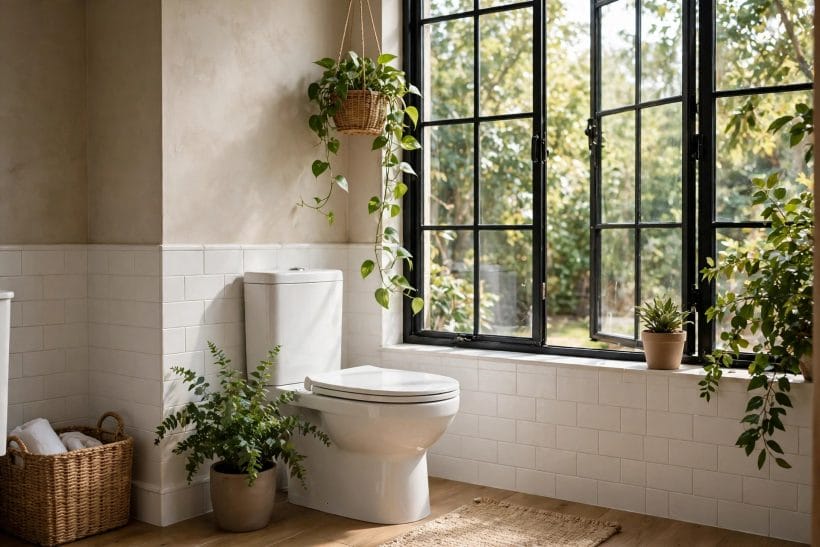
The second toilet question deserves asking before the first toilet is bought, because many houses have more than one bathroom and the two toilets need not match. A main bathroom toilet can prioritise comfort and quiet, while a downstairs cloakroom toilet can prioritise compactness and easy cleaning, and a guest bathroom toilet can prioritise simplicity. Buying the same model throughout is tidy but not always wise, and the money saved on a simpler cloakroom toilet can fund a better main bathroom one. Think of the house’s toilets as a set with different jobs, not as a matching pair, and each room will be better served.
10. The Choice: A Short List Before You Buy
Before buying, run the short list. Does it fit the room, with clearance to use and clean? Does it flush completely, first time, in conditions like yours? Does its water use make sense alongside that performance? Is it comfortable for the household’s range of users? Can a professional install it, and can its parts be found afterwards? Is it quiet, cleanable and stylistically quiet?
A toilet that passes the whole list is a good buy whatever its price or provenance, and one that fails any item will remind you of the failure daily. There is no winner, no ranking and no single right answer — only the checks, applied honestly, to the bathroom you have. Buy on the checks, keep the paperwork, and let the toilet do its job unnoticed, which is the highest praise it can earn.
Furniture quality checks and interior design ideas apply the same check-first discipline to the rest of the home, because every lasting purchase in a house rewards the same habit: check before you buy, and buy once.
A toilet is a quiet purchase, and quiet purchases deserve the same care as loud ones. Nobody shows guests their new toilet with pride, and that is precisely why the choice matters: it is used more often than almost anything else in the house, it is noticed most when it fails, and it is lived with for years between replacements. The checks in this guide — fit, flush, water, comfort, installation, surfaces, noise, parts and style — take an afternoon to run and repay themselves every day for a decade. Buy quietly, buy carefully, and then forget about it entirely, which is the highest praise a toilet can earn.
Final Considerations
A toilet earns its keep invisibly: flushing fully, filling quietly, staying clean, sitting comfortably, lasting for years without drama. The checks in this guide — fit, flush, water, comfort, installation, surfaces, noise, longevity and style — are short, but applied honestly they separate a good buy from a daily regret. No ranking can do that work for you, and no figure quoted as fact can substitute for sitting, measuring and asking a professional. Check first, buy once, and let the bathroom get on with its quiet job. Tiny house porch ideas show how the same measure-first discipline applies outdoors, where space is tighter still.



0 Comments