

Three famous names, one sink, and a decision you will live with every day. A moen vs delta shortlist — with Kohler in the frame too — is where most faucet shopping ends up, and the winner depends far less on the badge than on the checks you run first.
This guide is deliberately calm: no invented specifications, no made-up prices, no star ratings. Just the style, fit, parts and paperwork checks that separate a faucet you love from one you tolerate, and a simple verdict at the end.
1. At a Glance: The Head-to-Head Checklist
All three brands are large, established faucet makers with wide ranges, which is exactly why brand-level generalisations mislead. One maker’s entry-level line and another’s premium line are not a fair fight in either direction. The honest comparison happens model by model, using the same checklist for each. Run every candidate through the rows below, using the manufacturer’s own current documents and a reputable retailer’s listing for the exact model you are considering — never a review of a different model, however similar its name sounds.
| What to check | How to check it, for any brand |
| Style range | Browse the maker’s current kitchen and bath collections; note which design language suits your room |
| Finishes | List the finishes offered on your exact model; order samples or view in store under your lighting |
| Fit and mounting | Compare hole count, deck thickness limits and spout reach in the model’s own specification sheet |
| Parts and cartridges | Check the maker’s parts diagrams and local availability for your model’s cartridge and wear parts |
| Warranty paperwork | Read the current warranty document for your region and model type before buying, not after |
| Support | Find the maker’s support channels and documentation library; test how easy the manuals are to reach |
| Price positioning | All three span entry to premium lines; compare models in the same band, qualitatively, at several retailers |
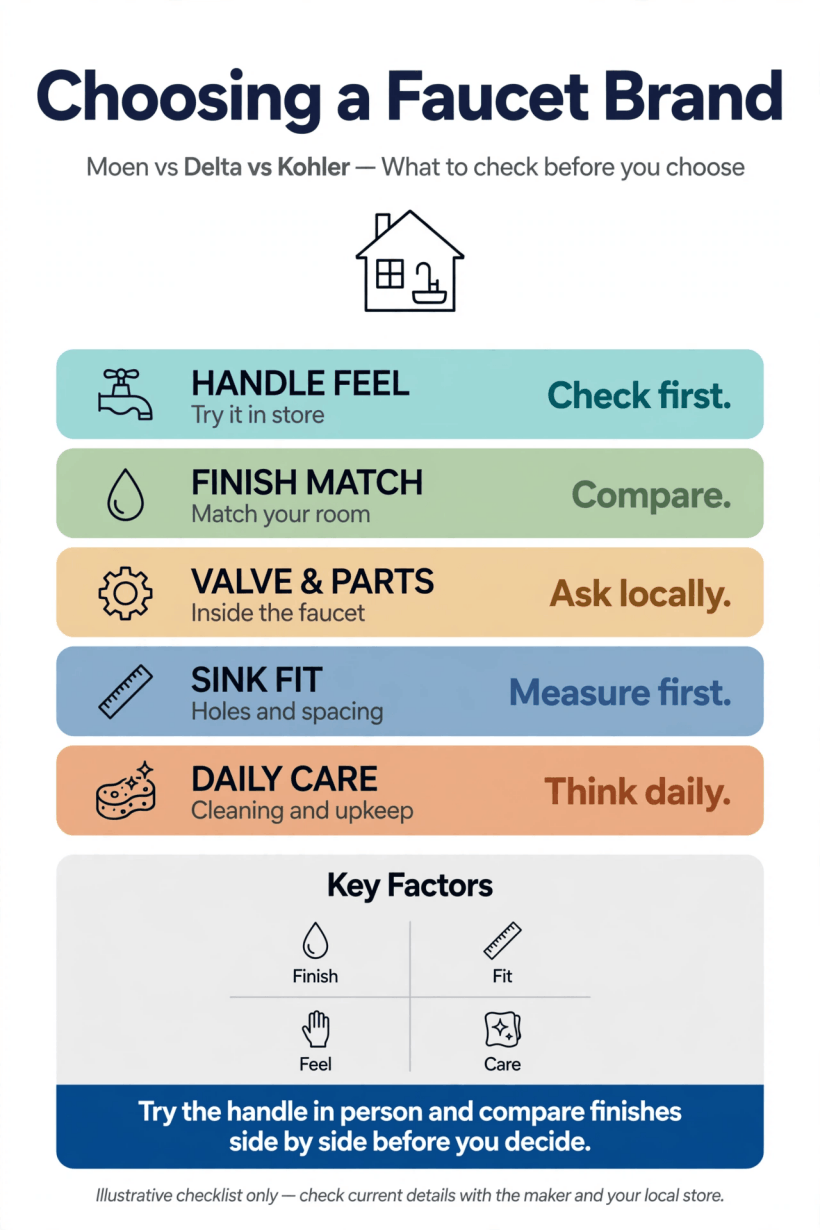
Infographic: the head-to-head checklist — style, finish, fit, parts and paperwork — to run on any faucet before you choose.
Keep your results somewhere visible: a simple note per candidate with the finish you saw, the fit you confirmed and the parts you found. When the shopping blur sets in — and it will — that note is the difference between a decision and a guess. The sections that follow walk through each row of the table in the order an experienced buyer actually checks them.
2. First, Decide What You Are Actually Buying
Brand comparisons go wrong at the very first step: comparing things that are not the same product. A single-hole pull-down kitchen faucet, a widespread bathroom faucet and a shower trim kit are three different purchases with three different checklists, whichever logo is on the box. Fix the product type first — kitchen or bathroom, the mounting your sink or deck actually has, and whether you need a valve or trim only — and only then let the brands compete.
This is especially true in smaller homes, where one faucet often has to do two jobs gracefully. The planning in these tiny house kitchen designs shows how hard a compact sink area works: the faucet there is a prep tool, a pot filler and a washing-up station in one. In a space like that, the right type — tall enough for pots, with a hose that reaches the corners — matters more than any badge. Write your type, your must-haves and your finish shortlist on paper before you open a single product page.
3. Style and Finish: Compare Ranges, Not Reputations
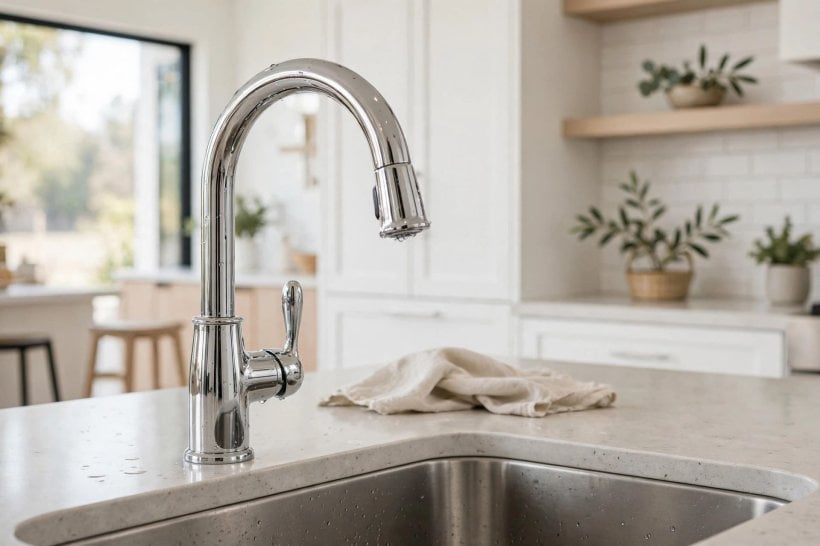
Each of the three makers sells traditional, transitional and contemporary designs, and each refreshes its collections over time. That means the useful question is not which brand is “the stylish one” — a claim that would be out of date as soon as any catalogue changes — but which current models, in which finishes, suit the room you actually have. Shortlist by photograph first, then go and stand in front of the real thing.
Finishes deserve particular suspicion, because a finish name is not a promise of an identical colour across brands, or even across one brand’s own lines. What one maker calls brushed nickel another presents slightly warmer or cooler, and finishes can look entirely different under warm home lighting than under showroom spots. If the faucet must live beside existing hardware — cabinet pulls, towel bars, a shower trim you are keeping — take a piece of that hardware to the store, or order the faucet where returns are painless. Living with a near-miss finish for a decade is the most common, and most avoidable, faucet regret.
4. Handles, Spouts and the Everyday Feel
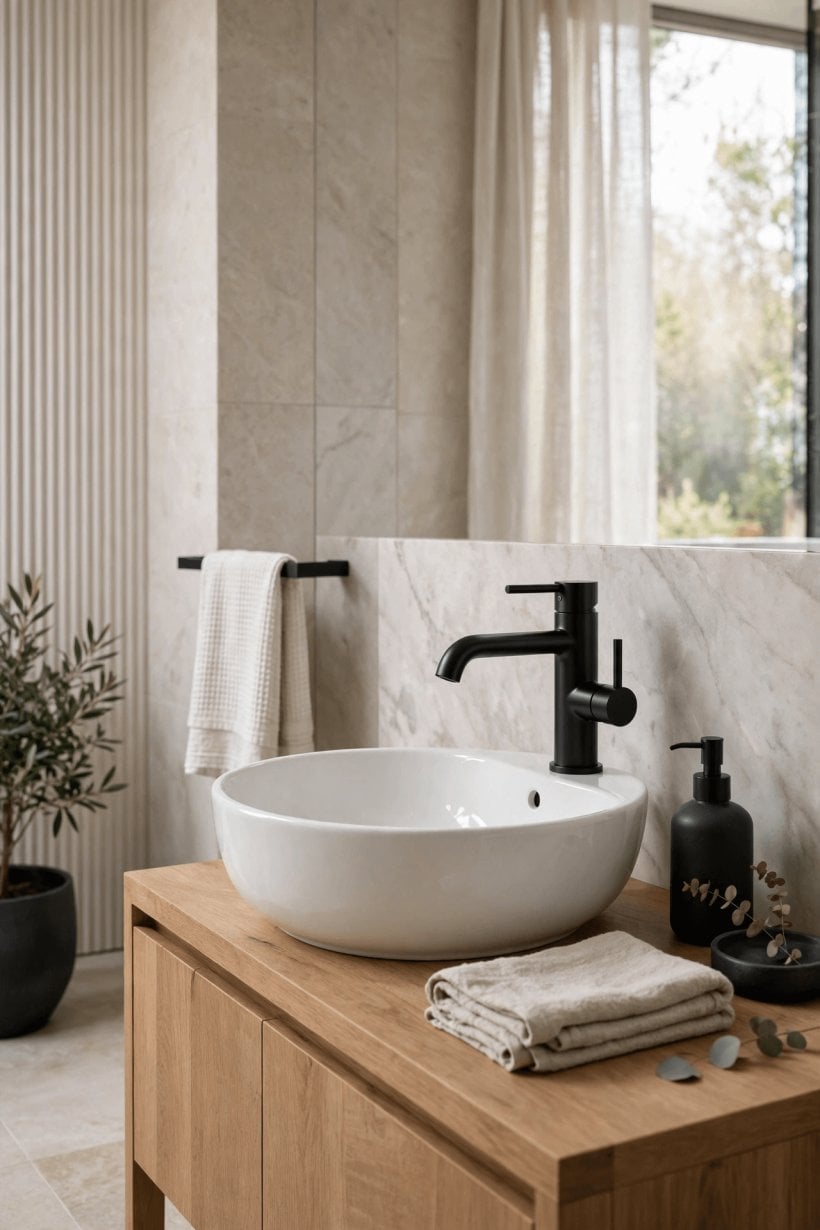
Specifications rarely capture the things you will notice ten times a day: how a lever feels with wet hands, how far a spout reaches over your biggest pan, whether the hose on a pull-down glides back home or dangles. These are feel questions, and all three brands answer them differently from model to model — which is why handling the floor display, or ordering from somewhere with kind returns, beats reading about it.
Make a short ritual of it in the store. Turn the handle through its full travel and notice whether it feels precise or vague. Pull the spray head out and let it retract several times. Stand at the display sink as if washing a roasting pan and judge the clearance honestly. Check how the aerator is removed for cleaning — a small thing that decides whether a two-minute job actually happens. A faucet is a tool you operate with soapy hands, tired eyes and occasionally one elbow; judge it in those conditions, not in brochure conditions.
5. Fit and Installation: The Checks That Save Returns
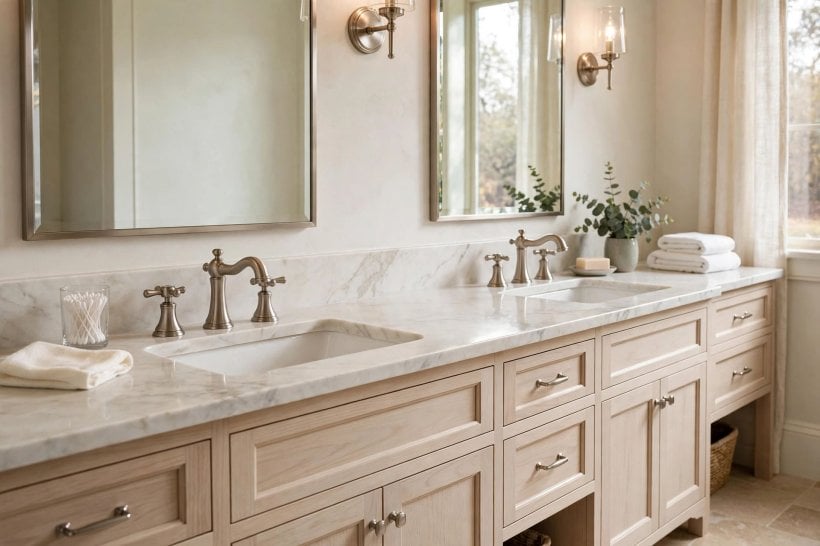
More faucets are returned for fit than for taste. Before falling for any model from any maker, confirm the unglamorous quartet: the number and spacing of holes in your sink or counter, the thickness of the deck the faucet must clamp through, the reach needed from the mounting point to the middle of your bowl, and the space beneath for hoses, weights and supply connections. Every one of those answers lives in the model’s own specification sheet — download it from the manufacturer and measure your sink against it, twice.
Renovations add traps. A new counter in a different material can change deck thickness beyond a faucet’s stated range; a deep farmhouse sink can move the bowl forward until a proud spout barely reaches it; an old valve in the wall can rule out a new trim entirely. In tiny house bathroom layouts these margins shrink further, because every fitting is planned to the centimetre. If a plumber is installing for you, send them the specification sheet before you buy, not after — five minutes of their scepticism is cheaper than a restocking fee.
6. Inside: Cartridges, Parts and the Repair Question
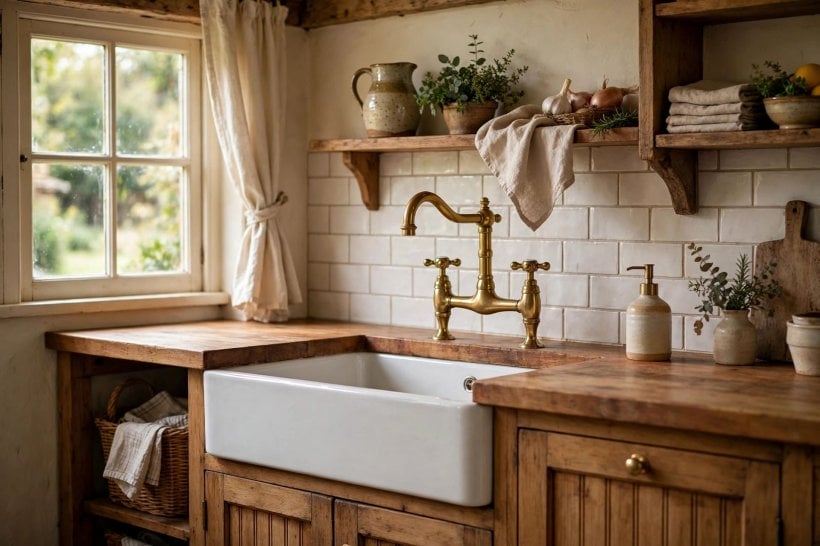
Every faucet eventually drips, stiffens or clogs, and the experience of that day depends on parts: can you identify the cartridge or valve parts your model uses, can you buy them locally or by post without drama, and does the maker publish clear diagrams and instructions? All three brands maintain parts catalogues and documentation; the check is to walk the path yourself for your exact model before you buy it, as if it had started dripping this morning.
Do the same for the wear items you can foresee — aerators, O-rings, spray wands, hoses and finish-care guidance — and note what the maker says about cleaning products, because the wrong cleaner is a common way finishes die young. In a waterproof tiny house bathroom wet bath, where one valve set may serve shower and basin duty in a compact wall, that parts trail matters even more: downtime there means the whole bathroom waits. A brand whose parts you can actually obtain in your town has a practical advantage no advertisement can argue with.
7. Water, Pressure and Efficiency Checks
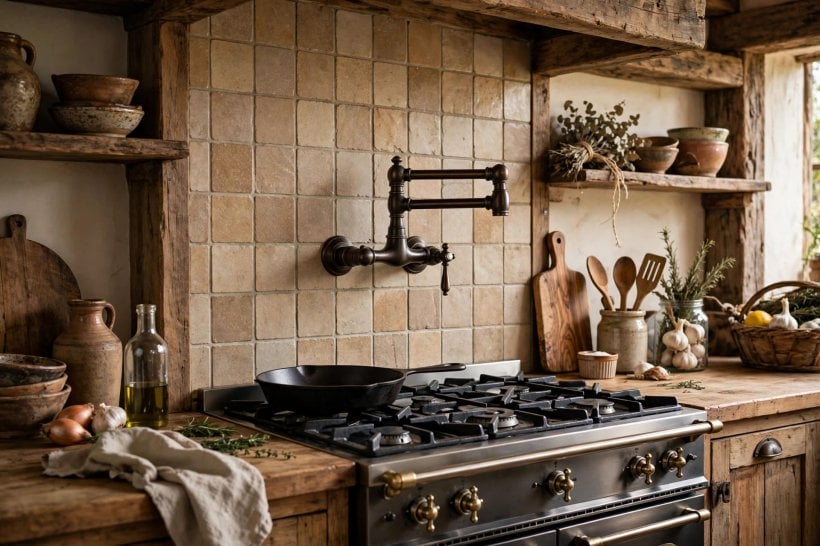
Two faucets that look identical can behave very differently on your water supply. Flow rates are published per model — check the maker’s listing and any efficiency labelling that applies in your region, and think honestly about your pressure: a very economical aerator on a feeble supply can feel disappointing, while a generous flow on high pressure wastes water and splashes a shallow sink. The specification sheet, not the showroom’s perfect plumbing, is where this decision lives.
While you are there, check the spray functions a kitchen model actually offers and how they switch, whether the pause or boost features — where fitted — suit how you cook, and how the maker says the spray face should be descaled in hard-water areas. None of this is brand territory; it is model territory, and it is all published by the manufacturers for exactly this comparison. Ten minutes with three specification sheets side by side will teach you more than an afternoon of opinions.
8. Bathrooms and Showers: The Valve Question
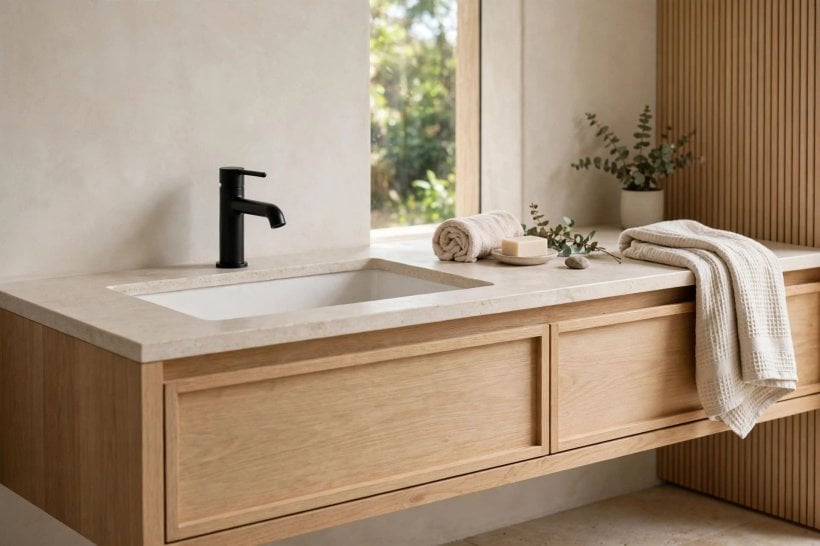
Shower and bath fixtures add the one decision you cannot easily undo: the valve in the wall. Trim — the part you see — is comparatively easy to change; the rough-in valve behind the tiles is not, and trim and valve must be compatible within a maker’s system. So for bathrooms, compare systems, not just shapes: which valve the trim needs, whether that valve suits your water pressure and your plans, and how the maker handles future trim refreshes on the same valve.
Ask, too, how each candidate handles the everyday details: anti-scald protection as described in the maker’s documents, diverter behaviour between bath and shower, and cleaning access in a hard-water home. In the space planning for a kitchen in a tiny house and its small-space design the same principle appears in miniature — the hidden infrastructure is chosen once, carefully, and the visible pieces stay flexible. If you are mid-renovation with walls open, the valve conversation with your plumber is the single highest-value talk in this whole guide.
9. Kitchens in Real Life: Pull-Downs, Pots and Washing Up
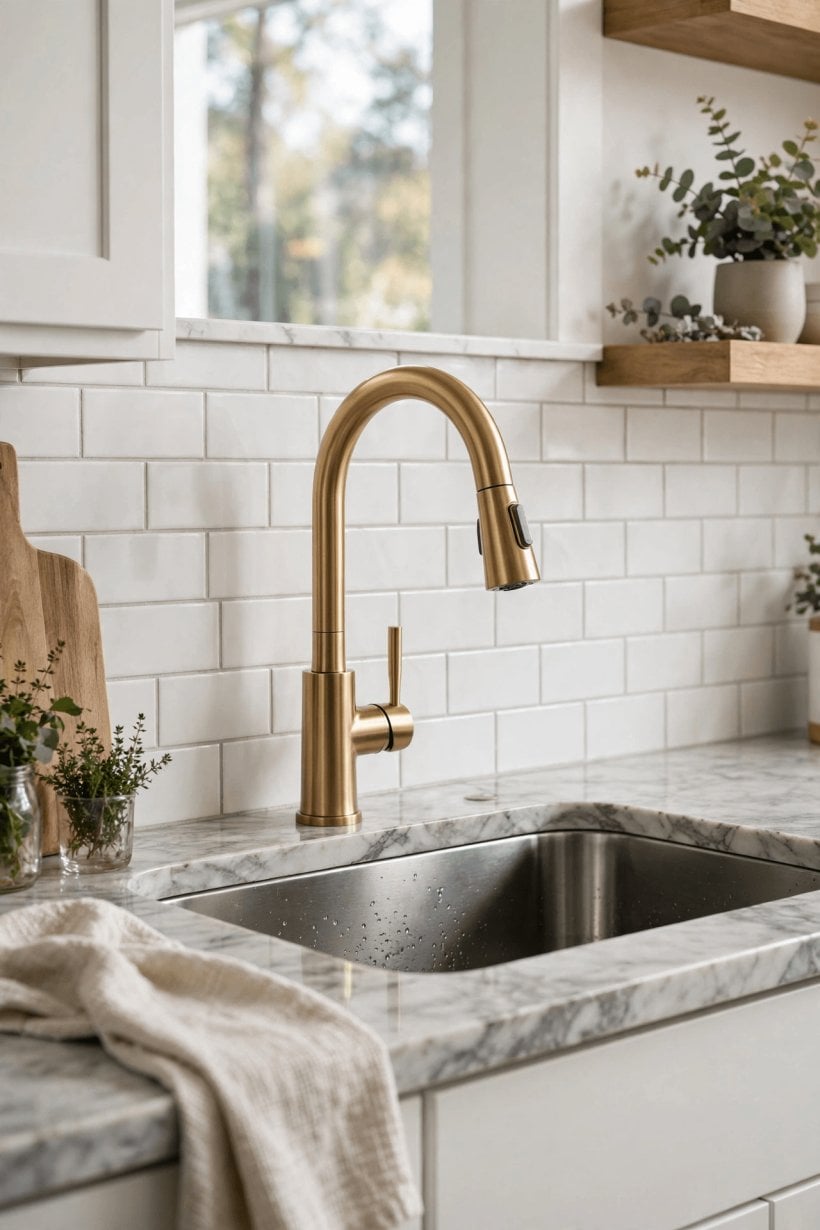
Kitchen faucets live harder lives than any other fitting in the house, so weight your checks towards the daily grind. Hose length and retraction, the balance of the faucet when the spray head is out, clearance under your tallest pot, clearance in front of your window or shelf, and whether the handle’s travel collides with a backsplash or a windowsill — these decide satisfaction, and none of them appears in a beauty photograph.
Lay your own kitchen over the decision: the tiny house kitchen floor plans in our library show sinks centred on windows, tucked in corners and set into islands, and each position forgives different faucet shapes. A tall arc that thrills on an island can bully a small sink under a cabinet; a compact single-lever you dismissed in the showroom can be perfect where hands pass a hundred times a day. Measure your sink’s depth and your pot heights, and let those two numbers veto candidates before style gets a vote.

10. Warranty, Support and the Verdict
Paperwork is the last check and the one everyone skips. Each maker publishes warranty documents that vary by product type and region, and the only version that protects you is the current one for your model in your country — read it before purchase, including what it asks of you about proof of purchase, installation and water quality. Do the same quick test of support: find the manual for your candidate, find the parts diagram, find the contact route. If any of the three is hard to find now, it will not be easier with water on the floor.
Total cost deserves the same calm treatment. All three brands publish ranges from entry-level to premium, so compare complete outfits in the same band — faucet, valve if needed, and any installation parts your situation requires — across retailers, and keep the comparison qualitative rather than chasing a single headline number. The guidance we give for compact kitchen appliances applies here too: buy the thing whose support and parts you have verified, not the thing with the loudest discount.
Who should pick which? Choose Moen if, after running the checks above, its current models give you the finish and feel you liked most in person and its parts are the easiest for you to source locally. Choose Delta if its range best matches your mounting, your budget band and the styles on your shortlist, with documentation you found clear and complete. Choose Kohler if its designs suit your room best and its system — valves, trim and parts — checks out most cleanly for your project. In other words: the brand whose checklist comes back with the fewest compromises is your brand, and a different reader, running the same honest checks, may rightly land somewhere else.
Final Considerations
A faucet is a decade-long housemate chosen in an afternoon, which is why the checks matter more than the crest on the box. Decide the type first, test the feel in person, prove the fit from the specification sheet, walk the parts trail as if it had already dripped, and read the warranty while you can still walk away. Do those five things and any of these three makers can serve you well; skip them, and even the finest name cannot save the purchase.




0 Comments