
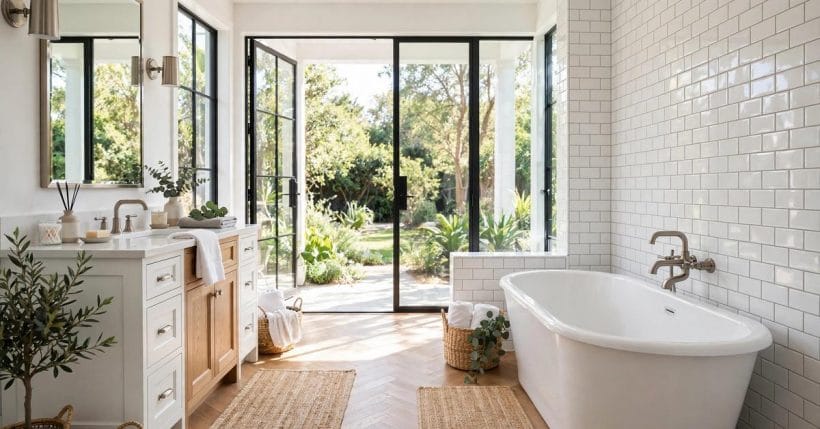
The tile around a bathtub does more visual work per square metre than any other surface in the bathroom: it is the backdrop to every soak, the frame of the room’s largest fixture, and the first thing a guest’s eye lands on. It also lives the hardest life in the house — soaked, steamed and scrubbed daily.
This collection gathers 75 bathtub tile ideas for the tub surround — the walls and aprons that wrap the bath itself. Shower-only schemes and whole-room tiling live in their own posts; here the bath is the subject, and every idea is judged by how it behaves in the splash zone and how it makes the tub look.
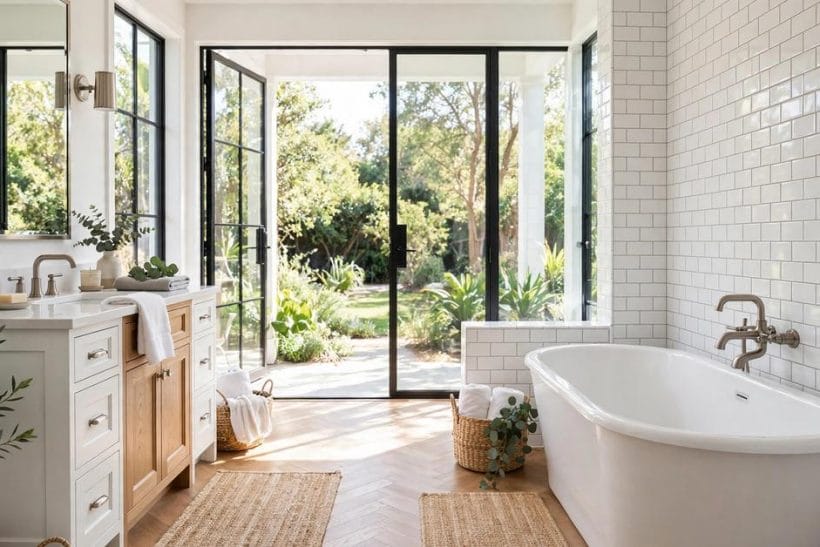
1. Bathtub Tile at a Glance
Surround tile falls into five families, and the bathroom ideas pillar makes the same division when it treats the bath zone on its own. Choose the family by the room you want to feel, then by the cleaning you are honestly willing to do — a surround is a commitment you will wipe down for years, so charm and upkeep must be chosen together.
| Family | Character | What it means |
|---|---|---|
| Subway Tile | Classic and timeless | Versatile |
| Marble-Look | Elegant stone effect | Luxurious |
| Patterned Tile | Bold character | Eye-Catching |
| Mosaic Tile | Detailed texture | Intricate |
| Large-Format | Seamless modern look | Spacious |
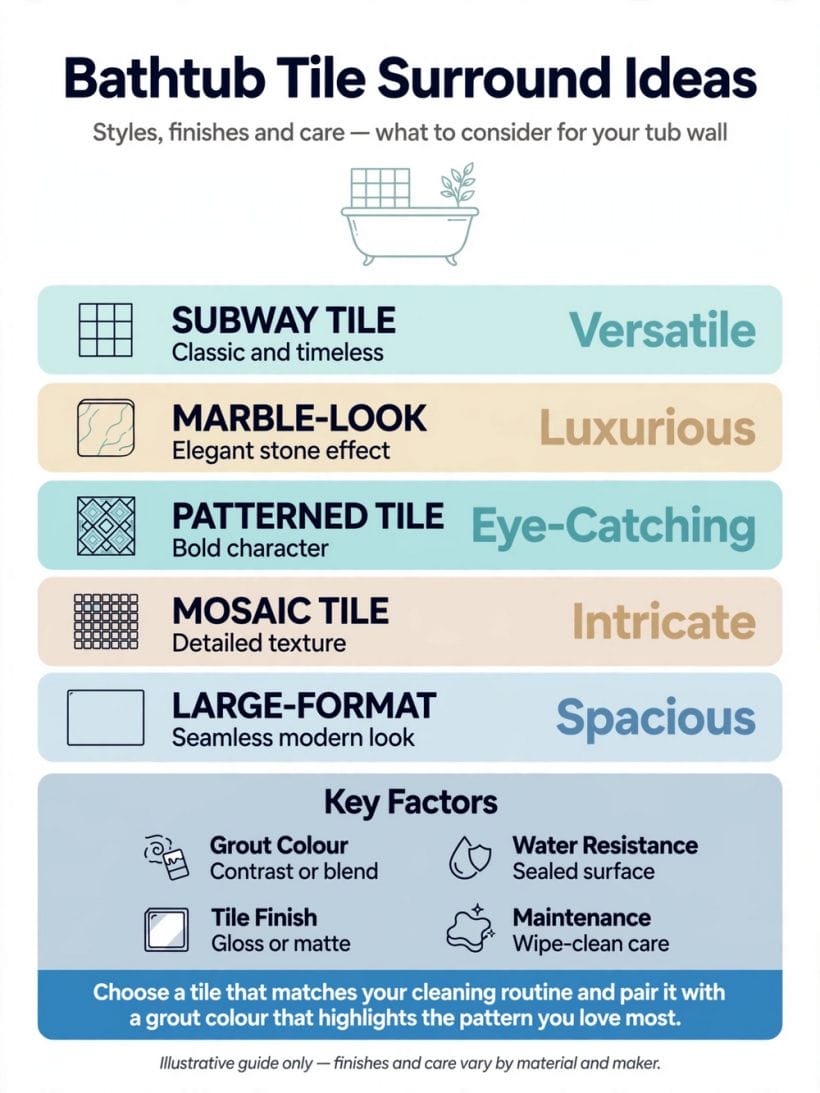
Four factors run through every section: grout, because its colour and quantity decide half the look; finish, because gloss and matte behave differently under bathroom light; water resistance, because the surround is a working waterproof surface and its build belongs to professionals; and maintenance, because the prettiest tile is the one that still looks cared for in five years.
2. Subway and Mosaic: The Small-Tile Classics
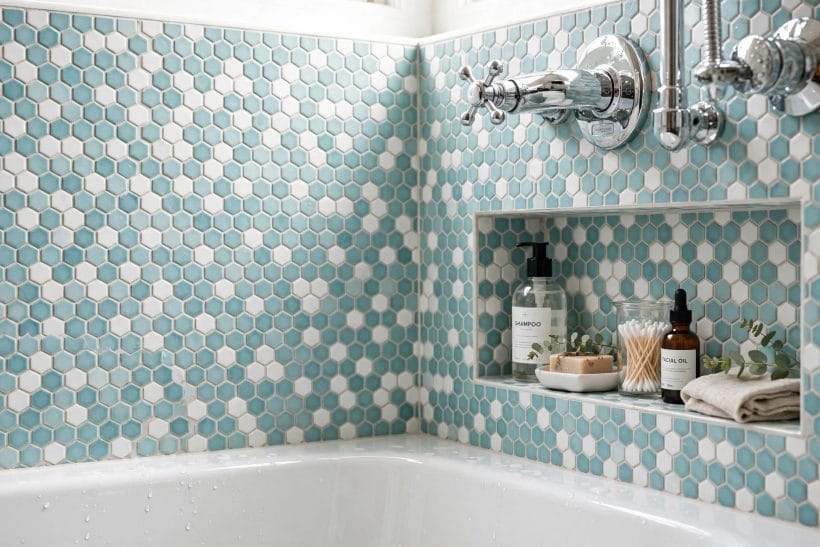
Small tiles are the surround’s old faithfuls. Subway tile brings brick-bond rhythm and a century of good behaviour; mosaics bring texture fine enough to wrap curves and niches. The aqua hex mosaic in this photograph shows the family’s charm — a whole wall of tiny, light-catching pieces.
1. White Subway, Running Bond
The default that never dates: white subway tile in running bond, as in the feature photograph, suits every tub and every budget of effort. Its magic is restraint — it makes the bath, the taps and the towels the coloured things in the room.
2. Subway in a Stacked Layout
Stacking subway tiles in a strict grid instead of staggering them turns the classic modern. The same cheap tile reads as architecture rather than tradition, which is why stacked layouts star in so many small, sharp bathrooms.
3. Subway Run Vertically
Turning the brick upright stretches a low surround visually and suits rooms where the ceiling needs lifting. Vertical running bond around a bath feels tailored, like the room was measured for the tub rather than the other way round.
4. Hex Mosaic in Aqua
Small hexagons in a watery aqua, as here, put the sea inside the bathroom. Mosaic sheets make the fitting quicker than the piece count suggests, and the many grout lines give grip-prone texture where hands reach.
5. Penny Rounds Around the Tub
Penny tiles bring a dotted, retro softness to the surround and curve beautifully around an alcove’s corners. In white they are fresh; in black they are a tuxedo. Either way the grout colour becomes a headline decision.
6. Herringbone Mosaic Accent
A herringbone panel behind the taps or inside a niche concentrates mosaic’s labour where the eye rests. Surrounding it with plain field tile keeps the cost and the cleaning sane while the accent does the showing off.
7. Marble Mosaic Basketweave
Basketweave mosaic borrows the floor patterns of grand old bathrooms and lifts them onto the surround. It suits period houses and roll-top tubs, and its greys hide water marks with unusual grace.
8. Coloured Subway, White Grout
Subway tile in a soft colour — sage, blush, powder blue — with white grout is the gentle way into colour. The white grid keeps it classic while the tint does the decorating, and the whole scheme can be repainted around, not ripped out.
3. Marble-Look Tile: The Elegant Stone Effect
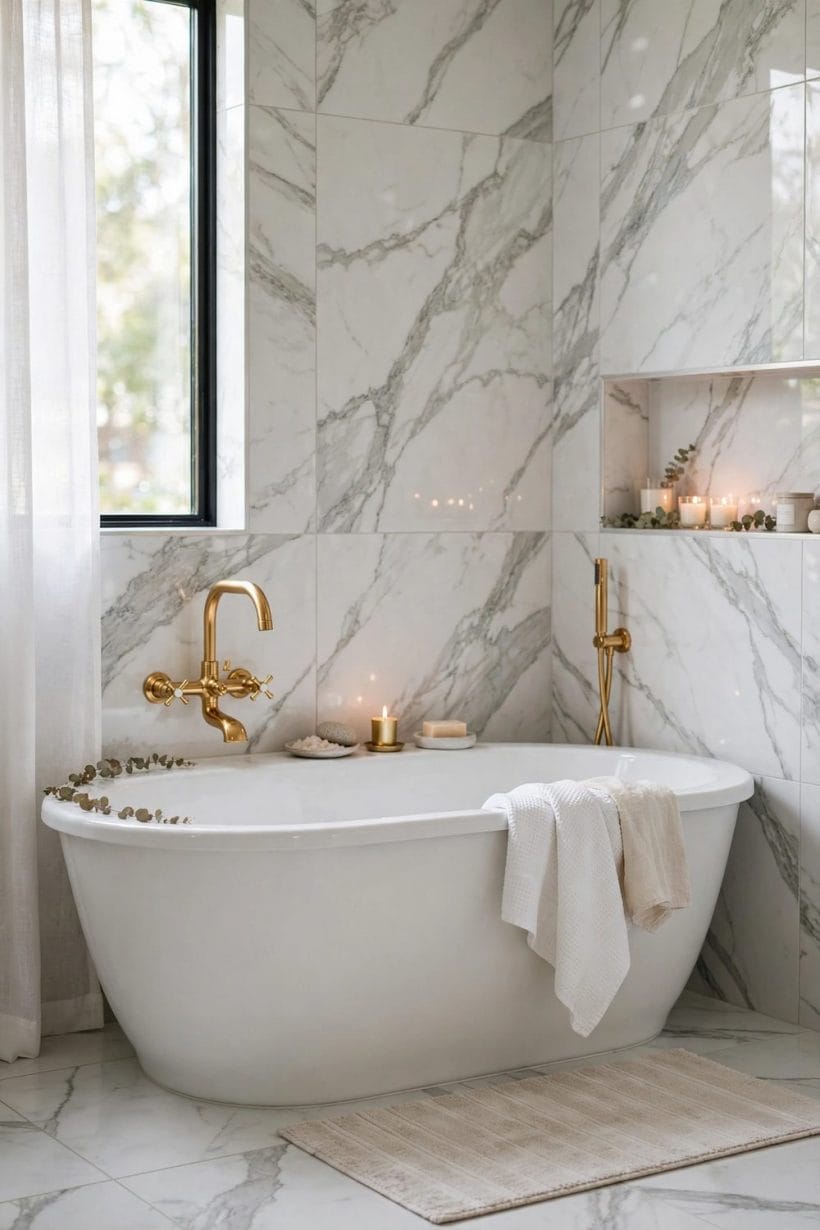
Real marble around a bath is beautiful and demanding; marble-look porcelain offers the veining without the sealing diary. The pin photograph’s brass-and-marble scheme is the family’s promise — a hotel wall, at home, that wipes clean.
9. Classic Carrara-Look Veining
Soft grey veins on white is the marble look that suits the most rooms. Large tiles show the pattern best; small ones chop the veining into static. Pair with chrome for coolness or brass for warmth.
10. Bold Vein, Book-Matched Panels
Where the surround is the room’s one big gesture, dramatic veining laid as mirrored panels turns the bath wall into a painting. It wants a freestanding tub in front of it and very little else competing.
11. Marble-Look with Brass Fittings
Warm metal against cool stone-look tile is the combination in this photograph, and it flatters both. The brass will patina; plan to love it slightly aged rather than fighting for showroom shine.
12. Honed-Look Matte Marble
A matte, honed effect takes the glare off marble-look tile and reads more like real stone than the glossy versions. It also forgives water spots better, which around a bath is a daily mercy.
13. Marble-Look in the Niche Only
Lining just the shampoo niche in marble-look tile gives the surround a jewel box without the wall’s price. The trick works in reverse too — plain niche, marble walls — but the small dose is the cleverer spend.
14. Dark Marble-Look for Drama
Near-black marble effects with pale veining make an alcove feel like a grotto in the good sense. Keep the tub white and the lighting warm, or the drama curdles into gloom.
15. Marble-Look Beside Real Slate
Stone effects sit well beside honest materials: the slate tile bathroom ideas in the neighbouring post make the same point from the real-stone side. Mixing one real texture with one printed one keeps both believable.
16. Marble-Look Apron on a Built-In Tub
Tiling the apron — the tub’s front panel — in the same marble-look as the wall makes a built-in bath read as a carved block. It is the cheapest route to the ‘sculpted stone bath’ photograph everyone saves.
4. Large-Format Tile: The Seamless Modern Look
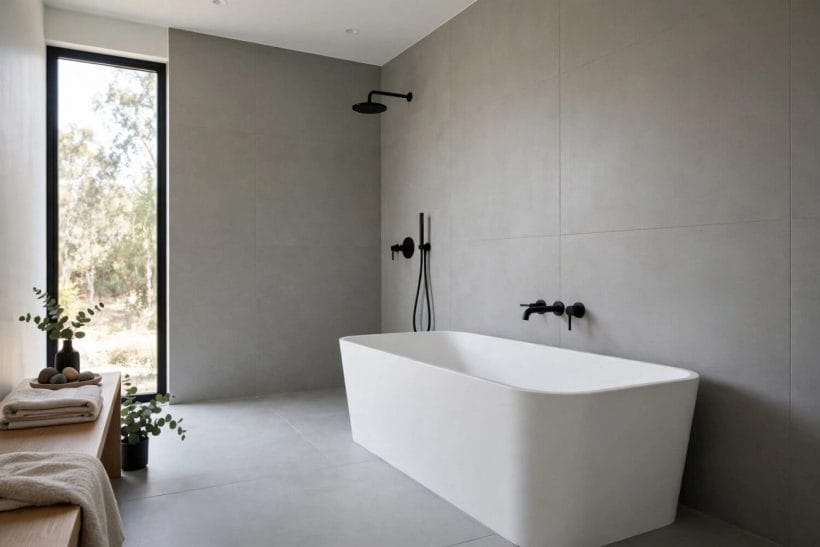
Oversized tiles shrink the grout count and stretch the room. The grey scheme in this photograph shows the effect: a handful of calm planes, a freestanding tub, and nothing else asking for attention. Large format is the minimalist’s surround and the cleaner’s friend.
17. Large Grey Planes, Minimal Grout
Big matt grey tiles make the surround a single quiet surface. In small rooms the trick is counterintuitive but reliable — fewer, larger pieces read as more space, a point the small-bathroom cluster makes often.
18. Large-Format in a Small Bathroom
Do not let anyone tell you small rooms need small tiles. In the small bathroom ideas collected next door, large tiles are the standard remedy for a cramped alcove: fewer lines, calmer walls, a bigger-feeling bath.
19. Continuous Tile, Wall to Apron
Running one large tile across wall and apron without a break makes the whole bath zone a single folded surface. It asks for precise setting-out, so this is a scheme to hand to a meticulous tiler.
20. Large Tiles, Dark Grout Lines
A deliberate dark grout turns big tiles into a drawn grid — structure instead of seamlessness. It suits industrial and graphic schemes and hides the inevitable grout darkening of a working splash zone.
21. Stone-Look Large Format
Printed stone in large formats brings travertine or limestone calm without stone’s sealing needs. Keep the pattern’s repeat unobtrusive by choosing tiles with varied faces, or the wall will show its printing.
22. Large Format Around a Window
Bathroom windows inside the splash zone are large format’s friend: fewer joints for water to hunt. The tiling and its waterproof build around openings is professional work — admire the result, delegate the making.
23. Pairing Large Tiles with a Compact Layout
In a 5×8 bathroom layout, large-format surround tile keeps the bath end calm while the small room does its squeezing elsewhere. The tub wall becomes the room’s one serene surface.
24. Polished Large Format, Carefully Lit
Glossy oversized tiles double the light of a windowless bathroom and show every droplet like jewellery. If you are the wiping sort, glorious; if not, choose the matte sibling and keep the size.
5. Colour and Gloss: The Confident Surround
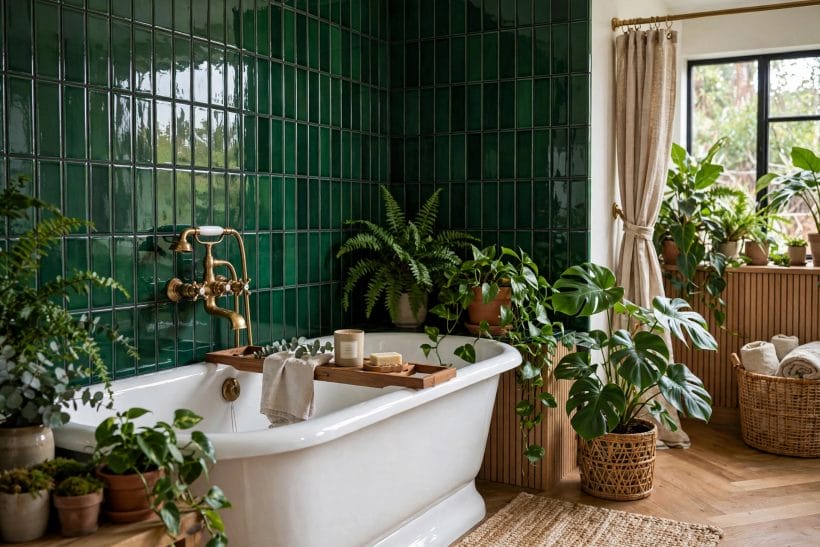
Glossy coloured tile is the surround as jewellery: it catches light, deepens colour and makes a white tub look deliberate. The emerald wall in this photograph is the family’s manifesto — one strong colour, plants as accomplices, brass as jewellery.
25. Deep Green Gloss
Emerald and bottle-green gloss tiles turn the bath into a conservatory moment, especially with plants leaning in as here. Green is the colour bathrooms forgive most easily, and gloss keeps it luminous rather than swampy.
26. Navy and Midnight Blue
Dark blue tile around a white tub is nautical without a single seagull motif. It suits north-facing rooms that have given up on brightness and decided on mood instead — often the better bargain.
27. Blush and Terracotta Pinks
Warm pinks flatter skin in the mirror and make morning light kind. Around the tub they read as plaster-warm rather than sweet when the grout is toning and the fittings are black or brass.
28. Black Tile, White Tub
A black surround is the tuxedo option: severe, chic and honest about water spots. It demands good light and a certain tidiness, and repays both with the most photographic bathroom in the house.
29. Colour Matched to White Cabinets
If the vanity wall wears the white cabinets bathroom ideas from the neighbouring post, a coloured tub surround gives the room its one saturated note. One colour event per bathroom is a reliable rule; the bath is the best place for it.
30. Gloss Versus Matte, Honestly
Gloss bounces light and shows droplets; matte hides droplets and drinks light. In a bright room choose by mood; in a dark one, gloss is nearly a lighting decision. Many surrounds split it — gloss field, matte border.
31. Two-Tone Surrounds
A darker tile to shoulder height with pale tile above copies the old dado logic and grounds the tub zone. The junction line wants a trim or a deliberate grout shadow, never an apology.
32. Ombré and Graduated Colour
Tiles graded from deep at the tub rim to pale at the ceiling make a tall surround feel like dawn. It is a fitting-out puzzle for the tiler, but the puzzle is layout, not labour — agree the sequence on paper first.
6. Niches, Edges and the Details Inside the Surround
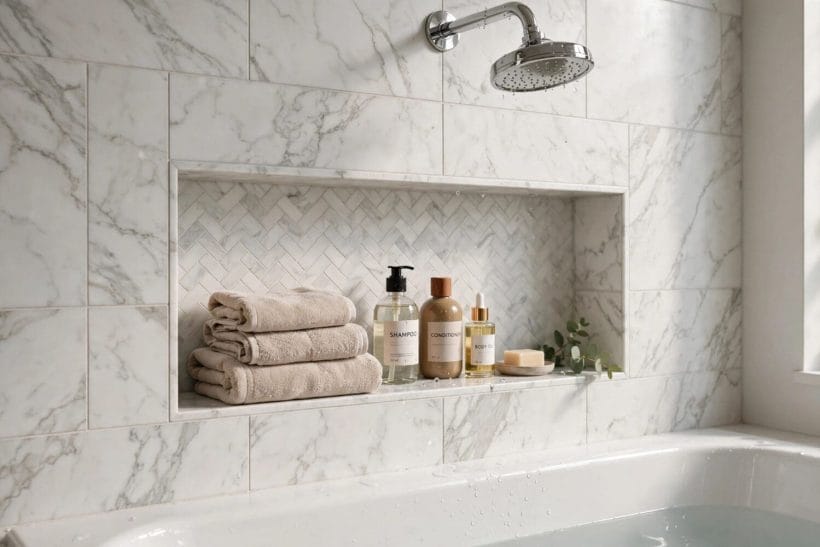
A surround is finished at its interruptions: the niche that holds the shampoo, the shelf the candles sit on, the edge where tile meets paint. The marble niche in this photograph shows how a recess can be the best-dressed part of the wall.
33. The Recessed Niche, Tiled to Match
A niche lined in the surround’s own tile disappears into the wall while doing daily work. Size it from your actual bottles before the tiler arrives — the classic niche failure is a beautiful recess an inch too short.
34. The Niche as the Accent
Reverse the emphasis: plain surround, jewel niche. A mosaic or patterned lining inside the recess gives the wall a single lit moment and concentrates the expensive tile where a metre of it does the work of ten.
35. A Tiled Ledge Along the Tub
Where a niche will not fit the wall’s build, a shallow tiled ledge along the bath does the same holding with less surgery. It doubles as the candle-and-book shelf every bath photograph promises.
36. Contrasting Edge Trim
A trim tile in a second colour or a metal profile gives the surround’s outer edge a finished sentence. Untrimmed edges are where DIY tiling confesses; the trim is a small price for silence.
37. Mitre-Cut Corners
Tiles mitred at external corners keep the pattern flowing around the wall’s turns with no trim at all. It is the tiler’s flourish — ask to see an example of their mitres before agreeing the job.
38. Herringbone Inside the Niche
The niche is the natural home of a labour-intensive pattern: a square metre of herringbone, as in this photograph’s recess, gives the surround a crafted heart without a crafted-everywhere bill.
39. Tiling the Apron and the Wall as One
Carrying surround tile down the apron unifies built-in tubs completely. It also moves the splash zone’s easiest-clean surface to where feet and mop actually meet the bath.
40. The Shelf Above the Taps
A narrow tiled shelf at tap height keeps the working bottles off the tub’s rim and in the splash zone where they belong. It is the unglamorous detail that makes a surround feel designed for bathing, not photographing.
41. Niches Where a Shower Shares the Wall
Where the tub wall also serves a shower — the corner shower ideas cover the pure-shower versions — a longer niche can serve both. Plan its position from the bather’s reach, seated and standing, and it will never feel borrowed.
7. Terracotta and Warm Earthy Tile
Handmade-look tiles in clay colours bring the bathroom the warmth of a farmhouse kitchen. The sunlit terracotta wall in this photograph — uneven, glowing, imperfect on purpose — is the family’s whole argument in one image.
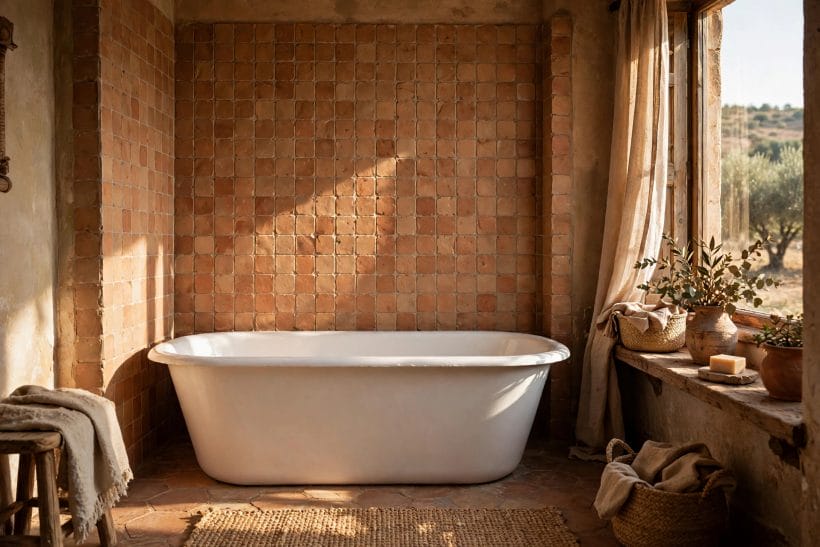
42. Zellige-Look Terracotta
Tiles with a handmade ripple and varied glaze catch light unevenly, so the wall seems to move as you do. Around a plain white tub the effect is all warmth — the bathroom equivalent of a wood fire.
43. Warm Clay Squares, Toning Grout
Square clay tiles with grout in a matching earth tone make a surround that reads as one warm surface. It suits rustic and Mediterranean rooms and hides the dust of country living gracefully.
44. Terracotta with a White Tub
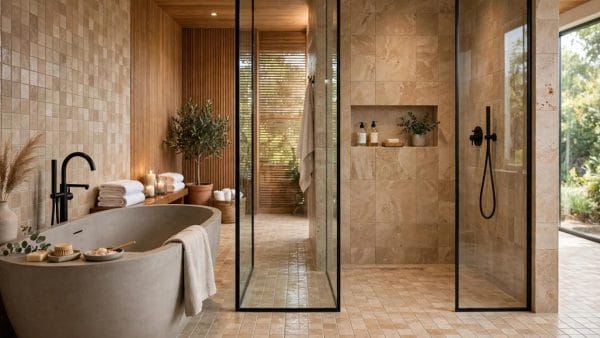
The classic pairing in this photograph: white porcelain against baked earth. Keep metals black or iron for the full farmhouse sentence, or brass if the room leans elegant.
45. Sandy and Stone Neutrals
Where terracotta is too much colour, its paler cousins — sand, putty, warm stone — keep the handmade texture without the heat. They are the neutrals that do not feel like an apology for colour.
46. Earthy Tile with Beadboard
Half-tile, half-timber walls suit cottages: tile in the splash zone, beadboard bathroom ideas above or beside it. The beadboard carries the room’s softness while the tile does the waterproof work.
47. Sun-Baked Colour in a Dark Room
Warm earthy tile lends a windowless bathroom borrowed sunlight. Pair it with warm-white lighting and the room stops apologising for its missing window entirely.
48. Rustic Tile, Modern Tub
A sleek modern tub against rough handmade tile is a designed tension: the fixture says now, the wall says always. It is the combination in this photograph, and it flatters both halves.
49. Sealed and Cared For, Simply
Handmade-look porcelain needs no more care than any tile; the real handmade article asks for sealing and gentleness. Know which you are buying, and let the care label — honestly read — make the final choice.
8. Patterned Tile: Bold Character
Pattern is the surround that introduces itself. The blue-and-white wall in this photograph commits completely — floor of the bath zone, walls and apron in one exuberant print — and that commitment is the lesson: pattern at half-heartedness looks like an accident.
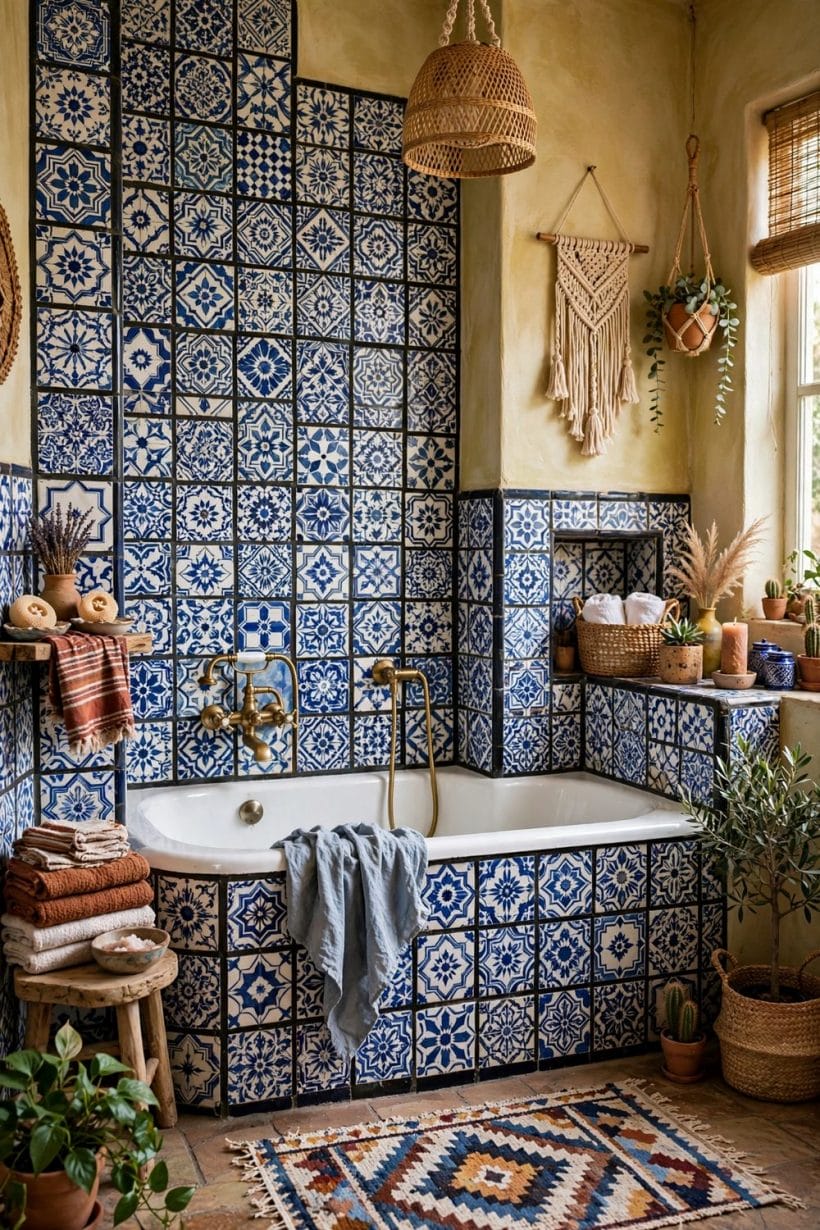
50. Blue and White Pattern, Full Commitment
A traditional blue pattern across the whole surround, as here, turns the bath into the room’s artwork. Keep every other surface plain and let the pattern hold the room the way wallpaper holds a parlour.
51. Pattern on the Apron Only
For the pattern-curious, the tub apron is the safe canvas: one bold panel, plain walls, and a bathroom that can change its mind later with a single day’s tiling.
52. Pattern Inside a Plain Frame
Bordering a patterned field with plain tile gives the eye a rest and the pattern a picture frame. It is the classic way to use expensive patterned tile — a measured field of it, honoured by restraint around.
53. Geometric Black and White
Crisp geometrics in black and white suit art-deco and modern rooms alike, and they age slowly because they were never this year’s colour. The grout is part of the geometry — choose it as precisely as the tile.
54. Floral and Botanical Prints
Soft botanical patterns bring the garden into the bath zone and suit cottage and vintage rooms. Keep the palette limited to two or three colours or the wall turns into a fabric shop.
55. Pattern Mixed with Plain, Half and Half
Pattern to shoulder height, plain above, splits the difference between bold and calm. The junction is the design moment — a trim line there turns two decisions into one composition.
56. Vintage-Encaustic Look
Encaustic-style patterns in muted colours give a period house its historically literate bathroom. The look suits roll-top tubs and traditional fittings, and it hides the evidence of family bathing with a busy, forgiving face.
57. Small Pattern, Big Room Energy
A small repeat reads as texture from across the room and as pattern only up close — the diplomat’s choice for shared bathrooms where one partner wants bold and the other wants calm.
9. Grout: The Second Design Decision
Grout is half the surround’s surface and most of its maintenance, yet it is usually chosen from a stick of samples in the last five minutes. The black-grouted grid in this photograph shows grout promoted to co-author — the same white tile, an entirely different room.
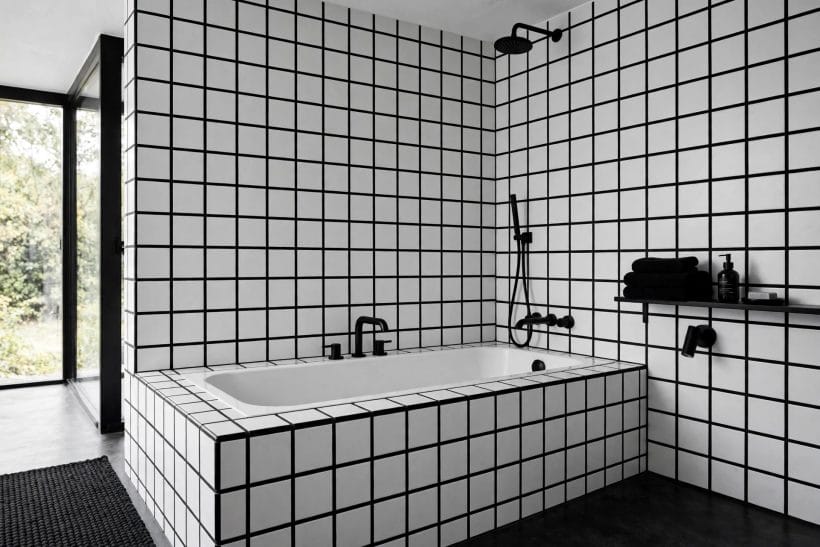
58. Black Grout, White Tile
The graphic classic in this photograph: white tile drawn in black lines. It is bold, it is honest about its joints, and it hides the slow darkening that pale grout suffers in a splash zone.
59. Toning Grout for a Seamless Wall
Grout matched to the tile makes the surface read as one material — the choice for marble-look and large-format schemes where interruption is the enemy. Expect the joints to announce themselves slightly as they age; that is patina, not failure.
60. White Grout, Coloured Tile
White grout against coloured tile draws the grid and lightens the whole scheme — the cottage and coastal standard. It asks for sealing and a squeegee habit in hard-working family bathrooms.
61. Grey Grout, the Diplomat
Mid-grey grout forgives the most, clashes with the least, and suits nearly every tile in this collection. When the grout decision is paralysing the project, grey is the answer that lets it proceed.
62. Wide Joints for Rustic Tile
Handmade-look tiles need wider joints to absorb their irregularity, and the joint becomes part of the rustic texture. Fighting for hairline joints with uneven tiles is how surrounds crack their composure.
63. Fine Joints for a Modern Wall
Narrow joints suit large formats and polished looks, demanding flat walls and a tiler’s patience. The result — a wall that reads as folded stone or glass — is worth it where the room’s whole idea is calm.
64. Grout in the Niche, Deliberately Different
A contrasting grout inside the niche outlines the recess like a frame. It is the smallest possible grout experiment — one square metre of boldness — and it can be the detail guests remember.
65. Sealed Grout in the Splash Zone
Whatever the colour, the surround’s grout lives wet. Sealing it — and renewing the seal as makers advise — is the unglamorous ritual that keeps a pale grout scheme honest. Budget the hour a year; it is the cheapest renovation there is.
66. Coloured Grout as the Colour
Plain white tile with terracotta, sage or navy grout puts the colour in the lines instead of the field — reversible in spirit, striking in effect, and the boldest cheap trick in this entire collection.
10. Layouts, Waterproofing and What Things Cost
The closing section is the surround’s conscience: how the tile is laid out, what keeps the wall behind it dry, and where the money honestly goes. All of it is stated generally — every bathroom’s figures are its own, and the wet build belongs to professionals.
67. Setting Out from the Tub
A surround is set out from the bath’s rim and the room’s sightlines, not from a corner’s convenience. Full tiles at the rim and the eye’s level, cuts hidden low and high, is the layout logic every good tiler starts from.
68. Half-Tile Traps and How Pros Avoid Them
Slivers of tile at corners and ceilings are the mark of unplanned setting-out. The professional fix is arithmetic done before the first tile is buttered — which is to say, layout is a design stage, not a tiling stage.
69. Waterproofing Is the Real Surround
Tile and grout are a wearing surface, not a waterproof one: behind them sits a tanking or membrane system that does the actual water defence. Its specification and fitting are professional work, full stop — admire surrounds, delegate their sandwich.
70. Alcove Tubs: Three Walls, No Waste
The alcove surround tiles three walls and asks each to earn its place: taps on one, niche in another, the long wall for the pattern. It is the most-tiled scheme per bath and the one where layout discipline shows most.
71. Freestanding Tubs: The Wall as Backdrop
A freestanding tub’s surround is really a backdrop wall, free of apron duties. It can carry the room’s boldest tile precisely because the tub stands off it — the pairing in half this collection’s photographs.
72. Drop-In and Deck-Mounted Tubs
Where the tub drops into a tiled deck, the deck’s own tiling joins the surround’s family. Keep one tile and one grout across both, or the bath zone reads as two projects that met by accident.
73. What Drives the Cost
Tile price per metre matters less than pattern labour: mosaics, herringbone and mitres are bought in hours, not boxes. Waterproofing, trims and the niche are the other honest costs. Get the whole surround priced as one job.
74. Refacing Versus Re-Tiling
A sound but dated surround can sometimes be tiled over or panel-clad, subject to a professional’s judgement of the existing build. When the waterproofing is suspect, re-tiling from the wall out is the only honest answer.
75. Keeping the Surround Young
Squeegee habits, ventilation and renewed seals keep a surround looking chosen rather than endured. None of it is heroic maintenance — ten seconds after a bath does more than a weekend a year.
Final Considerations
Choose the family for the room you want to soak in, promote grout to a design decision, and let professionals own the waterproof build beneath the beauty. A bathtub surround chosen that way stops being a tiling job and becomes the room’s portrait of the bath itself — which is all any of these 75 ideas is really trying to be. The bathroom ideas pillar is the natural next read for the rest of the room.


0 Comments