

A fence is the longest backdrop most gardens have, and the least loved: a hard line that planting usually ignores until everything in front of it looks unfinished. These 75 ideas treat the fence line as a border in its own right, with layered plants, honest structure and details that keep it looking good in every season.
1. At-a-Glance: Planning a Fence-Line Border That Works
| Decision | What usually works best |
|---|---|
| Border depth | As deep as you can spare, even a modest strip looks intentional when it is edged cleanly and planted in layers rather than in a single row. |
| Layering | Tall plants and climbers at the fence, mid-height shrubs and perennials in the middle, low edging at the front, so every plant can be seen over its neighbour. |
| Choosing landscaping ideas against fence lines | Match them to the aspect first — sun, shade and wind along a fence can differ completely from the middle of the garden — then to the time you honestly have for upkeep. |
| Fence condition | Repair, clean and treat the fence before planting, because access disappears once climbers and shrubs grow over it. |
| Boundaries | Keep plants and structures on your own side, leave room to maintain both the fence and the planting, and talk to neighbours before attaching anything to a shared fence. |
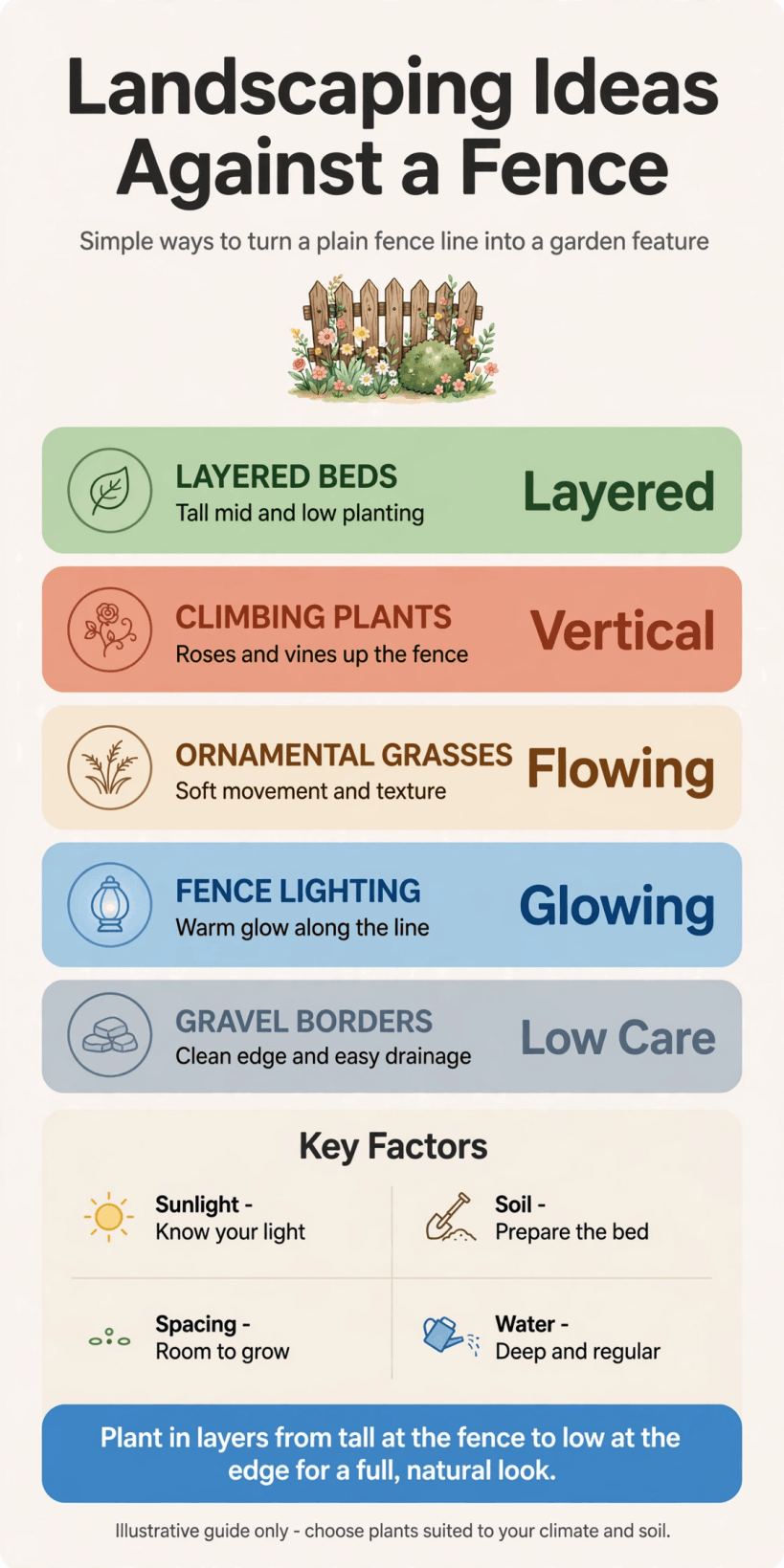
Layers, aspects and practical details at a glance, before the 75 ideas in full.
Walk the fence at different times of day before you buy a single plant. One end may bake in afternoon sun while the other sits in cool shade behind the house, and the soil at a fence base is often dry, rubbly and shaded from rain by the fence itself. That dry strip at the foot of the boards is the hardest growing position in most gardens, and choosing plants that tolerate it — or improving the soil and watering honestly — is the difference between a border and a disappointment. For wider small-plot planning, our tiny house landscaping ideas guide takes the same layer-by-layer approach to whole compact gardens.
The ideas are counted through the sections that follow: seven or eight per section, from structure and climbers down to edging, lighting and the upkeep rules in the last section. Borrow a layer at a time; a fence line planted in stages, tallest first, settles better than one planted in a single expensive weekend.
2. Structure First: Beds, Edges and Levels (Ideas 1–8)
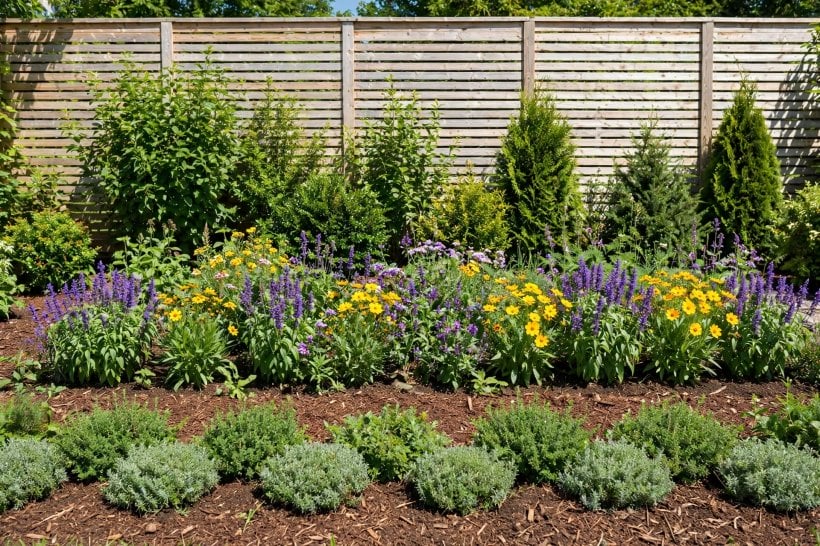
1. Widen the border beyond a token strip wherever the lawn can spare it, because depth is what makes layering possible. 2. Edge the bed with a crisp, maintainable line — stone, brick, metal or a cut turf edge — so the planting reads as deliberate. 3. Curve the border gently into the lawn at its ends rather than stopping it square at a corner. 4. Build a low raised bed along a fence where the soil is rubble, shade-dried or full of roots from next door. 5. Terrace a sloping fence line into two shallow levels instead of fighting one long incline. 6. Leave a narrow maintenance gap between the fence and the back of the border, hidden by planting but reachable. 7. Set stepping stones or a slim path behind mid-height planting for access to the fence and the back row. 8. Mulch the whole bed deeply at planting time to hold moisture in that dry fence-foot soil and suppress the first weeds.
Structure is the unglamorous investment that every later idea depends on. Soil at a fence base has usually been compacted by the fence builders, starved of rain by the boards and threaded with roots, so dig in generous organic matter before planting and keep a soaker hose or watering can routine for the first season. New plants against a fence fail from thirst far more often than from any defect in the planting plan.
3. Climbers and Wall Shrubs (Ideas 9–16)
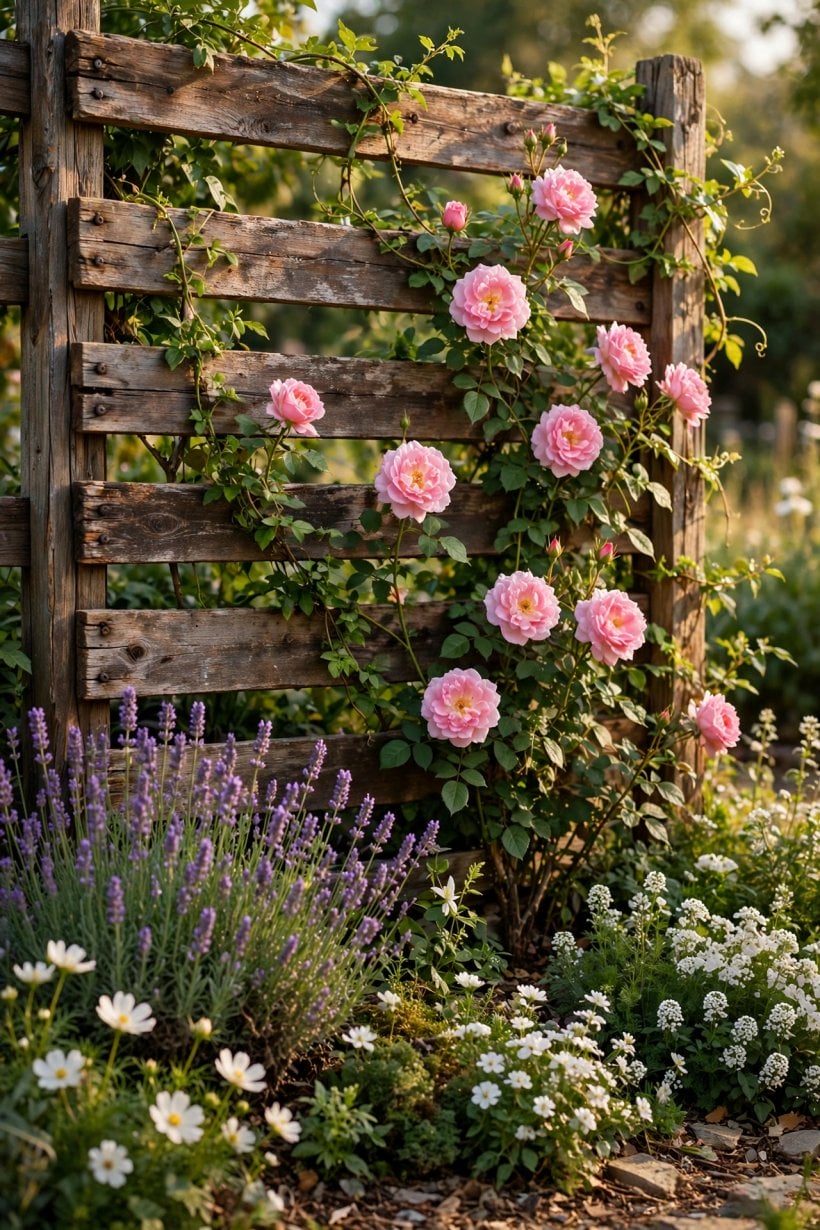
9. Train a climbing rose along horizontal wires so the fence disappears behind flowers at eye level. 10. Grow evergreen clematis for winter cover where the fence is visible from the house all year. 11. Use jasmine for scent near a gate or a seating area at the end of the fence line. 12. Plant a wall shrub such as pyracantha, trained flat, for berries, blossom and security in one plant. 13. Grow espalier or cordon fruit along a sunny fence, where the boards store warmth. 14. Let a vigorous honeysuckle soften a shady stretch that little else will cover. 15. Mix two climbers with different seasons on one long fence, so something is always performing. 16. Fit wires or trellis panels on battens with a small air gap, so the fence can be maintained behind the growth.
Climbers need consent and commitment in equal measure: check whose fence it is before fixing anything to it, and choose a support system that lets you lower or reach behind the plant when the boards need treatment. Plant climbers a little away from the fence base and lean them in towards their support, because the soil tight against the boards is the driest spot of all. In a small plot the vertical layer does the work of a whole extra bed, a trick our tiny house living room ideas apply indoors with shelving and height instead of floor space.
4. Tall Plants and Screening (Ideas 17–24)
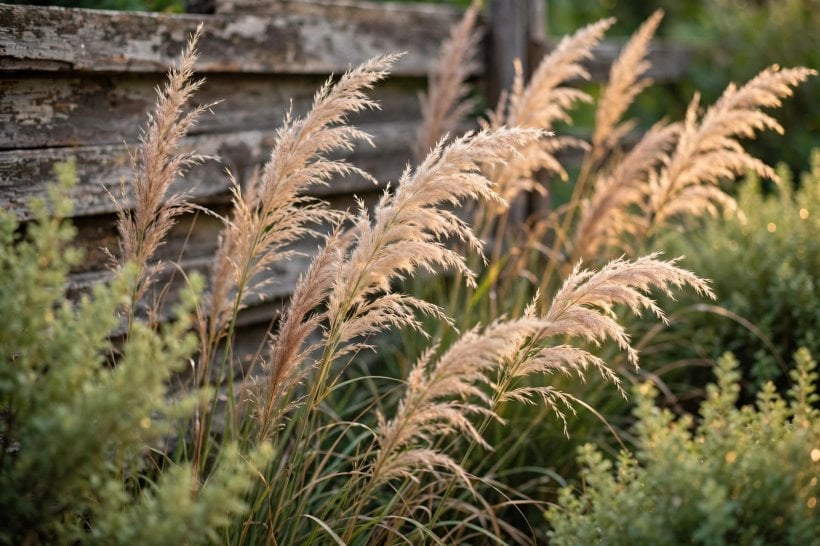
17. Plant clump-forming bamboo in barriers or pots where height is needed without a hedge’s footprint. 18. Use tall ornamental grasses for a soft screen that moves and lets light through. 19. Set pleached or columnar small trees at intervals where the fence needs rhythm rather than a wall of green. 20. Grow a mixed native hedge in front of a plain fence where space allows a deeper, wildlife-friendly boundary. 21. Use large shrubs — lilac, viburnum or philadelphus — as the back row where scent carries into the garden. 22. Plant tall perennials such as verbena bonariensis and Japanese anemones for summer height without bulk. 23. Stagger heights along the run so the eye travels, instead of one flat green cliff. 24. Keep one deliberate gap in the tall planting to frame a view, a gate or a borrowed tree beyond the fence.
Screening works best when it filters rather than fortifies. A completely solid wall of planting can make a small garden feel smaller and darker, while layers that vary in height and density give privacy where you actually sit and openness where you do not need it. Check ultimate heights before planting the back row: a shrub that wants to be twice the fence’s height will spend its life being argued with, at exactly the height you cannot comfortably reach.
5. Mid-Layer Shrubs and Perennials (Ideas 25–32)
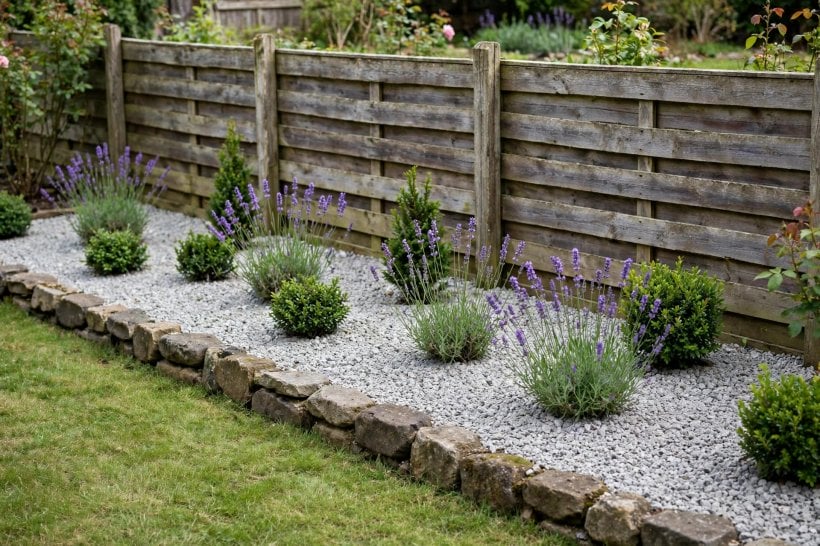
25. Repeat one reliable flowering shrub along the run for rhythm — hydrangea, spiraea or potentilla all earn their place. 26. Mix evergreen structure shrubs among the flowerers so winter does not empty the middle layer. 27. Plant lavender or rosemary along a sunny fence where the reflected warmth suits them. 28. Use hostas, ferns and astilbe to fill a shady stretch with leaf texture instead of struggling flowers. 29. Group perennials in odd-numbered drifts of three or five, repeated, rather than one of everything. 30. Add spring bulbs between the perennials, in the gaps that are empty before the border wakes up. 31. Choose long-flowering perennials — hardy geraniums, salvias, echinacea — for the border’s main season. 32. Leave seed heads standing into autumn on plants that offer them, for structure and for birds.
The mid-layer is where a fence border is won or lost, because it is the layer at eye level from a chair. Think in seasons when you choose it: spring bulbs and blossom, summer flowers, autumn colour and berries, winter stems and evergreen leaves. A border that performs in only one month will be walked past in the other eleven, so spread your choices across the calendar even if it means fewer of each.
6. Front Edging and Ground Cover (Ideas 33–40)
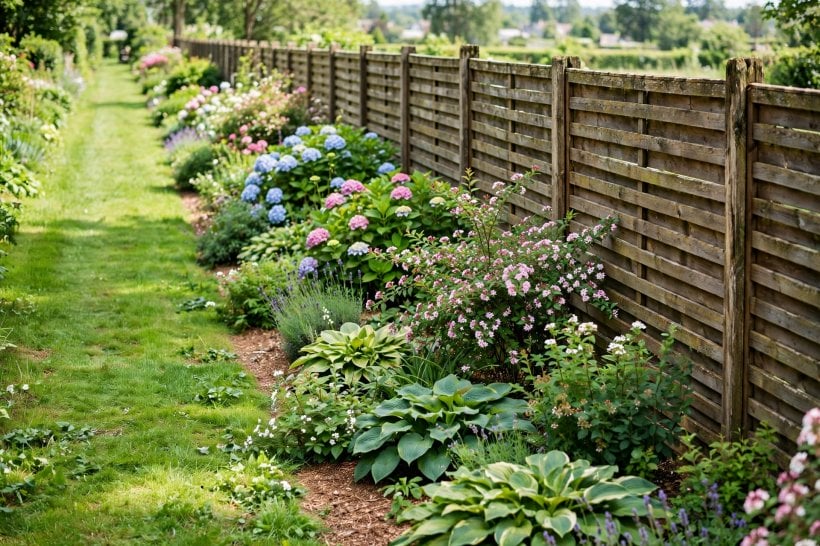
33. Edge with low mounds of hardy geranium that spill gently onto the path and forgive the mower. 34. Use a clipped low hedge of box alternatives or germander where the garden’s style is formal. 35. Plant creeping thyme or chamomile along a sunny front edge for scent when brushed past. 36. Fill dry front corners with stonecrop and other succulents that thrive where the hose rarely reaches. 37. Repeat one edging plant along the whole run for a calm, finished line. 38. Use evergreen ground cover under the shrubs to close the soil and cut weeding. 39. Tuck spring bulbs into the front edge, where their flowers are seen close and their dying leaves hide fastest. 40. Add a gravel strip at the very front where the border meets a path, to keep mulch and soil off the paving.
A good front edge hides a multitude of sins behind it and makes the whole border look maintained even in a busy month. Keep it low enough not to shade the plants behind, tough enough to survive strimmers and football, and consistent enough that the eye reads the fence line as one designed thing rather than a series of improvisations. The colour restraint that helps here outdoors is the same instinct behind our colourful tiny house interior guide: one repeated accent beats a different idea every metre.
7. Colour, Scent and Seasonal Schemes (Ideas 41–48)
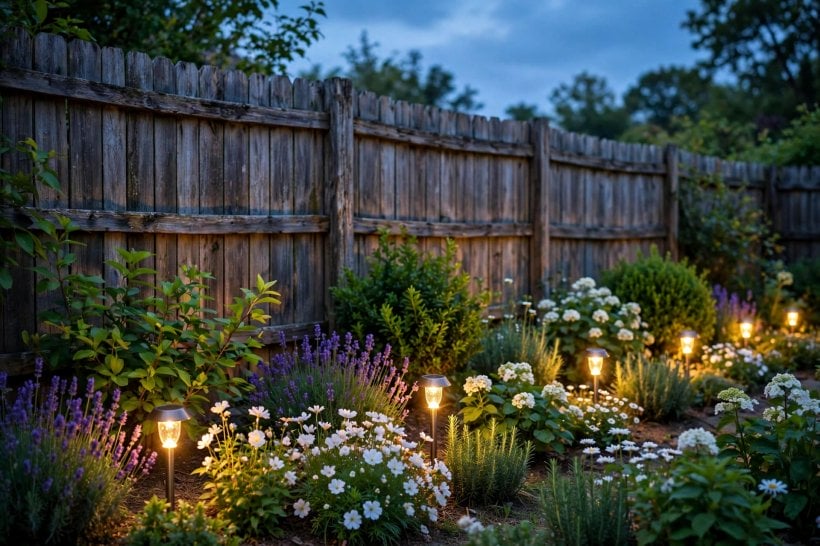
41. Plant a white and green scheme against a dark fence, where it glows in evening light. 42. Run hot colours — oranges, reds, deep pinks — along a sunny fence for a border that performs at midday. 43. Keep a shady fence line to cool blues, purples and pale yellows that stay luminous in low light. 44. Build one scented stretch near the house end of the fence: roses, jasmine, lilac and herbs in reach of the path. 45. Plan an autumn crescendo of asters, sedums, grasses and berries at the far end, to draw you down the garden. 46. Paint or stain the fence a deep, quiet colour so foliage and flowers read against it like a stage set. 47. Repeat the house’s trim colour in one family of flowers for a garden that feels connected to the building. 48. Add a spring-only corner of bulbs and blossom where the fence meets the house, for the year’s first reward.
Colour against a fence behaves differently from colour in the open: the boards are a permanent background, so test your scheme against them, not against a nursery bench. Dark fences flatter pale flowers and green foliage and heat up in sun; pale fences suit deep colours and can glare at midday. Whatever you choose, let one season be the border’s headline and the others its supporting acts, because a fence line that shouts all year exhausts the eye.
8. Containers, Features and Focal Points (Ideas 49–56)
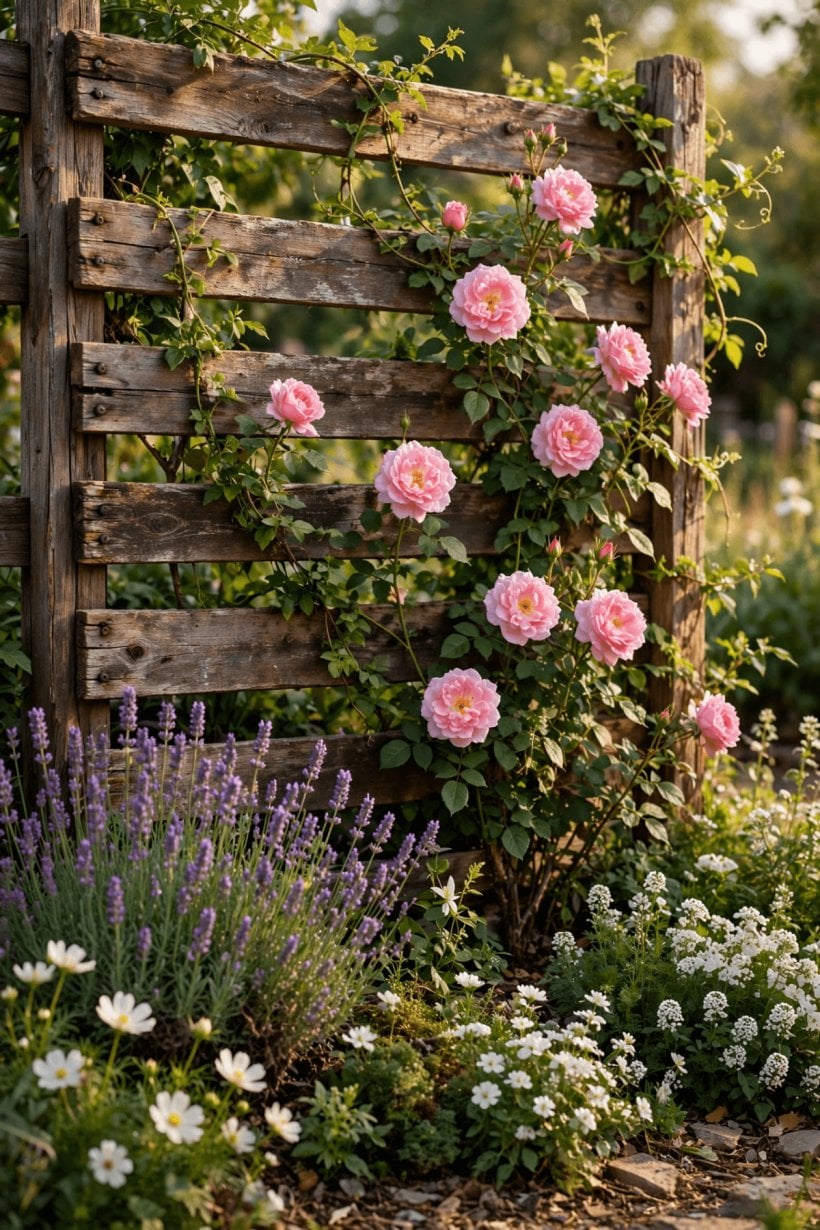
49. Set a pair of large pots against the fence where the soil is hopeless or the aspect changes, and plant them boldly. 50. Hang a weatherproof mirror on a shady fence to borrow light and double the planting — angled safely away from direct sun. 51. Fix a simple water feature or bird bath at a fence junction, where plumbing and power runs are shortest. 52. Build a bench into the border’s end, backed by scented planting, as a destination down the fence line. 53. Stand a single sculptural shrub or small tree in a gravelled circle as the run’s full stop. 54. Use obelisks inside the border for annual climbers, giving height that can change every year. 55. String discreet festoon or solar lighting along the fence for evenings, kept warm and low. 56. Add a hedgehog gap and a bug hotel at the quiet end, turning the fence base into a wildlife corridor.
Features earn their keep when they solve a problem as well as decorate: pots bypass bad soil, a bench gives the border a purpose, lighting makes a dark boundary feel safe rather than gloomy. Keep fixings into sound fence posts rather than thin boards, and remember that anything attached to a shared fence needs a neighbour’s agreement first. In compact plots these decisions carry the same weight as the fitted choices in our tiny barn house interior guide — small spaces reward features that do two jobs.
9. Shady, Dry and Difficult Fence Lines (Ideas 57–64)
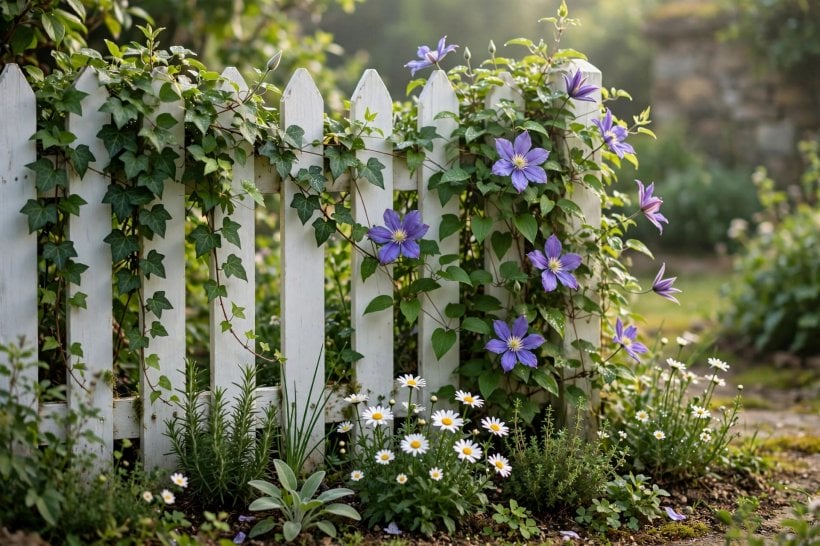
57. Accept the dry shade at a fence foot and plant for it: epimedium, geranium macrorrhizum, ferns and foxgloves. 58. Improve one planting pocket at a time with compost and mulch rather than fighting the whole run at once. 59. Use drought-tolerant Mediterranean plants along a sun-baked fence that reflects heat. 60. Grow climbers on a north-facing fence that are sold for shade, and let them find the light at the top. 61. Plant spring bulbs and early perennials under deciduous climbers, using the light before the canopy closes. 62. Lay a soaker hose under the mulch along the driest stretch, and water deeply but rarely. 63. Choose wind-tolerant, flexible plants where the fence funnels gusts along its length. 64. Turn a truly impossible stretch into a gravel garden with sculptural pots, rather than a graveyard of failed shrubs.
Difficult fence lines punish optimism and reward honesty. Watch where the rain actually falls — the boards shed it a hand’s width out from the base, leaving a permanent dry shadow — and where the sun reaches in each season, then plant for the conditions you measured, not the ones the catalogue photographed. A short list of plants that thrive beats a long list that survives, and the border will look intentional instead of apologetic.
10. Practical Details: Boundaries, Access and Upkeep (Ideas 65–75)
65. Confirm the boundary and the fence’s ownership before planting or fixing anything. 66. Treat and repair the fence first; you will not get a better chance once it is planted. 67. Leave access along the back of the border for fence maintenance and painting. 68. Keep vigorous climbers and shrubs pruned off a neighbour’s side, as a matter of routine and good relations. 69. Stake tall plants in their first seasons, before wind rocking loosens their roots. 70. Water new planting deeply through its first dry spells, especially in the rain shadow at the fence base. 71. Mulch annually to feed the soil, hold moisture and keep the border’s finish tidy. 72. Divide and refresh perennials every few years, filling gaps from your own stock. 73. Photograph the border in each season and keep notes on what performed, for next year’s orders. 74. Keep a spare fence panel treatment, ties and wire in the shed for quick repairs after storms. 75. Check ties, supports and tree stakes each winter, before growth hides the failures.
Upkeep against a fence is mostly access and water: the gardens that struggle are the ones where the back row cannot be reached and the front row hides the thirst of everything behind it. Build the access in at planting time and the border’s care becomes a pleasant circuit with a watering can rather than an expedition. That practical-first thinking runs through our guide to building your own tiny house and the room plans in our bedroom interior design for tiny houses guide alike — hidden work first, visible pleasure second.
Final Considerations
Stand at the house and look down the fence before you order anything: that view, in the season you use the garden most, is the one your planting must serve. Choose one structural fix, one climber, one layer of shrubs and a repeated edging from these landscaping ideas against fence lines, and let the border grow into itself over two or three seasons rather than demanding instant maturity from stressed plants in dry soil.
Then keep the simple promises: water the first year like you mean it, mulch every spring, and walk the line each winter with secateurs and a notebook. A fence planted this way stops being a boundary you apologise for and becomes the longest, hardest-working border in the garden — which, in a small plot, might be most of the garden there is.


0 Comments