

A Victorian garden is abundance with manners: overflowing borders, clipped evergreen bones, ironwork and urns — every plant luxuriant, every line deliberate.
These 75 ideas build the look the authentic way, from layout and paths to signature plants and seasonal rhythm, whether your plot is a grand front garden or a cottage-sized patch.
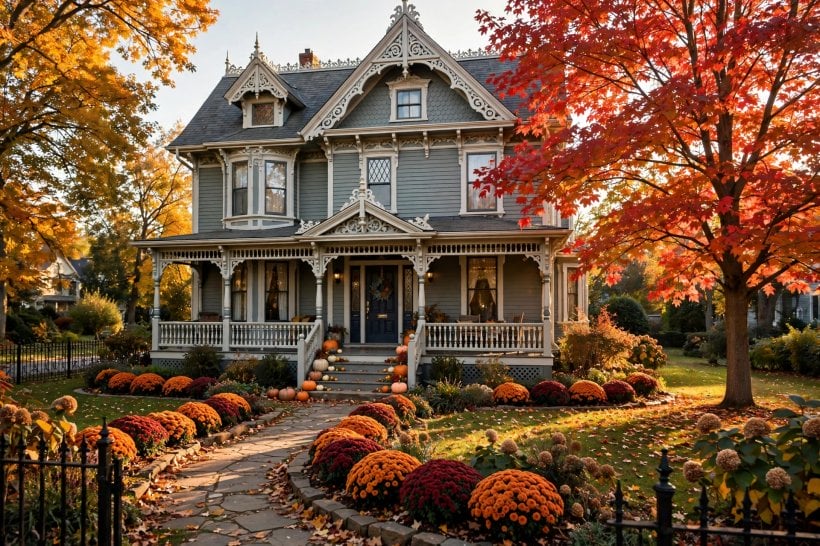
1. Victorian Landscaping at a Glance
The Victorian landscape is one entity with two natures: structure — symmetry, evergreen bones, paths, edging and ironwork — and abundance — deep mixed borders, roses, bedding colour and ornaments layered inside the structure. Modern gardens usually pick one; the Victorian garden insists on both, and the tension is the style.
| Defining look? | Formal bones with lush planting: clipped hedges and straight paths containing exuberant, layered borders. |
| Signature plants? | Roses, hydrangeas, boxwood, lavender, peonies and seasonal bedding in generous groups. |
| Signature materials? | Brick or gravel paths, cast-iron edging and fences, stone or terracotta urns, painted wood trellis. |
| How much maintenance? | Honestly high: clipping, deadheading, edging and seasonal bedding changes are the style’s price of admission. |
| Does it scale down? | Beautifully — a small front garden with a path, an edged border and one urn reads fully Victorian. |
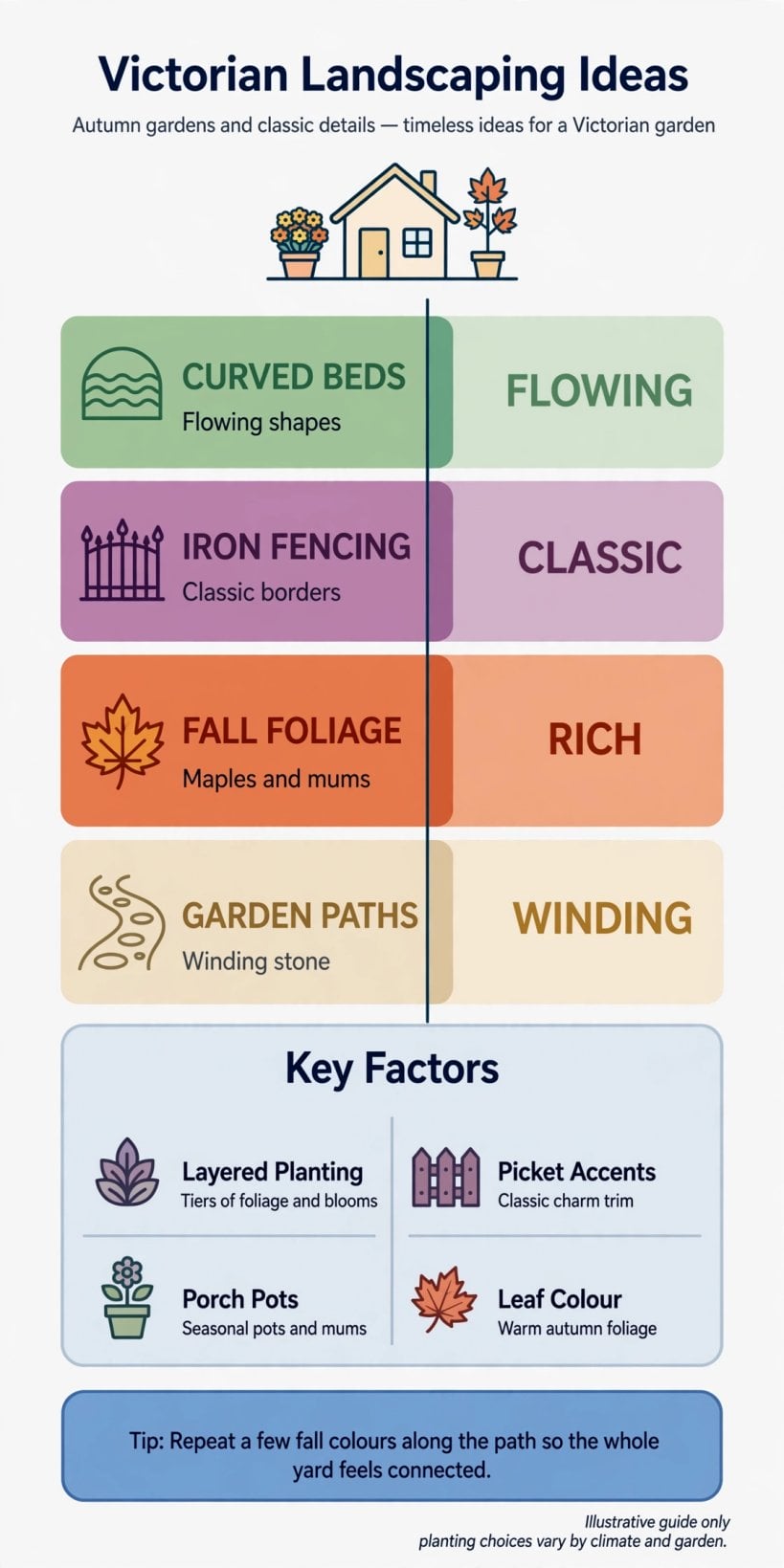
At a glance: formal bones first, abundance inside them — paths, edging and evergreens hold the plan while flowers do the showing off.
2. Layout and Formal Structure
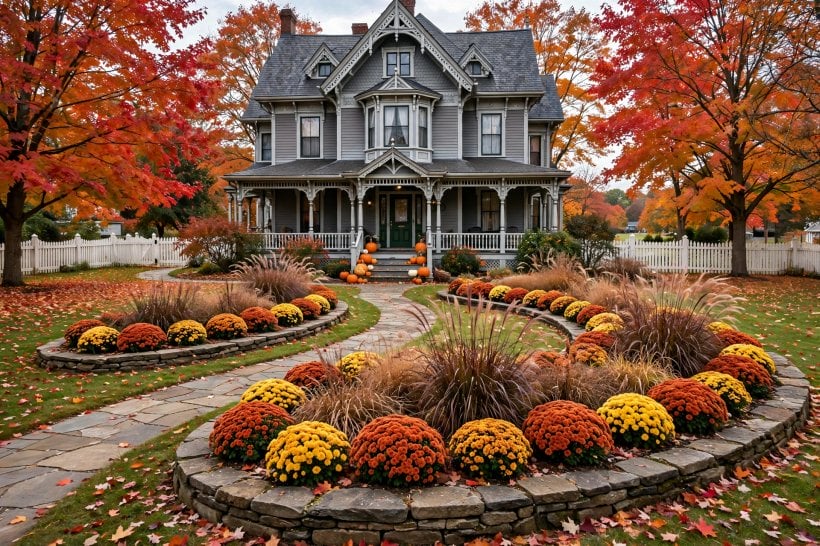
Victorian gardens were laid out like outdoor rooms, with axes, symmetry and a clear hierarchy of paths. Getting the bones right matters more than any plant choice — bones are what the garden looks like in winter, and what visitors read in the first three seconds. The same bones-first thinking shapes the exteriors in new home exterior design ideas: structure carries, decoration follows.
1. Lay Out One Clear Axis
A main path or sightline from gate to door, everything else arranged around it. One axis organises even a tiny garden.
2. Use Symmetry at the Front Door
Paired shrubs, urns or plantings flanking the entrance — the Victorian front garden’s most recognisable gesture.
3. Divide the Garden Into Rooms
Hedges, trellis or changes of level create separate compartments, each with its own planting mood.
4. Give the Lawn a Clean Geometric Shape
Oval, rectangle or circle, crisply edged. Victorian lawns were frames for planting, not the planting itself.
5. Build Evergreen Bones First
Boxwood, yew-style conifers and holly-type shrubs planted before any flowers — the skeleton that holds winter.
6. Plan a Focal Point on Every Axis
An urn, a sundial, a specimen shrub or a bench where each path’s view ends. Eyes need destinations.
7. Keep Borders Deep
Victorian borders are generous — room for three layers of plants, not a single file along a fence.
8. Repeat One Shape Throughout
The same curve or the same hedge height echoed across the garden ties separate beds into one design.
9. Let the House Set the Scale
Tall houses take tall hedges and big borders; cottages need the same structure at half the height.
3. Paths, Edging and Ironwork
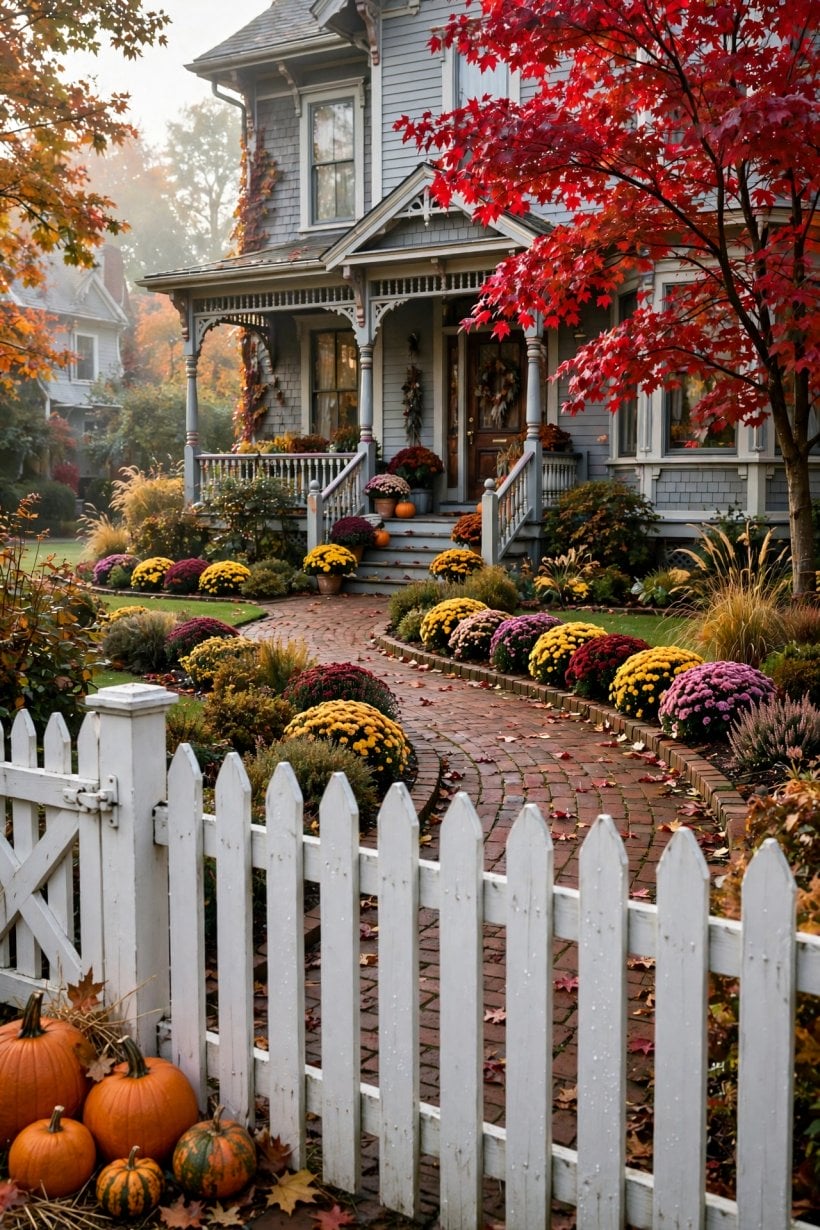
Hard landscaping is the Victorian garden’s jewellery: brick paths, scalloped edging tiles and black ironwork appear in nearly every period photograph of the style. These elements are also the most durable investment — plants change yearly, a good path serves for decades. Gravel-and-border construction overlaps with the methods in gravel path and rock border ideas.
10. Brick Paths in a Herringbone or Basket Pattern
Warm brick underfoot suits Victorian houses perfectly and ages by mellowing rather than failing.
11. Gravel Paths With Brick Edging
The cottage version: crunched gravel contained by a soldier course of bricks, raked rather than swept clean.
12. Victorian Rope-Top or Scalloped Edging Tiles
The classic terracotta edging that draws a dark line between path and bed — small detail, instant period feel.
13. Cast-Iron Lawn Edging
Hoop or spear-head iron edging where tiles are unavailable; painted black, it disappears into order.
14. A Black Iron Garden Gate
Spear finials, a gentle arch and hinges that work silently. The gate is the garden’s handshake.
15. Trellis Panels Painted to Match the House Trim
Diamond or square lattice for roses and clematis, coloured as part of the house’s scheme rather than left as raw wood.
16. Low Iron Fencing Along the Front Boundary
Defines the plot while keeping the garden on show — the opposite of a privacy wall.
17. Stepping Stones Through a Side Garden
For service paths and shady sides, irregular stone keeps the informality where formality isn’t needed.
18. A Path That Curves Once, Out of Sight
Even in formal gardens, one disappearing curve promises more garden beyond — the picturesque counterpoint.
4. Planting Beds and Cottage Borders
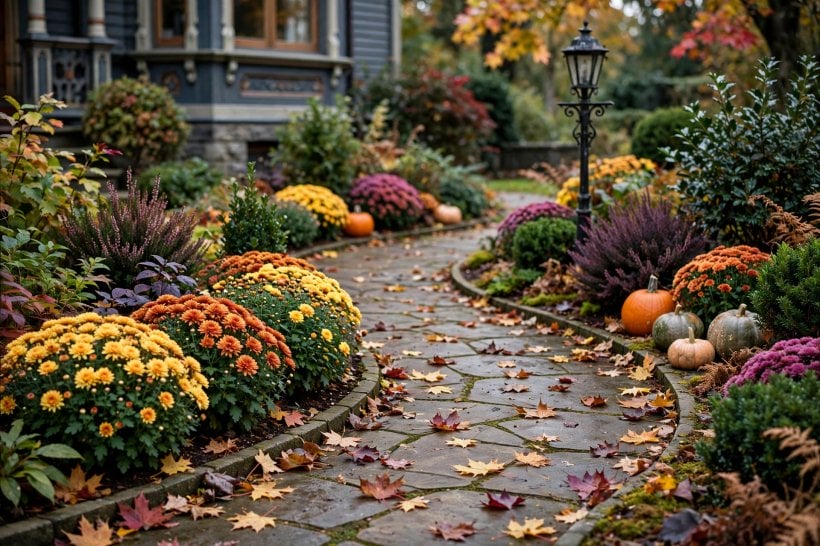
The Victorian border is planted like a crowd scene: tall at the back, medium in the middle, low and spreading at the front, with plants in drifts of the same kind rather than single specimens. Seasonal bedding — the era’s beloved “carpet bedding” — filled the most visible beds with pattern. You need not go that far, but planting in groups rather than dots is non-negotiable. The layering logic mirrors the drift planting in native plant garden ideas, adapted here to cottage ornamentals.
19. Plant in Drifts, Not Dots
Groups of three, five or more of one plant read as design; single plants read as shopping.
20. Three Layers in Every Border
Back, middle and front heights in each section of bed, so no layer of soil shows by midsummer.
21. A Dedicated Rose Bed
Roses in their own sunny bed with low edging plants at their feet — the Victorian garden’s heart.
22. Seasonal Bedding Swaps in the Front Beds
Spring bulbs, then summer bedding, in the beds nearest the gate: the era’s signature discipline, scaled to effort.
23. Carpet Bedding in One Small Panel Only
A single patterned panel of low coloured foliage near the door gives the historic effect without the historic workload.
24. Mixed Borders Instead of Shrubberies
Shrubs, perennials, bulbs and annuals combined in one bed out-perform single-type planting in every season.
25. Edge Beds With a Living Trim
Low lavender, box or thrift along bed fronts — a green line that keeps abundance looking intentional.
26. Bulb Layers Under Perennials
Spring bulbs threaded through perennial beds give two displays from one patch of soil.
27. Annuals as Gap-Fillers, Not the Scheme
Fast annual colour plugs the holes while perennials mature; the bones should never depend on them.
28. Repeat Border Plants Across the Garden
The same rose or geranium appearing in three beds knits the whole garden into one composition.
5. Signature Plants the Victorian Way
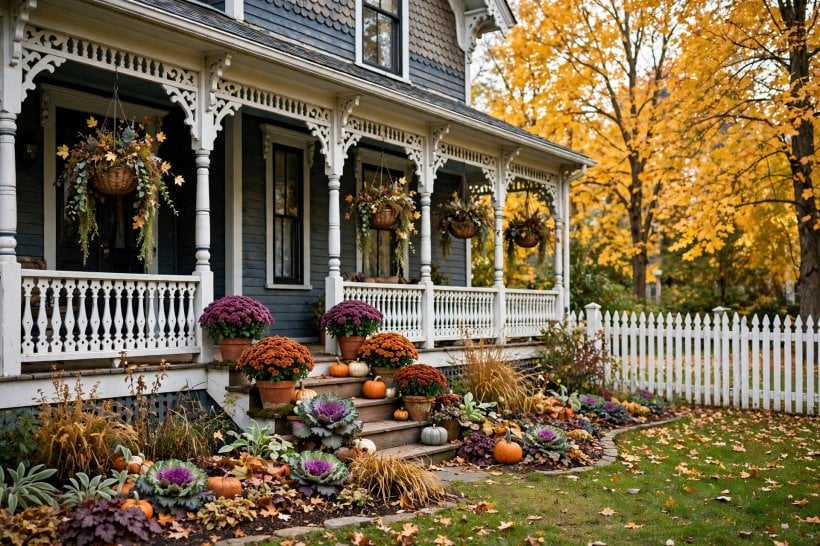
Certain plants are the style’s vocabulary. Use them in the Victorian manner — generously, in groups, and trained or clipped with intent — and almost any garden starts speaking the language.
29. Roses on Arches, Pillars and Porch Posts
Climbers trained up structures, not left as bushes: height is what makes them Victorian.
30. Hydrangeas Massed at the Foundation
Big soft mounds bridging house and garden, the style’s favourite foundation planting.
31. Boxwood Balls and Low Hedges
Clipped spheres in beds and pots, low hedges edging paths — geometry you can grow.
32. Lavender Along Sunny Path Edges
Scent released by passing sleeves, exactly as period gardeners planned it.
33. Peonies and Delphinium-Type Spires in the Middle Layer
Early-summer opulence in the border’s centre, staked discreetly before they need it.
34. Ferns and Hostas in the Shady Corners
The Victorians adored ferns; a shaded ferny corner is historically right and solves the awkward north bed.
35. Standard Roses or Topiary as Sentinels
One trained standard at a path junction or door — punctuation marks in plant form.
36. Clematis Through Roses and Shrubs
Two climbers sharing one support double the flowering without doubling the structure.
37. A Small Flowering Tree as the Ceiling
One ornamental cherry, crabapple or lilac-type tree gives the garden a canopy event each spring.
38. Herbs and Old-Fashioned Annuals by the Kitchen Door
A useful, scented corner — the Victorian garden always kept a practical patch near the house.
6. The Front Approach and Porch Planting
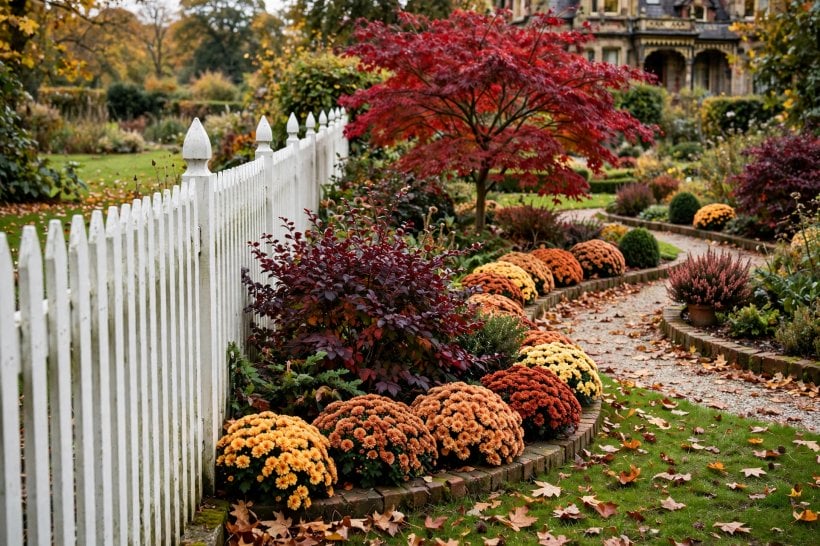
The front approach is public theatre: gate, path, porch and door staged as one sequence. Planting here should flatter the architecture and never swallow it — the porch the whole composition depends on must stay visible. Porch planting for small homes follows the same rule in tiny house plans with screened porches: greenery frames the structure, not hides it.
39. Paired Urns at the Porch Steps
Matching planters, matching plants — symmetry where the visitor’s eye lands first.
40. A Wisteria or Rose Over the Porch
One trained climber on wires, kept clear of gutters and paintwork, flowering where guests wait.
41. Window Boxes on the Front Sashes
Trailing plants soften the ground floor; lined and watered carefully to protect the walls beneath.
42. Foundation Planting in Two Heights
Tall shrubs at the corners, low planting between windows — never a single hedge line hiding the house’s base.
43. Hanging Baskets on Porch Brackets
Seasonal colour at eye level, watered on a routine — a dead basket is worse than none.
44. A Scented Plant by the Door
Jasmine, rose or lavender where arrivals brush past: the Victorian welcome included perfume.
45. Keep the Door Itself Clear
Planting frames the doorway; nothing should fight the door’s colour or block its swing.
46. Light the Path, Not the Street
Low, warm lights along the path edge so the evening approach glows without glare.
47. A Bench or Chair Where the Garden Meets the House
One seat at the transition, inviting the garden to be used, not only viewed.
7. Fences, Boundaries and Garden Structures
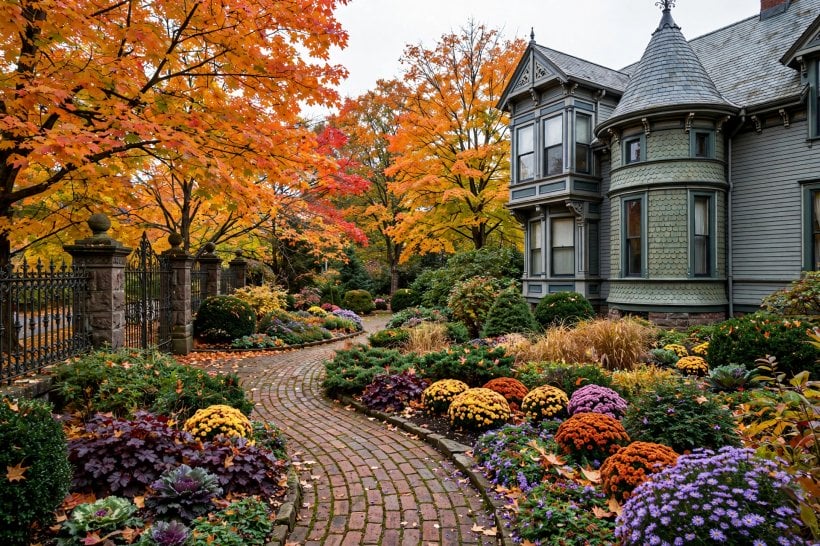
Victorian boundaries were decorative and see-through at the front, practical at the back. Structures — arches, obelisks, a small pergola — gave climbing plants their stage and the garden its vertical events.
48. A Painted Picket Fence at the Street
Pale pickets matching the house trim, low enough to display the garden over them.
49. A Rose Arch Over the Gate or Path
The single most quoted Victorian garden image: an arch, one climber each side, a path beneath.
50. Obelisks in the Borders
Painted wood or iron obelisks give sweet peas and clematis height in mid-border.
51. A Small Pergola or Arbour Seat
A shaded sitting structure at a path’s end — the garden room’s furniture at garden scale.
52. Hazel or Willow Hurdles at the Back
Woven rustic fencing where the garden turns practical: bins, compost and the kitchen patch.
53. A Hedge Instead of a Fence Where Space Allows
Living boundaries thicken the garden’s green frame and shelter the borders inside.
54. Espalier or Trained Shrubs on a Sunny Wall
Flat-trained plants turn a blank wall into the garden’s most productive picture.
55. Gates and Fences in the House’s Trim Colour
Painting structures with the house unifies plot and building into one composition.
8. Ornaments, Water and Finishing Touches
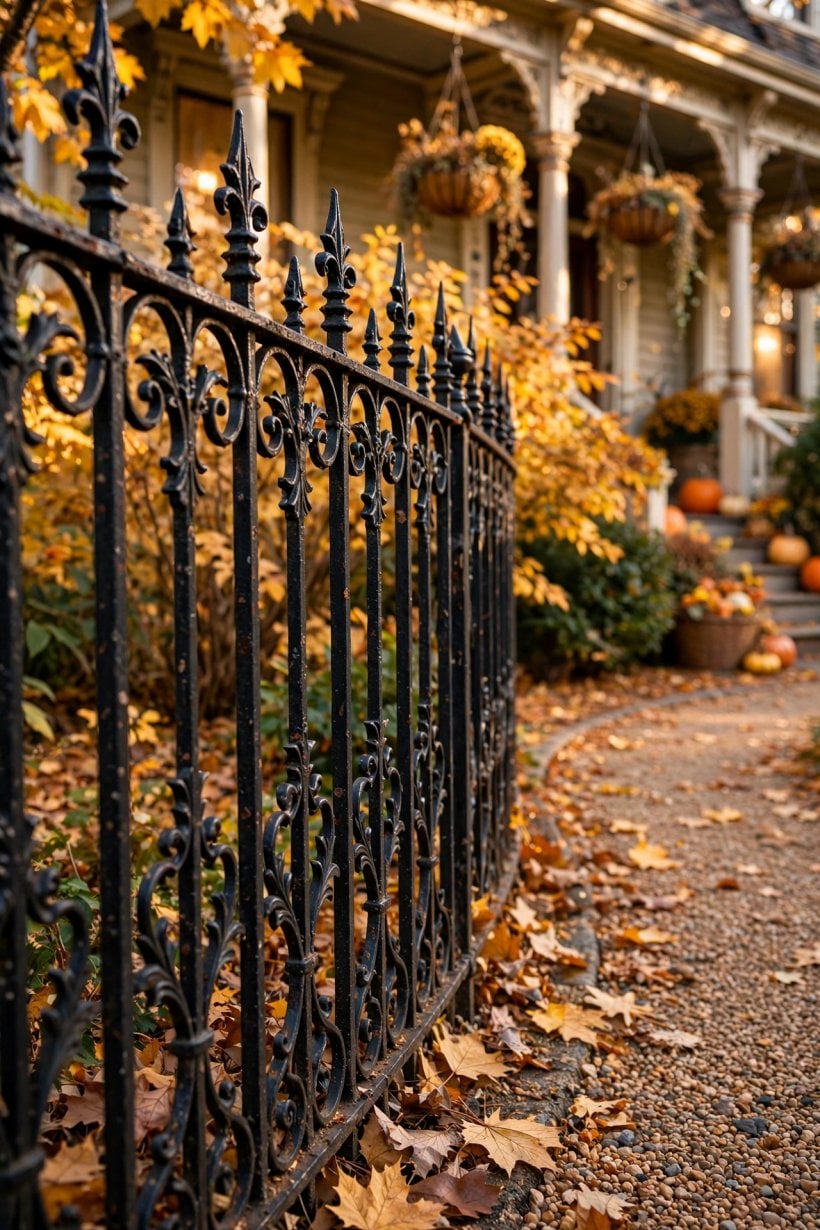
Victorian gardens were furnished: urns, statuary, sundials and bird baths placed as deliberately as indoor ornaments. The rule is the same indoors as out — fewer, better, and placed on axes and at focal points rather than scattered. Stone elements age gracefully, as the projects in dry-stack stone path ideas show.
56. One Statement Urn, Planted Seasonally
A single large urn on a plinth at the main focal point, replanted with the seasons.
57. A Sundial or Armillary on the Lawn Axis
The classic lawn ornament, given the clean geometric lawn it deserves.
58. A Bird Bath Where It Can Be Watched
Near a window or bench — the garden’s wildlife is part of the entertainment.
59. Terracotta Pots in Groups of Three
Clustered by steps and doors, planted alike: repetition again, never a row of singles.
60. A Small Wall Fountain or Water Bowl
Moving water at modest scale cools the garden’s sound as much as its air.
61. Stone or Iron Garden Furniture, Painted
A bench and small table in the trim colour — furniture as part of the scheme, not an afterthought.
62. Boot Scrapers and Period Details at the Door
Small functional ironwork rewards the walk in — details guests actually use.
63. Restraint With Statuary
One figure, well placed, in a green niche. Three is a yard sale.
64. Seasonal Containers Rotated to the Door
Pots grown on in a back corner and moved to the steps at their peak — the professional’s trick.
65. Night Lighting Kept Low and Warm
Uplight the specimen tree, wash the urn, light the path: three effects, no floodlights.
9. Autumn Colour and the Seasonal Round
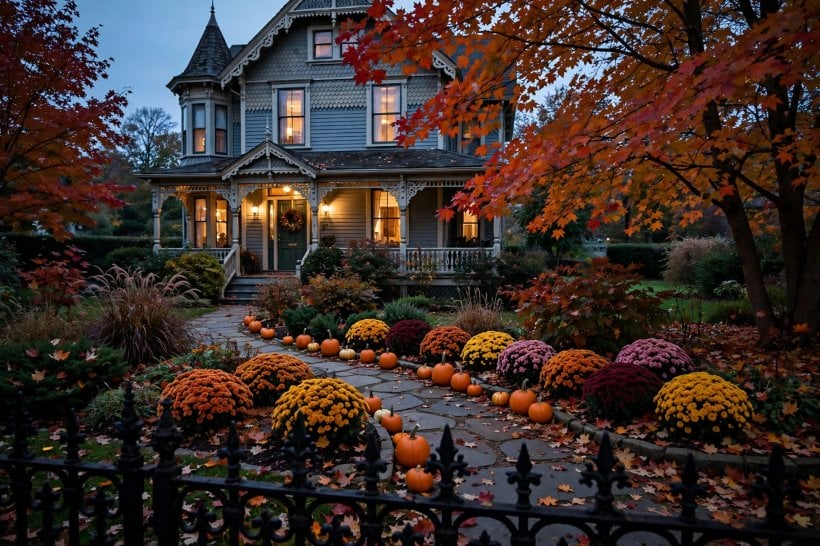
A Victorian garden was managed as a year of acts, not a single summer performance. Autumn is one act — glorious, but one — and it earns its place inside the evergreen structure rather than replacing it. Plan each season a headline and the garden never has a dull month.
66. Late Perennials for the Autumn Headline
Asters, sedums and chrysanthemum-type flowers carry the borders as early plants retire.
67. One Tree Chosen for Autumn Fire
A maple-type or similar specimen whose fall colour closes the year at canopy height.
68. Berries and Hips Left Standing
Rose hips and berries feed birds and decorate bare stems — tidiness can wait until spring.
69. Ornamental Grasses for Winter Silhouette
Feathery seed heads hold frost beautifully among the evergreen bones.
70. Spring Bulb Carpets as the Opener
Crocus and daffodil drifts in lawns and beds announce the year before the borders wake.
71. Winter Structure Audits
View the garden bare each winter and fix the bones — the season that reveals every layout flaw.
72. A Cutting Patch for the House
Rows of flowers grown to be picked keep borders full and the house in vases.
73. Leaf Mould and Mulch as Autumn Rituals
Fallen leaves gathered to beds and compost: the Victorian garden recycled everything.
74. Protecting Tender Plants the Period Way
Straw, bracken and wall shelter for borderline plants — the low-tech methods still work.
75. Keep a Garden Notebook
What flowered, what failed, what to move: the Victorians gardened by record, and it shows.
10. Costs, Phasing and Upkeep
The honest economics of Victorian landscaping: the expensive parts are the permanent ones — paths, edging, fencing, structures and mature evergreen bones — while the glorious parts, flowers, are comparatively cheap and endlessly adjustable. Costs are driven by the garden’s size, the length of path and boundary, how much structure is built new versus planted, and labour, whether hired or your own weekends.
Phase it the way the style itself suggests: bones one year (paths, edging, hedges started), borders the next, ornaments last as the budget allows. Upkeep is the real commitment — clipping, edging, deadheading and seasonal bedding are weekly in the growing season, and a neglected Victorian garden declines faster than a loose modern one because disorder reads against its formal frame. Gardeners weighing the whole-home picture can set those garden hours beside the build numbers in the tiny house cost breakdown — time is a cost too.
Final Considerations
Victorian landscaping is a bargain struck with abundance: formal bones, deep borders, period materials and one garden managed through all four seasons. Build the structure honestly and the flowers can change every year without the garden ever losing its identity.
Start with the axis, the edging and the evergreens. Add roses. The rest of these 75 ideas can arrive one season at a time — which is exactly how the originals were built.


0 Comments