
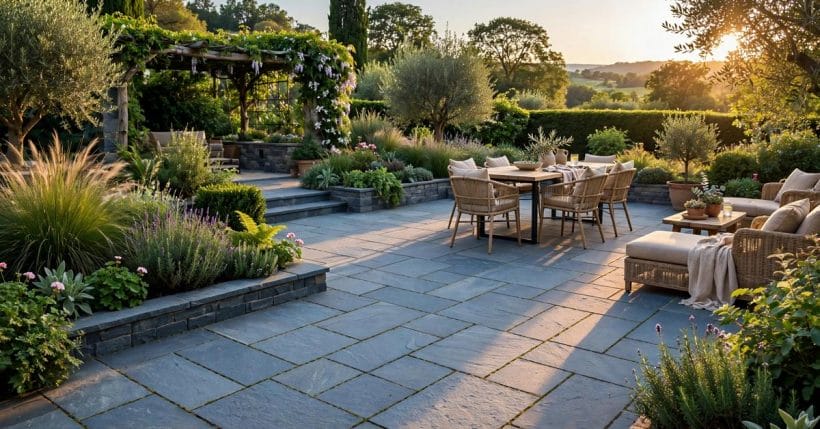
Bluestone is a patio stone with a character all its own: a blue-grey tone that shifts with the light, a natural texture underfoot, and a cool feel on warm days. It suits patios that want to feel grounded and calm, rather than bright and formal, and it pairs naturally with planting, timber furniture and water. This guide covers bluestone patios the way you should approach any stone choice: finishes, layouts, furniture, care and the checks that matter before you commit.
Bluestone is a different stone from flagstone and brick, and it should not be confused with them. What follows is about bluestone specifically — its finishes, its layouts, and the patios it makes best — with the usual honesty about what stone can and cannot do for a garden room.
| Item | What it is |
|---|---|
| Finishes: Thermal, Natural Cleft and More | Bluestone comes in finishes that change how it looks and feels. |
| Layouts: Regular, Irregular and Random | Bluestone layouts range from regular — rectangular slabs in neat rows — to irregular flagstone patterns where each stone has its own shape. |
| Patios by Water: Pools and Fire Features | Bluestone suits patios by water, because its cool tone and smooth thermal finish feel natural beside a pool. |
1. What Bluestone Actually Is
Bluestone is a natural stone, quarried and cut into slabs, with a blue-grey colour that ranges from soft grey-blue to deeper slate tones. Its surface carries natural variation — subtle veins, texture and tone shifts from slab to slab — which is part of its appeal: a bluestone patio never looks like a manufactured product, because it is not one. That variation is also something to accept before you buy, because a patio that demands perfect uniformity will fight the stone’s nature. When ordering, expect tone differences between batches, and ask the supplier to mix slabs from different batches across the patio rather than laying one batch in one area. Mixed laying evens out the overall tone and prevents visible bands where one batch ends and another begins.
The stone’s cool tone is its defining quality. In a sunny garden, bluestone stays visually cool and calm, and underfoot it feels cooler than warmer-toned stones, which makes it a natural choice for patios used in hot weather. It suits gardens with green planting particularly well, because the blue-grey stone and green foliage are a classic, restful pairing. If your garden is lush, bluestone will sit in it quietly and beautifully.
2. Finishes: Thermal, Natural Cleft and More
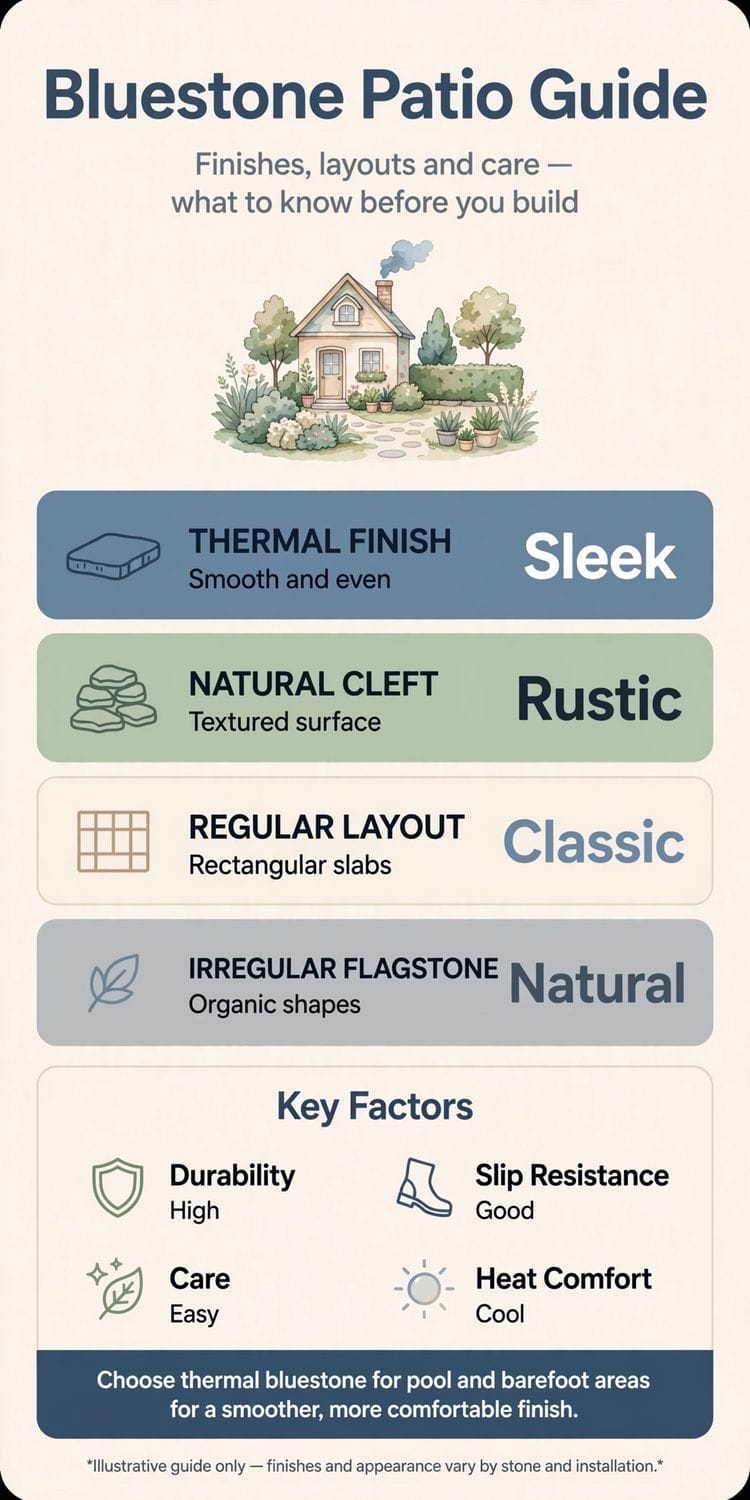
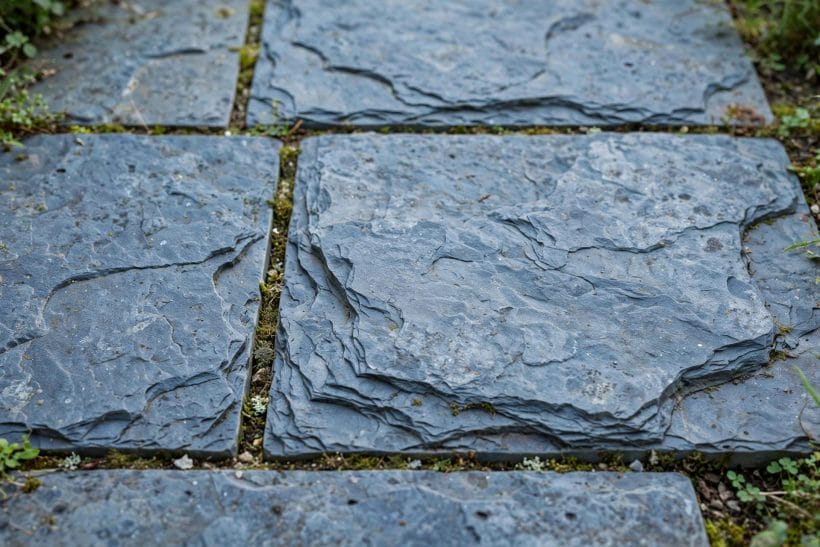
Bluestone comes in finishes that change how it looks and feels. A thermal finish is smooth and even, with a refined surface that suits bare feet and formal layouts. A natural cleft finish keeps the stone’s split texture, which feels more rustic and grips better underfoot. Neither is better in itself; the choice depends on how the patio will be used and how formal the garden is.
Look at finish samples outdoors, not indoors, because stone changes dramatically in daylight. Wet a sample too, since rain darkens bluestone and deepens its colour, and a patio spends much of its life wet. The finish you choose should look good both dry and wet, because you will see it in both states. Ask the supplier how each finish wears and how it is cleaned, and choose the finish whose care routine you will actually keep. Also ask about frost behaviour in your climate, because natural stone responds to freeze and thaw, and a supplier who knows your area can advise which finish holds up best through winter. Local knowledge beats general advice here, as it does for most stone choices.
3. Layouts: Regular, Irregular and Random
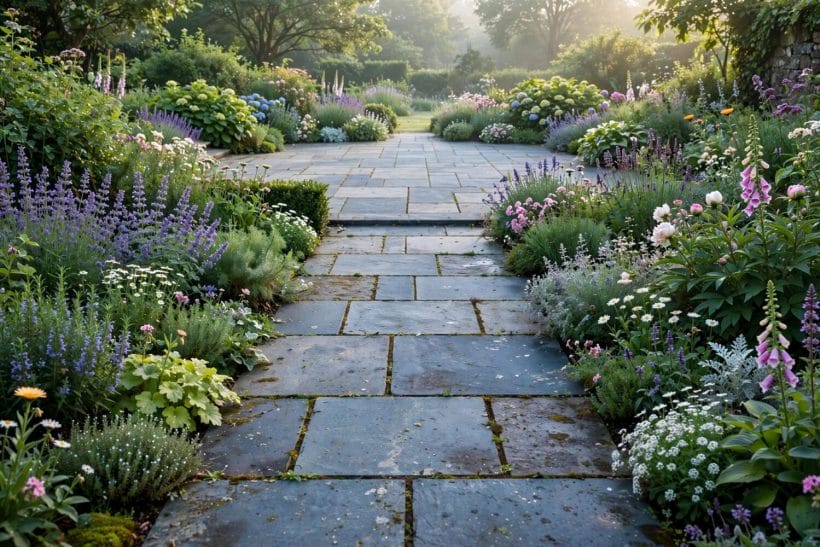
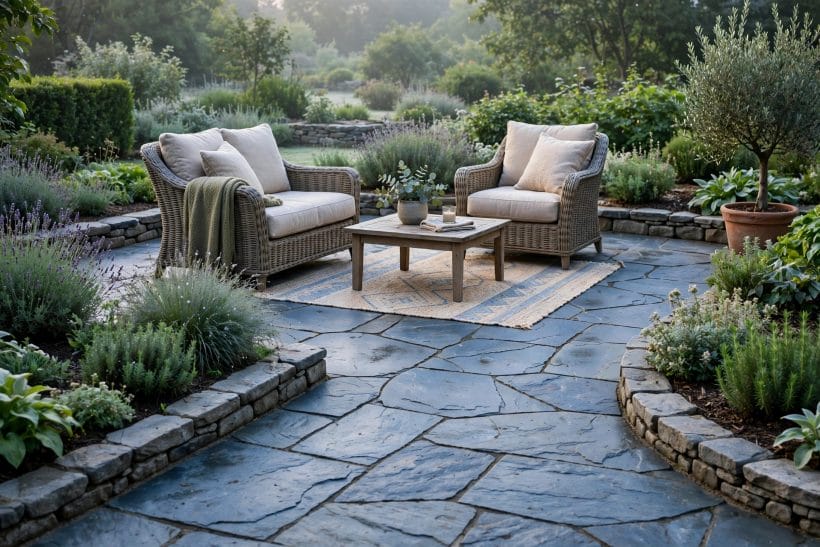
Bluestone layouts range from regular — rectangular slabs in neat rows — to irregular flagstone patterns where each stone has its own shape. A regular layout feels classic and calm, and it suits formal gardens and modern houses. An irregular layout feels natural and relaxed, and it suits cottage gardens and informal spaces. A random rectangular pattern sits between the two, offering structure with enough variation to feel organic.
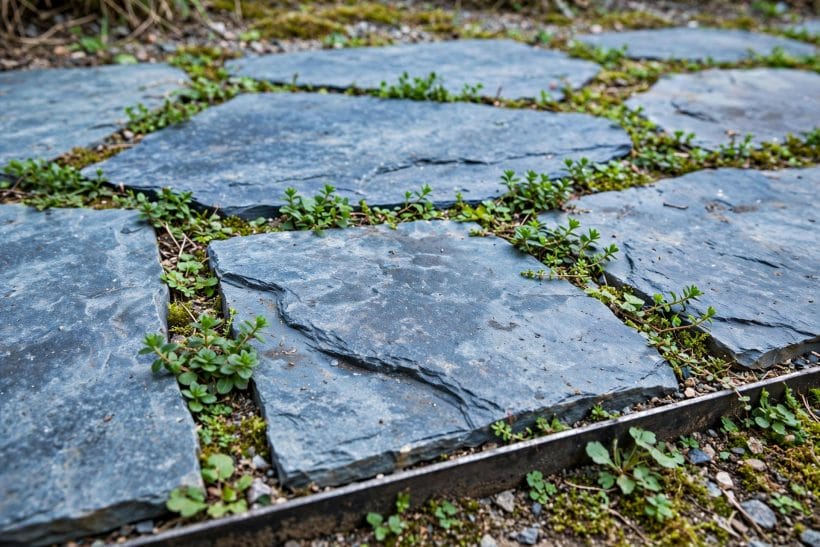
The layout should match the house and garden, not fight them. A formal house with a regular layout feels coherent; a cottage garden with an irregular layout feels natural. Also consider the joints: narrow joints give a cleaner, more continuous surface, while wider joints filled with ground cover soften the patio and connect it to the planting. The joint choice is part of the layout, not an afterthought, and it changes the patio’s character considerably. Edge restraint matters too: a patio without a firm edge spreads and shifts over time, while a well-set edge — stone, metal or timber — holds the layout crisp for years. Ask how the edges will be finished before the stone is laid, because edges are much harder to fix afterwards than the field of the patio itself.
4. Furniture That Suits Stone
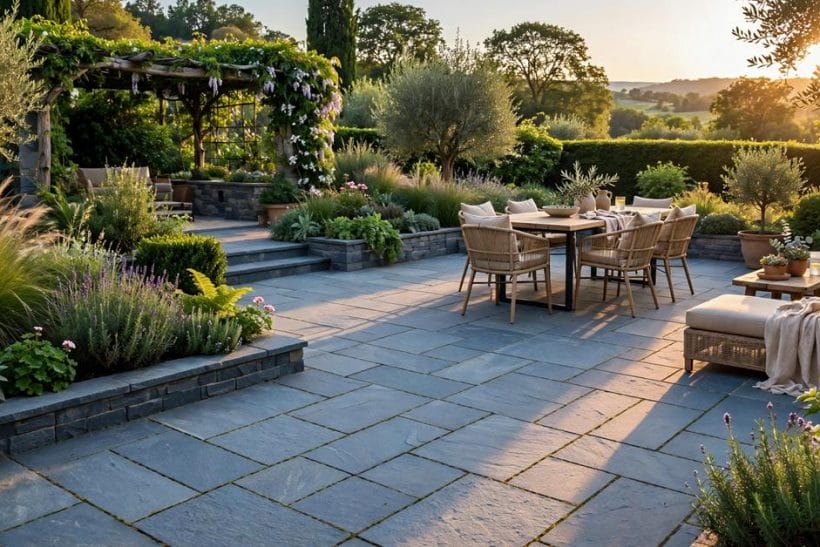
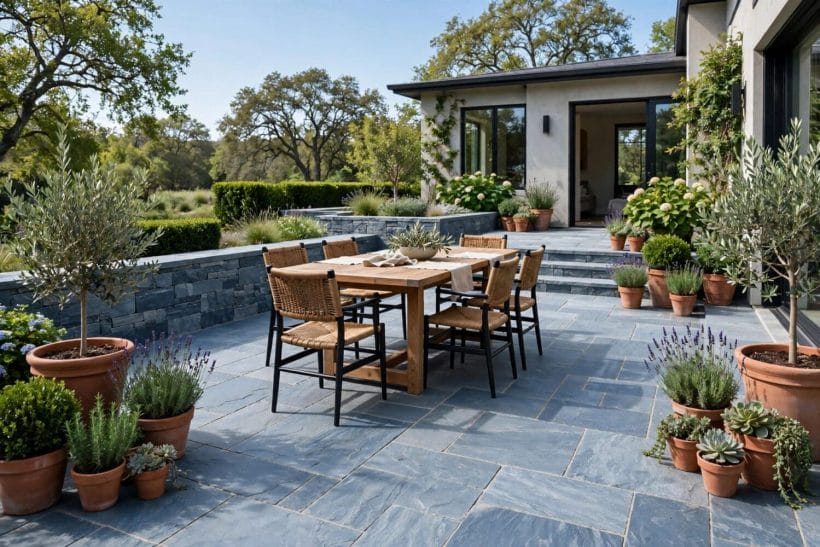
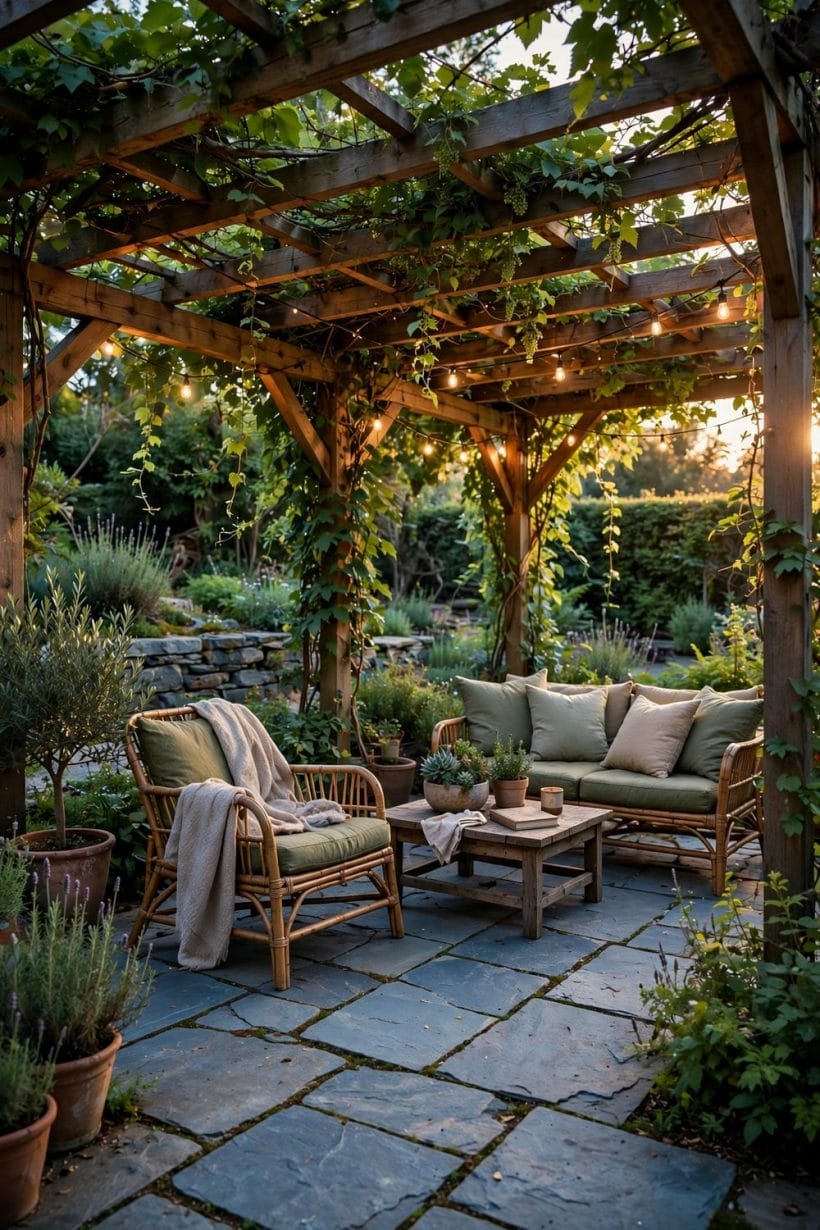
Bluestone’s cool tone pairs beautifully with timber furniture, which warms the patio without competing with the stone. Teak, cedar and other outdoor timbers sit naturally on bluestone, and their warm tones balance the stone’s cool grey-blue. Woven and rattan furniture works too, adding softness and texture, while metal furniture should be chosen carefully, because dark metal can feel harsh against the stone unless softened with cushions and planting.
Think about weight and movement as well. Heavy furniture on a stone patio stays put, which suits a settled dining area, while lighter pieces can be moved with the sun, which suits a flexible seating area. Protect the stone from dragging by lifting rather than sliding heavy pieces, and use pads under metal feet. A patio is a room, and its furniture should be chosen with the same care as indoor furniture, because it is lived in just as much. Cushions deserve a mention: outdoor cushions in warm, natural tones soften both the stone and the furniture, and they are the easiest way to refresh a patio’s look without changing anything structural. Store them under cover when not in use, and they will last far longer than cushions left out in all weathers.
5. Planting Around Bluestone
Planting is what makes a bluestone patio feel like a garden room rather than a stone yard. The blue-grey stone is a calm backdrop for green foliage, and it flatters flowering plants by contrast: purples, pinks and whites all read beautifully against it. Raised beds in matching stone tie the patio to the garden, while pots and planters soften the edges and let you change the planting with the seasons.
Ground cover between joints is another way to connect stone and planting. Low, creeping plants in wider joints soften the patio’s edges and make it feel established, though they need more care than a plain joint. Choose planting that suits your climate and your willingness to maintain it, and remember that a patio with planting needs watering and care that a bare patio does not. The reward is a patio that feels alive, not just built. Raised beds deserve a note here as well: beds in matching stone tie the patio to the garden more strongly than pots alone, because they share the patio’s material, and they give planting the depth it needs to thrive. A bed that is too shallow will limit what grows in it, so build beds generously where space allows.
6. Shade, Sun and the Cool Stone
Bluestone’s cool feel is a genuine asset in sunny gardens, but shade still matters. A patio in full sun all day can feel exposed even on cool stone, while a patio with partial shade — from a pergola, a tree or a sail — becomes usable for much longer. Shade also protects furniture and softens the light, which makes the stone’s colour read more richly. Plan shade alongside the patio, not after it, because retrofitting shade is harder than building it in.
Consider the sun’s path through your garden before finalising the layout. A dining area that catches the evening sun is a pleasure, while a seating area that bakes at midday is not. The stone will stay cooler than many alternatives, but it cannot rescue a badly sited patio. Sit in the garden at different times of day, notice where the sun falls, and place the patio’s uses — dining, lounging, reading — where the light suits them best. A movable shade, such as a large parasol, is a flexible companion to a fixed pergola, because it lets you shade the spot in use rather than shading the whole patio whether it needs it or not. Flexibility suits patios, which are used differently across the day and the year.
7. Patios by Water: Pools and Fire Features
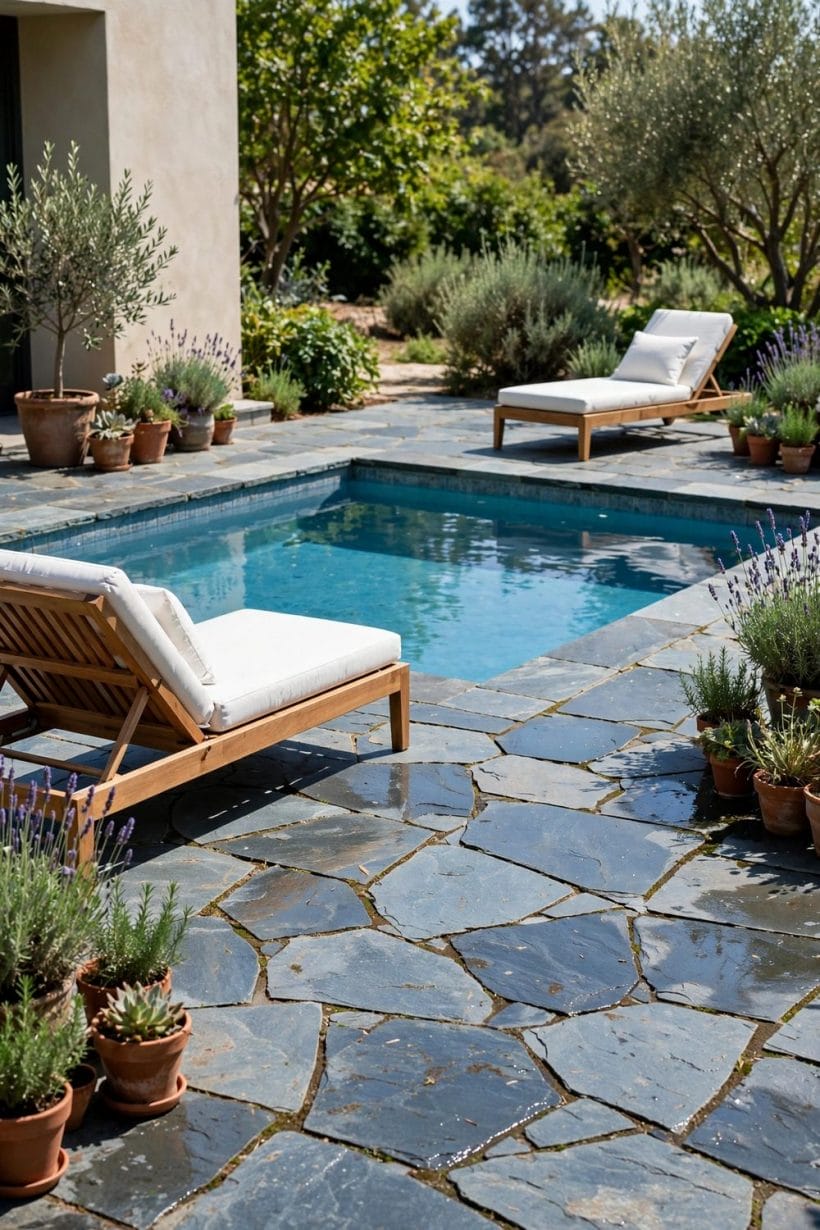
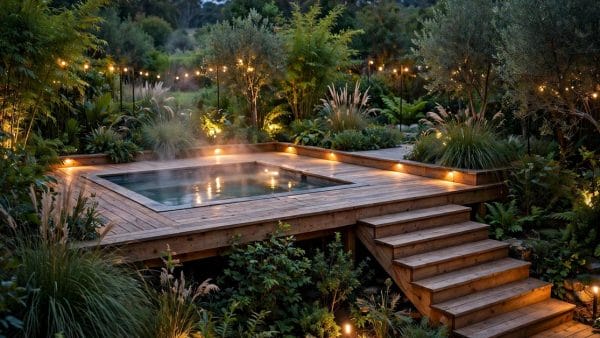
Bluestone suits patios by water, because its cool tone and smooth thermal finish feel natural beside a pool. A thermal finish is particularly suited to barefoot areas, and the stone’s calm colour does not compete with the water. If your patio includes a pool, the finish choice matters even more, because wet feet and smooth stone need to work together safely. Check slip resistance in wet conditions with the supplier, and choose the finish that feels secure underfoot when wet. Coping stones around the pool edge deserve the same attention as the patio field, because the coping is what bare feet meet at the water’s edge, and a coping that is too rough or too slick will be noticed every time someone enters or leaves the pool.
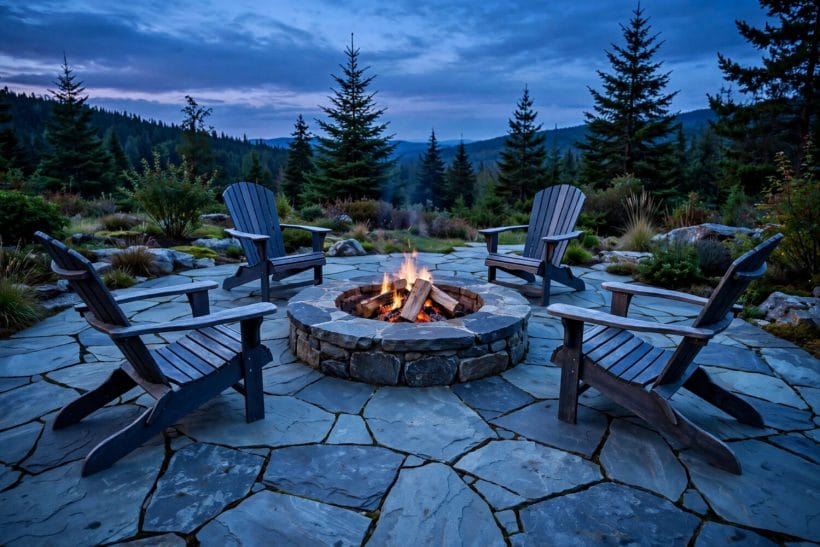
Fire features pair well with bluestone too, because the stone’s cool tone contrasts beautifully with flame and warm light. A fire pit or outdoor fireplace on a bluestone patio creates a natural gathering point, and the stone handles the heat of the surrounding area well. Our patio fireplace ideas post shows outdoor fireplaces in garden settings, and it is a useful companion read. Keep clearances and local rules in mind for any fire feature, and have the work done by qualified people where structure or fuel is involved.
8. Care That Keeps Stone Looking Good
Bluestone care is straightforward: sweep regularly, wash occasionally, and deal with stains promptly. Grit and leaves left on the surface dull the stone over time, while a simple sweep keeps it looking fresh. Washing with water and a soft brush handles most dirt, and stains should be treated according to the supplier’s guidance for your specific stone, because harsh chemicals can damage natural stone. Avoid aggressive cleaning methods unless the supplier explicitly allows them.
Sealing is a question to ask the supplier about, not a default. Some bluestone patios benefit from sealing, which can deepen the colour and ease cleaning, while others are left natural and weather gracefully. The right answer depends on the stone, the finish and the patio’s use, so ask rather than assume. A patio cared for simply and regularly ages well; one that is neglected and then scrubbed aggressively does not, whatever the stone. Drainage is part of care too: a patio that drains well stays cleaner and safer, because standing water breeds algae and stains, while a patio that puddles will always look tired. Check the falls and drainage when the patio is laid, and keep drains and joints clear afterwards.
9. Bluestone in the Wider Garden
A bluestone patio should connect to the rest of the garden, not sit in isolation. Paths in matching stone, steps that echo the patio’s slabs, and edging that ties the patio to the lawn all make the garden feel coherent. Our Florida backyard patio post shows a warm-climate patio in its garden context, and our Mediterranean pool post shows stone and water together — both are useful for seeing how a patio sits in a larger garden, even though their climates differ from yours.
Boundaries matter too. A fence or hedge around a bluestone patio gives it enclosure and privacy, and the boundary material should complement the stone rather than compete with it. Timber fencing warms a bluestone patio beautifully, and our horizontal wood fence post shows a fence style that pairs well with stone. The entry to the patio matters as well: our exterior entryway post covers the approach to the house, and the same thinking — a clear, welcoming route — applies to the route from house to patio.
10. Choosing With Confidence
Choosing bluestone comes down to a few honest checks: look at samples outdoors, wet and dry; choose a finish that suits your feet and your care routine; pick a layout that matches your house and garden; and plan furniture, planting and shade alongside the stone. If those checks feel good, bluestone will reward you with a patio that looks better as it weathers and feels cool underfoot for years. One final check is worth making: visit a bluestone patio that has been in place for a few years, if you can, because a weathered patio tells you more about the stone than any new sample. The colour it settles into, the way the joints have aged, and the feel underfoot after seasons of use are the truths that matter, and they are only visible in a patio that has lived a little.
For a broader view of how outdoor rooms come together, our tiny house designs and interior design ideas collections show small outdoor spaces used well, which is a useful reminder that the principles here — honest materials, calm layouts, planting that connects — scale from the smallest courtyard to the largest garden.
Final Considerations
A bluestone patio earns its place by being cool, calm and honest: a natural stone with a blue-grey tone that flatters planting, suits bare feet, and weathers gracefully. Choose the finish and layout for your garden, plan furniture and shade alongside the stone, and keep the care simple. Do that, and the patio will do what a good patio should do: hold the garden together quietly, season after season, while life happens on top of it.

0 Comments