

A flower bed is the garden’s smallest complete landscape: a shape cut into the ordinary ground, filled with soil made generous, and planted as a composition that changes by the month. The gardens people remember are rarely lawns — they are beds, remembered one flowering at a time.
This page works the flower bed in depth, as the garden mini-cluster’s planting survey alongside the soil lessons of the loam explainer and the coastal planting of the coastal landscaping ideas lane: shapes and edges first, then soil, colour through the seasons, beds for sun and shade, styles from cottage to formal, structures that raise and frame them, and the year’s keeping. Plant advice is kept general and checkable throughout — your own site, soil and local nursery’s knowledge make the final plant list, as they should.
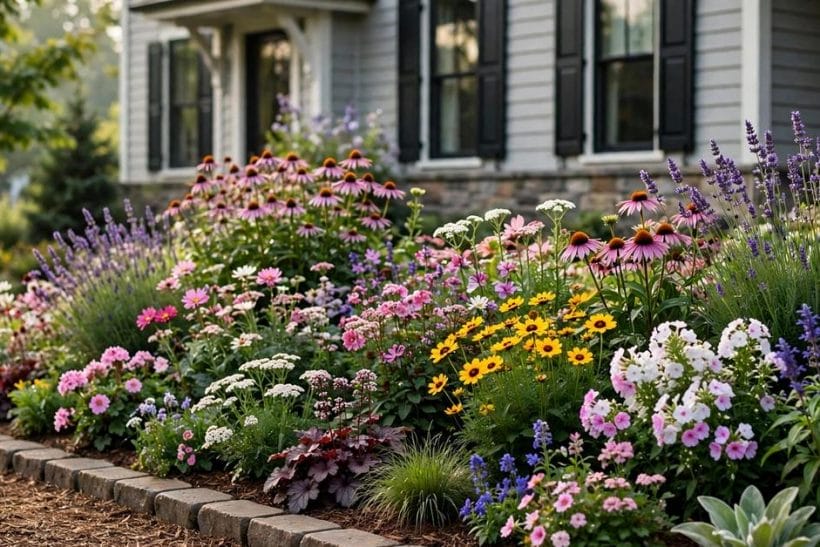
1. Flower Bed Ideas at a Glance
A flower bed is a defined area of prepared soil, edged against lawn, path or paving, planted with flowering and foliage plants arranged as a composition. Its elements are few and strict: a shape that suits the garden’s geometry; an edge that holds the shape crisply; soil improved for the plants it must carry; a planting arranged in layers — structure behind, body in the middle, detail at the front — and a plan for the whole year, not one glorious fortnight. Everything else — style, colour story, scent, wildlife value — is built on those five. A bed is a garden in miniature, and it succeeds or fails by the same laws as the whole.
| Question | Short answer |
|---|---|
| What is the right shape for a flower bed? | The one the garden’s own lines suggest: long borders along fences and walls, curves that echo paths and lawns, islands where the plot is wide enough to walk around them. Shape is decided by the site first and taste second — a bed whose geometry fights its garden looks wrong in every season, whatever is planted in it. |
| How do I keep a bed interesting all year? | Plant in succession, not in a single chorus: spring bulbs and early flowers, the great summer body, late flowers and seedheads, and evergreen structure carrying the winter. Add foliage — coloured, variegated and fine-textured leaves work in the months between flowers. The honest method is a planting diary: note the bed’s gaps month by month for one year, then plant into the gaps, not over the glories. |
| What soil preparation actually matters? | Know what you have before improving it: texture, drainage and how it behaves wet and dry. Most beds ask for generous organic matter worked in, compaction relieved, and levels set so water neither ponds nor flees. The soil lessons of the loam explainer apply in every bed — plants forgive many things, but they do not forgive a soil nobody understood. |
| What is the biggest flower-bed mistake? | Planting for the photograph of one month: a bed bought in a single spring afternoon, glorious in May and empty by August, in soil that was never prepared. The second is scale — plants chosen without their mature sizes in view, so the front row swallows the path and the back row vanishes. Beds are built in years, and every shortcut is billed to the following season. |
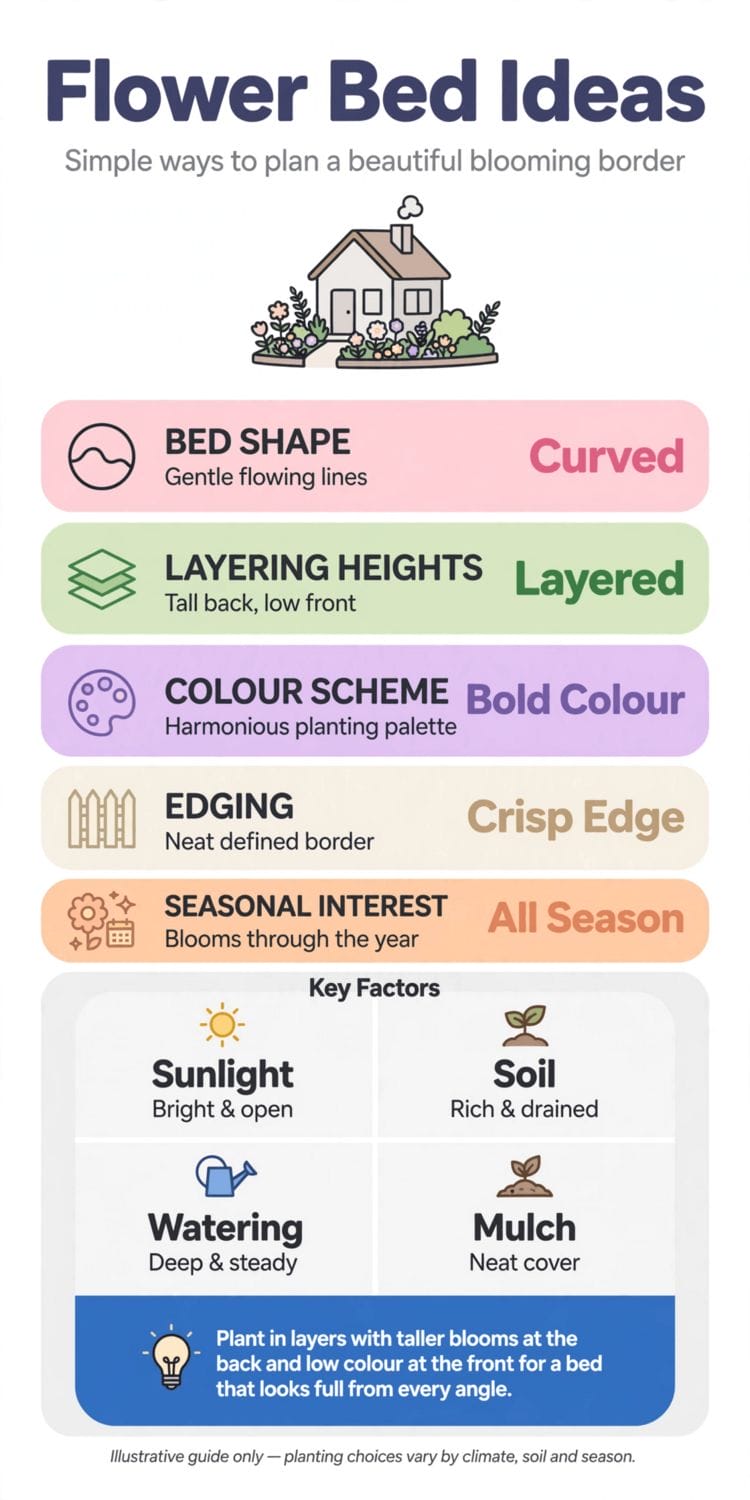
2. Shapes and Edges: The Bed’s Drawing on the Ground
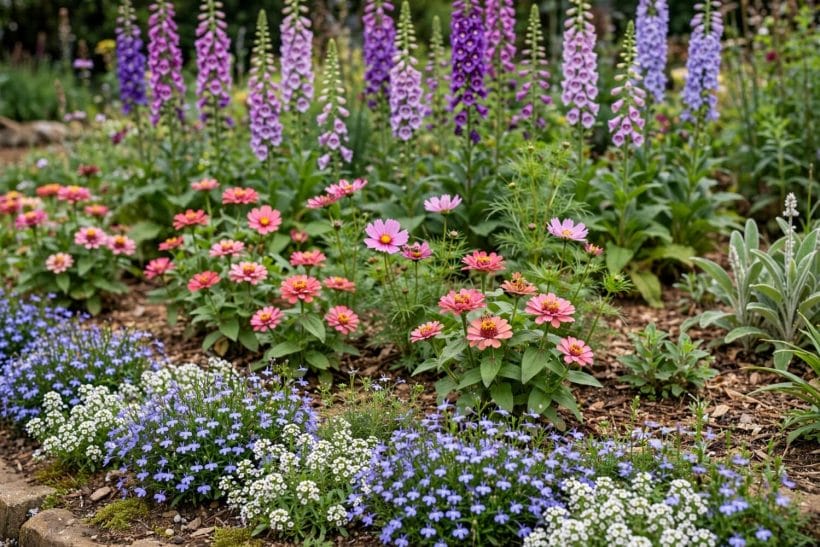
Before a single plant, the bed is a drawing. This section shapes it — curves, borders, islands and the edges that keep the drawing legible — the ground-plan discipline shared with the front yard landscaping ideas survey and the backyard landscaping ideas collection.
1. Draw the bed with a hose before cutting it
A garden hose or a line of sand on the lawn lets the household live with a shape for a day — view it from the windows, walk its curves, mow around it in imagination.
2. Make curves generous and borders straight
Tight, wiggly curves look anxious and mow badly; broad, sweeping curves look inevitable.
3. Widen the border beyond your first instinct
Narrow borders are the beginner’s universal error: no room for layers, plants spilling onto the path, every weed visible.
4. Cut island beds only where the lawn can spare them
An island in a wide lawn, planted to be walked around and seen from every side, is the bed as sculpture.
5. Let the bed answer the house’s architecture
Beds against a house should take their lengths and divisions from the building — a bed per bay, a rhythm echoing the windows — so house and garden read as one composition.
6. Edge with a crisp cut for the classic finish
A cleanly cut turf edge, renewed each spring, is the traditional and cheapest edging, giving the bed its tailored line against the lawn.
7. Edge with stone or brick where permanence matters
Set stone, brick or tile edging where beds meet paths, slopes or heavy traffic, and the line holds itself for years.
8. Edge with metal or timber for the modern garden
Slim steel or aluminium edging disappears into a clean line suited to contemporary planting, while timber boards and logs serve the rustic and woodland registers.
9. Raise the bed’s front line with low planting
A front row of low, neat plants — edging the bed in green or flower — draws the bed’s line even where the physical edge is plain.
10. Keep mowing and walking access in the drawing
Every bed needs its keeper’s access: a mowing strip at the lawn’s edge, stepping places within deep borders, a path behind where the bed is very deep.
11. Let one bed be the garden’s signature shape
A spiral in the herb garden, a crescent around the tree, a long ribbon down the drive: one bed may carry the place’s individual gesture while the rest keep the grammar plain.
3. Soil and Preparation: The Bed Beneath the Flowers
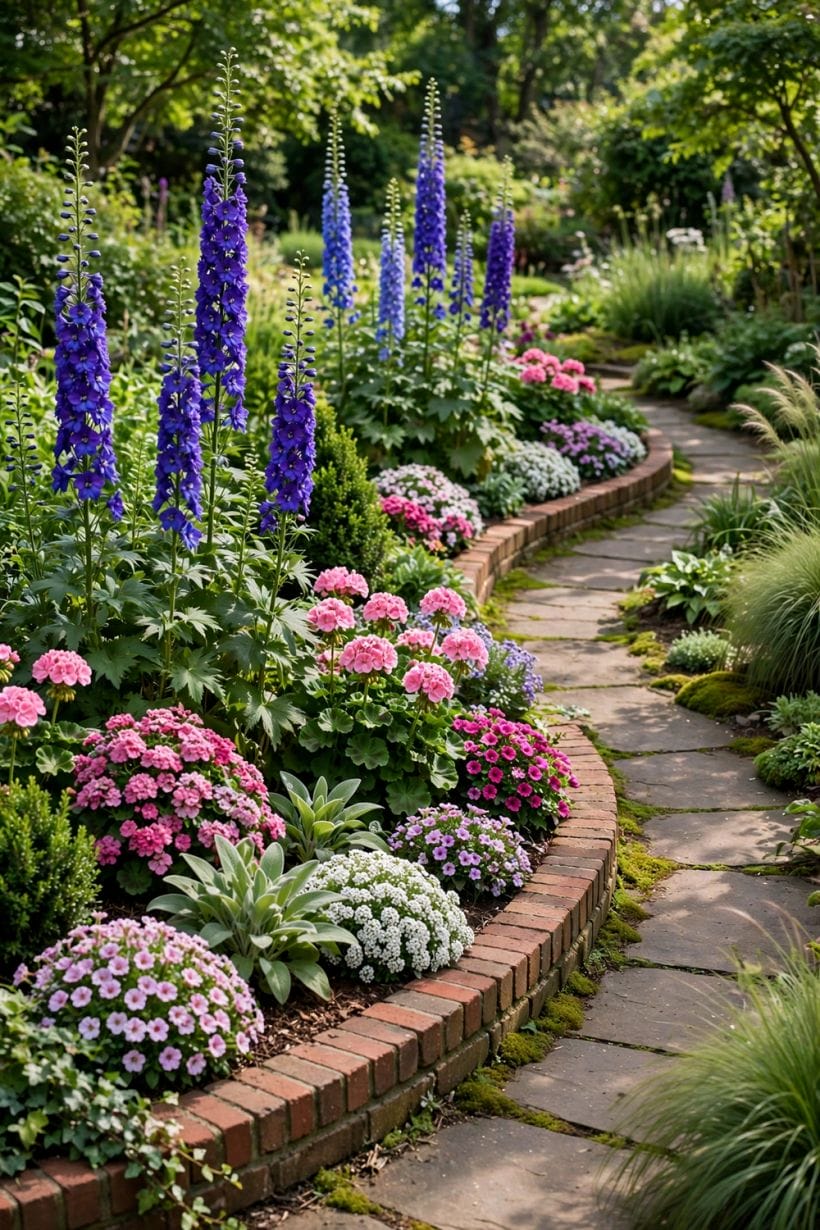
Flowers are the bed’s advertisement; soil is its factory. This section prepares the ground — kept general, because soils are local and the testing is the gardener’s own first job — and it borrows the protected-growing wisdom of the greenhouse ideas lane, where soil is made entirely by hand and every lesson is visible.
12. Learn your soil before improving it
Dig, feel and watch the soil across a wet week and a dry one: its texture, its drainage, its depth over what lies beneath.
13. Relieve compaction wherever feet and machines have pressed
Ground that has been walked, driven or stored on is squeezed shut, and roots read it as a closed door.
14. Work in generous organic matter
Compost and well-rotted organic material, dug through the bed, feed the soil’s life, open heavy ground and give light ground body — the universal amendment because it improves structure, not merely chemistry.
15. Set levels so water behaves
The bed’s surface should sit kindly against paths and lawns, shedding storm water gently rather than ponding on crowns or flooding the path.
16. Weed the ground before the plants arrive
Perennial weeds cleared honestly at preparation — roots out, not heads off — save the bed’s first two seasons of warfare.
17. Mulch as the bed’s standing coat
A mulch of compost, bark or leaf mould over the planted bed holds moisture, cools roots, feeds the soil as it rots and gives the planting its finished ground.
18. Feed by the soil’s evidence, not the calendar’s habit
Plants in good, mulched soil need less feeding than the advertisements claim; feed where growth, colour or a proper soil test says the ground is hungry.
19. Match plants to the soil you actually have
The deepest soil wisdom is surrender: gardeners who plant for their real soil — its drainage, its richness, its temper — grow the lush beds, while those fighting it with amendments grow the expensive ones.
20. Prepare new beds a season ahead where patience allows
Ground cleared, improved and mulched to rest under cover while its weeds declare and die is the finest planting medium a bed can open with.
21. Keep the soil covered always
Bare soil erodes, crusts and weeds; between plantings, cover it — mulch, a living groundcover, or the plants themselves grown close.
22. Record what the bed’s soil did
A note in the garden diary — which corner stayed wet, which plant sulked, where the compost went — turns one year’s bed into next year’s knowledge.
4. Colour and Succession: A Bed Through the Whole Year
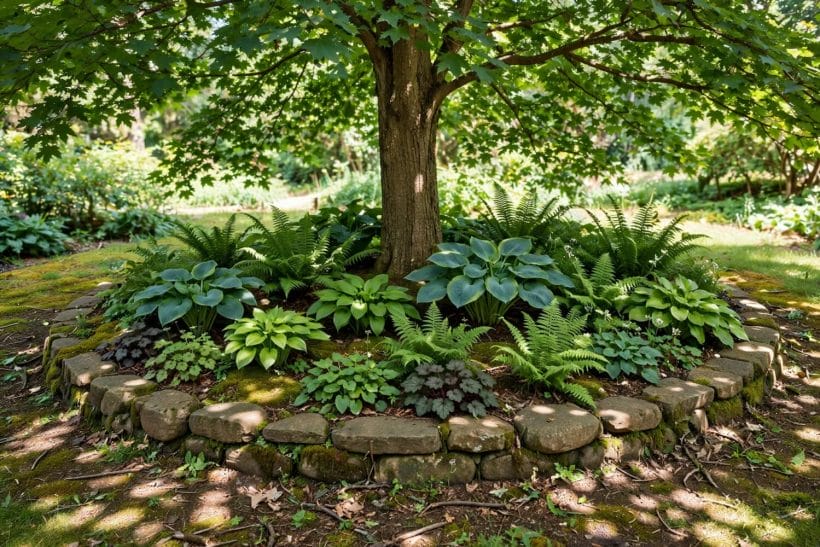
The bed’s performance is a relay, not a sprint. This section plants for sequence — colour stories carried across the seasons by flowers, foliage and seedheads in turn, in the spirit of the colour planning in the tropical landscaping ideas lane, translated to the temperate bed.
23. Choose one colour story per bed
A bed of whites and greens, a bed of sunset colours, a bed of blues and purples: a declared story lets every plant choice be judged in one question — does it belong?
24. Build the spring overture with bulbs and early flowers
Bulbs planted in autumn drifts, early perennials and flowering shrubs open the bed’s year while the summer body is still underground.
25. Give the summer body its full-throated weeks
The high-summer perennials and annuals are the bed’s main act, planted in drifts large enough to read across the garden.
26. Plant the late shift deliberately
Late flowers, grasses coming into plume and plants whose seedheads stand into autumn carry the bed past its supposed finale.
27. Use foliage as the permanent collection
Leaves work in every month the plant is awake: silver, purple, gold, variegated and finely cut foliage carries the bed between flowerings and gives the flowers their background.
28. Repeat a few plants as the bed’s refrain
Three or four plants repeated along the bed knit its length into one composition and give the gardener fewer, larger lessons to learn.
29. Layer heights honestly: back, middle, front
Tall structure at the back — or the island’s centre — the body in the middle, the detail at the front edge, each plant given its mature size in the plan.
30. Add scent where people linger
By the bench, the path and the evening window, scented planting earns a premium no photograph can justify and every summer night can.
31. Leave seedheads and skeletons for winter
The bed’s winter architecture — grasses, seedheads, evergreen bones — is planted in summer by restraint: what is not cut down stands as the cold months’ garden.
32. Audit the bed monthly and plant into its gaps
Walk the bed with the diary each month and name its empty weeks precisely; then buy for those weeks only.
33. Let annuals be the bed’s flexible friends
Annuals fill a new bed’s first year, patch a perennial’s failure and trial a colour before it is committed to.
5. Sun, Shade and Difficult Corners: Beds Where Gardens Actually Are
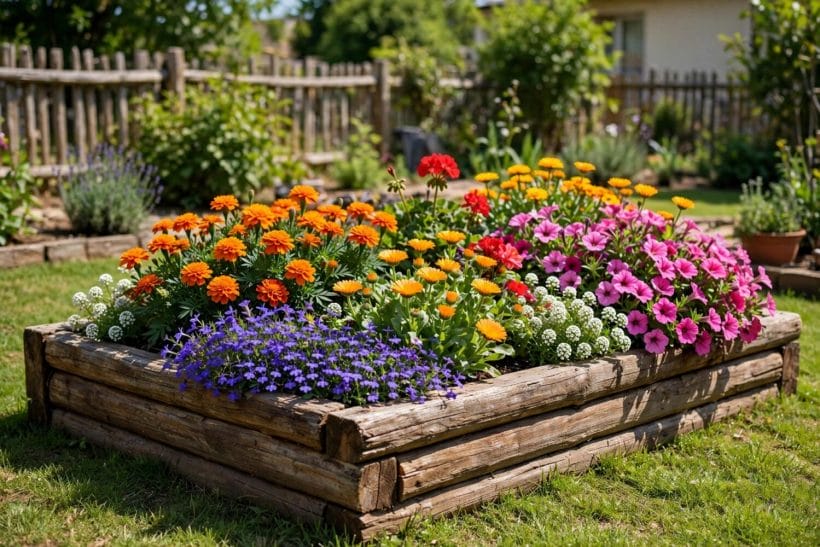
Most gardens are not the south-facing rectangle of the catalogues. This section beds the shady side, the dry corner, the slope and the strip nobody wanted — the slope work owing much to the hillside landscaping ideas lane — with planting advice kept honest and general.
34. In full sun, plant for abundance and thirst alike
Sunny beds carry the classic flower wealth, and they also dry first: soil rich in organic matter, mulch kept deep, and watering planned for the establishment years are the sun bed’s foundations.
35. In shade, make foliage the headline
Shaded beds flower less and leaf beautifully: the shade bed’s art is texture, variegation and the pale flower that glows in dim light.
36. At the house’s north wall, plant the cool border
The wall that never sees noon sun gives a long, even, cool light that certain plants adore and that keeps colours unfaded for weeks.
37. On a slope, terrace the bed or plant it as a bank
Sloping beds either step into small terraces with planted risers, or run as banks of ground-hugging planting that holds the soil.
38. In the dry corner, build the gravel bed
Where rain rarely reaches — under eaves, against hot walls, over rubble — a gravel bed of sun-loving, drought-content planting turns the garden’s worst soil into its most fashionable.
39. In wet ground, plant the bog bed gladly
Ground that stays moist carries a lush company of plants that would sulk anywhere else; the wet corner’s bed, planted for its condition, becomes the garden’s greenest room in August.
40. In the narrow strip, plant in a single disciplined file
The thin bed along a path or drive succeeds with one repeated plant or a strict two-note rhythm, kept clipped or naturally compact.
41. Under trees, negotiate with the roots
Tree roots own their ground; beds beneath them succeed with shallow, tough planting in pockets of improved soil, added gradually without burying the tree’s own roots under deep new soil.
42. By the sea and in wind, plant the sheltered first
Exposed beds begin with shelter — a hedge, a fence, tougher shrubs as the windward wall — and flowers follow in the lee.
43. In the front garden, plant for the street’s pleasure
The front bed is public art: evergreen bones, a long flowering season and tidiness at the edges matter more there than rarity.
44. Give every difficult bed one season of observation
Before planting the awkward corner, watch it for a year — its light by season, its water, its wind, what volunteers there happily.
6. Styles of Bed: Cottage, Formal, Prairie and the Low-Care Garden
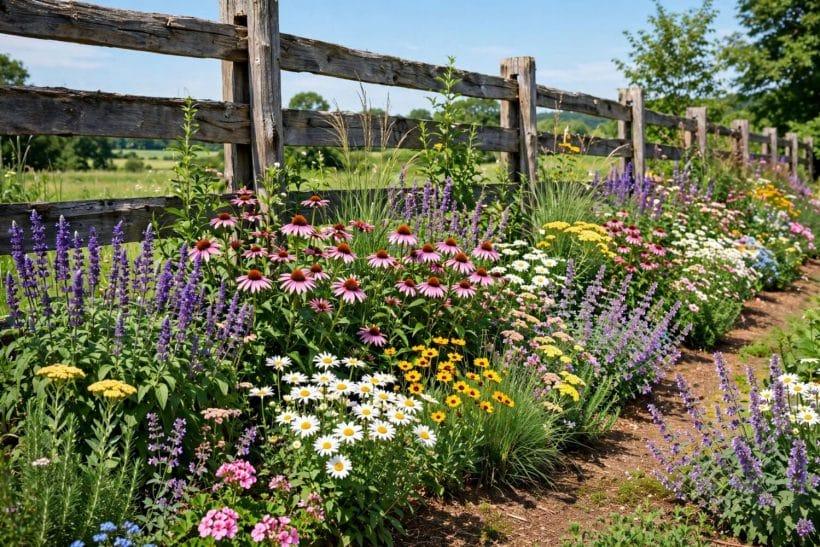
A bed’s style is its planting’s accent, not its costume. This section speaks the main dialects — including the cottage register that the cottage-garden article in this same frontier develops in full — and the low-care style that serves real households.
45. Plant the cottage bed in generous disorder
The cottage bed overflows on purpose: roses, hollyhocks, herbs and self-seeders mingling in drifts that lean on the path and each other.
46. Plant the formal bed in symmetry and restraint
Formal beds repeat their planting in mirrored order, keep their edges military and admit few colours at once.
47. Plant the prairie bed in grasses and late light
The naturalistic bed of grasses and tough perennials, planted in interlocking drifts, peaks late and stands all winter as architecture.
48. Plant the Mediterranean bed for sun and scent
On free-draining ground in a sunny wall’s shelter, the dry-garden bed of silver foliage, herbs and sun-lovers brings the south into northern gardens.
49. Plant the woodland bed under the trees’ terms
Spring flowers before the leaf canopy closes, foliage all summer, berries and bark for autumn: the woodland bed runs on the trees’ calendar.
50. Build the low-care bed on shrubs and groundcover
For households whose gardening hours are few, the honest low-care bed rests on flowering shrubs, bulbs and a carpet of groundcover that suppresses weeds by occupancy.
51. Make the cutting bed a working bed, unashamed
A bed grown for the vase — rows or blocks of flowers planted to be picked — belongs in the sun with the vegetables or at the garden’s working end.
52. Plant the pollinator bed as a season-long table
Flowers in sequence from the first spring day to the last autumn one, in open, single forms insects can actually use, make the bed a working part of the neighbourhood’s ecology.
53. Give children a bed of their own to command
A small bed where children choose, sow and harvest — fast flowers, giant sunflowers, things to eat — buys the garden its next generation of gardeners.
54. Keep one bed as the garden’s experiment
A test bed for the new plant, the doubtful colour, the gift from a friend: every garden needs a place where failure is cheap and curiosity is free.
55. Plant the white bed for evening and moonlight
A bed restricted to white flowers and silver foliage near the terrace or the evening window glows at dusk when every other colour has retired.
7. Raised Beds, Containers and Structure: Lifting the Flowers
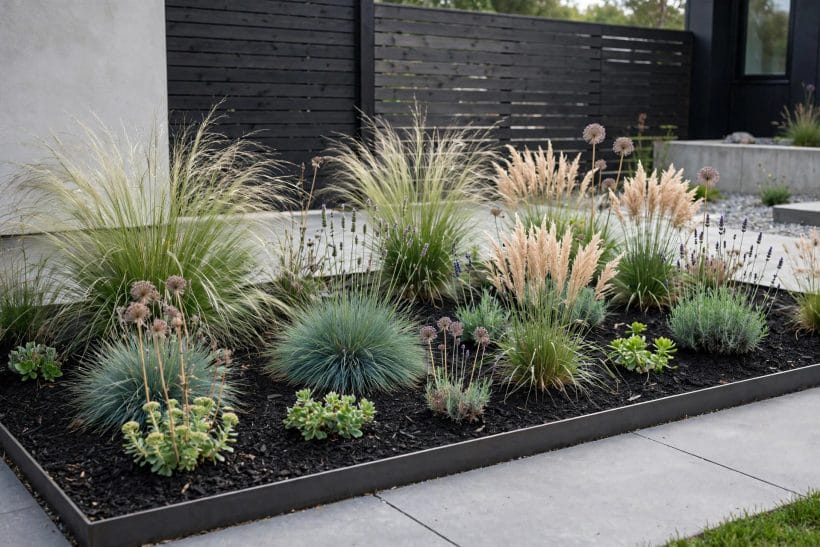
Some beds rise. This section builds the raised and contained flower bed — kinder to backs, decisive on bad ground, and architectural in its own right — with the practical framing the shed-and-structure posts in this frontier use for garden building generally.
56. Raise the bed where the ground defeats you
On rubble, clay pans, flooded corners or ground of unknown history, a raised bed imports a known soil and a clean start.
57. Build raised edges in timber, stone or brick to match the garden
Sleepers and boards for the rustic garden, stone and brick where the house’s masonry leads, metal for the contemporary plot: the raised bed is a piece of garden architecture and should dress in the family’s materials.
58. Fill a raised bed as a soil, not a hole
A deliberate mixture, rich in organic matter and free-draining, filled generously to allow for settling, is the raised bed’s whole advantage — spend it properly.
59. Water raised beds as the thirstier gardens they are
Raised soil drains and dries faster than the ground’s own; plan the watering — a hose’s honest reach, a stored butt nearby, or irrigation laid at the build — before the first dry week teaches the lesson.
60. Use containers as the movable bed
Great pots grouped as a bed — by the door, on the patio, up the steps — give flowers to ground that cannot be dug and let the composition move with the season.
61. Plant a window box as the house’s own bed
The box under the window is the most-seen bed in most houses, changed with the seasons and lit by the room behind it.
62. Terrace a slope with bedded retaining walls
Low walls turning a bank into a stair of beds give every plant a level root run and every keeper a reachable row.
63. Frame a bed with a low fence or hedge for the garden’s rooms
A dwarf hedge, a woven hurdle or a low rail gives a bed a wall of its own, dividing the garden into rooms and the styles into chapters.
64. Set a bench inside the bed’s own theatre
A seat placed within or against the largest bed — surrounded by its scent and its humming — is the garden’s best room, and it costs one bench.
65. Light the bed for the evening garden
A few low lights among the planting — aimed at foliage and path, never at eyes — extend the bed’s day into the summer evening.
8. The Year’s Keeping: Feeding, Deadheading and the Diary
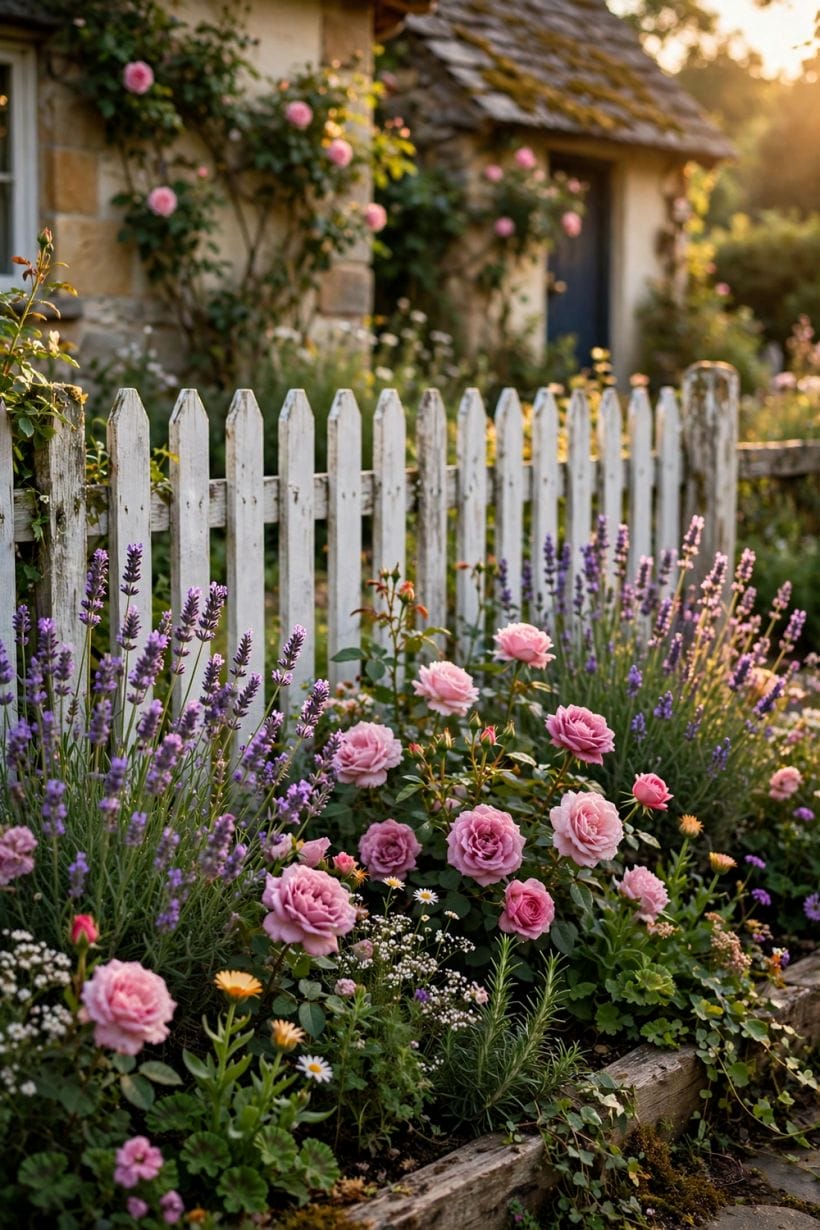
A flower bed is kept, not finished. This final section runs the year’s round — the small, regular acts that separate the beds that improve annually from the beds that merely persist.
66. Walk the beds weekly with basket and eyes
The keeper’s round — deadheading, a weed pulled at sight, a stake before the flop, a note in the diary — is ten minutes that replaces the weekend of rescue.
67. Deadhead for the second flowering
Spent flowers removed promptly return many plants to bloom and keep every bed looking intended rather than concluded.
68. Stake before the storm, invisibly
Supports placed while plants are half-grown disappear into the growth and hold it through the weather that flattens the unstaked.
69. Divide the crowded and move the unhappy in their seasons
Perennials outgrowing their space are lifted, divided and replanted — the bed’s own nursery, renewing its stock for free.
70. Feed and mulch in the bed’s spring renewal
The year’s main act: edges re-cut, mulch renewed, a feed where the soil’s evidence asks, and the winter’s losses surveyed and listed.
71. Leave the autumn bed standing longer than instinct says
Seedheads, grasses and the last flowers are autumn’s garden and winter’s larder for birds; cutting everything to the ground in October empties the year’s final act.
72. Put the bed to bed honestly in winter
What must be cut is cut, what must be protected in your climate is protected by the locally proven method, tender things are lifted or left to their fate by a decision, not by neglect.
73. Photograph every bed in every season
The four-season photograph set is the bed’s truest record — succession gaps, colour clashes and structural holes confess themselves in pictures as they never do to the fond eye.
74. Buy plants with the gaps list, not the catalogue
The discipline that improves beds fastest: no plant is bought without naming the bed, the month and the gap it fills.
75. Share the surplus and accept the gifts with grace
Divisions given away and received are the gardening economy at its best, and a flower bed is its bank.
9. Checks and Mistakes: Before the First Purchase or the First Stone
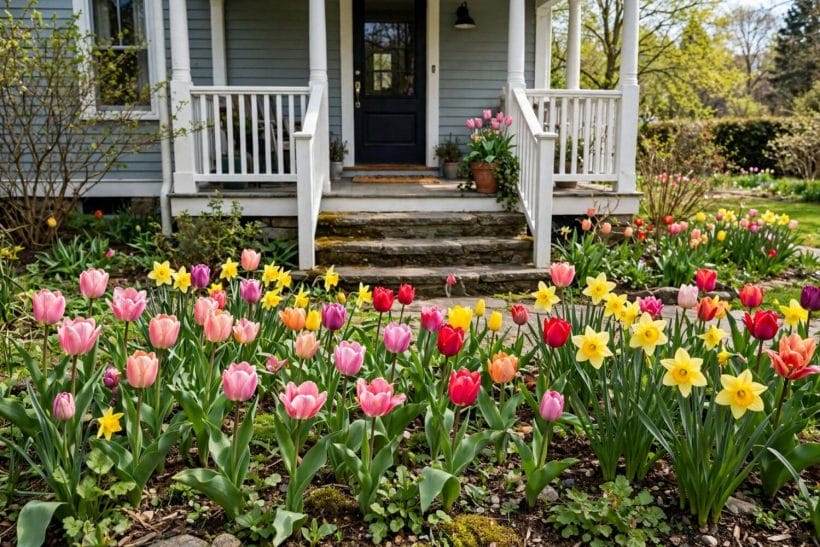
Begin with observation, not purchases: the commonest flower-bed failure is a bed planted before its site was understood — its sun by season, its soil by hand, its water by watching a storm. A season of watching feels slow and is the fastest route there is, because every plant bought afterwards is bought on evidence. Households in a hurry should plant the one bed they understand and watch the rest, rather than planting all of them on hope.
Check plant claims at the local source. Hardiness, mature size, flowering season and appetite vary with place enough that no general page — this one included — can promise them for your garden; your nursery’s proven lists, your neighbours’ surviving plants and your own diary are the authorities. Be especially wary of any source, however beautiful, that promises specific performance with no mention of conditions: plants keep their promises only where their conditions are met.
Resist the single-afternoon transformation. Beds bought entire in one visit peak together, fade together and teach nothing; beds built over two or three seasons, gap by recorded gap, end deeper, longer-flowering and cheaper. The exception proves the rule usefully — annuals and containers can dress a new bed’s first year while its permanent planting is chosen on evidence.
Finally, keep the diary. One notebook — what was planted, where, what flowered when, what failed and the four-season photographs — is worth more to the fifth-year bed than any single plant in it. Flower beds are long projects kept by short memories; the diary is how the garden remembers what its gardener meant to do.
10. Costs and Pulling It Together
The costs of a flower bed are honest ones: soil improvement and mulch as the foundation, plants bought at the size your patience dictates, edging in the material the garden deserves, and the keeper’s regular hours as the standing charge. Against them stands the bed’s arithmetic of return: perennials and shrubs bought once and divided forever, self-seeders and bulbs multiplying in place, and a garden whose value — to the house and to the household — rises with every season the beds are kept.
Pull a bed together in the order this page has kept: shape drawn on the ground, soil understood and fed, layers planted for the whole year’s relay, style chosen as an accent, and keeping entered in the diary as a pleasure rather than a chore. Do that, and the flower bed stops being the garden’s decoration and becomes its calendar — a small landscape that tells the household, month by month, exactly where the year has got to, in flowers.
Final Considerations
Of all the garden’s works, the flower bed is the one that most rewards the virtues gardeners actually have: attention, patience and affection applied in small, regular doses. It does not ask for genius. It asks for a drawn shape, a fed soil, plants chosen for the place they will live in, and a keeper who walks it weekly with a basket and notices things. Gardens remembered across a lifetime are remembered as a succession of such beds, each with its month of glory and its year of quiet work.
So cut the first bed generously, plant it in layers, and start the diary on the same day. Next spring there will be bulbs where there was lawn, next summer a drift where there was a gap in the notes, and in a few years a border that strangers slow down to look at over the fence. That is the whole promise of the flower bed — and unlike most promises in gardening, it reliably keeps itself.


0 Comments