

1. Quality Is Something You Check, Not Something You Are Told
Furniture shopping comes with a lot of claims: solid wood, premium build, designer quality, built to last. The trouble is that those words cost nothing to print, and two pieces carrying the same claims can be very different underneath. Quality in furniture is not a label. It is a set of things you can check with your hands, your eyes and a few minutes of attention before you buy.

This guide is about those checks. It covers frames, joints, cushions, drawers, finishes and the questions worth asking in the shop or before an online order arrives. It gives no verdict on any maker or retailer, because a maker’s name tells you less than the piece in front of you. The patio furniture checks apply the same method outdoors. Two pieces from the same range can differ, and a lesser-known piece can be better built than a famous one.
2. The Frame: Where Quality Lives
Everything else in a piece of furniture hangs off its frame, so the frame is where quality starts. On a sofa or chair, lift one front corner a few inches and watch the rest of the piece: a well-built frame lifts as one rigid unit, while a weak one twists and racks. Sit down firmly and feel for flex in the arms and back. A frame that moves under ordinary sitting will only loosen further with years of use.
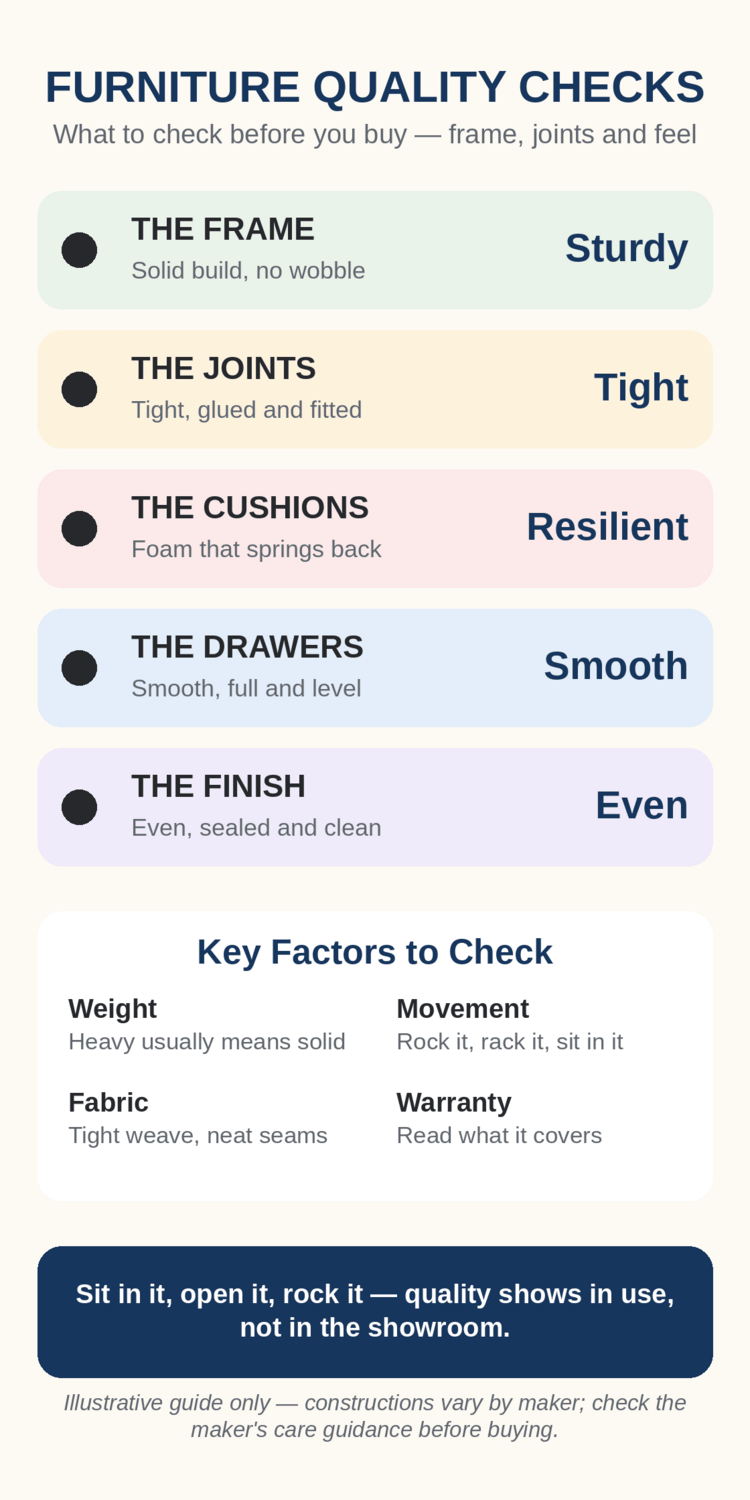
Ask what the frame is made of, and listen for specifics rather than generalities. Kiln-dried hardwood frames are the usual standard for better upholstery, while frames of softwood or engineered board can be perfectly sound in smaller pieces. What matters is that the material suits the piece’s size and job, and that the seller can tell you what it is without vagueness.
Frame materials are worth a direct question, because the same piece can be built on very different frames across its price range. A hardwood frame, a softwood frame and an engineered-board frame can all be sound, but they suit different sizes and jobs, and the price should reflect the difference. If a seller cannot tell you what a frame is made of, treat that as information in itself: a maker proud of its frames says so plainly.
3. Joints: Tight, Glued and Fitted
Joints are where cheap construction shows first. Look underneath and behind a piece, where makers hide their shortcuts. Dowelled, screwed-and-glued and traditional interlocking joints all hold well when they are tight and properly glued. What fails is a joint held by staples alone, or by a dab of glue with no mechanical fixing at all.

On wooden furniture, check that joints sit flush with no visible gaps, and that glue has not squeezed out in blobs along the seam. On upholstered pieces, feel along the base and arms for the frame’s shape: hard edges and regular corners suggest a frame that was made square, while soft, uneven lumps can mean padding is hiding a rough frame.
Glue quality is invisible but decisive. A joint glued with a proper wood adhesive and held tight while it cures will outlast the furniture around it, while a joint held by staples alone loosens with every season’s movement. You cannot see glue quality directly, but you can feel its results: a joint that is tight, flush and silent under load is a joint that was made properly.
4. Cushions: Foam, Fill and Recovery
Cushions decide how a sofa feels in year three, not just on the day it arrives. Press a cushion firmly and watch how it recovers: good foam springs back promptly and evenly, while tired or low-grade foam recovers slowly or keeps a dent. Unzip a cushion cover if you can and look at what is inside — a wrapped foam core with a fibre or feather layer is a common better-quality construction.
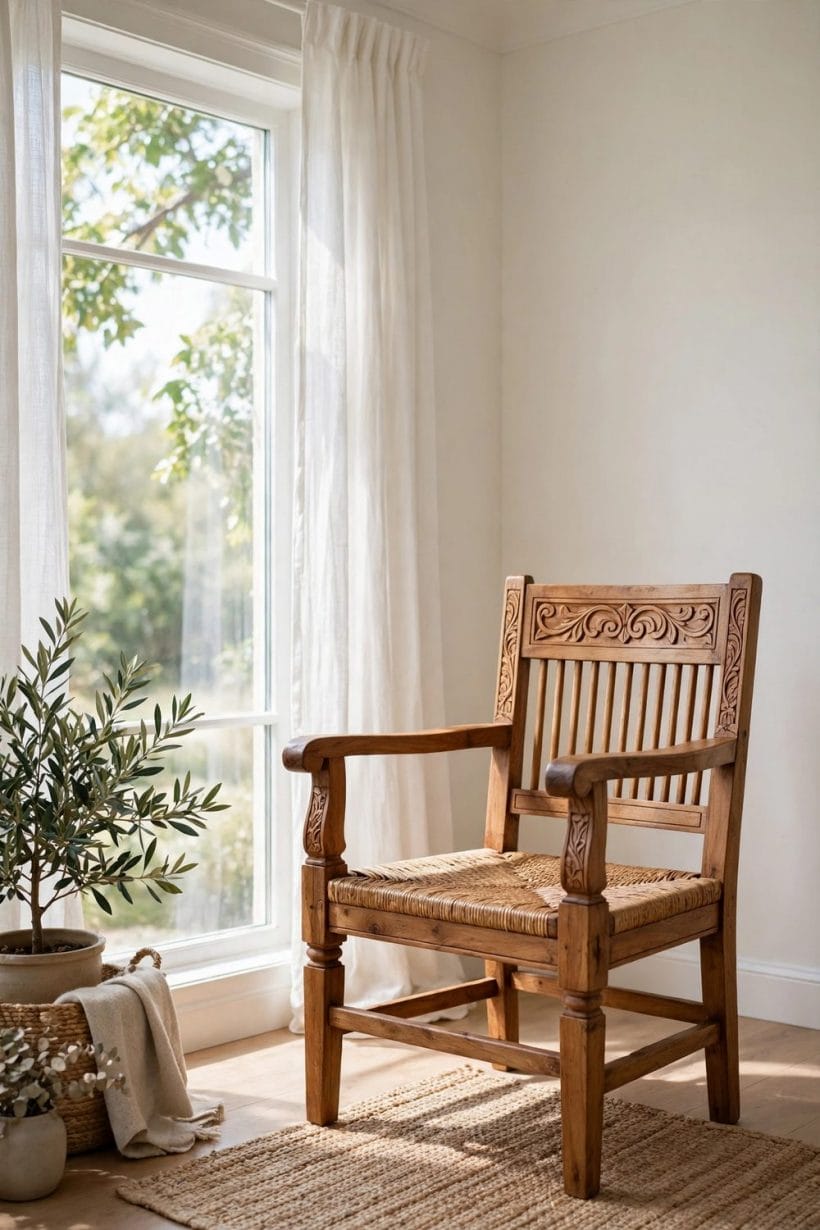
Ask about cushion density in general terms, but treat any single number with caution: density alone does not tell you how a cushion feels, and makers measure it differently. The sit test matters more. Sit for several minutes, shift position, and notice whether the cushion supports you evenly or lets you sink through to the frame beneath.
Cushion covers deserve the same attention as cushion cores. A cover that removes easily, washes to the maker’s instructions and refits without a struggle will keep a sofa looking good for years, while a cover that shrinks or distorts after one wash ruins the piece it was meant to protect. Ask about washing before you buy, and test a zip or fastening in the shop if you can.
5. Drawers, Doors and Moving Parts
Moving parts are the honesty test of case furniture. A good drawer slides fully open and closed on its runners without sticking, sagging or rattling, and it stays level when open. A good door closes flush against its frame without needing a push, and its hinges hold it square. Test every drawer and door in the shop, more than once.
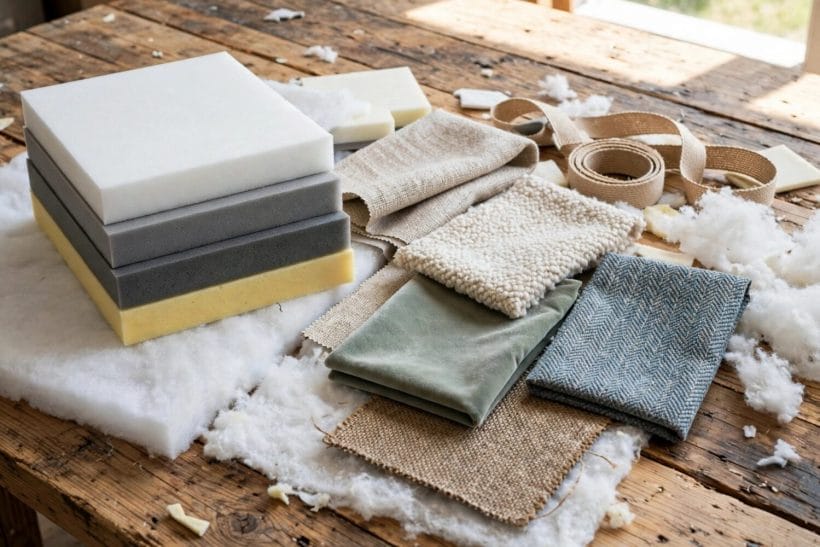
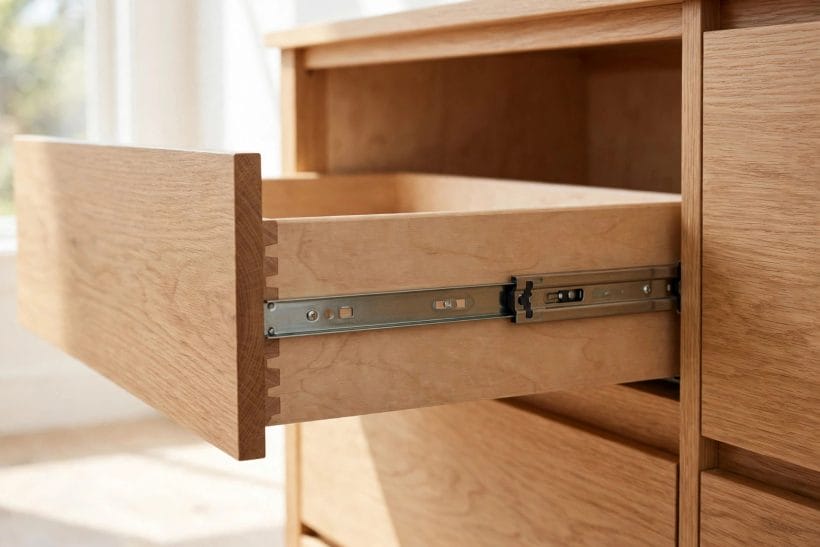
Look at the drawer itself, not just its front. Dovetailed or well-fitted drawer boxes with solid sides are a good sign; thin board held by a few staples is not. Check that drawer bottoms are properly housed in grooves rather than simply tacked underneath, where a heavy load can push them out.
Storage furniture deserves the same checks as seating, because a wardrobe or sideboard that fails does so slowly and expensively. Open every door and drawer, load a shelf with something heavy, and watch for sagging, sticking or tipping. A piece that handles a realistic load in the shop will handle daily life at home, while one that struggles empty will only get worse once it is filled.
6. Finishes: Even, Sealed and Clean
A finish should be even across the whole piece, including the parts you do not see first. Run a hand over surfaces and edges: a good finish feels smooth with no rough patches, drips or sharp edges, and it seals the wood so that a damp cloth does not raise the grain. On stained pieces, check that the colour is consistent from panel to panel rather than blotchy.
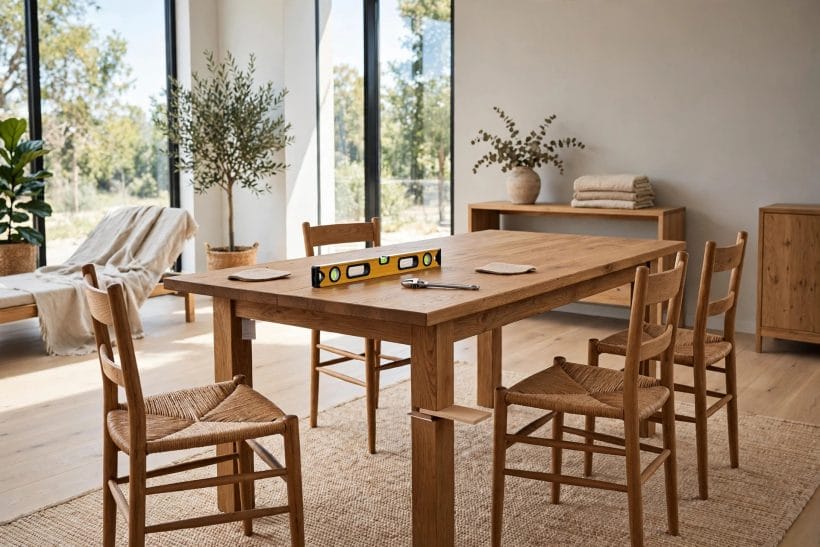
Edges and undersides tell the same story as faces. A piece that is finished underneath and behind has usually been made by someone who expected it to be looked at properly. One that is raw, rough or splintery in hidden places has usually been made to a price, and the visible parts may be the only parts that received attention.
Edges are where finishes fail first, because they take the knocks of daily use. Run a finger along every edge of a piece — table edges, drawer fronts, shelf lips — and feel for roughness, chipping or bare wood showing through. A finish that is even on edges as well as faces has been applied by someone who expected the piece to be handled, not merely looked at.
7. Fabric and Upholstery
Upholstery fabric should feel tight and even, with a weave that does not shift when you tug it gently on the bias. Check seams for straight, even stitching with no puckering, and look at pattern matching on cushions and arms: a maker who matches patterns across seams has taken time that a cheaper process skips. Removable covers are a practical advantage, but only if they are genuinely washable to the maker’s instructions and easy to refit.
Ask how the fabric is expected to wear in your household’s conditions: pets, sunlight, children and heavy daily use all change the answer. A fabric that suits a rarely used formal room may not suit a family sofa, and an honest seller will say so rather than selling the same fabric for every room. Luxury master suite ideas show how fabric choices play out in a bedroom.
8. Weight, Wobble and the Rock Test
Weight is a rough but useful signal. A solid, well-built piece is usually heavier than a hollow or lightly framed equivalent, because real timber, dense board and proper fixings weigh something. Pick up a chair, rock a table gently from corner to corner, and sit on a sofa’s edge: wobble, creaking and flex under ordinary use are all warnings, whatever the price tag says.

The same test applies to beds, wardrobes and shelving. A wardrobe should stand square without leaning, a bed should not groan when you sit on its edge, and a bookshelf should not bow under its own shelves. Reach-in closet ideas cover the storage side of the same room. These are not demanding tests. They are the ordinary movements furniture meets every day, and a piece that fails them new will not improve with age.
The rock test works best on a hard, flat floor, where a wobbling piece cannot hide behind an uneven surface. Ask to move the piece to a clear area if the showroom floor is carpeted, and rock it from corner to corner as well as from side to side. A piece that rocks on a flat floor has a frame or leg problem that will not improve at home.
9. Warranties, Returns and Written Answers
A warranty is only as good as its wording. Read what it actually covers — frame, springs, cushions and fabric are often covered for different periods — and what it excludes. Ask whether the warranty is handled by the seller or the maker, and how a claim works in practice: who collects the piece, who pays for transport, and how long repairs take.

For online orders, the returns policy matters as much as the warranty. Check the return window, whether return transport is free, and what condition the piece must be in. Get important answers in writing — frame material, cushion construction, warranty terms — before ordering, and keep them with your receipt. If a seller cannot answer a basic construction question, that silence is itself an answer.
10. Putting It Together in the Shop
Good furniture buying is a short routine: lift and rock the piece, open every drawer and door, sit for several minutes, look underneath and behind, check seams and finishes, and ask about frame, joints and warranty in writing. It takes ten minutes and it catches most of what matters. Price still matters, but it matters after these checks, not instead of them. Coffee table pictures show how one well-chosen piece anchors a living room.

The best piece in a shop is rarely the one with the grandest claims. It is the one that feels solid when you lift it, sits square when you rock it, opens smoothly when you pull it, and comes with answers you can keep. Buy that piece, from whichever maker or shop offers it, and the name on the label will matter far less than the furniture itself. Fireplace wall designs arrange living rooms around a similar idea of honest materials.
Bring a short checklist to the shop and use it on every piece, however confident you feel. Memory is unreliable in a showroom full of attractive furniture, and a checklist keeps the routine honest: frame, joints, cushions, drawers, finish, fabric, warranty, returns. Ten minutes with a list catches more than an hour of admiring, and it leaves you with notes to compare when you get home.
Final Considerations
Quality in furniture is checkable, and the checks are simple. Frames that lift as one piece, joints that sit tight, cushions that recover, drawers that glide, finishes that feel even, and warranties you have read rather than assumed — together they tell you more than any brand story. Brown living room ideas let one warm material lead in the same way. Use them every time, and let the piece itself make its case.




0 Comments