

Swapping a heater from natural gas to propane is not a weekend tweak. This guide explains when conversion is even possible, why many ventless heaters must never be converted, and the professional checks that have to happen before any converted heater is used.

1. At a Glance: The Safety-First Summary
Read this section twice, because it contains the whole message. A gas heater is built, tested and certified for one specific fuel. Changing that fuel changes how the appliance burns, how much air it needs and what comes out of it. The only safe route is the one the manufacturer designed, documented and approved for your exact model, carried out or verified by a licensed gas professional.
| Question | Key point |
|---|---|
| Can any natural gas heater run on propane? | No. Conversion is only possible where the manufacturer offers an approved conversion kit for that exact model. Many heaters, including many ventless models, are not convertible at all. |
| Why does the fuel matter so much? | Propane and natural gas burn differently and are supplied at different pressures. An appliance set up for one fuel and fed the other can produce dangerous flames, soot and carbon monoxide. |
| Who should do the work? | A licensed gas fitter. Gas supply, regulators, connections and combustion checks are professional work, and in many places the law and your insurance require it. |
| What checks must follow any conversion? | Leak testing of every disturbed connection, correct supply pressure confirmed, flame and combustion checked, and carbon-monoxide safety verified, including a working CO alarm in the space. |
| What if no approved kit exists for my model? | Then the heater must not be converted. The safe options are to keep it on its original fuel or replace it with a heater built and certified for propane. |

The decision path in one picture: approved kit, licensed fitter, full safety checks — or no conversion.
Everything after this section explains those five answers in more depth: how to find out whether your model is convertible, what a genuine kit is and is not, the risks that make improvisation so dangerous, and how to work with a professional from first phone call to final check. If you take one habit from this page, let it be the one our small home interior design ideas guide repeats for every trade: the qualified person’s judgement outranks any internet summary, including this one.
2. First Question: Is Your Heater Convertible at All?
Every winter, search boxes fill with variations of the same hope: convert natural gas ventless heater to propane, quickly, cheaply, with parts from a marketplace listing. Start further back. Find the heater’s rating plate or manual and identify the exact model and the fuel it was certified for. Then check the manufacturer’s own documentation for that model: if the maker does not list a conversion kit for it, the answer is no, and no forum thread, video or third-party part changes that answer.
Ventless heaters deserve special honesty here. A ventless, or vent-free, heater releases its combustion products into the room it heats, relying on precise fuel metering and safety sensors to keep the air safe. That precision is exactly why manufacturers of many ventless models state plainly that the units are not convertible: the burner, the metering and the oxygen-safety system were engineered and certified as one fixed package for one fuel. Feeding a ventless heater the wrong fuel is not a grey area; it is the scenario its certification exists to prevent.
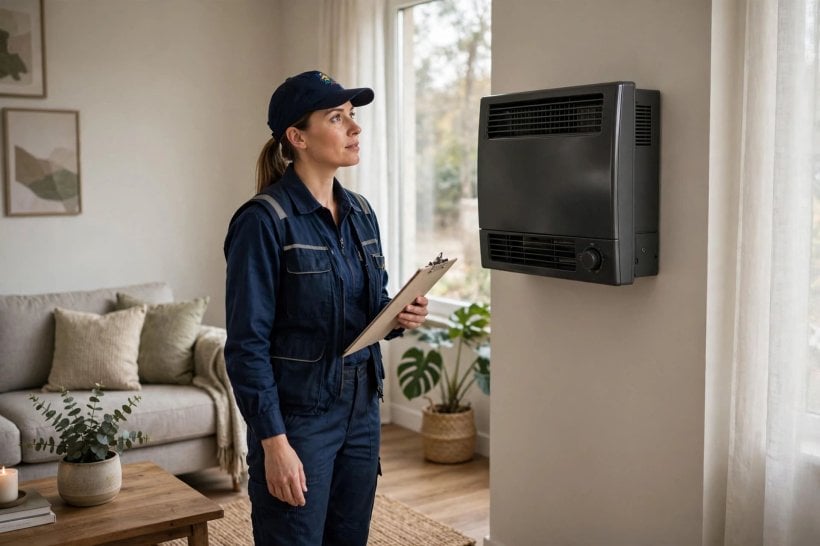
If the documentation is missing, contact the manufacturer with the model and serial details before spending anything. Makers can confirm whether a kit was ever offered, whether it is still available, and whether your unit’s age or condition rules conversion out anyway. That single phone call is the cheapest safety device in this entire guide.
3. What a Manufacturer-Approved Kit Actually Is
A genuine conversion kit is not a bag of generic fittings. It is a model-specific package designed and tested by the heater’s maker, containing the components their engineers determined the appliance needs to burn the other fuel as safely as it burned the first, together with the maker’s own instructions and a new rating label recording the change. Anything that cannot name the exact models it is approved for is not a conversion kit; it is a collection of parts and a risk.
The label matters more than it looks. After an approved conversion, the appliance’s documentation should show which fuel it now uses, so that any future owner, tenant, inspector or service technician treats it correctly. A heater converted without its paperwork updated is a hazard passed silently to the next person, which is one reason professionals insist on completing the documentation as part of the job.

Be wary of listings that use words like universal, compatible or fits-most. Gas appliances do not work on fits-most. Also be wary of kits for a similar model from the same brand: similar is not identical, and manufacturers approve kits by exact model for a reason. The verification habit here is the same one we recommend for any safety-adjacent purchase in our gift shop interior design ideas guide: buy the documented thing from a traceable seller, or do not buy it at all.
4. Why the Two Fuels Are Not Interchangeable
Natural gas and propane are cousins, not twins. They differ in energy content per volume, in the pressure at which they are delivered to the appliance, and in how they behave when they leak: one rises and disperses differently from the other, and propane systems involve storage, regulators and ventilation considerations that a natural gas line never raises. A heater’s burner and controls are set up around one fuel’s characteristics in fine detail.
When the wrong fuel reaches a burner set for the other, combustion goes wrong in predictable directions: flames that lift, yellow and soot; unburned fuel where it should never collect; and, most seriously, carbon monoxide produced in quantities the room was never meant to handle. None of these failures announces itself politely. Carbon monoxide in particular has no smell and no colour, which is why this guide treats alarms and professional combustion checks as part of the appliance, not accessories.

This is also why this article deliberately contains no step-by-step conversion instructions. The safe steps are the manufacturer’s, written for one model, followed by a licensed fitter with the instruments to verify the result. A general guide that sketched the mechanical process would invite exactly the improvisation that makes conversions dangerous, so you will find decision guidance here, and the spanners stay where they belong.
5. The Risks, Stated Plainly
Fire and explosion sit at the top of the list, because gas leaks plus ignition sources are unforgiving, and an incorrectly converted appliance can leak at connections, at controls or through a flame that does not sit where it should. Carbon monoxide poisoning follows close behind: it can build quietly in a heated, closed-up room, and its early symptoms masquerade as tiredness or flu. Ventless appliances raise the stakes on both counts, because their exhaust goes into the room by design and their safety margin depends entirely on correct combustion.
Then come the quieter risks that still cost real money. Sooting from wrong-fuel combustion blackens walls, ceilings and the appliance itself, and can ruin soft furnishings. Insurance cover can be voided by an unapproved modification to a gas appliance, which means a fire that would have been a claim becomes a total loss. Warranties end at the same moment. In many jurisdictions, unlicensed gas work is also an offence, and a heater with an undocumented fuel change can complicate a house sale when an inspector asks reasonable questions.

None of this is written to frighten you away from propane heating itself, which is a normal, well-established fuel used safely in countless homes, including off-grid ones like those in our tiny houses for sale in Charlotte buyer’s guide. The risks belong to mismatched fuel and appliance, and to work done outside the manufacturer’s and the profession’s checks. Keep the pairing correct and the risks fall to the ordinary, managed level of any gas appliance.
6. Why a Licensed Gas Fitter Is Not Optional
A licensed gas fitter brings three things a careful homeowner cannot: legal authority to do the work, training in how gas systems fail, and instruments that measure what eyes cannot. Supply pressure, leak tightness and combustion quality are all measurable, and a professional’s job is to measure them, not to glance at a flame and pronounce it fine. Where licensing exists, it also creates accountability and a paper trail that protects you with insurers and future buyers.
Choosing the fitter deserves the same care as choosing the kit. Ask whether they have converted your heater’s brand before, whether they will supply or verify the manufacturer’s kit, and what checks they run before leaving. A good fitter will welcome those questions and will refuse, on the spot, to convert a model with no approved kit. That refusal is a credential in itself; the fitter who will convert anything is the one to walk away from.
Cost conversations belong here too, handled honestly: professional conversion with an approved kit, full testing and documentation costs more than a bag of parts, and less than the alternatives it prevents. Get the scope in writing before work starts, including what happens if the fitter finds the supply, the flueing arrangement or the appliance itself unsuitable. Homes that budget heating alongside other systems, like the readers of our guide to solar panels for a tiny house, know the pattern: the professional line in the budget is the one that protects all the others.
7. The Checks That Must Follow Any Conversion
An approved conversion is not finished when the heater lights. It is finished when a professional has verified the whole system. Leak testing comes first: every connection that was disturbed, and the supply run serving the appliance, must be proven tight by test, not by hope. Supply pressure must be confirmed against what the converted appliance now requires, since the two fuels arrive at different pressures and the regulation equipment differs accordingly.
Combustion checks follow. The fitter verifies that the flame is stable and burning as the manufacturer specifies, that safety controls and shut-offs operate, and that the room’s ventilation provisions match the appliance’s needs. For a ventless heater, the oxygen-safety system and the room-size suitability the maker specifies are part of this verification, because the room itself is part of the appliance’s design.

Finally, carbon-monoxide protection: a working CO alarm in the heated space, tested, in date, and positioned as its maker directs, plus a clear explanation from the fitter of the symptoms that should send everyone outside to fresh air and a phone call. Ask for the completed documentation before final payment: what was fitted, what was measured, and the updated fuel information for the appliance. File it with your home records, the same habit our tiny houses for sale in Nashville guide recommends for every major appliance.
8. Propane Supply: Tanks, Regulators and Placement
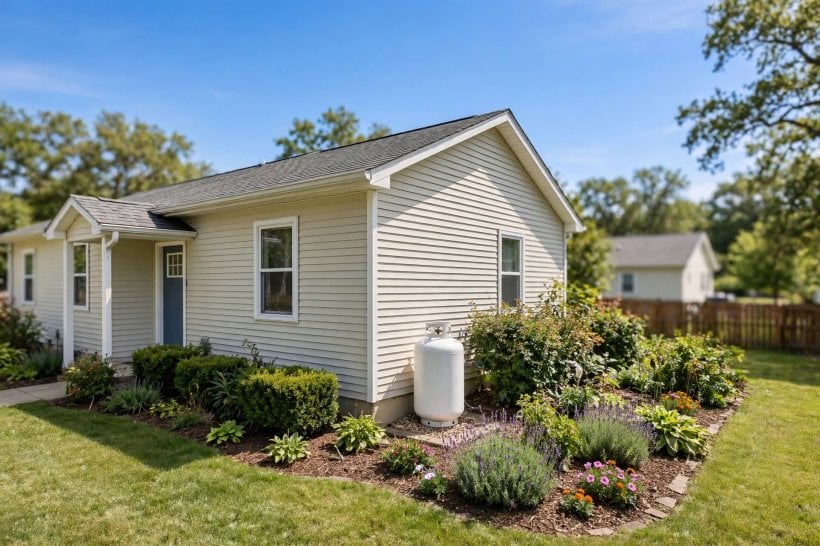
Converting the heater is only half the project; the propane has to come from somewhere, and supply arrangements are regulated for good reason. Cylinder sizes, tank placement, distances from openings and ignition sources, and the regulator setup are all governed by rules that vary by place, and all of them belong in the fitter’s scope, not in a homeowner’s guesswork. If your property has never had propane, expect the supply design to be a project in its own right.

Think about the practical rhythm as well as the hardware. Cylinders need exchanging or refilling; a bulk tank needs delivery access in all weathers. A heater that is cheap to convert but miserable to keep fed will not feel like a bargain in February. Talk through consumption honestly with your supplier and fitter: how the heater will be used, how large the space is, and what running out would mean for the household, then size the supply to the real pattern rather than the optimistic one. Rural and off-grid homes in our tiny house for sale in Dallas guide plan fuel this way as a matter of survival, and the discipline transfers to any address.
9. When Replacement Is the Smarter Answer
Sometimes the verified answer is that your heater should not be converted at all: no approved kit exists, the unit is old or corroded, its safety systems are dated, or the combined cost of kit, labour and supply work approaches the cost of a new appliance. In those cases, a heater built and certified for propane from the factory is not the expensive option; it is the option that arrives with its combustion, controls and documentation already correct as one tested package.
Replacement also lets you size the heater properly for the room, which older installations often are not. An oversized heater short-cycles and wastes fuel; an undersized one runs flat out and still leaves the room cold, tempting occupants toward exactly the kind of improvised supplementary heating that causes accidents. A fitter quoting for replacement should assess the space and say plainly what size and type suits it, and whether ventless is appropriate for that room at all.
Disposal of the old unit belongs in this conversation too. A gas appliance should be disconnected by a professional and disposed of through the routes your area provides for such equipment, not sold on casually to someone who may repeat the whole conversion gamble unknowingly. If it is passed on, its fuel type and condition go with it in writing.
10. Questions to Ask Before Anyone Touches the Heater
Ask the manufacturer: was a conversion kit ever approved for this exact model, is it still available, and are there conditions, such as age or a required inspection, attached to using it? Ask the fitter: are you licensed for this work here, will you follow the kit maker’s instructions in full, what leak, pressure and combustion checks will you run, and what documentation will I receive? Ask your insurer, before work starts, whether an approved, professionally documented conversion affects your cover in any way. Ask your local authority or gas supplier if any permits or notifications apply to a new propane supply.
Write the answers down. Verbal reassurance evaporates; a short written scope, a kit part reference tied to your model, and a completed test record endure, and they are what an inspector, insurer or buyer will ask for later. If any answer comes back vague, treat the vagueness as the answer and pause the project. Heating is essential, but it is never so urgent that it must be done unsafely this week rather than properly next week.
The households that get this right share a pattern we see across our dining room interior design ideas and every other guide on this site: they slow down at the decision point, verify with the source, and let qualified people do the parts that can hurt someone.
Final Considerations
To convert natural gas ventless heater to propane safely, three conditions must all hold at once: the manufacturer approves a kit for your exact model, a licensed gas fitter does or verifies the work, and leak, pressure, combustion and carbon-monoxide checks all pass afterwards. If any one of those is missing, and for very many ventless models the first one is missing by design, the correct decision is not to convert.
That answer may disappoint, but it protects everything the heater was bought for: a warm room, a safe household, and peace of mind while both happen. Choose the factory-built propane appliance or keep the fuel the heater was born with, keep a working CO alarm in the space either way, and let the professionals carry the risk they are trained and licensed to carry.




0 Comments