

A green bedroom can feel calm without feeling cold, and generous without needing a big footprint. This guide gathers seventy-five ideas across colour, layout, storage and restful styling, then narrows them into ten practical sections you can actually use. Whether your room is a compact loft, a spare corner or a full primary suite, the same principles apply: choose a green you can live with after dark, layer texture before pattern, and let every storage piece earn its place quietly and well.
1. At a Glance: The Essentials Before You Start
Start with the whole room in mind rather than a single paint swatch. The most restful schemes balance one dominant green with warm neutrals, honest natural materials and low, uncluttered lines. Use the table below as a quick reference while you read, and return to it when you are choosing paint, furniture or bedding, because each decision is easier when the others are already settled.
| Aspect | What Works | Why It Helps |
|---|---|---|
| Colour palette | Sage, eucalyptus, olive or deep forest, softened with cream and warm white | Muted greens read as restful in both daylight and lamplight |
| Layout | The bed as the anchor, clear walking paths on both sides where space allows | A settled layout makes even a small room feel deliberate |
| Storage | Closed, low and built in wherever possible | Hidden storage keeps the calm surface uninterrupted |
| Lighting | Warm, dimmable and layered at several heights | Soft light flatters green tones and supports winding down |
| Textiles | Linen, washed cotton, wool and a single heavier throw | Natural fibres deepen colour without adding visual noise |
| Plants | One generous plant or a small, edited group | Living green bridges painted colour and daylight |
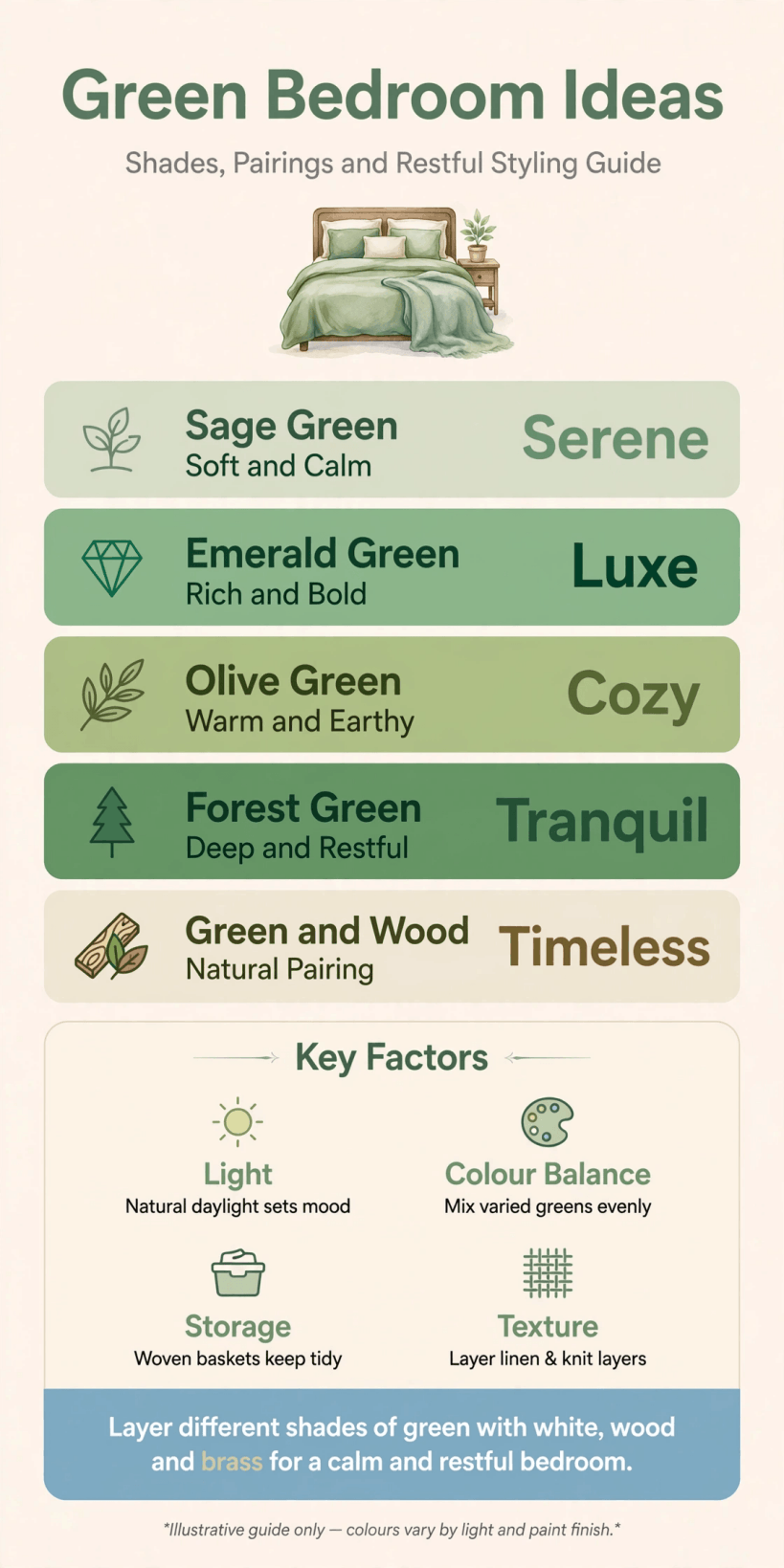
The essentials at a glance: palette, layout, storage, light and texture working together before any single purchase is made.
Notice how little of this depends on size. A large suite and a loft bed follow the same order of decisions: colour first, then layout, then storage, then light, then the soft layers that make the room personal. Readers planning compact spaces will find the same thinking applied at a smaller scale in our guide to tiny house bedroom ideas, where every centimetre has to justify itself. Keep that discipline and your scheme will hold together, whatever the room’s dimensions.
2. Choosing Greens That Stay Restful After Dark
Colour is the decision everything else follows, so test it properly. Paint large swatches on at least two walls and live with them through a full day, because a sage that looks gentle at noon can turn grey at dusk, and a rich forest tone can feel wonderfully cocooning at night but heavy on a north-facing morning. As a rule, the smaller or darker the room, the softer the green on the largest surfaces should be; save the deepest tones for a headboard wall, alcoves, cabinetry or bedding, where they add depth without closing the room in.
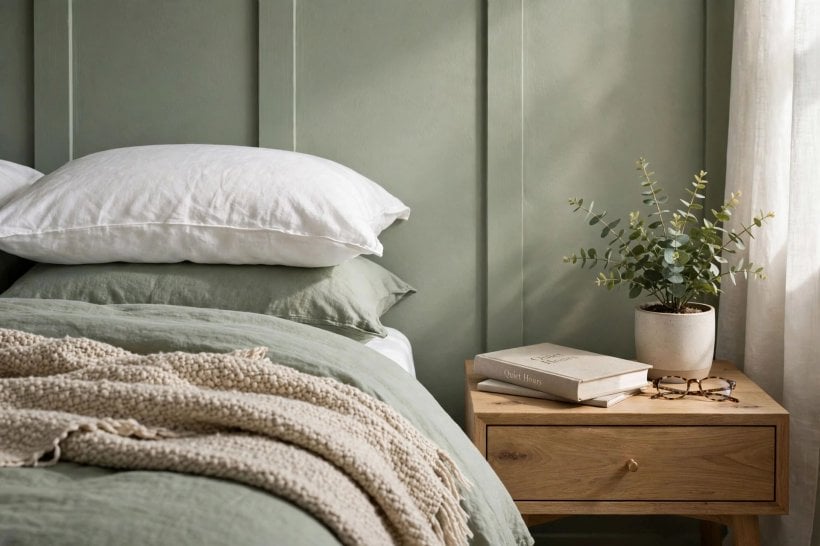
Balance is easier when you limit the palette to three greens at most: one main, one deeper accent and one living green from plants. Warm the scheme with cream, putty or pale oak rather than bright white, which can make green look stark. The same restraint works in miniature, as shown in our look at tiny house bedroom decor, where a short palette keeps a tiny sleeping space feeling composed rather than busy. If you rent, lean on paintable furniture, curtains and bedding to carry the colour instead of the walls.
Do not forget the woodwork and ceiling while you deliberate. Skirting, doors and frames painted in a soft warm white keep the green feeling tailored, while carrying the wall colour over the woodwork in a deeper gloss creates a cocooning, contemporary wrap that suits bedrooms used mainly after dark. Sample both approaches on one corner of the room, live with them for a weekend, and trust the version that makes you exhale when you walk in at night.
3. Layouts That Put Rest First
Arrange the room around sleep, not around the door. Centre the bed on the longest uninterrupted wall when you can, leave a comfortable path on the side used most, and keep the view from the pillows as calm as you can make it: a plant, a picture ledge or a softly curtained window rather than a wardrobe spilling its contents. In narrow rooms, pushing the bed lengthwise against one wall and treating the opposite side as a low storage run often works better than squeezing around three sides of a centred bed.
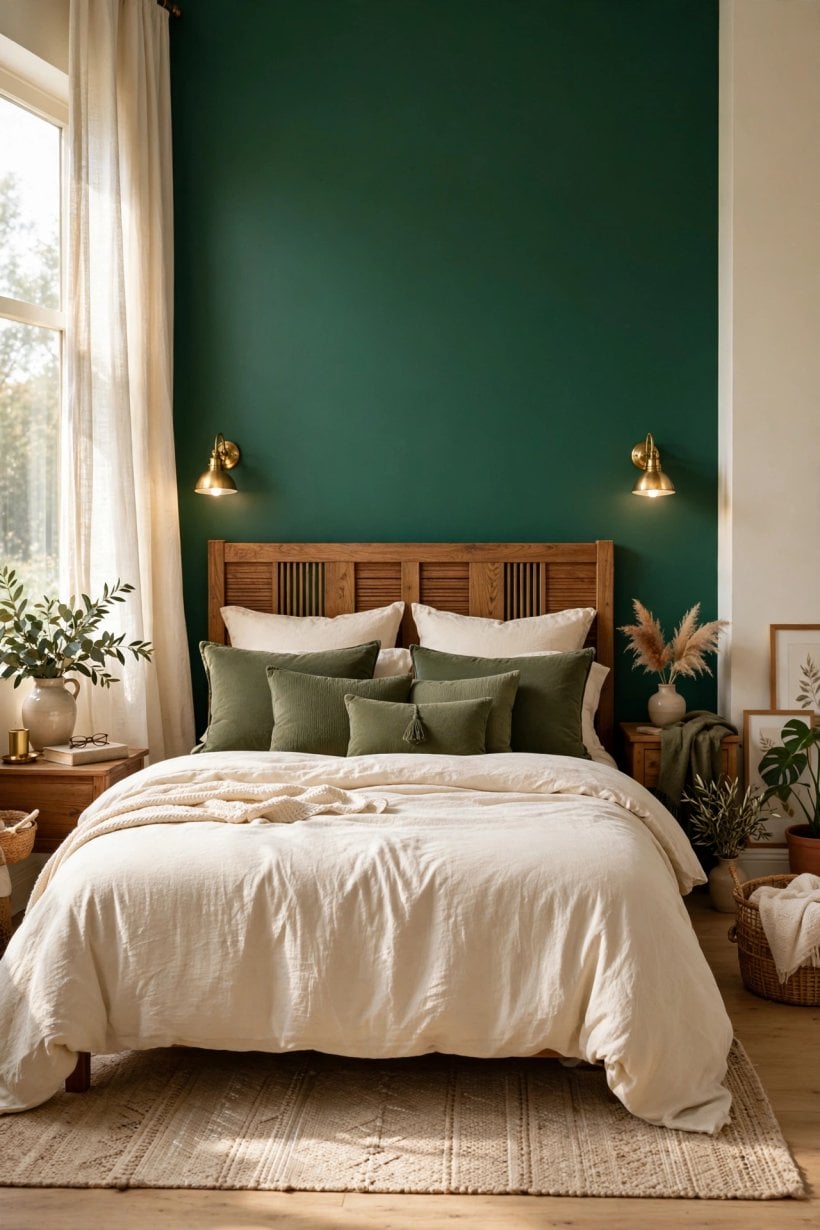
Think in zones even when the room is small. A reading chair with a small lamp in one corner, a hook rail rather than a chair buried in clothes, and a single surface kept clear beside the bed all signal that the room has one job. Loft and mezzanine sleepers make the point well; our notes on bedroom interior design for tiny houses show how a raised bed, a rail and two storage boxes can still feel like a retreat. Whatever the layout, measure twice: door swings, drawer fronts and radiator clearance are the details that decide whether a plan survives contact with real life.
4. Storage That Disappears Into the Scheme
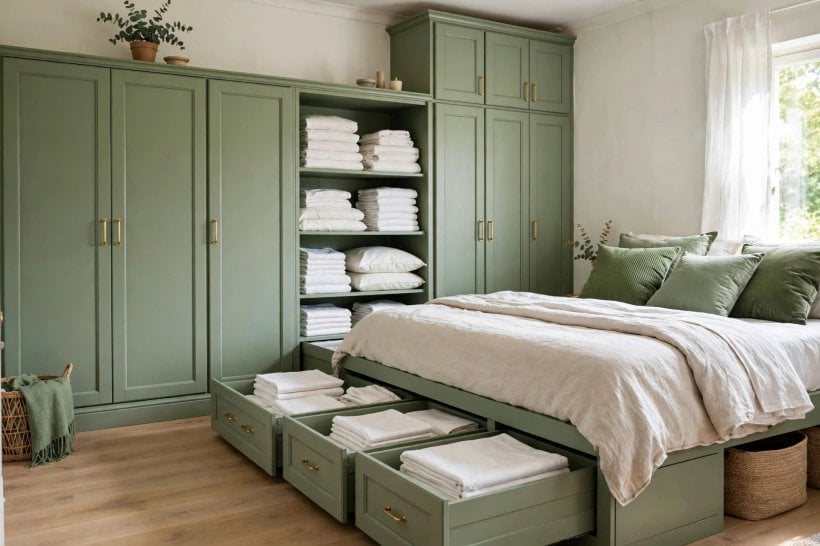
Restful rooms hide their workings. Prefer closed storage over open shelves in the sleeping zone, and paint built-in cupboards the same green as the walls so they read as architecture rather than furniture competing for attention. Under-bed drawers beat loose boxes, a lidded bench at the foot of the bed swallows spare blankets, and a tall, narrow wardrobe usually serves better than a wide, shallow one because it leaves a longer run of clear wall for the bed.
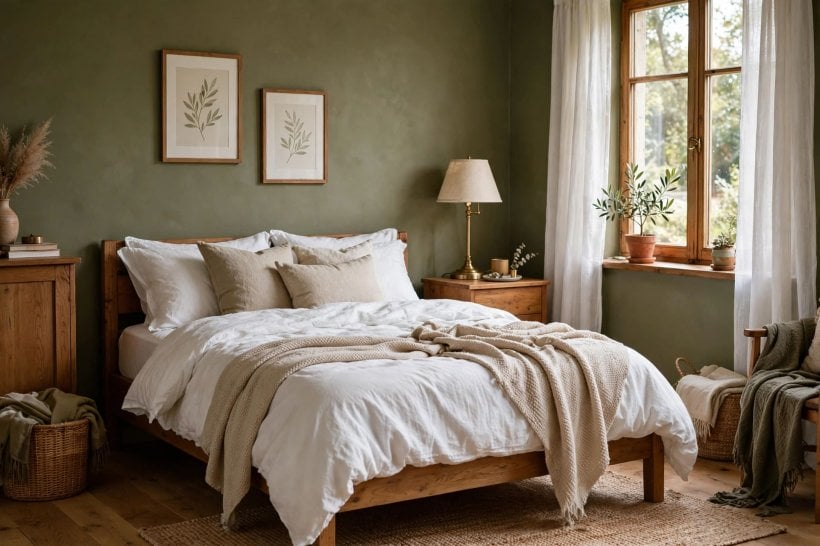
Edit before you buy. An honest audit of what actually lives in the room usually frees a drawer or two, and out-of-season pieces can move to a hallway cupboard or a labelled box elsewhere. The barn-style homes in our tour of a tiny barn house interior make a good case study: storage is built into stairs, benches and eaves, so the rooms themselves stay spare. Copy that instinct at any scale, and choose handles and hinges you enjoy touching, because storage you like using is storage that stays tidy.
5. Lighting That Flatters Green Tones
Green is unusually sensitive to light temperature. Warm bulbs bring out its yellow undertones and make sage and olive feel sunlit in the evening, while cool bulbs can push the same paint towards blue and make a room feel chilly. Build light in layers: a soft overhead source you rarely use at full strength, bedside lamps at shoulder height for reading, and one low, indirect source such as a shaded floor lamp or a candle-effect light for the last hour of the day. Dimming, even with simple plug-in dimmers, does more for atmosphere than any single statement fitting.
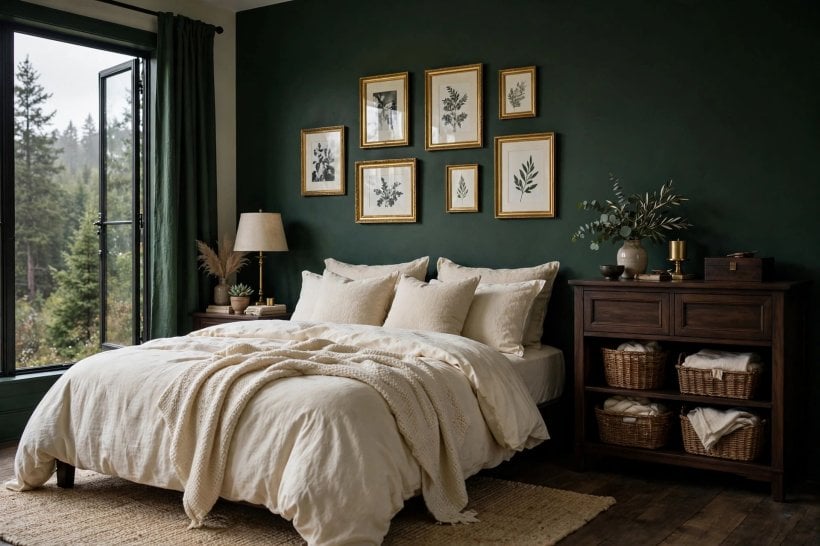
Daylight deserves the same care. Sheer curtains in a warm white keep privacy without stealing light, and a mirror placed to catch a window, not the bed, lifts the whole scheme. If the room doubles as a workspace, borrow the zoning ideas in our guide to tiny house living room ideas: one bright, focused task light that switches off cleanly at night keeps work light from flattening the evening mood. Test paint and fabric under the bulbs you actually own before committing, because the lamp, not the swatch card, has the final say.
6. Textiles and Layering for a Softer Room
Once the bones are right, textiles do the persuading. Bedding is the largest soft surface in the room, so choose it with the wall colour in front of you: washed linen or cotton in cream, pale sage or a fine stripe keeps a deep green wall feeling fresh, while the reverse pairing, white walls with a forest or moss duvet set, gives renters and cautious decorators the same effect in a removable form. Layer in a deliberate order: smooth sheets, a mid-weight cover, one heavier throw folded at the foot, and cushions kept to two or three so the bed still looks sleepable rather than styled for a photograph.
Curtains deserve equal weight in the plan. Full-length curtains in a natural fibre soften hard window lines and, in a slightly deeper green than the walls, make the room feel tailored; in cream, they lift it. Rugs follow the same logic, anchoring the bed and giving bare feet a warm landing. For bolder pattern confidence, look at how a colorful tiny house interior mixes strong shades through textiles first, because fabric is the cheapest place to be brave and the easiest to change when a colour stops pleasing you.
7. Small Rooms, Lofts and Awkward Shapes
Compact bedrooms reward editing more than ingenuity. Choose the palest green that still reads as green, keep furniture legs visible so the floor shows through, and let one wall, ideally the one behind the bed, carry any deeper tone. Wall-mounted lights free the bedside surface, a single floating shelf replaces a bulky table, and a mirror-fronted or wall-hung cupboard keeps storage off the floor entirely. In a loft, a low platform bed with drawers beneath and a rail in a matching green turns a leftover level into a deliberate sleeping nook.
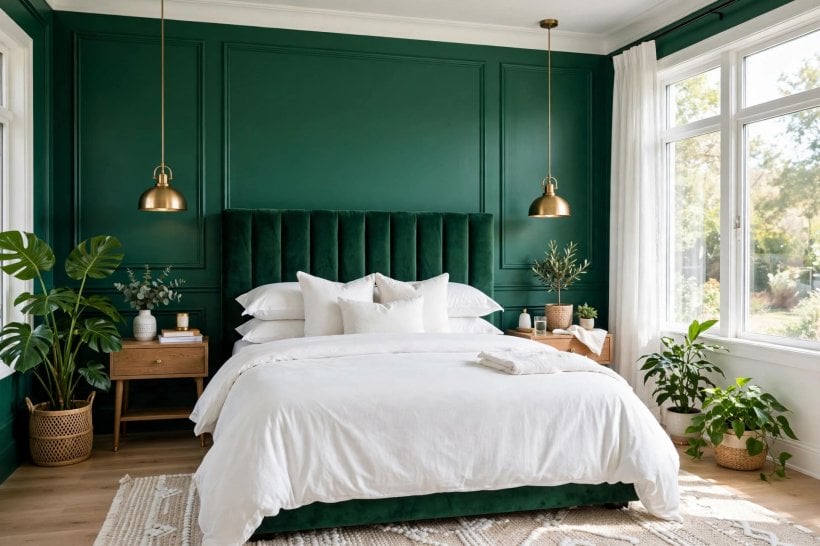
Awkward shapes need honesty rather than disguise. An alcove too small for a wardrobe makes a fine dressing corner with a curtain; a sloping ceiling suits a low bed and floor cushions better than tall furniture fighting the angle. The planning mindset behind how to build your own tiny house applies indoors too: measure the real space, design for the life actually lived in it, and let multifunctional pieces, a bench that stores, a desk that folds, replace single-purpose furniture wherever they honestly can.
8. Finishing Touches: Art, Hardware and Scent
Details decide whether a scheme feels finished or merely painted. Swap standard handles for aged brass, blackened metal or warm wood that echoes your furniture, and repeat that finish in lamp bases and picture frames so the room reads as one thought. Art works best hung slightly lower than instinct suggests, at the eye level of someone sitting up in bed, and botanical prints, landscapes or quiet abstracts in thin frames suit the palette without competing with it. Keep surfaces to a short edit: a book, a small dish for jewellery, one plant, and space left deliberately empty.
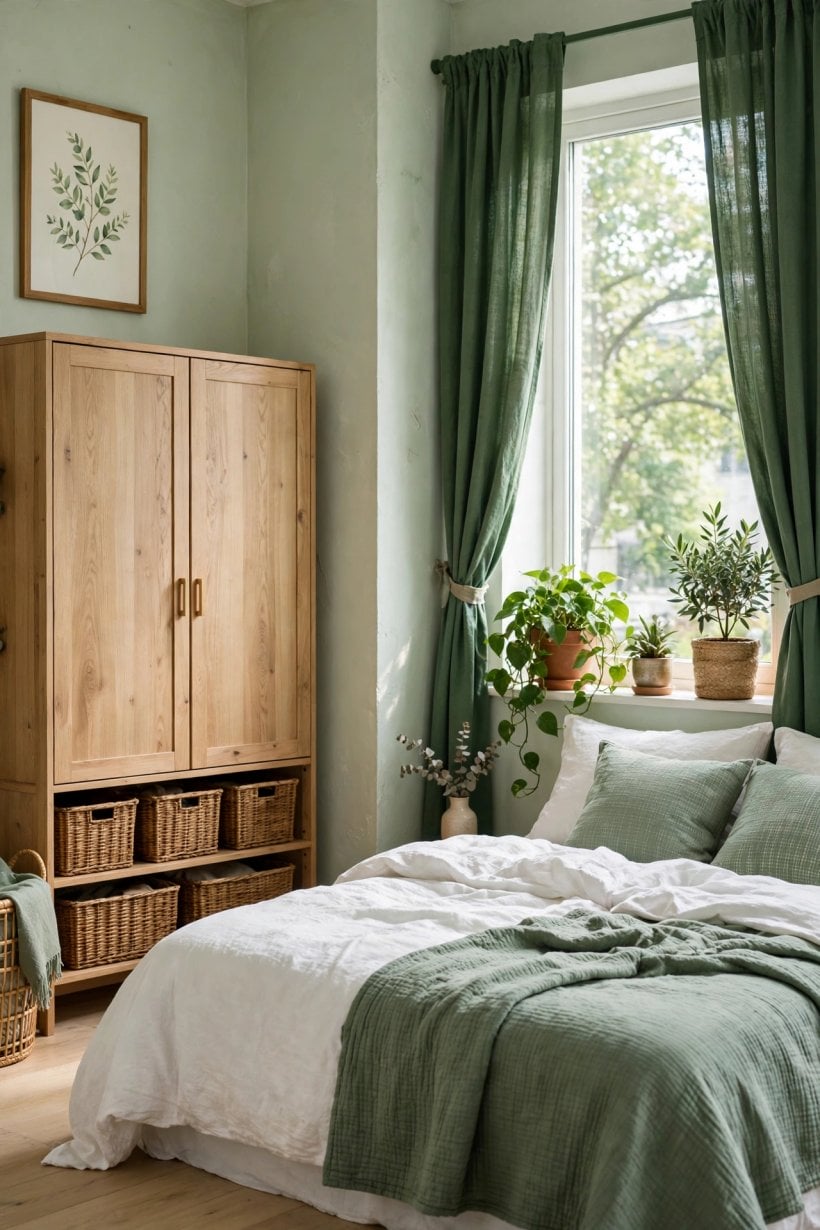
Scent and sound complete the restfulness that colour begins. Natural fibres, a window opened daily and laundry washed and aired properly do more than any fragrance product, though a simple cedar block or a linen spray can become part of a pleasant evening ritual. If the room overlooks a garden or planted balcony, borrow the planting ideas in our guide to tiny house landscaping ideas and frame the view with the same greens used indoors, so the eye travels from cushion to curtain to leaves without a jarring stop.
9. Plants and Natural Materials That Belong Indoors
Plants are the obvious partner for this palette, but choose them for the room’s light, not for their looks alone. A tall plant in the corner beside a window softens the hardest line in most bedrooms, trailing plants suit high shelves and the tops of wardrobes, and a small pot on the bedside table is often enough if light is scarce. Group plants in odd numbers with varied leaf shapes, and keep pots in a family of clay, woven fibre or simple ceramic so the greenery, not the containers, provides the variety.
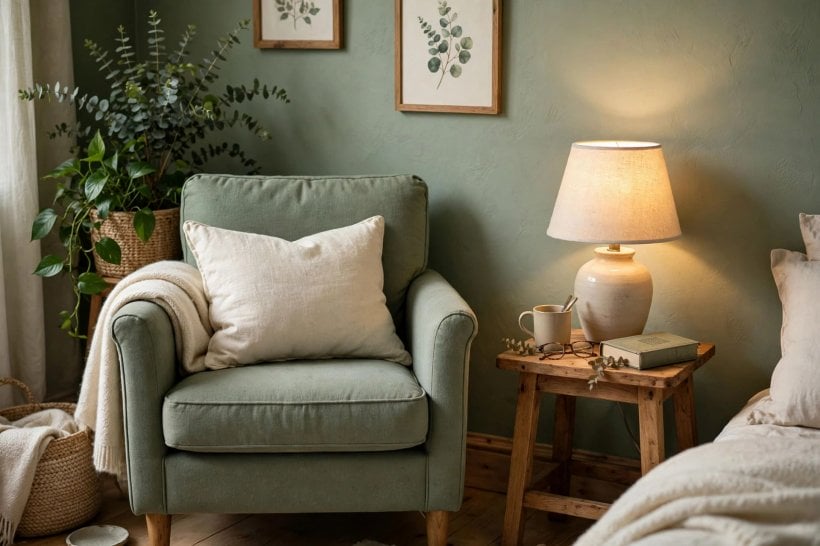
Natural materials keep the colour grounded. Oak, rattan, cane, jute and unglazed clay all sit comfortably beside green because they share its outdoor references, and they age gracefully alongside painted surfaces that will gather small marks of their own. Introduce them in a loose ratio you can feel rather than count: roughly one natural texture in every sightline, such as a wooden stool, a woven basket for spare blankets and a cane-fronted cabinet, is enough to stop a painted room feeling flat or synthetic.
Rotate the planting with the seasons to keep the room feeling alive rather than staged. Spring bulbs on a windowsill, summer herbs by an open window and evergreen cuttings in winter all cost little and change the view from the bed in a way no static ornament can. Treat plants as part of the furnishing plan, with a place and a purpose, and they will reward the small attention they ask.
10. Common Mistakes and Simple Care
Most disappointing results come from a handful of avoidable errors. The first is choosing paint under shop lighting and never testing it at home. The second is matching everything: walls, bedding, curtains and cushions in the same green flatten a room, where contrast in tone and texture is what makes it rich. Third comes clutter creep, the slow return of surfaces covered in chargers, cups and paperwork, which undoes calm faster than any colour choice. Finally, do not ignore the fifth wall: a ceiling in warm white or the palest tint of your wall colour lifts the room, while a cold brilliant white can glare against deep greens.
Care is mostly rhythm rather than effort. Air the room daily, rotate and wash textiles before they look tired, dust leaves so plants keep earning their place, and touch up paint scuffs on skirting and door frames once a season so the scheme keeps its intended crispness. Keep a small note of paint names and fabric sources in a drawer; matching a green two years later from memory alone is a frustration nobody needs. Treated this way, the room stays restful not because it was styled once, but because it is kept with the same calm it was designed with.
A short weekly reset protects all of this work. Ten minutes spent returning books, chargers and clothes to their proper homes, straightening the throw and emptying the small bedside dish of odds and ends will hold the room at its best far longer than an occasional heroic tidy. Habits, like colours, compound quietly in your favour.
Final Considerations
Build the room in the order this guide follows and the decisions get easier as you go: a tested palette, a layout arranged for sleep, storage that disappears, warm layered light, textiles with contrast, and a short list of finishing details you genuinely enjoy. None of it requires a large room or a large budget, and most of it can be borrowed, painted or rearranged before anything new is bought. Start with the swatch test this week, edit one surface tonight, and let the room become restful step by step rather than all at once. The best schemes are rarely the most complicated ones; they are the ones where every green, every texture and every object was chosen on purpose and given room to breathe.



0 Comments