

A grey floor is the hardest-working backdrop a living room can have: it hides everyday dust, flatters almost every sofa colour and makes layered lighting glow. This collection gathers 75 ideas for living rooms built on a gray floor, from materials and laying patterns to sofas, palettes, rugs and light, so you can lift a whole scheme or borrow a single detail.
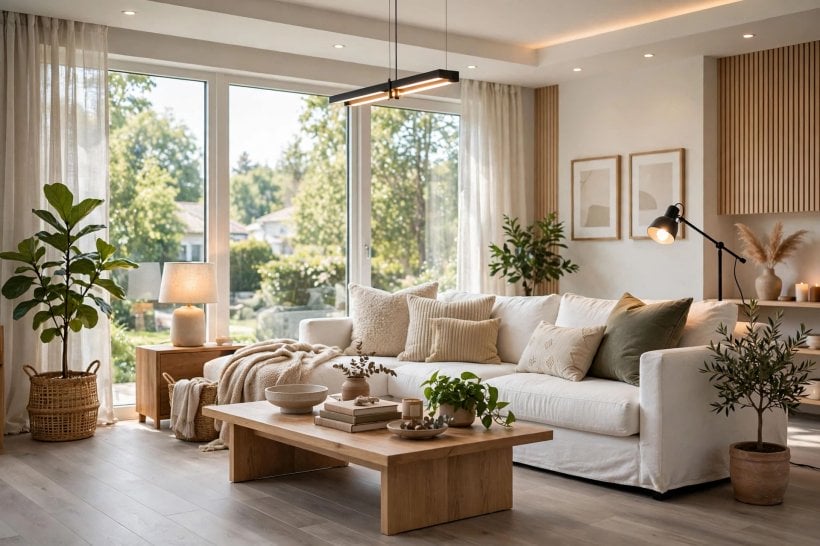
1. Grey Living Room Floors at a Glance
Grey flooring sits between the warmth of timber and the coolness of stone, which is why it pairs with such a wide range of furniture. The decisions that shape the result are the floor’s undertone, warm greige or cool blue-grey, its finish, matt or polished, and how much contrast the rest of the room provides. Pale floors brighten and enlarge; mid greys are the most forgiving; deep charcoals are dramatic but show dust and need confident lighting. Keep one metal finish and one warm timber tone running through the room and almost any grey floor will look intentional. The table below sums up the starting points, and the 75 ideas that follow are grouped so you can work through materials, layouts, sofas, colour, rugs, lighting, warmth and small-space tricks in order.
| Decision | What usually works | Good to know |
|---|---|---|
| Floor tone | Pale grey for small rooms, mid grey for family spaces | Check the undertone against your sofa fabric in daylight |
| Material | Engineered oak, porcelain planks, vinyl, laminate, concrete, stone | Porcelain and vinyl shrug off spills and pet claws best |
| Layout | Lengthways planks, herringbone for period rooms | Direction changes how large the room feels |
| Sofa colours | Cream, navy, tan leather, sage, blush, charcoal | One strong sofa colour is enough; repeat it in cushions |
| Walls | Warm white, greige, or one deep feature wall | Cool grey floors usually want warmer walls |
| Rugs | Ivory, vintage pattern, jute, bold geometry | The rug is the easiest warmth lever you have |
| Lighting | Layered: ceiling, wall, table and floor lamps on dimmers | Warm bulbs stop grey schemes feeling cold |
| Warmth | Walnut, rattan, wool, linen, plants, books | Texture matters more than extra colour |
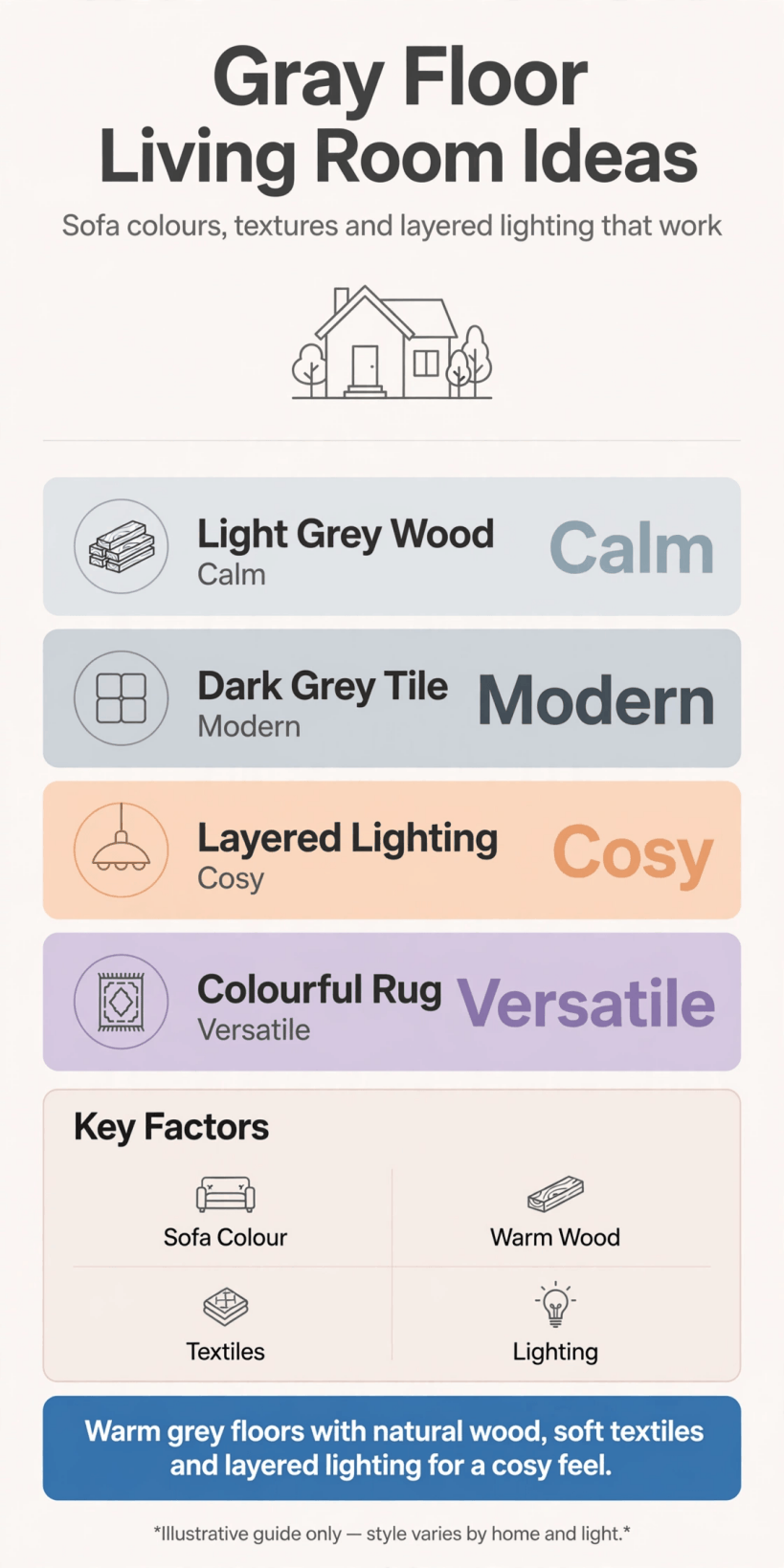
At a glance: pick the floor’s undertone first, then build sofa colour, wall colour, rugs and layered light around it.
2. Floor Materials and Finishes (Ideas 1–10)
The material sets the room’s temperature, budget and maintenance rhythm, so start here before falling for a sofa.
1. Pale ash-effect laminate
A budget-friendly way to get the Scandi look, with click-fit planks that brighten north-facing rooms and hide dust well between cleans.
2. Wide-plank grey oak
Real timber washed in grey stain gives grain, warmth and a premium feel; wider planks mean fewer seams and a calmer floor.
3. Grey-washed pine boards
A soft, cottage-leaning finish that suits relaxed seating, linen upholstery and rooms that lean rustic rather than sleek.
4. Polished concrete
Seamless and architectural, concrete makes a superb base for sculptural furniture, though it wants rugs and textiles to soften its sound and feel.
5. Honed grey stone tiles
Natural variation keeps large floors interesting, and the matt honed finish avoids the slippery shine of polished stone.
6. Grey porcelain planks
Timber looks with tile practicality: water-resistant, hard-wearing and happy over underfloor heating in busy family rooms.
7. Distressed driftwood finish
Weathered grey tones forgive scratches and suit coastal schemes with white sofas, rope textures and pale blue accents.
8. Herringbone grey vinyl
Luxury vinyl in a herringbone cut delivers a classic pattern at a gentle price, warm and quiet underfoot.
9. Matt grey parquet blocks
Small blocks in a soft matt finish bring period character to apartments and pair beautifully with mid-century furniture.
10. Light grey gloss tiles
A reflective finish bounces light around basement or window-poor rooms; keep the rest of the scheme matt to avoid a showroom feel.
3. Layout Patterns and Plank Direction (Ideas 11–19)
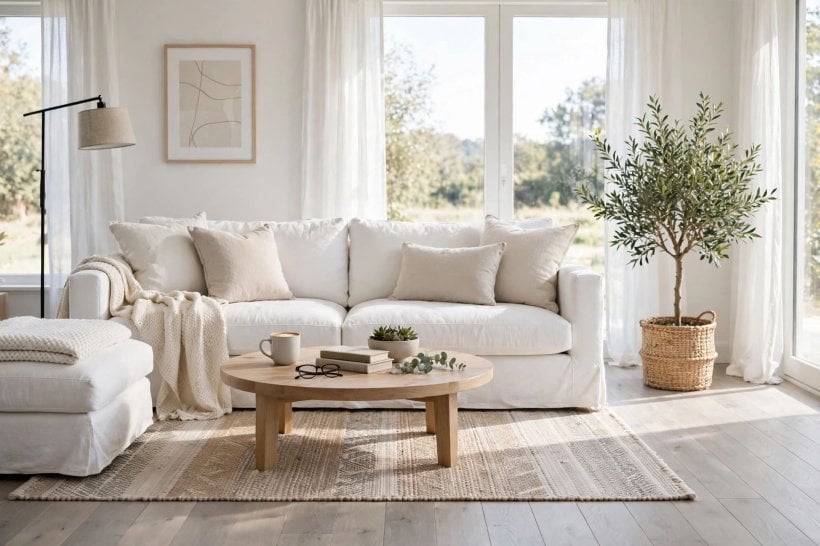
Same floor, different room: the laying pattern steers the eye and changes how generous the space feels.
11. Lengthways planks
Running planks along the room’s longest wall stretches the space visually and is the safest default for rectangular rooms.
12. Diagonal laying
A diagonal field widens narrow rooms and hides the fact that walls are not perfectly square, at the cost of more cutting.
13. Herringbone focal field
Concentrate herringbone in the seating zone, framed by straight planks elsewhere, for pattern without the full-room price.
14. Chevron through open plan
Chevron’s continuous arrow pulls the eye through a combined living and dining space and unifies the zones.
15. Darker grey border inlay
A border two planks wide in a deeper grey frames the seating area like a built-in rug and looks especially smart in period rooms.
16. Mixed-width planks
Alternating two or three widths gives an informal, reclaimed character that hides the odd scuff gracefully.
17. Timber-to-tile transitions
Where the living room meets a tiled hallway or kitchen, a neat threshold strip keeps the change of material looking deliberate.
18. Large-format running bond
Oversized tiles in a brick pattern reduce grout lines and give open-plan floors a calm, gallery-like base.
19. Planks that follow the light
Laying planks towards the main window draws daylight deep into the room and makes the floor’s grain part of the view.
4. Sofa Choices That Sit Well on Grey (Ideas 20–29)
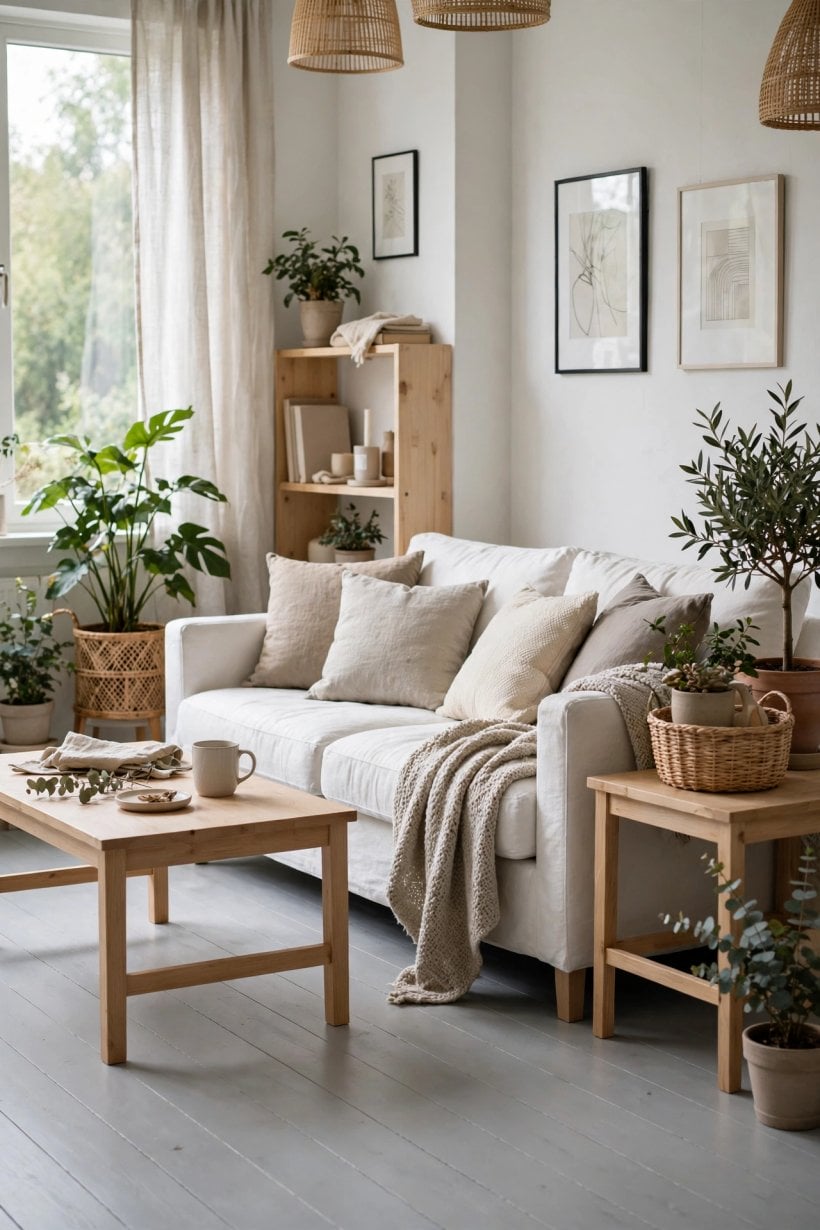
The sofa is the largest colour block in the room, and grey flooring is famously generous about what it will host.
20. Cream bouclé sofa
Soft white texture against a cool floor is the defining modern pairing; the bouclé’s nubbles keep it from feeling stark.
21. Navy velvet sofa
Deep blue against mid grey is a classic that never dates, especially with brass legs and warm lamplight.
22. Tan leather sofa
Leather’s warm caramel tones are the perfect counterweight to a cool floor, and it ages gracefully in family rooms.
23. Tonal charcoal sofa
Charcoal upholstery on a paler grey floor gives a moody, layered monochrome room; break it up with pale cushions.
24. Sage green linen sofa
Muted green and grey share the same calm register, ideal for plant-filled rooms and natural materials.
25. Blush pink velvet sofa
A gentle pink softens grey beautifully and stops a north-facing room feeling chilly.
26. White slipcovered sofa
Removable covers make white practical, and the crisp contrast with grey floors reads coastal and fresh.
27. Chocolate brown leather
Deeper than tan, chocolate leather grounds a pale floor and suits books, timber and low lamplight.
28. Grey check patterned sofa
A subtle check keeps a grey-on-grey scheme interesting and hides the evidence of pets and children remarkably well.
29. Curved sofa
A bowed back softens the straight lines of plank floors and makes conversation seating feel more intimate.
For more seating-led schemes, see our modern living room designs and small living room ideas.
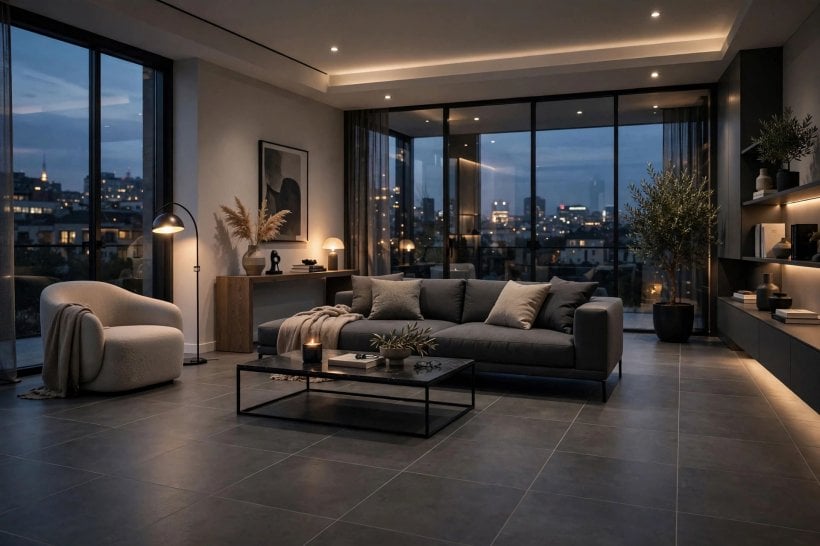
5. Colour Palettes for Walls and Textiles (Ideas 30–39)
Walls decide whether a grey-floored room feels serene, dramatic or cold, so test paint beside the floor, not in isolation.
30. Warm white walls
A white with a hint of cream keeps the room bright while avoiding the blue chill that pure white can strike over grey.
31. Greige walls
Grey-beige bridges floor and furniture, the easiest palette for mixing timber, leather and painted pieces.
32. Deep teal feature wall
One teal wall behind the sofa adds depth that a grey floor supports elegantly; keep the other walls pale.
33. Navy and grey classic
Navy cabinetry or a navy wall with grey floors is a tailored, timeless combination that suits brass fittings.
34. Black-accent monochrome
Black frames, a black stove or black shelving sharpen a pale grey scheme into something graphic and confident.
35. Pastel accents
Cushions and throws in powder blue, lilac and mint keep a grey base feeling springlike and change cheaply with the seasons.
36. Terracotta and clay accents
Earthy pots, cushions and art warm a cool floor instantly and echo the tones of leather and timber.
37. Olive and botanical greens
Olive textiles plus real plants give grey rooms a garden-room calm that suits stone and concrete floors.
38. Brass and gold accents
Warm metals are the jewellery of a grey scheme; repeat them in lamp bases, frames and handles for cohesion, as in many of the living room paint schemes we feature.
39. Blue-grey tonal room
Layering several blue-greys, floor, walls, sofa, creates a cocooning, tonal room that glows under warm evening light.
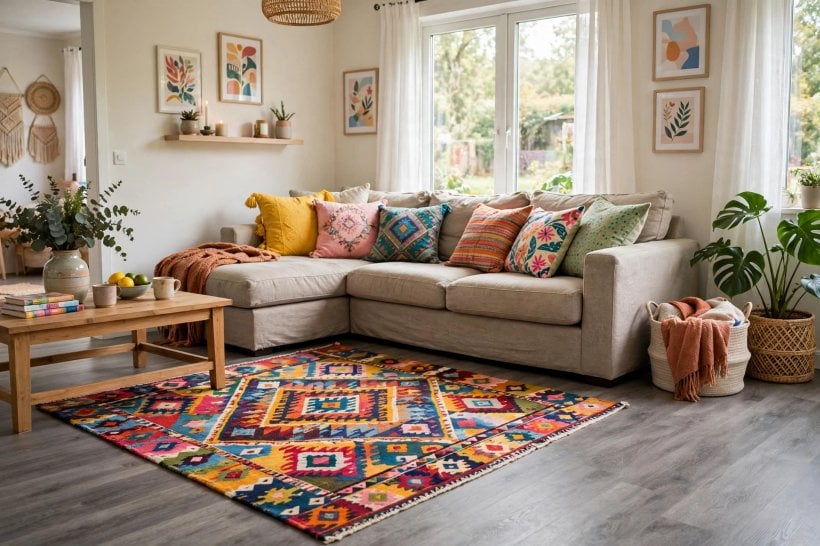
6. Rugs and Layering (Ideas 40–48)
A rug is where a grey floor gets its warmth, pattern and zoning, all without touching the floor itself.
40. Ivory high-pile rug
The classic softener: a pale, deep rug under the coffee table lifts the seating zone and feels luxurious barefoot.
41. Vintage Persian-style rug
Faded reds and blues over grey planks add history and hide a multitude of everyday marks in busy homes.
42. Natural jute layer
Jute’s golden fibre is the fastest warmth fix for a cool floor and works under almost any second rug.
43. Black and white geometry
A bold geometric rug turns a plain grey floor into a graphic composition and suits minimalist furniture.
44. Round rug
A circle breaks up the straight seams of planks and tiles, perfect under a curved sofa or in a square room.
45. Layered rugs
A large flat jute with a smaller patterned rug on top gives depth and lets you size the patterned piece affordably.
46. Runner for long rooms
A runner along the seating edge leads the eye and protects the main walkway across vinyl or laminate.
47. Sheepskin throws
Draped over chair arms or a sofa corner, sheepskins add the soft texture grey schemes always welcome.
48. Art-led statement rug
Treating the rug as the room’s artwork lets you keep walls and sofa plain and the floor scheme calm.
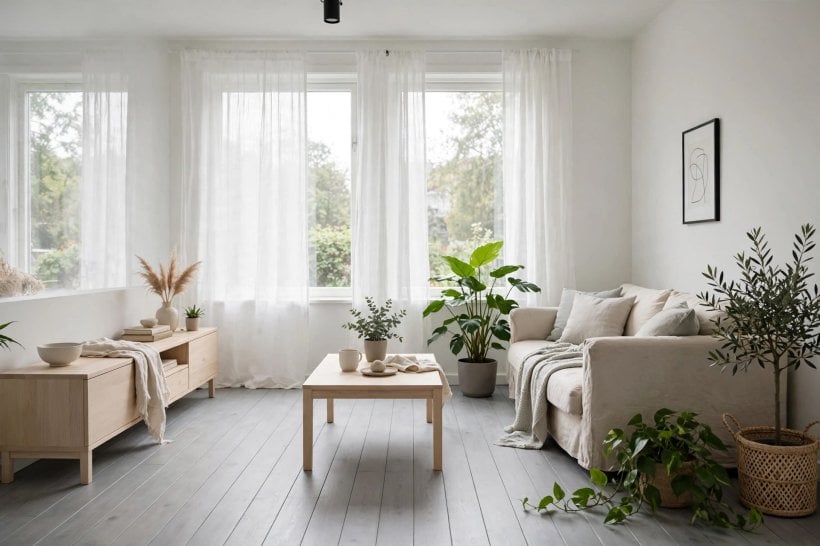
7. Layered Lighting Schemes (Ideas 49–57)
Grey rooms live or die by their lighting: one ceiling light flattens them, while layers make the floor’s tone glow.
49. Arc floor lamp
An arcing lamp over the sofa adds sculpture and pools warm light exactly where people sit and read.
50. Low cluster pendants
A trio of pendants hung low over a side table or coffee table creates an intimate pool of evening light.
51. Warm wall sconces
Sconces wash the walls with light and remove the shadows that make grey paint look dull at night.
52. Matched table lamps
A pair of lamps on side tables or a console gives symmetry and the friendliest light for faces.
53. Shelf strip lighting
Discreet LED strips under shelves make books and ceramics glow and add depth to a media wall.
54. Paper lantern shade
A large paper shade diffuses ceiling light softly, a gentle contrast to the floor’s hard surface.
55. Candlelight and fire glow
A real fire, a stove or grouped candles supply the flicker that cool grey rooms crave in winter.
56. Dimmer scenes
Dimmers on every circuit let one room shift from bright daytime tasks to a low, warm evening mood.
57. Statement chandelier
A crystal or sculptural chandelier over a grey floor delivers the contrast that makes visitors look up, then around.
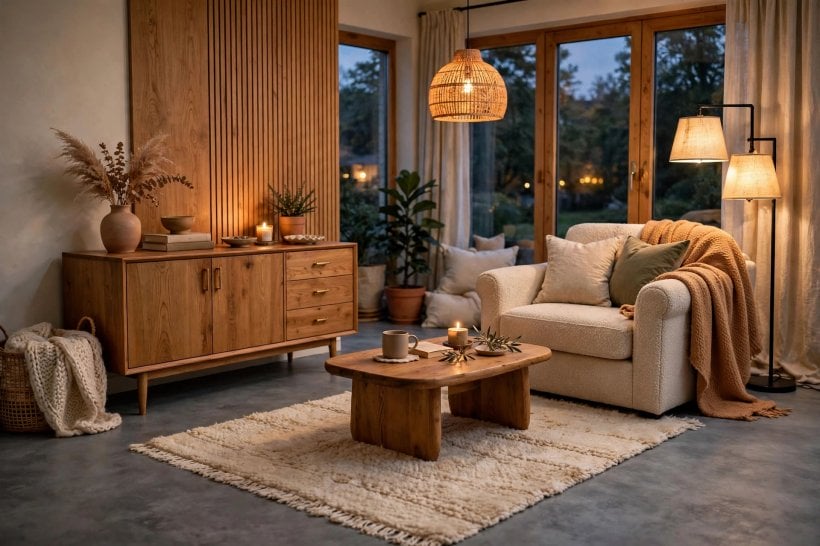
8. Warmth: Timber, Leather and Texture (Ideas 58–66)
If a grey room feels cold, the answer is almost never more colour; it is more texture and a dose of warm material.
58. Walnut furniture
Walnut’s deep grain is grey’s best friend, rich against pale floors and handsome against charcoal ones.
59. Rattan and cane
Woven chairs, baskets and lamp shades bring the handmade irregularity that smooth grey surfaces lack.
60. Leather pouffe
A tan pouffe works as footstool, side table and extra seat while echoing a leather sofa’s warmth.
61. Wool throws in rotation
Chunky wool over sofa arms invites touch; rotating colours seasonally refreshes the whole scheme cheaply.
62. Linen curtains
Unlined linen softens window light and adds a gentle, natural texture against hard flooring.
63. Exposed or added beams
Timber beams, real or well-faked, pull warmth overhead and balance a cool floor in tall rooms.
64. Plants as living colour
Green foliage is the accent colour grey floors flatter most; group plants at different heights for effect.
65. Books and layered shelves
Full shelves add colour, pattern and personality that stop a grey scheme reading as a showroom.
66. Woven storage baskets
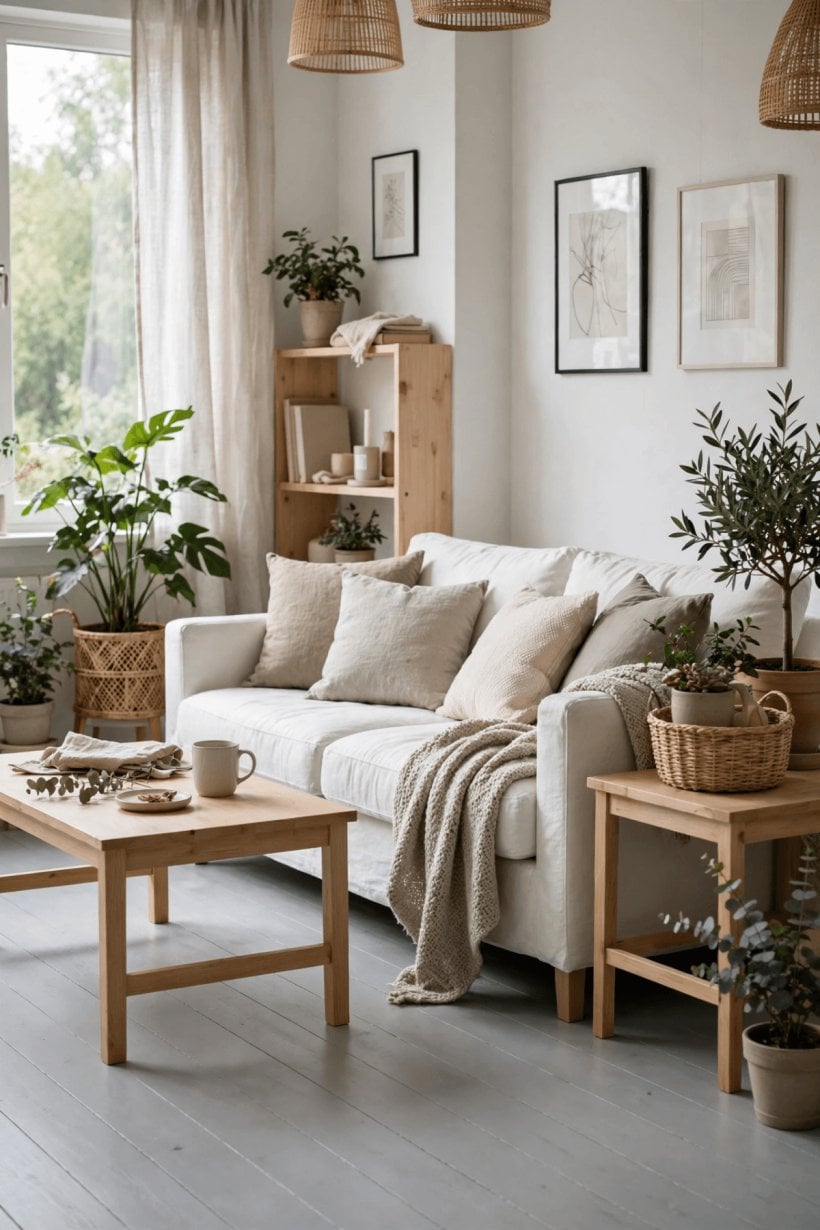
Baskets corral blankets, toys and magazines while adding the woven texture that softens plank lines, a trick borrowed from our blue and white tiny house interior.
9. Small Rooms and Tiny Homes (Ideas 67–75)
Grey floors earn their keep in compact living rooms, where one continuous surface and pale tones stretch every centimetre.
67. Pale grey to bounce light
The palest grey floor you can live with reflects the most light and makes small rooms feel a size larger.
68. One floor, every room
Running the same grey flooring from living room to hallway removes thresholds and visual stops in tiny homes.
69. Low-profile sofa
A low-backed sofa keeps sightlines open over the floor, which makes the room’s footprint read bigger.
70. Glass coffee table
A transparent table lets the floor show through, preserving the sense of unbroken space.
71. Mirrored panel or large mirror
A mirror doubles the light and the floor with it; place it to reflect a window where possible.
72. Built-in bench seating
A window bench with storage below seats more people in less floor area than freestanding chairs.
73. One rug to zone a studio
In a studio, a single generous rug marks the living zone on the shared grey floor without walls.
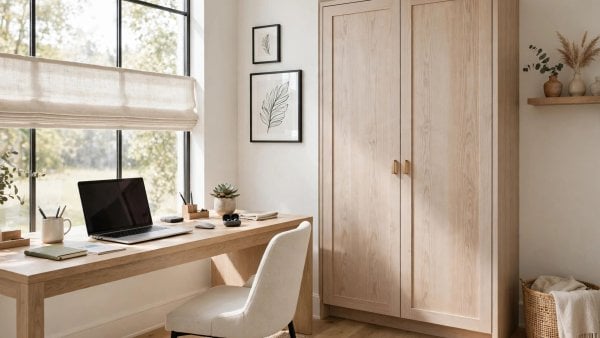
74. Fold-away work corner
A small desk that folds down leaves the living room fully social in the evening; our mid-century tiny house tour shows the principle in action.
75. Grey tiles with a defined grout line
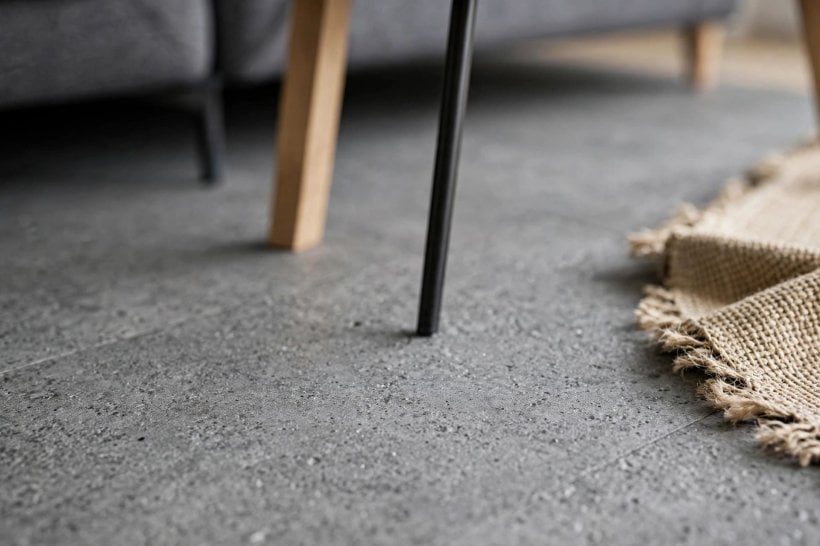
In the smallest rooms, grey tiles with a slightly darker grout grid add pattern at floor level so walls can stay calm and pale; more compact-space thinking lives in our small-space interior ideas.
10. Pulling It Together: Balance and Mistakes to Avoid
Across all 75 ideas, the pattern is balance: a cool floor wants warm textiles, hard surfaces want soft ones, and a single strong colour wants quiet company. The mistakes to avoid are consistent too. Choosing every element in the same grey produces a room with no focal point, so always give the eye one hero, a sofa, a rug or a wall. Ignoring undertones causes the commonest disappointment: a blue-grey floor against warm grey walls can make both look slightly off, so compare samples together in the room’s own light. Skimping on lighting flattens everything, and choosing a gloss finish for a family room shows every footprint. Finally, buy the rug large enough: its front edge should sit under the sofa’s front legs, or the seating will look as if it is floating. Work through the ideas in the order given, materials first and accessories last, and a gray floor stops being a compromise and becomes the making of the room.
Final Considerations
Whether your taste runs to pale Scandi planks or a charcoal concrete sweep, grey flooring gives a living room unusual freedom everywhere else. Decide the floor’s tone and material first, let the sofa supply the main colour, warm the scheme with timber, leather and wool, and layer the lighting until evenings glow. Start with the handful of ideas that fit your room and budget, live with them, and add the rest a layer at a time.

0 Comments