

Moving water changes a pool from a still rectangle into the living heart of a garden. This guide collects seventy-five pool fountain ideas, then organises them into ten practical sections covering styles, placement, pumps, lighting, materials and upkeep. Whether you are planning a new build, refreshing an existing pool or adding a single spout to a plunge pool, the same order of decisions applies: choose the effect first, place it where it will be seen and heard, then match the plumbing honestly to the effect you want.
1. At a Glance: Fountain Types and What They Do Best
Most pool water features fall into a handful of families, and naming the family first saves money later, because each one asks something different of the pump, the pipework and the pool shell. Use this table as your starting reference, then read the sections that follow for the placement and practical details behind each choice.
| Fountain Type | Best For | Practical Notes |
|---|---|---|
| Tiered fountain | Formal pools and courtyard centrepieces | Needs a level base and a pump sized for the full lift height |
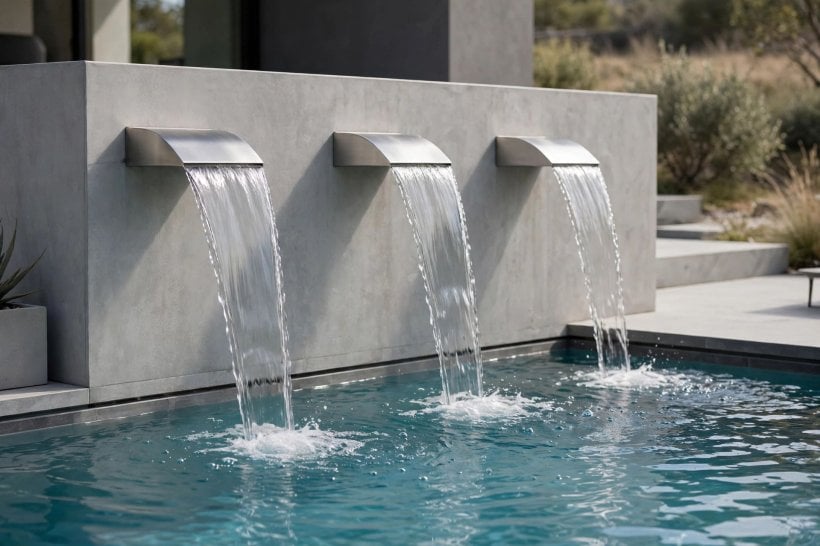
| Wall spout | Narrow pools, raised walls and courtyards | Simple plumbing with a surprisingly large visual effect |
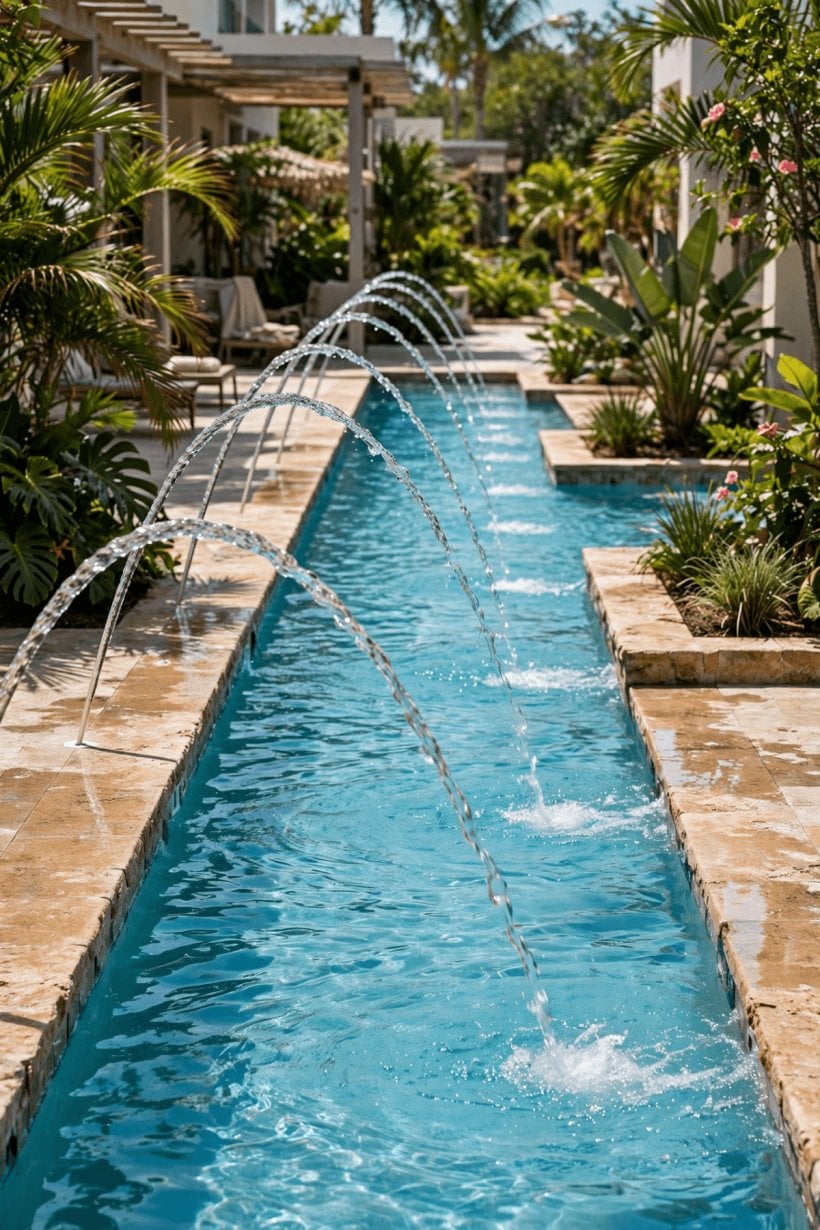
| Bubbler | Family pools, sun shelves and plunge pools | Gentle, low arcs of water that feel safe and playful |
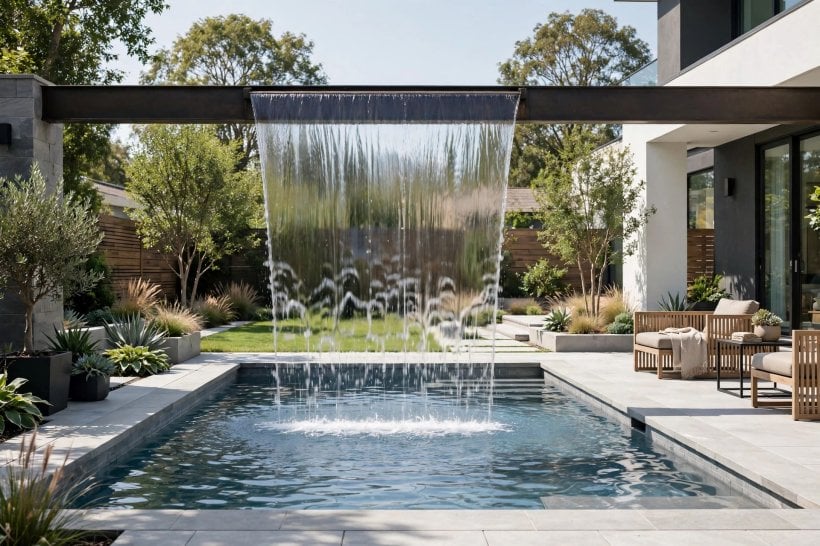
| Scupper or sheet fall | Modern rectangular pools | A clean sheet of water needs a perfectly level weir |
| Floating fountain | Existing pools and seasonal displays | No installation, but store it away in harsh weather |
| Solar fountain | Small pools, spas and wildlife-friendly gardens | No wiring needed, though flow varies with the light |
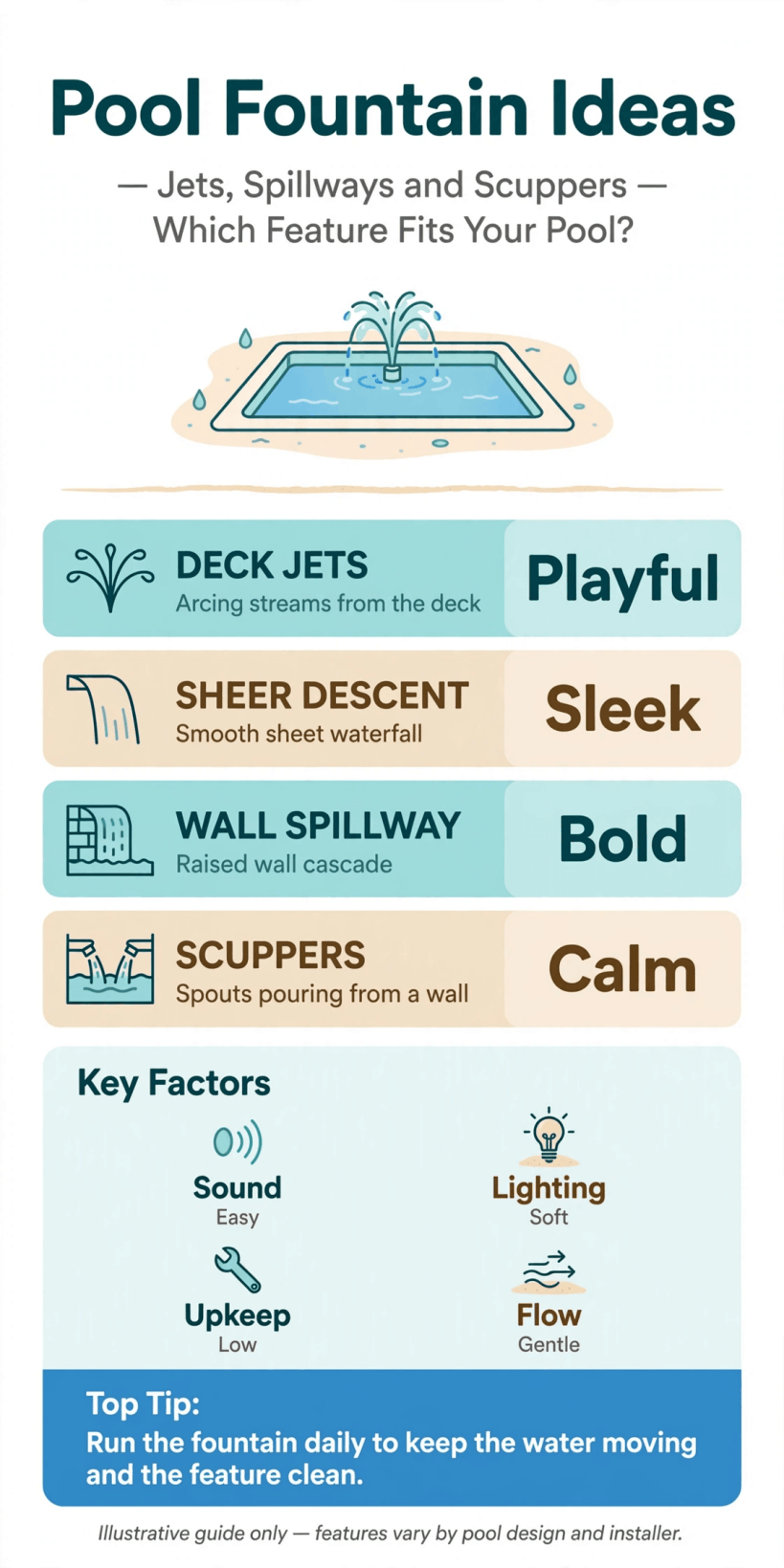
The main fountain families at a glance: match the type to your pool’s shape, your plumbing and the sound you want to live with.
A fountain never sits alone in a design. It borrows its backdrop from planting, paving and walls, so plan the water and the garden together. The planting frameworks in our guide to tiny house landscaping ideas translate well to pool gardens of any size: layered greenery behind a spout, a single sculptural plant beside a tiered bowl, and clear sightlines from the house to the water. Decide the backdrop before the feature, and the feature will look inevitable rather than added.
2. Choosing a Style That Suits the Pool
Style follows architecture. A formal, symmetrical pool takes a tiered or pedestal fountain on its central axis, where the geometry does half the work before the water is even switched on. A naturalistic pool, edged with stone and planting, suits a rock spout or a gentle cascade that looks discovered rather than installed. Modern rectangular pools pair best with restraint: one wide scupper, a row of slim spouts, or a single arc that lands cleanly without splash. When in doubt, choose the quieter option, because a fountain is heard for more hours than it is watched.
Scale is the second test. A fountain that is too small reads as an apology, while one that is too tall throws spray across paving and steals the pool’s calm. As a working guide, let a freestanding fountain rise clear of the water without dominating it, and repeat one material from the pool surround, a matching stone, tile or metal, so the feature belongs to the scene. Mock up the height with a ladder or stacked crates before you order anything; five minutes of theatre in the garden prevents an expensive mistake.
3. Placement: Sightlines, Sound and Splash
Place the fountain where the house looks at it, not where the plan happens to have a gap. The best seat in the garden, the kitchen window and the main lounger position should all share the view, because a water feature earns its keep in glimpses across the day. Consider the axis from the back door as well; a spout aligned with a doorway becomes part of the house’s interior view, in the same way that our guide to tiny house living room ideas treats a garden view as an extension of the room inside.
Sound travels further than most people expect, especially at night and especially downhill. Visit your intended spot at the quietest hour and imagine a constant murmur: delightful beside a terrace, less welcome directly outside a bedroom window. Splash is the third factor. Wind carries fine spray onto paving, furniture and planting, so keep arcs landing inside the water, allow a splash margin around raised features, and remember that a higher fall in a breezy garden will spend much of the summer switched down or off unless it is sheltered.
Before anything is built, rehearse the effect with a garden hose and an accomplice. A hose held at the planned spout height, running at a guess of the flow, shows you the arc, the landing point and roughly the note the water will strike, and it costs nothing to move. Neighbours’ windows, a prized dry garden bed and the prevailing evening breeze all reveal themselves in this ten-minute test, and the fountain that survives it rarely disappoints once it is plumbed in for good.
4. Raised Walls, Spouts and Scuppers
A raised wall along one side of a pool is the hardest-working fountain structure there is. It hides pipework, provides a seat, and gives spouts a natural home at a height that produces a pleasing fall and an audible, musical note. Spouts in aged metal, stone or simple squared channels each change the character of the water: a narrow spout throws a clear, glassy arc, while a wide scupper pours a sheet whose sound is deeper and steadier. Group spouts in odd numbers, or run one long scupper for a contemporary line.
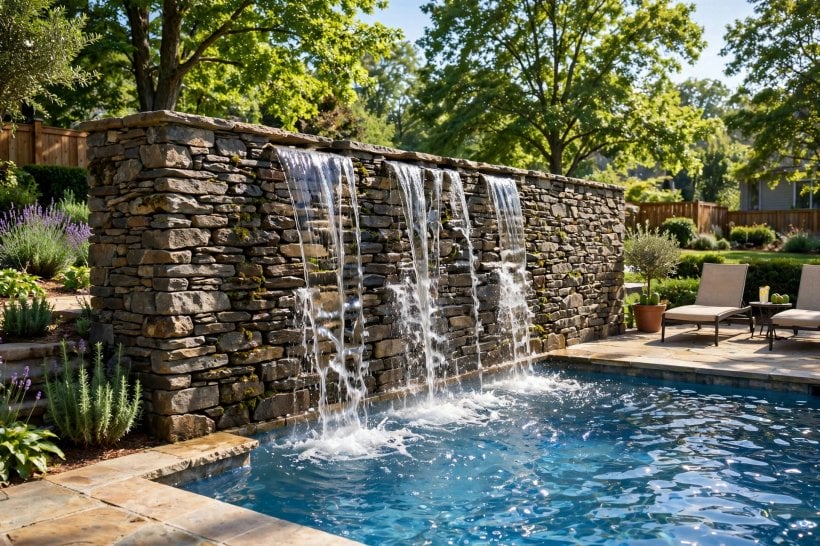
Build the wall to be sat on and leant against, with a coping that sheds water away from the face below the spouts to limit staining. Rustic settings can borrow the honest masonry seen in our tour of a tiny barn house interior, where stone and timber are left to weather gracefully; a pool wall in the same spirit ages into the garden instead of fighting it. Whatever the finish, give the plumber access: a removable panel or coping section over valves and unions will be thanked at every service.
5. Bubblers, Jets and Playful Water
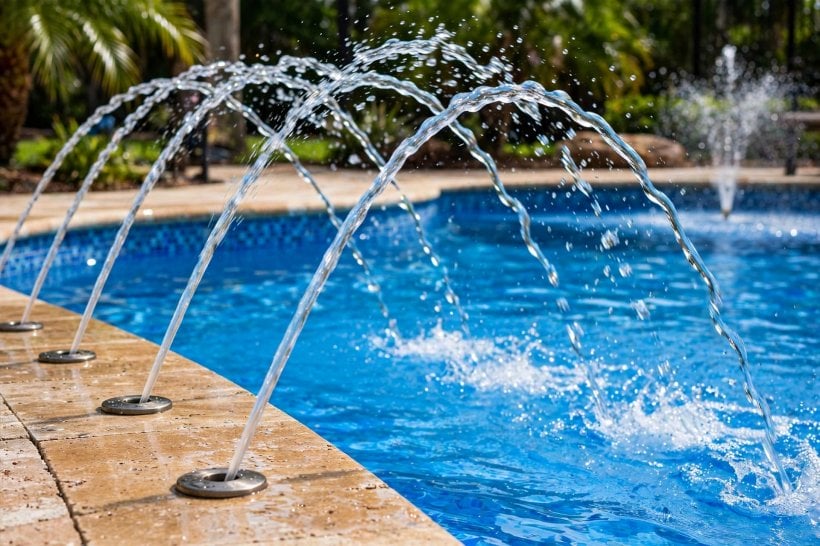
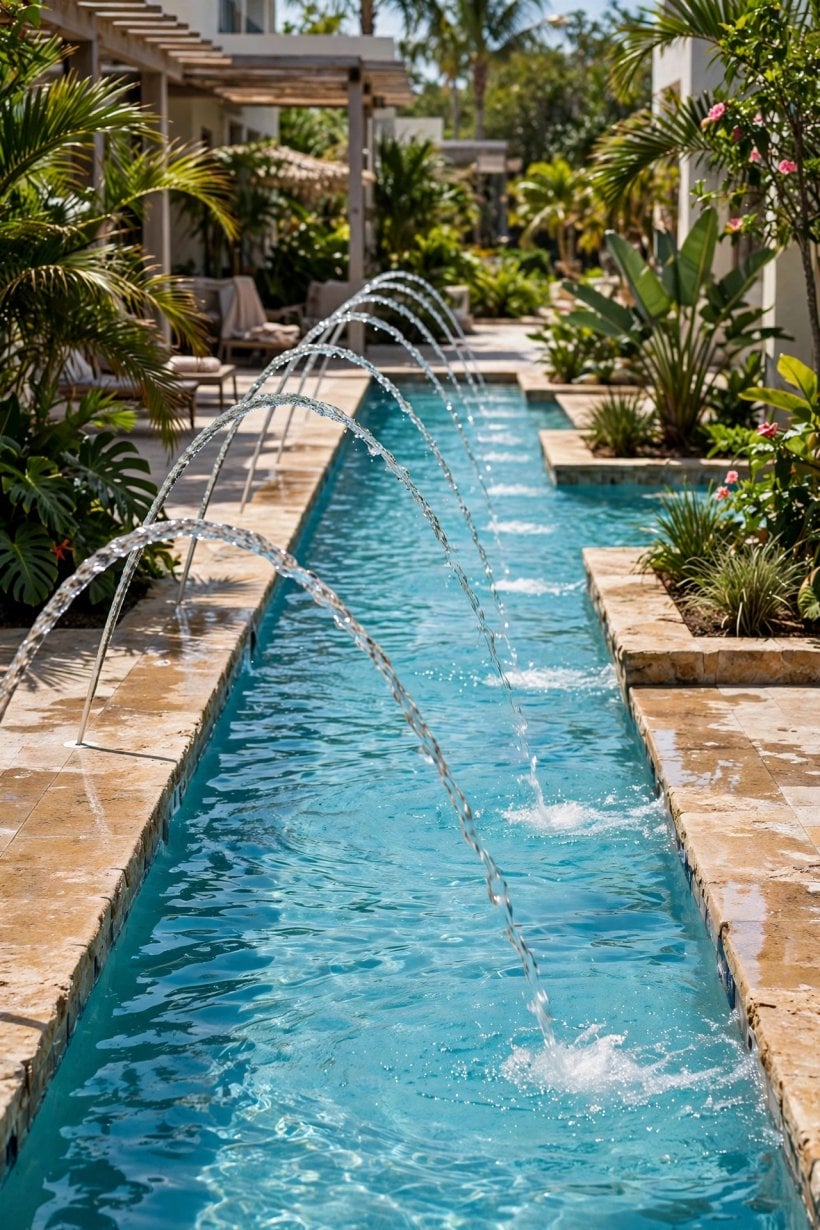
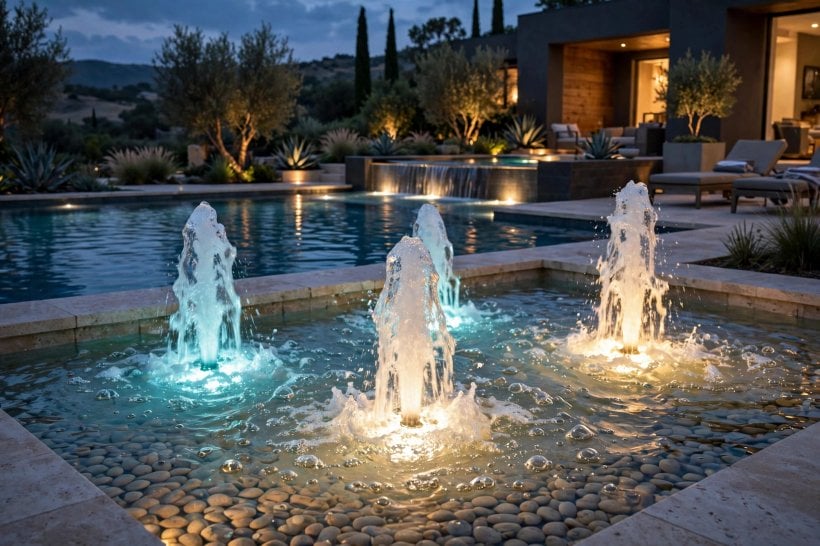
Not every fountain needs height. Bubblers on a sun shelf push low, foaming mounds of water that toddlers can pat and adults can trail a hand through, and laminar jets fire smooth, glass-like arcs that can be lit from within for evening drama. Deck jets sit flush in the paving and arc into the pool, which keeps the surface clear for swimming while still giving the garden movement and sound. These low features also suit small pools, where a tall jet would overwhelm the space and soak everything around it.
Playful water benefits from colour confidence around it. Mosaic tiles in deep blues and greens, a brightly painted wall behind a jet, or coloured light inside a laminar stream can turn a modest feature into the garden’s signature, an approach echoed in the colorful tiny house interior philosophy of committing to one joyful note and repeating it calmly. Keep the palette of materials short, though: playful water plus busy paving plus mixed planting is a crowd, and one of the three should always stay quiet.
6. Pumps, Plumbing and Power in Plain Terms
Every effect described so far is simply water lifted and returned, so the pump is the fountain’s heart and should be chosen for the job, not the price tag. What matters is how much water the pump can move at the height your feature demands; a tall tier or a long scupper asks far more than a bubbler on a shelf. Many owners run the fountain on its own dedicated pump so the feature can play while the pool’s filtration rests, and so a fountain fault never stops the pool being cleaned. Ask for that option to be priced before the shell is finished, not after.
Plan pipe runs short and accessible, with valves that let you balance several spouts so each arc matches its neighbours. Electricity and water are unforgiving partners, so all wiring, bonding and controls belong to qualified installers working to your local code; this guide deliberately leaves those particulars to them. At handover, ask for a simple labelled diagram of what each valve does. The household that understands its own plumbing enjoys the fountain more and fears it less, rather as the methodical approach in our notes on tiny house bedroom ideas shows that small spaces reward knowing exactly where everything lives.
Running costs stay modest when the feature is used with intent. A fountain run for the hours the garden is occupied, on a pump honestly sized rather than oversized, adds far less to a household’s energy use than most owners fear, while a feature run day and night out of habit mostly waters the wind. Put the display on a timer, keep filters clean so the pump never strains, and treat efficiency as part of the design rather than an afterthought.
7. Lighting the Water After Dark
A fountain lit well doubles its working hours. Light placed in the water beneath a fall makes the sheet glow from within, a soft uplight behind a spout silhouettes the arc, and a single warm source aimed across, rather than into, a tiered fountain models its shape better than a ring of bright spots. Avoid aiming lights at seating or windows; glare kills the very mood the lighting was bought to create. Warm tones flatter stone and planting, while colour-changing lights are best kept as an occasional party trick rather than the nightly default.
Timers and simple controls matter as much as fittings. Run the display for the hours the garden is actually used, and let the system rest overnight; moving water all night wastes energy and can disturb the very neighbours you hope to entertain beside it. If you are planning the work yourself, the staged, measure-twice mindset in how to build your own tiny house applies: draw the lighting positions on the plan, stand in the garden at dusk with a torch, and test the angles before a single cable is buried.
8. Materials That Weather Gracefully
Pool water is chemically active and outdoor materials live a hard life, so choose finishes that improve with weather rather than surrendering to it. Natural stone, cast stone and quality concrete develop a patina that suits water; metals such as bronze and brass mellow, while powder-coated finishes must be specified for poolside use or they will chalk and flake. Tile belongs where the water lands and turns, because a mosaic splash zone is easier to clean than a rendered one and hides water marks with good grace.
Details decide how a feature ages. Drips should fall clear of faces that stain, overflow paths should be designed rather than discovered, and any timber nearby should be a species and finish chosen for constant damp, detailed like the hardworking accents in our look at tiny house bedroom decor, where every material earns its place by coping with daily life. Keep a small stock of spare tiles and the names of your finishes in a file; matching a weathered material years later is far easier with a sample than with a memory.
9. Small Pools, Plunge Pools and Tight Gardens
A small pool does not need a small imagination, only a smaller fall of water. A single wall spout, a pair of bubblers on a bench shelf, or one slim scupper gives a plunge pool sound, movement and a focal point without stealing swimming room. Wall-mounted features are the small garden’s friend because they borrow no floor at all, and a mirrored or pale backdrop behind the spout doubles its presence. Keep paving simple and planting loose, so the water remains the event.
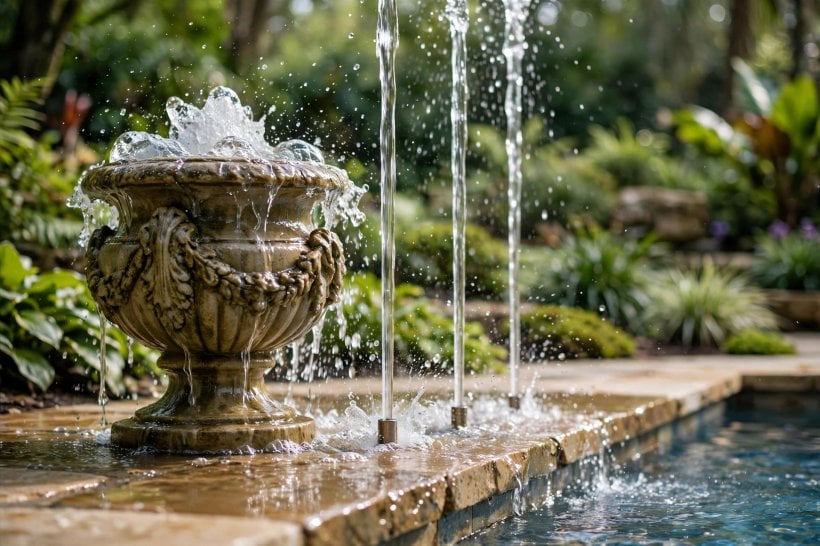
Design coherence matters more as spaces shrink. Repeat the house’s own materials at the pool, match metal finishes to door furniture and lights, and let one design language run from the back door to the far wall, as the best examples in our guide to bedroom interior design for tiny houses show interiors doing at a domestic scale. A tight garden with a clear idea feels generous; a large one without an idea feels unfinished. The fountain, being the moving part, is where that idea is most visible, so give it the wall, the light and the planting it needs to carry the whole composition.
10. Care, Cleaning and Seasonal Rhythms
Fountains repay small, regular attention and punish neglect politely but firmly. Skim leaves before they sink and block intakes, brush the waterline where the fall lands, and keep an eye on water level, because a pump run dry is a pump replaced. Nozzles and spout mouths gather scale and debris; a gentle clean restores a ragged arc to a glassy one in minutes. Your pool’s normal water care routine covers most of the chemistry, but a feature that sprays increases evaporation and aeration, so expect to test and top up a little more attentively in hot, windy spells.
Seasonal habits complete the picture. In cold climates, follow your installer’s winterising guidance for exposed pipework and removable features rather than improvising, and use the quiet months to service valves and inspect lights. Spring recommissioning is the moment to re-level sheet falls, rebalance spouts and replace tired seals before the first warm weekend arrives. None of this is laborious; it is simply the rhythm of owning moving water, and households that adopt it spend their summers listening to their fountains working exactly as drawn, instead of apologising for a silent feature.
Final Considerations
Choose the effect before the object, place it on the garden’s main sightline, size the pump for the real lift, and give the water a backdrop of planting and honest materials. Light it softly, keep the plumbing understandable, and maintain it in small, regular passes. Do those things in that order and almost any of the seventy-five ideas gathered here will settle into your garden as if it had always been there, which is the highest compliment a fountain can earn.




0 Comments