

A guest bedroom is hospitality built into a floor plan: a real bed, a door that closes, somewhere to put a suitcase — and the quiet message that the visitor was expected, not merely accommodated.
This survey collects seventy-five guest bedroom ideas in the guest angle only — the bed, the dual-duty layout, calm colour, storage for a short stay, and the comfort details guests remember — inside the wider bedroom ideas pillar, whose general bedroom survey this post deliberately does not repeat.
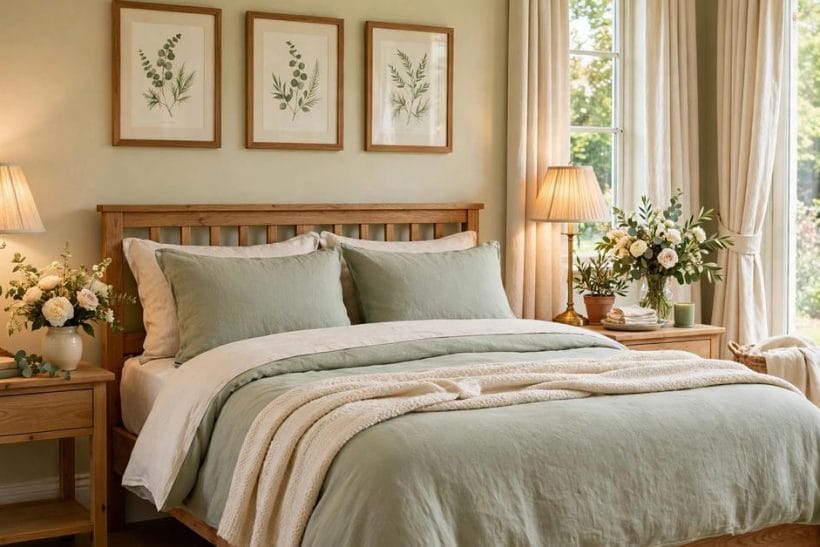
1. Guest Bedroom at a Glance
A guest bedroom is a room whose first duty is sleeping visitors well: a proper bed with bedding in adjustable layers, privacy (a door that closes, curtains that darken), surfaces and storage scaled to a suitcase rather than a wardrobe, lighting that serves reading, dressing and the walk to the bathroom at night, and a calm, impersonal decor that helps a stranger sleep in a strange room. Its second duty, in most houses, is the rest of the year — study, dressing room, nursery-in-waiting — so its best layouts are honestly dual-purpose: fully a guest room on the nights it is one, fully its other self the rest of the time, with the changeover measured in minutes. This post owns that guest attribute set; the bedroom cluster’s style and colour lanes are linked, not absorbed, below.
| Question | Short answer |
|---|---|
| What matters most in a guest bedroom? | The bed, tested honestly. A guest forgives a small room, plain furniture and no view; a bad mattress, one flat pillow and a single thin blanket are remembered. Sleep in the room yourself before the first guest does — the test costs one night and finds everything. |
| Should a guest room have a second job? | In most houses, yes — rooms are too scarce to keep one on standby. The secret is a second job that clears completely: a study whose desk stays but whose clutter leaves, a daybed that is a sofa daily and a real bed nightly. Dual-purpose fails when the guest sleeps among the other job’s overflow. |
| How much storage does a guest need? | A suitcase’s worth, genuinely empty: a drawer or two, hanging space with hangers, a surface for the case itself, and a bedside drawer. Guests live from a case for a few nights; what they need is not volume but vacancy — storage that is not already full of the household’s overflow. |
| What makes guests sleep badly in a good room? | Light and temperature. Street light through thin curtains, a room too hot with no fan or too cold with no reachable extra layer, and a bathroom trip through a pitch-dark hall undo more guest nights than any decor choice. Blackout, layers and a lit path are the unglamorous essentials. |
2. The Guest Bed Itself: Where Hospitality Is Decided
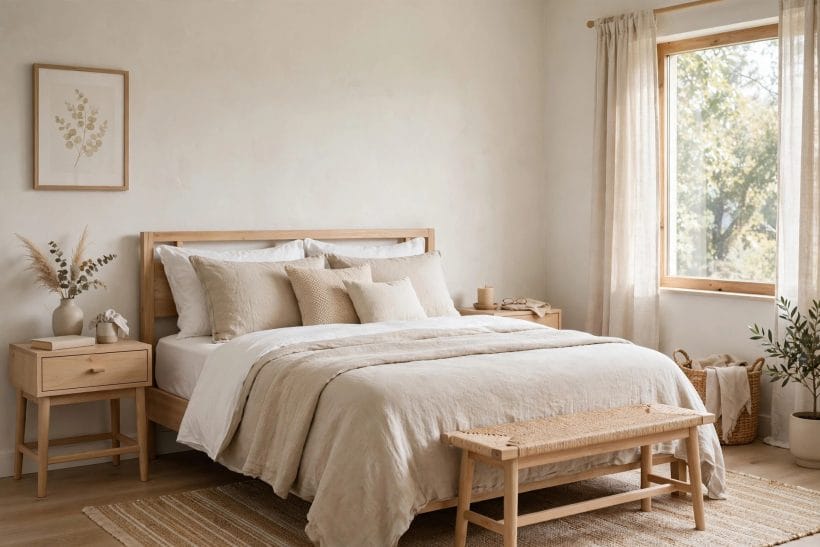
Every other idea in this survey is commentary on this one. The bed is the guest room’s product, and it is judged in the dark, by a tired person, in silence.
1. A proper bed, not the household’s cast-off
The guest bed should be a bed in its own right — sound frame, honest mattress — not the mattress the household replaced for being uncomfortable.
2. Size the bed to the room’s honest capacity
A double bed in a room that can breathe around it beats a king shoehorned against two walls. Guests need to walk around the bed, open a case and close the door.
3. The mattress you would sleep on yourself
The standard is personal: the guest mattress should pass the host’s own back.
4. Two pillows per person, of two kinds
One firm, one soft, per side of the bed. Pillow preference is the most personal variable in sleep and the cheapest to cover: two kinds let every guest compose their own.
5. Bedding in layers a guest can adjust
A sheet, a duvet of middle weight, and a folded blanket or throw at the foot give every guest their own climate. Single heavy bedding forces a choice between roasting and freezing; layers hand the thermostat to the sleeper.
6. An extra layer in sight, not in storage
The folded throw at the bed’s foot is a promise: warmth without asking. Guests hesitate to wake a house to request a blanket; they never hesitate to pull up one that is already there.
7. A bedside table on both sides
Two sides, two surfaces: water, phone, glasses and a book each need a home. A single bedside table sentences one guest to the floor or the mattress corner.
8. A headboard you can sit against
Guests read, scroll and drink morning tea in bed, against the headboard. A padded or cushioned headboard — or two large European pillows standing in for one — turns the bed into the room’s armchair.
9. Twins for the flexible room
Two single beds suit siblings, friends, children and carers, and a guest room that hosts varied visitors often serves more nights with twins than with a double.
10. Twins that join into a double
Single beds designed to link, with a joining topper to bridge the middle, give the room both configurations honestly.
11. Make the bed like a welcome
Crisp, aired bedding; pillows plumped; the throw folded once, neatly. A guest bed made with visible care says the visit was anticipated with pleasure.
3. Layouts That Work Twice: The Guest Room’s Other Life
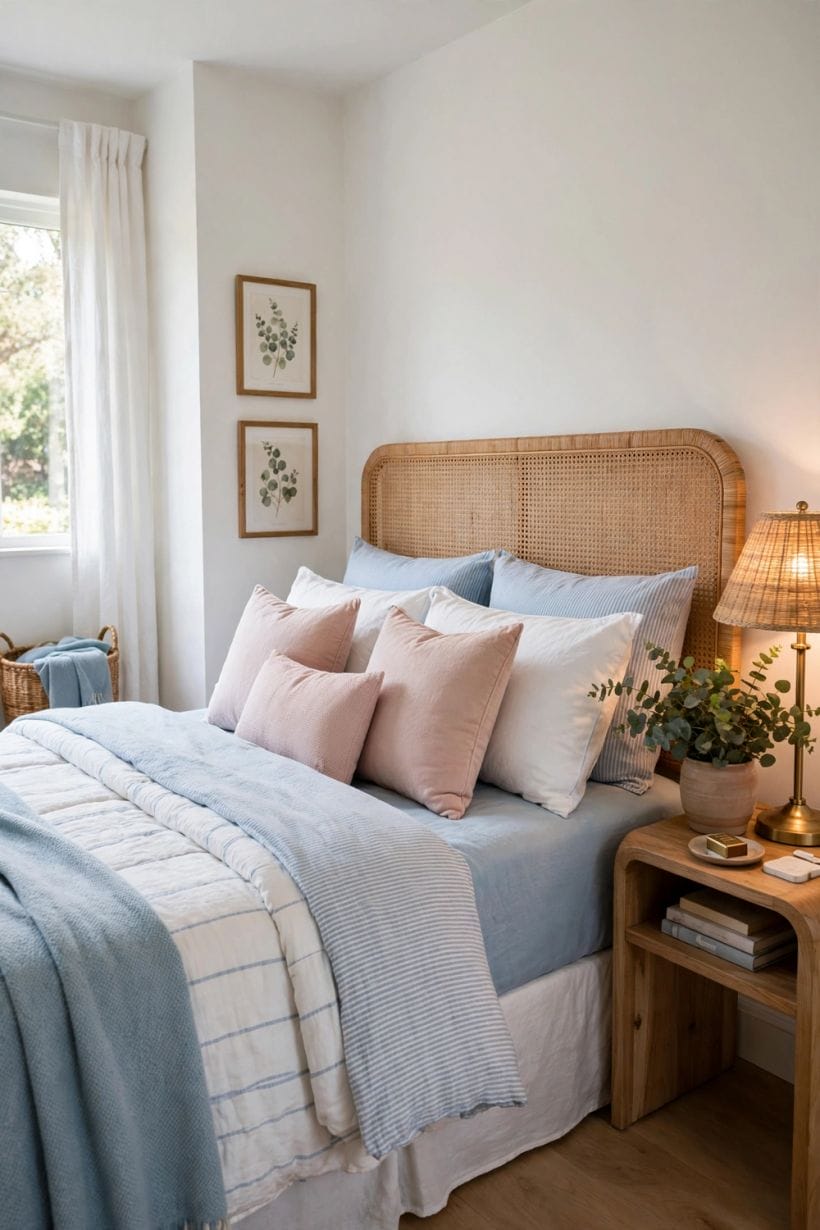
Most guest rooms work a second job for fifty weeks a year. These layouts keep both jobs honest — and the flexible furniture logic here is the guest-room cousin of the modern bedroom ideas survey’s clean-lined approach.
12. A daybed that is a sofa daily
The daybed is the dual-purpose champion: a deep sofa with cushions by day, a real single bed — or, with a trundle, two — by night.
13. A sofa bed chosen by its mattress, not its sofa
Sofa beds are judged at midnight, not in the showroom. A decent mechanism and a mattress with actual thickness decide whether guests sleep or endure. Test the fold-out fully made up.
14. A wall bed for the study that hosts
A folding wall bed disappears into cabinetry by day, giving a study its floor back, and descends as a real bed with a real mattress by night. It suits regular guests in a working room.
15. Zone the guest-study so the guest wins at night
Where the room studies by day and hosts by night, give the bed its own calm zone — the window end, say — and let the desk zone carry the work’s visual noise.
16. Keep the floor clear for a suitcase and a person
Guest rooms shrink mysteriously under household creep. Defend a clear floor: space to open a case flat, to dress, to move around the bed in the dark.
17. A door that closes, and what it promises
Privacy is the layout feature nobody lists: a door that closes and ideally latches, curtains that truly cover, a household that knocks. Guests relax in proportion to their control over their threshold.
18. Place the bed out of the draught and the noise
Beds under a rattling sash, beside the bathroom’s plumbing wall or sharing a partition with the television room tax sleep all night. Within the room’s options, choose the quiet, still corner for the bed’s head.
19. An ensuite is luxury; clarity is the necessity
A private bathroom is a genuine luxury, but what guests actually need is clarity: which bathroom is theirs, where the towels live, how the shower behaves.
20. A chair that is not a clothes horse
One real chair — for dressing, sitting, a moment’s privacy from a partner — earns its floor space in any guest room bigger than a box. Fit it with a cushion and keep it empty.
21. Leave one wall calm
A guest room of four busy walls is a stimulating place to fail to sleep. Leave one wall — ideally the one the bed faces — quiet: plain paint, one calm picture at most.
22. The changeover, rehearsed and timed
Convert the room from its weekday self to guest-ready, once, with a timer and a checklist. If the changeover takes an afternoon, the layout is wrong: the second job is storing itself in the guest’s space.
4. Colour and Calm: A Room That Sleeps Strangers Well

Guest-room colour has one client: a tired stranger’s nervous system. The colour-led lanes of the cluster — the white bedroom ideas survey and the warmer farmhouse bedroom ideas treatment — go deeper on their palettes; here colour is kept in the guest’s service.
23. A soft neutral base that offends nobody
Warm whites, pale greys, gentle stone tones: the guest room’s base should be the visual equivalent of a quiet voice. It suits every visitor, photographs nothing, and lets bedding and one accent carry the character.
24. White bedding, one coloured throw
The hotel formula works at home: white or near-white bedding — fresh-looking, bleachable, serene — with the room’s colour concentrated in the throw, cushions and a single picture.
25. One restful colour, used with restraint
Choose a single calm hue — sage, dusty blue, soft plaster pink, warm taupe — and let it recur in the throw, a cushion, the art and perhaps a painted bedside.
26. Keep the room impersonal on purpose
A guest room dense with the family’s photographs, trophies and memorabilia makes the visitor a guest in someone else’s shrine.
27. Judge the palette by the room’s aspect
A north-facing guest room in a cool climate wants warmth in its colours; a sun-baked south room wants cooling softness.
28. Pattern in small, sleepy doses
A stripe in the throw, a small check on a cushion, a quiet floral on one pillowcase: pattern as seasoning. Large-scale, high-contrast pattern on walls or bedding stimulates exactly the brain the room exists to settle.
29. Art that is calm, and hung where the bed sees it
One decent, restful picture — a landscape, a print, something with depth to wander in — hung where a person in bed can look at it. Hosts hang art for the doorway view; guests live with the bed’s view.
30. Matte paint for a sleeping room
Flat and matte finishes absorb the evening’s lamp light instead of bouncing it, and a sleeping room should feel upholstered by its own walls. Save sheen for the hall and the bathroom.
31. Warmth by texture when colour stays pale
A pale room need not be a cold one: wool in the throw, linen-look bedding, a timber bedside, a woven rug underfoot. Texture carries the welcome that colour has been asked to whisper.
32. Repeat one colour three times
The stylist’s rule of three, borrowed for guests: the accent colour appears in the throw, once in the art or cushions, and once more in a small object — a book’s spine, a vase.
33. Test the colours under lamplight
Sit in the room at night with the bedside lamps on — the light the guest actually sleeps by — and judge the palette there. Colours that were fresh at noon can turn sallow or chilly under warm bulbs.
5. Storage and Surfaces for a Suitcase Life
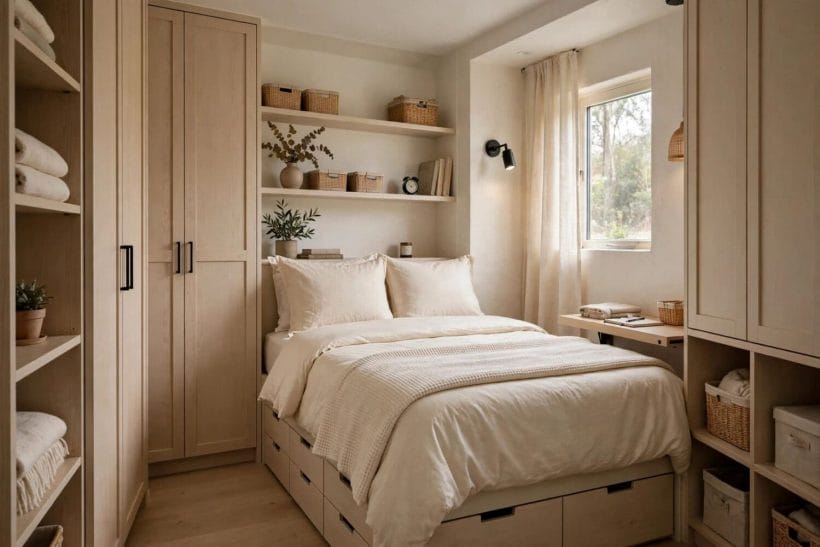
Guests unpack into the room’s vacancies. This section creates them — drawers that open empty, rails that wait, surfaces that receive a case with grace.
34. Two drawers, genuinely empty
Not moved-aside empty — empty. A guest who opens a drawer onto the household’s jumble learns the room was lent, not given.
35. Hanging space with real hangers
A section of wardrobe or a freestanding rail, with a handful of decent hangers including one or two trouser and padded ones.
36. A bench or rack where the case belongs
A luggage rack, a low bench or a sturdy chest at the bed’s foot gives the suitcase its station — open, off the floor, off the bed. It protects the bedding from wheels and the guest’s back from the floor.
37. An empty bedside drawer each side
Chargers, jewellery, medication, the paperback: the bedside drawer is the guest’s pocket. Empty both sides, as with the bedside tables above. A small torch inside is a kindness in an unfamiliar room and costs nothing to provide.
38. Hooks for today’s clothes
A row of hooks — behind the door, beside the mirror — takes the day’s clothes, tomorrow’s outfit, the dressing gown. Guests without hooks drape the chair, then the bed, then the floor.
39. A mirror a person can dress by
A full-length mirror, or the best the room allows, placed where daylight or a lamp serves it.
40. A small basket for used towels
A basket or a designated hook tells guests where wet towels go, sparing them the bathroom-floor dilemma and you the damp bedding pile.
41. A findable kit of small rescues
A needle and thread, spare buttons, a lint roller, safety pins, a shoe cloth — a small box in the drawer, labelled by its lid. Guests facing a small wardrobe disaster before an event experience this box as pure grace.
42. Defend the room from household creep
Every household stores by gravity: the guest room attracts the ironing pile, the returns parcel, the outgrown toys. Institute a rule — nothing enters the guest room that is not the guest’s — and a fortnightly eviction.
43. A shelf for books and bits
One shelf or surface, clear but for a few books, receives the guest’s scattered small life: keys, coins, the novel, the water glass. Rooms fail guests in small surfaces more than in grand features.
44. A cleared shelf in the bathroom too
The guest’s territory extends to the bathroom: one cleared shelf or a small tray for their washbag, beside the towels you laid out.
6. Light, Blackout and the Small Hours
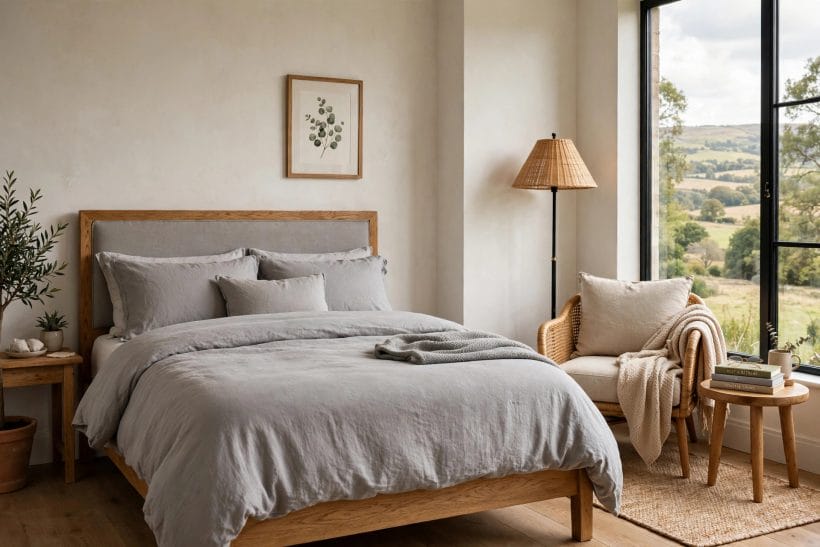
A guest room is experienced mostly in the dark: arriving tired, sleeping, waking at night in a strange geography. These ideas light that experience properly.
45. Blackout that actually blackens
Lined curtains or a blind that closes fully, fitted close to the window, so the sleeping guest — not the streetlight — decides when morning starts.
46. Bedside lamps on both sides, warm and shaded
Two lamps, matched in height if not in shape, with warm bulbs and shades that keep glare from a lying-down eye. One lamp sentences one guest to darkness or to the ceiling light’s interrogation.
47. A lit path to the bathroom
A low, warm night light in the hall or landing — motion-sensed or simply left on — draws the map a half-asleep stranger needs.
48. A kind ceiling light, dimmed or shaded
The overhead light is for arriving, unpacking and finding things; it should still be kind. A dimmer, or a shade that hides the bare bulb, keeps the room’s one utility light from undoing the calm the lamps create.
49. A reading light that aims
One adjustable lamp — at the better reading side, or the room’s chair — respects the couple where one reads and one sleeps. Beam control is the whole feature: light on the page, darkness on the pillow.
50. Layers at the window: sheer by day, blackout by night
A sheer or voile for daytime privacy and the blackout layer for night give the room both its lives.
51. Switches a stranger can solve
Walk the room as a stranger at midnight: can you find light, kill light, and reach the door without a puzzle? Label nothing, but arrange everything obvious — the lamp by the bed first, the door where doors should be.
52. Charging at the bedside, cabled
A socket within reach of each pillow and a spare charging cable in the drawer.
53. A small torch for the exceptional night
Power cuts and unfamiliar houses are a poor combination. The bedside drawer’s torch — checked when the bedding changes — covers the exceptional night for pennies.
54. Test-sleep the room yourself
Once, before your first guests and yearly after: sleep in the room.
55. Blind cords and small guests, kept safe
Where children visit, loose blind and curtain cords are a recognised hazard: fit the cleats and tensioners that keep cords out of reach, as general safety practice in any sleeping room.
7. Comfort Details: The Hotel Lessons Worth Stealing

Hotels professionalised the guest’s small comforts. Steal the transferable ones — the water, the towels, the written-down essentials — and leave the mini-bar psychology behind.
56. Water and a glass, by the bed
A covered carafe and glass, refreshed for each arrival. The night-time drink of water is the most-requested, least-provided comfort in amateur hospitality: guests will not wake a house for it, and will remember its absence at 3 a.m.
57. Towels laid out in the room
A bath towel and a hand towel per guest, laid on the bed or the bench, plus a spare in the bathroom.
58. A spare toiletries kit
Toothbrush, toothpaste, soap, shampoo, a razor, cotton wool: a small sealed kit in the bathroom tray for the forgotten washbag. It rescues one guest a year completely and reassures all the others.
59. The house’s small facts, written down
A card on the bedside: the Wi-Fi code, how the shower runs, when breakfast roughly happens, where the tea lives, the front door’s knack. Guests relax when the house’s operating system is written rather than guessed.
60. A few books, chosen for browsers
Short stories, a local history, a book of photographs, something funny: guest-room books are browsed, not studied. Choose for the half-hour before sleep and the rainy afternoon.
61. Temperature a guest can adjust
A fan in summer within reach, the extra blanket of the bed section in winter, and instructions — one line on the card — for any heating control the guest may touch. Guests suffer temperatures politely and sleep badly honestly.
62. Breakfast honesty, the night before
A note — on the card, or said at goodnight — about the morning: when people rise, where the tea and cereal live, whether to help themselves. Guests lie awake rehearsing the etiquette of an unknown kitchen.
63. Scent restraint: fresh air over fragrance
Air the room before arrivals; let clean bedding be the scent. Artificial fragrance is the most divisive amenity in hospitality — adored by some, a headache to others, and impossible to un-apply at midnight.
64. A stem or two from the garden
One small vase — a rose, a sprig of something green, whatever the season offers — on the bedside or the chest. It is the detail guests photograph and mention.
65. Leave the room better briefed than you found it
After each visit, restock, repair and note what ran out or was asked for: the guest book of logistics nobody writes. The room improves by one lesson per guest until it runs like a small, beloved inn.
8. Small, Shared and Awkward Guest Spaces
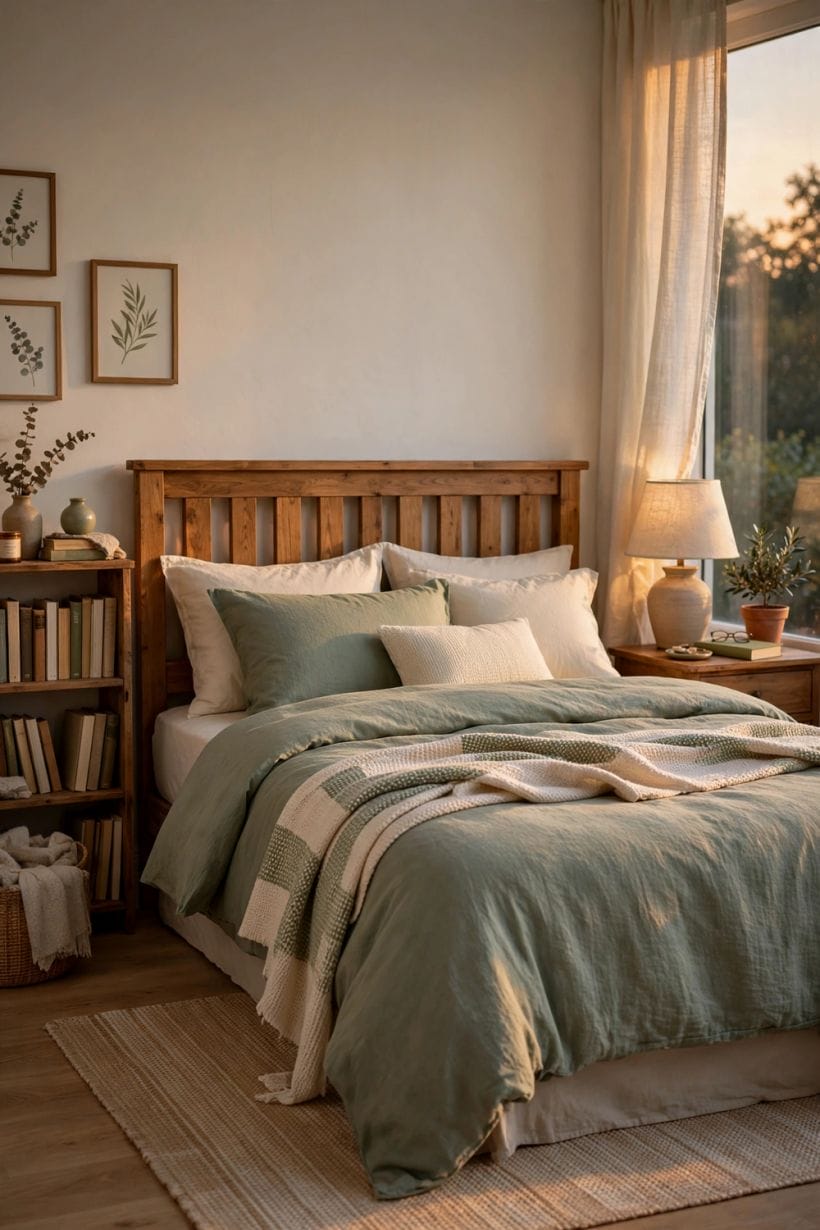
Not every house has a spare room; every house can still host well. The compact-room lessons of small bedroom ideas apply double here, where the sleeper is a guest and the welcome must survive the squeeze.
66. The box room, done completely
A single bed of real quality, in a small room finished completely — blackout, lamp, hooks, mirror, one clear surface — outperforms a large room half-lent. Smallness forgives; incompleteness does not.
67. An airbed, but done properly
Where a temporary bed is unavoidable, do it properly: a raised airbed or a thick self-inflating mat, on a rug, with real bedding, pillows and a bedside lamp. The category’s disgrace comes from the floor-level, sheet-less version.
68. The living-room guest, given privacy kit
When guests sleep in the living room, hand them the means of privacy: a screen or curtain track, a lamp of their own, a basket for their things, and a household that vacates on schedule.
69. A screen where a door should be
In studios and shared spaces, a folding screen or a bookcase turned boundary gives the guest corner its threshold. It will not stop sound, but it stops sightlines, and sightlines are most of privacy at 2 a.m.
70. Fold-away everything in the occasional room
Folding luggage rack, collapsible rail, stacking chair: the occasional guest room earns its everyday floor by folding its hospitality away.
71. A guest corner in a studio, defined honestly
A daybed along one wall, its own rug, lamp and screen: a studio can define a guest corner that is genuinely comfortable for a night or three.
72. Eaves and awkward shapes, used kindly
Low eaves take the bed’s head, the storage and the dressing zone; the room’s tall centre takes the person.
73. Signals that say a temporary bed is expected
In shared and occasional spaces, the welcome is signalled by preparation done in advance: the bed made before the guest arrives, towels out, the basket waiting. A bed assembled apologetically at midnight says the opposite, whatever words accompany it.
74. An ottoman that stores the bedding
A storage ottoman or blanket box holds the guest bedding in the room where it will be used, serves as seat and suitcase stand meanwhile, and keeps the airing cupboard out of the changeover.
75. The reset routine after guests leave
Strip, air, wash, restock, and return the room to its other life the same day — or return it to guest-ready, if the room is dedicated. Rooms left in post-guest limbo decay into the household’s dumping ground within a fortnight.
9. Checks and Mistakes: Before the First Purchase or the First Stone
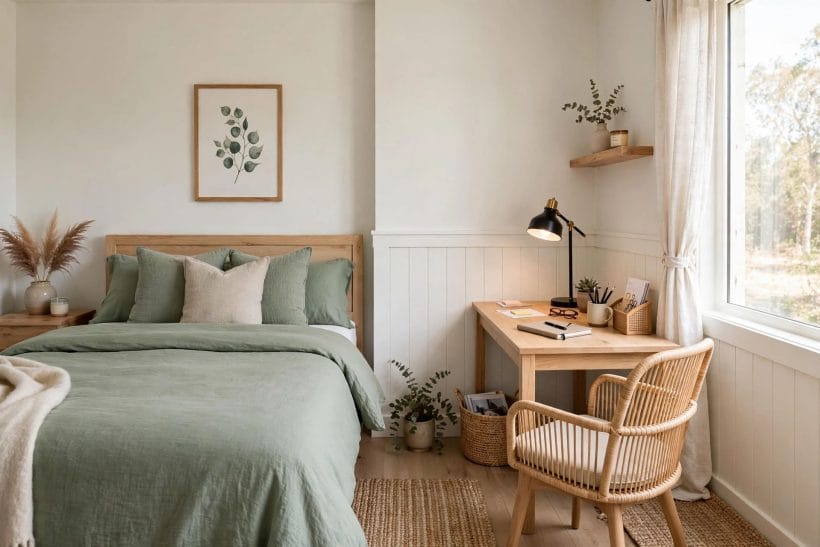
Before the first guest, run the test-sleep of the light section and the changeover rehearsal of the layout section; between them they find nearly everything. Then check the room’s small print: drawer emptiness, hanger count, towel spares, the toiletries kit, the torch’s batteries and the welcome card’s facts. A guest room’s failures are almost never large — they are small, specific and findable by exactly this kind of walk-through.
The mistakes are consistent: the cast-off mattress, the drawer that is not empty, the curtains that leak dawn, the second job that never quite leaves. Each is a version of the same error — lending the room while keeping it. The guest room works when the household genuinely gives it, for the nights in question, and the checklist is simply how the gift is wrapped.
One discipline protects everything: the reset. Whatever the visit taught — a request, a shortage, a breakage — write it where the bedding is changed, and fix it before the next arrival rather than apologising for it during. Guest rooms improve visit by visit or decay week by week; there is no third direction, and the direction is chosen by this small habit alone.
10. Costs and Pulling It Together
Costs in a guest bedroom divide honestly: the bed and its bedding first and largest; the blackout and lamps second; storage pieces and the comfort kit a modest third — and this survey invents no figures, because the range between a daybed in a box room and a dedicated suite is too wide for numbers to mean anything. The spending order, though, is universal: sleep first, darkness second, vacancy third, decoration last. A beautiful guest room with a bad bed is a photograph; a plain one with a great bed is a reputation.
Pull the seventy-five together and the formula is short: a bed you’d sleep on, layers a guest can adjust, storage that is actually empty, darkness that is actually dark, and the house’s small facts written down. Do those five and the style of the room — farmhouse, modern or inherited — hardly matters, though the cluster’s style lanes each have their own say in the wider home design ideas collection.
Final Considerations
Hospitality is mostly logistics wearing a smile. The guest bedroom is where the logistics live: a bed, a drawer, a lamp, a towel — arranged before the doorbell, tested by the only honest method, which is sleeping there yourself.
Prepare the room once, properly, with its checklist by the door. After that, every guest night is the same small ceremony: bedding changed, towels laid, water by the bed — and a house that can say, truthfully, we were expecting you.



0 Comments