

Luxury vinyl plank is the floor people buy for the look of wood without the fuss of wood — and most of the time it delivers exactly that. When it disappoints, the disappointment almost always traces back to a check that was skipped before the boxes were opened: the wear layer that was thinner than the traffic, the core that did not suit the room, the locking edges that were not quite right, or the subfloor that was never checked. None of those is a fault in the plank. All of them are decisions a buyer can make well.
This guide is the prevention version of the buying guide: every section is a problem class, and every problem class comes with the check that stops it. Read it before you order, not after the floor is down, and the floor you get will be the floor you expected.

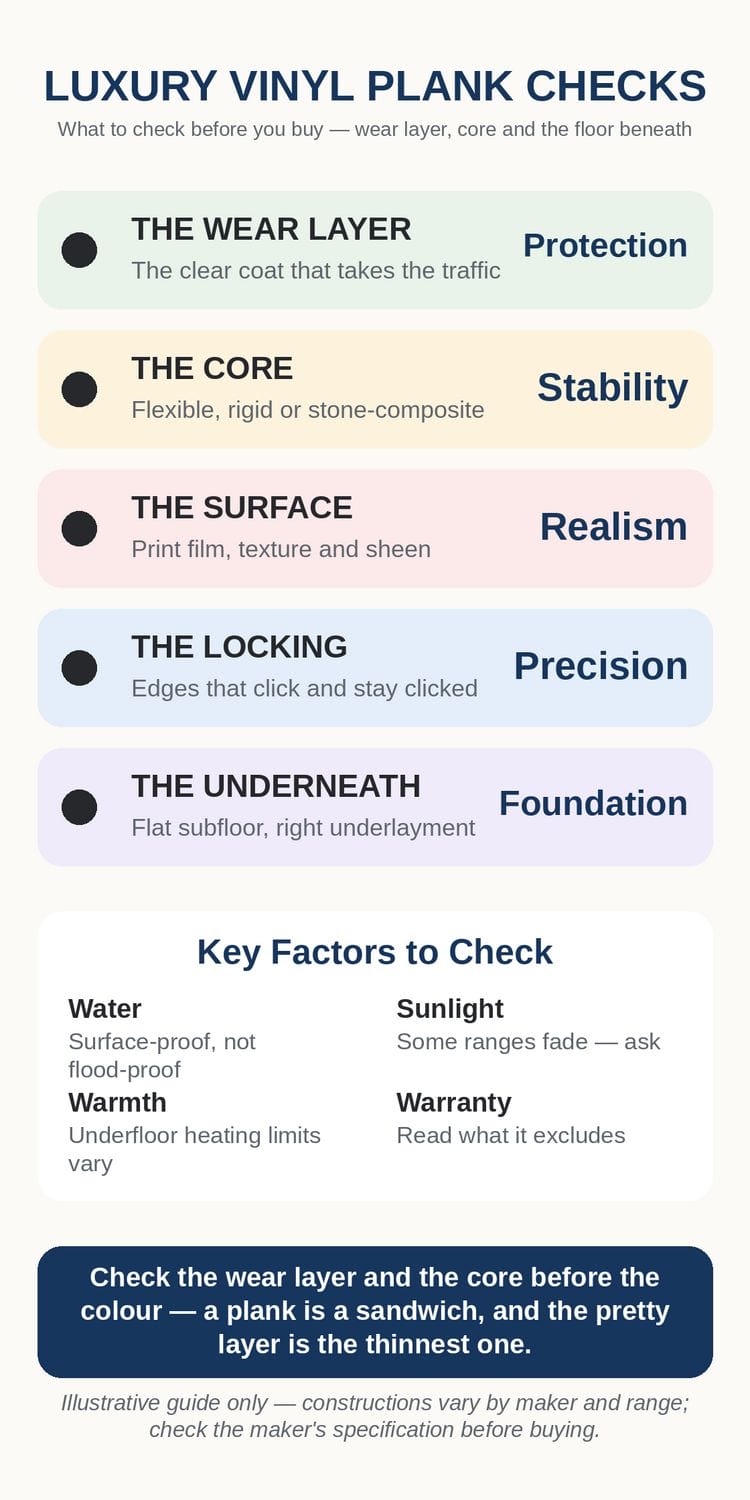
1. Luxury Vinyl Plank Checks at a Glance
Five checks cover the plank itself; the sections after them cover the room, the water, the light and the paperwork. Run the five first and the rest falls into place.
| The Check | What to Know | At a Glance |
|---|---|---|
| The Wear Layer | The clear coat that takes the traffic | Protection |
| The Core | Flexible, rigid or stone-composite | Stability |
| The Surface | Print film, texture and sheen | Realism |
| The Locking | Edges that click and stay clicked | Precision |
| The Underneath | Flat subfloor, right underlayment | Foundation |
Check the wear layer and the core before the colour — a plank is a sandwich, and the pretty layer is the thinnest one. Four key factors sit behind the table: water, because the surface is water-resistant but not flood-proof; sunlight, because some ranges fade and the question is worth asking; warmth, because underfloor heating limits vary by construction; and the warranty, whose exclusions are as informative as its promises. The companion buying guides in this family — the luxury vinyl plank checks guide and the vinyl plank checks guide — cover the same ground from the choosing side; this post covers it from the problems side.
2. The Wear Layer: Where Floors Age
The wear layer is the clear coat over the printed wood image, and it is the only part of the plank that actually meets your shoes, your dog’s claws, your chair legs and your vacuum. Everything else is structure; the wear layer is the floor’s skin, and when it is too thin for the room, the floor ages in the places you walk most — the hall, the kitchen, the doorway — while the corners still look new.
The check is simple: ask for the wear layer’s specification for the exact plank, and match it to the room’s traffic. Busy family rooms and hallways deserve the heavier end of the range; a quiet bedroom does not. The maker’s specification, not the showroom sample, is the authority — a sample in a shop tells you nothing about how the coat behaves after a year of shoes.
Two habits protect the layer once it is down: felt pads under furniture feet, and a mat at the door that catches grit before it becomes an abrasive. Grit is the wear layer’s real enemy — not traffic itself, but the sand and stone that traffic carries in. A mat at every outside door is the cheapest floor protection there is.
3. The Core: Flexible, Rigid or Stone-Composite
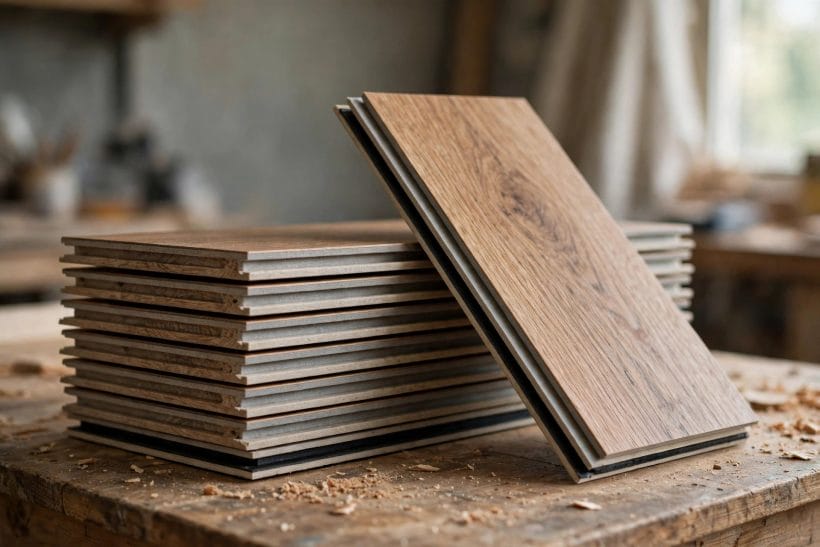
Under the print film sits the core, and the core decides how the floor feels and how it behaves. Flexible cores bend slightly and sit close to the subfloor; rigid cores hold their shape and bridge small imperfections; stone-composite cores add mineral content for stiffness and dimensional stability. None is universally best — the right core depends on the room, the subfloor and the temperature range the floor will live in.
The problem to prevent here is movement: a floor that expands and contracts with temperature more than its room allows, or a core that does not suit a room with wide temperature swings, such as a sunroom or a room over an unheated space. The maker’s guidance on temperature range, acclimatisation time and expansion gaps is the check — and it is worth reading before the boxes arrive, because the acclimatisation clock starts when the boxes come indoors.
Feel matters too. A rigid core feels firmer and more wood-like underfoot; a flexible core feels softer and quieter. Walk the showroom samples in your own shoes, on a hard surface, and notice which feeling you would want in your own kitchen at seven in the morning.
4. The Surface: Print, Texture and Sheen
The visible layer is a printed film, and its quality decides whether the floor reads as wood or as a picture of wood. Good prints carry varied grain, knots and colour shifts across planks; weaker ones repeat the same image too often, and the repetition becomes obvious once a room is laid. The check is to lay several planks out together in the shop and look for repeats — a floor made of four identical planks is a floor that will look tiled.
Texture and sheen complete the illusion. An embossed surface that follows the printed grain feels like wood under bare feet and breaks up light the way wood does; a flat, glossy surface reflects light evenly and gives the game away. Matte and low-sheen finishes are usually the safer choice for a convincing floor, and they hide dust better than a shine.
Colour choice is where the wear-layer guide in this family earns its keep: the vinyl flooring wear layer guide explains how the clear coat interacts with the print, and why the prettiest sample in the shop is not always the best floor in the room.
5. The Floor Beneath: Flat, Dry, Clean
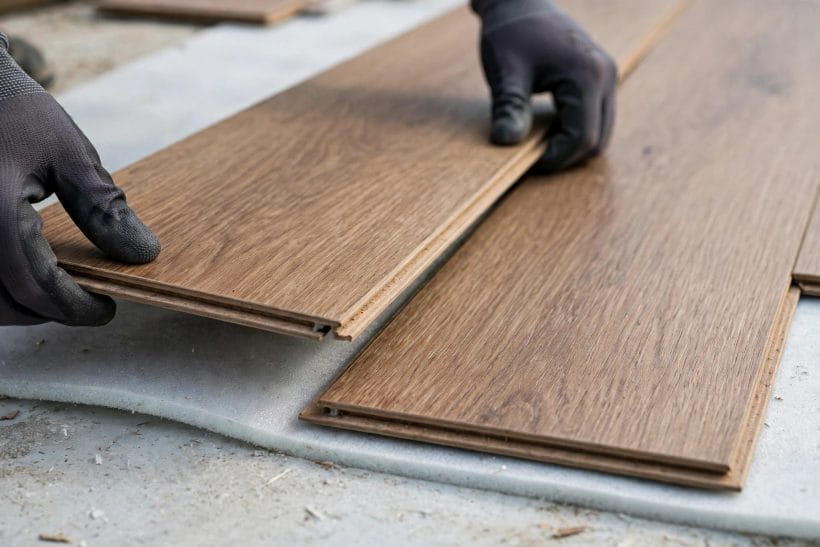
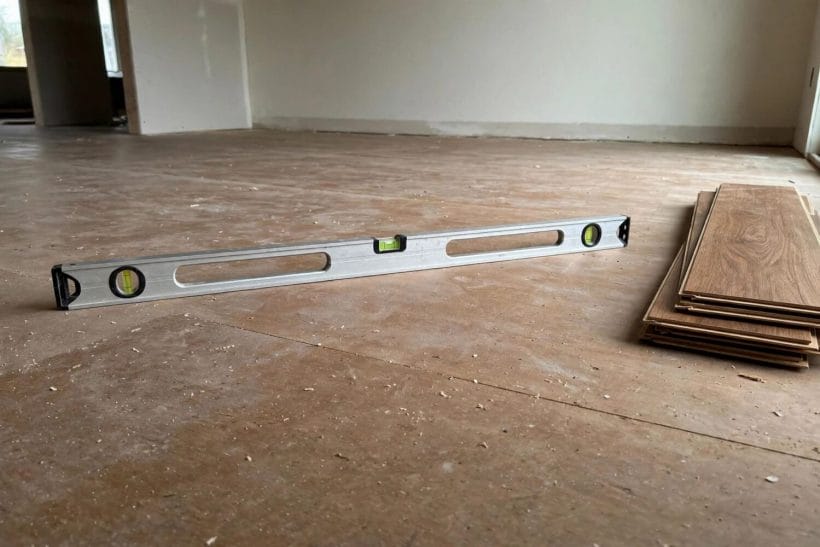
More vinyl plank complaints trace back to the subfloor than to the plank. A subfloor that is not flat telegraphs its bumps and dips through the planks as a soft, uneven feel underfoot; a subfloor that is not dry traps moisture under a floor that cannot breathe it out; a subfloor that is not clean leaves debris that clicks and crunches under every step. The plank is a skin — it shows whatever is beneath it.
The check is the long straightedge. Lay it across the subfloor in several directions and look for gaps; the maker’s tolerance tells you how much is acceptable, and anything beyond it gets levelled before a plank is laid. Moisture gets a test too, especially over concrete and in ground-floor rooms, following the maker’s method. Cleaning is the simplest step and the most skipped: sweep, vacuum, and sweep again.
Old flooring complicates the picture. Some floors can stay down as a base, others must come up, and the answer depends on their condition and the maker’s guidance. If the subfloor work looks like more than a weekend’s effort, that is the moment to involve a professional installer — the subfloor is the one part of the job that cannot be redone without lifting the whole floor.
One more subfloor habit is worth forming: photograph it before the planks go down. A dated photograph of a flat, clean, dry subfloor is useful evidence if a warranty question ever arises, and it costs nothing. Keep it with the plank paperwork, the batch numbers and the spare box, and the floor’s whole history is in one folder.
6. Locking Edges That Stay Locked
Click-lock edges are the reason vinyl plank is a popular do-it-yourself floor, and they are also the place where installation quality shows. A plank clicked home properly sits flush, tight and silent; a plank forced, angled wrong, or laid over a dirty edge sits proud, gaps over time, or clicks underfoot. The difference is technique, not product, and it is learned in the first row.
The checks are small and decisive. Keep the locking edges clean as you work. Tap with the maker’s recommended block, never a hammer on the edge itself. Check each row for tight joints before starting the next, because a gap in row three becomes a pattern by row ten. And respect the expansion gap at the walls: the floor needs room to move, and a floor jammed tight against the skirting will find its movement somewhere else — usually as a lifted seam in the middle of the room.
Damaged edges deserve honesty, not hope. A plank with a chipped or bent locking profile will not heal in the floor; set it aside for a cut piece at the wall, where the damaged edge disappears under the trim. The spare box in the garage exists for exactly this reason — buy it with the order, not after the last row.
7. Underlayment and the Quiet Floor
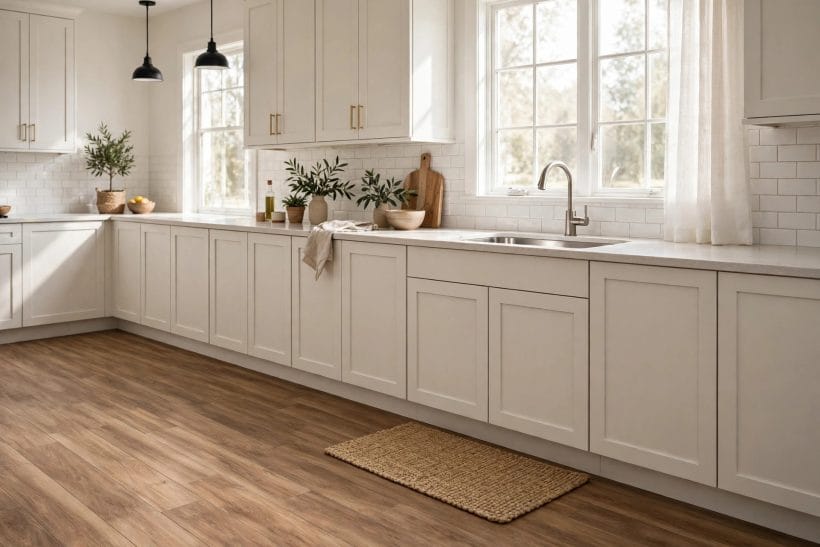
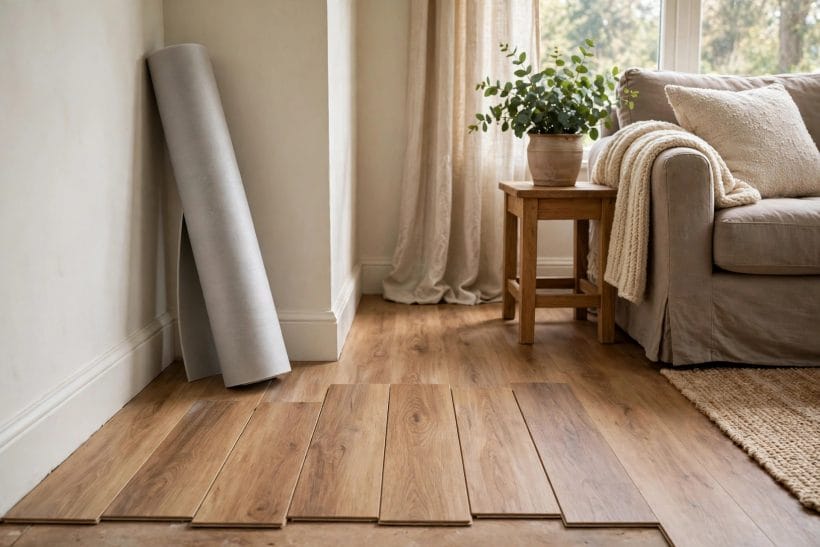
Underlayment is the thin layer between plank and subfloor, and its job is threefold: it softens the feel underfoot, it quietens the hollow click that hard floors can have, and it evens out the smallest subfloor imperfections. Some planks arrive with an attached pad; others need a separate roll, and the two must not be doubled up — a pad on top of a pad makes a floor that is too soft and joints that flex.
The check is the maker’s specification for the exact plank: attached pad or separate underlayment, and which thickness and material are approved. The wrong underlayment can void a warranty or make the joints work too hard, and the right one is usually the least expensive part of the whole floor. Sound matters most in upstairs rooms and flats, where the floor below hears everything — and a good underlayment is the difference between a floor and a drum.
Underlayment also has a moisture role on concrete: some products include a vapour barrier, others need one separately. The subfloor test from section five decides which, and the two checks together — moisture and underlayment — are the floor’s real foundation.
8. Water, Sunlight and Heat
Vinyl plank is water-resistant, and the distinction matters: the surface shrugs off spills, splashes and a wet mop, but standing water finding the seams, or a flood, is a different event, and no plank construction is flood-proof. Kitchens and bathrooms suit the floor well with one habit — wipe spills promptly, keep the seams clean, and use a mat at the sink — and the room that floods is a repair job for a professional, not a mop.
Sunlight is the slower problem. Strong, direct sun through a large window can fade some ranges and warm others beyond their comfortable range, and the check is to ask the maker about the exact plank’s light and temperature performance before laying it in a sunroom or a south-facing glass wall. Curtains, blinds or a rug in the sunniest patch are cheap insurance.
Heat follows the same logic. Underfloor heating and vinyl plank can coexist, but the system’s temperature limits vary by construction, and exceeding them is a warranty and a movement problem at once. The maker’s heating guidance — maximum surface temperature, heating type, ramp-up rate — is the check, and it belongs in the plan before the heating goes down, not after.
9. Colour and Pattern in a Real Room
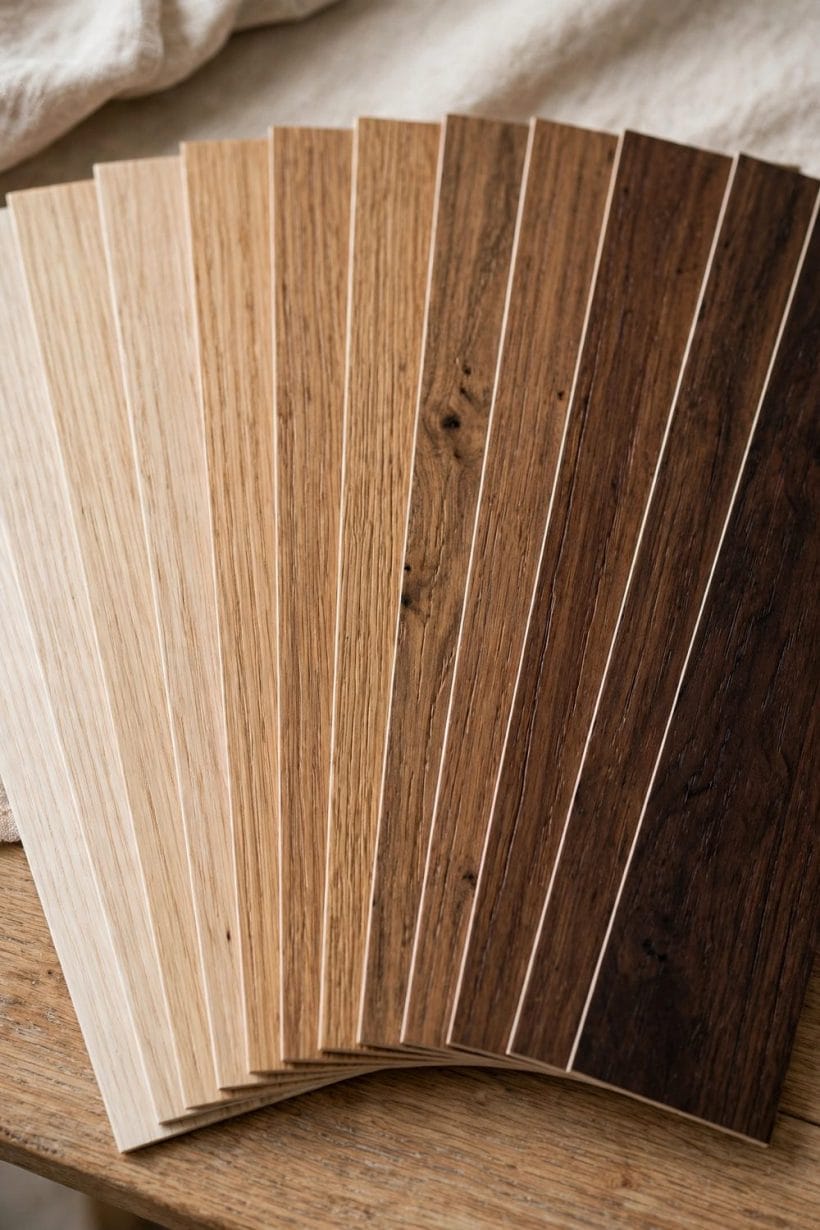
The last problem class is aesthetic, and it is the one buyers regret most quietly: a floor that looked perfect in the shop and slightly wrong at home. Showroom lighting flatters; home lighting tells the truth. The check is to take samples home — several planks, not one — and live with them for a few days: morning light, evening light, against your furniture, beside your wall colour.
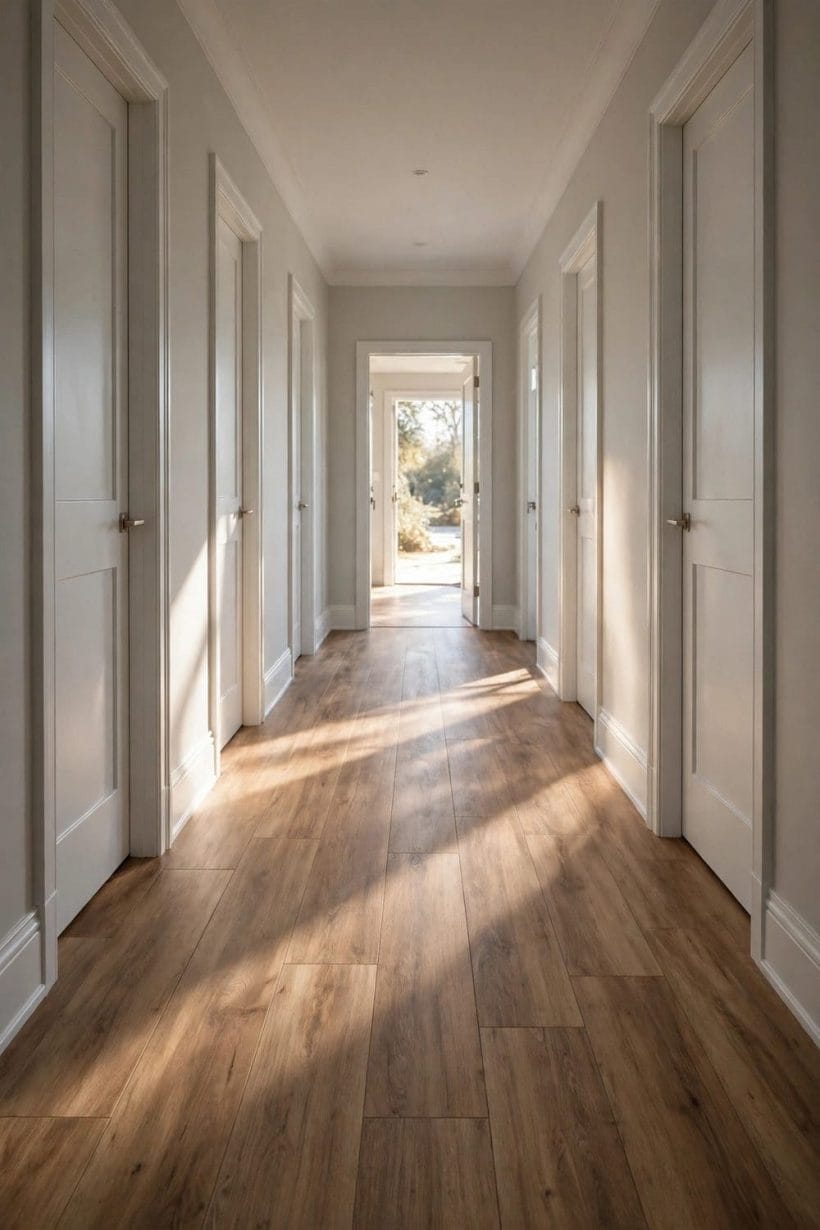
Pattern repeat, covered in section four, gets a second look at this stage, because a room’s worth of planks shows repeats that a single sample hides. Plank size matters too: wider, longer planks suit larger rooms and read calmer; narrower planks suit small rooms and busy layouts. And the direction of laying changes the room — planks running toward the main light source usually read best, and a long hall wants planks running along its length.
The wider flooring picture helps here: the tiny house flooring ideas collection compares the whole floor family in small rooms, the bathroom flooring ideas guide covers the wet-room end, the flooring installation cost guide sets the budget for professional fitting, and the luxury vinyl tile vs ceramic tile comparison sits next to this post for anyone weighing the tile-shaped alternative.

10. The Warranty and the Final Checks
Read the warranty before you buy, and read the exclusions first. They are the list of everything the maker will not cover — installation errors, subfloor problems, water damage beyond the rating, heat beyond the limit, the wrong underlayment — and they read, usefully, as a second checklist of the checks this guide has already given you. A warranty that excludes your actual room is a warning, not a promise.
Keep the paperwork with the floor: the plank name and range, the batch numbers, the installer’s details if one was used, and the spare box for future repairs. A single damaged plank in a click-lock floor is replaceable by a competent installer, and it is far easier with a spare from the same batch than with a new box in a slightly different dye lot.
The final walk, once the floor is down, is worth an hour: every seam tight, every edge under its trim, the expansion gaps in place, the room clean. Then the furniture goes back, the mats go down, and the floor gets to do the job it was bought for — looking like wood, shrugging off life, and asking for nothing more than a sweep and a mop.
The first month is the floor’s settling-in period, and it is worth watching with fresh eyes. Walk it barefoot and listen for clicks or soft spots; check the seams in the sunniest patch and the wettest corner; move a rug and look underneath. Anything that needs attention is cheapest to fix while the installer, the tools and the spare box are all still close at hand — and a floor that passes its first month quietly is a floor that will pass its first decade the same way.
Final Considerations
Luxury vinyl plank problems are almost all preventable, and the prevention is the same short list: check the wear layer against the traffic, the core against the room, the locking edges as you lay, the subfloor before you start, and the warranty before you pay. Get those five right and the colour you fell in love with is the floor you actually live on — year after year, without a single problem to report.



0 Comments