
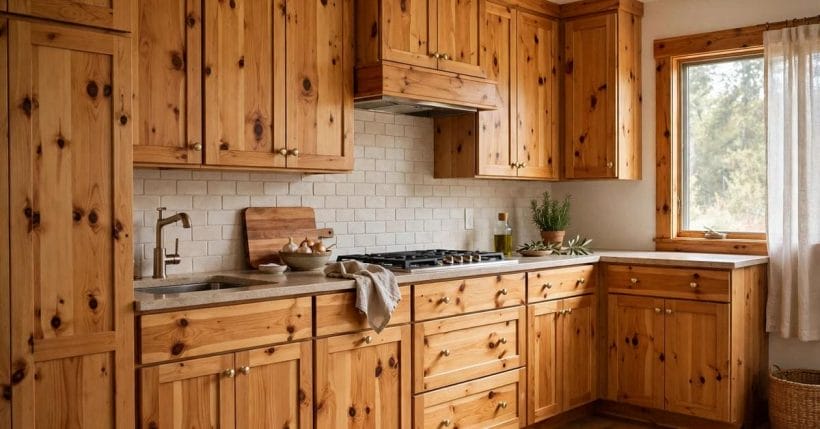
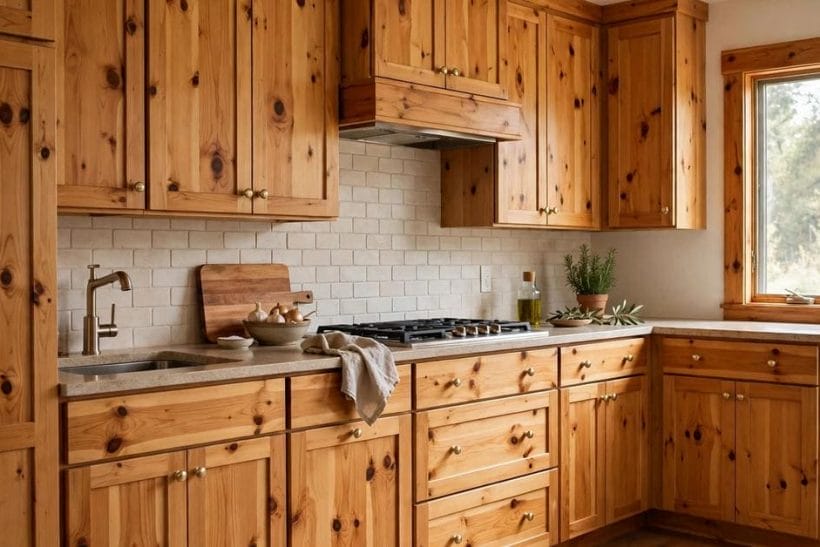
Knotty pine cabinets bring a warmth to a kitchen that few other materials match: the visible knots, the honey tones and the natural grain give the room character from the day they are fitted, and they age into a deeper, richer colour over time. But pine is a softwood with its own personality, and it suits some kitchens far better than others. This guide looks at knotty pine cabinets in the kitchen only — the wood itself, the finishes that protect it, the layouts it suits and the care it needs — and how to tell whether it is right for your home. Pine here means kitchen cabinets; the pine wall-finish treatment is a different subject, and the alder cabinets in the companion guide are a different species with a different character.
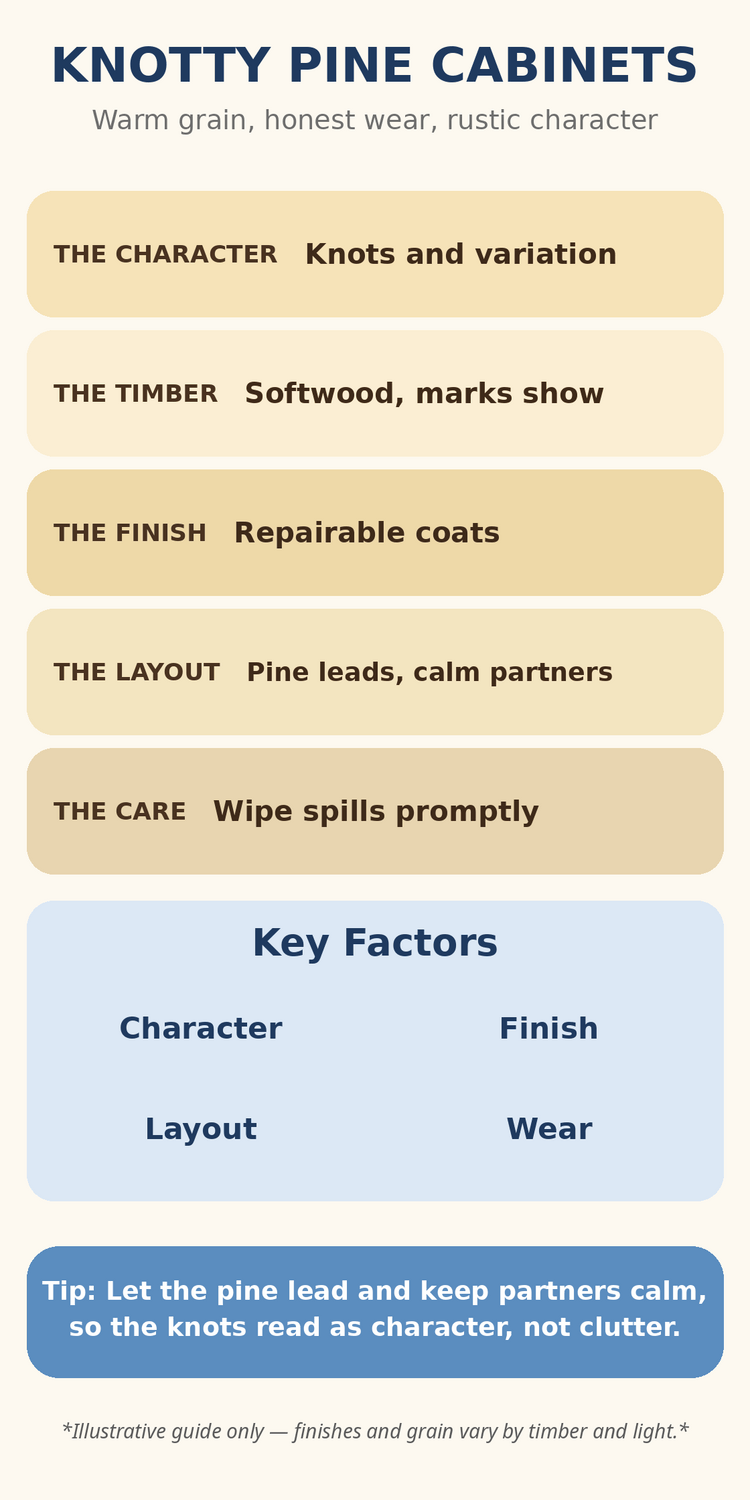
| Item | What it is |
|---|---|
| The Character of Knotty Pine | What makes knotty pine distinctive is exactly what its name promises: knots. |
| Pine as a Cabinet Timber | Pine is a softwood, which means it dents and marks more easily than hardwoods such as oak or maple. |
| Finishes That Protect Pine | Finish is what stands between pine and kitchen life, so it deserves careful thought. |
| Layouts That Suit Knotty Pine | Knotty pine suits kitchens with a rustic, farmhouse or cabin character best, where its warmth and texture feel at home alongside timber beams, stone or brick and natural flooring. |
| Pairing Pine With Counters and Backsplashes | Counters and backsplashes set the tone around pine cabinets, and the best partners are calm ones. |
| Hardware That Flatters Pine | Hardware is the jewellery of a pine kitchen, and the right choice lifts the whole room. |
| Pine and Kitchen Light | Light changes pine more than most cabinet timbers, because the knots and grain catch light and shadow. |
| Living With Pine Day to Day | Day-to-day care for pine cabinets is straightforward but not negligible. |
| Pine Against Alder and Other Cabinet Timbers | Pine is often compared with alder, and the comparison is worth making honestly. |
| Is Knotty Pine Right for Your Kitchen | Knotty pine is right for a kitchen where warmth and character matter more than a pristine, uniform finish, where the style leans rustic or farmhouse, and where the household will enjoy the timber ageing visibly. |
1. The Character of Knotty Pine
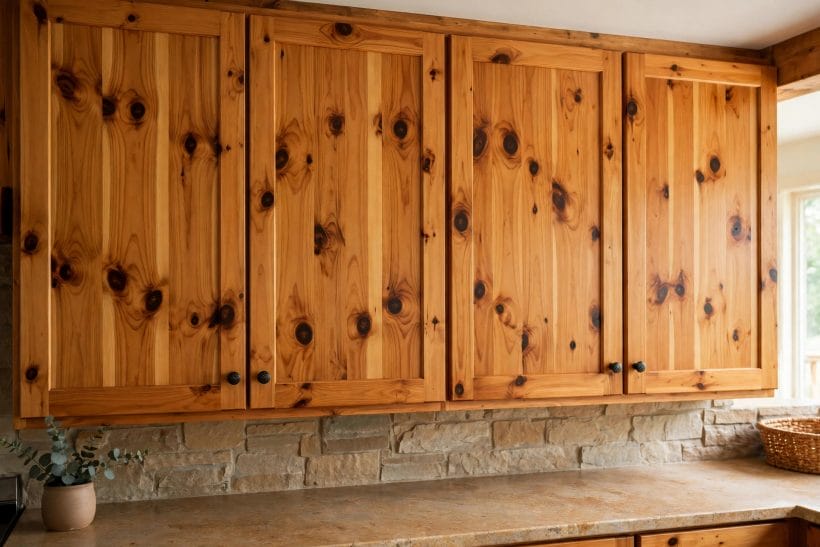
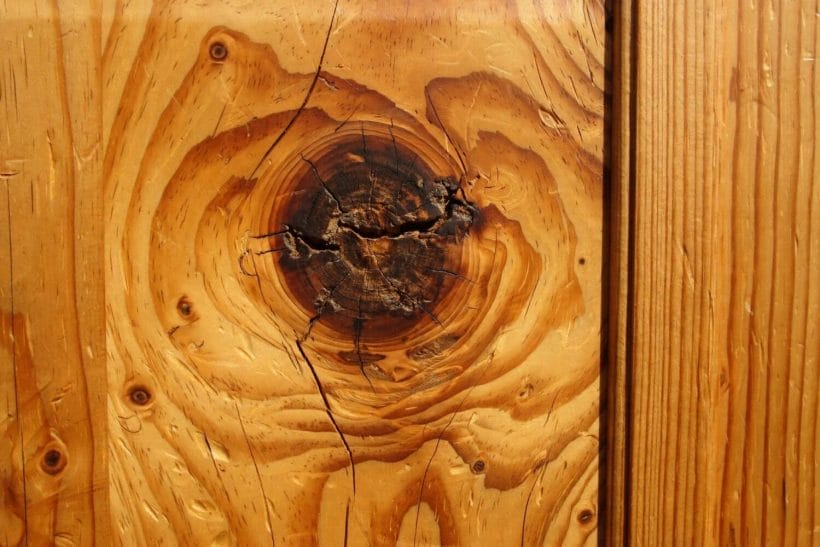
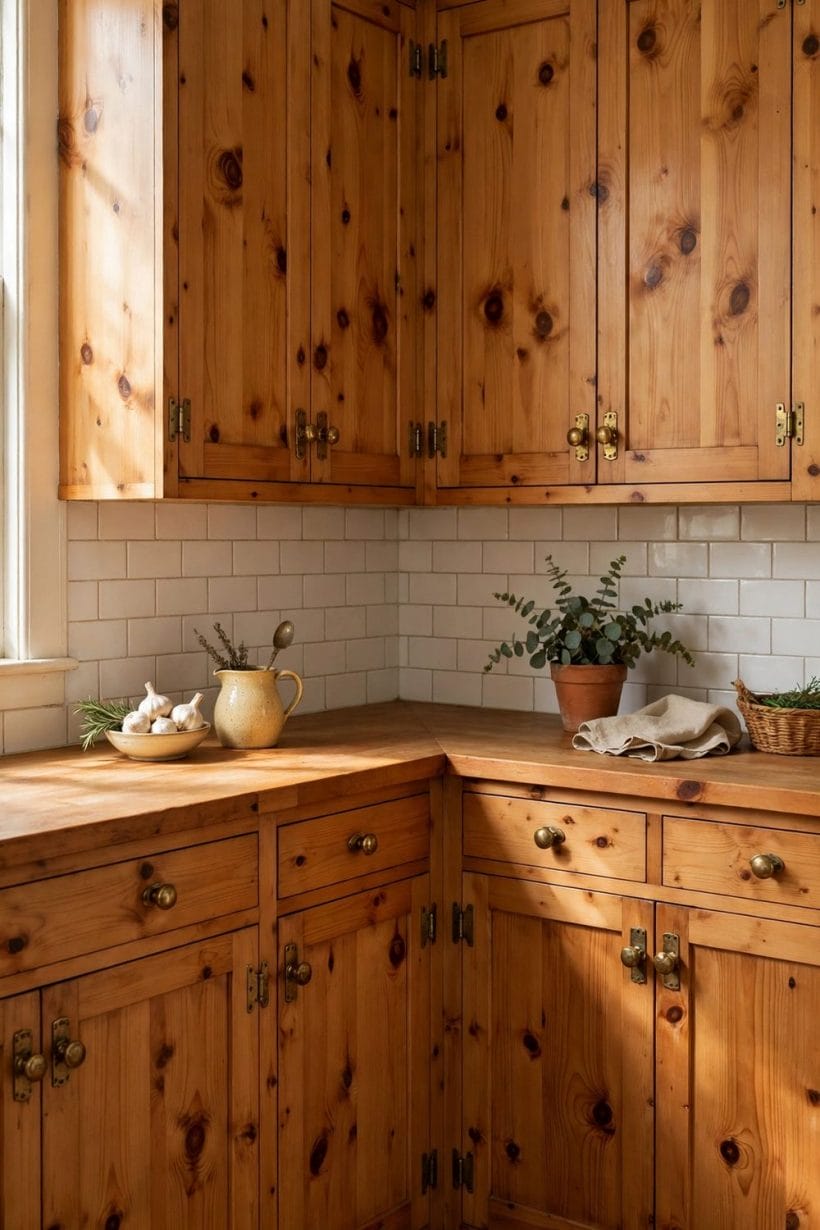
What makes knotty pine distinctive is exactly what its name promises: knots. Each knot is a point where a branch once grew, and the grain swirls around it in a way no other cabinet timber reproduces. Some people love this busy, rustic character; others find it too much. Before committing, look at large samples or full cabinet doors rather than small chips, since the knot pattern varies enormously from board to board and a single sample tells you very little about the finished kitchen.
Colour varies too, from pale honey to deeper amber, and it deepens with age and sunlight. If you want a consistent, uniform kitchen, knotty pine will fight you; if you want a kitchen with visible natural variation, it delivers it effortlessly. Ask to see several doors from the same batch side by side, and check that the variation on display is variation you will enjoy living with rather than variation you will wish away.
The variation between boards also means the kitchen should be viewed as a whole rather than judged door by door. A single door with a dramatic knot pattern may look busy on its own but settle beautifully among plainer doors, while a run of very knotty doors together can feel overwhelming. Ask the supplier how boards are matched across a kitchen and whether you can approve the door selection before fitting. This conversation costs nothing and prevents the most common disappointment with knotty pine: a kitchen whose variation feels accidental rather than composed.
2. Pine as a Cabinet Timber
Pine is a softwood, which means it dents and marks more easily than hardwoods such as oak or maple. In a busy family kitchen that is a real consideration: a dropped pan or a knocked chair leg will leave a mark on pine that it would not leave on a harder timber. Many owners accept this as part of the material’s charm — pine wears its history visibly — but it is worth deciding honestly whether you will enjoy that patina or resent it.
On the other hand, pine is lighter and easier to work than hardwood, which makes it practical for larger cabinet runs and for details such as raised panels and beading that suit its rustic character. It takes stains and finishes well, though the knots absorb finish differently from the surrounding grain and can appear darker — a feature to expect rather than a defect to complain about. Check the cabinet construction as well as the timber: solid doors, sound frames and quality hinges matter more to a kitchen’s life than the species on the front.
3. Finishes That Protect Pine
Finish is what stands between pine and kitchen life, so it deserves careful thought. A clear lacquer or varnish protects the wood while letting the grain and knots show, and it is the most popular choice for knotty pine precisely because it celebrates the timber. A stained finish deepens the colour and can even out variation between boards, while a painted finish hides the knots entirely — which defeats the purpose of choosing knotty pine in the first place.
Ask how many coats the finish has, how it is applied and how it can be repaired, since kitchen cabinets get wiped, splashed and knocked daily. A finish that can be touched up locally is far more practical than one that needs a full door refinished after every mark. Also check how the finish behaves around heat and steam, particularly near the oven and dishwasher, since pine and its finish both respond to sustained heat and moisture.
Finish choice also affects how the kitchen ages. A hard lacquer resists stains and moisture well but can show scratches as pale lines against the wood, while an oiled finish is easier to repair locally but needs re-oiling periodically to stay protected. There is no finish that is both invisible and invulnerable, so choose based on how you actually live: a household that cooks daily and wipes surfaces often may prefer the repairable oil, while one that wants a wipe-clean surface may prefer lacquer and accept visible scratch lines over time.
4. Layouts That Suit Knotty Pine
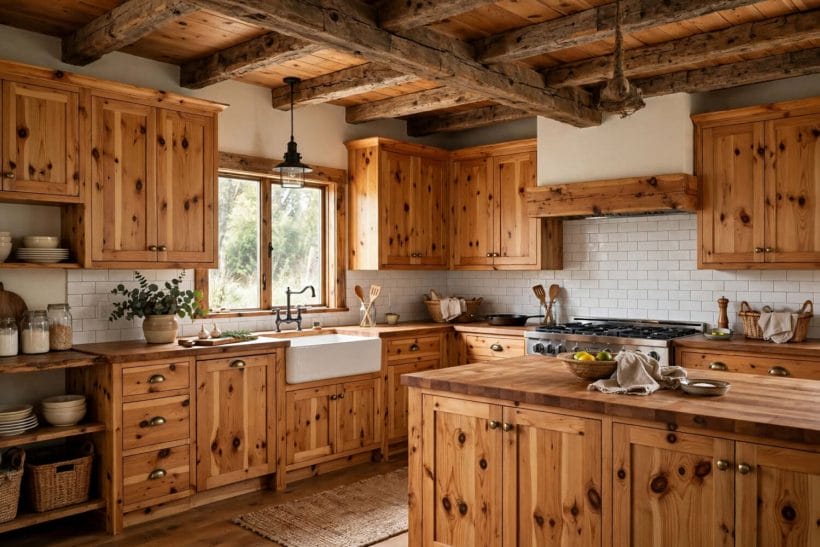
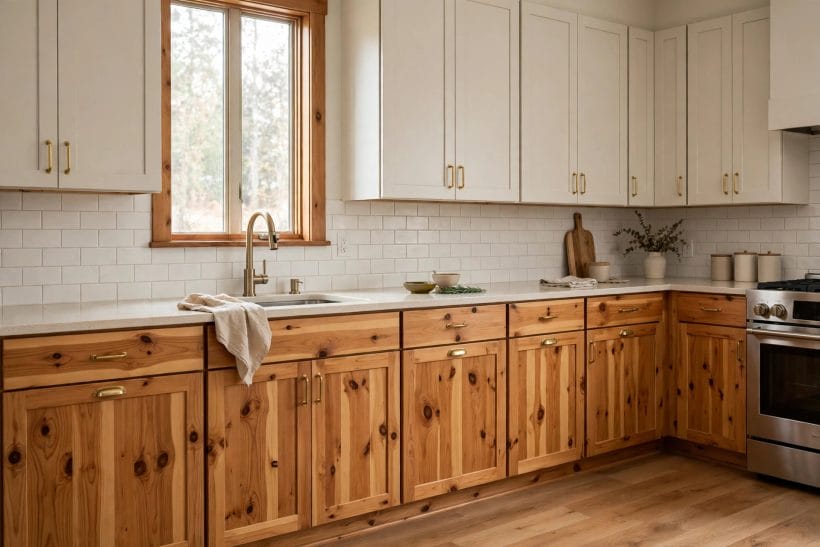
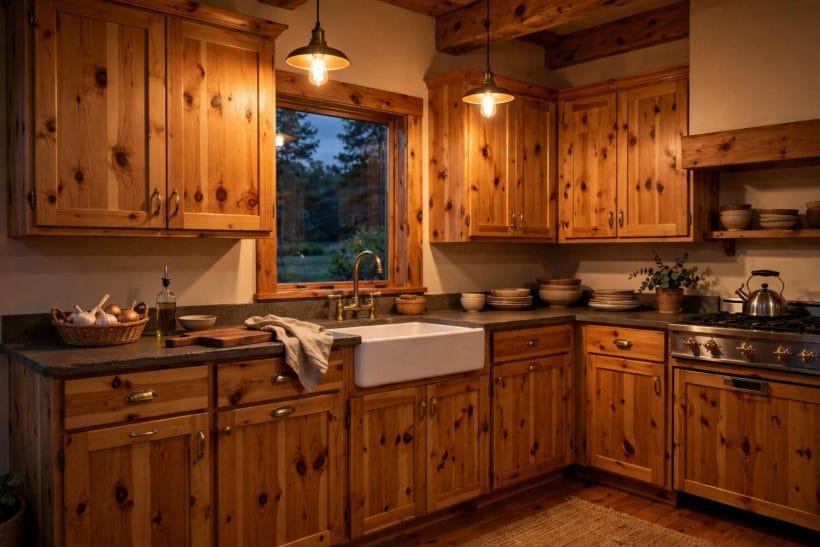
Knotty pine suits kitchens with a rustic, farmhouse or cabin character best, where its warmth and texture feel at home alongside timber beams, stone or brick and natural flooring. In a very sleek, handleless modern kitchen it can feel out of place, since its busy grain fights the clean lines. That does not make it wrong for a contemporary home, but it does mean the rest of the kitchen should be calm enough to let the pine lead.
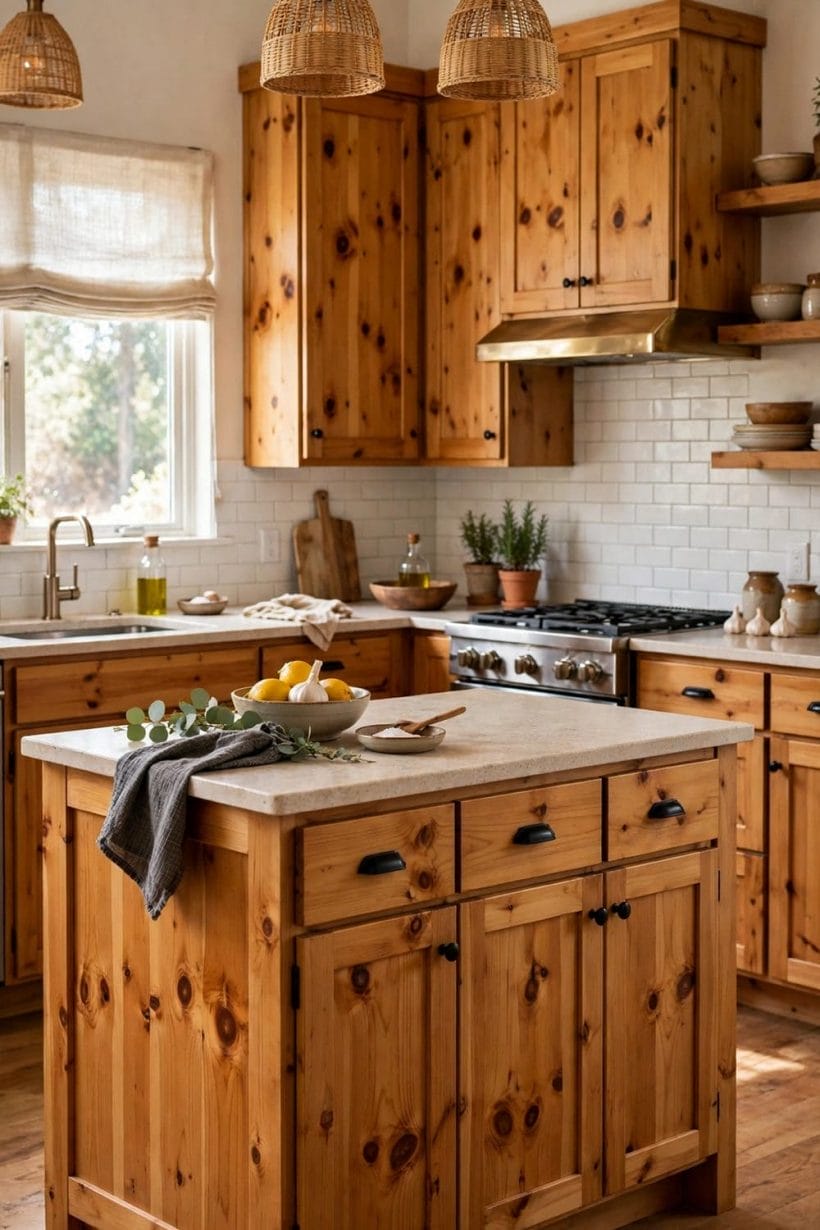
Consider how much pine the kitchen will carry: full-height runs of knotty pine on every wall can feel heavy, while pine on the base cabinets with calmer wall cabinets, or pine on an island with plainer perimeter cabinets, gives the warmth without the weight. A kitchen island in knotty pine is often the sweet spot, giving the room a warm centre while the rest of the cabinetry stays quiet.
5. Pairing Pine With Counters and Backsplashes
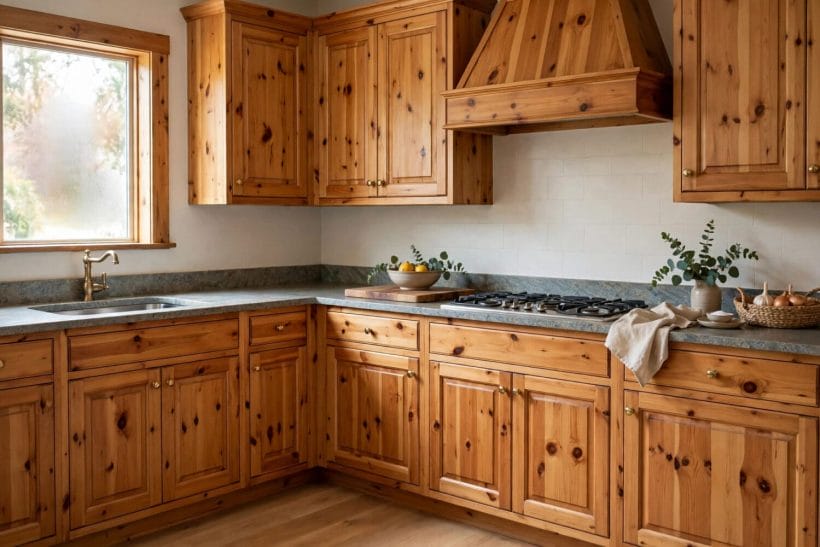
Counters and backsplashes set the tone around pine cabinets, and the best partners are calm ones. A plain stone, a simple quartz or a butcher-block counter lets the pine’s grain do the talking, while a busy, heavily veined stone competes with it and makes the kitchen feel restless. For backsplashes, simple tiles in warm white, cream or soft sage sit comfortably with pine, while the quartz backsplash ideas in the companion guide show how a slab approach can work if the stone is quiet.
Keep the palette warm: pine’s honey tones sit best with warm whites, creams and soft earth colours rather than stark white or cool grey, which can make pine look yellow by contrast. Test counter and tile samples against actual cabinet doors in your kitchen’s light before deciding, since showroom lighting flatters combinations that look different at home.
Layout balance also includes the ceiling and the floor, not just the walls. A pine kitchen with a low ceiling can feel enclosed if the cabinets run full height in pine, so consider breaking the run with open shelving or a lighter wall cabinet section to give the eye somewhere to rest. Similarly, a very dark floor under pine cabinets can make the room feel heavy, while a mid-tone timber or stone floor keeps the warmth without the weight. The kitchen works as a single composition, and pine is only one voice in it.
6. Hardware That Flatters Pine
Hardware is the jewellery of a pine kitchen, and the right choice lifts the whole room. Oil-rubbed bronze, black iron and aged brass all suit pine’s rustic character, while bright chrome or polished nickel can feel too cold against the warm grain. Cup pulls and bin pulls suit the farmhouse character of pine particularly well, while simple knobs keep the look quieter if the grain is already busy.
Check the hardware’s fixing as well as its looks: pine is soft, so screws can work loose over time if they are short or poorly seated. Longer screws and, where appropriate, bolts through the door give a more durable fixing. Try the hardware in your hand before committing, since a pull that looks right but feels awkward will annoy you every day.
7. Pine and Kitchen Light
Light changes pine more than most cabinet timbers, because the knots and grain catch light and shadow. Under warm lighting, pine glows; under cool lighting it can look flat or yellow. Use warm-white lighting in a pine kitchen, and make sure the work areas are well lit, since the busy grain can make it harder to see what you are doing on a dark counter.
Natural light matters too: a pine kitchen with good daylight shows the grain at its best, while a dark kitchen can make full runs of pine feel heavy. If the kitchen is short on daylight, consider pine on lower cabinets only, with lighter wall cabinets and a pale backsplash to keep the room bright. Check samples in the kitchen’s actual light, morning and evening, before finalising the finish.
Hardware fixing in softwood deserves a practical note: screws in pine loosen more readily than in hardwood, especially on doors that are opened dozens of times a day. Check hinges and handles every few months and tighten them before they work fully loose, since a screw that has wallowed out its hole needs a larger repair than one caught early. A dab of wood glue on a dowel can rescue a stripped hole, but prevention through regular checks is simpler and keeps the kitchen feeling solid.
8. Living With Pine Day to Day
Day-to-day care for pine cabinets is straightforward but not negligible. Wipe spills promptly, since pine and its finish both dislike standing moisture, and avoid harsh cleaners that can dull the finish. Dust with a soft, dry cloth and clean with a mild, timber-safe cleaner, following the finish maker’s guidance rather than generic advice. Keep an eye on the areas that get the most wear — around handles, near the sink and beside the oven — and touch up the finish early when it shows wear, since small repairs stay invisible while neglected ones grow.
Accept that pine will mark. A kitchen that is used daily will collect small dents and scratches, and on pine they show. Owners who love pine tend to see this as character accumulating; owners who want a kitchen that looks new for a decade may be happier with a harder timber. Knowing which camp you are in before you buy is the most useful check in this guide.
9. Pine Against Alder and Other Cabinet Timbers
Pine is often compared with alder, and the comparison is worth making honestly. Alder is also a softwood with a warm tone, but its grain is finer and quieter, with fewer and subtler knots — it suits a kitchen that wants warmth without pine’s rustic busyness. Oak is harder and more uniform in grain, maple is harder still and paler, and both resist dents better than pine. Each has its place; the question is which character you want to live with.
The companion knotty alder guide covers alder cabinets in full, and the whitewash guide covers pine as a wall finish rather than a cabinet timber — both are different subjects from the pine kitchen cabinets here, and confusing them leads to the wrong expectations. Judge pine on its own terms: unmatched warmth and character, honest wear, and a rustic feel that no harder timber reproduces.
10. Is Knotty Pine Right for Your Kitchen
Knotty pine is right for a kitchen where warmth and character matter more than a pristine, uniform finish, where the style leans rustic or farmhouse, and where the household will enjoy the timber ageing visibly. It is less right for a very sleek modern kitchen, for a household that wants cabinets to look untouched for years, or for a kitchen where the grain would fight with other busy materials. Run through the checks in this guide — samples at full-door size, finish and repair, layout balance, counter pairing, hardware, light and honest wear expectations — and the answer usually becomes clear.
If you choose pine, choose it wholeheartedly: let the knots show, pick calm partners for counters and backsplashes, and accept the patina as part of the deal. A pine kitchen chosen with open eyes is a kitchen that grows more loved as it ages, and that is a rare quality in any room of the house.
Final Considerations
Knotty pine cabinets offer a warmth and character that few timbers match, but they ask for an honest decision in return. Look at full doors, not chips; choose a finish you can maintain and repair; balance the pine with calm counters and backsplashes; pick hardware that suits its rustic character; and accept that a softwood kitchen will wear visibly. Done with open eyes, a knotty pine kitchen is a room that feels welcoming from the first day and grows more personal with every year. For the companion species and finishes, see knotty alder cabinets, whitewash knotty pine, quartz backsplash ideas, kitchen ideas, tiny house designs and interior design ideas.

0 Comments