

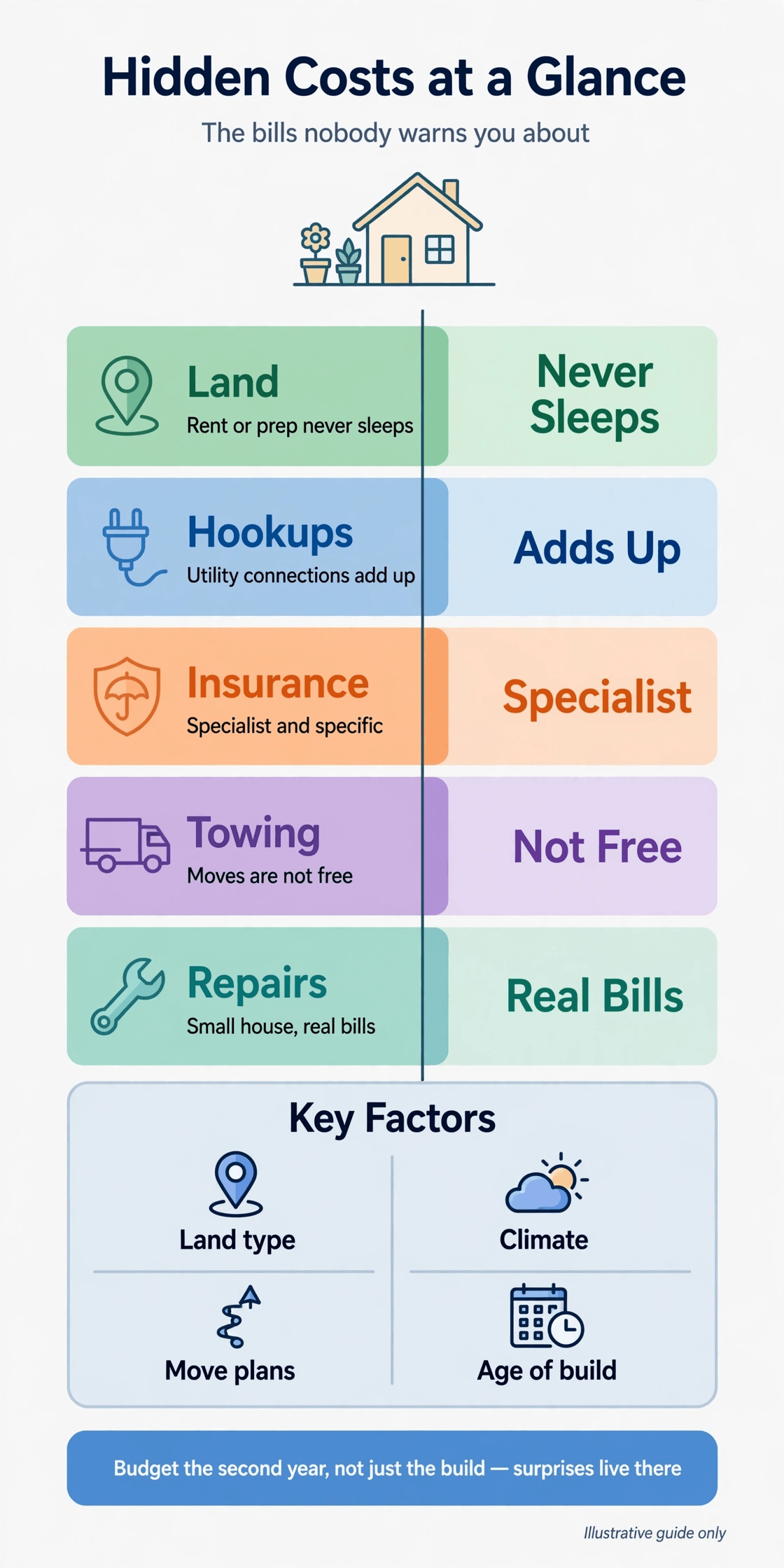
The advertisement for tiny house living writes itself: a small home, a small mortgage or none, and a life unshackled from big bills. What the advertisement leaves out is the second ledger — the steady stream of costs that never appear in the build price, the brochure or the walkthrough video. None of them are ruinous alone. Together, the hidden costs tiny house living carries — land, hookups, specialist insurance, moves, maintenance — are the difference between a budget that works on paper and one that works in February.
This guide names them all, in the order they tend to arrive, and it does so without invented figures: costs here are described by what drives them, because a pitch fee, a tow or a premium in one region says little about the same line in another. What transfers everywhere is the shape of the trap. Each cost below is predictable, most are plannable, and nearly all of them are only ‘hidden’ because somebody selling something preferred not to mention them. Forewarned, you can budget them from month one — which is the entire difference between a surprise and a line item.
Hidden Costs Tiny House Living at a Glance
The questions below are the ones new owners ask each other, usually too late. The short answers point at the sections that unpack each cost and what drives it up or down.
| Question | Short Answer |
|---|---|
| What is the biggest hidden cost of all? | Land. Rent or a pitch fee keeps arriving every month, and preparing your own ground is a major one-off before the home even lands. |
| Are utility hookups included with the house? | Rarely. Connecting water, power and waste is normally the owner’s cost, done to the site’s rules — and it is skilled, inspected work. |
| Is insurance like ordinary house insurance? | It is specialist cover. Expect searching questions about construction, certification, wheels and where the home is sited, and fewer insurers to choose from. |
| Is moving a tiny house just a tow? | No. It is a small logistics project: a suitable tow vehicle, route and permits, preparation, and then re-siting and re-connecting at the other end. |
| Are repairs cheaper because the house is small? | Materials shrink; call-outs and compact specialist parts often do not. A small house can still produce full-size invoices. |
| What catches owners out in year two? | The maintenance cycle starting up — seals, tyres, servicing, batteries and replacements — all arriving after the build budget has closed. |
| Can these costs be avoided? | Most cannot be avoided, but every one of them can be surfaced early, priced realistically and planned for. That is the point of this list. |
1. Land Rent and Pitch Fees: The Monthly Nobody Mentions
Start with the cost that most quietly dismantles the ‘no monthly bills’ story. Unless you own suitable land outright, the ground under a tiny house is rented — a pitch on a site, a corner of someone’s land, a space in a community — and rent, unlike a build loan, never finishes. It can also rise, and the home sitting on it is far harder to move than a tenant in a flat. When people compare tiny living with renting, the honest comparison includes this line, every month, for as long as you live there.
What drives it is location and facilities, exactly as with any housing: serviced pitches with hookups, amenities and legal security cost more than a bare field with a handshake, and the cheapest arrangements often carry the weakest rights to stay. Read any agreement for the unglamorous clauses — notice periods, fee reviews, rules on selling the home in place — because the value of your house is partly hostage to the ground it stands on. Cheap land with no security can prove the most expensive land of all the first time you are asked to leave it.
2. Preparing the Ground: Pads, Access and Drainage
Owning or leasing the land is the beginning, not the end, of land cost. A tiny house needs a level, drained, load-bearing place to stand: a pad or piers, an access route a delivery vehicle can actually use, drainage that keeps the home out of the mud, and often screening, fencing or a parking spot beside it. On a kind, flat, dry plot this is modest work. On a sloping, wet or overgrown one, groundwork becomes a project with its own machinery, materials and surprises buried in the soil.
The preparation sequence in how to prepare your land for a tiny house is the right checklist to price against, because each skipped item returns as a problem with a call-out fee attached — standing water finds the underside of a home, frost heaves an unprepared pad, and a delivery that cannot reach the pitch costs money standing still. Get the ground quoted before the home is finished, keep a contingency for what excavation uncovers, and remember this cost is largely unrecoverable: a beautiful pad under a house you later move is a gift to the next occupant.
3. Utility Hookups: Water, Power and Waste
A tiny house arrives as a building; it becomes a home when water flows in, power flows in and waste flows out — and that transformation is a bill. Hookups mean trenching or running services to the pitch, certified electrical connection, water supply with frost protection, and a lawful waste solution, from a sewer connection to a tank that needs emptying. Sites sometimes provide connection points; the work and hardware between their point and your home is typically yours, and it is inspected, regulated work rather than a weekend improvisation.
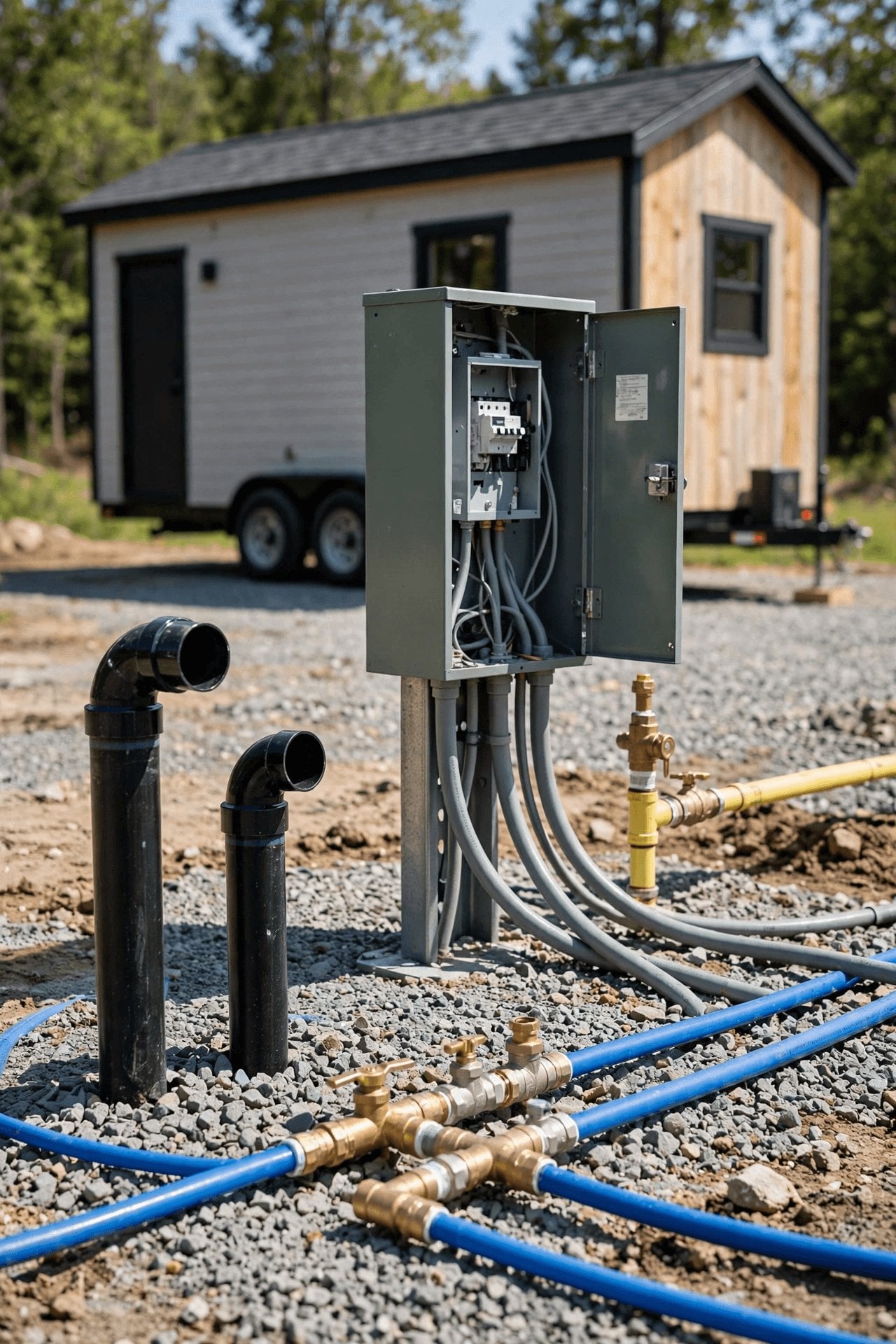
The ongoing side surprises people too. Standing charges, metered utilities at pitch rates, tank emptying, bottled gas deliveries, water filters and the freeze-protection that a small exposed home demands all recur. The systems thinking in tiny house plumbing layout and DWV design — falls, vents, access — has a cost echo here: hookups designed for maintenance are cheaper over a decade than hookups designed for the photograph. And protect what runs beneath the home, where the guidance on tiny house skirting options for pipes and insulation earns its keep every single winter.
4. Insurance: Specialist Cover for an Unusual Home
Insuring a tiny house is not hard because insurers dislike them; it is hard because the product is unusual — part vehicle, part building, sometimes part self-build — and unusual risks get specialist underwriters, detailed questions and fewer competing quotes. Expect to be asked how the home was built and by whom, what it sits on, whether it can move and how, where it is sited and what security exists. A home that cannot answer those questions cleanly may find cover expensive, limited, or declined until the paperwork improves.
Treat insurance as an annual cost of the lifestyle, not an afterthought, and budget the time as well as the money: shopping a niche market takes longer than ticking a comparison site. Keep a build record — photographs, invoices, certifications — because evidence of quality is the currency specialist insurers trade in. If you move the home, rent the land or let the home out, tell the insurer; the cheapest policy is the one that actually pays, and a policy voided by an undeclared change is the most expensive hidden cost in this entire guide.
5. Moving and Towing: The Cost of Changing Your Mind
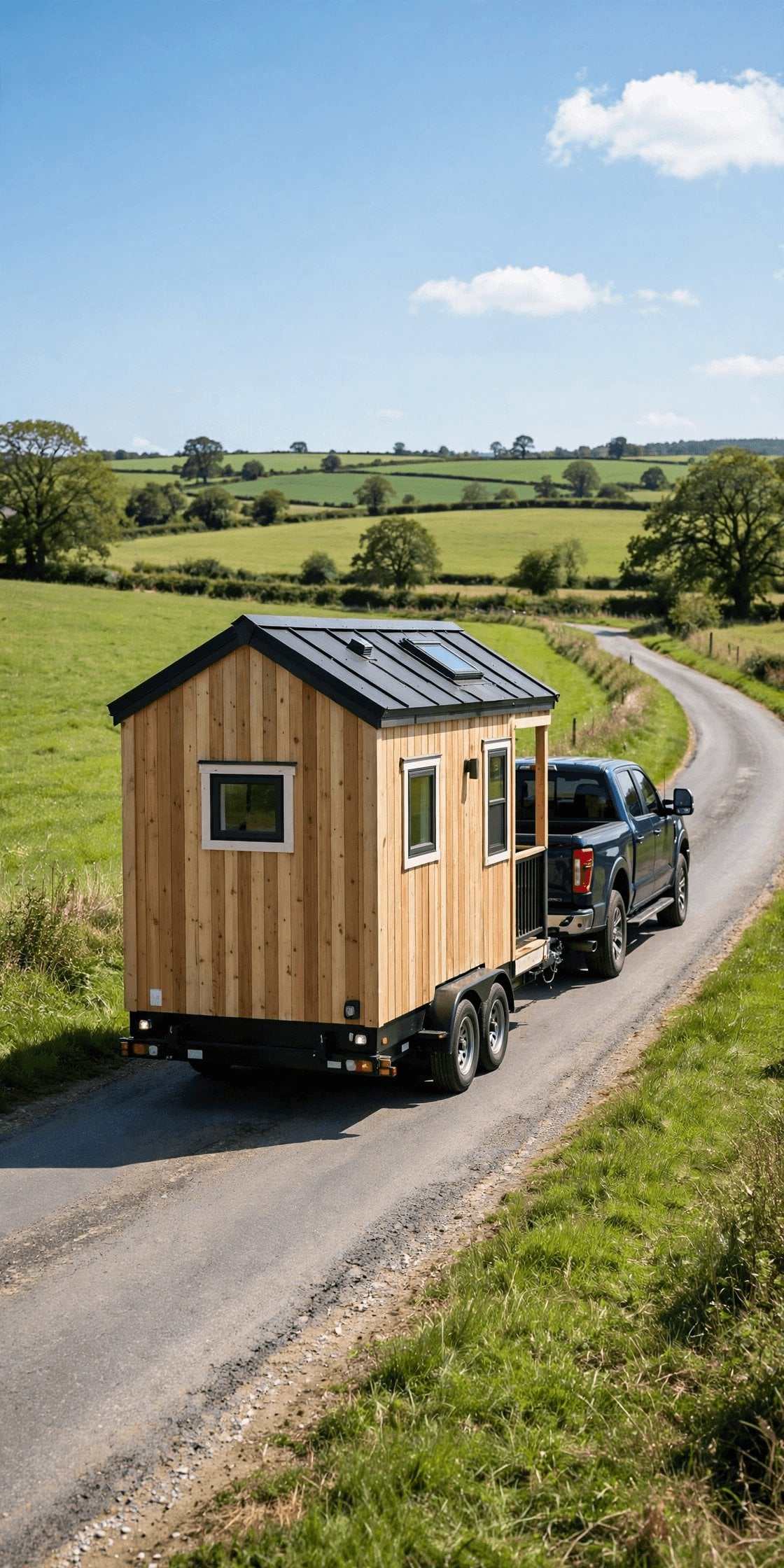
The great promise of a house on wheels is that it can move. The fine print is that moving it is a transport operation, priced like one. There is the tow itself — a suitably rated vehicle and, for most owners, a professional driver. There is preparation: securing the interior, protecting the exterior, checking tyres, brakes and lights after months of standing still. There may be route planning, permits for an oversize load, and in some cases an escort — and at the far end, the whole siting and hookup cost of sections 2 and 3, happening again in reverse order.
The full picture is laid out in the tiny house moving guide and its transport costs, and the lesson to budget by is simple: a move is a project with a price, not an errand with a fuel bill. Owners who move rarely and plan long barely feel it. Owners who imagined relocating with the seasons discover that each change of view carries an invoice, plus wear on tyres, bearings and brakes that standing still never caused. Price a move before you need one — ideally before you buy the land arrangement that might one day force one.
6. Maintenance and Repairs in Miniature
Everything in a house wears, and a tiny house wears its components at the same rate as a big one — sometimes faster, because each component works harder. One bathroom serves every shower; one small water heater cycles constantly; seals, hinges and latches open and close the same number of times in a fraction of the joinery. Materials for repairs are smaller, certainly, but tradespeople charge for attendance, diagnosis and time, and none of those shrink with the floor plan. The compact or marine-grade parts tiny homes favour can also carry specialist prices and longer waits.
The defence is a rhythm, not a rescue fund alone. Small homes reward small, regular attention: resealing wet areas before water gets behind them, servicing heating before winter, checking the underside, roof and penetrations each season, and keeping tyres, brakes and running gear alive even when the home never travels. An hour with a checklist twice a year is the cheapest maintenance contract in housing. Skip it, and the repairs still come — they just arrive together, in the rain, at emergency rates, in a home with no spare room to retreat to while the work happens.
7. Heating, Cooling and the Comfort Bills
A small, well-insulated box is genuinely cheap to heat compared with a draughty large house — and owners still manage to be surprised by comfort costs, usually because the comparison in their head was with zero. Fuel has to be bought in some form: electricity, gas in bottles that need exchanging and delivering, wood that needs sourcing, storing and a stove that needs sweeping and servicing. Summer writes its own line — a small home with big glass heats fast, and cooling it is a real cost in a hot climate, in energy and sometimes in equipment bought in a hurry during a heatwave.
Choices made at build stage echo here for years. The fuel comparison in propane vs electric for tiny houses, with tank sizing shows how installation cost and running cost pull in opposite directions, while efficient equipment of the kind covered in installing a mini-split in a tiny house can carry both heating and cooling in one machine — with servicing as its own recurring line. Budget comfort as a monthly reality with a seasonal temper, not as the rounding error the brochures imply, and the first winter holds no ambush.
8. Fees, Permits and Paperwork
Paperwork is the hidden cost with the worst publicist and the longest tail. Depending on where and how you live, the list can include planning or permit applications, site licences, inspection fees, certification for the build or its gas and electrical work, vehicle registration and roadworthiness for the trailer, and local taxes or charges assessed in ways nobody predicted for a house that is also a vehicle. Each item is modest; the category is not, and it renews.
The expensive version of paperwork is retrospective paperwork — regularising an arrangement that was never approved, paying for inspections that should have happened in sequence, or discovering at sale time that a missing certificate discounts your home. Keep a single folder, physical or digital, with every consent, certificate and receipt from the day the trailer was bought. It feels bureaucratic while life is calm. It becomes the most valuable document you own on the day you insure, move or sell, which is to say on exactly the days this guide keeps warning you about.
9. Replacements Arrive Sooner in a Small Home
Compact living concentrates use, and concentrated use shortens lives. The small appliances, space-saving fittings and multi-tasking furniture a tiny home depends on are worked daily and worked hard, and when a compact unit fails, its replacement is the specialist version at the specialist price, not the big-box bargain. The selection logic in the best compact kitchen appliances for tiny houses — standard sizes where possible, available parts, nothing irreplaceable — is really a replacements strategy wearing a shopping list’s clothes.
Beyond appliances, keep a mental register of consumables with birthdays: filters, seals, batteries for off-grid or backup systems, tyres ageing on a stationary trailer, flexible hoses and connectors that perish quietly under the floor. None announces its schedule in year one, which is why year three ambushes the unprepared. A replacements list with rough dates, reviewed annually, converts a series of small crises into a rotation — and lets you buy the right part calmly, at the right price, before the old one fails at the least convenient moment it can find.
10. The Second-Year Budget: Planning the Real Number
Here is the pattern underneath all nine sections: year one is paid for by the build budget’s momentum, and year two is when tiny house living presents its real, recurring bill. Insurance renews. Servicing comes due. The first replacements stir. Pitch fees review upwards. Nothing has gone wrong — this is simply what the lifestyle costs when it is running normally, and the owners who thrive are the ones whose monthly budget was built from this list rather than from the memory of a deposit.
Build that budget on paper before you move in: a monthly figure for land and utilities, an annual figure for insurance, servicing and paperwork, and a modest reserve that accumulates for repairs, replacements and the eventual move. Set against the totals in the true cost of tiny houses, prefab vs DIY, it remains true that small living can cost far less than conventional housing — it just never costs the nothing of the legend. A real number you can sustain beats a fantasy number you cannot, every month, in every season, for as long as the little house is home.
Final Considerations
Read the list once more with a pencil: land, ground, hookups, insurance, moves, maintenance, comfort, paperwork, replacements. Not one of these costs is a reason to abandon the tiny life, and together they are not a scandal — they are simply the running costs of a real home, which a tiny house unambiguously is. The scandal, such as it is, is only in the selling, where a lifestyle marketed on freedom from bills quietly depends on nobody itemising them.
Itemise them. Price the land before the house, surface the hookups and the paperwork while they are still cheap to arrange, keep the documents, keep the reserve, and let every recurring line sit visibly in the monthly budget from day one. Do that, and the hidden costs lose their only real power, which was never their size — plenty of households carry larger. It was their surprise. A cost you have planned for is just a cost. A cost you have not is a warning you deserved to read earlier, ideally here.


0 Comments