

Black ice doesn’t care about your carbon goals. Most cyclists park the bike in November and don’t look back until April, surrendering months of clean miles to the car. But winter riding is mostly a gear problem, and gear problems have solutions: a shell that turns the rider into a greenhouse, tires that claw ice, and a battery routine that respects the chemistry of cold.
1. How to Commute in Winter at a Glance
Learning how to commute in winter comes down to treating the cold as an equipment question, because that is what it is. The velomobile answers it with a body: an enclosed shell that traps the rider’s own heat the way a greenhouse traps the sun’s. The e-bike answers it at the contact patch: carbide studs for ice, wide tires floated low for snow. Between those two answers sits a supporting system — a battery that sleeps warm, clothing that leaves no skin exposed, a drivetrain defended against salt, and a route chosen for the plow rather than the map. The table gathers the whole system in one place; the sections after it take each layer apart in turn.
| Attribute | Detail |
|---|---|
| The Shell | Enclosed body traps body heat and motor warmth — riders report 40°F inside when it’s 20°F outside |
| The Tires | Carbide studs for ice at $60–120 a tire; fat tires of 4″ and up floated at 10–15 PSI for snow |
| The Battery | Loses 20–40% of its capacity in freezing temperatures — plan on 60% of summer range, and bring it inside |
| The Rider | No exposed skin — balaclava and ski goggles, a three-layer system, bar mitts over the grips |
| The Machine | Wet lube, full fenders, disc brakes, and a post-ride rinse against road salt |
| The Route | Plowed main roads first, ride the plow window, and coast — never brake — over black ice |
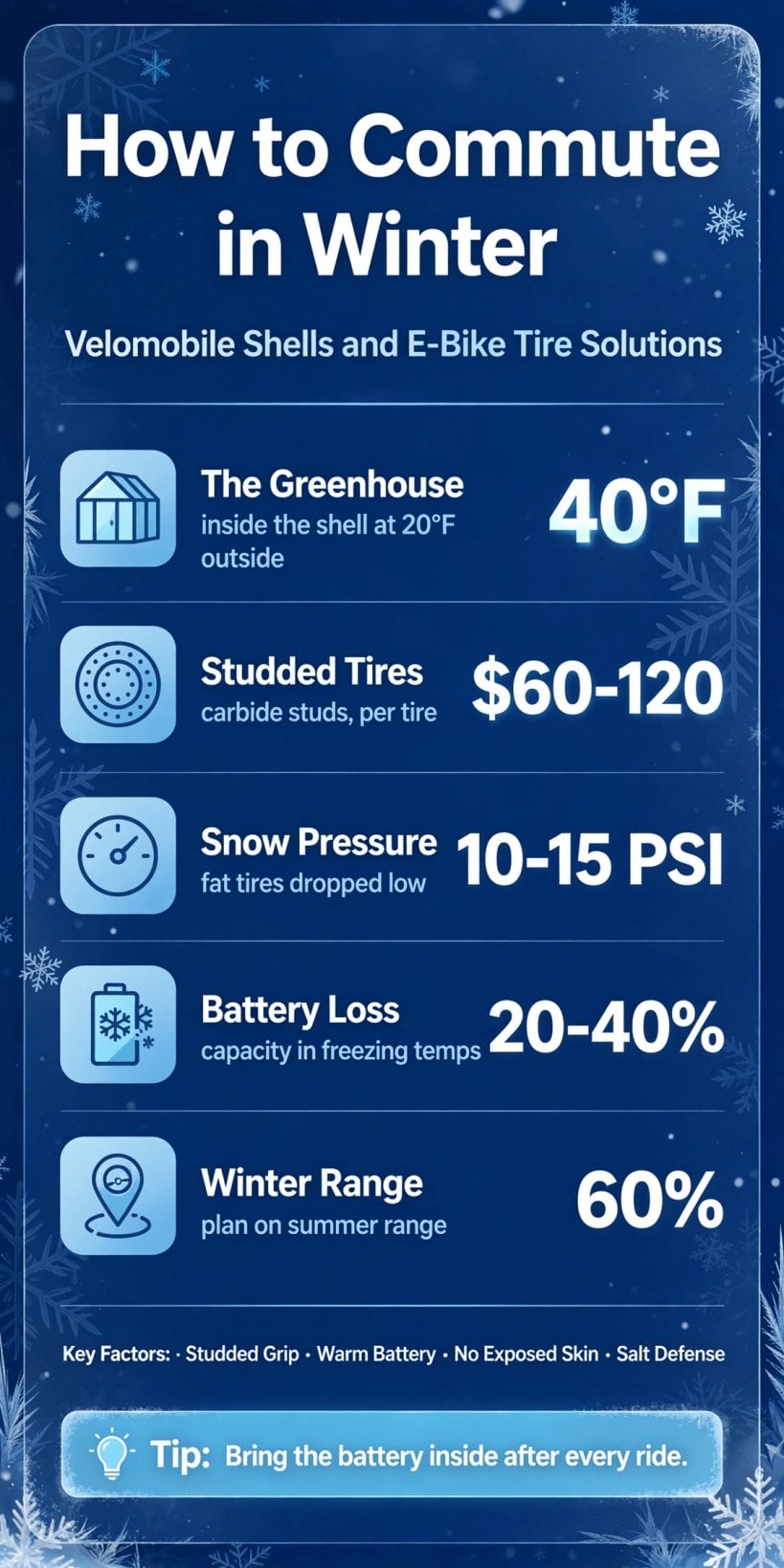
Forty degrees inside the shell, studs at ten to fifteen PSI, and sixty percent of summer range — the winter commute on one card.
Read the system as a dependency chain. The shell or the studs handle the cold and the ice; the battery routine protects the range the cold tries to steal; the clothing protects the rider the wind tries to chill; and the route ties it together, because the safest winter gear still loses to a bad road choice at the wrong hour. Every element traces back to the same principle the original states plainly: winter kills bike commuting only for riders who treat it as a weather problem. Treat it as a gear problem, and each piece of gear has a job, a number and a habit attached to it.
2. The Velomobile Shell: A Rolling Greenhouse
The velomobile’s winter advantage is architectural, and no bicycle can match it. The enclosed body traps body heat and motor warmth around the rider, and riders report 40°F inside the shell when it is 20°F outside — a twenty-degree gift before clothing even enters the discussion. The rider pedals inside a still pocket of self-warmed air while the wind that defines winter cycling for everyone else slides over the shell’s curves. It is the difference between riding in the weather and riding past it, and it is why the velomobile is the best winter micro-mobility vehicle made: shell, three wheels and electric assist, combined into the all-weather commuter. The machine’s basic anatomy — shell, recumbent seat, drivetrain under bodywork — is laid out in the guide to what a velomobile is and where it came from.
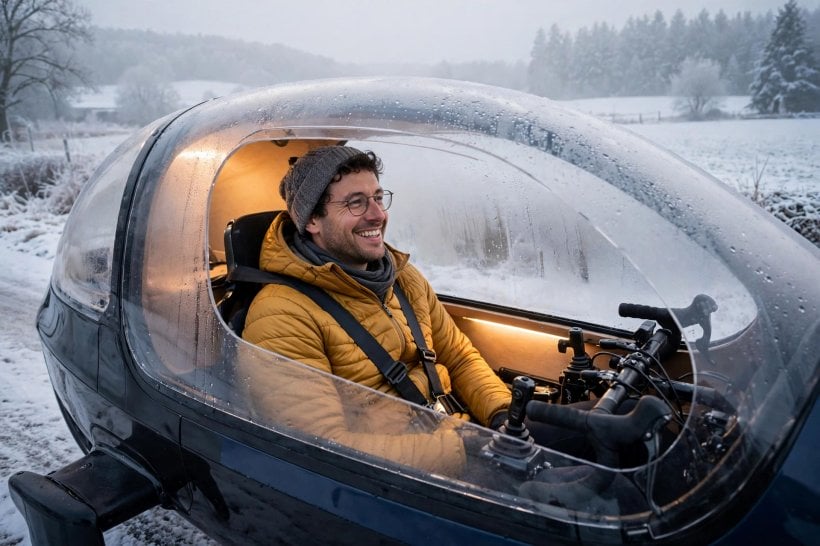
The greenhouse has one management problem, and it is fog. Warm, moist breath inside a cold shell mists the canopy, so ventilation is a balance the rider tunes continuously: crack the vents, manage the fog, treat the visor with anti-fog, and breathe with the airflow rather than against it. Too sealed and the view clouds; too open and the greenhouse leaks its warmth away. Experienced winter riders treat vent adjustment the way other cyclists treat gear changes — small, frequent, and done before it becomes urgent. The reward for getting it right is the original’s verdict, which no open bike can claim: the winter clothing problem, halved, because the shell does the first and hardest part of keeping the rider warm.
3. Studded Tires: The Ice Solution
On an e-bike, the winter problem concentrates into two patches of rubber the size of credit cards, and studded tires are the single biggest winter upgrade because they solve it directly. Carbide studs bite where rubber alone polishes the ice smooth: ice becomes grippable, the claw replaces the slide, and the rider stops negotiating with every frozen puddle. At $60–120 a tire, a studded pair is not cheap — but it is the difference between riding the season and watching it. The same shell shape that warms the velomobile rider also explains the open bike’s vulnerability: with no bodywork between rider and road, the tires carry the entire burden of winter, which is why the stud question comes before every other e-bike question.
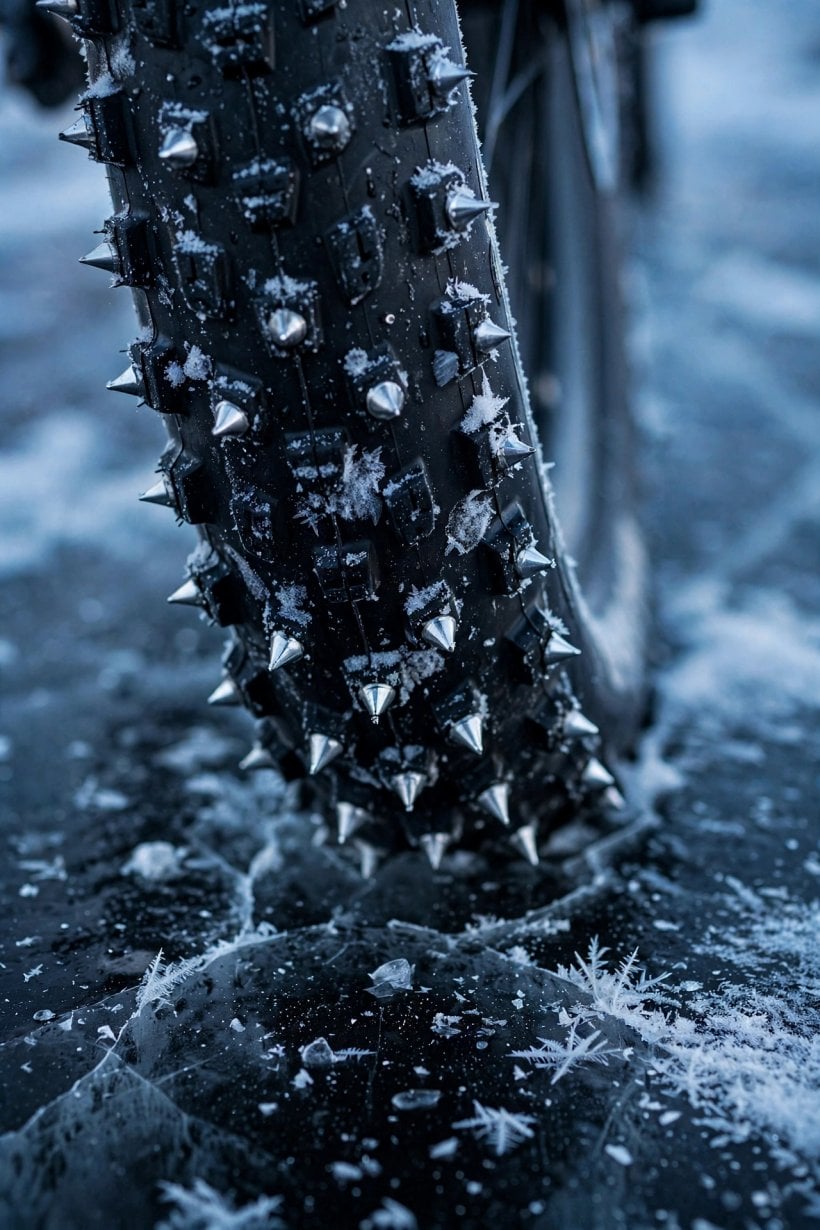
There is a budget route, and the original keeps it honest: DIY studding. Sheet-metal screws driven through an old tire, with a lined casing to protect the tube, produce roughly a $10 ice tire — the classic hack, crude beside carbide and genuinely effective on the ice it was built for. Between the factory carbide tire and the screwed-together hack sits the real decision, which is not about money but about surface. Studs earn their cost on ice, on the frozen mornings and shaded corners where rubber has no answer. On bare pavement they are simply the wrong tool, which is why the tire system, taken up next, is a calendar as much as a product choice.
4. Fat Tires, Pressure and the Two-Wheelset System
Snow asks a different question than ice, and fat tires are its answer. A tire of 4 inches and up, dropped to low pressure, stops cutting through fresh snow and starts floating on it — the snowshoe principle applied to a wheel. Pressure is the adjustment that makes it work: drop to 10–15 PSI in snow, and the contact patch spreads, the tread flattens onto the surface, and grip comes from area instead of bite. The same tire pumped hard would knife down through the soft layer to the slick one beneath and spin. Reading the morning — studs for the icy day, width and low pressure for the snowy one — is the core skill of the winter e-bike, and it is a skill of surfaces, not of strength.
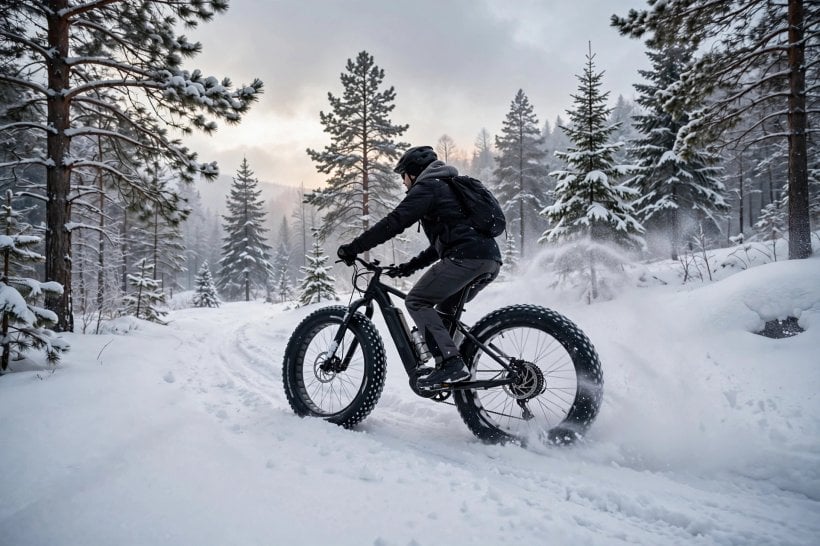
The calendar rule binds the system together. Studs go on when the temperature drops below freezing consistently; the shoulder seasons run normal tires; and the practical way to live by that rule is the two-wheelset system — one wheelset shod for ice, one for ordinary roads, swapped as the season turns rather than as the morning surprises. Guessing wrong has a cost in both directions: studs on a warm week wear the carbide and drag the ride, while summer tires on the first black-ice morning can end the season early. The two-wheelset rider never has to guess. The wheelset on the bike matches the month, the spare waits by the door, and the commute rolls on the surface the season is actually serving.
5. Battery Care in the Cold: The Chemistry
Cold does not damage an e-bike battery so much as it slows it. Lithium chemistry in freezing temperatures gives up 20–40% of its capacity — the range the screen promised in September is simply not in the pack in January. The honest response is arithmetic: plan for 60% of summer range, and let the winter derating set the route, the charge stops and the decision to ride at all on the longest days. Riders who plan on summer numbers strand themselves; riders who plan on the derated number arrive, every time, with the pack’s weakness already priced in. The interplay between the rider’s own output and the motor’s is covered in the breakdown of human power versus electric assist — in winter, that balance matters more, because the electric side of it shrinks.
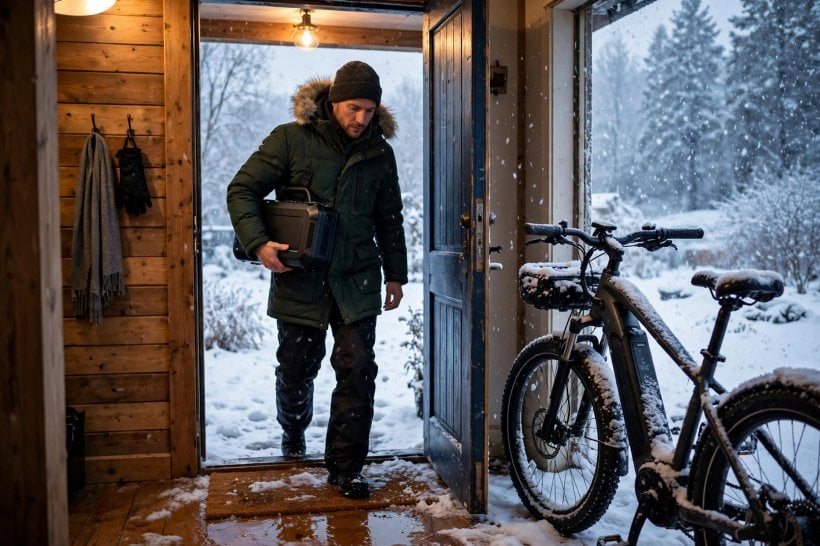
Three habits defend what range remains. First, storage: bring the battery inside after every winter ride. The battery sleeps warm, and the original calls it the 30-second habit that doubles winter range — thirty seconds of carrying against a fifth to two-fifths of the pack, surrendered nightly to a cold garage. Second, charging discipline: never charge a frozen battery. Let it reach room temperature first, because charging a frozen pack damages it; the rule costs patience and saves the most expensive component on the bike. Third, insulation on the ride itself: a neoprene battery cover, about $15, retains warmth during the ride — marginal gains, honestly labelled, but marginal gains are what winter range is made of once the big habits are in place.
6. Dressing the Rider: No Exposed Skin
The clothing principle is absolute: no exposed skin. At 20 mph, windchill is brutal, and the face is where winter riding fails first — so the balaclava and ski goggles are not accessories but the foundation, sealing the one surface every other layer leaves open. Beneath that seal, the cycling layer system does the temperature regulation: a wicking base layer moves sweat off the skin, an insulating mid layer holds warmth, and a windproof shell keeps the moving air from stripping both. The danger the system manages is a two-step trap — overheating on the climb, then chilling in the sweat on the descent — and layering is what lets the rider vent the first without suffering the second.
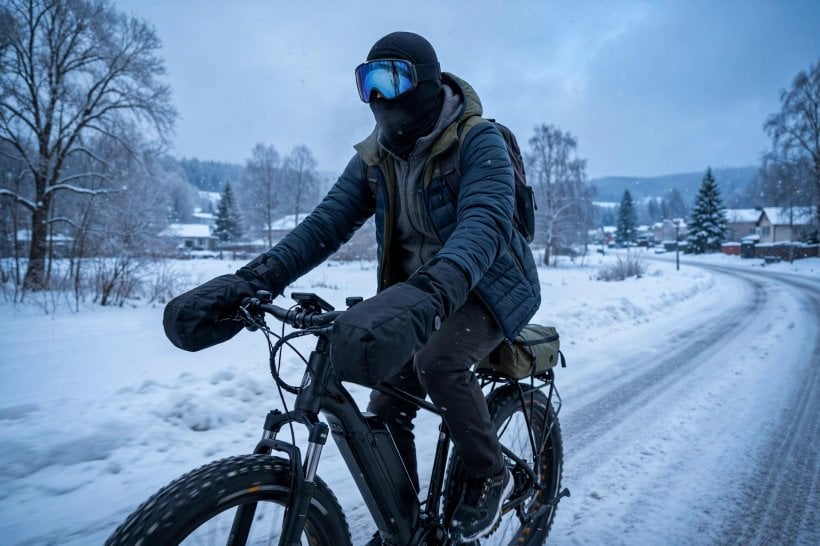
Hands and feet get their own solutions. Bar mitts — pogies, the handlebar covers that enclose the grips — are warmer than any glove, the winter cyclist’s secret: the hands sit in a sheltered pocket of still air, gloved lightly enough to work the controls, while the wind that defeats thick gloves entirely breaks against the covers instead. Feet follow the same logic of shelter over insulation. Winter boots and wool socks replace cycling shoes, and the pedals change to match: platform pedals in winter, because they are boot-friendly — and because the clipless connection that is a virtue in July becomes an ice risk in January, one more thing to release in a slide that the rider no longer has a free move to spare for. The velomobile rider, finally, dresses lighter than all of this: the shell’s warmth is the first layer, and every layer after it can be one step thinner.
7. Winterizing the Machine: Lube, Fenders and the Salt War
Winter is hard on the machine as well as the rider, and salt is the enemy that organizes the whole defense. The drivetrain runs on wet lube through the season — the winter chain lube, applied often, because slush strips a chain the way it strips everything else. Fenders graduate from accessory to equipment: full coverage, with mudflaps, because the slush spray that a bare wheel throws is a face-full of near-freezing water arriving exactly at riding speed. Brakes get a standing check — pads inspected, because rim brakes fade in slush while discs rule winter, and the pad check is what tells the rider which of those two truths their bike is currently living.

The frame’s defense is a habit rather than a product: rinse the salt off after rides, and use frame-saver spray against the corrosion that road salt starts the moment it dries on metal. None of this is glamorous, and all of it is cheap compared to the alternative — a drivetrain and frame consumed by one season of neglect. The riders who enjoy winter most tend to be the ones who treat the post-ride rinse the way they treat the battery carry: a thirty-second ritual, done every time, that keeps the machine’s winter from compounding. Hands-on riders who like this side of ownership often end up going further — the path from winter maintenance to building a velomobile from a DIY kit is shorter than it looks.
8. Lights, Visibility and the Dark Commute
Winter commuting is dark commuting. Short days put both ends of the ride in twilight or full night, and the lighting rig is therefore a system, not a lamp: a full primary rig, reflectivity worked into the shell accents and the rider’s clothing, and — the rule the original states without decoration — redundancy. Primary plus backup, always: the dark commute forgives a dim light and never forgives a dead one. USB-rechargeable lights make the discipline easy to keep, and the always-on habit makes it automatic: lights on for every winter ride, dusk or not, because the grey half-light of a snowy afternoon hides a rider almost as well as midnight does.
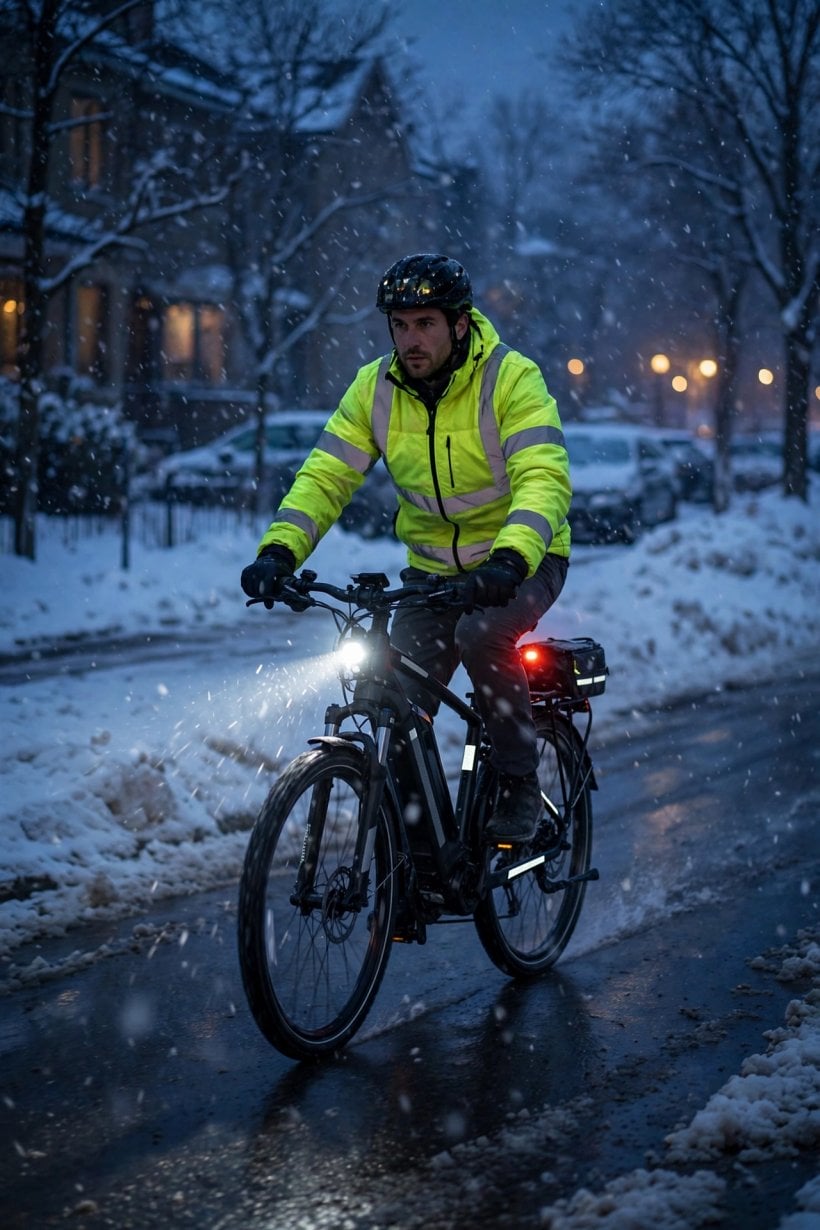
The velomobile adds a visibility asset no bicycle has: presence. A shell at car-seat height, carrying reflective accents across a body-sized surface, reads to drivers as a vehicle rather than an obstacle, and the be-seen strategy is built into its shape. The open-bike rider builds the same presence deliberately — reflective shell of clothing, lit from both ends, positioned in the lane where drivers are actually looking. Visibility in winter is not a product category; it is the commute’s insurance policy, renewed every ride, and its premium is the few seconds it takes to check that both lights — and the backup — are alive before rolling out.
9. Route and Tactics: Riding the Plow Window
The safest winter route is rarely the shortest one; it is the plowed one. Main roads are plowed first and the bike lane last, so the winter route inverts the summer instinct: take the plowed priority, ride where the clearing has already happened, and treat lane-taking on a cleared main road as both legal and safer than a snow-choked path no one has touched. Timing sharpens the advantage. Ride the plow window — after the plows, before the refreeze — and the same street that was a skating rink at dawn is a clean, salted surface by mid-morning. The ice timing is a schedule the winter commuter learns the way a sailor learns tides.
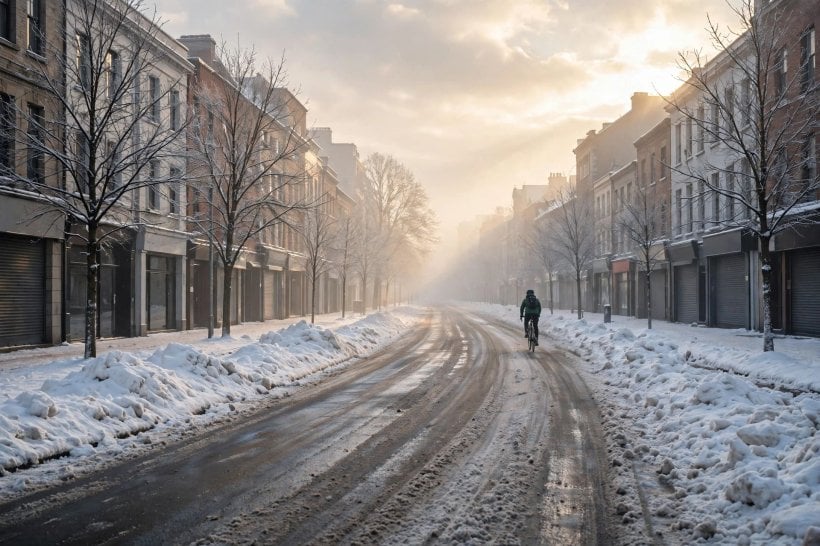
Black ice gets its own protocol, stated as respect: it gathers on bridges and in shaded corners, and when it appears under the wheels, the moves are all negative — coast, don’t brake, don’t turn. The rider who has already slowed for the bridge deck rarely needs the protocol; the rider who brakes mid-patch learns why it exists. And when the day defeats even the prepared rider, the honest tactic is to shorten: the multi-modal commute, bike to the transit, a 3-mile ride and a train — the winter compromise that keeps the habit alive on the days the full ride would break it. The wider family of options this compromise belongs to is mapped in the overview of sustainable micro-mobility — winter does not end the system; it just asks the system to flex.
10. The Payoff: Money, Health, Reliability, Joy
Why bother is a fair question at 20°F, and the original answers it on four ledgers. Money first: the car’s winter costs — idling warm-up fuel, winter tires, the slide-off deductible — against the bike’s winter costs of about $150 in gear. The comparison is not close, and it repeats every single season; the longer ledger of what these machines cost to run sits in the cost of owning a velomobile, where winter is one line among many and never the deciding one. Health second: daylight and exercise, the SAD antidote, the commuter’s therapy arriving twice a day precisely in the months it is scarcest. The miles surrendered from November to April are not neutral; they are the season’s light and movement, given up.
Reliability third — the plow-independent argument. The bike goes when cars gridlock; the snow day’s freedom belongs to the vehicle that does not need the road cleared to car standard, only to bicycle standard, and often not even that. And joy last, though the original clearly means it as more than a rounding error: the snow ride, the silent streets, the winter cyclist’s secret pleasure — the city belongs to you. It is the same calculus that drives the environmental impact of velomobiles, run from the rider’s side of the handlebars: the cleanest miles of the year are the winter ones, because they are the ones that replace a cold-started car. Studs, a warm battery, sealed skin, a rinsed drivetrain and a plowed route are the entire price of admission.
Final Considerations
Stud the tires — the ice claws. Bring the battery inside — the warm sleep. Dress with no exposed skin — the balaclava rule. Winterize the drivetrain against salt — the rinse. Respect black ice — the coast. And consider the velomobile, winter’s natural vehicle, the rolling greenhouse in which the whole problem shrinks by twenty degrees before the first layer is zipped. The cold is a gear problem, and gear problems have gear solutions. Ride through.




2 Comments