

Two kitchens can have the same footprint and very different quotes, because stone is only one line in the bill. This guide explains, in plain qualitative terms, what actually drives granite countertops cost — the slab, the layout, the edges, the cutouts, the fitting and the work hidden underneath — so you can compare quotes fairly and decide where money is well spent and where it is not.
1. The Cost Drivers at a Glance
| Cost driver | How it pushes the price | How to keep it in check |
|---|---|---|
| The stone itself | Rarer colours and strongly figured slabs usually sit in higher price bands than common, even-grained stones. | Choose from stones your fabricator stocks regularly and view the actual slab before deciding. |
| Size and layout | More surface, more joins and awkward shapes mean more material and more labour. | Simplify the layout where you can and plan join positions early. |
| Edges and thickness | Elaborate edge profiles and thicker-looking builds take extra machining and finishing time. | Pick a clean, standard edge unless a feature edge is the point of the design. |
| Cutouts and details | Every sink, hob, tap and socket cutout adds templating, cutting and polishing work. | Fix appliance and sink choices before templating day. |
| Fabrication and fitting | Templating, transport, access and installation time are real costs, not extras. | Clear the room, confirm access and get one itemised quote that covers the whole job. |
Read the table as a map rather than a price list. No single driver decides the bill; the total is the accumulation of dozens of small decisions, most of them made before the stone is ever cut. That is good news, because it means you have more control over the final figure at the planning stage than at any other point in the project.
It also means headline figures are a weak way to shop. A low square-rate quote can grow once edges, cutouts, templating, delivery and sealing are added, while a higher all-in quote may already include them. The sections that follow take each driver in turn, explain why it costs what it does, and show where a simpler choice changes the character of the kitchen very little but the quote a great deal.
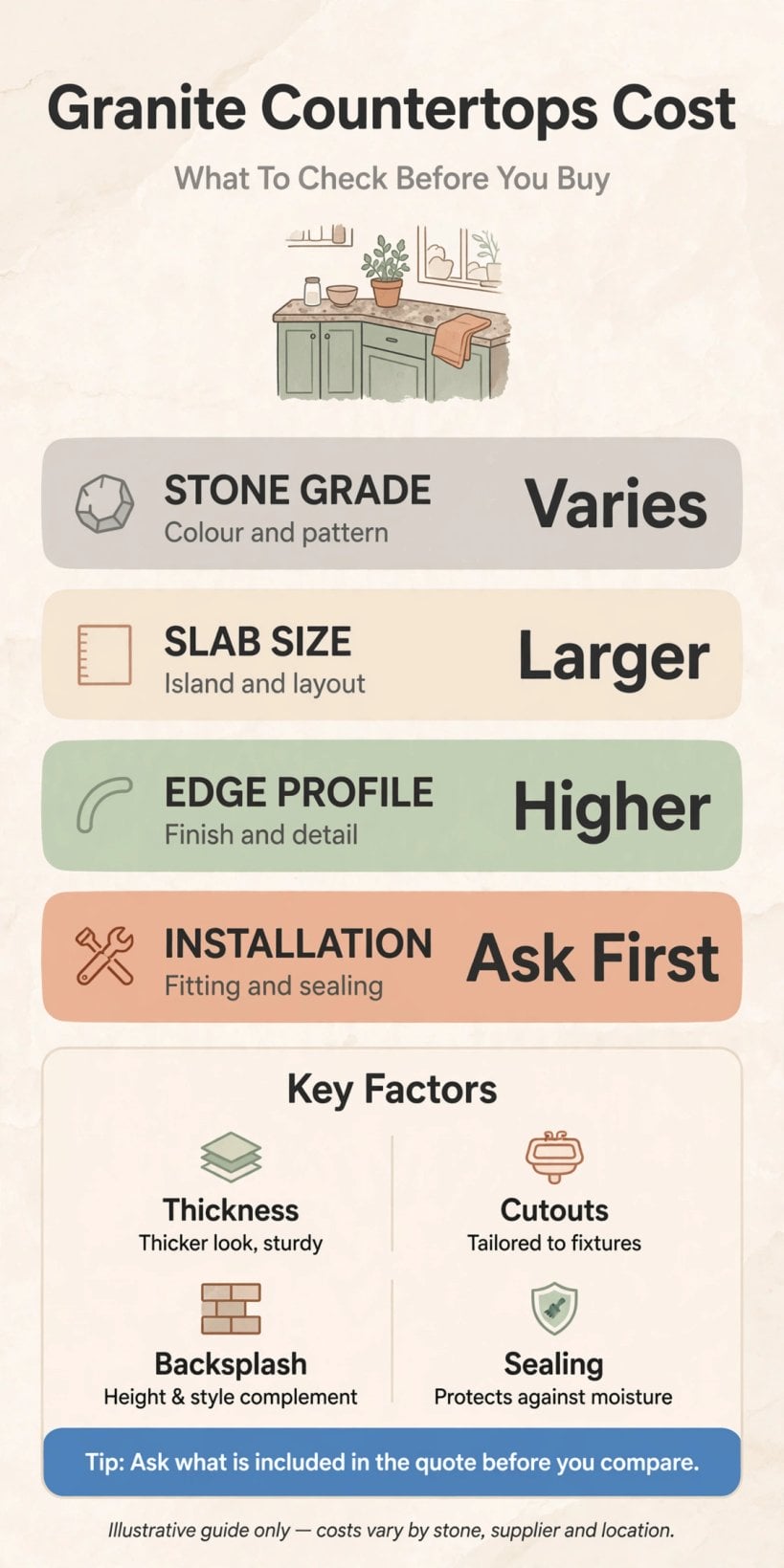
The main drivers of a granite quote at a glance — stone, layout, edges, cutouts, fabrication and fitting.
2. The Stone Itself: Colour, Pattern and Availability
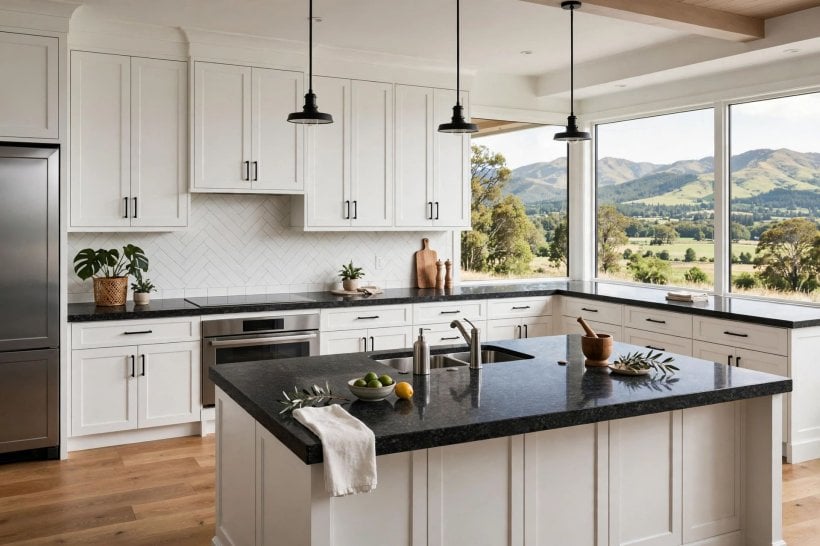
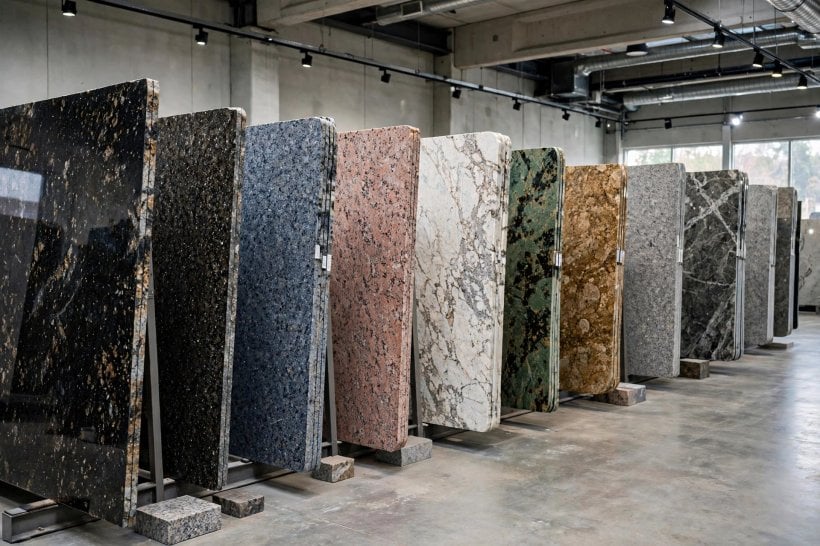
Granite is a natural material, and its price band reflects how much of it there is, how far it has travelled and how consistent it looks from slab to slab. Widely available stones with an even, forgiving grain tend to sit in the lower bands because fabricators stock them in depth and can cut them with little waste. Stones with dramatic movement, unusual colour or limited supply sit higher, because each slab is harder to source and harder to replace if a cut goes wrong.
Pattern affects more than the slab price. A strongly figured stone may need careful book-matching or vein alignment across joins and around corners, which takes planning time and can use more material. An even-grained stone is far more forgiving: joins almost disappear, offcuts can be reused for upstands or a windowsill, and a future repair is easier to blend in.
Always view the actual slab, not just a hand sample. Colour and movement vary across a single slab, and the part you love in a photograph may not be the part that lands over your sink. Mark, with the fabricator, which areas you want in the most visible places. That short conversation, before cutting, is one of the cheapest quality improvements in the whole job.
3. Size, Shape and Layout: You Pay for Every Turn
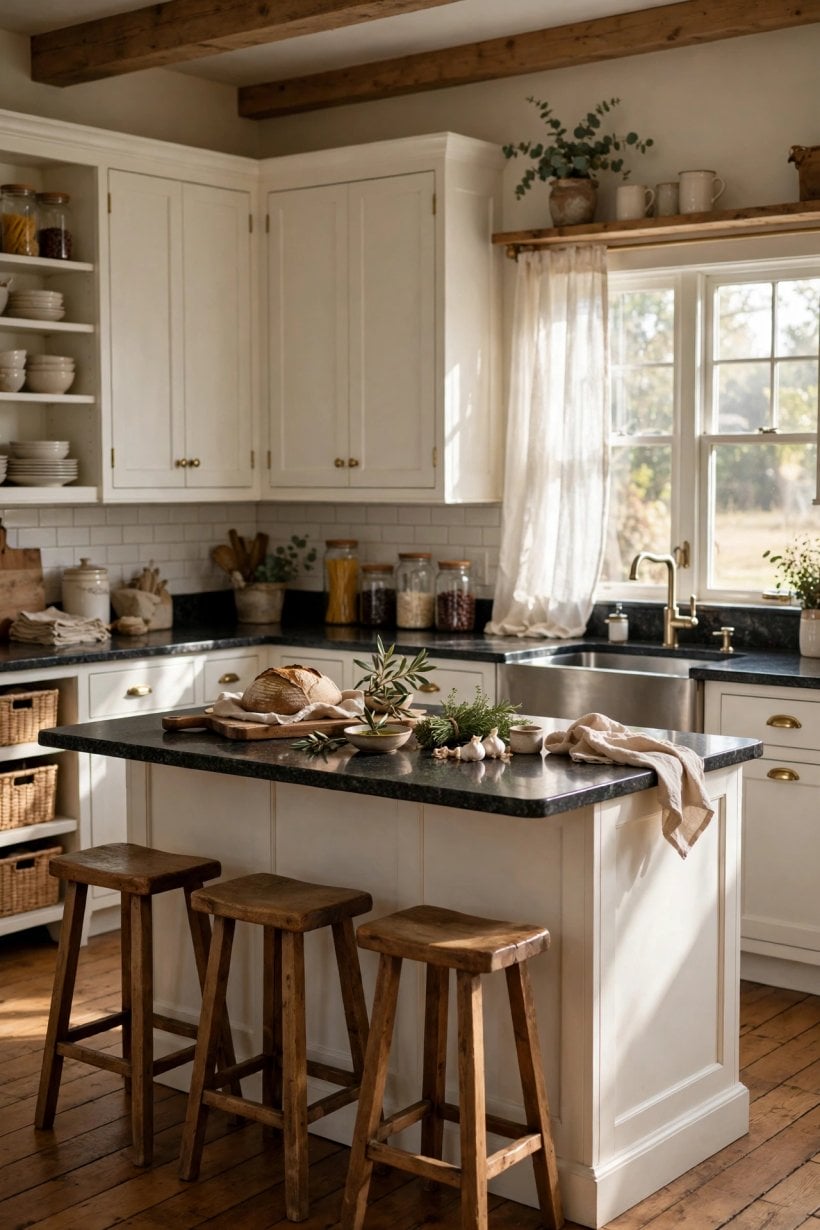
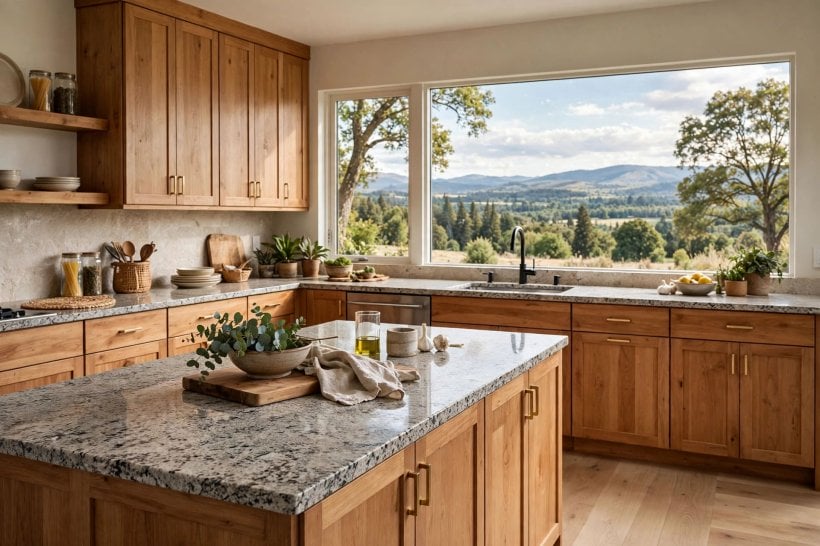
Countertop pricing starts with quantity, but shape matters almost as much as area. A straight run along one wall is the simplest and least wasteful form to template, cut and fit. L-shapes and U-shapes add corners and joins. Islands add a second piece of stone, often a large one, plus finished edges on several sides. Peninsulas, breakfast bars with overhangs and counters that wrap around structural quirks all add machining and handling.
Joins deserve a budget line in your thinking. Each join must be cut accurately, polished, levelled and sealed on site, and in a figured stone it may need vein matching. Fewer, well-placed joins cost less and usually look better than several joins positioned purely to save material. Talk through join placement at templating stage and agree it before fabrication begins.
Layout decisions made for other reasons have stone consequences too. Moving a sink or hob to a different wall, widening an island or adding a small utility counter changes the slab count. In a compact home the effect is magnified, which is why the space-planning discipline in these tiny house living room ideas — measuring honestly and letting one surface do one job well — translates so directly to a small kitchen worktop plan.
4. Thickness and Edge Profiles: The Visible Luxury
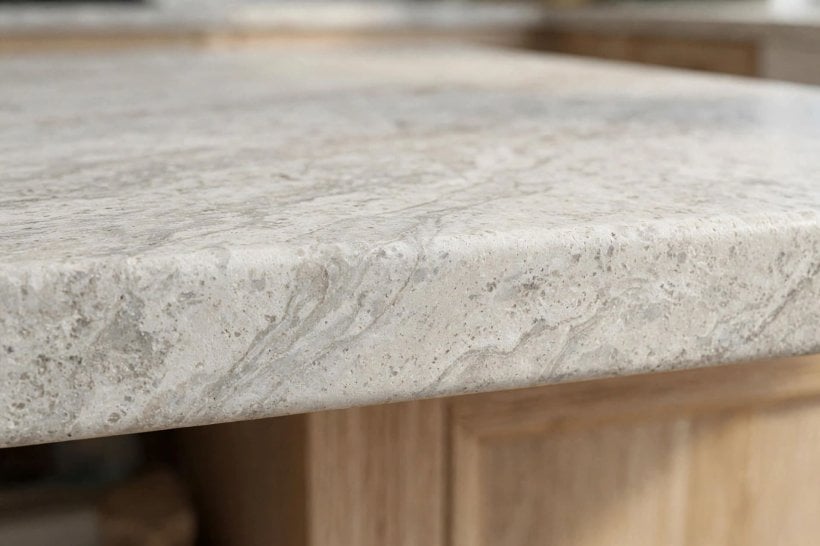
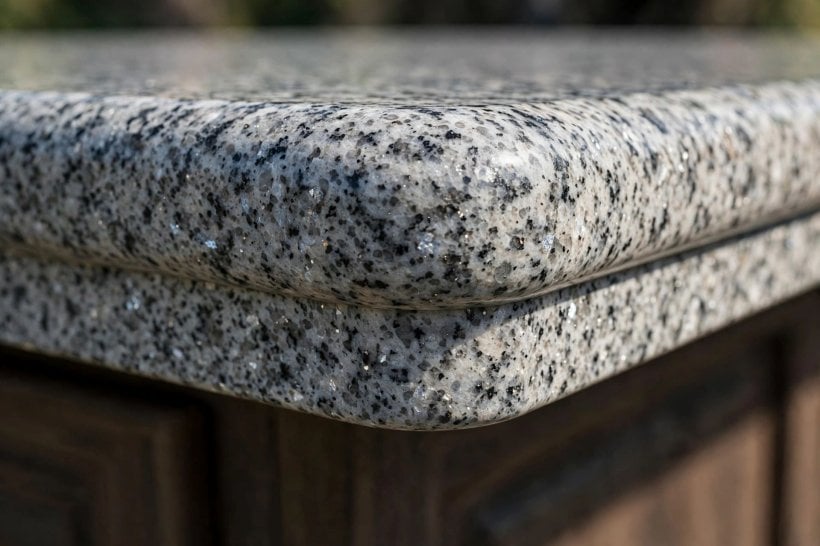
Edge work is where a plain slab becomes a finished counter, and it is priced accordingly. A simple square or lightly eased edge with a small bevel is quick to machine and polish. Rounded, half-bullnose and more elaborate traditional profiles need additional passes and hand finishing, and they must run consistently around every corner, join and cutout. The more linear length of feature edge you order, the more that choice adds.
Thickness works in a similar way. A standard slab with a clean edge reads as honest and modern. A thicker-looking front edge is usually built up by laminating a strip beneath the edge, which adds material, bonding, machining and polishing. It can look wonderful on an island designed as a centrepiece, and it can be money spent for almost no benefit on a short run hidden beneath wall cabinets.
Choose edge and thickness by sightline. Spend on the island edge people touch every day and on the profile they see across the room. Keep secondary runs, utility counters and the strip behind a hob simple. Consistency matters, though: use the same profile family throughout, or the kitchen will look as though two different jobs were fitted in the same week.
5. Cutouts, Sinks and Small Holes With Big Consequences
Every interruption in the stone is work. An inset sink needs a straightforward cut; an undermount sink needs a cut that is also polished all the way round, because the edge of the stone remains visible. A hob cutout needs accuracy and heat-aware clearances. Tap holes, soap dispenser holes, pop-up sockets and drainage grooves are each small operations that add templating time, tooling and risk, and they are usually priced as individual items in a detailed quote.
Risk is the honest reason cutouts cost. Stone is at its most vulnerable while it is being cut and moved, and the narrow bridges of material around a sink or hob are the weakest points of the finished counter. Careful fabricators allow time for reinforcement and handling, and that care is worth paying for — a cracked bridge is far more expensive than the cutout ever was.
Lock down the specification early. The sink model, tap position, hob size and any socket locations must be final before templating, because changing a sink after the slab is cut can mean remaking an entire section. This is exactly the kind of unglamorous decision that guides to a tiny house bathroom also stress for fitted furniture: in small, hard-finished rooms, the order of decisions matters as much as the decisions themselves.
6. Templating and Fabrication: Paying for Accuracy
Good counters begin with a template. A templater visits, records the cabinets, walls, openings and levels — which are rarely perfectly straight or square — and notes joins, overhangs and cutout positions. That visit, whether done with traditional templates or digital measuring, is a professional service with a real cost, and skipping it to save money is a false economy on any kitchen that is not perfectly regular.
Fabrication then turns the slab into your counters: cutting, edging, polishing, reinforcing weak points and dry-checking joins. Workshops differ in equipment and finishing standards, which is one reason quotes for the same stone vary. Ask what is included — sink cutout polishing, drainer grooves, upstands, windowsills from offcuts — and whether sealing is done in the workshop, on site, or not at all.
Upstands are a useful example of a small line item with a big visual effect. A short granite upstand gives a neat, wipeable junction with the wall and can use material efficiently; full-height splashbacks use far more stone and fabrication time. Decide room by room, in the same way you would balance fitted pieces elsewhere using the storage thinking in this bedroom interior design for tiny houses guide: matching everywhere is rarely necessary, but matching where the eye lands is.
7. Delivery, Access and Installation Day
Stone is heavy, fragile in long lengths and unforgiving of mistakes, so moving it is a priced skill. Delivery charges reflect distance, crew size and handling equipment. Access shapes all three: a ground-floor kitchen with wide doors is a different job from a flat up several flights of stairs, a cottage down a narrow lane or a house where the only route is through a finished living room.
Installation itself involves more than placing the pieces. Counters are levelled on the cabinets, joins are bonded and colour-matched, cutouts are checked against the actual sink and hob, and everything is sealed and cleaned. If cabinets are not level or walls run out, fitters spend time correcting other people’s tolerances, and some quotes allow for this while others treat it as an extra — another reason itemised quotes are easier to compare fairly.
Prepare the site so fitting day is short and calm. Cabinets fixed and level, plumbing and electrics ready, the room cleared and a parking and carrying route agreed all reduce time on site. Off-grid and rural projects feel this most: the planning habits behind tiny house landscaping ideas — thinking about access, drainage and where heavy things will be set down — are the same habits that keep a stone delivery from becoming an expensive improvisation.
8. What Sits Underneath: Cabinets, Supports and Preparation
A granite quote sometimes assumes the room beneath it is ready, and sometimes quietly includes making it ready. Old counters may need removing and disposing of. Cabinets may need levelling, strengthening or additional support, especially under a large island overhang where people will sit, lean and perch. Sinks and hobs may need plumbing and electrical disconnection and reconnection by other trades, and those visits belong in your overall budget even when they are not in the stone quote.
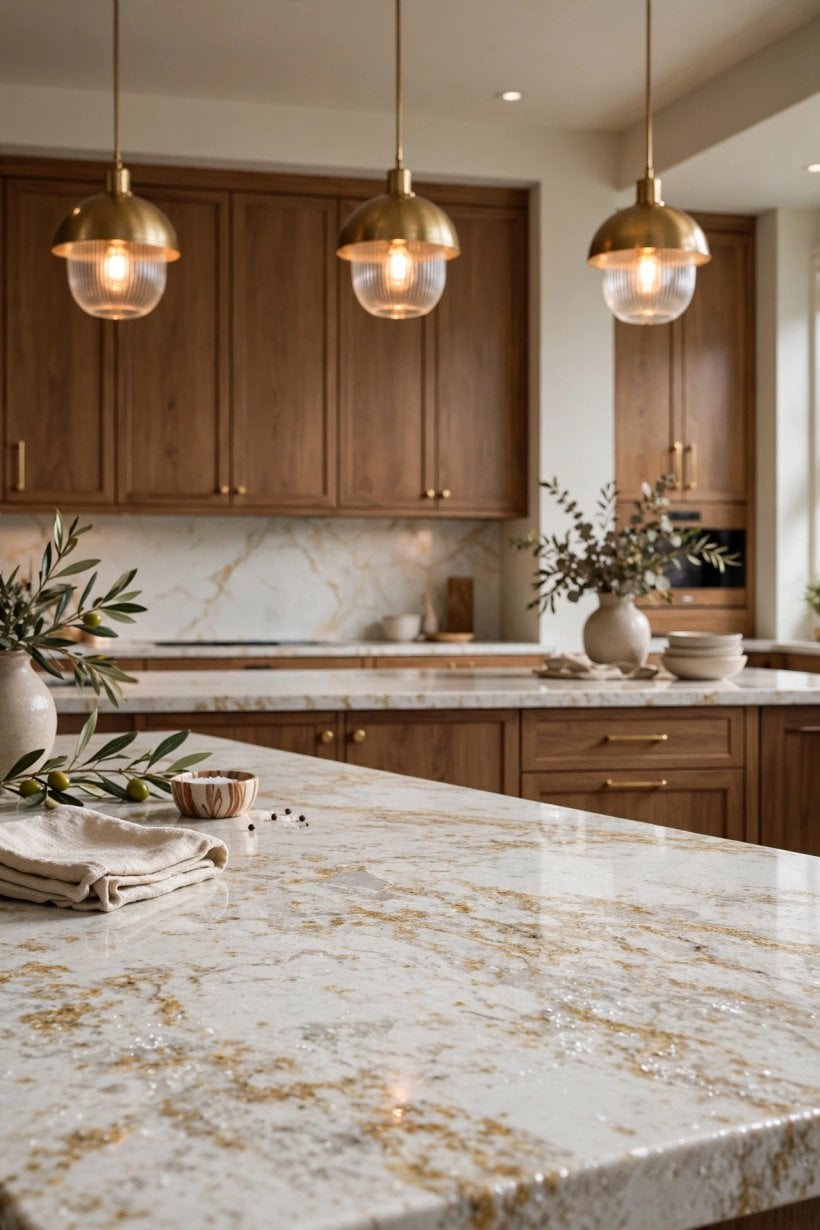
Overhangs deserve special attention. A modest overhang on a well-supported island is routine; a generous seating overhang can need brackets, a steel support or a designed leg, all fabricated and fitted neatly. Agree who supplies and installs supports before templating, because their positions affect both the stone and the cabinets beneath it.
Ask, in writing, what preparation your quote excludes. A clear exclusions list is not a warning sign; it is how you build a true total by adding the plumber, the electrician, the disposal and any cabinet work to the stone figure. Homes planned as carefully as the interiors in this colourful tiny house interior feature still depend on an honest list of what each trade is — and is not — doing.
9. Finish, Sealing and the Cost of Keeping It Lovely
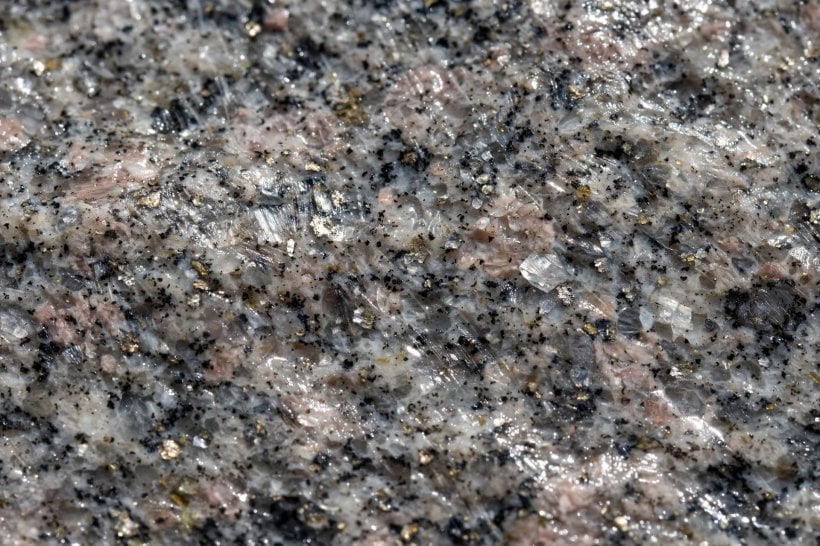
The finish you choose changes both the price conversation and the years that follow. A polished finish is the familiar, light-reflecting standard. Honed and other softer finishes can involve extra processing and may show marks differently, so ask to see and touch a finished sample of your actual stone in the finish you are considering, under lighting like your own kitchen’s.
Sealing is a small recurring cost rather than a large one, but it belongs in an honest whole-life picture. Granite is dense, yet a sealer helps protect against staining, and how often it is renewed depends on the stone, the finish and how the kitchen is used. Ask your fabricator what they applied, when to renew it and which cleaning products they recommend — and keep the answer with your house paperwork rather than relying on memory.
Daily care is mostly about habits, not products: wipe spills, use boards and trivets, and avoid harsh chemicals the fabricator warns against. A counter that is looked after keeps its finish and avoids remedial polishing or professional stain work later. In budget terms, care is the cheapest section of this entire guide and the one most fully under your control, just as a small planted area stays affordable when it is tended little and often like the schemes in tiny barn house interior planning, where upkeep is designed in from the start.
10. Getting Quotes You Can Actually Compare
A useful quote for granite countertops cost is an itemised one. Ask each fabricator to price the same stone, the same layout, the same edge, the same cutouts and the same scope for templating, delivery, installation and sealing, and to list exclusions in writing. When every bidder prices the same job, the differences that remain are real differences in stone, workmanship and service — and those are differences worth discussing.
Send every fabricator the same information: a measured plan, photographs of the room and access, the sink and hob specification, and your decisions on joins, upstands and finish. Vague briefs produce vague quotes that converge only when the extras arrive. If a figure looks unusually low, check the scope before celebrating; something — sealing, a cutout, disposal, supports — is often simply missing.
Finally, judge value over the life of the kitchen, not over the week of the quote. Counters are touched every day and are difficult to change later, so clear scope, careful templating and tidy finishing are worth more than a small saving that buys ambiguity. The project discipline in this guide to how to build your own tiny house applies exactly: define the job fully, price the whole job once, and let the written scope protect both you and the people doing the work.
Final Considerations
Granite pricing is not a mystery once you see the drivers: the rarity and pattern of the stone, the size and shape of the layout, the edge and thickness you choose, the number of cutouts, the accuracy of templating and fabrication, the difficulty of delivery and fitting, and the preparation and aftercare around the job itself. Change any one of them and the quote moves, usually for an understandable reason.
Spend where the benefit is daily and visible — a stone you love, accurate fitting, a comfortable edge on the island — and simplify where the benefit is hard to see. Then hold every quote to the same itemised standard. A counter chosen that way will not be the cheapest on paper, but it will be the one whose price you understand completely, and that understanding is what a fair kitchen budget is built on.

0 Comments