

Sticker shock kills more velomobile dreams than any hill ever will. A five-figure price tag on a bicycle with a shell sends most buyers back to the car lot — until they total what the car actually costs them every year. This guide totals the velomobile’s real ledger: purchase, maintenance, energy, insurance and resale, line by line.
1. The Cost of Owning a Velomobile at a Glance
The cost of owning a velomobile is best read as two numbers moving in opposite directions: a purchase price that rivals a used car, and running costs that rival a bicycle’s. The sticker is real — low-volume, handbuilt machines are never cheap — but it is paid once, while the savings repeat every year the machine replaces car miles. Read the whole ledger before judging the ticket: the sections below take each line of it apart in turn, from the three purchase routes to the five-year total.
| Attribute | Detail |
|---|---|
| The Sticker — New | $7,000–12,000 from the factory — basic fiberglass at the floor, carbon performance at the ceiling |
| The Sticker — Used | $3,000–6,000 through the forum classifieds — the depreciation gift |
| The DIY Route | $1,000–4,000 in kits or a coroplast build over a donor trike |
| Routine Maintenance | $150–300 a year — tires, chains, brake pads and cables, at bicycle prices |
| The Battery | $400–800 every 4–6 years — the biggest single maintenance item |
| The Shell | $0–200 a year — gel-coat touch-ups and hinge adjustments |
| Energy | About $0.02 a mile; $50–150 a year at 5,000 miles |
| Insurance | €100–300 a year for EU specialty theft and liability cover; US machines mostly ride on homeowner’s policies |
| Resale | 60–70% of value retained at 3 years |
| The Five-Year Total | About $15,000, against about $50,000 for a second car — a $35,000 gap |
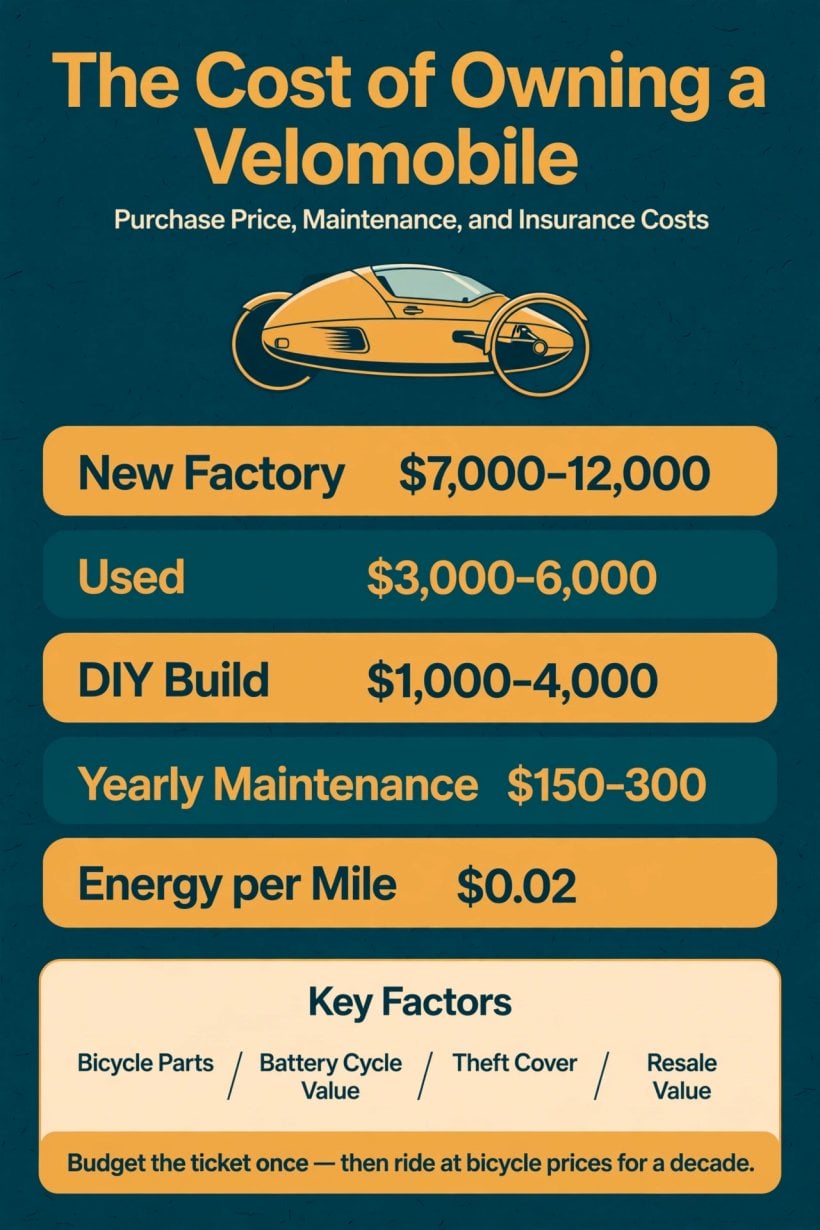
Five figures to buy, pennies to run: the purchase routes, the yearly bills and the five-year gap on one card.
Read the table as the whole argument in miniature. Every expensive line sits at the top and happens once — the purchase, and years later a battery — while every recurring line is priced like a bicycle’s, because underneath the shell that is what the machine is. The comparison that matters is therefore never velomobile against bicycle; it is velomobile against the second car it replaces, and on that ledger the original’s verdict holds: the velomobile pays for itself in under two years of replaced car ownership, then keeps paying its owner back for the rest of the decade.
2. Purchase Price: New Factory, Used and DIY Routes
There are three doors into velomobile ownership, and they open at very different prices. The front door is the factory: $7,000–12,000 new, the range running from basic fiberglass machines to carbon performance models. That is the low-volume handbuilt reality — these are built in small numbers, largely by hand, and the price is what small-batch composite work costs. What softens it is what the sticker includes: most velomobiles ship electrified, so the e-assist — motor and battery — is in the price rather than a drivetrain upsell waiting at the checkout. The machine whose anatomy the sticker buys is laid out in the guide to what a velomobile is and where it came from.
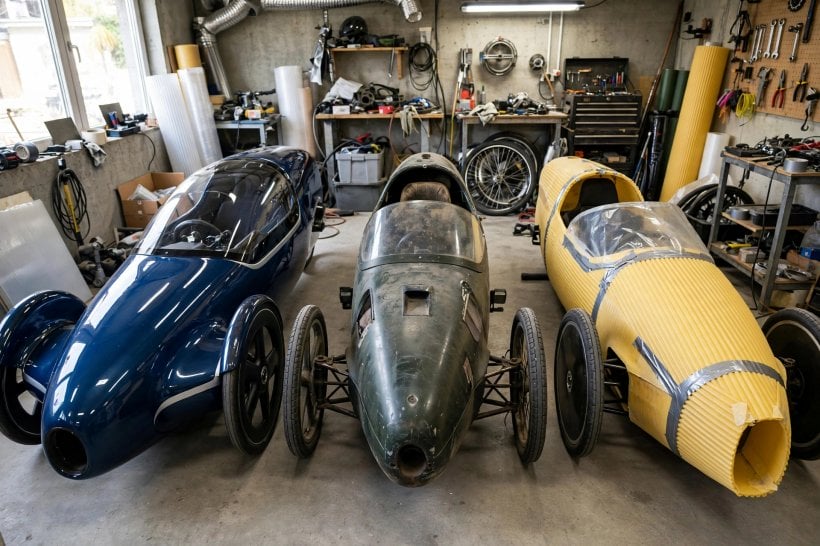
The side doors are cheaper. Used machines run $3,000–6,000 — the depreciation gift, because velomobiles hold value well but sellers do exist, and the forum classifieds are where they list. The back door is the build: $1,000–4,000 for the DIY routes, kits and coroplast over a donor trike. One more line belongs in this section because it shapes how the ticket gets paid: financing is rare in this niche. There is no dealer finance desk for a handbuilt bicycle-car; buyers use personal loans or savings, which makes the velomobile a planned purchase — saved for, shopped for patiently, and usually bought by someone who has already run the five-year numbers in §10.
3. What the Sticker Buys: Shell Material, Handbuilt Volume and Included Assist
Why does the range start where a good e-bike tops out? Because the product being bought is the shell, and the shell is skilled work. The material ladder sets the price ladder: fiberglass at the floor of the range, carbon at the performance ceiling, with the layup, finishing and fitting done by hand at every rung. That premium is not cosmetic — the shaped body is the machine’s speed, as the physics of velomobile aerodynamic shells sets out: the same rider power travels markedly faster inside an efficient shell, so the top of the range is buying measurable performance, not paint.
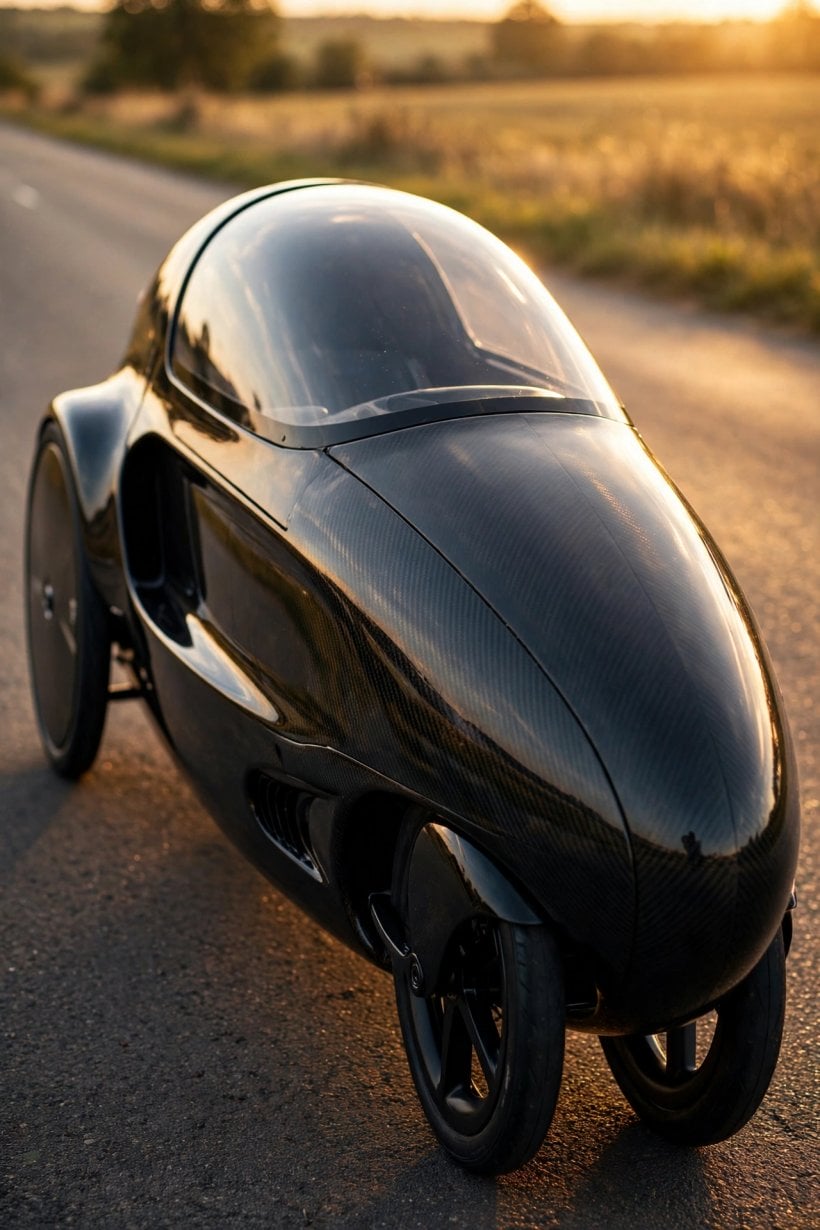
The second driver is volume, or rather its absence. A car spreads its tooling across hundreds of thousands of units; a velomobile maker spreads hand labour across a handful. The original names this plainly — the low-volume handbuilt reality — and it cuts both ways for the buyer: it explains the sticker, and it also explains §9’s resale strength, because scarcity at purchase becomes scarcity on the used market. Finally, the included assist: most machines ship electrified, motor and battery in the price, which means the $7,000–12,000 figure is the complete machine. There is no second invoice for the drivetrain — the comparison against a bare bicycle frame plus a conversion kit is one the factory price quietly wins.
4. Maintenance: The Bicycle Bills
Maintenance is where the velomobile stops behaving like an exotic vehicle and starts behaving like what it mechanically is: a bicycle. The annual routine runs $150–300 — tires, chains, brake pads and cables, the standard bicycle consumables at standard bicycle prices. There is no dealer-only diagnostic, no proprietary service schedule, no parts catalogue priced for a luxury marque. The consumables wear, get replaced from ordinary cycle trade stock, and the machine rolls on. For a vehicle that can replace a car, a three-figure annual maintenance bill is the single most car-unlike line in the entire ledger.
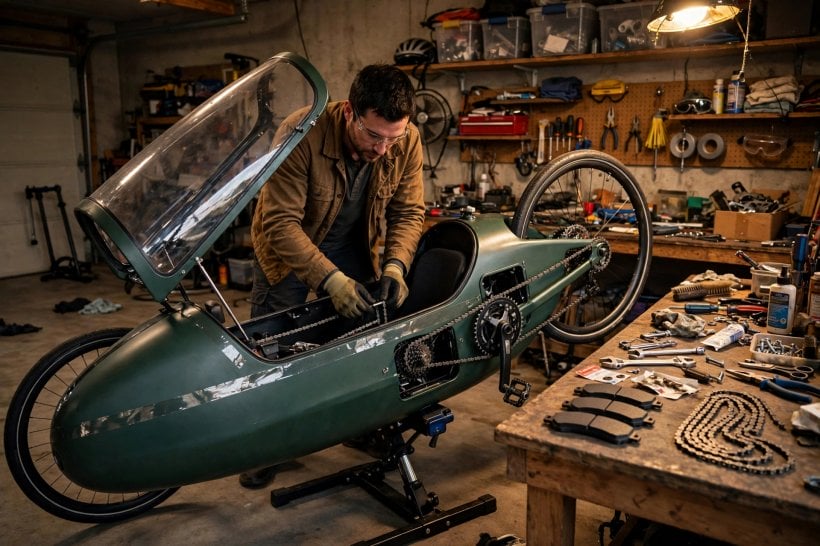
The second half of the maintenance story is who does the work. The DIY factor is a real saving: home mechanics halve the bills, because the skills transfer directly — anyone who has trued a wheel, swapped a cassette or bled a brake on an ordinary bicycle already knows the velomobile’s service routine. The shell adds access panels and hinges to the job, not new disciplines. Owners who pay a shop still pay bicycle labour rates for bicycle parts; owners who wrench at home reduce the $150–300 routine toward its parts-only floor. Either way, maintenance is a rounding line in the ownership total, and §10’s five-year maintenance figure of $1,250 for a $10,000 machine shows how small it stays even when nothing is done at home.
5. Tires, Battery and Shell: The Consumables That Matter
Three items rise above the routine, and each deserves its own line. Tires first: a velomobile runs three of them, and three wheels wear tires faster than two — the original prices replacements at $30–60 a tire with a service life of 3,000–5,000 miles. The per-tire price is pure bicycle; it is the third wheel and the mileage these machines accumulate that make tires the most frequent consumable. Budget them as a rhythm rather than a surprise: a high-mileage year will ask for rubber, and the bill will still read like a bicycle’s.
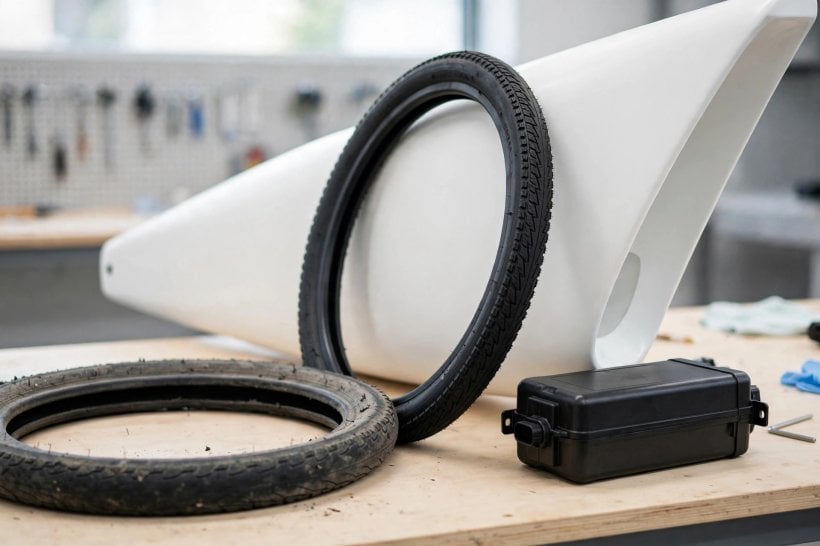
The battery is the biggest maintenance item in the whole ledger: $400–800 every 4–6 years. It is also the most manageable — the 80% charging habit, keeping the pack away from the extremes of charge, is the original’s named practice for extending its life toward the long end of that window. The shell, by contrast, is nearly free to keep: $0–200 a year covers the occasional gel-coat touch-up and hinge adjustment, and fiberglass durability does the rest. A body that shrugs off years of weather for the price of an occasional touch-up is part of why the five-year maintenance total stays so low: the expensive-looking part of the machine is, in service, the cheapest.
6. Energy: Pennies per Mile
Energy is the line where the ledger turns almost comic. Electricity costs about $0.02 a mile — the original’s arithmetic is 10 Wh per mile at $0.15 per kWh — and a solar-charged machine rides at $0.00, a figure the guide to solar chargers for e-bikes and portable EVs shows is practical rather than theoretical. Total it across a year and the numbers stay tiny: $50–150 of electricity for a 5,000-mile year, set against the $1,500 of fuel the original puts on the car’s side of the same year. The velomobile’s fuel bill is not a smaller version of the car’s; it is a different category of expense altogether — the rounding error of a transport budget.
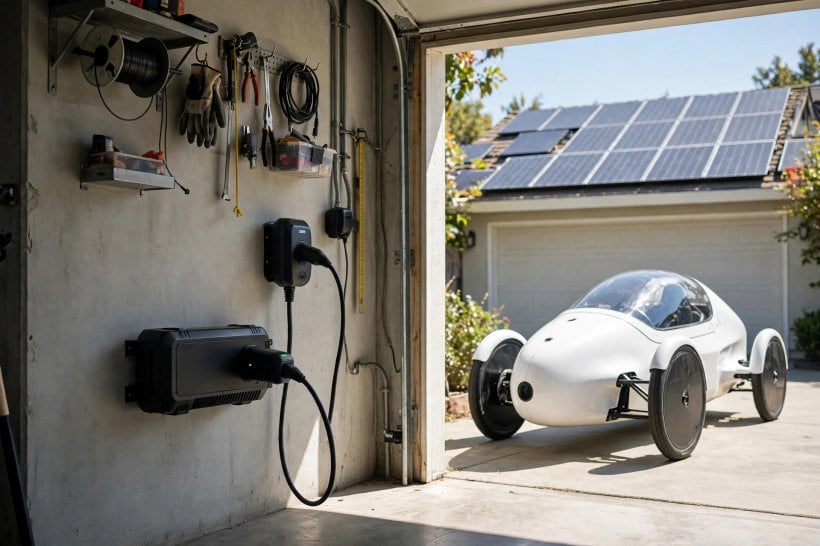
Honest accounting adds the second fuel: the rider. Human fuel is the sandwich — the calories the rider burns are a real energy input, and the original counts them with a straight face, down to the 100-mile sandwich. The split between the rider’s output and the motor’s is exactly the balance explored in human power versus electric assist: the cheaper the electricity line gets, the more of the machine’s motion is honestly the rider’s own lunch. Counted either way, the energy section of the ledger closes at pennies — the line item that makes drivers laugh, until they compare it with their own fuel receipts.
7. Insurance: The Emerging Market
Insurance is the least settled line in the ledger, because the market is still forming around the machine. In the US, most velomobiles are simply uninsured as vehicles: bicycle-classified, they fall outside the motor-vehicle insurance system — the classification logic is the same one worked through in the guide to velomobile regulations and bike-path legality — and owners lean on their homeowner’s or renter’s policy, which may cover theft. Dedicated velomobile policies are rare stateside. The practical consequence: the American owner’s insurance cost is often zero, and their insurance protection is whatever the household policy happens to say, which makes reading it a genuine ownership task.

Europe is further along. Specialty policies exist there — theft plus liability — at €100–300 a year, in what the original calls the maturing market: insurers have met the machine, priced the risk, and sell a product shaped for it. Liability is the other half of the picture on both continents: the personal liability umbrella attached to a homeowner’s policy often extends to the rider, and the original’s advice is simply to check — one phone call converts an assumption into a fact. Budget-wise, insurance is either nothing (the uninsured US default), the price of a household policy the owner already holds, or a few hundred a year for the European specialty product — small money in every version, but worth arranging deliberately rather than discovering after a loss.
8. Theft: The Real Risk and the Lock Strategy
The insurance gap points at the risk that actually keeps owners awake: theft. The original names it directly — the real risk — and the reason is arithmetic: a velomobile is a $10,000 vehicle that parks like a bicycle. It cannot be left on a street rail with a cable lock and a clear conscience. The defence is layered, and each layer is cheap beside the machine’s value: a serious lock strategy, treating the lock as part of the vehicle’s equipment rather than an accessory; indoor storage as the default, the machine sleeping inside the way a car sleeps in a garage; and a GPS tracker, the recovery layer for the day the first two fail.
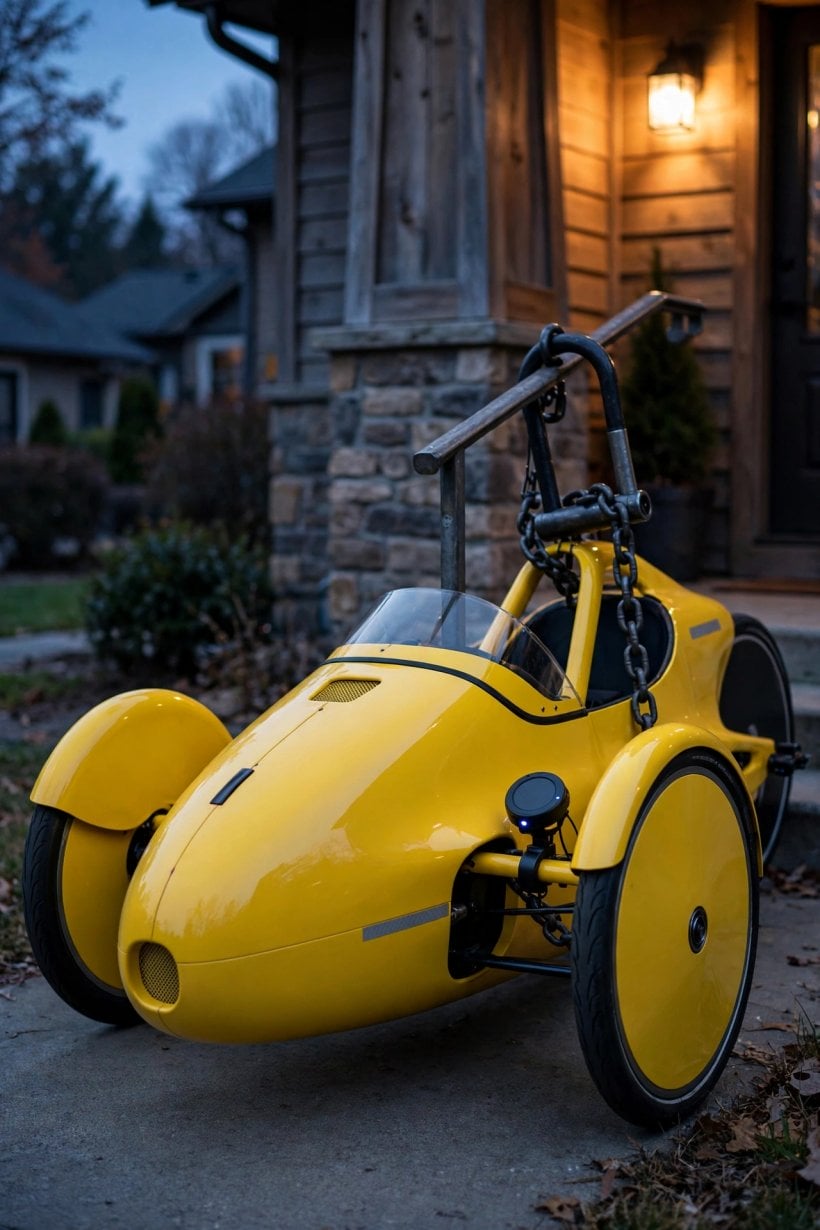
Read this section as the shadow price of §7. Where a European owner can buy theft cover for €100–300 a year, the uninsured owner’s substitute is discipline: storage, locks and tracking carry a cost in money and habit, and it belongs in the ownership ledger even though no invoice itemises it. The good news is that the velomobile’s oddity defends it a little — it is conspicuous, hard to ride away unnoticed, and awkward to sell quietly — but no owner in the original’s account relies on that. The machine concentrates a car’s value into a bicycle’s footprint; the security routine is simply priced into the life that owns one.
9. Depreciation and Resale: The Value Curve
Depreciation is where the velomobile’s odd economics turn in the owner’s favour. The machines hold value well — 60–70% retained at 3 years — because the forces that set the new price set the used one too: low supply meets devoted demand. The niche is, in the original’s word, a cult: buyers who want a velomobile really want one, there are never many for sale, and a well-kept machine finds its next owner at a price that would embarrass a three-year-old car’s percentage. For the new buyer, that curve is a partial refund written into the purchase; for the used buyer in §2, it is the reason the $3,000–6,000 door is narrower than they hoped.
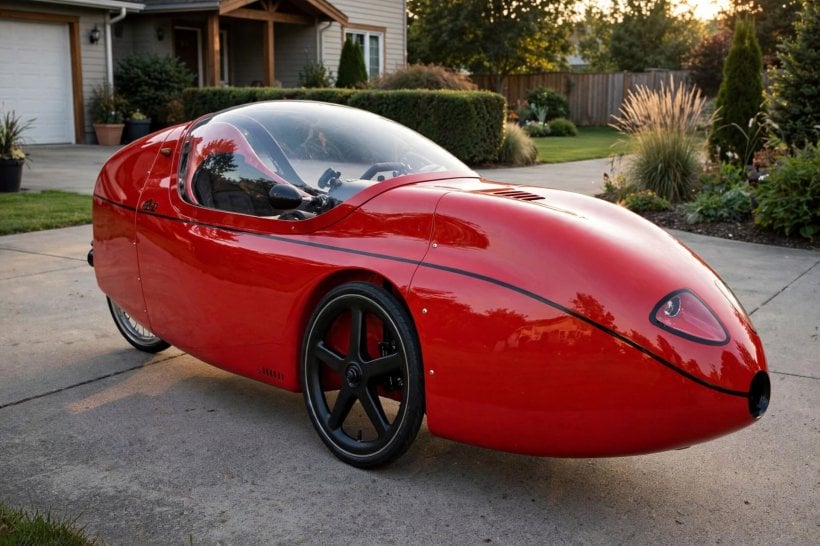
The used market itself is thin: few listings at any moment, which cuts both ways — the patient buyer waits for the right machine, and the seller with one sells quickly. The honest caveat is customisation. Paint and motor swaps are personal: the mods don’t add resale, because the next buyer’s taste is not the builder’s. The original’s framing is build-for-you — choose the machine as its keeper, not its speculator. Even with that caveat, the value curve is a genuine ownership asset: a vehicle that keeps 60–70% of its price at three years while costing bicycle money to run is depreciating slower than almost anything else with wheels.
10. The Five-Year Total — and Making It Affordable
Now total it. The velomobile’s five-year ledger, in the original’s math: $10,000 purchase + $1,250 maintenance + $750 energy + $3,000 battery = about $15,000 — roughly $3,000 a year, everything in. The second car’s five-year ledger: $25,000 purchase (used) + $7,500 insurance + $7,500 fuel + $5,000 maintenance + $5,000 depreciation = about $50,000 — $10,000 a year. The gap is $35,000 over five years, and it produces the single most important sentence in this guide: the velomobile pays for itself in under two years of replaced car ownership. After that crossing point, every year is $7,000 of the car’s running cost that simply never gets spent.
The strategies for the sticker itself close the guide. Buy used: the $4,000 entry through the forum classifieds, patiently found and properly inspected. Go DIY: the $2,000 build, the coroplast proof-of-concept that building a velomobile from a DIY kit walks through, upgradeable later. Replace, don’t add: sell the second car, and let its capital fund the machine — the swap that makes the five-year math immediate instead of eventual. Finance the gap: a short 12-month loan, bridged by a payback period measured in months. And make the replacement real by riding in every season — the winter case is made in the guide to commuting in winter with a velomobile — because the savings only compound while the car stays parked. The velomobile sits in the wider family of sustainable micro-mobility options, but on the ledger above it stands alone: the one that replaces the car outright and pays its owner for the privilege.
Final Considerations
Budget $7,000–12,000 new or $3,000–6,000 used, $150–300 a year in bicycle maintenance, pennies in energy, and specialty insurance where it is available — against the second car’s $10,000 a year. The velomobile isn’t expensive transport; it’s cheap transport with an expensive ticket. Buy the ticket once — used, DIY, or funded by the car it replaces — and ride the savings for a decade.



4 Comments